



Quick Facts: Needles OHV access at a glance
- Program: City of Needles OHMV Pilot Program
- Location: Needles, California, San Bernardino County, on the Colorado River
- Route network: About 9.2 miles of combined-use streets
- Staging areas: Two, at Park Drive/River Road and Clary Drive/Lillyhill Drive
- Launched: Week of June 25, 2026 ribbon-cutting
- BLM role: Needles Field Office partners on trail connections
- Best for: UTV and ATV riders who want Needles OHV access from town to BLM trails
7 min read
In This Guide
Needles OHV Access Overview: A Town-to-Trail First for California
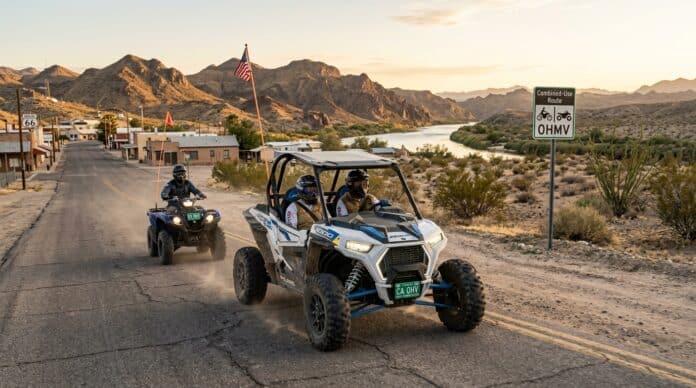
New Needles OHV access now lets riders leave a staging area, travel signed city streets, and roll onto surrounding BLM trails without loading back onto a trailer. The City of Needles built the network under its OHMV Pilot Program, and it stands as the first California city to legally connect downtown streets to public-land trails. A ribbon-cutting the week of June 25, 2026 marked the launch.
This matters because access gains are rare in California. Over the past decade, closures and litigation have shrunk where off-road drivers ride. Instead, Needles moves the other direction. As a result, riders reach fuel, food, and lodging on the same trip they reach the trailhead, a convenience common in Utah and Arizona but new here.
BLM California framed the news as new OHV access between Needles and Arizona. The city leads the program, while the BLM Needles Field Office partners on the trail connections. Field Manager Ron Nuckles joined city officials at the launch. For riders, the result is a legal, mapped corridor from town to the desert.
Key Facts at a Glance
| Detail | What to Know |
|---|---|
| Program name | City of Needles OHMV Pilot Program |
| Route length | About 9.2 miles of combined-use streets |
| Staging areas | Park Drive/River Road and Clary Drive/Lillyhill Drive |
| Speed limit | 35 mph on OHMV corridors |
| Required | License, insurance, registration, OHV permit |
| Managing partner | BLM Needles Field Office |
| Pilot sunset | 2028, with a bill to extend to 2033 |
What the OHMV Program Opens
The program designates roughly 9.2 miles of combined-use roadways through Needles. State law caps this type of network at 10 miles, so the city built close to the legal maximum. These streets link the staging areas to local businesses and to BLM trail access points at the edge of town.
Above all, the core change is legal continuity. Before this program, California riders had to trailer their machines to a trailhead, unload, ride, then reload. Now you launch from a staging area, follow signed corridors, and continue onto the trail network in one trip. The city adopted its OHMV Master Plan in September 2025, approved a signage plan in January 2026, and opened the routes in summer 2026.
Needles sits at the corner of California, Arizona, and Nevada, which makes it a natural hub. Historic Route 66 runs through town, and the nearby BLM-managed Mojave Trails National Monument holds the longest undeveloped stretch of the historic highway. As a result, the OHMV network turns the town itself into a legal gateway to the surrounding desert.
The Two Needles OHV Staging Areas
Two city-designated staging areas anchor the network. The first sits at Park Drive and River Road, and it offers truck and trailer parking, loading zones, a route kiosk, and restrooms. The second sits at Clary Drive and Lillyhill Drive, and it adds trailhead access, signage, fencing, and rest-area amenities.
Both locations were placed to reduce impacts on residential streets. You stage, unload, and enter the corridor from these points rather than riding out of a neighborhood or a driveway. The city has not published acreage for either site, so plan for standard lot-style parking rather than a large dispersed area.
If you plan a first visit, start at Park Drive and River Road. Its restrooms and kiosk make it the easier orientation point for reading the route map before you ride. For a deeper primer on reading public-land route maps, our guide on how to find dispersed camping and read an MVUM pairs well with a Needles trip.
OHV Access Rules You Must Follow
The corridors carry a 35 mph limit, and you ride only on designated routes and staging areas. Residential streets and any road outside the signed network stay off-limits. Every rider needs a valid driver’s license, insurance, and vehicle registration at all times.
Specifically, permit rules follow California OHV law. California residents display a valid green or red OHV sticker. However, non-residents whose machines are registered out of state must buy the California non-resident OHV permit before they ride. Helmets are required for ATV and UTV riders under state rules, and you use seat restraints where the vehicle has them.
The pilot draws its legal authority from California Vehicle Code Section 38026.2. The San Bernardino County Sheriff’s Colorado River Station and the CHP enforce the rules. Moreover, the city reports incidents to the State of California so officials evaluate the program. The current authorization sunsets in 2028, while Assembly Bill 1756 would extend the data-gathering window to January 1, 2033.
Crossing Into Arizona and Nearby Trails
The headline for many riders is the cross-border angle. BLM California says the network lets riders cross the Colorado River and link into Arizona’s OHV trail systems. As a result, Needles gives you a single base for a multi-state riding weekend along the river corridor.
In addition, local pairings extend the trip well beyond town. For example, Mojave Trails National Monument sits under the same BLM field office and delivers Route 66 history, dunes, and lava flows. The Snaggletooth primitive camp in the Chemehuevi Mountains, off US-95 near Needles, gives you a staging and camping option. Lake Havasu and the Parker area lie across the river for more Colorado River riding.
Standard BLM camping rules apply on the public lands you reach. Most BLM areas allow dispersed camping for up to 14 days within a 28-day period, after which you move on. Confirm current limits with the field office before a long stay. Our roundup of free dispersed camping in Arizona covers nearby options once you cross the river.
Needles OHV Access vs. the Old Trailer Routine
The value of Needles OHV access shows most when you compare it to the traditional California routine. Under the old model, you towed your machine to a trailhead, unloaded, rode, then reloaded to reach fuel or food. Every resupply meant another load-and-unload cycle.
The OHMV network removes those cycles inside the corridor. You refuel in town, grab lunch, and return to the trail on the same registration and route, which saves time and reduces wear on your tow rig. For families and groups, fewer loading stops mean more trail time and less parking-lot logistics.
The trade-off is scope. This is a pilot with a 10-mile street cap, a 35 mph limit, and strict route boundaries, so it complements rather than replaces backcountry trailering. Riders who want remote, permit-free desert still drive out to it. For a town-based hub with legal trail links, though, Needles now leads the state.
Final Verdict
Needles OHV access suits UTV and ATV riders who want a legal, low-hassle base for Colorado River desert riding. Its biggest strength is continuity, since you move from staging area to town services to BLM trails without reloading. The cross-border link into Arizona widens a weekend well beyond one state.
The limits are real and worth respecting. A 35 mph cap, license and permit requirements, and tight route boundaries keep the pilot narrow. Riders chasing remote, unmarked terrain will still trailer out past the corridor, and the program faces review when the 2028 sunset arrives.
On value, this ranks as a rare access win in a state where closures dominate the news. The same BLM field office recently closed West Mojave routes in protected habitat, which shows how uncommon a net gain like this is.
If you ride the Southwest, put Needles on your list for a spring or fall trip and pair it with Mojave Trails or a river crossing into Arizona. For a fully remote experience with no speed caps, a dispersed BLM area farther from town remains the better alternative.
Frequently Asked Questions
Is Needles OHV access run by the BLM?
No. The City of Needles runs the OHMV Pilot Program, and the BLM Needles Field Office partners on the trail connections. The city manages the staging areas and combined-use streets, while BLM manages the public-land trails the network reaches.
Do I need a permit to ride the Needles OHMV routes?
Yes. California residents display a valid green or red OHV sticker, and non-residents buy the California non-resident OHV permit. You also need a driver’s license, insurance, and current vehicle registration on the corridors.
Does the network reach into Arizona?
BLM California says riders reach across the Colorado River and connect to Arizona’s OHV trail systems. Confirm current crossing points and Arizona OHV decal requirements before you go, since state rules differ across the river.
Where do I park and unload?
Use one of two staging areas. Park Drive and River Road offers trailer parking, a route kiosk, and restrooms. Clary Drive and Lillyhill Drive adds trailhead access, signage, and rest-area amenities.
How long will the program last?
The pilot authorization sunsets in 2028. Assembly Bill 1756 would extend the data-gathering window to January 1, 2033. The city reports all incidents to the State of California to help evaluate the program.