



Quick Facts:
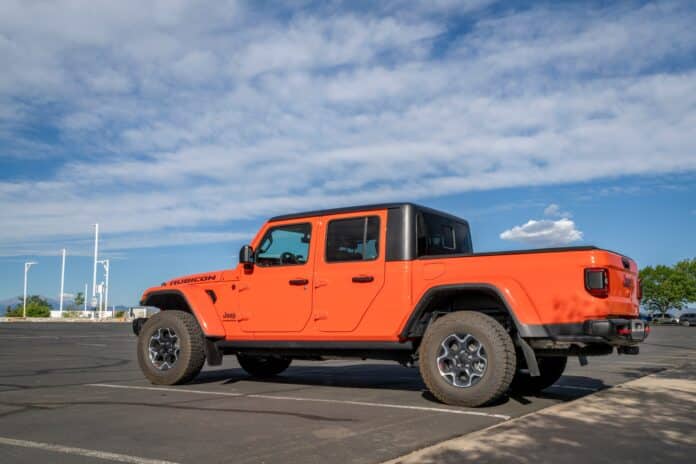
- Platform: 2020-2023 Jeep Wrangler JL and 2021-2023 Gladiator JT, 3.0L EcoDiesel V-6
- Engine output: 260 hp and 442 lb-ft, paired with the ZF 8HP75 eight-speed
- Factory coolant capacity: 12.3 quarts, against 10 quarts for the 3.6L Pentastar
- Owner-reported derate: around 260°F engine oil, silent, with no warning chime
- Diagnose first: an enhanced scan tool, $50 to $150, before any part
- Transmission cooler: CSF 8344, $379, claimed 68% more fluid capacity
- Fitment trap: Fluidyne’s JL/JT radiator lists gas engines only
- Best for: EcoDiesel owners who tow near the rating or run long summer grades
15 min read
In This Guide
- Why the Jeep EcoDiesel Cooling Upgrade Question Keeps Coming Up
- Factory Cooling Specs at a Glance
- What Jeep Owners Report on Grades and While Towing
- Four Heat Loops, One Misdiagnosed Problem
- Check These Before You Buy a Jeep EcoDiesel Cooling Upgrade
- Log Your Jeep Temperatures Before You Buy Anything
- Radiator Shootout: What Actually Fits a Jeep 3.0L
- Transmission Coolers and the Supplemental Radiator Option
- Warranty Exposure and the Magnuson-Moss Reality
- Jeep EcoDiesel Cooling Upgrade Costs and Install Time
- CSF vs. Mishimoto vs. Supplemental Cooling
- Final Verdict
- Frequently Asked Questions
Why the Jeep EcoDiesel Cooling Upgrade Question Keeps Coming Up
Search any Jeep forum in August and the same thread reappears. A 3.0L EcoDiesel loses power halfway up a grade with a trailer behind it. Within a page, the owner starts pricing a Jeep EcoDiesel cooling upgrade. Nobody has yet told him what got hot. Threads on jlwranglerforums.com and jeepgladiatorforum.com run for dozens of pages on exactly this. The advice inside them is confident, contradictory, and almost never backed by a logged temperature.
Start with what the record shows. There is no cooling recall on this engine. A query against the NHTSA recall database for the 2021 Gladiator returns eight campaigns. None address the radiator, the coolant, or the EGR cooler. Two cover the high-pressure fuel pump instead. Federal complaint data tells a similar story, because the cooling reports owners trade on forums barely appear in it. This is a community-documented problem rather than a regulator-documented one. The distinction changes how you treat every claim about it, vendor marketing included.
Where Most Jeep Owners Misread the Derate
Now the part owners get wrong. The derate most of them chase is an engine oil event rather than a coolant event. On the Gladiator forum, owners put roughly 260°F oil at the point where power quietly disappears. No chime sounds. Nothing flashes. Instead, the throttle simply stops answering. A coolant warning arrives later, near 248°F, with a chime and a flashing red gauge. Because a bigger radiator targets coolant first, owners in these threads routinely spend $725 on the wrong heat loop.
This guide sorts the fixes by what the manufacturers themselves publish. Specifically, it covers which radiators list the 3.0L as a fitment and which quietly do not. It also covers what the CSF 8344 cooler adds, what to inspect before spending anything, and where the Magnuson-Moss Warranty Act protects you. If you are still deciding on the platform itself, our guide to EcoDiesel Gladiator and Wrangler ownership covers the wider maintenance picture.
Factory Cooling Specs at a Glance
Stellantis publishes more useful detail than the owner’s manual does. The figures below come from the 2021 Wrangler and Gladiator specification sheets plus the Gladiator EcoDiesel press release. Those documents state the cooling stack layout directly.
| Specification | Details |
|---|---|
| Engine | Third-generation 3.0L EcoDiesel V-6, built by VM Motori |
| Output | 260 hp at 3,600 rpm, 442 lb-ft at 1,400-2,800 rpm |
| Transmission | ZF 8HP75 eight-speed automatic; 3.73 axle on all Gladiator EcoDiesel models |
| Coolant capacity | 12.3 qt (11.6 L), versus 10 qt for the 3.6L Pentastar |
| Engine oil capacity | 9.0 qt (8.5 L) |
| Charge air cooler position | At the base of the grille, in front of the radiator |
| Max tow, Wrangler JL 4-door | 3,500 lb |
| Max tow, Gladiator JT | 6,500 lb Sport and Overland, 6,000 lb Rubicon |
| Production run | Wrangler through 2023 Rubicon FarOut, Gladiator through 2023 |
Notice the coolant number, because it undercuts the lazy version of this story. The diesel carries roughly 23% more coolant than the gas Pentastar. Coolant volume alone therefore fails to explain the complaints. The stack geometry explains them better. Stellantis states the charge air cooler sits at the base of the grille, ahead of the radiator. Every bit of air reaching the radiator has therefore already picked up heat from compressed intake charge.
| Top Pick | Best Budget | Best for iPhone | |
|---|---|---|---|
| Product | TOP PICK OBDLink MX+ OBDLink MX+ | 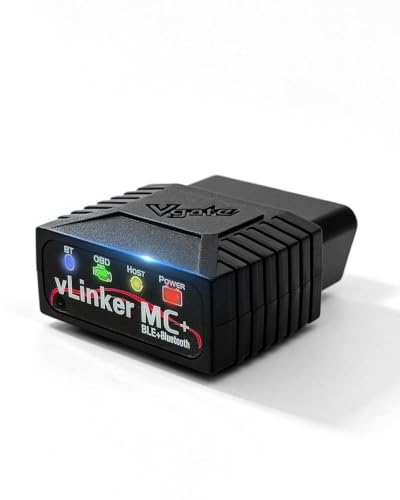 Vgate vLinker MC+ Vgate vLinker MC+ |  Vgate vLinker MS Vgate vLinker MS |
| JScan-recommended for JL/JT enhanced PIDs | Yes | Yes | Yes |
| Connection type | Bluetooth, multi-app | Bluetooth, budget | Bluetooth MFi, iPhone-native |
| Needs a phone or PC app | Yes | Yes | Yes |
| Price | $139.95 as of Oct 10, 4:34 pm | $68.99 as of Oct 10, 12:57 pm | $76.49 as of Oct 10, 12:57 pm |
| Check Price → | Check Price → | Check Price → |
What Jeep Owners Report on Grades and While Towing
Owner logs are the only temperature dataset in existence for this engine. Treat every number below as owner-reported rather than factory-published. Stellantis publishes no normal or maximum operating range, and owners on the Gladiator forum note the absence directly.
Normal Jeep EcoDiesel Temperatures
Unloaded, owners consistently report coolant near 203°F. Towing a 4,000 lb camper at 65 to 70 mph moves it to roughly 213°F. Multiple owners in the same thread confirm the pattern. Engine oil sits higher. Around 235°F appears routine behind a 3,500 lb trailer, while around 250°F shows up near the tow rating. One owner logged transmission fluid near 197°F while pulling 2,000 lb, though a single data point establishes nothing.
Where a Jeep EcoDiesel Power Derate Starts
The threshold owners repeat is 260°F oil. Above it, the engine pulls power silently, and the common description is a throttle going limp while speed bleeds off. A second stage arrives near 248°F coolant, this time with a chime and a flashing red gauge. One owner reported dropping to 20 mph until things cooled. Another towed a 5,300 lb boat home through 120°F Arizona heat. An EcoDiesel power derate cut him from 55 mph to 35 mph.
Which Jeep Owners Never See the Problem
Plenty of EcoDiesel owners in the same climates report nothing unusual. Several Arizona owners specifically note zero derate in triple-digit heat while running unloaded. Load, grade, and ambient temperature stack together, so the failure is conditional rather than universal. Weight is the variable most owners control, so our breakdown of payload versus towing capacity limits belongs here before any parts catalog.
Four Heat Loops, One Misdiagnosed Problem
Your Jeep manages four separate thermal circuits, and two of them trigger a derate. First, coolant moves through the radiator. Engine oil circulates through a cooler bolted to the filter housing. Transmission fluid gets a dedicated cooler of its own. Ahead of all three sits the charge air cooler, feeding the intake. Swap the radiator and you have improved exactly one of the four.
This distinction decides where your money goes. If your logs show 262°F oil while coolant sits at 220°F, a larger radiator addresses the loop already inside its limits. Conversely, coolant climbing toward the 248°F warning on a grade points at airflow and radiator capacity, and a bigger core addresses the second one. Without logs you are guessing, and guessing here costs about $725.
The loops interact, which is why the confusion persists. Cooler coolant pulls heat from the oil through the oil cooler, so a radiator upgrade lowers oil temperature indirectly. The effect is real but secondary. No vendor publishes how large it is on this engine, and the silence is worth noticing before you read any marketing page.
Check These Before You Buy a Jeep EcoDiesel Cooling Upgrade
Six checks cost almost nothing and resolve a meaningful share of these complaints. Work through them first, because a Jeep EcoDiesel cooling upgrade installed over a restriction or a leak buys you little.
Clean the Charge Air Cooler, Not Only the Radiator
Since the charge air cooler sits first in the stack, mud and chaff pack its face before anything reaches the radiator behind it. Looking through the grille shows you a clean radiator and tells you nothing. First, pull the front fascia far enough to see the intercooler face, then flush both cores with a garden hose rather than a pressure washer.
Look Hard at Your Front Bumper and Winch
Forum consensus among hot-climate owners who tow is blunt: skip the aftermarket steel front bumper on a diesel. Owners argue an aftermarket bumper obstructs the lower portion of the cooling cell, though nobody has published airflow measurements to settle it. Treat the claim as untested. The same geometry complicates one popular fix. Bullet Proof Diesel specifies its supplemental radiator for the factory plastic bumper and asks winch-bumper owners to call first.
Listen for the Electric Fan and Test the EGR Cooler
This engine uses a diesel-specific electric fan module, Mopar 68340962AC, so there is no fan clutch to inspect. Owners describe high speed as unmistakable and helicopter-loud. To force it, idle the Jeep at operating temperature with the air conditioning on maximum, or command the fan directly with a bidirectional scan tool. If you have never heard high speed, treat the silence as a finding. A separate Stellantis bulletin covers a perceived internal coolant leak in the high-pressure EGR cooler. One owner traced roughly 40 ounces of coolant loss over a year to it. For example, a block tester catches the leak. So does an oil analysis showing elevated potassium. Bench testing a cold cooler often passes a unit leaking hot.
Check the Degas Bottle and the Thermostat
Safety note: Never open a degas bottle or pull a radiator hose on a warm engine. This system holds pressurized coolant well above the boiling point of water, and a hot cap release sprays scalding fluid. Let the Jeep sit until the upper hose is cool to the touch, then work.
The plastic coolant reservoir, part 68283565AB, splits at the seams, and replacement runs $40 to $60 with under an hour of labor. A separate bulletin covers thermostat regulation with diagnostic code P0128, so a scan tool showing the code points you at a cheap part. Chasing an expensive one first wastes money.
Log Your Jeep Temperatures Before You Buy Anything
None of this is diagnosable by feel. Standard OBD-II covers coolant, intake air and ambient temperature. Transmission fluid temperature sits outside the standard parameter set entirely. Engine oil temperature is defined in the standard, yet the JL and JT do not serve it to a generic dongle.
Reading either one therefore takes an enhanced tool such as JScan, or another scanner with manufacturer-specific coverage. For instance, budget roughly $50 to $150 for a capable Bluetooth adapter, against $725 for the radiator you are trying to decide about. Note also the security bypass module JScan needs on the Gladiator.
Meanwhile, log ambient alongside everything; otherwise the numbers mean nothing. Repeat the same grade at the same speed and load, then compare runs. Two weekends of logging tells you which of the four loops is in trouble. Owners who skip this step are the ones who post a receipt and no improvement.
Radiator Shootout: What Actually Fits a Jeep 3.0L
One warning about what follows. No maker in this group publishes a measured temperature test on a 3.0L EcoDiesel, so this comparison runs on fitment, construction and install risk instead of degrees. Here the market turns strange. The brand most often recommended for a Jeep Gladiator radiator upgrade does not sell a part for this engine.
Fluidyne: No EcoDiesel Fitment
Fluidyne’s 4-row 5mm fin extruded-tube radiator, SKU RJP.JL at $1,095, covers the 2018-2026 JL and JT. Read the fitment line on Fluidyne’s own product page, however, and it names the 3.6L Pentastar and the 2.0L turbo four. The 3.0L EcoDiesel appears nowhere on the page or in the specification table. Anyone recommending Fluidyne to a diesel owner is repeating a name rather than reading a catalog.
Mishimoto MMRAD-JL-18: Listed, With a Footnote Worth Reading
Mishimoto lists the 3.0L, and the part number is MMRAD-JL-18 at $799.95. Claimed gains are geometric: 51% more core volume, 38% more coolant capacity, and 37% more fin surface area, backed by a lifetime warranty. The complication sits in Mishimoto’s own footnote. Installation on 3.0L EcoDiesel models requires significant disassembly of the cooling stack, work not covered in the instructions. Trimming the intercooler inlet and outlet is sometimes required. Retailers list this same part as a one-hour job. For a diesel, the retailer estimate is wrong.
CSF 7340: The Only Confirmed Drop-In
CSF states the diesel fitment explicitly for both the 2020-2023 JL and the 2021-2023 JT. The 7340 runs a 2-row 42mm core against the factory 1-row 27mm unit, with aluminum tanks replacing plastic. CSF claims a 20% to 25% increase in heat transfer efficiency and 50% more core volume. It describes the $725 radiator as plug-and-play, requiring no modification. XDP independently confirms the EcoDiesel fitment, while ExtremeTerrain sells the same part for around $819.99.
Cold Case and the Jeep Fitment Gap
Cold Case sells a 41mm extruded-core radiator, MOJ996XD, at $553.59. Its product page names the 2018-2023 JL and the 2019-up JT, with no engine listed. One retailer listing for the related non-XD part is titled for the 3.6L. Until Cold Case states a diesel fitment in writing, treat the price as irrelevant.
Transmission Coolers and the Supplemental Radiator Option
Because the ZF 8HP75 runs its own loop, a radiator swap leaves transmission temperature roughly where it was. Two direct-fit coolers address it, and neither publishes a measured result on a diesel.
The CSF 8344 transmission cooler drops into the factory location. CSF lists the 3.0L diesel in both the JL and JT. Claimed gains run to 34% more core volume and 68% more fluid capacity over stock. A dual-pass core and 16mm ten-channel microtubes do the work, at $379 with a two-to-three-hour install. One quirk: the 8HP75 never appears in the fitment table, since CSF specifies by vehicle and engine instead.
Jeep Supplemental Cooling and the Mishimoto Alternative
Mishimoto’s MMTC-JL-18SL competes at $357.95, growing the core from 19mm to 32mm and adding 83% more fluid capacity, with a medium install difficulty rating. CSF publishes no measured temperature drop. Mishimoto’s R&D testing reports fluid leaving its cooler at 170°F against roughly 180°F from the stock unit, though not on a diesel. In Mishimoto’s own forum thread, an owner asked how much cooler the transmission runs and the question went unanswered.
The Bullet Proof Jeep Supplemental Radiator
Bullet Proof Diesel takes a different route. Its $299.95 supplemental radiator, SKU 90401300, mounts between the frame rails and between the front skid plate and bumper assembly. The company claims up to a 20% increase in available engine power while towing. Its own forum thread promised before-and-after data from a Cajon Pass run. No owner results were ever posted. If you already run a steel winch bumper, this option likely stops here on packaging grounds alone.

ScanGauge 3 Touch Screen OBD2 Scanner, Digital Gauges & Trip Computer SG3
A permanent dash monitor with a published transmission-temperature X-Gauge for the 3.0L EcoDiesel, so you can watch the loop this article flags without holding a phone up to the console.
- Mounts permanently on the dash, no phone required
- Confirmed transmission-temperature readout for the 3.0L EcoDiesel
- Logs data continuously across an entire towing season
- Doubles as a trip computer and code reader
- Setting up the EcoDiesel-specific X-Gauge takes manual entry, not plug-and-play
- Does not natively expose engine oil temperature on this platform
From experience: The rigs I see cooking on summer grades are usually the ones carrying a full build and a trailer without anyone having weighed either. Cooling parts get bought long before a scale gets visited. Watch temperature on a real gauge for one season, on the same passes you always run. You will learn more about your Jeep than any forum thread teaches.
Warranty Exposure and the Magnuson-Moss Reality
Cooling parts sit in an awkward spot. A radiator swap touches the system a dealer would later blame for a head gasket, turbo, or EGR failure. Knowing where you stand matters more here than on a set of floor mats.
What the Law Says
The Magnuson-Moss Warranty Act bars a manufacturer from conditioning warranty coverage on your use of branded parts or service. Guidance from the Federal Trade Commission puts the burden plainly. A manufacturer or dealer must prove the aftermarket part caused the damage before denying coverage. Consumers also keep the warranty when someone other than the dealer performs maintenance. In 2018 FTC staff sent warning letters to six companies across the appliance and automobile industries over exactly this language. A further round went out in 2024, though no automakers appeared in the second group.
What Happens at the Service Counter
The law and the practice diverge. Owners across brands describe dealers denying claims over parts as trivial as a short shifter. One reported being told to hire a lawyer after citing the statute. A technician in the same discussion put it bluntly: dealers bet you will not fund litigation. The one documented win there came through arbitration rather than argument. It ended in a full vehicle buyback.
How to Protect Yourself
Above all, keep the factory radiator in your garage, since reinstalling it removes the argument entirely. Save receipts for every fluid and service, a step the FTC specifically recommends. Log your temperatures before and after the swap, because a documented pre-existing heat problem shifts the causation question back where it belongs. For a wider view of ownership cost exposure, our look at Jeep maintenance cost reality is worth reading alongside this. Notably, no documented case of a Jeep EcoDiesel warranty denial over an aftermarket radiator turned up in this research.
Jeep EcoDiesel Cooling Upgrade Costs and Install Time
Shop-management platform Tekmetric puts the 2026 national average auto repair labor rate at $132 per hour. State rates range from $85 to $197, with dealerships sitting at the top. Applying vendor-stated install times and published shop-labor estimates to the national average produces the figures below. Treat the shop column as calculated rather than quoted.
| Cost Item | Install Time | DIY | Hiring a Pro |
|---|---|---|---|
| Enhanced scan tool (buy this first) | minutes | $50 to $150 | not applicable |
| CSF 7340 radiator | 2 to 3 hours | $725 to $820 | $1,120 to $1,215 |
| CSF 8344 transmission cooler | 2 to 3 hours | $379 | around $710 |
| Both CSF parts together | 5 to 6 hours | $1,104 to $1,199 | $1,830 to $1,925 |
| Bullet Proof supplemental radiator | not published | $299.95 | around $695 at an assumed 3 hours |
| Coolant reservoir replacement | under 1 hour | $40 to $60 | $115 to $210 |
| Mishimoto MMRAD-JL-18 on a diesel | not published for the 3.0L | $799.95 plus cutting | not reliably estimable |
One spending order makes sense for most owners. Log first with a scan tool, clean the cooling stack second, then buy the loop your data implicates. Skipping straight to the parts catalog is how a hundred-dollar diagnostic gets replaced by a $725 radiator. Owners already committed to broader upgrades will find our roundup of essential modern diesel mods a useful companion.
CSF vs. Mishimoto vs. Supplemental Cooling
Core thickness is not the biggest difference among these three. Ask instead whether the manufacturer stands behind a diesel installation. CSF names the 3.0L in writing and promises no modification. With Mishimoto you get the engine listed, followed by a warning about stack disassembly and intercooler trimming. Bullet Proof went diesel-only, then boxed itself into the factory bumper.
Anyone shopping for a Jeep Gladiator radiator upgrade should read the fitment table before the price tag. Because the loops fail differently, your logs decide the rest. Match what you recorded against the table below rather than buying by budget.
| What Your Logs Show | Where the Money Goes |
|---|---|
| Nothing logged yet | An enhanced scan tool, $50 to $150. Buy no parts. |
| Coolant climbing toward 248°F on grades | CSF 7340 radiator, $725, after cleaning the stack |
| Oil near 260°F, coolant normal | No radiator solves this. Cut load, clear airflow. |
| Transmission temperature climbing while towing | CSF 8344 transmission cooler, $379 |
| Factory plastic bumper, towing complaint only | Bullet Proof supplemental radiator, $299.95 |
| Steel winch bumper up front | Supplemental unit ruled out on packaging |
| Willing to trim an intercooler pipe | Mishimoto MMRAD-JL-18, $799.95, lifetime warranty |
Two rows deserve emphasis. First, a steel winch bumper removes the cheapest option from your list entirely, so check your front end before pricing anything. Meanwhile the oil-temperature row is the one most owners land on and the one no product page addresses.
Final Verdict
The strongest case here belongs to the owner who tows near the rating in summer heat and has already logged coolant above 240°F. For such a Jeep, the CSF 7340 is the defensible buy. It is the only radiator here whose maker states the 3.0L fitment and a no-modification install together. Pairing it with the CSF 8344 cooler covers two loops for roughly $1,100 in parts.
The trade-off is honest and worth stating. Nobody publishes a measured before-and-after temperature test on an EcoDiesel for any radiator in this article. Every number a vendor offers describes geometry or efficiency in a lab, never degrees on a grade. You are buying more core, more fluid, and better tanks, without a field result to point at.
Value therefore depends entirely on what your logs show. An owner whose oil hits 260°F while coolant stays near 215°F should skip the radiator. Load, airflow restriction, and the oil cooler circuit deserve the attention instead. Spending $725 to improve the loop already inside its limits is the most common mistake in these threads. This guide exists to prevent it.
Owners running an unloaded Jeep in moderate climates need none of this. Clean the charge air cooler face once a season, replace the degas bottle when it seeps, and put the money toward tires. Still weighing the platform itself? Our comparison of diesel versus gas Wrangler tradeoffs answers the question this article assumes you have settled.
Frequently Asked Questions
At what temperature does the 3.0 EcoDiesel derate?
Owners put the first derate point at roughly 260°F engine oil, and it arrives silently with no chime or warning light. A second stage appears near 248°F coolant, accompanied by a chime and a flashing red gauge. Stellantis publishes no official thresholds, so treat both figures as owner-reported rather than factory-confirmed.
How hot is too hot for a Jeep EcoDiesel when towing?
Coolant near 213°F while towing a 4,000 lb trailer appears normal across multiple owner reports. Engine oil around 235°F under load is common, rising toward 250°F near the tow rating. As a working rule, treat sustained coolant above 240°F on a grade as worth investigating, since the confirmed warning stage sits close behind it.
Does the CSF 8344 transmission cooler fit a Gladiator EcoDiesel?
Yes. CSF lists the 2021-2023 Gladiator JT with the turbocharged 3.0L V-6 diesel among its fitments, alongside the 2020-2023 Wrangler JL. The company describes it as a plug-and-play drop-in replacement for the factory cooler, with a two-to-three-hour install.
Will an aftermarket radiator void my Jeep’s powertrain warranty?
Not automatically. Under the Magnuson-Moss Warranty Act, a manufacturer must prove the aftermarket part caused the failure before denying a claim. The FTC states this plainly. Practice differs from law at the counter, however, so keep the factory radiator, keep your receipts, and log temperatures before and after the swap.
Is the Mishimoto radiator hard to install on the 3.0 EcoDiesel?
Harder than the retailer listings suggest. Mishimoto’s own product page states installation on 3.0L EcoDiesel models requires significant disassembly of the cooling stack. The instructions do not cover the work, and trimming the intercooler inlet and outlet is sometimes required. Retailer estimates of about one hour do not account for the diesel.
Do I need a bigger radiator or a supplemental cooler for my EcoDiesel?
Log your temperatures before deciding. Coolant climbing on grades points toward radiator capacity and airflow, which a larger core addresses directly. A towing-only complaint on a Jeep with the factory front bumper suits the cheaper supplemental radiator. An oil-temperature derate points at load and the oil circuit instead.