


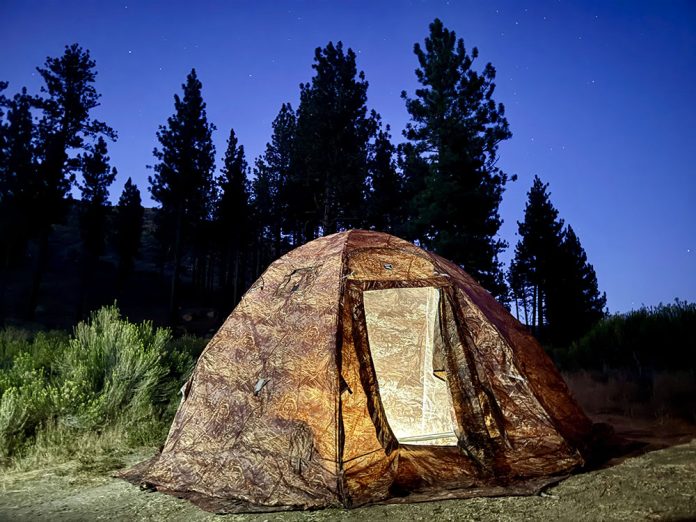

The “4 season tent” label is one of the most abused designations in outdoor gear. Walk through any camping retailer or scroll any gear site and you’ll find three-season tents with reinforced corners calling themselves four-season, single-wall shelters with an extra guy line attachment claiming all-season status, and canvas-look polyester domes promising winter performance they’re not engineered to deliver.
The result is that campers who trust the label show up in October or February conditions and discover the hard way that their shelter was built for spring weekends, not for real cold. This matters for both comfort and safety, a tent that fails structurally at 10°F or floods with condensation in a sustained Sierra snowstorm is a genuine problem, not an inconvenience.
I’ve been camping and overlanding for more than two decades, testing tents across the full spectrum of four-season conditions. That means Sierra snowstorms where the wind sounded like a freight train, Arizona high-desert nights at sustained 35 to 40 mph, and Big Bear campsite scrambles in fading light with a kid asking about dinner.
After five-plus years with the PF Bereg UP-5 as my primary ground tent, I’ve developed a clear sense of what separates a legitimately capable 4 season tent from one that’s wearing the label as a marketing decision. This guide covers those separating factors, why they matter in practice, and what they look like in a tent that delivers on the designation.
Quick Facts:
- Topic: What genuinely separates a 4 season tent from three-season alternatives
- Key factors: Frame alloy and diameter, wall construction, temperature rating methodology, ventilation design, stove jack integration, and structural geometry
- Featured tent: PF Bereg UP-5 ($1,650), double-wall Oxford dome with B95T1 aviation-grade aluminum frame, rated -50°C to +30°C, built-in stove jack
- Who this is for: Overlanders, hunters, and winter campers who need a shelter that performs rather than merely claims four-season capability
- Primary warning sign: A tent labeled 4 season with fiberglass or 6000-series aluminum poles and a single wall of nylon or polyester
- Honest trade-off: Genuine four-season capability adds weight and cost; the UP-5 is ~65 lbs and $1,650, which is appropriate for vehicle-based camps only
10 min read
In This Article
- The “4 Season” Label Problem
- Frame Material: The Most Important Spec Nobody Reads
- Wall Construction and Thermal Performance
- Structural Geometry and Wind/Snow Load
- Ventilation Design in Cold Weather
- Stove Jack Integration: Optional vs. Essential
- How to Read (and Distrust) Temperature Ratings
- The PF Bereg UP-5: How It Meets Each Standard
- Pros and Cons of a Genuine 4 Season Tent
- Final Verdict
- Frequently Asked Questions
The “4 Season” Label Problem

First, no governing body certifies tent season ratings. Manufacturers self-apply the designation, which means the same “4 season tent” label covers everything from a legitimately engineered four-season camping tent with aviation-grade aluminum and double-wall Oxford construction to a polyester dome with one extra stake loop. Buyers have no standard to reference, and product descriptions rarely disclose the specific frame alloy, wall thickness, or seam construction that would allow meaningful comparison.
The pattern that emerges across genuinely four season camping tent designs versus impostors is consistent. Real four-season tents share a specific cluster of engineering choices: 7000-series or equivalent aviation-grade aluminum poles (not 6000-series, not fiberglass), double-wall construction with a defined air gap, geodesic or dome geometry with multiple crossing or hub-and-spoke structural members, sealed seams on both fly layers, and a temperature rating backed by materials that support it, and double wall tent construction. Three-season tents marketed as four-season typically lack two or more of these and rely on marketing language to bridge the gap. The best way to evaluate any tent claiming all-season status is to skip the marketing copy and go straight to the specs, then cross-reference against a framework like the one in this guide. Our ground tent buying guide covers the full category comparison if you’re starting from scratch.
Tent Frame Material: The Most Important Spec Nobody Reads
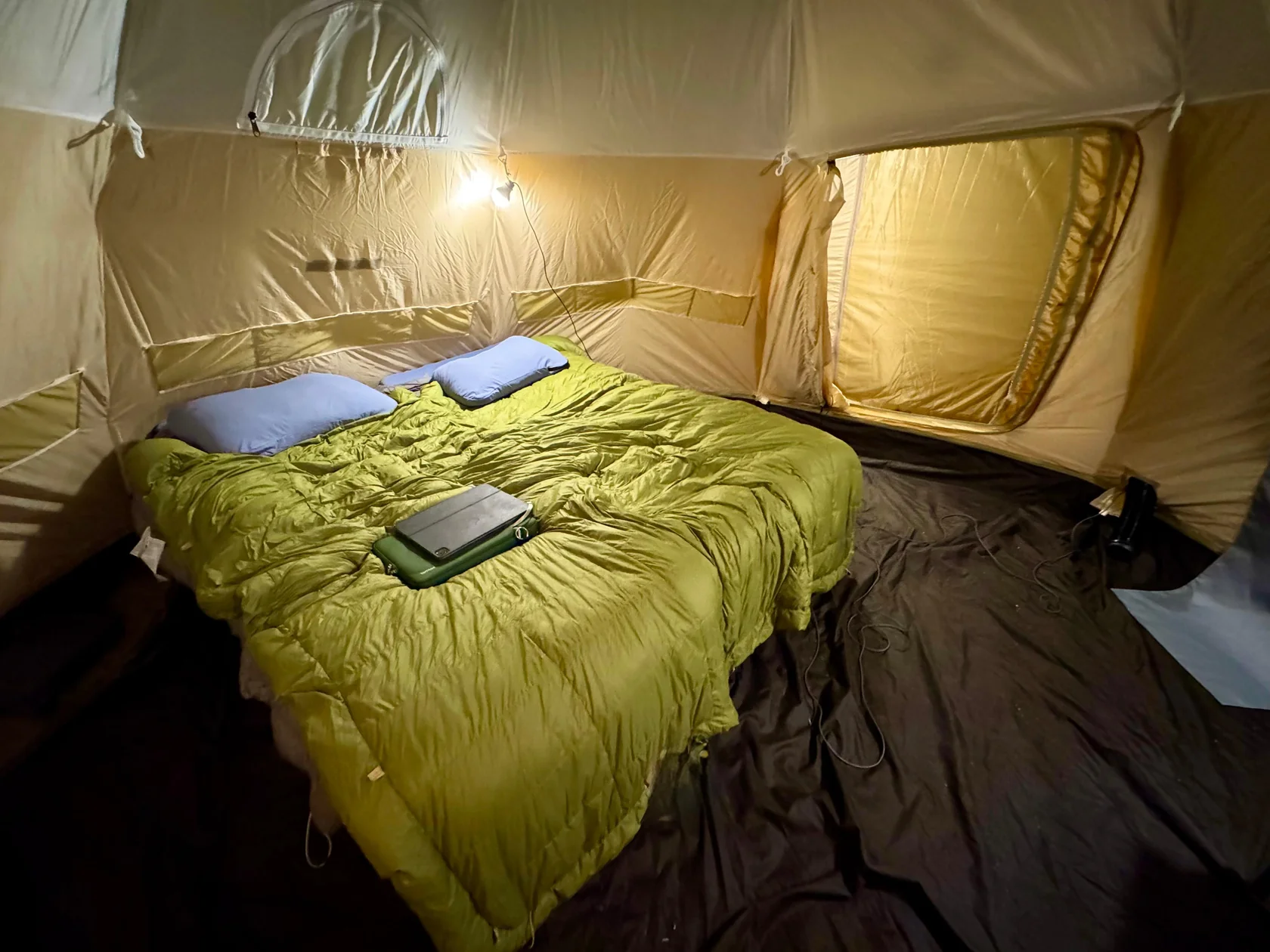
Ultimately, pole material determines how a 4 season tent behaves under the loads that define winter camping: sustained wind from any direction, accumulated snow weight, and repeated freeze-thaw cycling over a multi-day camp. Great fabric on a weak frame fails in the field. Average fabric on a strong frame holds. Tent frame material is the spec most buyers skim and most manufacturers obscure.
Fiberglass: Not for Four-Season Use
Specifically, fiberglass poles are the first disqualifier in a winter camping tent. Fiberglass bends reasonably well at room temperature but becomes brittle in sustained cold, particularly below 20°F. It splinters rather than flexes under impact, and a splintered section under load creates a point failure that cascades quickly. Any tent with fiberglass poles claiming four-season capability is misrepresenting the product. Fiberglass has its place in three-season backpacking tents where weight is the primary constraint, not winter performance.
6000-Series vs. 7000-Series Aluminum
Aluminum poles are the minimum viable standard for serious cold-weather camping, but not all aluminum is equivalent. 6000-series alloys (like 6061) are common in mid-range tents and perform adequately in three-season conditions. However, in sustained cold below 0°F, standard aluminum becomes more brittle and fractures at lower loads than it would at room temperature. In contrast, 7000-series alloys, particularly 7075 and its international equivalents, maintain ductility significantly below freezing and resist the cold-induced brittleness that causes standard aluminum failures in winter camps.
The PF Bereg UP-5 uses B95T1 aluminum, the Russian alloy equivalent to AA7075 (US designation) and ENAW-7075 (EU designation). This is the same alloy class used in aerospace structural components, not a marketing claim, but a verifiable material specification. PF Bereg backs the frame with a 10-year warranty, which reflects genuine confidence in the material’s long-term performance. The rods are 10mm diameter, at the upper end of the range for ground tents, which provides lateral stiffness against horizontal wind load that thinner 8.5mm or 9mm poles lack.
Wall Construction: A Core All Season Tent Feature

A legitimate all season tent feature set, starting with double wall tent construction and a defined air gap between layers, This is not simply two layers of fabric sewn together, that’s a liner, not a double-wall design. The gap between a separate outer fly and an inner layer performs two distinct functions simultaneously: it insulates the inner sleeping surface from ambient cold by creating a thermal buffer, and it allows condensation to migrate outward to the outer fly rather than accumulating on the inner layer where it soaks gear.
Oxford Fabric vs. Nylon and Polyester
The fabric itself also matters alongside the construction method. Nylon and polyester are common in three-season tents: lightweight, packable, and adequate for conditions above freezing. Under sustained cold and UV exposure, thin nylon delaminations from its PU coating faster than heavier Oxford weaves. Oxford fabric, named for its distinctive basket weave, is significantly denser and more abrasion-resistant. It holds its PU waterproofing impregnation longer under repeated freeze-thaw cycling and physical stress.
The UP-5 uses Oxford 300 with PU 4000 waterproofing on the outer fly and Oxford 210 with PU 2000 on the inner layer. PU 4000 on the outer fly is exceptional, most three-season tents ship with PU 1500 to PU 2000. In practice, this means the outer fly resists moisture penetration at higher hydrostatic pressure than most alternatives and maintains that resistance longer before a DWR refresh is needed. After five-plus years of Sierra snowstorms, Wyoming wind and rain, and packed-campground summer humidity, the Oxford outer fly has not developed the slow weeping that signals PU delamination in lower-rated fabrics.
Seam Sealing on Both Layers
A genuine four-season camping tent seals seams on both fly layers, not the outer alone. In a hard rain or multi-day snow melt, unsealed inner fly seams wick moisture into the sleeping space regardless of how well the outer fly performs. Single-layer seam sealing is a cost-reduction decision, not a design choice, and it represents a meaningful performance gap in sustained wet conditions. The UP-5’s seams are sealed throughout both Oxford layers, which is consistent with its overall construction standard and consistent with the zero seam failures observed across five-plus years of field use. For detail on how Oxford double-wall construction compares to canvas in heat retention and seam performance, our canvas wall tent buying guide covers the trade-offs.
Buy Direct From PF Bereg
PF Bereg UP-5: A 4 Season Tent That Actually Is One
B95T1 aviation-grade 10mm aluminum frame, Oxford 300/210 double-wall construction with sealed seams, built-in stove jack, rated -50°C to +30°C. Backed by a 10-year frame warranty.
Structural Geometry and Wind/Snow Load
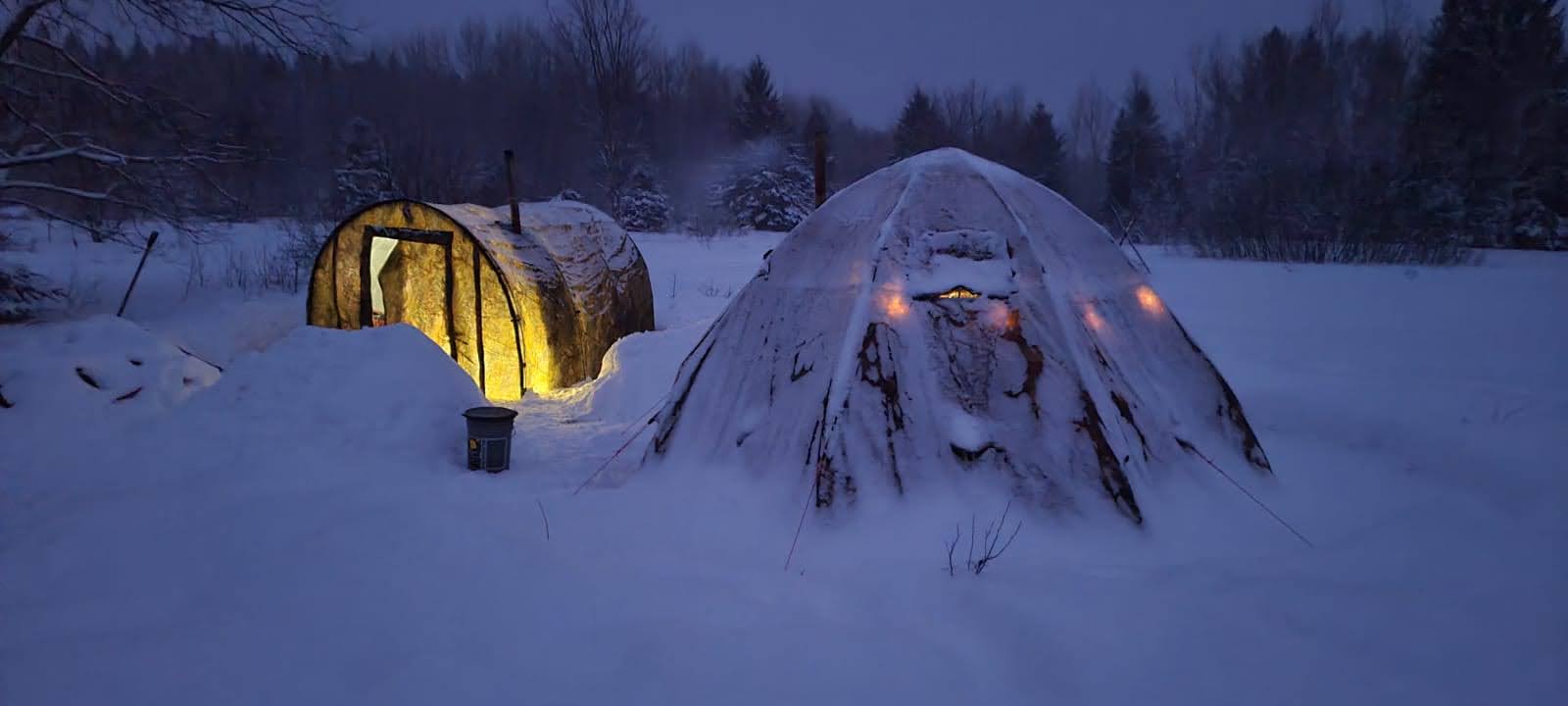
Beyond material choices, tent geometry determines how wind and snow load are distributed across the structure. This is not an aesthetic consideration, it is an engineering one. A tent with large vertical wall sections acts as a sail in wind: pressure loads the surface, transfers force to the pole joints, and eventually finds the weakest connection point. Geodesic and dome geometries redirect that force along curved surfaces and distribute it across multiple structural members rather than concentrating it at two crossing points.
Snow load also compounds the wind problem. A flat or low-angle roof section accumulates snow rather than shedding it. Specifically, accumulated snow applies downward compressive load to the pole structure, a load type for which most tent designs are under-engineered. Dome geometry with sufficient curvature sheds snow by allowing it to slide off the curved surface before accumulation reaches critical mass. This is precisely why high-altitude mountaineering tents are universally dome or geodesic designs and why no serious winter camping tent uses a cabin layout.
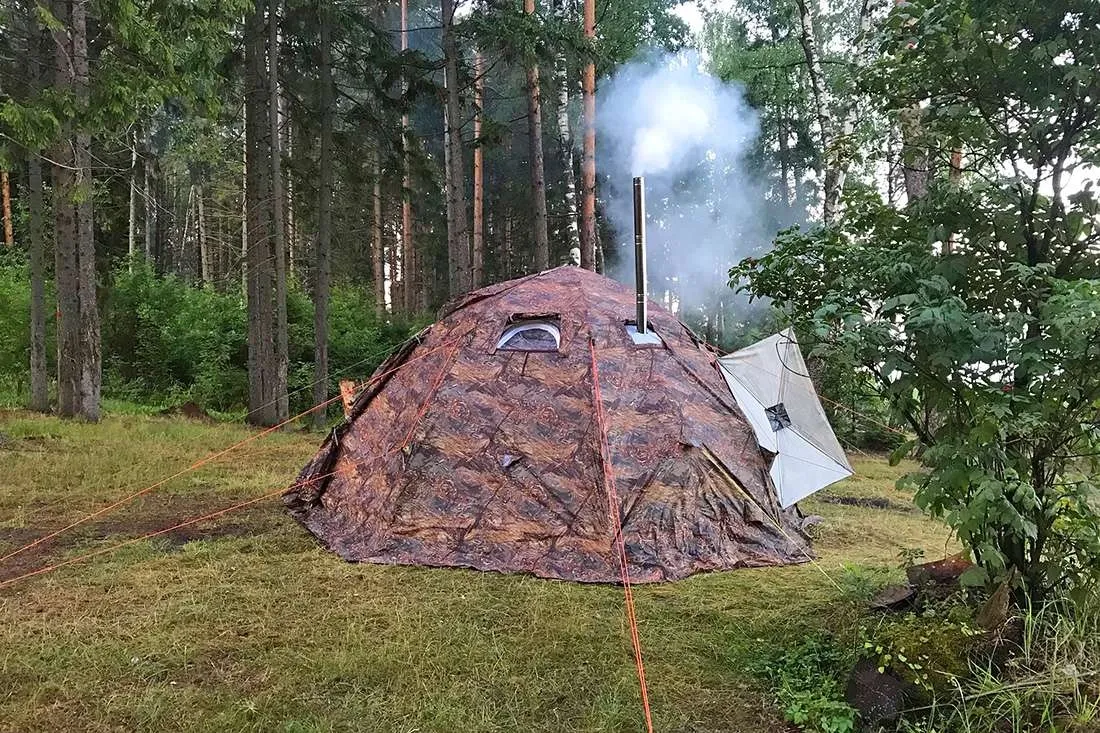
The UP-5’s dome-and-umbrella frame uses eight B95T1 aluminum rods radiating from a central hub. Wind load from any direction is distributed simultaneously across all eight legs rather than concentrated at two crossing poles. In conditions with gusts sounding like a freight train, the UP-5 holds its shape and seal without the visible oscillation common in two-pole dome tents under the same load. The dome curvature also sheds snow effectively enough that accumulated weight has never required manual clearing in any winter camp I’ve run with this shelter over five-plus years.
Ventilation Design in Cold Weather
Counterintuitive as it seems, ventilation ranks among the most critical all season tent features in cold conditions. A sealed tent traps moisture from breath and body heat, which saturates the interior air and causes heavy condensation on the tent wall regardless of construction quality. On a cold night, two adults in a fully sealed tent generate enough moisture to soak gear by morning even in a well-constructed double-wall design. Ventilation removes that moisture before it reaches saturation.
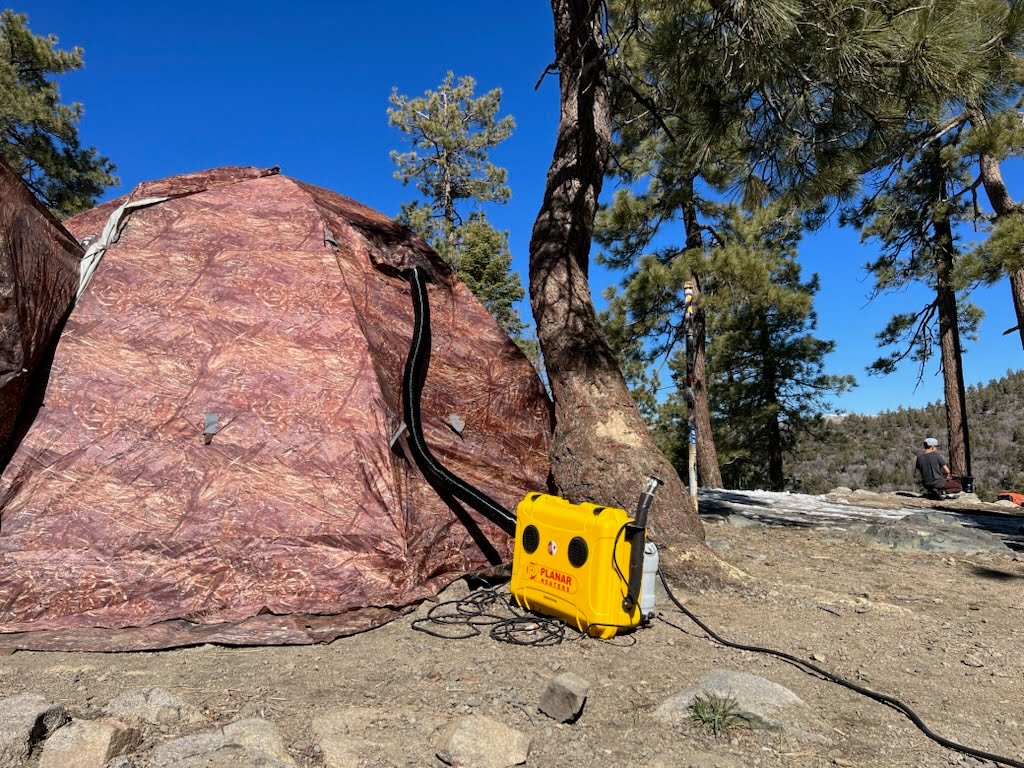
Specifically, effective four-season ventilation uses a convection loop: a low-level vent allows cool dry outside air to enter near the floor, it warms as it rises and picks up interior moisture, and exits through a ceiling vent near the peak. This continuous exchange moves moisture out without requiring wind to drive it and keeps the interior drier without requiring campers to open a door in freezing conditions. The UP-5 includes dedicated bottom ventilation openings and a ceiling vent specifically designed for this airflow pattern. When a wood stove or diesel heater is running through the stove jack, the chimney effect of hot air rising through the pipe accelerates the convection loop and dramatically improves interior air quality and dryness simultaneously.
In practice, five-plus years of running the UP-5 in winter conditions including a series of Sierra snowstorm nights where the combination of a diesel heater and the double-wall air gap kept interior surfaces dry while outside temperatures dropped into the teens, condensation on the inner layer has been negligible compared to any single-wall tent used in comparable conditions. The ventilation design, not luck, is what produces that result. Our hot tent wood stove buying guide covers how stove selection affects interior air quality and convection in detail.
Stove Jack Integration: Optional vs. Essential in a Winter Camping Tent

A stove jack is not a universal requirement in a 4 season tent, but its presence or absence defines the type of winter camping the shelter supports. Without a stove jack, a winter camping tent relies on sleeping bag ratings and insulation layers to keep occupants warm, the shelter manages wind and precipitation but not temperature. With a purpose-built stove jack, the tent becomes a heated space capable of sustaining comfortable temperatures well below 0°F, changing the entire character of cold-weather camping.
This distinction matters practically because a stove jack must be factory-integrated to function properly and safely. In contrast, aftermarket patches added to standard tents are positioned where the installer chooses, not where the chimney effect is most efficient, and the heat-resistant fabric quality varies widely. A factory-integrated jack is positioned in the upper dome section where physics places the exit point for rising hot combustion gases, uses purpose-built heat-resistant fabric at the pipe contact point, and includes a metal insert allowing diameter selection for different stove pipes.
The UP-5’s built-in stove jack is rated to 1,200 degrees Celsius at the pipe contact zone, with a selectable-diameter metal insert. In five-plus years of use with both wood-burning stoves and diesel heaters, the heat-resistant collar shows no degradation at the transition point where it meets the Oxford fly fabric. With a diesel heater running at moderate output on nights in the low 20s Fahrenheit, the interior stays warm enough to sit without a sleeping bag, a categorically different experience from a cold tent at the same ambient temperature. That shift is what drives campers toward stove-jack four-season camping tent designs once they’ve experienced the alternative. For compatible stove options, our hot tent wood stove guide covers pairing considerations in detail.
How to Read (and Distrust) Temperature Ratings
Temperature ratings on tents are unregulated and manufacturer-defined, similar to the season labeling problem. A tent claiming comfort to -30°F with a single layer of 70D nylon and a 6000-series aluminum frame is not a -30°F tent. That rating is aspirational marketing, not a performance specification.
Evaluating a temperature rating means checking whether the materials support the claimed performance. Genuine ratings to -50°C require: a frame alloy maintaining ductility below -40°F (7000-series minimum), double-wall construction with an air gap (single-wall fabrics lose heat too quickly to maintain stated ratings in practice), waterproof coatings rated high enough to resist condensation-driven moisture at sustained cold, and sealed seams on both layers. Tents meeting all four criteria at -50°C is a genuinely different product from a tent using that rating as a label while cutting corners on any one of them.
The UP-5’s -50°C rating is supported by verifiable materials: B95T1 aluminum (equivalent to AA7075, rated for structural use well below -60°C), Oxford 300 PU 4000 outer fly and Oxford 210 PU 2000 inner fly with double-wall construction, and sealed seams throughout. Field experience across five-plus winters confirms the rating is not aspirational: interior temperatures with a small diesel heater running at moderate output hold comfortably in the high 40s to low 50s Fahrenheit on nights where outside temps are in the teens, without the condensation or structural issues that would indicate the tent is working near its limits.
The PF Bereg UP-5: How It Meets Each Four-Season Standard
| 4 Season Tent Standard | Minimum Requirement | PF Bereg UP-5 |
|---|---|---|
| Frame alloy | 7000-series aluminum minimum; no fiberglass | B95T1 / AA7075 aviation-grade; 10mm diameter |
| Frame warranty | Multi-year manufacturer backing | 10-year frame warranty from PF Bereg |
| Wall construction | Double-wall with defined air gap | Oxford 300 PU 4000 outer + Oxford 210 PU 2000 inner |
| Seam sealing | Both fly layers sealed | Factory-sealed seams throughout outer and inner fly |
| Structural geometry | Dome or geodesic; no vertical wall sections | 8-rod hub-and-spoke dome; distributes load across all 8 legs |
| Ventilation | High and low vents for convection loop | Ceiling vent + bottom vents + stove jack chimney effect |
| Temperature rating | Materially supported to at least -20°C | Rated -50°C to +30°C; materials support the rating |
| Stove jack | Factory-integrated, heat-resistant 600°C+ if included | Built-in, rated 1,200°C, selectable-diameter metal insert |
| Interior volume | Full standing room for multi-day use | ~14.4 ft diameter, 7+ ft center height |
| Setup speed | Practical in cold or low-light conditions | Under 60 seconds, umbrella-frame deployment |
Engineered for Every Season
PF Bereg UP-5: Verified Four-Season Performance
Five-plus years of field-tested performance across Sierra snowstorms, Wyoming high-desert wind, and sub-zero nights. B95T1 frame, double-wall Oxford, 1,200°C stove jack, 10-year warranty.
Pros and Cons: All Season Tent Features That Matter Most
Pros
- Aviation-grade 7000-series aluminum frame maintains ductility below 0°F, where fiberglass and 6000-series aluminum become fracture-prone under cold-induced brittleness
- Double-wall construction with an air gap keeps the inner sleeping surface above the dew point longer, producing dramatically drier mornings than single-wall tents in identical conditions
- Dome or geodesic geometry distributes wind load across multiple structural members simultaneously, eliminating the single-point failure mode present in two-pole designs
- Sealed seams on both fly layers prevent moisture penetration through the inner layer in sustained rain or snow melt regardless of how well the outer fly performs
- Factory-integrated stove jack converts the shelter from a weather barrier into a heated space on cold nights, extending practical camping temperatures to well below 0°F
- High-rated PU waterproofing (PU 4000 on the UP-5 outer fly) maintains hydrostatic resistance significantly longer than the PU 1500-2000 common in three-season alternatives
- Sub-60-second umbrella-frame deployment on the UP-5 means the tent reaches structural integrity before conditions deteriorate, critical when weather turns fast
Cons
- Weight: the UP-5 at ~65 lbs is a vehicle-based camp shelter exclusively; genuinely capable four-season camping tent designs are not light, and any claiming both four-season performance and ultralight weight is almost always overstating one or both
- Cost: the UP-5 at $1,650 reflects the material quality and manufacturing standard required for the performance it delivers; meaningfully cheaper alternatives claiming equivalent performance should be scrutinized
- Insulated floor ($380) and PVC floor ($380) are sold separately, which is worth noting for campers who need full ground insulation from sub-zero frozen ground
- Sourcing directly from PF Bereg means international shipping timelines rather than same-day retail availability
- The large dome footprint (~14.4 ft diameter) requires a substantial flat area and a full stake-and-guy-line setup to perform at its structural best in serious weather
Final Verdict
A 4 season tent earns the designation through a specific cluster of engineering decisions, not a label applied by a marketing team. Aviation-grade 7000-series aluminum poles, double-wall construction with a defined air gap, dome or geodesic structural geometry, sealed seams on both layers, convection-based ventilation, and a factory-integrated stove jack for heated shelter use are the features that separate a genuine all season tent from a spring-weekend dome with extra guy lines.
The PF Bereg UP-5 meets every one of those standards with verifiable materials: B95T1 aluminum equivalent to AA7075, Oxford 300 PU 4000 outer and Oxford 210 PU 2000 inner with a proper air gap, eight-rod hub-and-spoke dome geometry, sealed seams throughout, ceiling and floor vents, and a 1,200°C factory stove jack. After five-plus years of field use across conditions from Sierra snowstorms to Wyoming freight-train wind has produced zero structural failures, no zipper breakdowns, no seam blowouts, and mornings where the sleeping gear is dry and the interior is warm. Those results are what a genuine winter camping tent delivers, not because the label says so, but because the engineering underneath supports it.
Campers who need that performance will find the UP-5 at $1,650 a serious long-term investment. Those who primarily camp in mild conditions three or four times a year, a quality three-season dome at a fraction of the price is the honest recommendation. Overall, four-season capability is worth paying for when the conditions demand it, and worth skipping when they don’t.
Ready to Buy?
Check Today’s Price on the PF Bereg UP-5
Order direct from PF Bereg with a 10-year frame warranty. Available in the UP-5 and UP-5 Deluxe with four arched entrances.
Frequently Asked Questions
What is the difference between a 3 season and a 4 season tent?
Three-season tents are designed for spring, summer, and fall conditions, typically above freezing, with moderate rain and wind. A 4 season tent is engineered for winter conditions: sustained snow load, sub-zero temperatures, high wind from any direction, and multi-day cold exposure. The structural differences are pole alloy (fiberglass or 6000-series aluminum versus aviation-grade 7000-series), wall construction (single-layer versus double-wall with air gap), geometry (simpler two-pole designs versus dome or geodesic), and the presence or absence of a stove jack for heated shelter use.
Is the PF Bereg UP-5 a true 4 season tent?
Yes, verifiably. The UP-5 uses B95T1 aluminum equivalent to AA7075, which maintains ductility well below -40°F. Its double-wall Oxford construction (Oxford 300 PU 4000 outer, Oxford 210 PU 2000 inner) creates a thermal air gap with sealed seams on both layers. Dome-and-umbrella geometry distributes wind and snow load across all eight frame legs. Its built-in stove jack is rated to 1,200°C. Five-plus years of field use across Sierra snowstorms and Wyoming high-desert winter conditions confirms the engineering. The -50°C to +30°C temperature rating is supported by its materials.
What frame material should a 4 season tent have?
A genuine four season camping tent requires 7000-series aluminum or equivalent aviation-grade alloy, specifically materials like AA7075, B95T1, or ENAW-7075. These alloys maintain ductility below 0°F, where 6000-series aluminum becomes more brittle and fiberglass splinters. No serious winter camping tent uses fiberglass poles. Rod diameter also matters: 10mm rods provide significantly more lateral stiffness against wind load than the 8.5-9mm poles common in three-season designs.
Do I need a stove jack in a 4 season tent?
Not necessarily, but it changes what four-season camping looks like. Without a stove jack, a winter camping tent relies on sleeping bag ratings and insulation layers to manage body temperature, the shelter handles wind and precipitation but not air temperature. With a factory-integrated stove jack and a compatible stove, the interior stays warm enough to sit without a sleeping bag at temperatures well below 0°F. Hunters, overlanders, and anyone running extended winter camps will find a stove jack converts the shelter from a survival tool into a comfortable basecamp. Occasional cold-weather camping above 20°F makes it useful but not essential.
How do I know if a tent’s temperature rating is honest?
Cross-reference the stated rating against the materials. Tents claiming -40°F comfort with 6000-series aluminum poles and a single layer of 70D nylon are not engineering a -40°F shelter, they’re applying a marketing label. Credibly rated shelters at -40°F or below use 7000-series aluminum or equivalent, double-wall construction with an air gap, waterproof coatings rated PU 3000 or higher on the outer fly, sealed seams on both layers, and a dome or geodesic frame geometry. All of those features should be verifiable in the product specification, not implied by the label alone.
Just so you know, some of the cool stuff we mention comes with affiliate links, meaning we earn a commission if you buy (no extra charge to you!). Plus, we occasionally feature sponsored content, but rest assured, we only shout out products we genuinely stand behind.