



Quick Facts:
- Topic: Free dispersed camping in Nevada for off-roaders and overlanders
- Spots covered: 13 free areas across 4 regions
- Land managers: BLM Nevada and the Humboldt-Toiyabe National Forest
- Typical cost: $0 on most BLM and national forest land
- Permits: None for dispersed camping; some monuments and parks charge fees
- Stay limit: 14 days on BLM and forest land
- Vehicle needed: Graded gravel reaches many sites; high-clearance or 4WD opens the rest
- Best season: Low desert in fall through spring; high country in summer
- Heads up: Carry all your water, and expect Stage 1 fire restrictions in 2026
- Best for: Overlanders who want solitude, dark skies, and self-reliant desert travel
11 min read
In This Guide
- Dispersed Camping in Nevada: What Off-Roaders Need to Know
- Rules and Permits for Dispersed Camping in Nevada
- Water, Heat, and Fire: Conditions for Dispersed Camping in Nevada
- The Northwest: Black Rock Desert and Massacre Rim
- The Northeast: the Ruby Mountains and Jarbidge
- Central Nevada: the Loneliest Road and the Toiyabe
- Southern Nevada: Las Vegas, Gold Butte, and the Spring Mountains
- Nevada State and Agency Resources
- Which Nevada Spot Fits Your Rig and Season?
- Final Verdict
- Frequently Asked Questions
Dispersed Camping in Nevada: What Off-Roaders Need to Know
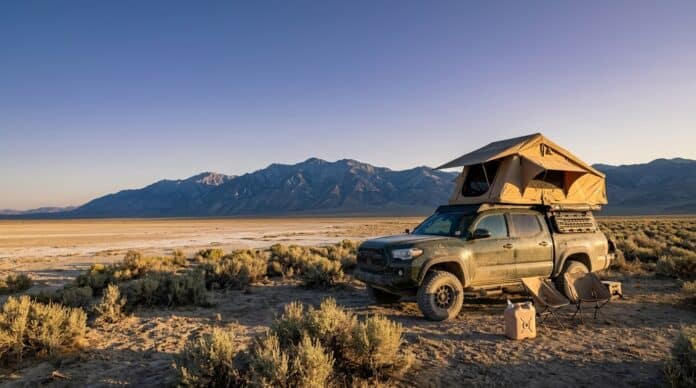
Dispersed camping in Nevada is free across tens of millions of acres, because roughly 80% of the state is public land. Most of it is BLM ground, with the huge Humboldt-Toiyabe National Forest crowning the mountain ranges. For an overlander, few states offer this much empty space, this much solitude, or skies this dark.
This guide covers 13 genuinely free areas across four regions. Every spot below rests on BLM or national forest land, so the camping itself costs nothing. We graded each by road difficulty, so you know where a stock crossover works and where you want high-clearance or 4WD. If you have used our dispersed camping in Utah picks, Nevada feels emptier, drier, and more remote.
Nevada also punishes the unprepared, so we lay out the risks plainly. Water is the real limit here, since this is the driest state in the country and most sites have none. Summer heat in the low desert turns dangerous, several famous places charge fees, and fire restrictions cover the state in 2026. We flag every catch, because the reward for dispersed camping done right here is the emptiest free country in the West.
Rules and Permits for Dispersed Camping in Nevada
The rules for dispersed camping in Nevada stay simple, and the freedom is real. On BLM and national forest land, dispersed camping is free and needs no permit or reservation. Two limits matter most: the stay cap and the water you carry. Here is the quick reference for free camping in Nevada on federal land.
| Rule | Details |
|---|---|
| Cost | $0 for dispersed sites on BLM and national forest land |
| Permit or reservation | None required for dispersed camping |
| Stay limit (BLM) | 14 days within a 28-day period |
| Stay limit (national forest) | 14 days within a 30-day period |
| Water | Carry at least one gallon per person per day; most sites have none |
| Campfires (2026) | Banned under Stage 1 restrictions; propane and liquid-fuel stoves allowed |
| Camp location | On bare, already-used ground; follow each agency’s map of open routes |
| Waste | Pack out all trash; bury human waste 6 to 8 inches, 200 feet from water |
Beyond those basics, camp only on durable ground along roads open to vehicles, and pull the agency’s travel map before you commit to a spur. Several headline destinations are not free, so know the difference before you arrive. Red Rock Canyon, Valley of Fire State Park, Great Basin National Park, and Lake Mead all charge fees. Following leave no trace principles keeps this land open, and our guide on how to find free camping walks through scouting a legal site.
Water, Heat, and Fire: Conditions for Dispersed Camping in Nevada
Three forces govern dispersed camping in Nevada: water, heat, and fire. Nevada is the driest state in the country, so water is the first thing you plan and the last thing you skimp on. Heat then decides your season, and fire decides your campsite rules. Read all three correctly and the state opens up.
Water and heat come first
Most dispersed sites here have no water and no services, with towns 50 to 150 miles apart. So carry everything, and pack at least one gallon per person per day, more when you hike or the wind blows hot. Low-desert areas like Gold Butte and the Black Rock playa average well over 100 degrees in summer, which makes them a fall-through-spring destination. For cool summer camping, climb instead to the Ruby Mountains, the Toiyabe crest, or the Spring Mountains.
Fire, snow, and the seasons
Fire restrictions cover the state in 2026, with Stage 1 orders across BLM and forest land through the summer. Under those rules, wood and charcoal fires get banned even at dispersed sites, and only a permitted gas stove stays legal. Snow then closes the high country from late fall into early summer, so the mountains run June through October. Two hazards deserve extra caution: the Black Rock playa turns to deep, vehicle-trapping mud when wet, and southern Nevada floods fast during the July-to-September monsoon. So watch the sky, camp out of washes, and never drive the playa damp.
The Northwest: Black Rock Desert and Massacre Rim
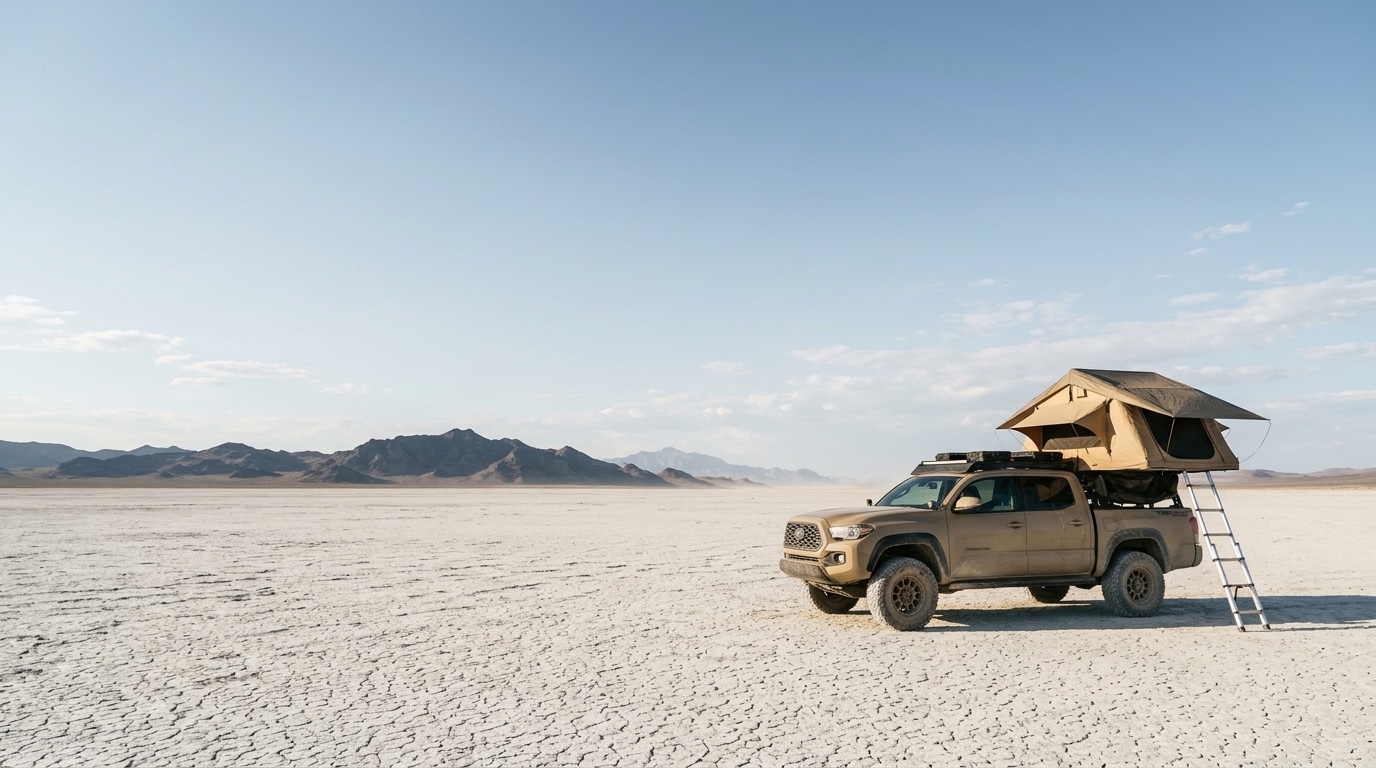
The northwest corner delivers some of the darkest dispersed camping in Nevada, across big and empty country. Both areas below sit on remote BLM land, and both reward self-reliance over comfort. Fall through spring is the window, since the low playa bakes in summer.
Black Rock Desert playa
The Black Rock playa offers surreal middle-of-nowhere camping on a cracked alkali flat, with hot springs and historic 4WD routes nearby. When bone dry, the playa edge takes 2WD vehicles, while the interior and the High Rock Canyon route demand high-clearance and 4WD. One rule overrides all others here: never drive the playa when wet, because vehicles sink to the frame. Burning Man closes large sections in late August and early September, and the High Rock Canyon road closes from February into May for wildlife. Otherwise you get total-dark skies and deep quiet.
Massacre Rim Dark Sky Sanctuary
Far north of Reno, Massacre Rim holds one of the darkest certified night skies in the country. Free BLM camping sits on the land along the state routes near the sanctuary. Graded dirt gives way to high-clearance ground, and 4WD becomes wise after any weather. Plan on late spring through fall; snow and mud shut the high desert down in winter. Above all, this place is remote, with no water, services, or cell signal, so self-recovery is essential.
The Northeast: the Ruby Mountains and Jarbidge
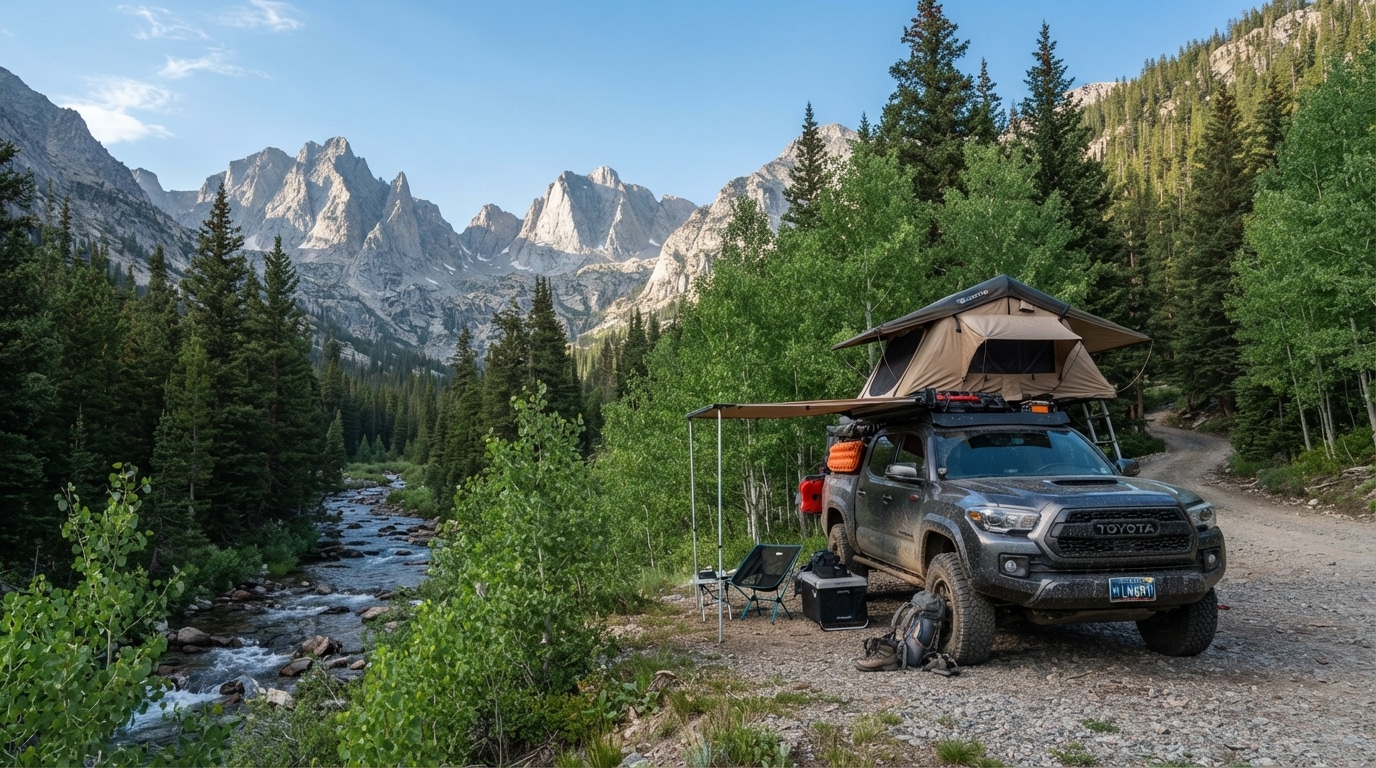
Head northeast and dispersed camping in Nevada turns alpine, anchored by the Humboldt-Toiyabe National Forest. These three areas peak in summer, since snow gates the high roads for much of the year. All of them charge nothing for dispersed camping, though the developed campgrounds nearby do.
Ruby Mountains and Lamoille Canyon
The Ruby Mountains near Elko earn their nickname as Nevada’s Alps, with a glacial canyon, alpine lakes, and granite peaks. Free dispersed sites line the forest roads off the paved Lamoille Canyon byway, and most want high-clearance. The season runs roughly late June through October, since sites above 7,000 feet stay snowbound in winter. Skip the developed Thomas Canyon campground, which charges a fee, and use the dispersed forest roads instead. This range is the base camp for the Ruby Crest Trail.
Jarbidge
In the remote northeast corner, Jarbidge ranks among the most isolated places in the lower 48. Free dispersed camping sits on forest roads near the tiny historic town and the Jarbidge Wilderness edge. A long graded approach turns to high-clearance and 4WD ground, especially after rain. Summer is the only reliable window, because the access roads stay snowbound much of the year. Fuel up and carry everything first, since services sit a long way off.
Angel Lake and the East Humboldt Range
Near Wells, a dramatic switchback byway climbs to Angel Lake, a glacial cirque at about 8,400 feet. Free dispersed spurs branch off the byway on forest roads, and they reward high-clearance. The developed Angel Lake campground charges a fee, so aim for the dispersed sites outside it. Its season is short and snow-gated, yet the payoff is a quick, cool escape from the I-80 heat.
Central Nevada: the Loneliest Road and the Toiyabe
Central Nevada is overland country at its purest, stitched together by US-50, the self-styled Loneliest Road. Free camping spreads across BLM valleys and forest ranges the whole way. Most sites suit fall and spring, while the high peaks hold summer.
US-50 Loneliest Road valleys
The BLM valleys flanking US-50 between Fallon and Ely offer endless roadside solitude, ghost towns, and dark skies. Graded gravel pull-offs take 2WD rigs when dry, while canyon and mountain spurs want high-clearance or 4WD. Spring and fall feel best; the valley floors bake in summer and the passes hold snow in winter. Handy resupply in Austin, Eureka, and Ely breaks up the long fuel gaps. This corridor makes a classic cross-state overland route.
Arc Dome and the Toiyabe crest
The Toiyabe Range in central Nevada holds Arc Dome at 11,788 feet and a 62-mile crest trail, with no permit or fee for dispersed camping. Free dispersed sites sit along the rough forest roads to the western trailheads, and they demand high-clearance to 4WD. Summer into early fall is the season, since the high country stays snowbound in winter. Deep isolation is the whole appeal, so carry recovery gear and plenty of water.
Basin and Range National Monument
Near Alamo, the Basin and Range National Monument protects 704,000 acres of empty basins and ranges. The BLM confirms free camping with a 14-day limit and no entrance fee. Graded dirt roads reach the monument, while interior routes want high-clearance and 4WD, and they wash out after rain. Fall through spring beats the high-desert summer heat. Solitude and dark skies define this remote landscape, so navigation and self-reliance are essential.
Great Basin National Park vicinity
Great Basin National Park itself charges campground fees and bans free roadside dispersed camping, so the free option sits on the surrounding public land. Ward Mountain forest roads and the free Sacramento Pass BLM area near Ely make solid base camps. Graded gravel reaches both, with high-clearance for the rougher forest spurs. From here you tour Wheeler Peak, Lehman Caves, and the bristlecone pines without paying park camping fees. Summer and the shoulder seasons work best at elevation.
Southern Nevada: Las Vegas, Gold Butte, and the Spring Mountains
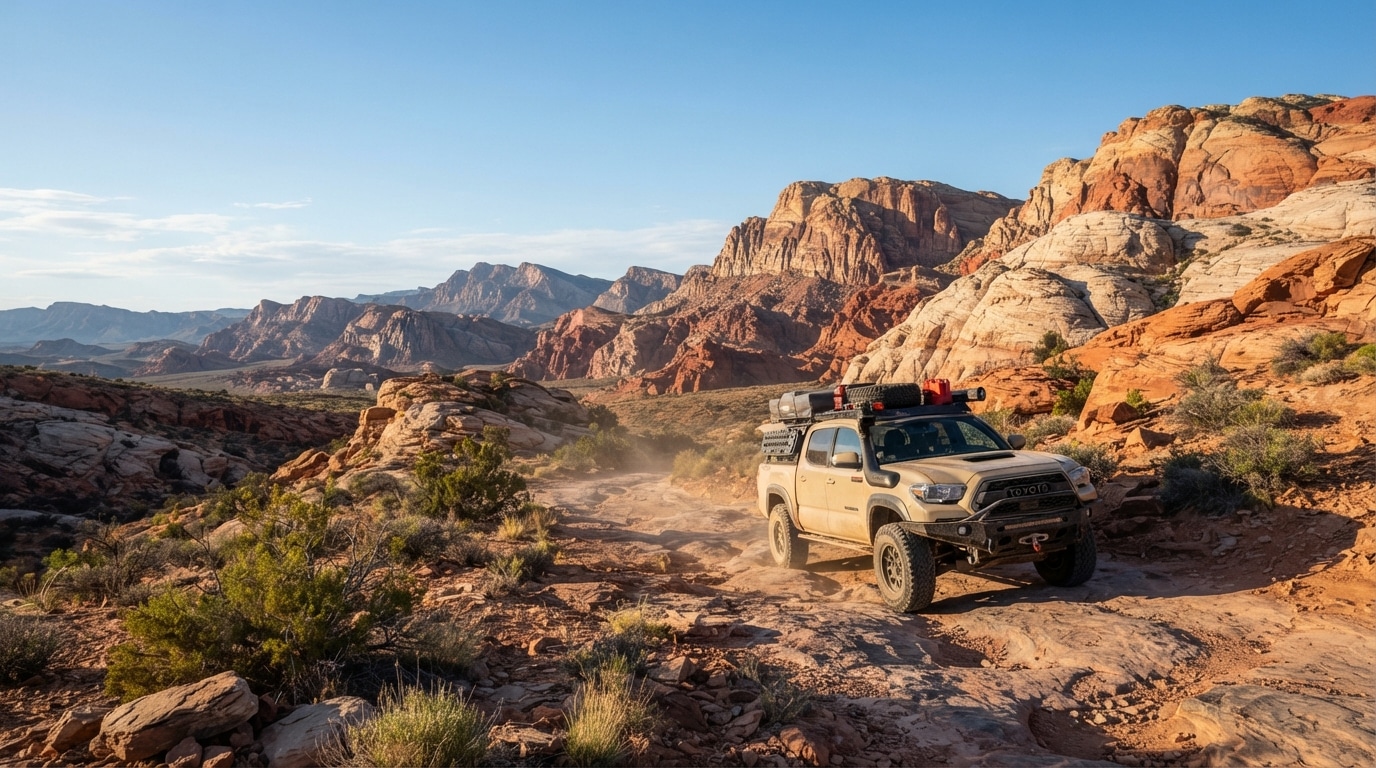
Southern Nevada packs red rock, desert monuments, and cool mountains within reach of the Strip. Dispersed camping near Las Vegas is genuinely good once you leave the fee areas behind. The low desert runs fall through spring, while the Spring Mountains give a summer escape.
Gold Butte National Monument
Near Mesquite, Gold Butte National Monument offers free primitive camping among red sandstone, petroglyphs, and 300 miles of backcountry routes. Pavement ends at Whitney Pocket, after which the monument roads demand high-clearance and 4WD. Fall through spring is the only comfortable window, because the low desert turns brutal in summer. Roads flood and erode after rain, so check the forecast and carry all your water. This is a genuine 4WD adventure within reach of Las Vegas.
Logandale Trails
North of Logandale, a BLM area holds a large network of OHV and jeep trails in red-and-white sandstone. Free dispersed camping near Las Vegas rarely comes this close to town, and graded access takes most rigs when dry. High-clearance helps on the sandy interior spurs. Fall through spring is the window, since summer heat is severe. The trails and the nearby scenery make this an easy weekend base.
Valley of Fire BLM dispersed
Right outside the north entrance of Valley of Fire State Park, free BLM camping sits on public land within a couple of miles. Do not confuse it with the state park itself, which charges a fee. The access road is rough, so bring high-clearance and use 4WD on deeper spurs. Fall through spring beats the heat. The reward is free red-rock camping beside one of Nevada’s most scenic parks.
Spring Mountains and Mount Charleston
Cooler and pine-forested about 45 minutes from the Strip, the Spring Mountains give a genuine escape from desert heat. Mount Charleston crowns the range. Free dispersed camping is allowed outside developed areas at spots like Lovell Canyon and Cold Creek, at least a mile from campgrounds. A major flood-repair closure in the Kyle Canyon area runs through May 2027, so check current orders first. High-clearance helps on the spurs. Fire restrictions here are common in warm months, so plan on stoves only.
Nevada State and Agency Resources
Conditions for dispersed camping in Nevada change fast, so bookmark the official sources before any trip. Each link below resolves to the agency running the land, the road, or the fire rules, and together they cover restrictions, closures, and heat and water warnings.
| Resource | Use it for | Link |
|---|---|---|
| BLM Nevada | Statewide BLM rules, districts, dispersed camping | blm.gov |
| BLM Gold Butte Monument | Gold Butte access, road and heat warnings | blm.gov |
| Humboldt-Toiyabe National Forest | Rubies, Spring Mountains, Jarbidge, Toiyabe | fs.usda.gov |
| Nevada Fire Info | Current fire restrictions and closures map | nevadafireinfo.org |
| InciWeb | Active wildfire incidents and perimeters | inciweb.wildfire.gov |
| NDOT / Nevada 511 | Real-time road conditions and closures | nvroads.com |
| Recreation.gov | Reservations for developed sites and permits | recreation.gov |
| Nevada State Parks | Developed paid alternatives and alerts | parks.nv.gov |
| Nevada Dept. of Wildlife | Wildlife areas, hunting, and fishing | ndow.org |
| Great Basin Coordination Center | Regional fire situation and preparedness level | gacc.nifc.gov |
From the 4wdTalk Garage
Nevada rewards a rig built for range and heat, because the distances between water and fuel are the longest in the West. For graded gravel like the US-50 valleys or the Massacre Rim approach, a high-clearance crossover or a stock truck handles it, and airing down to around 20 psi calms the washboard. On Gold Butte, the Toiyabe roads, and the Black Rock interior, you want real 4WD, a low range, and full recovery gear. Sand, silt, and playa mud each strand the underprepared in different ways.
Two habits keep a Nevada trip safe. First, treat water as your primary fuel, since most sites have none and the desert pulls it out of you fast. Pack extra jugs, and turn back early if you run low. Second, respect the playa and the sky. Never drive Black Rock when it is damp, camp on high ground away from washes during the monsoon, and carry a paper map, because cell signal disappears for hundreds of miles. Air back up on pavement, and you leave these routes open for the next rig.
Which Nevada Spot Fits Your Rig and Season?
Your best dispersed camping in Nevada comes down to clearance and season. Start with clearance. If you drive a stock crossover or a 2WD truck, you have solid dry-weather options. Aim for the US-50 pull-offs, the dry Black Rock playa edge, the Lamoille byway spurs, or the graded approaches to Basin and Range.
If you run 4WD with low range and recovery gear, the best of the state opens up. Gold Butte, the Toiyabe crest roads, the Black Rock interior, and Jarbidge reward a capable setup with deep solitude. Save the clay and playa routes for dry spells, because rain turns them dangerous.
Then match the season. During fall through spring, drop to the low desert at Gold Butte, Logandale, the Valley of Fire BLM land, and Basin and Range. From June through October, climb high to the Ruby Mountains, the Toiyabe, or the Spring Mountains, where the air stays cool. Wherever you go, carry all your water and check the current fire restrictions.
Final Verdict
Nevada is the most underrated free-camping state in the West, and the off-road angle is exactly why. Nowhere else pairs this much empty public land with this little competition, and the dark skies over Massacre Rim and Basin and Range rank with the best anywhere. For overlanders who value solitude and self-reliance, the state delivers trip after trip.
The catch is preparation. You have to carry your own water, read the fire orders, time the desert around the heat, and know which famous places charge fees. People who skip the prep run out of water, get turned around at a fee gate, or bog down on a wet playa. Those who plan around water, heat, and fire get a whole state nearly to themselves.
Value stays the strong suit, since free camping in Nevada costs nothing across every site here. Your real budget is fuel, water, and preparation, and a high-clearance rig widens the options far more than any dollar figure.
Nevada makes a fitting finish to this state-by-state series, with more empty public land than almost anywhere and free dispersed camping in Nevada from the Mojave to the Ruby Mountains. Pair this guide with our nearby free dispersed camping in Arizona roundup, and you have a corner of the desert West to explore for years.
More Free Dispersed Camping Guides by State
Frequently Asked Questions
Is dispersed camping free in Nevada?
Yes. Dispersed camping in Nevada is free on BLM and national forest land, which together cover most of the state, with no permit or reservation. Some monuments, state parks, and recreation areas charge fees, so confirm whether a named site is free dispersed or a paid site before you go.
What is the stay limit for dispersed camping in Nevada?
On BLM land, the limit is 14 days within a 28-day period. The Humboldt-Toiyabe National Forest allows 14 days within a 30-day period. After the limit, you move to a new area. A few developed sites and monuments post their own limits.
Do you need a permit to camp on BLM land in Nevada?
No permit is needed for dispersed camping on BLM land. You should still follow the travel map for open routes and current fire orders. Camp on already-used ground, and remember most sites have no water, so bring your own.
Where is free dispersed camping near Las Vegas?
The best free dispersed camping near Las Vegas sits on BLM land at Gold Butte, Logandale Trails, and the public land right outside Valley of Fire State Park. For a cooler summer option, the Spring Mountains offer free forest camping about 45 minutes from the Strip, though a flood-repair closure affects some areas through 2027.
When is the best time for boondocking in Nevada?
It depends on elevation. The low desert is best from fall through spring, since summer heat there turns dangerous. High country in the Ruby Mountains, the Toiyabe, and the Spring Mountains runs June through October. Boondocking in Nevada rewards matching the region to the season.
Are campfires allowed at dispersed sites in Nevada?
Often not in summer. As of 2026, Stage 1 fire restrictions across the state ban wood and charcoal fires at dispersed sites, and only a permitted gas stove stays legal. Carry a stove, and check the current fire restrictions before every trip.