


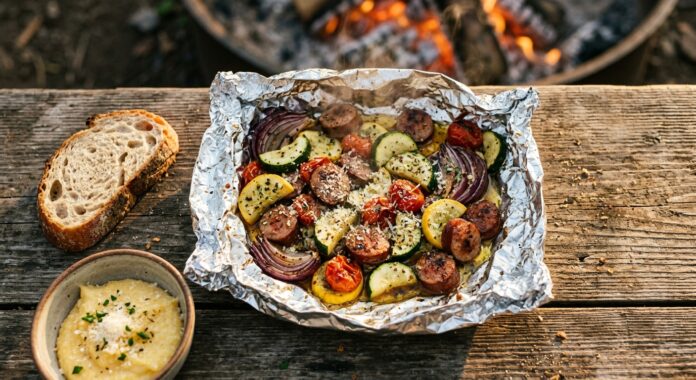

Quick Verdict: Foil packet Italian sausage and veggies pack sliced sausage, zucchini, squash, red onion, and cherry tomatoes into one sealed packet with garlic and Italian seasoning. First, slice everything at home and bag it cold. Then tent-fold, double-wrap for the acidic tomatoes, and cook on medium-hot coals for 22 to 25 minutes, flipping once. Finally, check the sausage at 160F and serve over polenta or crusty bread. Each batch feeds 4 with zero pans.
Save this recipe for your next trip.
Last updated: June 2026 | Prep: 10 min at home | Cook: 25 min | Serves: 4
Written by Alex Schult
Editor in Chief of 4wdTalk.com. 15+ years of off-road and overlanding experience with 1,000+ hours on the trail.
We tested this recipe on actual overland trips. Amazon affiliate links support 4wdTalk.com at no extra cost to you.
In This Recipe
Why This Recipe Works for Overlanders
Foil packet Italian sausage and veggies turn a one-pan skillet supper into a no-pan camp dinner. First, the sausage renders its fat over zucchini, squash, onion, and tomatoes while the Italian seasoning ties it together. Then you spoon the mix over polenta or crusty bread straight from the foil. Because nothing touches a pan, dinner cleanup drops to zero dishes.
This packet uses up fresh produce before it spoils on the trail. Specifically, zucchini, squash, and cherry tomatoes wilt fast in a warm cooler, and this recipe puts them to work in one cook. Since the vegetables steam-roast inside the foil, they hold their shape instead of turning to mush. Also, the recipe scales from 2 to 6 people on the same coal bed.
The tent fold matters for foil packet Italian sausage and veggies because tomatoes and squash release a lot of water. Because the raised tent gives the liquid room to steam and reduce, the packet concentrates flavor instead of boiling the food. When you want a drier, browned result, you open the seam for the last 5 minutes. This recipe is part of the full foil packet camping recipes collection. While a cast iron skillet sears the sausage faster, the dutch oven camping recipes collection covers bigger one-pot meals, and both roll up to our camp cooking for overlanders guide.
Equipment You Need
- Reynolds Wrap Heavy Duty aluminum foil: approximately 0.94 mil thickness, double-wrapped for the acidic tomatoes
- Cutting board and knife: for slicing sausage and vegetables at home
- Long-handled tongs: 16-inch to flip packets without reaching over coals
- Heat-proof gloves: rated above 500F for handling hot foil packets
- Charcoal chimney starter: lights briquettes in 15 minutes with no lighter fluid
- Kingsford Original briquettes: consistent burn and predictable ash timing
- Instant-read thermometer: confirms the sausage reaches 160F
- Camp Chef Everest 2X stove (optional): a fire-ban alternative to coals
The Essential
Reynolds Wrap Heavy Duty Aluminum Foil
Heavy-duty construction stands up to acidic tomatoes over a 25-minute coal cook, especially when double-wrapped. Specifically, one 75 square foot roll wraps roughly 12 double-wrapped dinner packets. Also, it is the only foil I trust on overland trips.
Ingredients
Makes 4 packets
- 1 pound Italian sausage links (sweet or hot), sliced into 1/2-inch rounds
- 1 medium zucchini, sliced into half-moons
- 1 medium yellow squash, sliced into half-moons
- 1 red onion, cut into wedges
- 1 cup cherry tomatoes, halved
- 3 garlic cloves, minced
- 2 tablespoons olive oil
- 1 tablespoon Italian seasoning
- 1 teaspoon kosher salt
- 1/2 teaspoon cracked black pepper
- 1/2 cup grated parmesan (optional)
- Polenta or crusty bread for serving
- 4 sheets heavy-duty foil, 14-inch square each, plus 4 more for double-wrapping
Step-by-Step Instructions
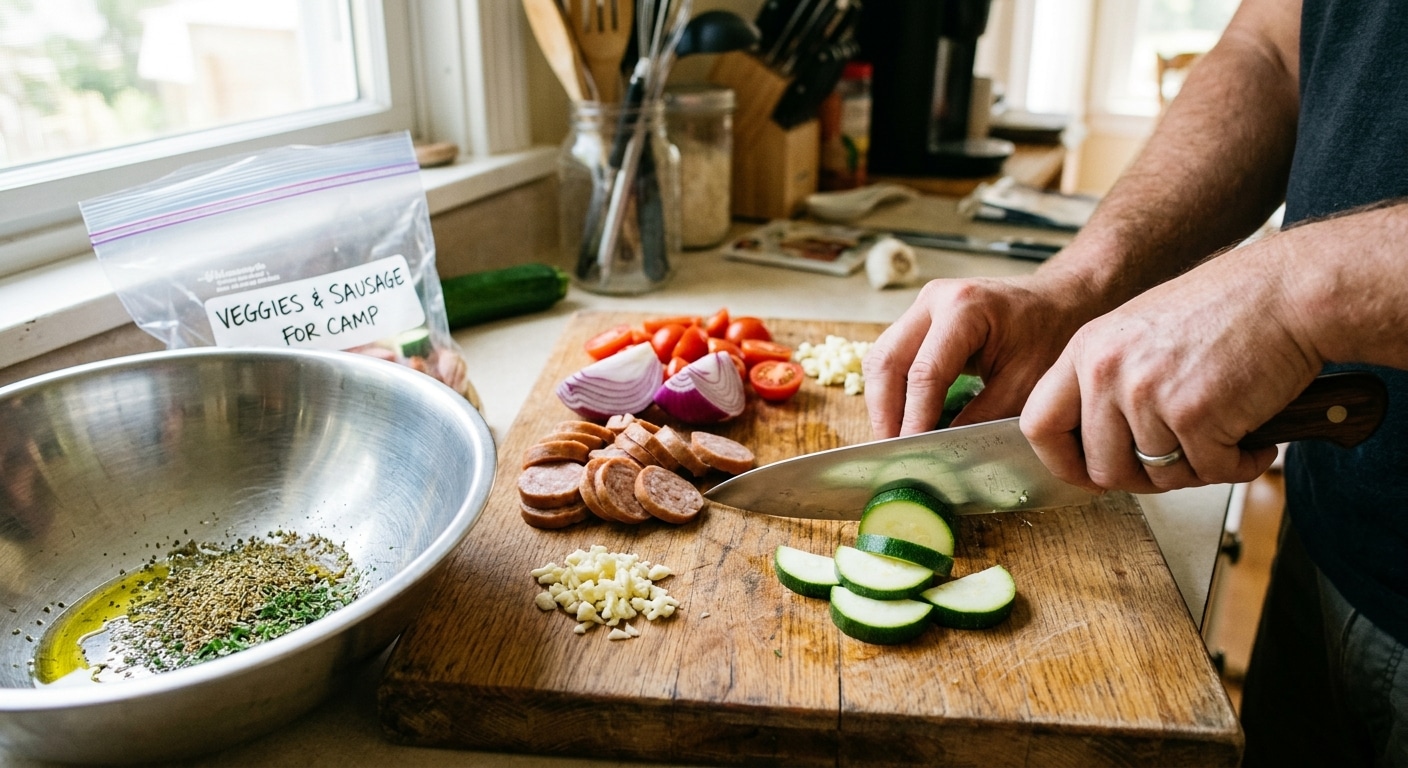
Prep at home (the night before, 10 minutes):
- Slice the sausage and vegetables: Cut the Italian sausage into 1/2-inch rounds. Slice the zucchini and squash into half-moons, cut the onion into wedges, and halve the cherry tomatoes. Then mince the garlic.
- Toss and season: In a bowl, combine the sausage and vegetables with the olive oil, Italian seasoning, garlic, salt, and pepper. Toss until everything coats evenly.
- Bag and chill: Transfer the mix to a sealed zip bag, press out the air, and chill below 40F. Because the sausage is raw, store the bag on the lowest cooler shelf away from ready-to-eat food.
At camp (dinner time):
- Light the coals: Fill a chimney with 25 to 30 Kingsford briquettes. Wait 15 to 20 minutes until they glow orange with light gray ash. Medium-hot coals run 400F to 500F at the surface.
- Build each packet: Divide the sausage and vegetable mix across the four foil squares. Then spread each pile into an even layer for uniform cooking.
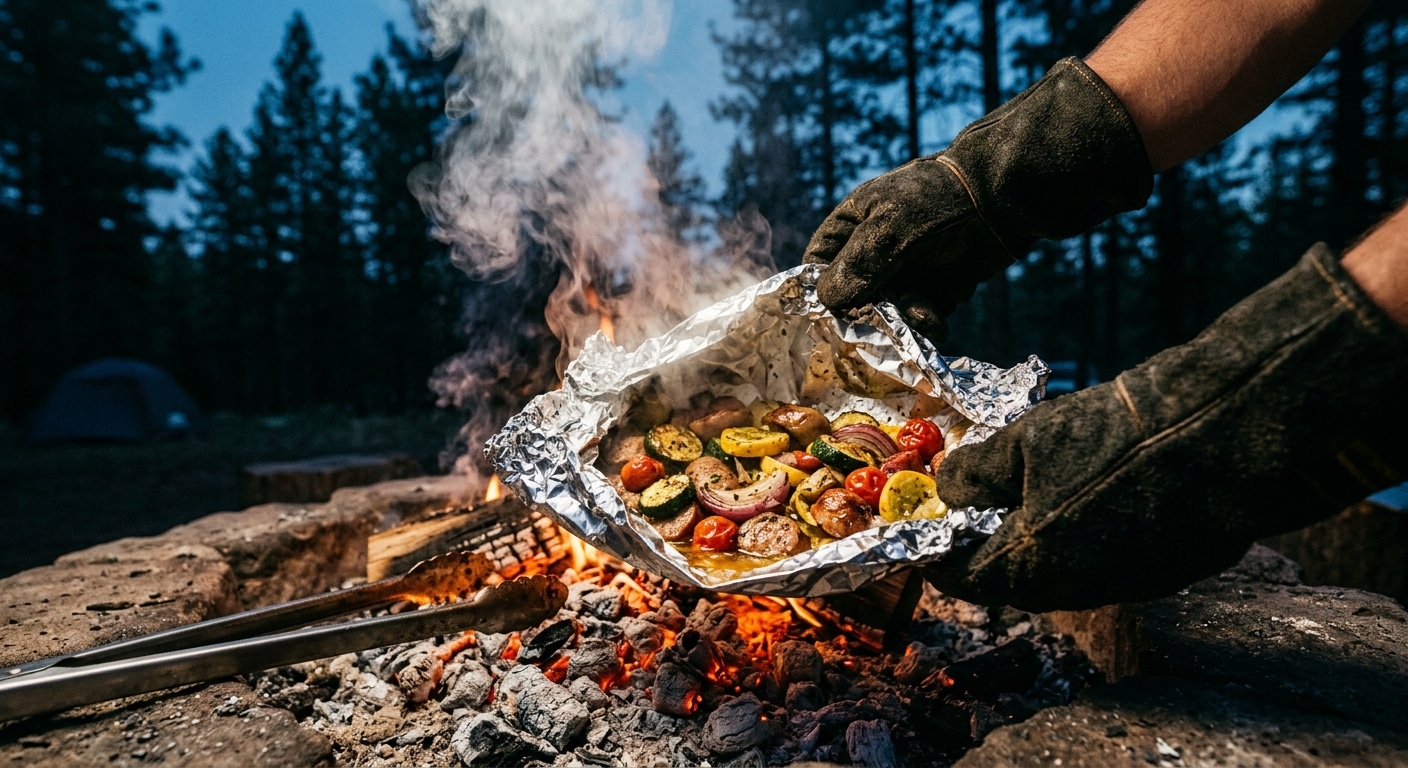
- Tent-fold and double-wrap: Bring the long foil edges up and pinch them above the food. Fold the seam down twice, leaving headroom inside for steam. Because the tomatoes are acidic, wrap a second foil square around each packet to block leaching and punctures.
- Cook on the coals: Rake the coals into a flat single layer. Place the packets on the bed with long-handled tongs. Cook 12 minutes on the first side.
- Flip once: After 12 minutes, flip each packet with tongs. Then cook another 10 to 13 minutes. Total cook time runs 22 to 25 minutes on medium-hot coals.
- Open for browning (optional): For a drier, browned finish, open the top seam in the last 5 minutes and tilt the steam away from your face. The vegetables caramelize as the moisture vents.
- Check the temperature: Slide an instant-read thermometer into a sausage round. It should read 160F, the safe internal temperature for pork sausage per USDA guidance. If it reads low, reseal and cook 3 to 5 more minutes.
- Serve and pack out: Spoon the mix over polenta or crusty bread and top with parmesan. Afterward, fold the cooled foil into a ball for pack-out.
Coal Bed Math for Foil Packets
This packet cooks by direct coal contact, so judge heat by the coal surface rather than a briquette count around a Dutch oven. Match the look of the coals to the job below.
| Heat Level | Coal Appearance | Surface Temp | Use |
|---|---|---|---|
| Hot | Bright orange, glowing | 500F+ | Quick sears, 5 to 10 min |
| Medium-Hot | Orange with light gray ash | 400F-500F | Sausage and veggies, most main dishes, 15 to 25 min |
| Medium | Gray ash, orange embers visible | 350F-400F | Eggs, dense vegetables |
| Medium-Low | Mostly gray ash, soft glow | 250F-350F | Reheating, desserts |
Foil packet Italian sausage and veggies run best on medium-hot coals at 400F to 500F, which cook the sausage through while the vegetables roast. Three field adjustments shift the timing. First, when wind tops 10 mph, add 5 to 8 minutes. Second, when ambient temperature drops below 40F, add 3 to 5 minutes. Third, above 5,000 feet, add 5 minutes because thinner air slows the cook on a packet running past 20 minutes.
Field Tips for Cooking at Camp
Double-wrapping is mandatory with tomatoes. Because tomato acid and a 25-minute cook eat through single-layer foil, a leak dumps the whole packet into the ash. Instead, wrap a second 14-inch square around each packet in the opposite direction. The extra layer costs a few cents and saves the dinner.
Cut sizes decide the texture. When you slice the squash and zucchini too thin, they collapse before the sausage cooks through. Instead, hold the half-moons near 1/2 inch and the sausage at 1/2-inch rounds so everything finishes together. Also, halving the cherry tomatoes lets them release juice into a quick sauce rather than bursting unevenly.
Moisture control sets the final foil packet Italian sausage and veggies dish. Therefore, keep the tent sealed for a saucy, braised result, or open the seam for the last 5 minutes for a drier, browned finish. On a windy night, build a windbreak with a Fireside Outdoor pit or a row of rocks to hold the coals at temperature. Then the vegetables roast evenly instead of steaming cold on one side.
Variations and Substitutions
- Over polenta: Serve the packet over a scoop of creamy polenta cooked on a camp stove. The juices soak in for a complete plate.
- Chicken sausage swap: Use chicken sausage for a leaner packet. Cook chicken sausage to 165F internal rather than 160F.
- Spicy version: Use hot Italian sausage and add 1/2 teaspoon red pepper flakes. Finish with chili oil after unwrapping.
- Vegetarian version: Skip the sausage and add a 15-ounce tin of drained cannellini beans and extra vegetables. Season with smoked paprika for depth.
- Mediterranean style: Add kalamata olives, a squeeze of lemon, and crumbled feta after cooking. Swap Italian seasoning for oregano and thyme.
- Pasta toss: Toss the cooked packet with cooked penne and a splash of pasta water for a fast camp pasta. Top with parmesan.
- Scaled for 2 people: Halve every ingredient. Build 2 packets with 1/2 pound sausage.
- Scaled for 6 people: Increase all amounts by 50%. Build 6 packets and light 35 briquettes for a longer coal bed.
Essential Tool
Camp Chef Everest 2X Two-Burner Stove
A two-burner propane stove cooks these packets on the grate during a fire ban, when open coals are off limits. Also, the second burner cooks polenta or pasta at the same time. I run one as my main camp burner.
Storage and Leftovers
The prepped raw mix holds below 40F for 48 hours before cooking. Specifically, the sliced sausage and vegetables keep together in a sealed bag on the lowest cooler shelf, though the tomatoes soften over time. Because the sausage is raw, never let the bag sit above 40F for more than 2 hours. Also, keep the mix separate from ready-to-eat food to prevent cross-contamination.
Cooked foil packet Italian sausage and veggies hold below 40F for 3 to 4 days after cooking. Then reheat a sealed leftover packet on medium coals for 8 minutes, flipping once, until the sausage returns to 160F. Otherwise, toss the leftovers with pasta in a skillet over a camp stove. Discard any cooked packet left above 40F for more than 2 hours, per USDA safe handling rules.
Frequently Asked Questions
Why double-wrap foil packet Italian sausage and veggies?
The cherry tomatoes make this packet acidic, and acid eats through single-layer foil over a long cook. Specifically, a 25-minute cook with tomato juice will punch pinholes which leak the packet into the ash. Therefore, wrap a second 14-inch square around each packet in the opposite direction. The extra layer blocks both leaching and punctures.
What coal temperature works best for sausage and veggies?
Medium-hot coals at 400F to 500F deliver the right heat. Specifically, this range cooks the sausage to 160F while the vegetables roast and soften. However, coals above 500F char the foil bottom before the centers finish. Look for orange embers under a coat of gray ash before placing the packets.
Should I use a tent fold or a flat-pack fold?
Use a tent fold for this recipe. Because the zucchini, squash, and tomatoes release water, the tent gives the steam room to circulate and concentrate flavor. When you want a drier, browned result, open the seam for the last 5 minutes. The flat-pack fold works too, though it leaves a wetter, more braised packet.
What internal temperature is safe for the sausage?
Cook pork Italian sausage to 160F internal. The USDA recommends 160F for raw pork sausage to neutralize bacterial risk. Slide an instant-read thermometer into the center of a round to confirm. If you swap in chicken sausage, raise the target to 165F instead.
Will this recipe work over a camp stove during a fire ban?
Absolutely, place the packets on the grate of a two-burner propane stove over medium heat. Because propane runs less intense than radiant coals, add 3 to 5 minutes to the cook. A stove also frees a second burner for polenta or pasta. The 160F sausage check stays the same.
Is it smart to prep foil packet Italian sausage and veggies ahead of time?
Yes, prep the raw mix up to 48 hours ahead and store it below 40F. However, do not assemble the foil packets until dinner time at camp. Since raw sausage in a warm packet risks bacterial growth, keep the mix cold in a sealed bag. Build the packets fresh right before they go on the coals.
How many packets fit on one coal bed?
A 12-inch by 12-inch bed from 25 briquettes holds 4 packets. Meanwhile, 6 packets need 35 briquettes raked into a longer 18-inch by 12-inch bed. Also, leave an inch between packets so heat circulates around each one. Crowding the bed creates cold spots and uneven cooking.
How do I pack out the used foil?
Let each packet cool, then fold it into a tight ball. Specifically, the double-wrapped foil compacts small and fits inside a sealed zip bag or dry box. Because Leave No Trace requires packing out all foil, never bury or burn the scraps. Also, sealing the greasy foil keeps odor and wildlife away from camp.
You Might Also Like
- Foil Packet Sausage and Peppers Breakfast
- Foil Packet Kielbasa and Cabbage (recipe coming soon)
- For a handheld breakfast, see Foil Packet Breakfast Burritos
- Return to the full Foil Packet Camping Recipes collection
- For a group dinner, see Dutch Oven Camping Recipes