


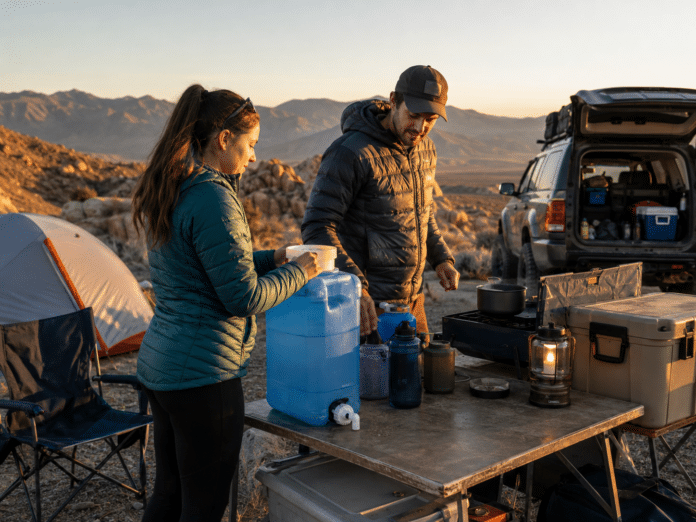
I’ve spent most of my adult life camping and overlanding across the American West, and camping water management is one lesson you learn fast. As the founder of 4WDTalk, I’ve parked my vehicle on BLM land three days from a spigot more times than I can count, and every one of those trips lived or died on how well I planned my water load. Running short on water 40 miles from pavement is not an inconvenience. It is a safety problem, and it is entirely preventable with a little math before you leave the driveway.
This guide comes from decades of trial and error, not a spreadsheet built in an office. I have hauled too much water and paid for it in fuel economy and payload. I’ve also hauled too little and rationed drinking water on the drive home, which I don’t recommend. What follows is the system I use in the field: how many gallons to carry per person, per day, how to store the water so it survives washboard roads, and how to stretch a limited supply across a week in the backcountry without cutting corners on hydration.
Quick Facts:
- Topic: Camping water management for multi-day trips
- Skill level: Beginner to intermediate
- Water needed per person, per day: 1 to 2 gallons
- Planning time: 15 to 20 minutes before departure
- Best storage setup: Rigid containers plus one collapsible backup
- Typical cost to outfit: $40 to $150
- Best for: Overlanding, boondocking, and dry camping trips of three or more days
8 min read
In This Guide
- Camping Water Management Overview
- Key Water Facts at a Glance
- How Much Water You Need
- Choosing the Right Water Containers
- Rationing Water on a Multi-Day Trip
- Finding and Treating Water in the Field
- Staying Clean Without Wasting Water
- Bladders vs. Rigid Tanks: Which Should You Choose?
- Pros and Cons of Rinse-Free Bathing on the Trail
- Final Verdict
- Frequently Asked Questions
Camping Water Management Overview: Why Rationing Is a Skill, Not Guesswork

Camping water management matters most for anyone dry camping, boondocking, or overlanding away from developed campgrounds with hookups. If you camp at a state park with a water spigot at every site, none of this changes your weekend much. However, once you head onto BLM land, national forest roads, or a multi-day overland route, water becomes the single heaviest and most limiting resource in your rig.

Rugged Revive No Rinse Bathing Wipes Large - Rinse-Free Sponge Bath for Adult, Elderly & Kids - Thick Body Wipes with Aloe for Camping, Hiking, Travel, Backpacking, Outdoor & Off-Grid Use - 50 Sponges
Swaps a two-gallon basin wash for a few ounces of water per cleanup, exactly the math this guide is about.
- A few ounces of water replaces a basin wash
- No gray water to dispose of afterward
- Aloe formula, gentle for daily use
- Used sponges add to your pack-out trash
A one-gallon jug weighs 8.3 pounds, so a five-day trip for two people at two gallons per person, per day adds up to 166 pounds before you pack a single meal or tool. Balancing this weight against your rig’s payload, while still carrying enough water to stay safe, is the core challenge this guide solves.
Key Water Facts at a Glance
| Use Case | Water Per Person, Per Day | 3-Day Trip (2 People) | 7-Day Trip (2 People) |
|---|---|---|---|
| Drinking (mild climate) | 0.5 to 1 gallon | 3 to 6 gallons | 7 to 14 gallons |
| Drinking (desert or high heat) | 1 to 1.5 gallons | 6 to 9 gallons | 14 to 21 gallons |
| Cooking and coffee | 0.25 to 0.5 gallon | 1.5 to 3 gallons | 3.5 to 7 gallons |
| Dishes and cleanup | 0.25 to 0.5 gallon | 1.5 to 3 gallons | 3.5 to 7 gallons |
| Personal hygiene (traditional) | 1 to 2 gallons | 6 to 12 gallons | 14 to 28 gallons |
| Personal hygiene (rinse-free method) | 4 to 8 ounces | 1.5 to 3 pints | 3.5 to 7 pints |
How Much Water You Need

Start with 0.5 to 1 gallon of drinking water per person, per day in mild weather, and raise that to 1 to 1.5 gallons in desert heat or above 6,000 feet of elevation, where dehydration sets in faster. Add 0.25 to 0.5 gallon per person for cooking and coffee, plus another 0.25 to 0.5 gallon for basic dishwashing. Together, this puts a realistic baseline at 1 to 2.5 gallons per person, per day before hygiene enters the picture.
Hygiene is where most first-time overlanders overload their rigs. A traditional sink-and-basin sponge bath with tap water burns through 1 to 2 gallons per person, per day on its own, since rinsing doubles the water a bar of soap requires. Multiply this across a family of four on a week-long trip. Hygiene alone accounts for 28 to 56 gallons, often more water than the drinking and cooking totals combined.
Build your total with a simple formula: multiply your per-person daily estimate by the number of people, then by the number of days, then add a 20 percent safety buffer for spills, extra cooking needs, or an unplanned extra night on the trail. A two-person, five-day trip at 2 gallons per person, per day lands at 20 gallons, and the buffer pushes it to 24 gallons.
Choosing the Right Water Containers
Rigid containers hold up best on washboard roads and rocky trails, where flexible bladders risk punctures against gear or cargo straps. A hard-sided camping water container built for overland use distributes weight evenly across a roof rack or cargo area, and stackable jerry-can designs make the most of limited space in a Gladiator bed or trailer box.
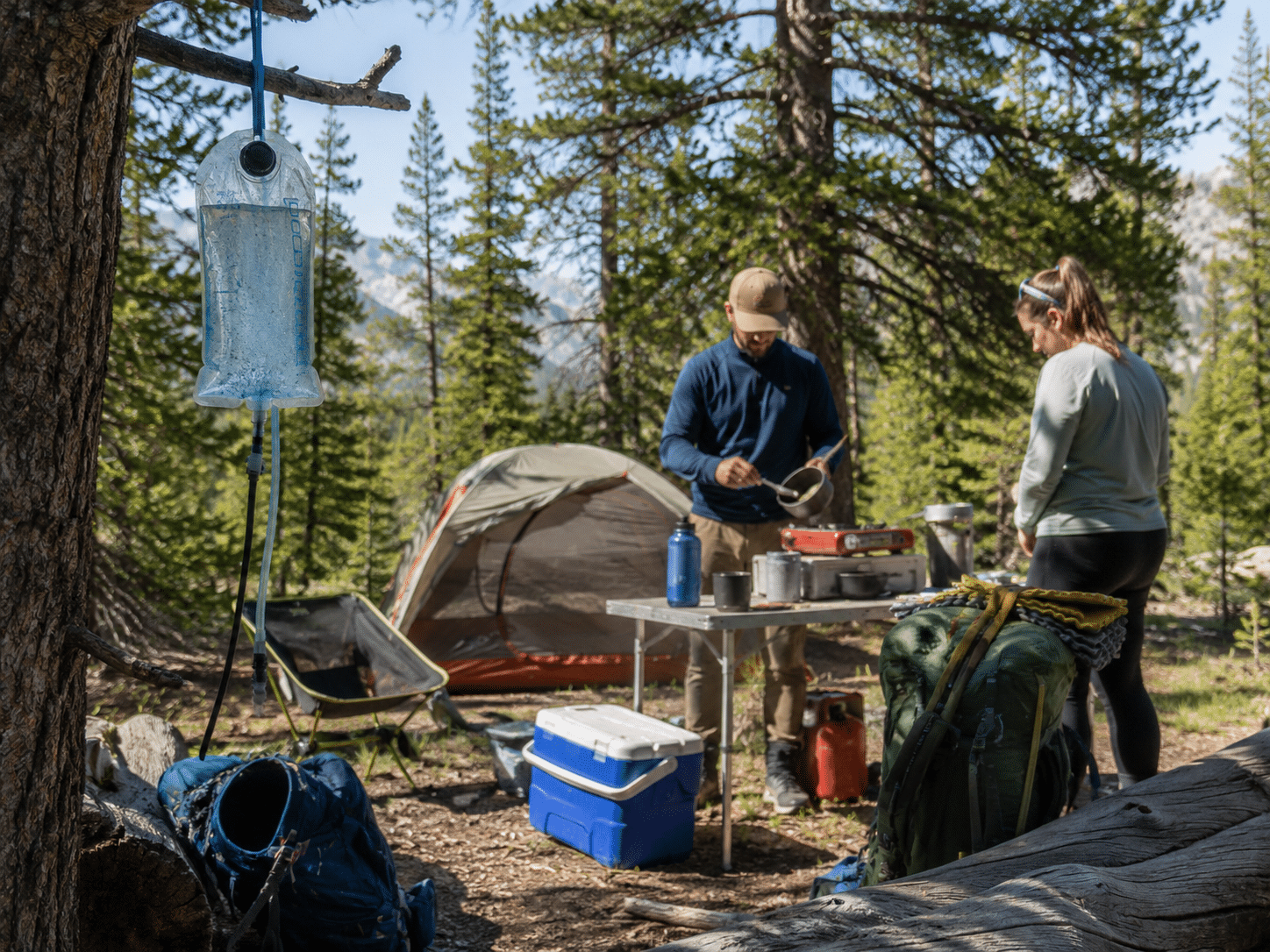
Collapsible bladders earn their spot as a secondary supply. They pack flat when empty, so they take up zero space on the drive out, and they work well as a dedicated hygiene or dish-washing reserve once the rigid tanks handle drinking water. Since bladders puncture more easily, store them inside a bin or behind gear rather than loose in the truck bed.
Whichever container style you choose, split your total supply across two or three separate vessels instead of one large tank. A single 40-gallon tank with a leak or a cracked fitting ends your trip early. Splitting the same volume across three 13-gallon containers means a single failure costs you a third of your supply, not all of it.
Rationing Water on a Multi-Day Trip
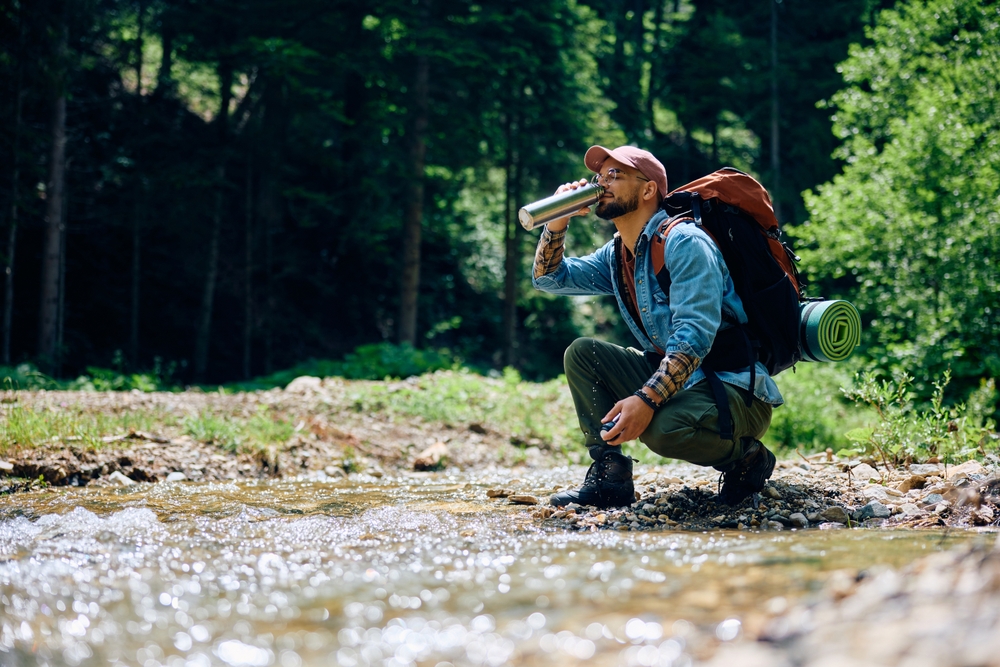
Track water use daily instead of guessing at the halfway point. Mark your containers at each morning’s fill level with a permanent marker, then check the level again before you set up camp each evening. This habit catches a leak or an unplanned overuse within a single day, while you still have time to adjust your remaining schedule.
Reserve your highest-quality water for drinking and cooking, and use lower-priority sources for cleanup once you have confirmed your drinking supply is secure. For instance, water left over from boiling pasta cools down and works fine for a quick dish rinse, so nothing goes to waste. Consequently, planning meals around reused water at each stage stretches your total supply further than most campers expect.
Dry camping and boondocking water conservation habits extend a fixed supply significantly. Turning off the tap between rinsing dishes, washing in batches instead of one item at a time, and using biodegradable soap in small amounts all reduce daily consumption without sacrificing cleanliness. Above all, the biggest single lever remains hygiene, since a full-body rinse-based wash uses far more water than any other daily task on this list.
Finding and Treating Water in the Field
Natural water sources extend a limited supply on longer trips, though they require planning before you leave cell service. Research stream, spring, or lake locations along your route in advance, and confirm current conditions through a ranger district or land management office, since seasonal creeks run dry by midsummer in much of the West.
Set up camp at least 200 feet from any water source to protect the ecosystem and keep contaminants out of the water itself. Meanwhile, when scouting a dispersed camping or boondocking site, factor proximity to a treatable water source into your site selection, particularly on trips longer than three or four days.
Treat any natural water source before drinking it, regardless of how clear it looks. A pump filter rated for backcountry use removes bacteria and protozoa, while a UV purifier or chemical treatment tablet adds a second layer of protection against viruses. Boiling water for one full minute at elevations below 6,500 feet, or three minutes above this elevation, works as a reliable backup method when a filter fails or clogs.
Staying Clean Without Wasting Water
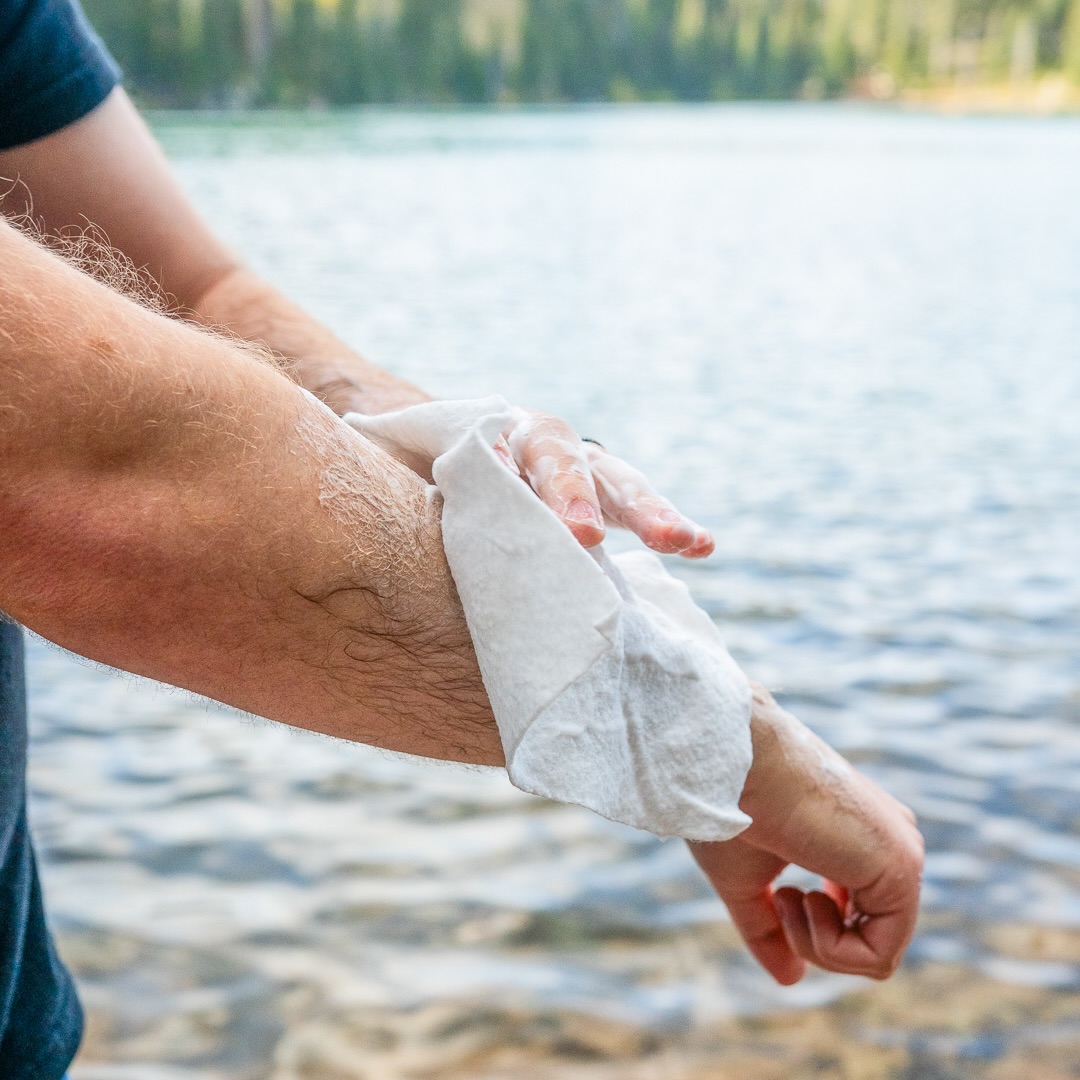
Personal hygiene is the single largest hidden water cost on a dry camping trip, and it is also the easiest to cut without sacrificing comfort. A traditional wash at a basin, using a washcloth and rinsing repeatedly, consumes 1 to 2 gallons per person for one cleanup. Multiply this across several days. Hygiene alone often rivals drinking water as the biggest line item on your water budget.
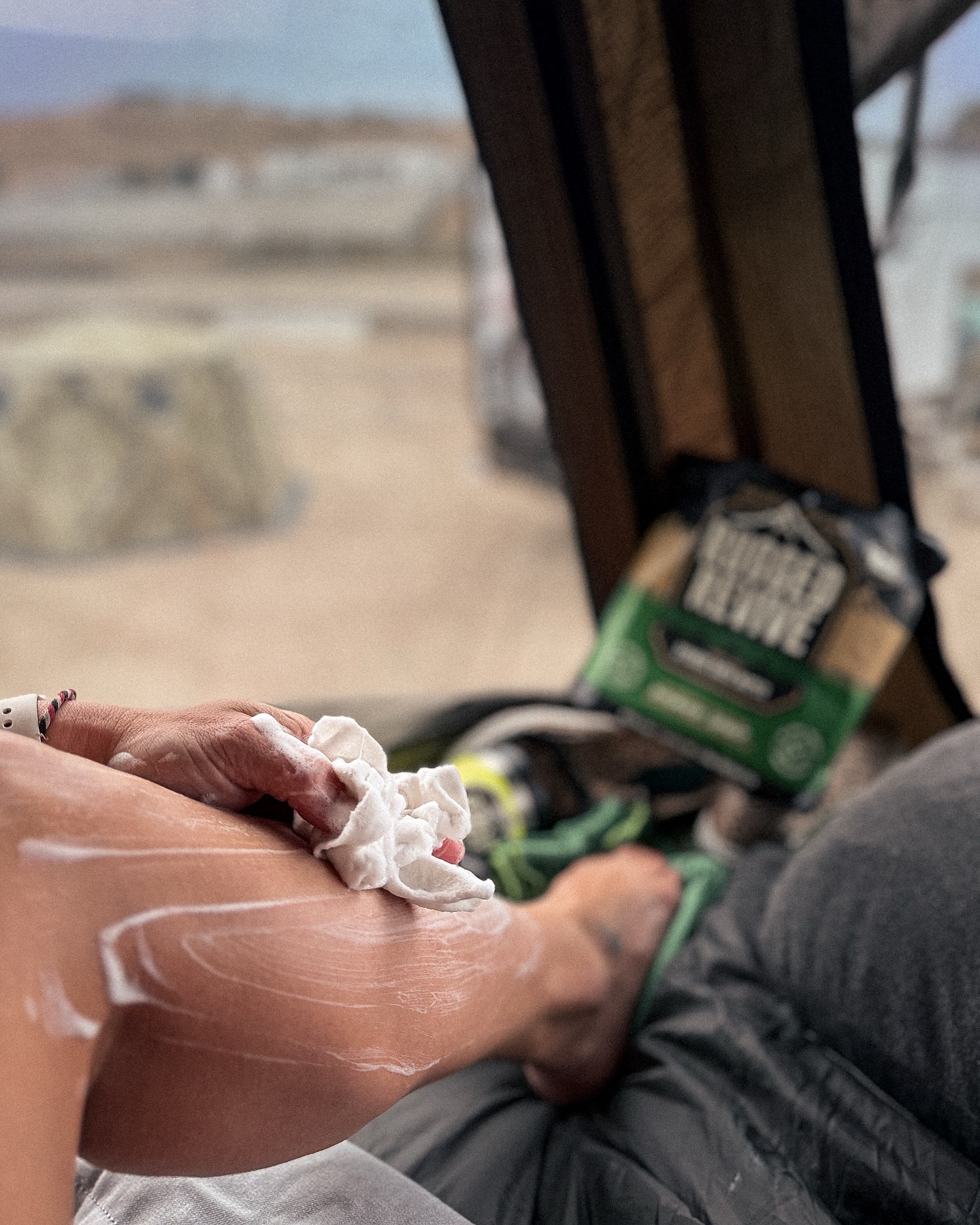
Rinse-free options solve this directly. Rugged Revive’s lathering sponge activates with a few ounces of water rather than a full basin, producing a shower-like clean without any rinsing step afterward. Since each sponge handles one full-body wash and gets thrown away when finished, there is no basin water to haul out, no soap residue left behind, and no drain water to manage responsibly at camp.
Our previous guide on no-shower camping hygiene hacks covers additional low-water strategies, including dry shampoo, biodegradable wipes, and targeted spot cleaning for high-sweat areas. Combining a rinse-free sponge bath with those habits routinely drops daily hygiene water use from 1 to 2 gallons down to under a pint per person.
Bladders vs. Rigid Tanks: Which Should You Choose?
RuggedRevive No-Rinse Wipes: Pick Your Pack Size


Rigid tanks and jerry cans win on durability and long-term value. They resist punctures from sharp gear, tie down securely with standard straps, and last for years of regular overland use, even though they take up fixed space whether full or empty.
Collapsible bladders win on flexibility. They pack down to nearly nothing when empty, making them ideal as a secondary or emergency reserve, though their thinner walls demand careful placement away from sharp edges and heavy cargo.
Most experienced overlanders run both. Rigid containers cover the baseline drinking and cooking supply, while one or two collapsible bladders serve as a reserve or a dedicated hygiene and dish-washing source. This combination balances durability against packability better than committing to either style alone.
Pros and Cons of Rinse-Free Bathing on the Trail
Pros
- Uses 4 to 8 ounces of water per wash instead of 1 to 2 gallons
- No rinsing step, so no wastewater to manage responsibly at camp
- Single-use design means no lingering soap film or shared washcloth bacteria
- Packs flat and weighs a few ounces per sponge, adding almost nothing to payload
- Works well after a hot, dusty trail day when a full shower is not available
Cons
- Single-use format adds a small amount of trash to pack out
- Does not replace a hair wash on longer, multi-week trips
- Costs more per use than a bar of soap over very long trips
- Not designed for washing dishes or gear, only personal hygiene
Final Verdict
Camping water management rewards planning over improvisation. Anyone heading into dry camping, boondocking, or a multi-day overland route benefits most from building a per-person, per-day estimate before departure. Splitting the total across two or three separate containers protects against a single point of failure.
The biggest trade-off most campers face is weight versus safety margin. Carrying extra water costs fuel economy and payload, while carrying too little risks a genuine emergency far from help. Campers sticking to established campgrounds with hookups need far less of this planning, since a spigot at the site removes most of the guesswork.
Cutting hygiene water use delivers the best return of any single change in this guide, since it frequently rivals drinking water as the largest daily draw on a limited supply. A rinse-free sponge bath, paired with the habits in our hygiene hacks guide, routinely cuts hygiene water use by more than 90 percent without leaving anyone feeling less clean at the end of a trail day.
For a typical two to four-person overlanding trip of three to seven days, plan on 1.5 to 2.5 gallons per person, per day for drinking, cooking, and dishes, plus a rinse-free hygiene option instead of a traditional basin wash. This combination keeps your rig’s payload manageable while still leaving a genuine safety buffer if a trip runs long.
Frequently Asked Questions
How much water should I bring per person, per day while camping?
Plan on 0.5 to 1 gallon of drinking water per person, per day in mild weather, and 1 to 1.5 gallons in desert heat or at high elevation. Add another 0.5 to 1 gallon for cooking and dishes, bringing the realistic daily total to 1 to 2.5 gallons per person before hygiene.
How do I calculate total water needs for a multi-day overlanding trip?
Multiply your per-person daily estimate by the number of travelers, then by the number of days, and add a 20 percent buffer for spills or an extra unplanned night. A two-person, five-day trip at 2 gallons per person, per day totals 24 gallons with the buffer included.
What is the best container for carrying water while overlanding?
Rigid jerry cans or hard-sided tanks hold up best against washboard roads and rocky trails. Splitting your total supply across two or three smaller containers instead of one large tank protects the trip against a single leak or cracked fitting.
How can I conserve water while boondocking?
Wash dishes in batches instead of running water continuously, reuse cooled cooking water for rinsing, and switch personal hygiene from a basin wash to a rinse-free sponge bath. Together, these habits regularly cut daily water use by half or more.
Is it safe to drink water from a stream or lake while camping?
Treat any natural water source before drinking it, regardless of clarity. Use a backcountry-rated filter, a UV purifier, or chemical treatment tablets, and boil water for one full minute below 6,500 feet, or three minutes above this elevation, as a backup method.
How do I stay clean on a trail trip without using a lot of water?
A rinse-free sponge bath, such as Rugged Revive, activates with 4 to 8 ounces of water and requires no rinsing afterward. Pairing this with dry shampoo and targeted spot cleaning drops daily hygiene water use from 1 to 2 gallons to under a pint per person.
Heads up: Clicking on our affiliate links and exploring our sponsored content helps us at no extra cost to you, and we only recommend gear we’re absolutely crazy about!