



Quick Facts:
- The question: Is a cheap winch worth it once you look past the number on the housing?
- Short answer: A discounted mid-tier unit earns its place; an unbranded sub-$150 box rarely does.
- Rated pull: Applies to the first rope layer and drops with every wrap after it.
- Winch duty cycle: Many brands publish nothing, so owners cook motors without knowing why.
- Motor type: Series-wound motors handle heat better than permanent-magnet motors.
- Hidden costs: Mount, cable, and fairlead sit outside the winch price.
- Warranty spread: 90 days at the bottom, limited lifetime mechanical at the top.
- Best fit: Occasional trail use, light mud, self-recovery on gentle ground.
- Look elsewhere if: You winch heavy, winch often, or wheel alone in the backcountry.
9 min read
In This Guide
- Overview: What a Cheap Winch Buys You
- Key Numbers Behind the Rating
- Rated Line Pull Versus a Full Drum
- Winch Duty Cycle, Heat, and Amp Draw
- Is a Cheap Winch Worth It on the Parts You Never See?
- What Independent Winch Testing Found
- Warranty, Support, and the Cost of the Install
- Cheap Winch Versus the $800 to $950 Tier
- Final Verdict: Is a Cheap Winch Worth It?
- Cheap Winch Questions, Answered
Overview: What a Cheap Winch Buys You
Is a cheap winch worth it? The answer turns on which kind of cheap you mean. One is a mid-tier 12,000 lb unit discounted for a holiday weekend. The other is an unbranded box with no published specs. Both land near the same price, although they share little under the housing.
Barricade’s 12,000 lb synthetic-rope winch sits in the first group: a 6.6 HP series-wound motor, a three-stage planetary gearbox, a three-year limited warranty. List pricing has run in the $475 to $540 band, so 70 percent off a $500 winch lands near $150. Same money as the no-name box, different machine.
Price is the wrong place to start, however. Ask instead what a falling price removes from the spec sheet. Motor type, sealing, brake design, duty cycle, warranty, and parts support all move with price.
Key Numbers Behind the Rating
Before those six matter, the rating itself needs a reality check. Warn publishes a layer-by-layer capacity table for its ZEON 8, a rare look at how fast rated pull falls. Other figures come from MotorTrend’s bench test of a 2011 Harbor Freight Badland 12,000 lb budget winch, and from Barricade.
| Measurement | Figure | Why it matters |
|---|---|---|
| Rated line pull, layer 1 (Warn ZEON 8) | 8,000 lb | Full rating needs a bare drum |
| Same winch, layer 4 | 5,189 lb | Loaded drum costs a third |
| Capacity loss per layer (Warn) | About 15 percent | Every wrap costs power |
| Duty cycle, 2011 Badland 12,000 lb | 5 percent, 45 seconds at max load | Short pulls, long waits |
| Cooling time after one max pull | 14 minutes 15 seconds | Our calculation from the 5 percent cycle |
| Barricade 12,000 lb gear ratio | 187.2:1 | Quicker speed, more heat |
| Barricade minimum battery | 650 CCA | Amp draw sets the floor |
Two rows deserve a warning label. Layer figures come from a premium winch, so treat them as a best case. And the duty-cycle listing describes a 2011 unit, since current models rarely publish one.
| Top Pick | Best Premium | Mid-Tier Alternate | |
|---|---|---|---|
| Product | TOP PICK Smittybilt X2O Gen3 12K Smittybilt X2O Gen3 12K |  WARN VR EVO 10-S WARN VR EVO 10-S |  Superwinch SX12SR 12K Superwinch SX12SR 12K |
| Rating | ★★★★☆ 4.6 108 ratings | ★★★★★ 4.7 665 ratings | ★★★★★ 4.7 40 ratings |
| Rated pull | 12,000 lb | 10,000 lb | 12,000 lb |
| Warranty | 5 yr electrical, limited lifetime mechanical | 7 yr electrical, lifetime mechanical | Not published |
| Price | $763.00 as of Oct 18, 4:39 am | $721.99 as of Oct 17, 8:15 pm | $949.99 as of Oct 18, 4:39 am |
| Check Price → | Check Price → | Check Price → |
Rated Line Pull Versus a Full Drum
The rating on a winch housing is a bare-drum number. Warn tells operators to spool off as much rope as the recovery allows, with a floor of 10 wraps for synthetic rope or five for wire. Its published penalty runs about 15 percent of rated pull per layer above the first.
Run the arithmetic on a 12,000 lb bargain unit, and the picture sharpens. On a nearly full drum, five layers deep, 15 percent a layer takes a nominal 12,000 lb rating down to a little over 6,000 lb. A loaded Bronco, Gladiator, or half-ton truck already outweighs 6,000 lb. Add mud and the gap widens. Our guide to recovery forces and safety covers those loads.
How to Buy Back the Capacity You Lost
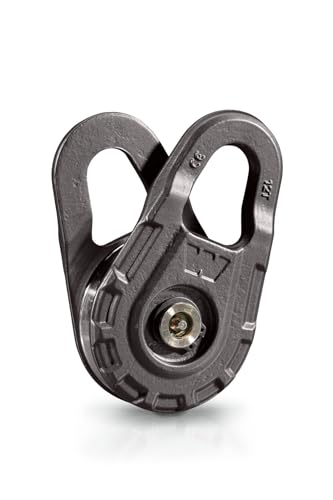
Two habits recover most of the loss. Spool rope off until the drum sits nearly bare, and then add a snatch block. Warn notes the double benefit: more rope leaves the drum while the pulley doubles capacity. Our beginner guide to using a snatch block shows the rigging.
Safety note: A synthetic line under load stores energy, and a break throws the hook back at the vehicle. Stop the pull the moment the line glazes, fuzzes, or shows a flat spot. Also lay a weighted dampener over the line and keep everyone clear.
Winch Duty Cycle, Heat, and Amp Draw
Duty cycle is the ratio of pulling time to cooling time, and it is the least-published spec. 4X4 Australia puts the problem bluntly in its 12-volt winch test. Some brands state a figure. Many state nothing. Others print a warning about exceeding a cycle they never define. Consequently, most owners keep pulling until the vehicle moves.
Its protocol shows a safer rhythm: 60 seconds of constant winching, then 10 minutes of cooling, repeated. Next to the way most people winch, the pause feels long. A motor dies with no single overload to blame, because heat accumulates across repeated pulls.
Why Amp Draw Sets the Ceiling
Heat comes from current. MotorTrend’s bench figures for the 2011 Badland budget winch show 159 amps at a 4,000 lb pull, climbing to 242 amps at 8,000 lb and 320 amps at the full 12,000 lb rating. A load past 300 amps flattens a marginal battery. Voltage sags, the motor turns slower, and line pull falls with it, so the electrical system, not the housing rating, sets the real limit. Barricade and Smittybilt specify a 650 CCA minimum, so an AGM battery joins the bill.
Safety note: A stalled winch under full load draws its highest current and heats fastest. Stop at the first sign of a stall, smoke, or a hot control box. Then let it cool for 10 minutes.
Is a Cheap Winch Worth It on the Parts You Never See?
A winch price is set by the parts you photograph: drum, rope, housing, and the stamped number. The parts deciding whether it survives a wet weekend never reach a product page. Three matter most, and all three get cut where a buyer cannot look.
Motor Type and Heat Tolerance
Series-wound motors make more torque and tolerate heat better, the reason heavy-duty winches use them. Permanent-magnet motors heat up faster, so they suit light-duty work. Yet a permanent-magnet motor pulls similar loads on less current, trading heat tolerance for it. If a sub-$150 winch does not state series-wound, plan for permanent magnet.
Solenoids, Sealing, and Control Boxes
Budget builders cut cost where you never look. 4×4 Down Under lists the casualties: solenoids overheating or sticking, voltage drop causing intermittent control failures, and poor seals letting dust in. Smittybilt answers with an IP68 rating and a sealed 500-amp control box, as does Warn’s VR EVO. Barricade publishes no ingress rating on its product page.
Rope Quality and Brake Behavior
Synthetic rope now ships at every price, so the word synthetic on the box tells you nothing. Diameter, fiber blend, and heat resistance all vary, showing up as glazing or sudden failure. A weak brake matters more still, since it lets the vehicle creep backward the moment tension drops. Smittybilt specifies an out-of-drum brake, chosen to keep heat off synthetic rope. Barricade, by contrast, lists a two-way automatic in-the-drum brake, putting brake heat inside the drum the rope wraps around.
So the answer on the parts you never see runs one way. A mid-tier unit was engineered for its list price and then marked down, while the unbranded box was engineered for the sale price it launched at.
What Independent Winch Testing Found
Project Farm load-tested seven 12,000 lb winches from Smittybilt, Warn, Badland, Superwinch, Mile Marker, Zeak, and Rugcel. Not one unit reached its rated capacity. Two snapped their lines first. Rugcel let go at a little over 9,000 lb, while Zeak broke at 10,300 lb. Zeak still finished on top, the Harbor Freight Badland last.
4X4 Australia ran a separate seven-winch sled test with thermal readings on every cycle. Its conclusion cuts the other way. Every winch in the test passed, a result the magazine put down to sticking with known brands. Notably, it excluded the budget tier on purpose, so the result says nothing about the unbranded end. For the rigging side, read our guide to winching technique for beginners.
Warranty, Support, and the Cost of the Install
Warranty length is the cleanest proxy for how long a maker expects its winch to last. Harbor Freight covers the Badland APEX for 90 days. In contrast, Barricade offers a three-year limited warranty. Smittybilt lists five years on electrical parts and limited lifetime on mechanical, while Warn lists seven years electrical and lifetime mechanical.
Parts support follows the same curve. 4×4 Down Under reports no source for spare solenoids, remotes, or brake parts at the cheap end. One missing part kills the whole winch.
What the Install Adds to a Cheap Winch
Price the whole install before you buy, since a rated mount, heavy cable, hawse fairlead, and soft shackle all sit outside the winch price. Harbor Freight lists those four at about $160 together, against a deep-discount winch near $143.
Recovery gear mentioned in this guide

X-BULL New Recovery Traction Tracks Sand Mud Snow Track Tire Ladder…


Cheap Winch Versus the $800 to $950 Tier
Step up to the $800 to $950 tier, where the Smittybilt X2O and Warn VR EVO list, and the spec sheet fills in: a published IP rating, a named brake, a sealed control box, and coverage measured in years. Line speed drops, since both run 218:1 gearing against Barricade’s 187.2:1. Set against a sub-$150 unit, the tier buys margin rather than pulling power.
The Smittybilt X2O Gen3 shows what the money buys. At $849.99 it lists a sealed 7 HP series-wound motor, a waterproof 500-amp control box, an out-of-drum brake, and five years of electrical cover over limited lifetime mechanical. Project Farm put a Smittybilt in its seven-winch field, and the line held. Its page publishes no IP figure, though; IP68 belongs to the Gen2. Warn’s VR EVO 10-S lists $100 higher, with seven years electrical.
A discounted mid-tier winch borrows the premium architecture at a fraction of list price. What it does not borrow is the published sealing, the named brake, or lifetime coverage. On a tight budget, our look at where recovery money goes first argues for boards and a strap.
The unbranded end leaves all four lines blank, and since rope fails first, a saving there shows up as a snapped line at 9,000 lb.
Final Verdict: Is a Cheap Winch Worth It?
Is a cheap winch worth it? For a weekend wheeler on graded trails and light mud, a discounted mid-tier unit earns its spot. Its strength is architecture normally carrying a much higher list price.
The trade-offs are real, however. Every line the tier fills in, a bargain winch leaves empty. If you winch weekly, run heavy recoveries on slopes, or travel alone, shop the $800 to $950 tier instead. You are the buyer who needs the parts you never see.
Value depends on the price on your receipt. A mid-tier winch at 70 percent off is a different purchase from a no-name box at the same total. Therefore, judge the buy on published specs, warranty length, and parts support rather than on the discount.
For most readers, the Smittybilt X2O Gen3 is the safer default. It names its out-of-drum brake, seals its 500-amp control box, and backs the mechanical side for a limited lifetime. Warn’s VR EVO carries the longest coverage here at seven years electrical. If your budget stops short of the $800 to $950 tier, buy traction boards and a snatch block first, then work from our roundup of the best off-road winches tested.
Cheap Winch Questions, Answered
Does a 12,000 lb winch pull 12,000 lb in the field?
No. Rated line pull applies to the first rope layer on a bare drum, and every added layer costs about 15 percent. With a mostly full drum, a nominal 12,000 lb winch delivers closer to half its rating. Therefore, size the winch to at least 1.5 times your gross vehicle weight rating.
What is a duty cycle on a winch?
Winch duty cycle describes how long a motor pulls before it needs to cool. Budget units often allow well under a minute at full load, then a much longer rest. Because most brands publish nothing, treat 60 seconds on and 10 minutes off as your default.
Is a cheap winch safe for recovering a full-size truck?
Safety depends on rigging more than on the badge. A sub-$150 winch on a heavy truck works near its limit, where heat, rope quality, and brake holding matter most. Use a snatch block and stop before the motor stalls.
Should you buy two cheap winches instead of one good one?
The argument fails on practical grounds. You have one bumper, so the spare sits in the bed while the mounted unit dies on a slope. A second winch does nothing about a brake with poor holding.
Do budget winches use real synthetic rope?
Most do, although quality varies widely among suppliers. Independent testing has snapped bargain lines below rated capacity, making rope the first upgrade on a discount unit. Inspect for glazing, flat spots, and fuzzing before every trip.
Related Reading
Figures above come from Warn’s pulling capacity by layer data, the 4X4 Australia 12-volt winch test, and MotorTrend’s Badland bench test.