


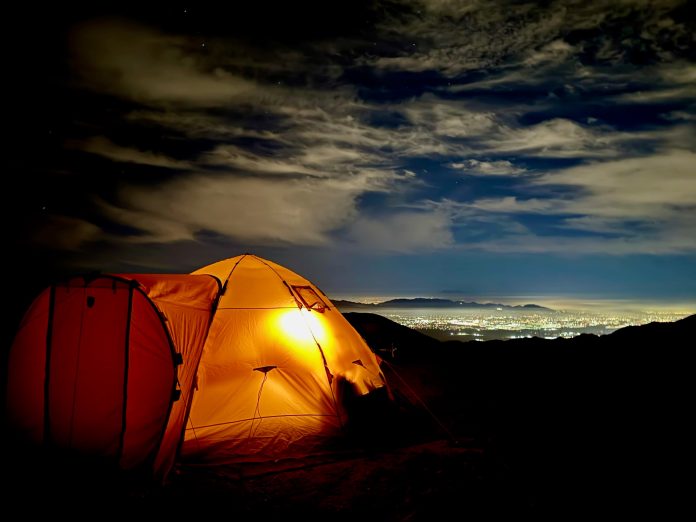

After five years running the Bereg UP-5 in snow, wind, sun, rain, and more, I’ve thought hard about what separates a hot tent from a four-season tent. Both sound like solutions to the same problem: staying warm when the temperature drops. In practice, however, they operate around entirely different design philosophies. Choosing the wrong one for your trip affects your comfort, your safety, and your sleep quality in ways worth understanding before you leave the driveway.
The distinction matters most when conditions get serious. A standard four-season tent prioritizes structural strength. It blocks wind and sheds snow while your sleeping bag and pad supply the warmth. A hot tent, by contrast, houses a stove inside the shelter. Fabric weight, ventilation strategy, and moisture management all work differently between the two types. Understanding those differences before you buy saves you from a cold, sleepless night in the wrong shelter at -15°F.
Quick Facts:
- Topic: Hot tent vs four season tent comparison
- Featured Product: Bereg UP-5 hot tent
- Price: $3,406.80 CAD (Bereg Canada)
- Key Difference: Hot tents have a stove jack; four-season tents rely on sleeping insulation
- UP-5 Temperature Rating: -50°C (-58°F)
- UP-5 Setup Time: Under 60 seconds
- UP-5 Weight: 29 kg (65 lbs)
- Best for: Winter campers, overlanders, and hunters choosing between heated and unheated shelters
8 min read
In This Article
- Hot Tent vs Four Season Tent: The Core Difference
- Design and Construction Differences
- How Hot Tents and Four-Season Tents Manage Cold Differently
- Condensation and Ventilation
- Weight, Packability, and Setup
- Hot Tent vs Four Season Tent: Side by Side
- Pros and Cons
- Final Verdict
- Frequently Asked Questions
Hot Tent vs Four Season Tent: The Core Difference

The hot tent vs four season tent debate comes down to one question: where does your warmth come from? In a four-season tent, warmth comes from your body heat, your sleeping bag, and your insulating layers. The tent is a windproof shell with a pole structure built to handle heavy weather loads. In a hot tent, warmth comes from a stove burning inside the shelter. The tent is specifically built to accommodate the heat source safely.
Four-season tents use rigid fabrics with a geodesic or semi-geodesic pole system. They handle severe wind and significant snow loads. Hot tents, on the other hand, are built for thermal efficiency. They feature double-wall fabric systems, strategic venting, and a reinforced stove jack sewn into the tent wall or roof. The stove jack on the Bereg UP-5, for example, uses a heavy-duty fire-resistant patch with a reinforced metal ring. It is rated for safe use with wood-burning stoves and diesel heaters alike.
Choosing between the two styles depends on your trip profile. Backpackers in winter conditions typically choose a four-season tent because weight matters above all else. Car campers, overlanders, and hunters who plan multiple nights in one spot often prefer hot tent camping. Heating the interior shifts the experience from survival mode to genuine comfort. Understanding it before you buy makes a real difference.
Design and Construction Differences
Look at both tent types side by side and the construction philosophy becomes obvious. Four-season tents prioritize structural strength. They use multiple intersecting poles and low-profile shapes to reduce wind resistance. Thick single or double-wall fabrics handle high waterproof ratings. The dome or tunnel design means snow slides off rather than accumulating. Most four-season designs minimize mesh panels to block windchill and prevent heat loss.
Stove Jack Design and Fabric Construction
Hot tents are built taller and more vertically than four-season shelters. The vertical walls let you stand upright while the stove runs. More importantly, the stove jack location determines safety. A properly positioned stove jack puts the pipe through the side wall or roof at a stable angle. The exhaust clears the tent fabric with room to spare. Cheap hot tents cut corners here. Premium designs like the UP-5 use heat-resistant materials tested to extreme temperatures. They also include reinforced rings to prevent wear around the pipe over time.
Fabric weight also differs between the two tent types. Standard four-season tents use nylon or polyester in the 40-70 denier range. Hot tents commonly use heavier Oxford-weave polyester in the 200-300 denier range. The Bereg UP-5 outer layer uses Oxford 300 PU 4000 fabric. It handles both extreme cold and radiant heat from an interior stove. Heavier fabric costs weight on the trail but pays dividends in durability at base camp. A tent with stove jack construction at this level is built for years of hard use, not a single season.
How Hot Tents and Four-Season Tents Manage Cold Differently
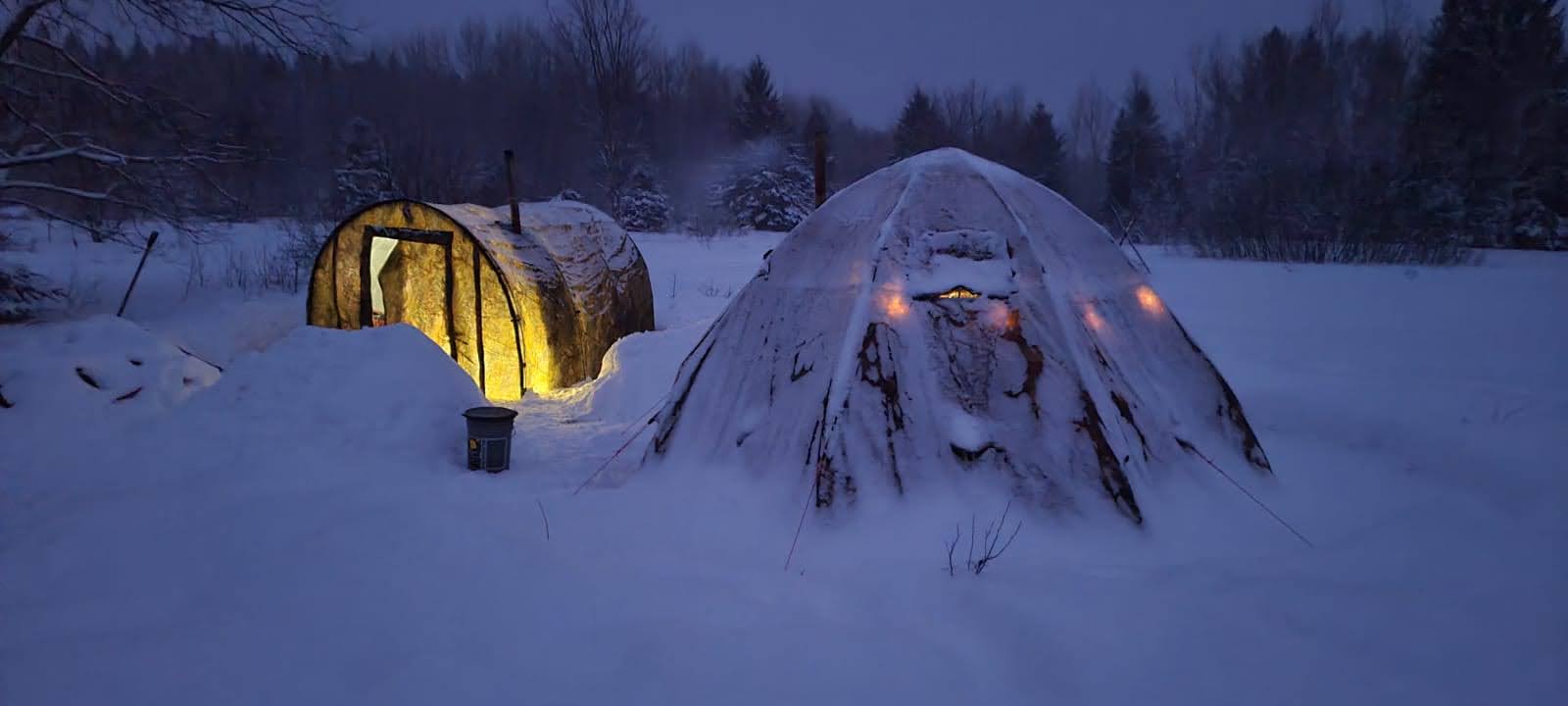
Performance in cold weather separates the two shelter philosophies clearly. A four-season tent keeps the wind and precipitation out. Your sleeping system does the heavy lifting on warmth. In temperatures below 0°F (-18°C), you need a sleeping bag rated for those conditions. Add a thick sleeping pad with an R-value of 5 or higher. The tent shell adds a windbreak, but it does not produce heat on its own.
Hot tent camping changes the equation entirely. With a wood-burning stove running, the interior reaches temperatures warm enough to sleep in a three-season sleeping bag. During a Sierra snowstorm where temperatures dropped to -15°F (-26°C), the UP-5 with a diesel heater running held the interior at a comfortable level. Working and sleeping became the focus, not thermal management. Specifically, the experience showed how a heated interior shifts your mental bandwidth from survival logistics back to enjoying the trip.
Temperature Ratings Explained
Pay attention to how each tent type uses temperature ratings. Four-season tent ratings describe the structural conditions the tent withstands. They do not describe the temperature at which you stay comfortable. A tent rated for -40°C means the poles and fabric survive those conditions. It does not mean you stay warm without gear. By contrast, hot tent ratings describe a combination of fabric insulation and stove output needed to maintain interior comfort. The Bereg UP-5 is rated to -50°C (-58°F). The rating reflects the double-layer Oxford fabric minimizing heat loss and the stove jack accepting stoves powerful enough to heat the 13.1 m² (141 sq ft) interior at extreme temperatures.
Condensation and Ventilation

Condensation is a serious issue in any cold-weather tent. The two shelter types approach it differently. In a four-season tent, moisture from your breath accumulates on the inner tent walls overnight. Without adequate ventilation, it freezes. Then it thaws and drips on your gear when morning sun hits the tent. Managing this requires keeping small vents open even in extreme cold. Balancing moisture management and heat retention takes active attention every night.
Hot tents handle condensation better when designed correctly. The Bereg UP-5 uses dual-wall construction. Its inner layer is Oxford 210 PU 2000 fabric. Externally, an outer layer carries a 4,000mm waterproof rating. Between those layers, air circulates through bottom vents and a ceiling vent. After five winters of use across desert camping, mountain stays, and overnight production shoots in freezing temperatures, I’ve seen nearly zero condensation on gear inside the tent. The stove also helps: warm air rises and exits through the stovepipe, drawing fresh air in from below. This circulation displaces moisture before it settles on surfaces.
For reference on choosing a canvas-walled shelter with similar dual-layer principles, the guide to choosing the right canvas wall tent covers material and construction considerations worth reading alongside this comparison.
Buy Direct From Bereg Canada
The Bereg UP-5: A Hot Tent Built for Extreme Winter
Sets up in under 60 seconds, rated to -50°C, and built with an aviation-grade aluminum frame that has never let me down across five years of hard use.
Weight, Packability, and Setup

Weight is where four-season tents have a clear advantage for anyone moving on foot. A quality two-person geodesic model typically weighs between 2 and 8 lbs (0.9-3.6 kg), with premium lightweight options as low as 2 lbs. It packs into a bag the size of a large water bottle. Hot tents weigh significantly more because of heavier fabrics, taller frame systems, and stove jack hardware. The Bereg UP-5 weighs 29 kg (65 lbs). It travels in a truck bed or on an ATV rack, not on your back.
However, setup time tells a different story. Traditional four-season tents take 10-20 minutes to pitch correctly in calm conditions, and longer in wind. The UP-5 uses an aviation-grade aluminum umbrella-style frame with a single push-up mechanism. In practice, an experienced person deploys it in under 60 seconds. At a crowded Labor Day camp where I needed shelter at dusk, the UP-5 was standing and staked before a companion finished assembling poles on a conventional winter camping tent. For overlanding and vehicle-based camping, the setup advantage outweighs the pack weight difference entirely.
If you’re still weighing shelter options, reviewing the pros and cons of rooftop tent camping offers a useful comparison point before committing to a hot tent or a ground-based four-season tent.
Hot Tent vs Four Season Tent: Side by Side
When you compare the two shelter types across the most important variables, the right choice depends entirely on how and where you camp. Neither type is universally superior. Instead, each excels under specific conditions. The table below lays out the key differences in the hot tent vs four season tent comparison.
| Factor | Hot Tent | Four-Season Tent |
|---|---|---|
| Warmth Source | Interior stove (active heat) | Sleeping system (passive insulation) |
| Typical Weight | 20-65+ lbs (9-30+ kg) | 4-10 lbs (1.8-4.5 kg) |
| Interior Space | Stand-up height, 4-11 person capacity | Low profile, 1-4 person typical |
| Condensation | Minimal (active ventilation from stove) | Moderate to high (requires vent management) |
| Setup Time | 60 seconds (UP-5) to 20 minutes | 10-20 minutes typical |
| Best Use | Vehicle-based camping, base camps, hunting | Backpacking, mountaineering, high-altitude |
| Stove Jack | Built-in fire-resistant jack included | None |
| Comfort Level | High (heated, stand-up, gear storage) | Functional (warmth requires heavy sleep system) |
Save on the Bereg UP-5
Shop the UP-5 Through Bereg’s Authorized Canadian Dealer
Bereg Canada is the only authorized North American source. Prices are in Canadian dollars and availability is limited, so check current stock before your next trip.
Pros and Cons
Hot Tent Pros
- Active interior heat makes extreme cold manageable without heavy sleeping bags
- Stand-up height allows you to cook, change clothes, and move around comfortably
- Double-wall ventilation systems produce nearly zero condensation
- Larger capacities (4-11 people) work well for group camping and family trips
- Stove jack enables wood-burning stoves, diesel heaters, or propane units
- Umbrella-frame designs like the UP-5 set up in under 60 seconds
Hot Tent Cons
- Weight of 29-65+ lbs limits use to vehicle-based travel
- Stove requires fuel management and fire safety protocols
- Higher upfront cost, with the UP-5 at $3,406.80 CAD
- Stove must be monitored and managed through the night
- Not practical for high-altitude mountaineering or through-hiking
Four-Season Tent Pros
- Lightweight models start at 4 lbs, practical for backcountry and alpine use
- Geodesic pole structures handle severe wind and heavy snow loads
- No fuel dependency, fire management, or stove setup required
- Proven designs from major brands with decades of refinement
- Pack size fits in standard backpacks
Four-Season Tent Cons
- Warmth depends entirely on your sleeping bag and pads, which adds cost and weight
- Low-profile interior makes movement, cooking, and changing difficult
- Condensation builds overnight without careful vent management
- No ability to cook inside safely or run a heat source
- Cold gear at night: boots, clothing, and electronics freeze without active heat
Final Verdict
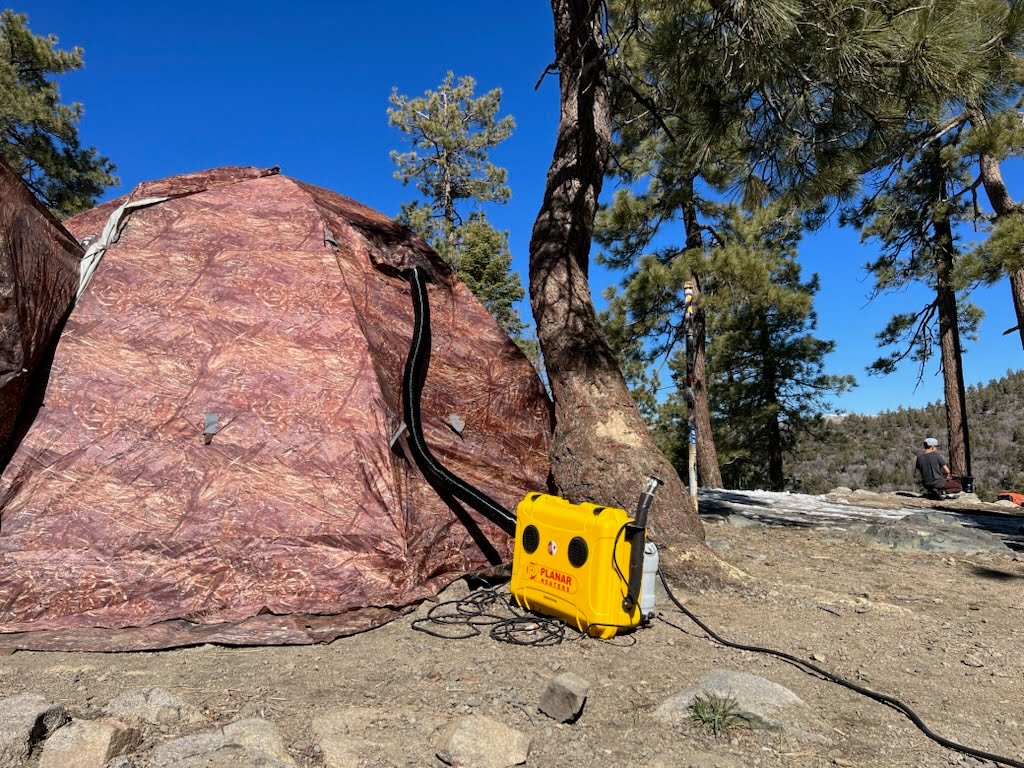
For overlanders, hunters, and anyone doing vehicle-based winter camping, a hot tent solves problems a four-season tent doesn’t address. The Bereg UP-5 is the specific version of this argument I’ve made personally for five years. It sets up fast and handles conditions most tents fail in. Beyond the specs, the warmth translates to better sleep, warmer gear in the morning, and more energy for whatever you drove out there to do. This style of camping is not roughing it. It’s camping with a real shelter.
Four-season tents remain the right tool for a different kind of trip. If you’re backpacking above treeline, summiting in winter, or covering terrain where every ounce matters, a geodesic four-season tent and a proper sleep system outperform a hot tent. No stove fuel to carry. No fire protocol to manage. Shelter weight stays in pounds, not tens of pounds. The trade-off is warmth comes entirely from your insulation budget, which has its own cost ceiling.
The Value Argument
The value argument for a hot tent gets stronger as group size increases. Splitting the UP-5’s $3,406.80 CAD cost across four people camping for a week comes to roughly $850 CAD per person, comparable to buying your own four-season tent solo before you add sleeping bags and pads. For solo winter camping, the investment is harder to justify unless you camp frequently. By contrast, a quality four-season backpacking tent costs between $400 and $1,300+ USD. It covers most winter backpacking use cases when paired with a rated sleeping system, and a tent with stove jack is not needed.
Choose a hot tent if you travel by vehicle, camp in groups, or spend multiple nights in one location. Choose a four-season tent if you cover distance on foot, prioritize pack weight, or need shelter for high-altitude objectives. Both are excellent tools for different purposes. Knowing which problem you’re solving before you buy prevents spending serious money on a shelter mismatched to your trip.
Ready to Buy?
Check Today’s Price on the Bereg UP-5
Ships from Bereg Canada, the only authorized North American dealer. Availability is limited, so confirm stock and current pricing before your next winter trip.
Frequently Asked Questions
What is a hot tent used for in camping?
A hot tent is a shelter designed to safely house a wood-burning, propane, or diesel stove inside the tent space. The tent with stove jack design allows the stovepipe to exit through a fire-resistant reinforced hole without contacting the tent fabric. Hot tent camping is primarily used for winter camping, hunting camps, and base camp setups. These are situations where temperatures drop below 0°F (-18°C) and comfort over multiple nights matters more than pack weight.
Do I need a hot tent for winter camping?
No, you don’t need a hot tent for winter camping, but it significantly changes the experience. A properly rated four-season tent with a matching sleeping bag handles most winter backpacking conditions. However, if you’re car camping, overlanding, or setting up a base camp, a hot tent creates a far more comfortable environment. The stove actively heats the interior. You’re not relying entirely on your sleeping system insulation to stay warm on a winter camping trip.
How does a tent stove jack work?
A tent with stove jack design uses a fire-resistant patch sewn into the tent fabric on the sidewall or roof. A metal ring reinforces the pipe hole and prevents wear over time. The stovepipe passes through the jack and exits the tent, carrying combustion exhaust outside. Quality stove jacks, like the one on the Bereg UP-5, use heat-resistant materials and reinforced metal rings. These prevent the pipe from burning through the fabric over time. The pipe also maintains a safe clearance from the tent fabric to prevent heat damage.
Is a hot tent safe to sleep in with a stove running?
Using a wood-burning stove inside a tent requires basic fire safety practices, but it is safe when done correctly. Keep the stovepipe clear of tent fabric. Maintain proper ventilation so combustion gases exit through the pipe rather than accumulating inside. Never leave a fire burning in a sealed tent without airflow. Most experienced hot tent campers let the fire burn down to coals before sleeping. The retained heat and insulating fabric maintain the interior temperature through the night.
Are four-season tents worth the cost for occasional winter camping?
For occasional winter camping, one or two trips per year in temperatures above -10°F (-23°C), a three-season tent with a quality sleeping system often handles conditions adequately as a winter camping tent. Four-season tents earn their cost in extreme conditions. Think sustained high winds, significant snow load, or temperatures consistently below -20°F (-29°C). Technical alpine objectives where structural failure means serious safety risk also justify the investment. For established campgrounds or moderate backcountry, a three-season tent plus a -20°F sleeping bag often covers you without the added cost. For a broader look at what you need for camping off grid, including shelter and gear priorities, that guide covers the essentials across all season types.
Friendly disclaimer: Our articles may contain affiliate links that support us without costing you more, and sometimes we spice things up with sponsored content—but only for products we truly stand behind!