


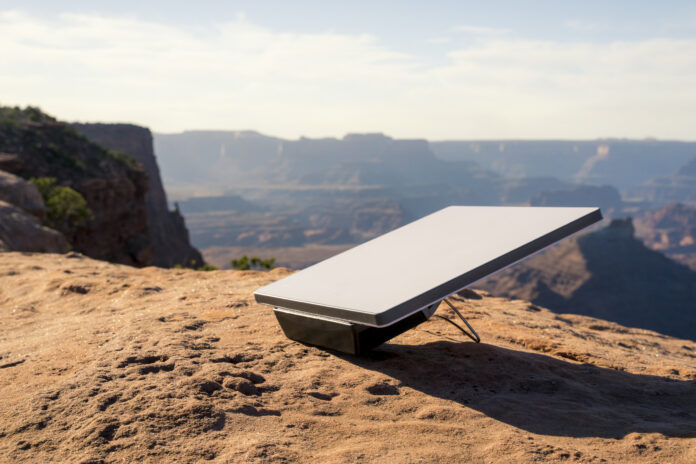
Quick Facts:
- Topic: Running Starlink Mini overnight on a 12V house battery or a power station.
- Rated draw: Starlink lists 20 to 40W average and 15W idle; owners measure about 18 to 25W.
- Night budget: About 16 to 23Ah at 12.8V for a 10-hour night at 20 to 30W.
- Power input: 12 to 48V DC at 60W, or USB-C PD rated 100W (20V/5A).
- Best source: A lithium house battery or a power station, never the starter battery.
- Easy saver: Run the dish on DC instead of through an inverter.
- Bedtime options: A switch or timer cuts all draw; Sleep Schedule cuts part of it.
- Refill: A 100W panel makes about 30Ah a day, per Battle Born Batteries.
- Skill level: Beginner with a power station; basic 12V wiring for a hardwired circuit.
11 min read
In This Guide
- Overview: Running Starlink Mini Overnight
- Step 1: Budget a Starlink Mini Overnight in Amp-Hours
- Step 2: Power Station vs House Battery
- Step 3: Wire It on DC, Not Through an Inverter
- Step 4: Refill the Battery After a Starlink Mini Overnight
- Step 5: Cut the Draw While You Sleep
- Final Thoughts
- Frequently Asked Questions
Overview: Running Starlink Mini Overnight
Running Starlink Mini overnight comes down to one number: the amp-hours your battery gives up between dinner and breakfast. Starlink rates the Mini at 20 to 40W average and 15W idle. Meanwhile, owners on the Escape, Sprinter-Source, and iRV2 forums measure about 18 to 25W in normal use. At 12.8V, a 10-hour night at a planning figure of 20 to 30W pulls roughly 16 to 23Ah.
This guide is for overlanders, truck and van campers, and anyone who wants Wi-Fi at camp after sunset. The plan starts with a one-night power budget. From there, you’ll pick a battery, wire the dish on DC, and plan the refill. Bedtime habits to trim the draw come last. For the base wattage tests, start with our breakdown of Starlink Mini power consumption figures, then come back for the overnight plan.
Some campers shut the dish down after dinner to save power. However, a Starlink Mini overnight setup keeps messages, weather alerts, and early work calls running while camp sleeps. A rig with a lithium house battery needs little more than a fused 12V lead and a switch.
Having built my own rigs over the years, I’d treat the Mini as one more load on the house battery, the same as a fridge or a heater. Owners on Reddit and Expedition Portal warn against running it from the starting battery overnight. The five steps below follow the same approach.
What You’ll Need
Tools
- Wire stripper and crimper for 16 to 10 AWG wire.
- Multimeter with DC volt and amp settings.
- USB-C power meter rated for 100W, to log real draw.
Materials
- 12V lithium house battery or a power station.
- Inline fuse holder with a 7.5A or 10A fuse.
- 16 AWG or heavier red and black wire, sized to the run.
- 100W (20V/5A) USB-C adapter and 5A e-marked cable, or a barrel-jack DC lead.
- Inline switch or timer relay.
Step 1: Budget a Starlink Mini Overnight in Amp-Hours
Start with amp-hours, since 12V batteries carry an amp-hour rating, not a watt rating. To convert, divide the watts by 12.8V, the nominal voltage of a lithium iron phosphate (LiFePO4) battery per Victron. Then multiply by the hours you plan to stay online. For example, 25W divided by 12.8V equals about 2A, and 10 hours at 2A uses about 20Ah.
Starlink Mini Power Figures at a Glance
| Figure | Value | Source |
|---|---|---|
| Average draw (spec sheet) | 25 to 40W | Starlink spec sheet |
| Average and idle (support page) | 20 to 40W average, 15W idle | Starlink support |
| Owner-measured average | About 18 to 25W | Escape, Sprinter-Source, iRV2 owners |
| Boot draw | About 36 to 40W for a few minutes | Escape forum owner, cold boot |
| DC input rating | 12 to 48V DC, 60W | Starlink support |
| USB-C power minimum | 100W (20V/5A) | Starlink support |
| Current at 12.8V | About 1.6 to 2.3A average, about 4.7A at 60W | Calculated |
Starlink’s support figures come from AC input averages, so they include the power brick’s losses. A direct 12V hookup tends to land lower, which matches the owner measurements. For planning, use 20 to 25W on mild nights and 30W if you stream late.
How Far a Power Station Stretches
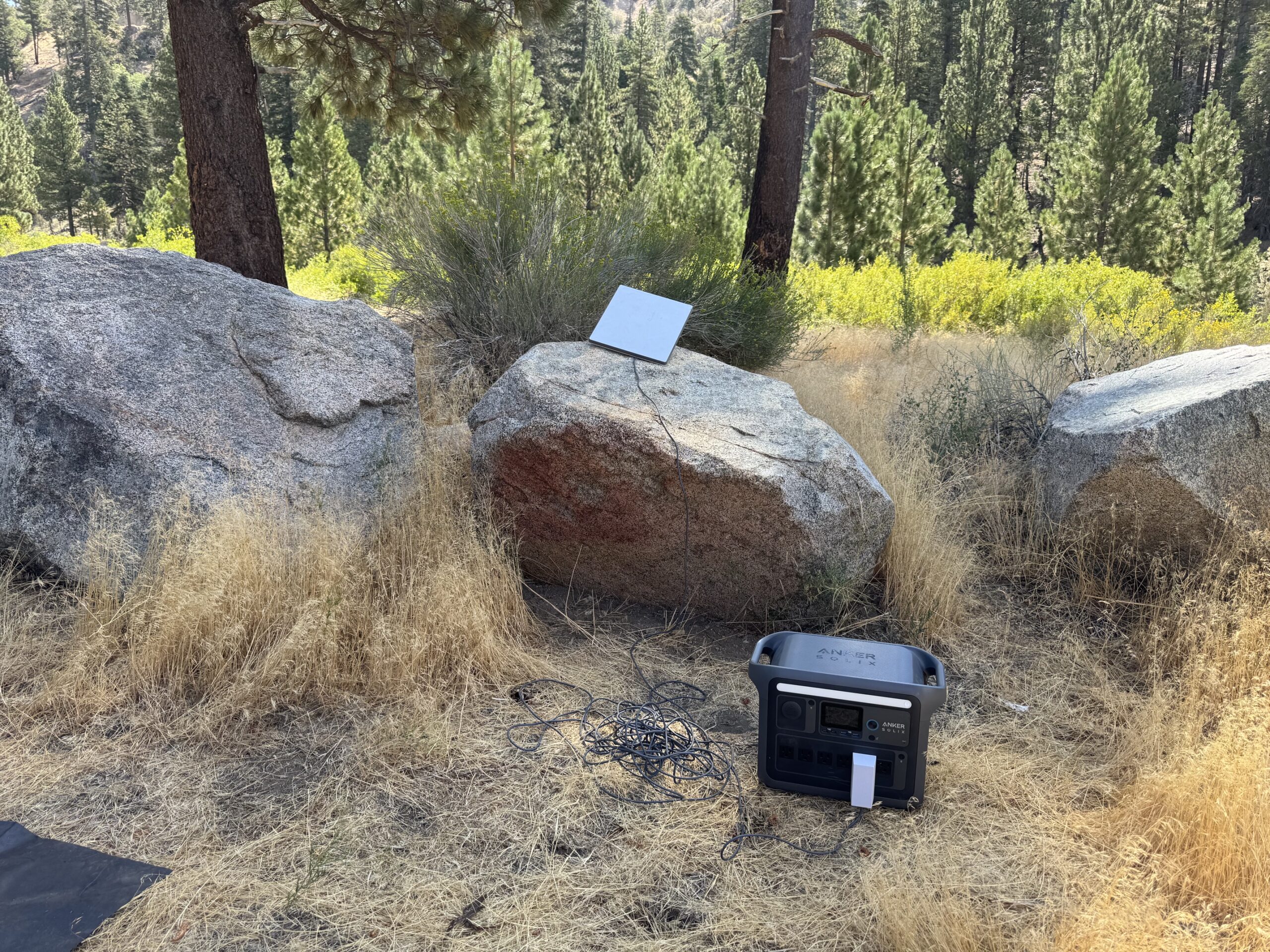
A power station with 100W USB-C ports runs the Mini at these numbers with no inverter loss. For instance, 4xSolar carries the Dark Energy Recon 2000, built for basecamps running several loads. Dark Energy lists 2,016Wh of LiFePO4 storage, two 100W USB-C ports, two DC5521 outputs, and up to 650W of solar input. At 25W, the Mini alone uses about 250Wh of it on a 10-hour night.
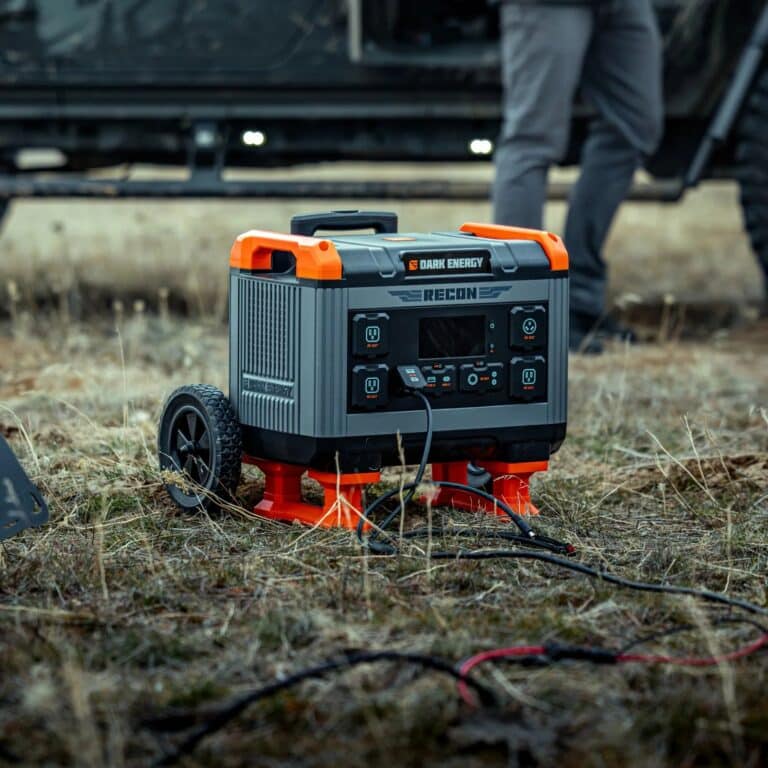
Dark Energy Recon 2000 Power Station
A 2,016Wh LiFePO4 power station with two 100W USB-C ports, so the Mini runs on DC with no inverter loss.
- 2,016Wh LiFePO4 battery
- Two 100W USB-C ports plus two DC5521 outputs
- Up to 650W of solar input
- 5-year warranty from Dark Energy
- About 70 lb, so it suits a basecamp more than a daily carry
Add the Rest of Camp to the Budget
The Mini rarely runs alone. On most builds, a fridge and a diesel heater share the same battery, so add them before you size anything. Our guide to overland fridge power draw puts a 40L compressor fridge at about 0.5 to 1A in mild weather. Similarly, Webasto lists its Air Top 2000 STC at 1.25 to 2.45A while running, per our diesel heater power consumption breakdown.
| Overnight Load | Average Draw | 10-Hour Night |
|---|---|---|
| Starlink Mini at 20W | 1.6A | 16Ah |
| Starlink Mini at 30W | 2.3A | 23Ah |
| 40L fridge, mild weather | 0.5 to 1A | 5 to 10Ah |
| Diesel heater, low to high | 1.25 to 2.45A | 12.5 to 24.5Ah |
| Dish, fridge, and heater together | About 3.4 to 5.8A | About 34 to 58Ah |
A cold night with all three loads lands near 34 to 58Ah. In contrast, a summer night with only the dish and fridge sits near 21 to 33Ah. Therefore, size the battery for your coldest planned trip, not your average one.
Step 2: Power Station vs House Battery
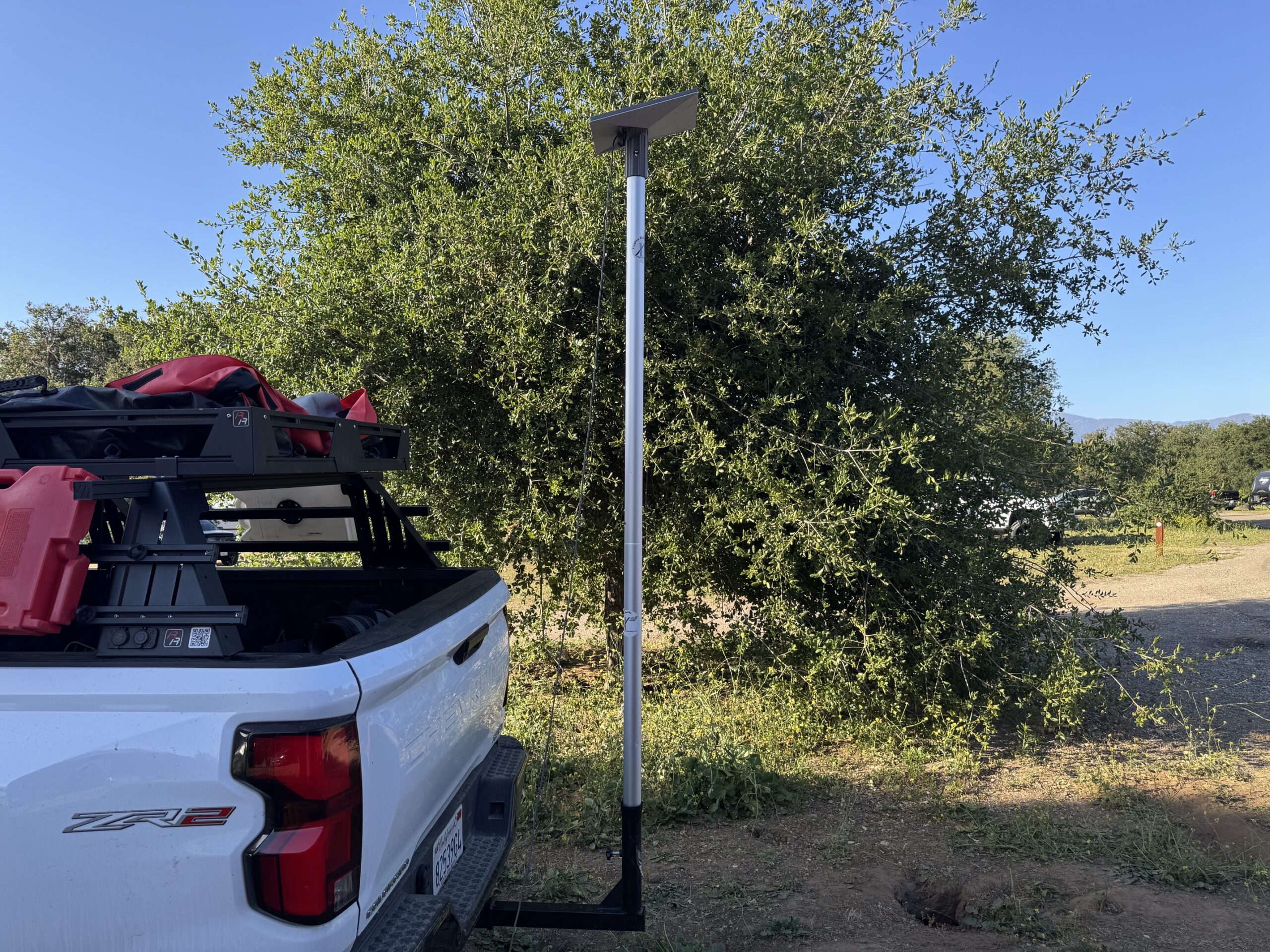
Both options handle a Starlink Mini overnight run when sized to the budget above. The choice hinges on how your rig is built and how often you camp. A power station works out of the box and moves between vehicles. In contrast, a hardwired house battery charges while you drive and frees up floor space.
When a Power Station Makes Sense
A power station suits renters, families with more than one vehicle, and anyone who wants the dish away from the truck. On Sprinter-Source, one owner expects a 512Wh EcoFlow River 2 Max to run the Mini for about 24 hours. Elsewhere, an Expedition Portal owner’s Jackery 1000 still showed 63% after several daytime hours and a night.
Check the ports before you buy. The Mini needs a USB-C port rated 100W, a regulated DC output, or a 12V car port. Also, most power stations limit the car port to about 10A. This limit covers the Mini’s roughly 5A peak, though many budget diesel heaters surge past it at startup.
When a House Battery Makes Sense
A hardwired house battery suits a rig you camp from most weekends. For scale, a 100Ah LiFePO4 battery stores about 1,280Wh at 12.8V. Battle Born puts usable depth of discharge for lithium at 80 to 100%, so plan on 80Ah usable to stay conservative. As a result, one 100Ah battery covers the worst-case winter night in the table above with about 22Ah to spare.
Lead-acid batteries work too, although they need more capacity for the same night. In particular, an AGM battery’s voltage sags as it drains, while the Mini needs at least 12V at its input. Owners on Reddit and the Forest River forum report dropouts once voltage at the dish falls below 12V.
Never Run It From the Starter Battery
A starting battery delivers a short burst of high current to crank the engine, and it wears quickly under deep discharge. Owners on Reddit and Expedition Portal warn an all-night run is hard on a starting battery. One Reddit owner’s battery, shared with a fridge, went flat in about 48 hours with the dish asleep.
If your rig has one battery, use a power station instead. Alternatively, add a second battery charged through a DC-DC charger, as our dual battery charging setup guide explains. A low-voltage disconnect adds a second layer of protection, since it cuts the load before the battery drops too far to crank.
Step 3: Wire It on DC, Not Through an Inverter
Once you pick the battery, wiring decides how far it stretches. Skipping the inverter is one of the biggest power savers in a Starlink Mini overnight setup. An inverter turns 12V DC into 120V AC, and then the Mini’s power brick turns it back into DC. Each step burns energy. Victron rates its small 12V inverters at 87 to 91% peak efficiency, with 4.2 to 10W of no-load draw.
Owners see the same loss in real use. In a six-hour EcoFlow River 2 test, one Reddit owner ran the Mini on AC, USB-C, and DC. USB-C and DC each used 21% of the battery, a roughly 38% improvement over AC. For me, this is the first fix, because it stretches runtime without a bigger battery.
Choose a USB-C PD or Barrel-Jack Connection
The Mini takes 12V power two ways. First, the barrel jack on the dish accepts 12 to 48V DC at 60W, per Starlink. Second, Starlink’s USB-C power guidance calls for a USB-C source rated at least 100W (20V/5A). It also states the Mini will not work at 65W or lower.
Underpowered USB-C PD gear causes most of the problems owners report. Dash ports, 30 to 65W power banks, and cheap car chargers lead to boot failures or reboot loops. Any cable carrying more than 60W also needs an e-marker chip, according to cable maker Cable Matters. The USB-IF ties 100W PD to 20V on cables rated 5A. Starlink’s own Mini Car Adapter works on 12 to 24V outlets and comes with the Mini USB-C Cable, which removes the guesswork.
Size the Wire and Fuse
A hardwired lead from the house battery needs the right wire gauge and a fuse. Blue Sea Systems recommends a 3% voltage drop limit for electronics, measured from the battery to the load and back. At the Mini’s 60W maximum, the circuit carries about 5A. The table below applies standard copper wire resistance to a 5A load at 12V.
Safety note: Disconnect the battery’s negative cable before you wire anything. Fit an inline fuse within 7 inches of the positive terminal, as Blue Sea Systems advises. Then size it at or below the wire’s rating. A 7.5A or 10A fuse on wire sized from the table below protects the Mini’s circuit.
| One-Way Run From Battery | Minimum Wire Gauge (3% Drop at 5A) |
|---|---|
| Up to 9 ft | 16 AWG |
| Up to 14 ft | 14 AWG |
| Up to 22 ft | 12 AWG |
| Up to 36 ft | 10 AWG |
Voltage drop matters more at 12V than at higher voltages. Owners on the Forest River and Oliver forums trace reboots to thin factory wiring and long runs to rear outlets. The Mini’s stock DC cable is also 15 m (49.2 ft) long. To avoid those reboots, some owners keep the 12V run short and heavy. Others add a step-up converter to 24V or higher.
Step 4: Refill the Battery After a Starlink Mini Overnight
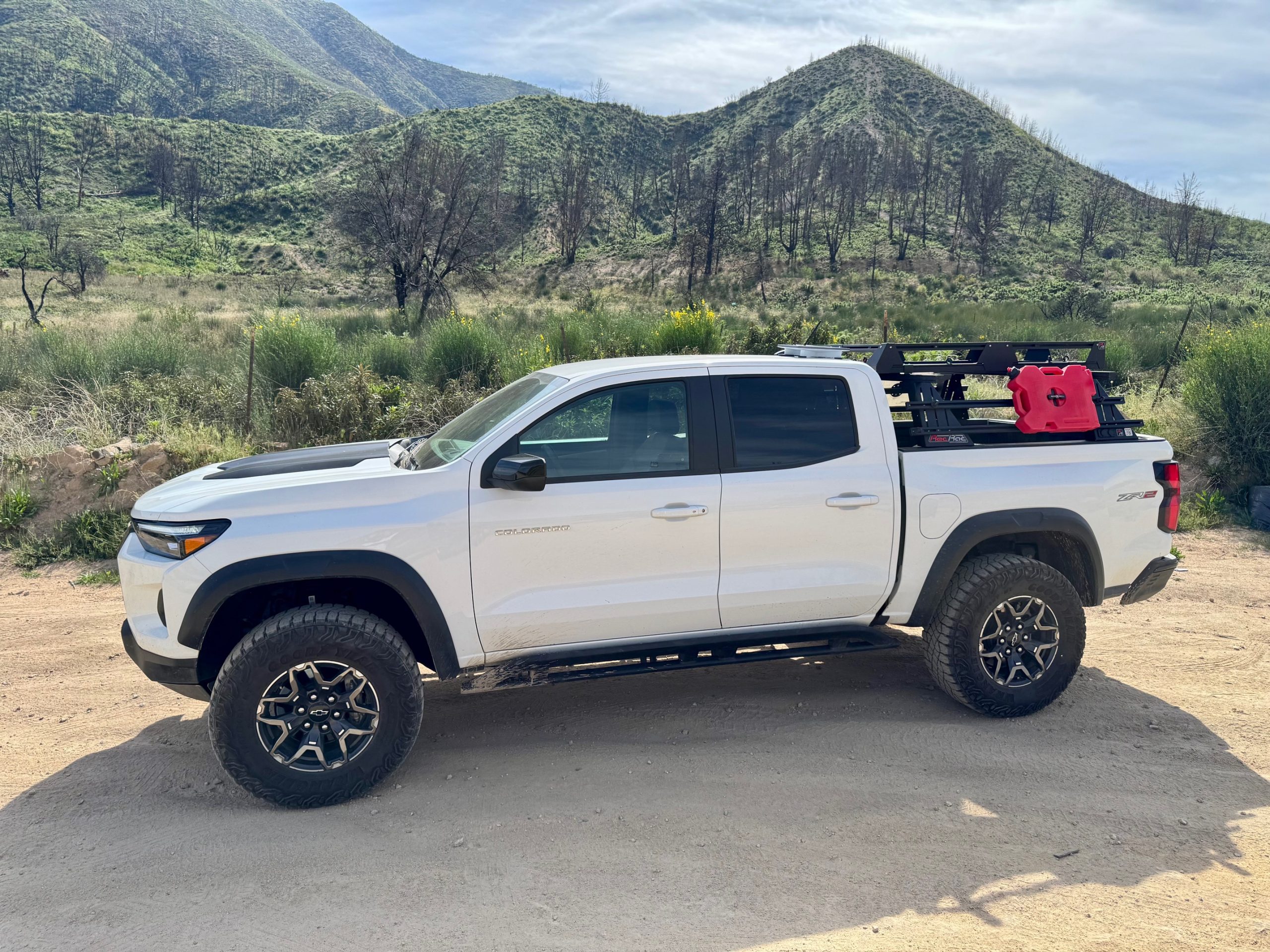
A Starlink Mini overnight plan works only when the battery returns to full by dinner. On a 12V rig, the alternator charges through a DC-DC charger while you drive, and solar charges while you sit.
Recharge While You Drive
A DC-DC charger pulls current from the alternator and charges the house battery at the right voltage for lithium. Victron rates its Orion-Tr Smart 12/12-30 at 30A continuous output. At 30A, about an hour of driving replaces a 23Ah Starlink night. A 58Ah winter night with the heater needs about two hours of driving.
Refill With Solar
Solar covers the days you stay parked. Battle Born estimates a 100W panel makes about 30Ah, or roughly 350Wh, per day. To estimate any panel, multiply panel watts by peak sun hours, then by 0.75 to 0.85 for system losses. For instance, a 90W panel in five hours of sun makes about 340 to 380Wh, or 26 to 30Ah at 12.8V.
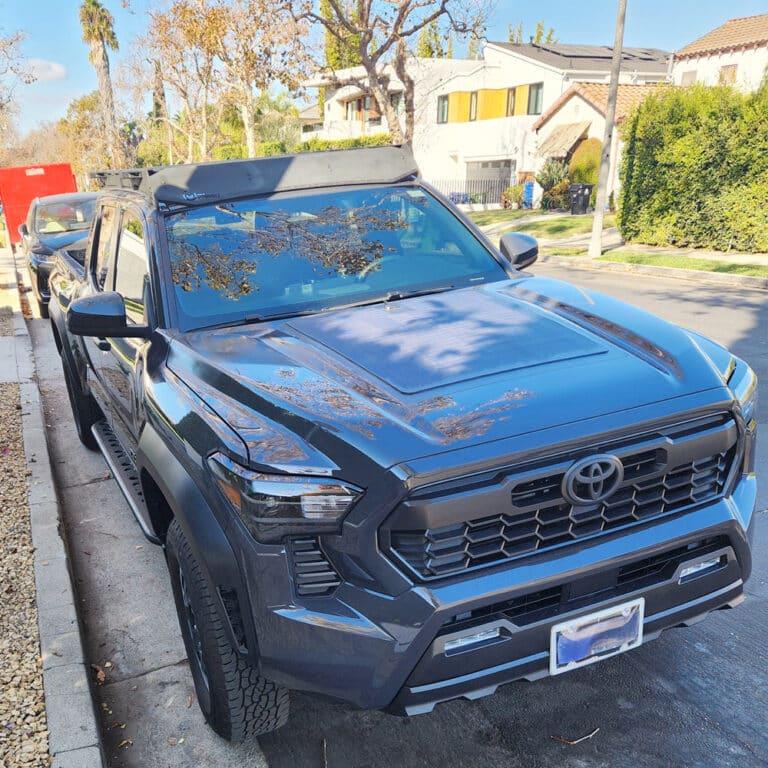
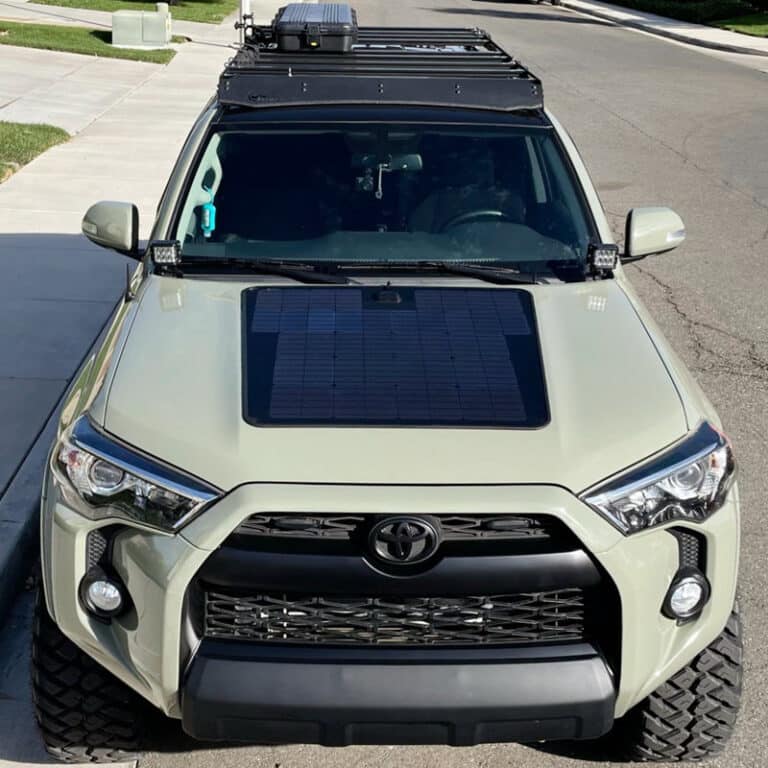
A hood panel keeps the roof free for a rack, a tent, or the dish. Our guide to a solar panel on the hood covers the trade-offs. In practice, a 90 to 100W hood panel refills a dish-only night on a sunny day. A winter night with the heater, by contrast, needs a second panel or a drive.
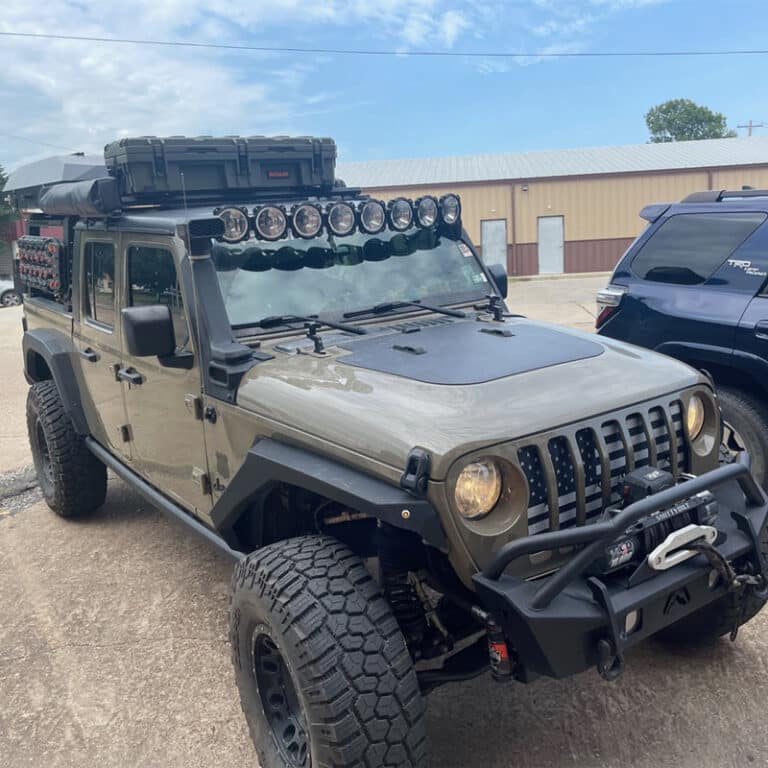
4xSolar sells Lensun hood panels cut to fit specific trucks and SUVs. Among them, the 4th Gen Tacoma and 4th and 5th Gen 4Runner panels are rated 100W. Similarly, the 3rd Gen Tacoma and Wrangler JL panels are rated 90W, and the Bronco panel 80W. Scooped hoods take smaller panels. At five sun hours, even the 80W panel makes about 23 to 27Ah, enough for a dish-only night.
Lensun Hood Solar Panels at 4xSolar

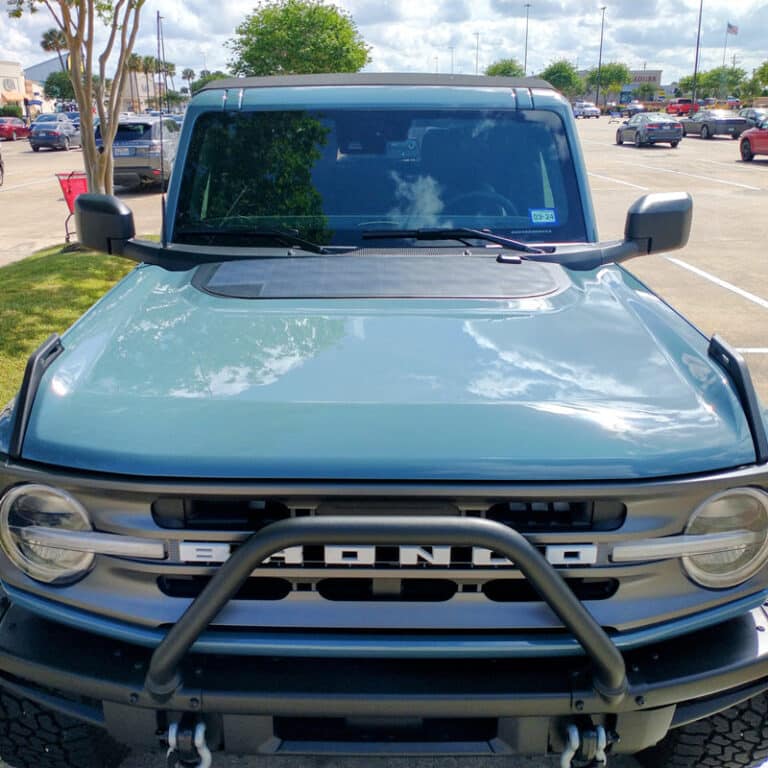

Battle Born batteries restrict charging below 25°F, so on cold mornings solar waits until the battery warms.
Step 5: Cut the Draw While You Sleep
The cheapest amp-hour is the one the dish never uses. Owners on Reddit and the RV forums lean on three tactics, ranked from most savings to least. Cut power at bedtime, schedule sleep hours in the app, and switch off the features you don’t need.
Cut Power at Bedtime
Cutting power entirely saves the most, since the dish draws nothing while off. Owners use an inline switch, a relay, a timer, or a power station’s phone app. The next morning, the Mini needs a few minutes to boot and reconnect. For example, a timer relay set for midnight trims several hours from a Starlink Mini overnight budget.
Use Sleep Schedule for Set Quiet Hours
Starlink’s app places Sleep Schedule under Settings, then Starlink. The feature conserves power, according to Starlink. While asleep, the dish has no internet, no snow melt, and no remote management. Set your local time zone before the first night, since the schedule defaults to UTC.
The schedule saves only part of the draw, however. Owners report the Wi-Fi radio stays on, so a sleeping Mini still pulls power. As a result, scheduled sleep works best for fixed quiet hours at a campground. A switch suits a full Starlink Mini overnight shutdown.
Trim Wi-Fi and Snow Melt, Then Update Firmware
Two more settings cut the draw. First, bypass mode turns off the built-in Wi-Fi when you run your own router. One Reddit owner measured 17.9W with Wi-Fi on against 13.9W in bypass. Second, Starlink’s Snow Melt setting has an Off mode, which uses no extra power, while Pre-heat raises consumption. Owners report snow melt drains the battery fast, so leave Snow Melt off on clear nights.
Keep the firmware current too. Owners on Reddit reported about a 25% drop in draw after an early 2026 update, although Starlink has not published a figure. Until Starlink confirms it, plan your Starlink Mini overnight budget on the older numbers and treat any savings as margin.
Final Thoughts
Running Starlink Mini overnight takes less battery than the box numbers suggest. At 20 to 30W, the dish uses about 16 to 23Ah over a 10-hour night. This fits inside a 100Ah lithium house battery or a mid-size power station with room left for the fridge. The biggest gain comes from running it on DC, which beat AC by roughly 38% in one owner’s test.
Underpowered USB-C chargers cause most of the failures owners report, so buy a 100W source and a 5A cable from the start. Also, keep the dish off the starter battery. Budget for the fridge and heater on cold nights too, since those loads more than double the total.
On my own rigs, I’d wire the Mini to the house battery through a fused circuit and a switch before buying a bigger battery. If you don’t have a house battery yet, a power station with a 100W USB-C port gets you online tonight. Later, a DC-DC charger or a hood panel keeps it full. Then the dish stays online from dinner to breakfast.
Frequently Asked Questions
How long will Starlink Mini run on a 100Ah battery?
A 100Ah LiFePO4 battery holds about 1,280Wh at 12.8V, or roughly 1,024Wh at 80% usable. At 20 to 30W, the Mini alone runs about 34 to 51 hours on DC. With a fridge and heater added, the same battery still covers one long winter night.
Does Starlink Mini run on 12V?
Yes. Starlink rates the barrel-jack input at 12 to 48V DC and 60W. Alternatively, a USB-C PD source rated 100W (20V/5A) runs it from a 12V outlet.
Is a 65W USB-C charger enough for Starlink Mini?
No. Starlink says the Mini will not work with USB PD sources rated 65W or lower, and it calls for at least 100W at 20V and 5A. Pair the charger with a 5A e-marked cable.
Will Starlink Mini drain my starter battery overnight?
It risks it. A 10-hour night takes roughly 16 to 23Ah, a deep pull for a battery built to crank an engine. Owners warn an all-night run is hard on a starting battery. Use a house battery or a power station instead.
Does Sleep Schedule save power on Starlink Mini?
Partly. Starlink says the feature conserves power, while owners report the Wi-Fi radio stays on during sleep. A switch or timer relay saves more because it cuts all draw.
How many amps does Starlink Mini draw at 12V?
About 1.6 to 2.3A at 20 to 30W, the planning range in this guide. Boot draw runs higher for a few minutes, and the 60W maximum works out to about 5A at 12V.