


Quick Facts:
- Law: SB 1392, Jay Leno’s Law, a California smog exemption for qualifying 1976 to 1985 collector vehicles
- Signed: September 16, 2026, by Gov. Gavin Newsom at Jay Leno’s Garage in Burbank
- First exemptions: January 1, 2028, for 1976 to 1980 model years
- Final step: January 1, 2033, adds the 1985 model year
- Route 1: Insured as a collector vehicle, with proof sent to the Bureau of Automotive Repair (from 2028)
- Route 2: Driven fewer than 1,000 miles per calendar year (from 2030)
- Use test: Shows, parades and exhibitions, not your primary transportation
- Not covered: 1986 and newer models; pre-1976 vehicles were already exempt
- Biggest winners: Owners of garage-kept Broncos, Blazers, Land Cruisers, CJs and Scouts on collector insurance
7 min read
In This Article
Leno’s Law Creates a California Smog Exemption for 1976 to 1985 Rigs
California has a new smog exemption for classic 4x4s, but it arrives in slow steps. On September 16, 2026, Gov. Gavin Newsom signed SB 1392, known as Jay Leno’s Law, at Leno’s garage in Burbank. The California smog exemption covers qualifying collector vehicles from the 1976 through 1985 model years. However, the first rigs leave the smog program on January 1, 2028, and the last model year joins in 2033. A collector-insured 1979 Bronco qualifies in the first wave, while a 1984 4Runner waits until 2032.
This law means something personal to me. Back in 2010, my brother and I brought two Corvettes onto Jay Leno’s show, and Jay interviewed us both. Mine was a unique car, and fast cars were my passion then, more than off-roading and overlanding. We also toured his entire car collection at his Burbank warehouses. It was an impressive collection, with cars from every era of the auto industry. Jay, Bernard and Helga are extraordinary, pleasant and down-to-earth people. As a result, the news of Jay Leno’s Law pleased me. I believe no one on the West Coast is as passionate about a car collection as Jay is about his.

Senators Dave Cortese (D-San Jose) and Shannon Grove (R-Bakersfield) wrote the bill together. It is now Chapter 245 of the 2026 statutes. Before this law, the state already exempted every vehicle built before the 1976 model year. As a result, a 1975 Bronco skips smog today, while a 1976 Bronco still tests every two years.
Many headlines call it a classic car smog exemption. For 4×4 owners, the fine print matters more than for show cars. The governor’s office itself calls the law “narrowly tailored.” Each qualifying rig must pass an insurance or mileage test, plus a use test. Also, the insurance route starts in 2028, while the mileage route waits until 2030.
Passing California Smog Until Your Model Year Comes Up
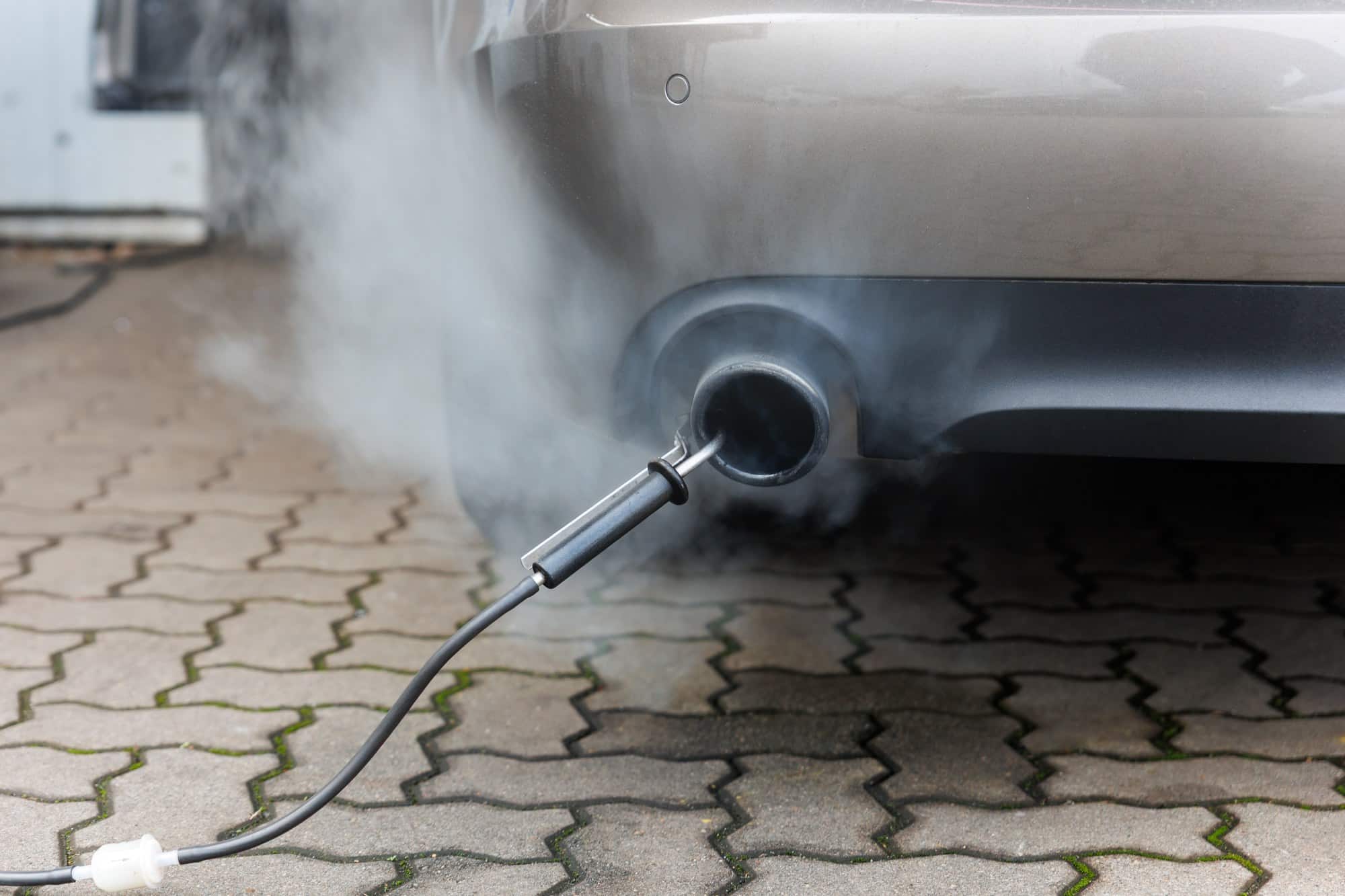
Nothing changes for your rig before January 1, 2028. Most gas-powered 1976 to 1985 rigs still need a smog certificate at biennial renewal and at nearly every sale. For example, a 1985 truck faces about three more biennial tests before its turn arrives in 2033. On a carbureted engine, a clean fuel system, correct ignition timing and a leak-free vacuum system all help it pass.
The grid below holds three tools for pre-smog prep: Sea Foam Motor Treatment for the fuel system, an Innova 5568 inductive timing light and a Mityvac MV8500 hand vacuum pump with a gauge. Each one targets a common reason older engines fail the tailpipe test.
Pre-Smog Tune-Up Gear for Carbureted Classics


Innova 5568 Pro Digital Timing Light Tool with Digital Advance
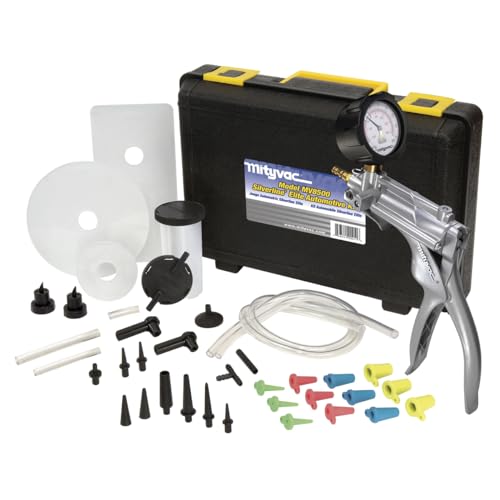
Mityvac MV8500 Silverline Elite Automotive Brake/Clutch Bleeding
The California Smog Exemption Schedule, Year by Year
The law adds one model year at a time. This table follows the chaptered text of SB 1392, which amends Health and Safety Code Section 44011 and Vehicle Code Sections 259 and 4000.1.
| Starting date | Model years exempt | Collector insurance route | Under 1,000 miles route |
|---|---|---|---|
| January 1, 2028 | 1976 to 1980 | Yes | Not yet |
| January 1, 2029 | 1976 to 1981 | Yes | Not yet |
| January 1, 2030 | 1976 to 1982 | Yes | Yes |
| January 1, 2031 | 1976 to 1983 | Yes | Yes |
| January 1, 2032 | 1976 to 1984 | Yes | Yes |
| January 1, 2033 | 1976 to 1985 | Yes | Yes |
Two details stand out. First, a low-mileage rig without collector insurance gets nothing until 2030. Second, the ladder stops at 1985, so a 1986 CJ-7 keeps testing under this law. In addition, the exemption covers all three smog triggers: initial registration, the biennial renewal and a change of ownership.
Which Classic 4x4s Qualify for the California Smog Exemption
2028: The 1976 to 1980 Rigs
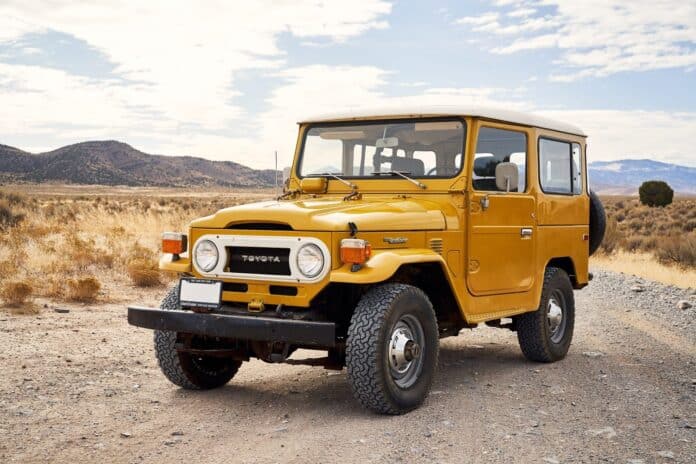
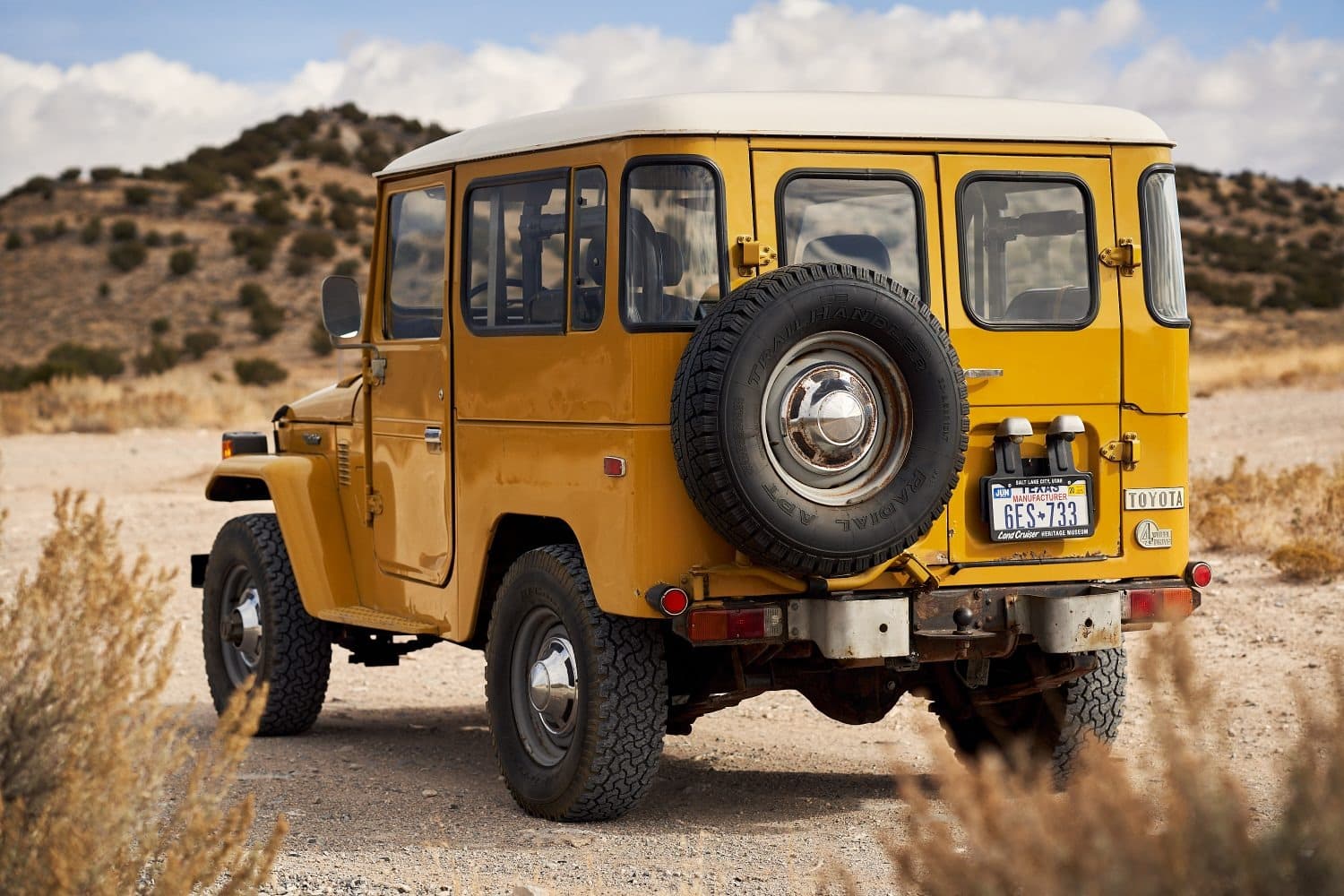
The first wave holds many of the most-wanted classics. It starts with 1976 and 1977 first-generation Ford Broncos, the last of the early Broncos. Next come 1978 and 1979 second-generation Broncos, plus 1980 third-generation models. Toyota FJ40 Land Cruisers from 1976 to 1980 qualify too. International Scout II owners also get in, since Scout production ended in 1980. Our history of the International Scout explains why those trucks still draw buyers. Likewise, 1976 to 1980 Jeep CJ-5s, CJ-7s and square-body Chevy K5 Blazers join in 2028.
2029 to 2033: The 1981 to 1985 Rigs
The later waves pick up one model year at a time. Third-generation Broncos and square-body K5 Blazers from 1981 to 1985 join between 2029 and 2033. So do US-market FJ40s from 1981 to 1983, the final years Toyota sold them here. FJ60 Land Cruisers follow the same ladder. Sources differ on whether US FJ60 sales began for 1980 or 1981, so a 1980-titled FJ60 would qualify in 2028. CJ-5s from 1981 to 1983 also qualify. The CJ-7 finishes the window with its 1985 models, although its final 1986 run stays out. For more on these trucks, see our roundup of classic American off-roaders.
Two newer icons squeeze in at the end. The first-generation Toyota 4Runner and the Jeep Cherokee XJ both launched for the 1984 model year. Consequently, a 1984 model qualifies in 2032, and a 1985 model follows in 2033. Every later XJ and 4Runner falls outside this law.
Two Routes and a Use Test: The Fine Print
Route 1: Collector Insurance, From 2028
This route opens on January 1, 2028, for rigs on collector vehicle insurance. You must also send proof of coverage to the Bureau of Automotive Repair (BAR). Collector car insurance policies usually require a separate daily driver, and some cap annual miles. Read those terms before you switch policies.
Route 2: Fewer Than 1,000 Miles a Year, From 2030
The second route starts on January 1, 2030. From then on, a rig driven fewer than 1,000 miles per calendar year qualifies without collector insurance. However, BAR still has to build the process for confirming mileage. In 2030, the route covers model years 1976 through 1982, and it grows with the ladder each year afterward.
The Use Test Every Rig Must Pass
Both routes share one more requirement. The vehicle must be used mainly for shows, parades, charitable events and historical exhibitions. In addition, it cannot serve as your primary transportation. The law never says whether a weekend trail run counts. Until BAR writes its rules, treat a daily-driven classic as not covered.
BAR Rules, Fees and Engine Swaps
Next, BAR has to adopt regulations, forms and fees before any exemption takes effect. The law caps the insurance-route fee at twice the $25 annual smog abatement fee, or $50. Notably, the text sets no stock-condition test, although BAR has not written its rules yet. Finally, the exemption removes the inspection only. California’s ban on tampering with emissions equipment, including Vehicle Code Section 27156, still applies to an engine swap. Newsom also signed the SB 1069 CARB-legal parts bill the same day.
What This Means for You
The governor’s announcement describes qualifying cars as preserved and driven only occasionally. For a 4×4 owner, the payoff depends on how you use the rig.
Stock, Garage-Kept Classics Win
Under this classic car smog exemption, a collector-insured, stock 1976 to 1980 FJ40 or Scout II wins most. From 2028, it skips the biennial test and the smog certificate at sale. The second point matters because California sellers normally owe the buyer a valid smog certificate. For me, a smog-free sale is the biggest long-term gain in this law.
Trail Rigs Face a Gray Zone, Daily Drivers Miss Out
A classic you wheel most weekends sits in a gray zone. Some collector policies restrict how you use the vehicle, and the use test favors shows over trails. My read: this law rewards the owner who keeps a classic parked and original, not the owner who wheels it hard. A daily-driven K5 gains nothing, since the law excludes primary transportation.
Steps to Take Before California’s 2028 Start Date
First, keep passing smog on schedule until your model year arrives. Next, price collector car insurance and ask about mileage caps and trail use in writing. Our guide to insuring a built rig properly covers agreed value and how to document mods. Then start an odometer log with dated photos, because BAR has not built its mileage process yet. Also, keep an eye on California’s new replacement tire rule, which starts in 2029.
Storage Gear for a Low-Mileage Classic
A rig driven under 1,000 miles a year spends most of its life parked. During those months, batteries drain, old fuel goes stale and rodents look for a warm engine bay. For long storage, the grid below groups a Battery Tender Plus smart maintainer, STA-BIL Storage fuel stabilizer and Mighty Mint peppermint rodent repellent spray.
Long-Term Storage Essentials for a Classic 4x4

Battery Tender Plus 12V 1.25 AMP Car & Motorcycle Battery Charger a…


Final Thoughts
Leno’s Law is good news, although the relief arrives slowly. If you own a collector-insured 1976 to 1980 rig, your last required smog test likely falls before 2028. Owners of 1981 to 1985 trucks wait longer, and 1985 models join last, in 2033.
I live in Orange County, and I like what this law says about these trucks. California now treats a clean ’79 Bronco as heritage worth keeping on the road. Still, the use test leaves trail rigs in a gray zone, and collector policies bring their own limits. If your classic sees regular trail miles, plan on smog tests for now.
None of the five Jeeps I’ve owned is old enough to qualify, yet a clean CJ-7 is the classic I’d watch most closely here. Its 1976 to 1985 models are in, while the 1986 finale is out. If you shop for one, weigh a 1985 against a 1986 with this gap in mind. Either way, keep your smog paperwork current until your model year arrives.
Frequently Asked Questions
What year is smog exempt in California?
Today, vehicles built before the 1976 model year are exempt from California smog checks. From January 1, 2028, qualifying 1976 to 1980 collector vehicles join them. The window then grows by one model year each January until it reaches 1985 models in 2033.
Is a 1981 car exempt from smog in California?
Not yet. A 1981 collector vehicle becomes exempt on January 1, 2029, if it carries collector insurance with proof on file at BAR. Alternatively, a 1981 rig driven fewer than 1,000 miles per year qualifies from January 1, 2030. Both routes also require show and exhibition use rather than daily driving.
What is the Jay Leno law?
The Jay Leno law is the official short title of California SB 1392, signed on September 16, 2026. It phases in a smog check exemption for 1976 to 1985 collector vehicles between 2028 and 2033. Jay Leno backed the bill, and the signing took place at his Burbank garage.
Does a 35 year old car need smog in California?
Yes, unless it was built before 1976 or qualifies under the new law. Current law lets an insured collector vehicle 35 or more model years old skip part of the inspection, but it must still meet tailpipe standards. SB 1392 keeps the 35-year minimum and adds the full exemption for 1976 to 1985 models.
Does Leno’s Law cover diesel 4x4s?
Diesel vehicles built before the 1998 model year are already exempt from California smog checks under existing law. As a result, a 1976 to 1985 diesel rig does not need SB 1392. Gas-powered classics from those years are the ones the new law helps.