


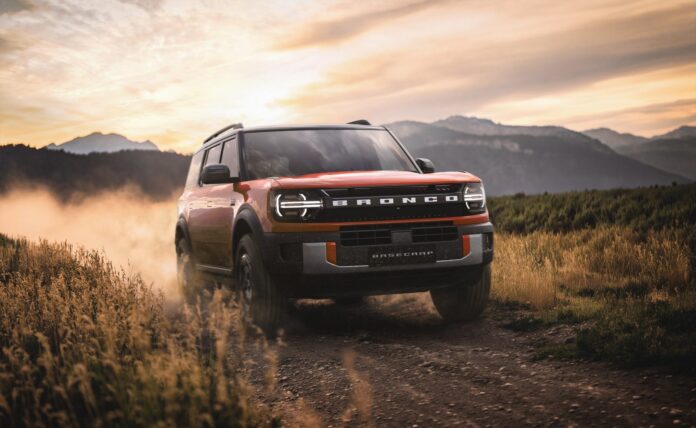
Quick Facts:
- Vehicle: Ford Bronco Basecamp, five-seat AWD SUV
- Platform: Unibody monocoque, not the body-on-frame US Bronco
- Markets confirmed: Australia and New Zealand, from mid-2027
- Powertrain: Dual electric motors plus a 1.5-liter turbo gasoline range extender
- Battery: 49 kWh usable, LFP chemistry per Ford Australia
- Range: 800 to 900 km, or 497 to 559 miles, on the WLTP cycle and preliminary
- Roof: Button-operated pop-up lift roof with rain sensing, Outer Banks trim only
- Onboard power: 6.6 kW total, split across one interior and one exterior outlet
- Built by: The Ford and Jiangling Motor Company joint venture in China
- Best for: Overlanders watching whether a factory sleeping platform reaches North America
8 min read
In This Guide
- Ford Bronco Basecamp: What Ford Confirmed and Left Out
- Basecamp Specs at a Glance
- The Pop-Top Roof No Automaker Sells Here
- Ford’s Super Hybrid, Explained
- This Is Not the Bronco You Know
- Ford’s Pop-Top vs a US Aftermarket Conversion
- Is the Ford Bronco Basecamp Coming to America?
- What the Basecamp Means for US Overlanders
- Bronco Basecamp FAQ
Ford Bronco Basecamp: What Ford Confirmed and Left Out
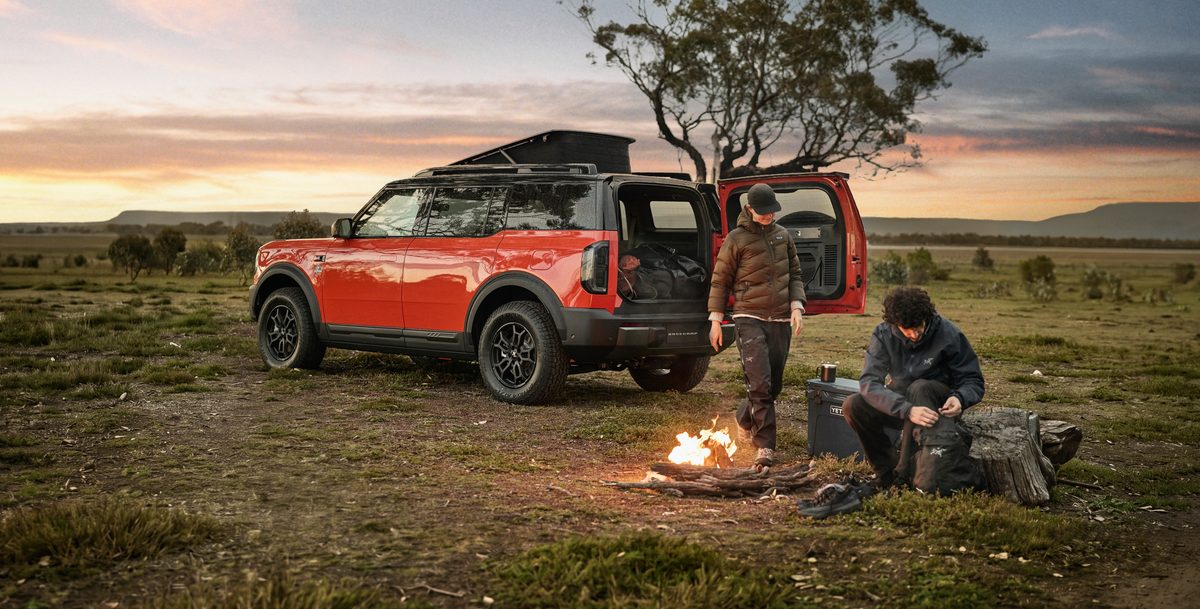
No mainstream automaker sells a factory pop-top passenger vehicle in the United States, and Ford has not said a word about changing it either way. Ford confirmed the Ford Bronco Basecamp for Australia and New Zealand on September 8, 2026, making them the first two markets outside China. It arrives with a button-operated pop-up roof and both rows of seats folding flat for sleeping. A temperature-controlled console and a fold-down tailgate table, which Ford calls the Wild Kitchen, round it out. Deliveries begin from mid-2027.
Volkswagen builds the California campervan with an elevating roof and has refused for years to bring it here. Consequently, an American who wants a roof lifting into a sleeping space buys an aftermarket conversion. Otherwise, a tent goes on the rack.
This announcement matters for a second reason. Ford’s previous public position, stated to Carscoops in 2025, called the vehicle strictly a China-only release. No North American plans existed. Half of it collapsed this week. Meanwhile Ford has said nothing new about the United States. Neither release mentions North America anywhere.
Before the details, one correction to most coverage of the announcement. The headline range figure comes from the WLTP cycle, and Ford labels it preliminary in its own footnote. WLTP figures generally run optimistic against EPA, so a US rating would land lower.
What an American Can Buy Today

KMZ SUV Air Mattress Thickened and Double-Sided Flocking Travel Cam…


Basecamp Specs at a Glance
| Specification | Details |
|---|---|
| Layout | Five-seat, all-wheel drive, monocoque steel platform |
| Drive motors | Dual electric motors; AU output not yet confirmed |
| Range extender | 1.5-liter turbo gasoline, generator only, no mechanical link to the wheels |
| Battery | 49 kWh usable, roughly 5 kWh more than the Chinese-market car |
| Combined range | 800-900 km / 497-559 miles, WLTP, preliminary |
| Pop-up lift roof | Outer Banks trim only; rain-sensing auto-close; unzippable ventilation gusset |
| Onboard power | 6.6 kW total; interior outlet capped at 2.3 kW; exterior outlet needs an accessory adapter |
| Thermal console | 7.5 liters (2 gallons), heats or cools, runs only while the vehicle runs |
| Mattress | Accessory inflatable unit at extra cost, dimensions unpublished |
| Pricing | Not announced |
The Pop-Top Roof No Automaker Sells Here
This roof is the reason the vehicle matters. One button raises it, and a rain sensor closes it automatically when weather arrives. An unzippable gusset around the perimeter handles ventilation, so you sleep with airflow instead of condensation. Notably, the hardware appears on the Outer Banks trim alone rather than across the range. No mainstream automaker offers anything comparable to US buyers as factory equipment.
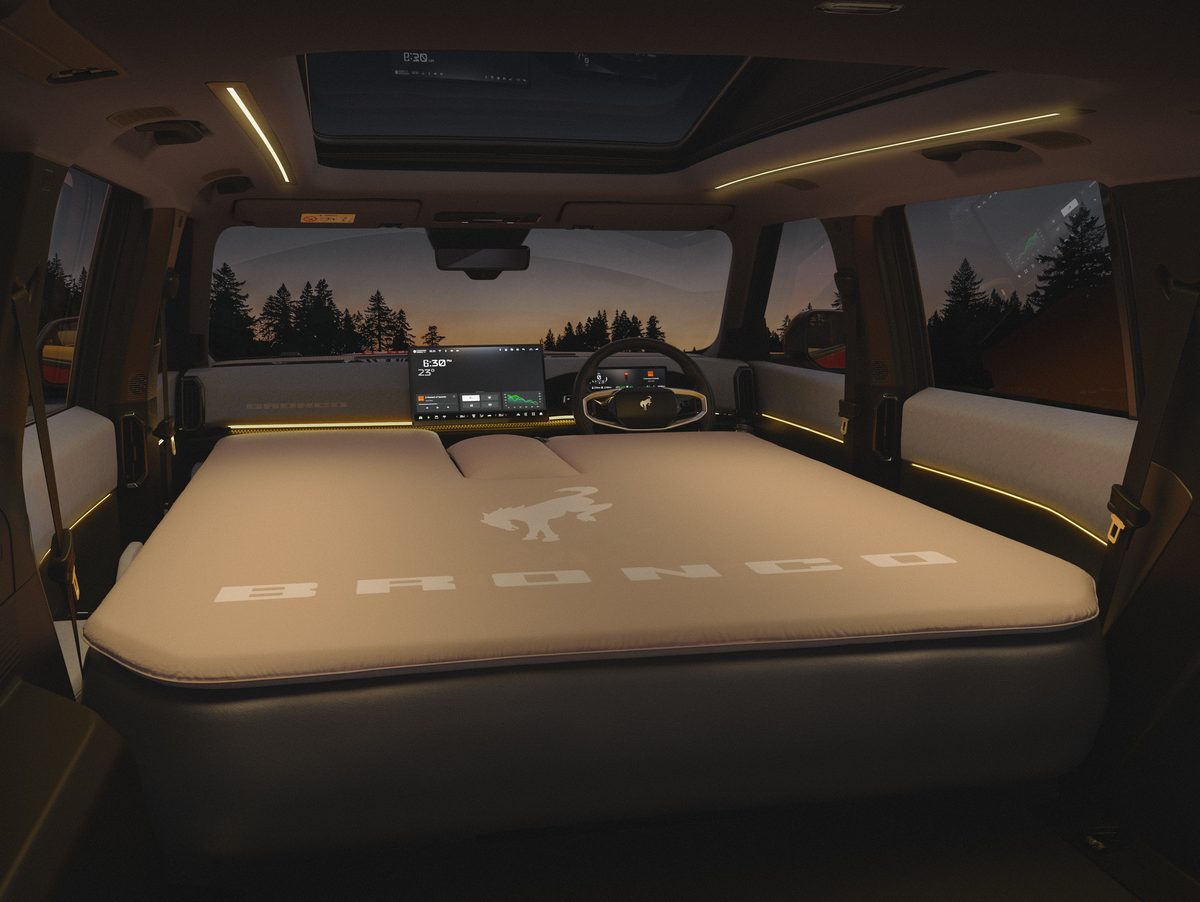
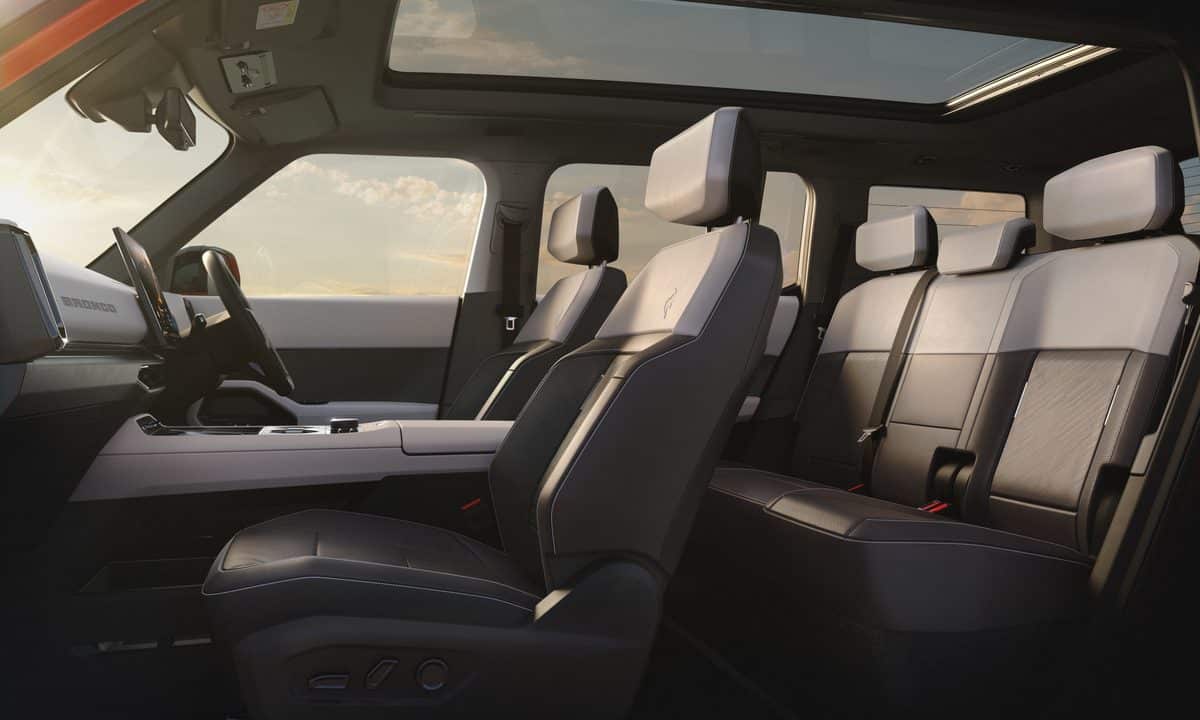
Underneath, both rows of seats fold flat into a sleeping surface. Ford moved the USB charging ports to the B-pillars. It also repositioned the LED cabin lighting so both stay reachable while you are lying down. Both details signal genuine engineering attention rather than a marketing package.
Two caveats deserve equal weight. First, the mattress is a paid accessory rather than standard equipment. Second, Ford publishes no sleeping dimensions at all. Australian outlets have described the bed as both queen-sized and a full double in the same article, so treat any specific size claim as unconfirmed until Ford releases real numbers.
Ford’s Super Hybrid, Explained
Ford introduced the name with this announcement, and its own copy concedes the term describes what most people call an extended-range EV. The layout is simple. Two electric motors drive the wheels, while a 1.5-liter turbo gasoline engine sits mechanically decoupled from the driveline and works purely as a generator.
Ford Authority, Carscoops and carsales all confirm the engine never turns a wheel. Practically, you drive an electric vehicle until the battery depletes. Then the engine fires and keeps feeding the pack. Compared to a conventional plug-in hybrid, the driving character stays electric throughout. No switching between two power sources happens.
Together, the 49 kWh usable battery and the generator deliver 800 to 900 km on the WLTP cycle, or 497 to 559 miles. Both Ford Authority and Carscoops published the mile conversion. Ford’s footnote specifies testing at 23 degrees Celsius (73 F) with no climate control running, and labels the figure preliminary.
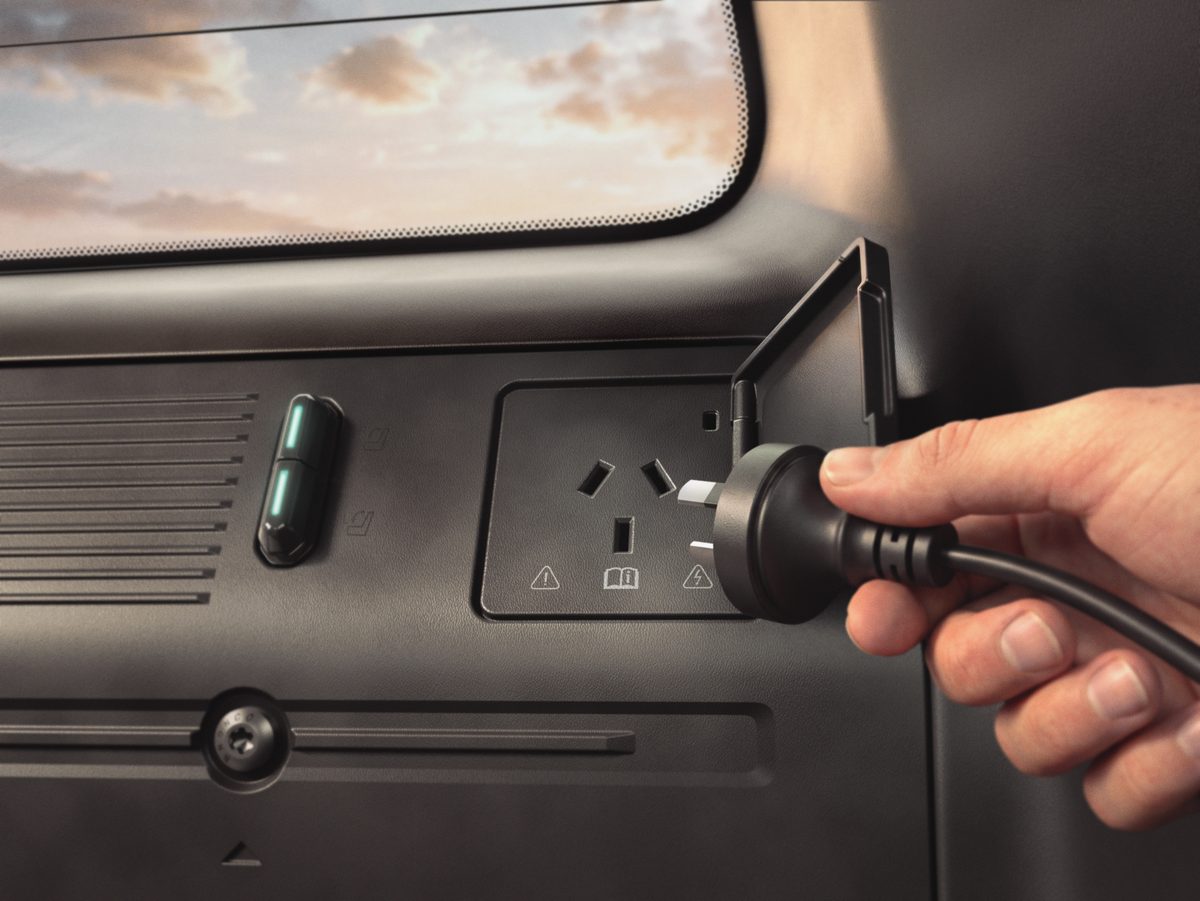
Onboard power carries similar fine print. The 6.6 kW headline splits across two outlets, with the interior port capped at 2.3 kW. Additionally, the exterior port reaches full rating only while the interior port sits unused. It also needs an accessory adapter sold separately. Ford warns directly about equipment the system might not power.
This Is Not the Bronco You Know
Here is the detail almost every headline has buried. The Basecamp is a unibody vehicle, and Australian outlet carsales reports the monocoque steel platform was designed by Jiangling Motor Company. The Bronco sold in North America uses the body-on-frame T6 architecture shared with the Ranger and the Everest.
Ford’s China design center developed the model, and the Ford and JMC joint venture builds it. At 197.8 inches long, it stretches roughly eight inches beyond the four-door US Bronco. Both share a 116.1-inch wheelbase. In China the car sells as the Bronco New Energy, with a battery-electric version alongside the range-extended one.
None of this makes it a bad vehicle. Still, an American reading the headlines pictures a body-on-frame Bronco with a factory tent. In reality, it is a five-seat crossover wearing the badge. If you are weighing the current US lineup instead, our comparison of how the Bronco stacks up against the 4Runner and Wrangler covers what body-on-frame buys you off-road.
Ford’s Pop-Top vs a US Aftermarket Conversion
An American who wants a pop-top camper today has two realistic paths, and both cost real money. Ursa Minor sells the B30 for the four-door sixth-generation Bronco starting at $11,500 before installation or shipping. The company listed it out of stock during our research. Installation requires removing your existing hard or soft top.
Alternatively, the second path is a rooftop tent. A hard shell wedge sits on crossbars rather than replacing the roof. Most deploy in a minute or two and keep the interior untouched. Our review of the ALL-TOP Apexcamp hard shell wedge tent covers where the category sits on price and weight.
Compare those against Ford’s version. The factory pop-top opens on a button, senses rain and closes itself. It also integrates with the vehicle’s own lighting and power, and carries a factory warranty. No aftermarket conversion offers the same combination at any price, which explains the attention the announcement drew. For an American deciding tonight, though, the real comparison is narrower: $11,500 and out of stock against a hard shell wedge on the crossbars you already own.
Is the Ford Bronco Basecamp Coming to America?
Ford has not addressed the question. Neither company article published on September 8 mentions North America, the United States or Canada. No Ford representative commented on the subject to Ford Authority or Carscoops. The honest answer is silence rather than a denial.
What we do know cuts both ways. Ford’s last explicit statement, from October 2025, described the model as destined solely for China with no North American plans. Australia and New Zealand have since overturned the China-only half. As a result, the strongest argument against a wider rollout disappears.
Working against it: the vehicle is built in China by a joint venture, and Chinese-built vehicles face significant political and trade friction in the US market. The platform also sits outside how Ford positions the Bronco name domestically. Our coverage of what Ford has confirmed about the Bronco lineup shows a North American roadmap pointed at body-on-frame trucks instead.
Ford’s powertrain philosophy is a different story.
Its US newsroom confirms extended-range options for larger trucks and SUVs. Notably, the next-generation F-150 Lightning moves to an EREV architecture built in Dearborn. Ford also targets roughly 50 percent electrified global volume by 2030, up from 17 percent in 2025. Americans will get the technology. This specific vehicle is a separate question.
| Top Pick | Best Budget | Best Premium | |
|---|---|---|---|
| Product | TOP PICK ARCTWONDER Hard Shell Rooftop Tent ARCTWONDER Hard Shell Rooftop Tent |  WildFinder Hard Shell Rooftop Tent WildFinder Hard Shell Rooftop Tent |  JIADROOE Hard Shell Rooftop Tent JIADROOE Hard Shell Rooftop Tent |
| Rating | ★★★★☆ 4.5 63 ratings | ★★★★☆ 4.5 73 ratings | ★★★★☆ 4.3 10 ratings |
| Sleeping Capacity | 2 Person | 2-3 Person | 3 Person |
| Weight | 198 lb | 198 lb | 176 lb |
| Price | $1,378.00 as of Sep 17, 4:22 pm | $1,099.00 as of Sep 17, 4:22 pm | $1,549.00 as of Sep 17, 4:22 pm |
| Check Price → | Check Price → | Check Price → |

What the Basecamp Means for US Overlanders
Treat the Basecamp as a signal rather than a product you will park in your driveway. A mainstream automaker has now committed a factory sleeping platform with integrated power and a powered roof to three markets. The second and third were announced within twelve months of the first. Momentum is the story here, rather than the individual specification sheet.
For anyone shopping now, nothing changes. The aftermarket still owns this space in the United States. Your practical decision remains a conversion, a rooftop tent, or a truck camper. Prices, weight and setup time drive the choice far more than anything Ford announced this week.
Watch two developments instead. First, whether Ford brings pop-top camper hardware or the thermal console to US Bronco accessory catalogs. Such a move would cost the company nothing in platform engineering. Second, whether the EREV rollout produces a US model with real onboard power. A 6.6 kW onboard power system at a campsite changes how much gear you need to pack.
For now, an American overlander who wants a roof lifting into a bed is still buying it aftermarket. Ford has shown the concept works, sells and travels between markets. Whether it crosses the Pacific eastward remains an open question Ford has pointedly declined to answer.
Bronco Basecamp FAQ
Is the Ford Bronco Basecamp coming to the United States?
Ford has not said. Neither of its September 8 announcements mentions North America, and no company representative has commented since. Ford’s last explicit position, from October 2025, described the model as China-only with no North American plans. The Australian launch has already overtaken half of it.
What is Ford’s super hybrid, and is it the same as an EREV?
Yes, functionally. Ford’s own copy concedes vehicles with super hybrid powertrains are sometimes called extended-range EVs. Two electric motors drive the wheels. Meanwhile a 1.5-liter turbo gasoline engine acts purely as a generator, with no mechanical link to the driveline.
How far does the Bronco Basecamp travel on a full charge and tank?
Ford quotes 800 to 900 km, which converts to 497 to 559 miles. However, the figure comes from WLTP testing at 23 degrees Celsius (73 F) with no climate control load, and Ford labels it preliminary. An EPA rating would come in lower.
Does the pop-top roof come standard?
No. The pop-up lift roof appears on the Outer Banks trim only. Additionally, the 7.5-liter thermal console is standard on Outer Banks and optional on selected other trims. Meanwhile the sleeping mattress is a paid accessory across the range.
Is the Bronco Basecamp the same vehicle as the US Ford Bronco?
No. The Basecamp is a unibody five-seat SUV, and carsales reports its monocoque steel platform was designed by Jiangling Motor Company. By contrast, the North American Bronco uses body-on-frame T6 architecture. Ford’s China-built model also runs about eight inches longer on an identical wheelbase.
What does a pop-top camper conversion cost on a US Bronco?
Ursa Minor lists its B30 pop-top camper for the four-door sixth-generation Bronco from $11,500, before installation or shipping. It was showing out of stock during our research. Installation also requires removing your existing roof, which a factory system would avoid.