


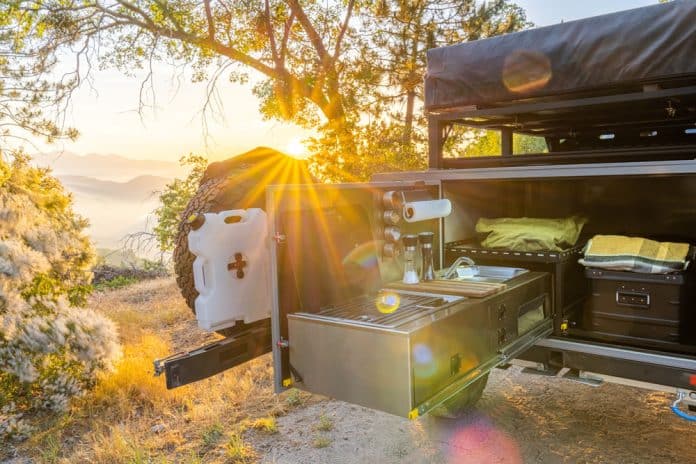

The onboard kitchen debate divides overlanders like almost nothing else. After years of overlanding across the American West as the founder of 4WDTalk, I’ve hosted plenty of campfire arguments on the topic. Specifically, built-in-galley owners and Jetboil-and-cooler purists spend hours trying to convert each other. Neither side wins the argument because neither is objectively right. Whether you need a built-in overland trailer kitchen depends on trip length, party size, and cooking style. Also, it depends on how much time you want to spend cooking versus doing everything else camp offers. Get the fit wrong and your beautiful galley collects dust while your cooler and camp stove do all the work.
I’ve toured the SNO Trailers facility, hitched their Alpine behind my Gladiator, and cooked from both a built-in kitchen and a modular setup on the same platform. So this piece delivers field-tested comparison, not marketing copy. In it, you’ll learn when a built-in overland trailer kitchen earns its cost and complexity. Also, you’ll see when a modular camp kitchen delivers more nights outside for less money, and how to match your approach to your camping style. The SNO Trailers Alpine serves as the concrete example for the built-in side. Its integrated kitchen zone shows what a purpose-built galley should include.
Quick Facts
- Product: SNO Trailers Alpine with integrated overland trailer kitchen zone
- Dry Weight: 1,500 lbs
- Dimensions: 12’2″ L x 6’3″ W x 5’9″ H
- Propane: Twin 10-lb propane tank holders
- Water: Optional tank up to 30 gallons for kitchen and shower use
- Shower: Joolca HOTTAP essentials kit standard
- Power: 100Ah Renogy AGM for 12V fridge and charging
- Starting Price: Around $29,995
- Best for: Overlanders wanting a factory-integrated overland trailer kitchen instead of aftermarket buildout
8 min read
In This Guide
- The Real Question About Onboard vs Modular Kitchens
- SNO Trailers Alpine at a Glance
- The Case for a Built-In Overland Trailer Kitchen
- The Case for a Modular Camp Kitchen
- Trip Style, Party Size, and Kitchen Fit
- Cost, Maintenance, and Long-Term Ownership
- Pros and Cons of a Built-In Approach
- Final Verdict
- Frequently Asked Questions
Why the Onboard vs Modular Kitchen Debate Matters
The kitchen debate splits along one axis: how much overland cooking do you truly do at camp? Specifically, some overlanders cook two hot meals a day and treat camp cuisine as a core part of the trip. Others eat a granola bar, boil water for coffee, and consider camp cooking a chore. The right overland trailer kitchen for each group looks completely different.
Built-in galleys reward the first group. They provide dedicated work surface, integrated water and propane, protected storage for cookware, and repeatable setup times measured in seconds. In contrast, they punish the second group with maintenance intervals, freeze-damage risk, and depreciation on features rarely used.
Modular camp kitchens reward the second group and any overlander focused on trip count over camp features. Specifically, a portable stove, folding table, and cooler get you rolling on shorter trips with less prep time and lower upfront cost. In contrast, they demand setup and teardown at every camp, which adds up over long trips or bad weather.
SNO Trailers Alpine at a Glance
| Specification | Details |
|---|---|
| Length | 12’2″ |
| Width | 6’3″ |
| Height | 5’9″ |
| Dry Weight | 1,500 lbs |
| Kitchen Zone | Integrated work surface with dedicated cookware storage |
| Propane | Twin 10-lb propane tank holders |
| Water Tank | Optional up to 30 gallons in shaded understorage |
| Shower | Joolca HOTTAP essentials kit standard |
| Power | 100Ah Renogy AGM, solar charge controller, external solar plug |
| Starting Price | Around $29,995 |
Buy Direct From SNO Trailers
See the Alpine at SNO Trailers
Starting around $29,995, the Alpine ships factory-direct with an integrated kitchen zone ready on delivery day.
The Case for a Built-In Overland Trailer Kitchen

A built-in overland trailer kitchen wins for anyone who cooks daily at camp. Specifically, the setup time drops to seconds. Open the kitchen zone, pull out the stove, and start cooking. In contrast, a modular setup demands unpacking the stove from a cargo bin, unfolding a table, hooking up a propane hose, and staging cookware separately.
Integrated water and propane matter more than most buyers expect. The Alpine’s twin 10-lb propane tanks feed both the stove and the Joolca HOTTAP shower. Consequently, buyers skip the small-bottle swap ritual most modular setups run through. Also, the Alpine’s water tank feeds the kitchen zone directly. So rinsing dishes, hands, and cookware happens without hauling jugs.
Weather protection is the third built-in advantage. A dedicated kitchen zone with a hinged or slide-out cover protects cookware from rain, dust, and wind. Consequently, cooking continues through weather shutting down modular setups. For a deeper look at how the Alpine’s kitchen fits into a comfortable backcountry setup, my earlier piece on why the Alpine is the definition of luxury backcountry camping covers the zone breakdown in detail.
The Case for a Modular Camp Kitchen
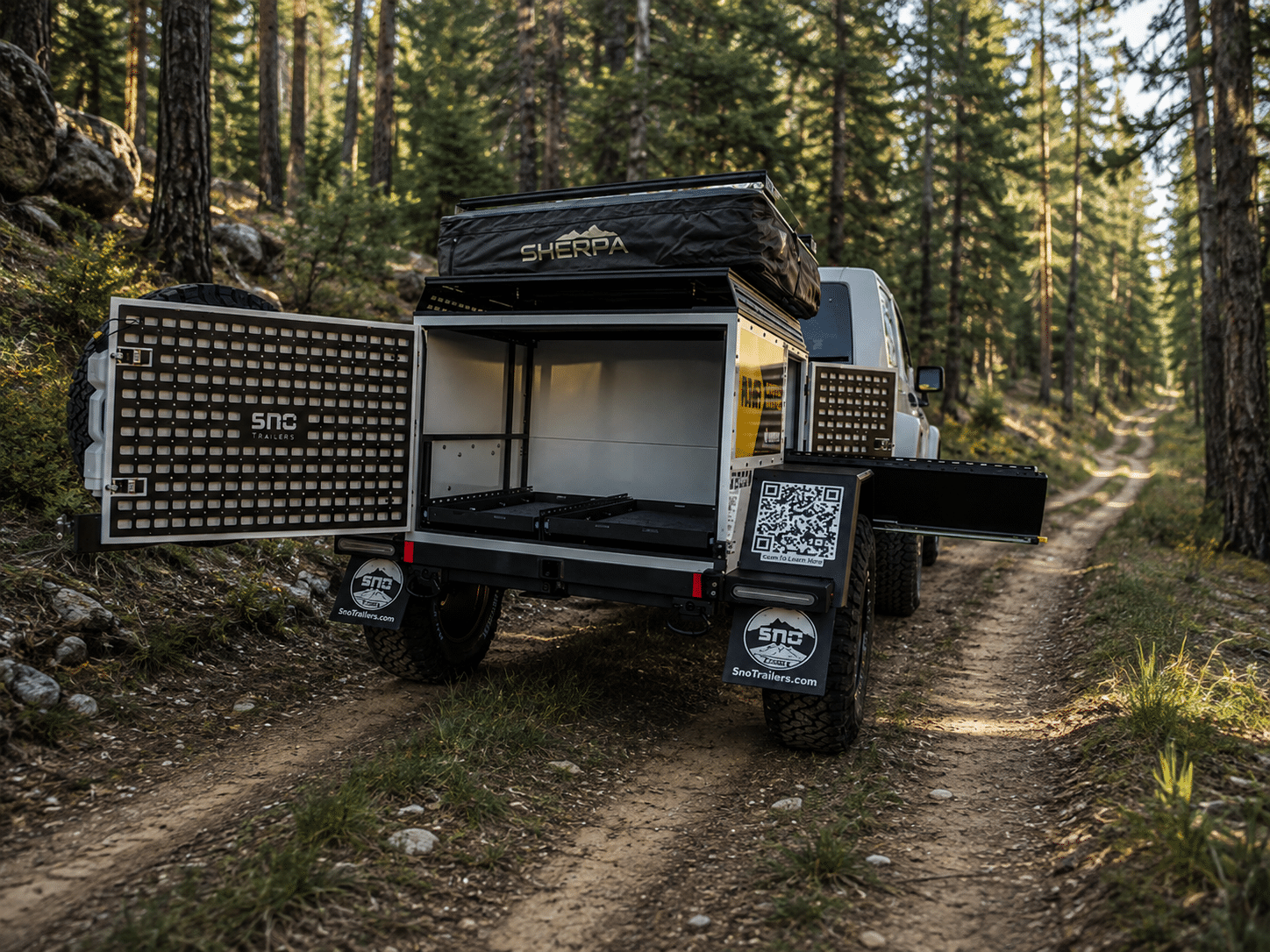
A modular kitchen wins for shorter trips, smaller budgets, and lower-frequency cookers. Specifically, a two-burner Coleman stove, a folding table, and a 45-liter cooler in a trailer like the SNO Trailers Recon shown above, cover most weekend needs. Total spend stays under $500. In contrast, a built-in kitchen adds $3,000 to $8,000 to trailer purchase price depending on the features included.
Storage flexibility matters too. A modular setup stows anywhere in the trailer or tow vehicle, which frees a purpose-built kitchen zone for other cargo when you swap trip styles. So the same trailer supports fishing gear, mountain bikes, or extra water storage. Trips where full camp cooking is not the point still work. In contrast, a built-in kitchen zone is fixed even on trips where you never cook a full meal.
Simplicity is the third modular advantage. Fewer subsystems mean fewer failure modes and lower maintenance. So a modular camp kitchen never freezes, never leaks, and never needs winterizing. For an example of how a simple platform supports remote camping without a built-in galley, my writeup on how the SNO Trailers Recon supports remote camping covers the modular kitchen approach in detail.
Trip Style, Party Size, and Kitchen Fit
Trip length is the first fit variable. Specifically, weekend trips of one or two nights favor modular setups. Setup time saved from a built-in galley pays back over months, not one weekend. In contrast, expedition trips of a week or longer favor built-in kitchens because the setup-time advantage compounds across many camps.
Party size drives the second fit variable. Solo and two-person parties cook simple meals and rarely need a full kitchen. Consequently, modular fits most small parties. In contrast, families of four or larger benefit from a built-in kitchen. Meal prep scales up, and the coordination cost of a modular setup grows fast.
Cooking style is the third fit variable. Buyers who love overland cooking with cast iron and multiple burners need work surface, water access, and organized storage. A built-in overland trailer kitchen delivers all three. In contrast, buyers who eat Mountain House pouches and boil water in a Jetboil never touch most built-in features. Honest self-assessment on this variable saves thousands of dollars.
Save on the Alpine
Configure Your SNO Trailers Alpine
Add water tank upgrades, dual batteries, awning mounts, and kitchen accessory rails at the factory.
Cost, Maintenance, and Long-Term Ownership
Purchase price sets the first cost line. Specifically, a built-in overland trailer kitchen adds $3,000 to $8,000 to trailer price depending on features. Water plumbing, propane routing, cookware storage, and a work surface all cost money to engineer and install. In contrast, a modular camp kitchen totals $300 to $1,500 for a full setup with stove, table, cooler, and cookware.
Maintenance costs diverge more over time. Built-in kitchens need annual winterizing, propane line checks, and plumbing pressure tests. Also, occasional pump or valve replacement is standard. Freeze damage from a missed winterization cycle runs $500 to $2,000 in repairs. In contrast, modular setups have almost nothing to service beyond replacing consumables like propane bottles and cook fuel.
Depreciation matters on any long-term ownership plan. Trailers with built-in kitchens depreciate slower when the kitchen holds up mechanically. However, they depreciate faster when appliances break or become dated. Also, resale demand favors well-maintained built-ins in the expedition-buyer market. For a full comparison of the Alpine’s build quality supporting long-term ownership, my full Alpine review walks through the durability details.
Pros and Cons of a Built-In Approach
Pros
- Setup time measured in seconds instead of minutes
- Integrated propane and water simplify cooking and cleanup
- Weather-protected work surface supports cooking in rain and wind
- Dedicated cookware storage prevents shared-bin chaos
- Twin 10-lb propane tanks feed both stove and Joolca HOTTAP shower
- Factory-installed plumbing avoids aftermarket buildout time
- Supports long expeditions with repeatable meal prep
- Zone-based storage keeps kitchen items separate from other cargo
Cons
- Adds $3,000 to $8,000 to trailer purchase price
- Annual winterizing prevents freeze damage to water plumbing
- Plumbing and propane subsystems occasionally need service
- Kitchen zone reduces flexible storage for non-cooking trips
- Appliances age and can date the trailer’s resale value
Final Verdict

For overlanders who cook daily at camp and travel on trips of a week or longer, a built-in overland trailer kitchen earns its cost fast. Specifically, the SNO Trailers Alpine setup delivers the value quickly. Above all, its biggest strength is repeatable, weather-protected meal prep. Setup time drops to seconds, and integrated water and propane eliminate rituals. Also, the dedicated work surface supports serious camp cooking in any weather.
Trade-offs are real, though. Buyers running weekend trips, cooking simple meals, or prioritizing storage flexibility should stick with a modular camp kitchen. Consequently, they save $3,000 to $8,000 for other gear. Also, buyers unwilling to commit to annual winterizing should skip the built-in approach entirely to avoid freeze damage.
On value, the Alpine’s integrated kitchen holds up strongly for the buyer profile it fits. Specifically, its roughly $29,995 starting price includes the kitchen zone, water plumbing, propane routing, and cookware storage costing more assembled aftermarket. Also, the factory install comes properly weighted, sealed, and warranty-backed.
Overall, I recommend a built-in overland trailer kitchen for serious cookers, larger parties, and longer trips. However, if you cook infrequently or prioritize simplicity, a modular camp kitchen serves better. Also, it leaves budget for other gear.
Ready to Buy?
Check Today’s Price on the Alpine
SNO Trailers ships factory-direct with a full warranty and configuration support before your build begins.
Frequently Asked Questions
Do I need an onboard kitchen in my overland trailer?
Only if you cook daily at camp and travel on trips of a week or longer. Specifically, built-in kitchens deliver setup-time savings compounding across many camps. In contrast, weekend campers and infrequent cookers rarely recover the extra cost. Honest self-assessment on cooking frequency saves thousands of dollars.
How much does a built-in overland trailer kitchen cost?
Expect $3,000 to $8,000 added to the trailer’s base price depending on features. Water plumbing, propane routing, cookware storage, and a work surface all cost money to engineer and install. In contrast, a modular camp kitchen with stove, table, cooler, and cookware totals $300 to $1,500.
What does a good overland trailer kitchen include?
A protected work surface, integrated water access, propane routing with fast-connect fittings, and dedicated cookware storage. Specifically, the SNO Trailers Alpine’s kitchen zone includes twin 10-lb propane tank holders. Also, plumbed water feeds from the onboard tank.
Is it possible to add a built-in kitchen to a modular overland trailer later?
Yes, but aftermarket costs typically exceed factory-installed prices by 50% or more. Also, aftermarket installs rarely match factory build quality. In contrast, a factory kitchen zone comes properly weighted and warranty-backed.
How do I winterize an overland trailer kitchen?
Drain the water tank and plumbing lines and blow compressed air through the system. Also, add non-toxic RV antifreeze to traps, disconnect and store propane bottles, and clean out the fridge before storage. Consequently, freeze damage to plumbing and appliances is avoided each winter.
Does a built-in overland trailer kitchen add weight?
Yes. Plumbing, water tanks, propane routing, and cookware storage together add 100 to 300 pounds. Also, a full 30-gallon water tank adds another 250 pounds when full. Consequently, buyers should confirm the tow vehicle’s payload and hitch class before choosing a built-in setup.
Just so you know, some of the cool stuff we mention comes with affiliate links, meaning we earn a commission if you buy (no extra charge to you!). Plus, we occasionally feature sponsored content, but rest assured, we only shout out products we genuinely stand behind.