


Quick Facts:
- Task: Find and remove a car dealer GPS tracking device from a truck you own
- Two device types: Lot-management add-on, or a starter interrupt unit tied to financing
- Time required: Roughly 20 to 45 minutes to search the four common locations
- Skill level: Basic for a plug-in unit. Intermediate for a hardwired one, which needs proper splice repair
- Key law: Magnuson-Moss Warranty Act, 15 U.S.C. § 2302(c)
- Two real risks: Your financing contract, and pulling a starter interrupt unit by mistake
- Best for: Truck and 4×4 owners who found unexplained wiring behind the dash
12 min read
In This Guide
- Before You Remove a Car Dealer GPS Tracking Device
- The Two Device Types, and Why It Matters
- What a Dealership Tracking Device Looks Like
- How to Find Tracker on Car: The Four Dealer Install Spots
- Dealer Tracker Detection Methods, and What Each One Misses
- The Warranty Threat, and What the Law Says
- How to Remove a Car Dealer GPS Tracking Device Safely
- Is a Dealer Tracker Legal, and Does State Law Help You?
- Why This Matters More on a Built Truck
- Final Verdict
- Frequently Asked Questions
Before You Remove a Car Dealer GPS Tracking Device
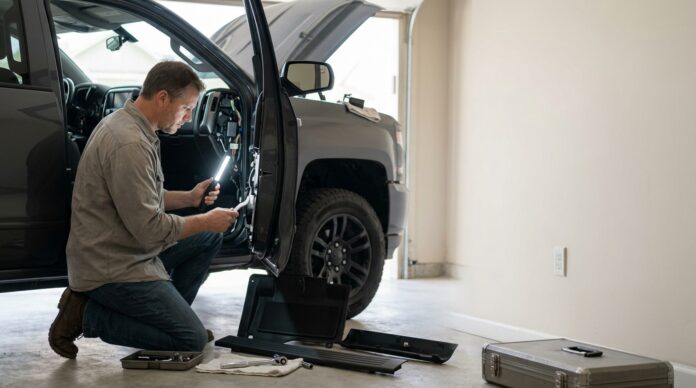
Every so often, an owner opens a kick panel for a winch feed and finds a small black box zip-tied to the factory wiring. Deciding whether to pull a car dealer GPS tracking device starts with one question, and it is not the one most people ask. Specifically, the question is not whether the dealer had the right to install it. It is whether the device is attached to your purchase or to your loan.
Each situation carries different consequences. A lot-management unit resold to you as an add-on is a consumer-protection and warranty matter. By contrast, a starter interrupt device installed as a condition of subprime financing is a contract matter, and pulling it out risks breaching an agreement you signed.
What follows sorts out which device you have, walks the physical search, covers what the Magnuson-Moss Warranty Act says, then gives the removal procedure. State law comes last, since it changes what you owe rather than what you do with a trim tool. For the anti-theft flip side of the same hardware, see our guide to the hidden GPS tracker for theft recovery.
The Two Device Types, and Why It Matters
First, vendors themselves draw the line. PassTime splits its catalog under headings reading “For Financed Asset Protection” and “For Lot Management and F&I Resale.” Elo GPS, from Connected Dealer Services, describes its system as giving dealers “a value-added profit center at the point of sale.” Spireon, now owned by Solera, has marketed its Kahu product as delivering “a new finance and insurance profit center.”
Three vendors, in their own marketing, describe a tracker sold to a dealer and resold to the buyer at the desk.
| Type | What It Does | Where the Authority Comes From | Your Real Question |
|---|---|---|---|
| Lot management / F&I add-on | Location tracking and recovery, sold to you as a product | A line item on your purchase paperwork | Did you agree to buy this, and what does it cost? |
| Starter interrupt device | Location tracking plus the ability to disable the starter | Your security agreement or financing contract | Does removal breach the loan? |
The Consumer Financial Protection Bureau puts the distinction plainly in its examination procedures: “Not all GPS devices have SIDs; many are solely used for navigation purposes.” An SID is a starter interrupt device. Therefore, do not assume the box behind your dash carries one, and do not assume it does not. The removal section below gives you three physical tells.
| Top Pick | Best with Pliers | Most Complete | |
|---|---|---|---|
| Product | TOP PICK Tresalto 5-Piece Nylon Trim Pry Set Tresalto 5-Piece Nylon Trim Pry Set |  Poraxy 19-Piece Trim Kit with Clip Pliers Poraxy 19-Piece Trim Kit with Clip Pliers | 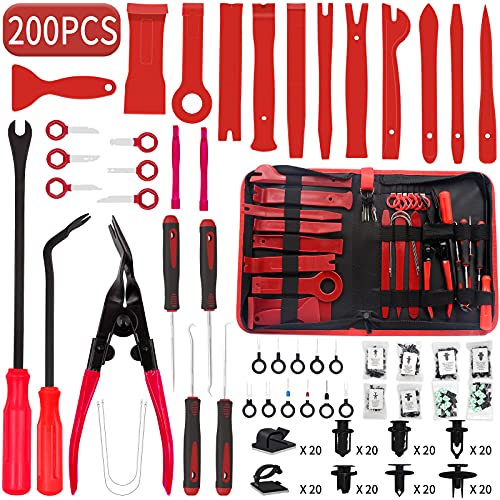 Wetado 200-Piece Trim and Fastener Kit Wetado 200-Piece Trim and Fastener Kit |
| Rating | ★★★★★ 4.7 27,469 ratings | ★★★★★ 4.7 8,700 ratings | ★★★★★ 4.7 3,118 ratings |
| Pieces | 5 | 19 | 200 |
| Clip Pliers | No | Yes | Yes |
| Price | $8.97 as of Oct 1, 10:58 pm | $17.99 as of Oct 1, 3:03 pm | $23.99 as of Oct 1, 3:03 pm |
| Check Price → | Check Price → | Check Price → |
What a Dealership Tracking Device Looks Like
In the field, two form factors cover almost everything you find. A plug-in unit hangs off the OBD-II connector in the driver’s footwell, near the steering wheel under the SAE J1962 standard, and unplugs in seconds. A hardwired unit, by contrast, uses three wires: constant 12V, ground, and ignition. Vendor documentation puts a hardwired install at 20 to 40 minutes.
Installers are trained to make the hardwired version disappear, which is why people miss it. One installer guide instructs technicians to run wire along existing OEM wiring and secure it with zip ties around an existing loom, because the practice “keeps the install invisible.”
Physically, most units are a sealed plastic case roughly the size of a deck of cards or smaller, usually black, with a short pigtail lead and sometimes a separate stub antenna. Look for a printed label carrying a model number, an FCC ID, or a vendor name. Photograph the label, then search the vendor name, since it tells you which product family you are dealing with faster than any other single step.
Consequently, the strongest tell is not the box itself. It is the hardware around it: aftermarket zip ties on otherwise factory wiring, add-a-circuit fuse taps in the interior fuse box, and T-tap splices on wires the factory never touched.
How to Find Tracker on Car: The Four Dealer Install Spots
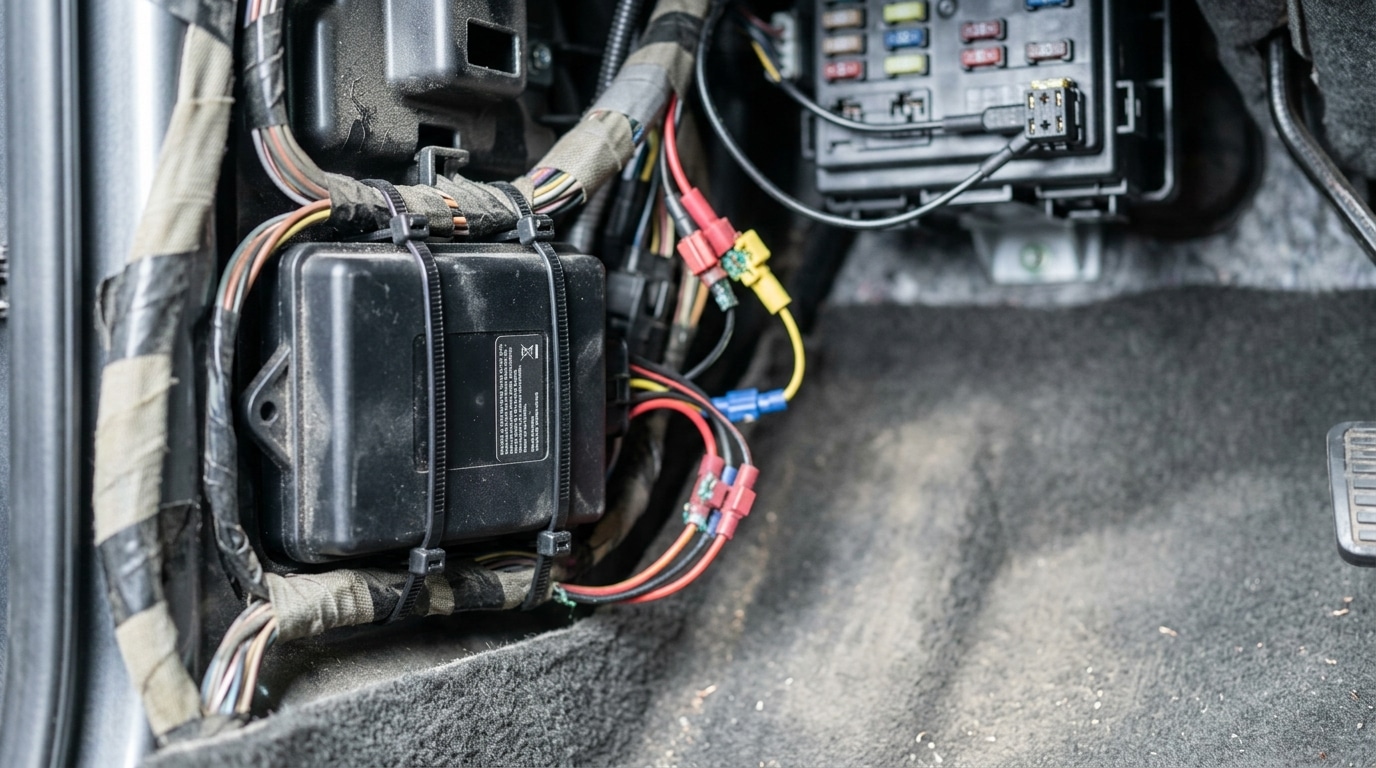
Vendor installer documentation names four locations specifically. Work them in order, since they run roughly from easiest to hardest.
First, the OBD-II port itself. Look for anything plugged into it, plus any Y-splitter or pass-through adapter. Second, the kick panel under the steering column, which is the most common hardwired location. Third, inside the dash above the fuse box. Fourth, behind the glovebox and inside the center console under the trim.
Safety note: Disconnect the negative battery terminal before probing behind the dash, and wait at least 10 minutes on any vehicle with airbags, checking your service manual for the discharge time it specifies, since the interval varies by manufacturer. Yellow connectors and yellow loom tape mark supplemental restraint circuits. Never cut, splice, or unplug those, and never work on them with the battery connected.
Knowing what counts as a finding matters more than the search order. For example, a factory module sits in a molded bracket with a factory connector and factory-color wiring. An added tracker sits in free space, secured by zip ties, with wiring in colors the factory never used there.
Dealer Tracker Detection Methods, and What Each One Misses
Search advice online leans heavily on RF bug detectors. However, the recommendation deserves a caveat nobody prints. Specifically, many of these units transmit on a schedule rather than continuously. Between transmissions the device is radio silent. Consequently, a sweep finds nothing while the tracker works normally. Even a detector vendor concedes basic units miss scheduled bursts.
Parasitic draw testing is more reliable in principle, although it carries a caveat too. Published figures for normal parasitic draw on a modern vehicle conflict. Treat any single number with suspicion. Instead, run the test comparatively. Measure the draw, unplug the suspect device, and measure again.
Even so, the highest-yield method is the least technical one. Before anything else, re-read your purchase and financing paperwork. The Federal Trade Commission’s rulemaking record on dealer add-ons found buyers who “sometimes did not realize they had purchased any add-ons at all.” In other words, the disclosure is often present and buried rather than missing. For example, a line item naming a GPS product tells you more in 30 seconds than an hour with a flashlight does. What it misses: a lot-management unit the dealer never billed you for leaves no paper trail, so a clean purchase order does not prove the truck is clean.
The Warranty Threat, and What the Law Says
Dealer paperwork sometimes claims removal by anyone other than the dealership voids the vehicle warranty. Take the claim apart carefully. Part of it is simply wrong, and part of it is a real risk.
First, the Magnuson-Moss Warranty Act, at 15 U.S.C. 2302(c), prohibits a warrantor from conditioning warranty coverage on the use of a brand-name article or service. Separately, the FTC’s stated position requires the warrantor to show the aftermarket equipment caused the failure before it denies a claim. Coverage on other parts of the car stays in effect. Moreover, the FTC has enforced the ban, notably in a consent order against Harley-Davidson over exactly this language.
So a blanket void is not permitted. Note the limits, though. Magnuson-Moss does not make trackers illegal, does not prevent a causation-backed denial of one specific claim, does not help if your own removal damages the wiring, and does not reach your financing contract. Our guide on whether a lift kit will void your warranty covers the same principle applied to suspension work.
How to Remove a Car Dealer GPS Tracking Device Safely
Order of operations matters more than tools here, and one gate comes before everything else.
Step Zero: Identify Which Device Is on Your Car
A location-only tracker reports where the truck is. The interrupt version also sits in the starter circuit and stops the engine cranking. Pull the second one blind and you risk leaving a truck unable to start in your own driveway.
Three physical tells separate them. First, count the conductors. A location-only unit typically runs three wires: constant 12V, ground, and ignition. Anything with additional heavy conductors deserves suspicion. Second, look for a relay, either integrated into the module or spliced in-line nearby. Third, check whether any wire taps the starter signal circuit rather than an accessory or ignition circuit. The starter signal is the small-gauge wire running from the ignition switch to the starter relay in the underhood fuse box, and your vehicle’s wiring diagram names the relay position. A tracker splicing into the starter circuit is an interrupt unit, whatever the label says.
Safety note: Stop work if you find a relay, a splice on the starter circuit, or more conductors than expected. Removing one without knowing how the lender wired it risks a no-crank condition, and the device is usually tied to your financing agreement. Call the lender or a 12V shop instead. Many of these units also alert the monitoring service when power is lost, so the removal will not go unnoticed.
What You Need to Pull a Dealer Tracker
Tools and Materials
Tools
- Nylon trim removal tools, 5 piece minimum
- Slim right-angle LED inspection light
- 10mm socket and ratchet for the battery terminal
- Fuse puller
- 12V test light for identifying constant and switched conductors
- Digital multimeter reading 10A DC, for the draw comparison
- Heat gun, if you use solder-seal connectors
- Phone camera for before and after photos
Materials
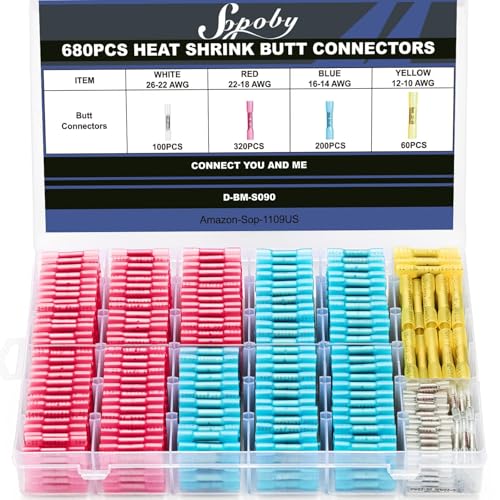
- Waterproof heat-shrink or solder-seal butt connectors, 26 to 10 AWG
- Replacement blade fuses matching the ratings you remove
- Automotive loom tape
- Automotive zip ties for re-securing factory wiring
The Dealer Tracker Removal Sequence
Start with the paperwork rather than the trim panel, because a device tied to financing changes the answer entirely. Confirm which device type you have and whether any agreement references it. Where the device relates to a loan, stop and talk to the lender first. Whether removal breaches a specific financing agreement depends entirely on its wording, and no general answer exists.
For a dealer add-on in a vehicle you own outright, work in this order. Photograph the installation from three angles. Note the rating and position of any fuse the device uses, since you will need to restore it. Disconnect the negative battery terminal. An OBD-II unit unplugs, and you are finished there.
A hardwired unit takes more. Access the kick panel by removing the door sill trim first, then releasing the panel clips with a nylon pry tool rather than a screwdriver. Work along each of the device’s wires by hand, following the loom until you reach the splice or fuse tap at the far end, and mark each one with tape as you identify it. A cheap test light confirms which conductor is constant 12V and which is switched. Remove any add-a-circuit fuse tap, return the original fuse to its original slot, then unwrap each T-tap.
Two details decide whether the job holds up. T-taps pierce the wire’s insulation, and installer documentation notes the taps corrode over time. A pierced conductor needs a proper repair rather than tape, which means cutting out the damaged section and joining the ends with a waterproof heat-shrink or solder-seal butt connector. Cutting is acceptable here; leaving a punctured factory wire behind a kick panel is not. Also re-secure the factory wiring you disturbed, since a loose loom becomes a rattle or a chafe point later.
Close-Out Checklist Before You Drive the Car
Reconnect the battery, then work through four checks before you call it done. Start the engine and confirm a normal crank. Scan for stored trouble codes. Disconnecting the battery clears most stored codes, so anything present afterwards came from the removal itself. Re-enter any radio or navigation security code. Finally, repeat the parasitic draw measurement and compare it against your earlier reading, which is the only direct confirmation the load is gone.
One administrative step remains. Where the device came with a subscription, cancel it in writing and ask about a refund for the unused term. Removing the hardware does not stop the billing.
Gear mentioned in this guide



Is a Dealer Tracker Legal, and Does State Law Help You?
To begin with, no federal statute bans dealer-installed tracking. State law is where the real constraints live. Moreover, the picture is narrower than internet summaries suggest.
Specifically, California Civil Code section 2983.37 is the strongest citation available, although it reaches only buy-here-pay-here dealers rather than every franchise store. It codifies the same two-type split this article opens with. Optional-service tracking must sit in a separate agreement, avoid being a condition of sale, be executed after the sale, and remain cancelable at any time. Connecticut restricts electronic self-help, including locating collateral, to debtors who separately agree, with 15 days of notice. Boilerplate does not satisfy the requirement in a consumer transaction.
However, two widely repeated claims fail on inspection. Wisconsin is often cited as banning kill switches. However, the Wisconsin Department of Financial Institutions issued an interpretive opinion in January 2016 stating installation “is not illegal,” expressly superseding previous statements. Similarly, a New Jersey statute frequently cited in these discussions governs employer tracking of employees. It does not reach dealer-to-buyer tracking at all.
At the federal level, the FTC’s CARS Rule addressed dealer add-ons. A court vacated it in January 2025 on procedural grounds, without reaching the substance. Instead, current federal activity runs through enforcement. The FTC sent warning letters to 97 dealer groups in March 2026, citing, among other things, “requiring consumers to buy additional items not reflected in the advertised price.”
Why This Matters More on a Built Truck
A hardwired tracker takes constant power from the factory fuse box, which on almost every truck means the starting battery. Consequently, they occupy the same kick-panel and fuse-box real estate 4×4 owners use for winch controllers, switch panels, and dual-battery gear. Adding a permanent parasitic load to the same circuit works against you on a truck sitting three weeks between trips.
The corrosion point compounds the problem. A T-tap piercing insulation on a daily-driven sedan in a dry garage is one thing. The same splice on a truck seeing water crossings, dust, and mud becomes a future intermittent fault in a spot nobody thinks to check. Our notes on how 12V wiring draws power cover the diagnostic side of chasing a parasitic drain.
Final Verdict
For most owners, the box itself matters less than the paperwork behind it. A car dealer GPS tracking device on a truck you own outright is a product you probably paid for. Removing it is therefore your call. The blanket warranty threat printed on the dealer’s paperwork does not hold up under Magnuson-Moss, although a dealer keeps the right to deny one specific claim by showing the device caused the failure.
Owners financing through a subprime lender sit in a different position. They should treat removal as a contract question rather than a mechanical one. Call the lender before pulling hardware, since the consequences run through your loan agreement rather than your warranty.
Either way, start with the four locations and the paperwork rather than with a detector. Vendor installer documentation names the four spots. More often than not, though, the buried line item on your purchase agreement usually settles the question faster than any sweep.
Finally, anyone shopping right now has a simpler move available. Ask the dealer directly, in writing, whether the vehicle has a tracking device installed and what it costs, before signing. Asking at the desk avoids the entire problem, and it belongs on the same list as the standard questions to ask the seller.
Frequently Asked Questions
How do you find a tracker on a car from a dealership?
First, check four locations named in vendor installer guides: the OBD-II port, the kick panel under the steering column, inside the dash above the fuse box, and behind the glovebox or center console trim. Look for aftermarket zip ties on factory wiring and add-a-circuit fuse taps. Reading your purchase paperwork for a GPS line item is often faster.
Does removing a dealer GPS tracker void your warranty?
A blanket void is not permitted. The Magnuson-Moss Warranty Act prohibits conditioning warranty coverage on the use of a brand-name article or service, and the FTC’s position requires showing the aftermarket equipment caused the failure before a denial. In practice, coverage on unrelated parts stays in force. Damage you cause during removal is your responsibility.
What is a starter interrupt device on a car?
The device combines GPS tracking with the ability to disable the vehicle’s starter. Subprime auto lenders use it as a payment-assurance tool. Authority for it lives in the security agreement rather than the purchase order. Removing one is a contract question, so speak to the lender first.
Who should remove a tracker from a car?
Any competent 12V technician handles it. An OBD-II plug-in unit needs nobody at all. A hardwired unit requires tracing three wires and restoring the fuse circuit properly. Where the device relates to financing, let the lender or the installing dealer do the work, so the removal is documented.
Is it legal for a dealership to install a tracking device?
No federal statute bans it. California requires buy-here-pay-here dealers to keep optional-service tracking in a separate agreement, executed after the sale, not conditioned on the sale, and cancelable at any time. Connecticut restricts electronic self-help to debtors who separately agree, with 15 days of notice. Rules vary by state and by dealer type, so check yours.
How much does a dealer charge for a GPS tracking device?
No authoritative source publishes a standard figure. Numbers circulating in owner forums are not verifiable. Instead, ask for the line item on your purchase agreement. The price you paid is documented there even when nobody discussed it.
Related Reading