


Quick Facts:
- Topic: Setting up a bell tent rental on Hipcamp and Airbnb
- Cost to list: Free on both platforms
- Host commission: Hipcamp 12.5% to 15%; Airbnb around 15.5%
- Typical nightly rate: $100 to $250 for a furnished bell tent
- Setup time: A weekend to stage, photograph, and publish a listing
- Built-in insurance: Up to $1 million in host liability coverage on each platform
- Best for: Owners with one bell tent seeking part-time income, not a full glamping business
11 min read
In This Guide
- Turning Your Bell Tent Into Rental Income
- Getting Your Bell Tent Guest-Ready
- Bell Tent Durability for Rental Guests
- How to List Your Bell Tent Rental on Hipcamp
- How to List Your Bell Tent on Airbnb
- Pricing Your Bell Tent Rental
- Photos to Get Your Bell Tent Rental Booked
- Writing a Listing Guests Book
- Hipcamp vs. Airbnb: Which One First?
- Final Verdict
- Frequently Asked Questions
Turning Your Bell Tent Into Rental Income

A bell tent rental turns gear you already own into side income. It also skips the land purchase and the multi-tent fleet a full glamping business needs. You need one bell tent and a patch of ground: a backyard, a field, or family land all work. Hipcamp and Airbnb both let you publish it as a listing within a weekend.
This guide covers the part most owners skip past: how the listing process works, what each platform takes in fees, how to price a night, and how to photograph a canvas tent so it books instead of sitting empty. Building a full glamping business from scratch is a different project, covered in a separate guide on scaling to multiple tents. Here, the setup stays simple: one tent, one owner, part-time hosting alongside a normal job.
A furnished bell tent rental with a real bed, lighting, and a fire pit commonly earns $100 to $250 a night. This range holds across most US markets. A bare, unfurnished setup often sits closer to $25 to $50. The gap between those numbers comes down to furnishing quality, not location. A host in a modest backyard with a styled interior regularly outearns a host on better land. The reason: an air mattress and bare canvas walls kill the booking rate.
Getting Your Bell Tent Guest-Ready
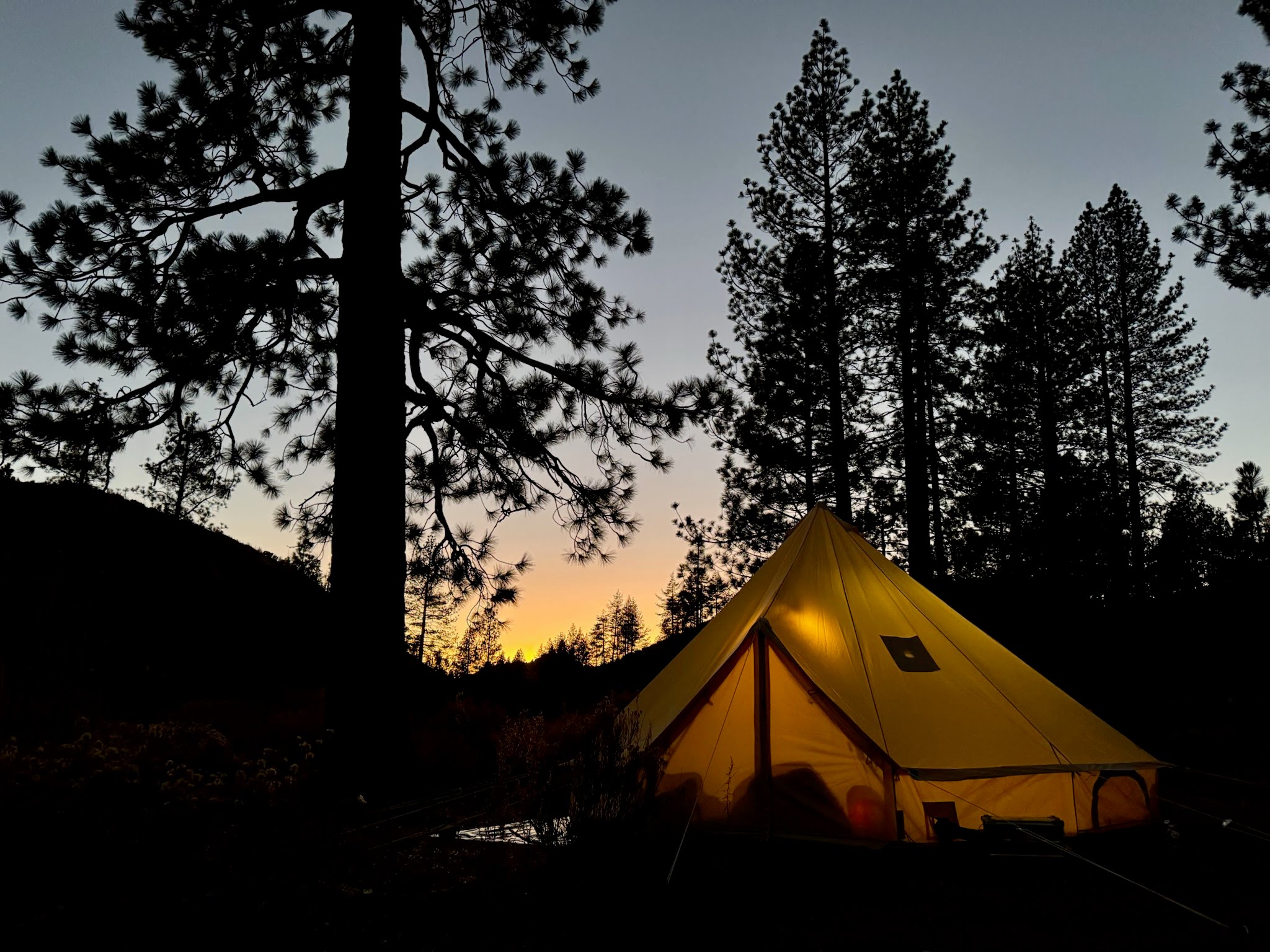
Before you rent a bell tent out, it needs to work as a small guest room, not a weekend camping setup. Guests expect a real mattress instead of an air bed. They also expect working lighting after dark and a groundsheet keeping moisture out. Our guide on how to turn your bell tent into a guest room walks through staging in detail. It covers four-season comfort and layout ideas too.
Rental-Ready Bell Tents From Stout Tent
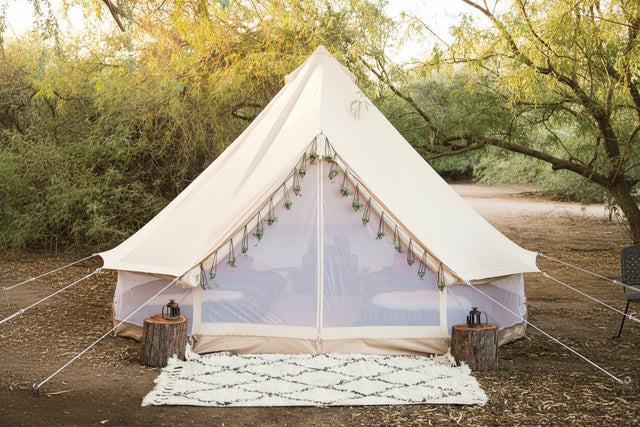
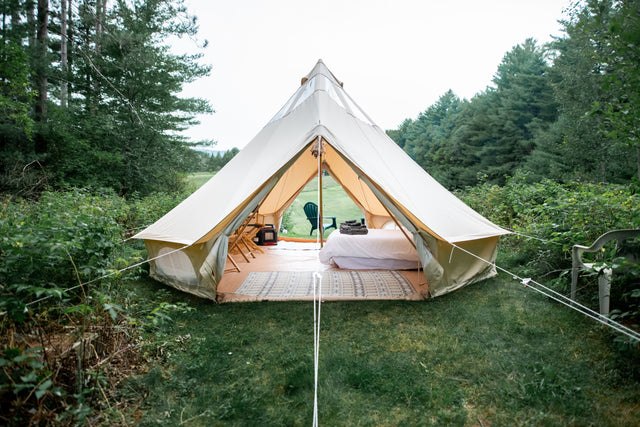
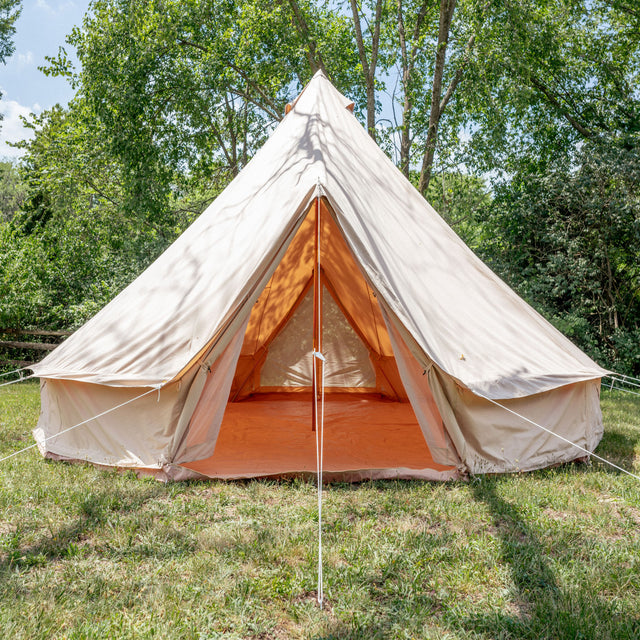

A few small items separate a smooth-running listing from one drawing constant guest messages. Since both platforms treat self check-in as standard, a mounted lockbox handles this step on its own. String lights or battery lanterns fix the top complaint about canvas tents after dark: they run dim without added light. Finally, a small fire pit with firewood and a nearby extinguisher rounds out the outdoor evening guests expect.
Safety note: If your bell tent has a stove jack and a wood stove, check your local fire code first. Confirm the rules before listing it as a heated stay. Neither Hipcamp nor Airbnb publishes a specific stove-jack rule, so this falls under your county’s fire code, not platform policy.
Between bookings, canvas needs upkeep a weekend-only owner rarely deals with. For example, guests bring in moisture, dirt, and body oils fast. Across a full season of turnovers, the toll adds up. Our guides on preventing mold and condensation between guests and storing your tent properly between bookings cover the routine. Follow it, and your bell tent rental stays fresh for the next guest.
What You’ll Need
Tools
- Phone or camera with a wide-angle lens
- Tripod or a stable ledge for interior shots
- 2 to 3 strands of warm-white string lights
- A coded or keyed lockbox for self check-in
Materials
- A real queen mattress, not an air bed
- A neutral bedding set with a throw blanket
- A metal fire pit with a spark screen
- An outdoor-rated fire extinguisher
- A firewood bundle for each guest stay
| Specification | Hipcamp | Airbnb |
|---|---|---|
| Cost to create a listing | Free | Free |
| Host commission | 12.5% to 15%, deducted from payouts | Around 15.5% for most hosts (range 14% to 16%) |
| Built-in host insurance | Host Protection, up to $1 million | AirCover for Hosts, up to $1 million liability |
| ID verification before going live | Required, identity check plus background check | Required, government ID plus address |
| Cleaning fee option | Cabin & Lodging listings only | Any listing type |
| Payout timing | The Tuesday after guest checkout | Set by platform schedule at booking |
Bell Tent Durability for Rental Guests
Once strangers start sleeping in your bell tent most weekends, durability turns from a spec into a real cost. Zippers get pulled at an angle instead of unzipped straight, guy lines loosen and stay loose for days, and guests come and go on their own schedule, not yours. None of it matches how the tent behaved on your own camping trips.
Stout Tent supplies thousands of its canvas bell tents and wall tents to festivals and venues nationwide. There, the tents stay pitched for about six months straight each season. Specifically, they absorb sun, wind, rain, and constant guest turnover for the entire stretch. I flew to the Gorge Amphitheater in Washington to see this firsthand and filmed how these tents hold up under conditions far harder than a part-time bell tent rental ever sees.
Between-Guest Maintenance for Your Own Tent
The maintenance lead at the Gorge, on site for five seasons, walks every tent daily. For instance, he describes regular wind gusts near 35 miles per hour, with recent storms pushing even higher. Sprinkler cycles soak the canvas, then the sun dries it out again. Guests rip zippers instead of running them along the track. Even so, the venue keeps most tents in rotation for several years before retiring them, a pattern matching our own findings on how long a rental bell tent lasts across brands.
Your own tent will not see this level of daily abuse, but the same checkpoints apply between guests. Run a hand along the zipper track for snags, check guy-line tension, and look over the groundsheet seams for wear. Catching a small tear or a loosening line before the next booking keeps one tent bookable for years, no matter who made it.
From experience: I have tested and reviewed many bell tents for 4wdTalk, including a three-month field test on a Stout tent. None of it came close to the strain a full festival season puts on canvas. A Stout tent survives six months of nonstop turnover at a venue holding up to 27,500 people. Occasional weekend bookings on your own bell tent rental are a far lighter load by comparison.
How to List Your Bell Tent Rental on Hipcamp
Once you know the canvas holds up to regular guest turnover, the next step is putting the tent in front of renters. Hipcamp charges nothing to create a listing. It then takes a host commission: 12.5% for parks running its property-management-system (PMS) integration, and 15% for private landowners listing directly. This commission comes out of each payout automatically. Guests pay a separate service fee on their end, with a $3 minimum per booking, so you are never billed the commission twice on the same charge.
Every Hipcamp host also gets built-in Host Protection at no added cost, covering up to $1 million in liability if a guest is hurt or property gets damaged during a stay. Notable exclusions include serving alcohol to guests, so read the coverage terms first. Hipcamp sets no blanket permit requirement of its own. It tells hosts to check their county zoning map or call the local planning department instead, since short-term camping rules vary by jurisdiction.
Once your listing goes live, you choose from nine cancellation policy tiers. They range from Super Flexible through several Strict variants, so you control how much notice a canceling guest owes you. As a Hipcamp host, payouts for US listings land the Tuesday after guest checkout. Direct deposit clears in one to two days, and PayPal arrives faster.
How to List Your Bell Tent on Airbnb
Airbnb requires identity verification before your first listing goes live: a government ID plus address confirmation. Hipcamp requires a similar step. Every new host there must verify their identity and pass a background check before hosting. A bell tent Airbnb listing fits the Camping search category well. Airbnb retired its old “OMG!” browsing bar in 2025, so don’t count on category browsing alone for visibility. Next, you publish a standard listing with photos, pricing, and amenities matching what guests search for.
In addition, AirCover for Hosts comes included at no extra cost. It covers up to $1 million in liability if a guest is injured or their belongings are damaged. Separate property damage protection covers your own tent and gear. Airbnb does not require extra insurance on top of AirCover. Still, many first-time hosts carry a personal umbrella policy before they rent a bell tent to strangers.
As of 2026, most Airbnb host fees run at a single rate near 15.5%. Airbnb has been shifting most hosts to this model, though a smaller split-fee structure, about 3% to the host plus a separate guest fee, still applies for some. The remaining range lands between 14% and 16%, depending on the listing and location. Budget for these Airbnb host fees the way you budget for Hipcamp’s commission. Both come off the top before a payout reaches your account.
Pricing Your Bell Tent Rental
Bare, unfurnished bell tent camping sites tend to book for $25 to $50 a night. Furnished, styled setups with a real bed and finished amenities cluster between $100 and $250. Premium locations near a national park, or a genuinely unique property, sometimes push past $250. The ceiling depends more on the land than the tent itself, but the floor-to-ceiling jump comes down to one lever: furnishing. Swap an air mattress for a real bed, and your bell tent rental jumps pricing brackets fast.
Weekend and summer nights command higher rates than weekday or shoulder-season stays. A wood-stove-equipped hot tent justifies a winter premium, since cold-weather glamping still reads as a novelty to most guests. However, cleaning fees work differently across platforms. Airbnb allows a cleaning fee on any listing type, though the nationwide average runs near $161. However, this figure reflects full homes far more than a single tent. Hipcamp restricts cleaning fees to its Cabin & Lodging category. A standard tent listing usually folds cleaning cost into the nightly rate instead.
New hosts commonly make one pricing mistake: publishing at full market rate on night one. Pricing slightly under market for your first ten to fifteen bookings builds reviews faster. Reviews move a listing up in search results more than a few extra dollars a night ever will. A two-night minimum, extended to three on holiday weekends, also protects your time. Turnover work stays roughly fixed whether a guest stays one night or three.
Photos to Get Your Bell Tent Rental Booked
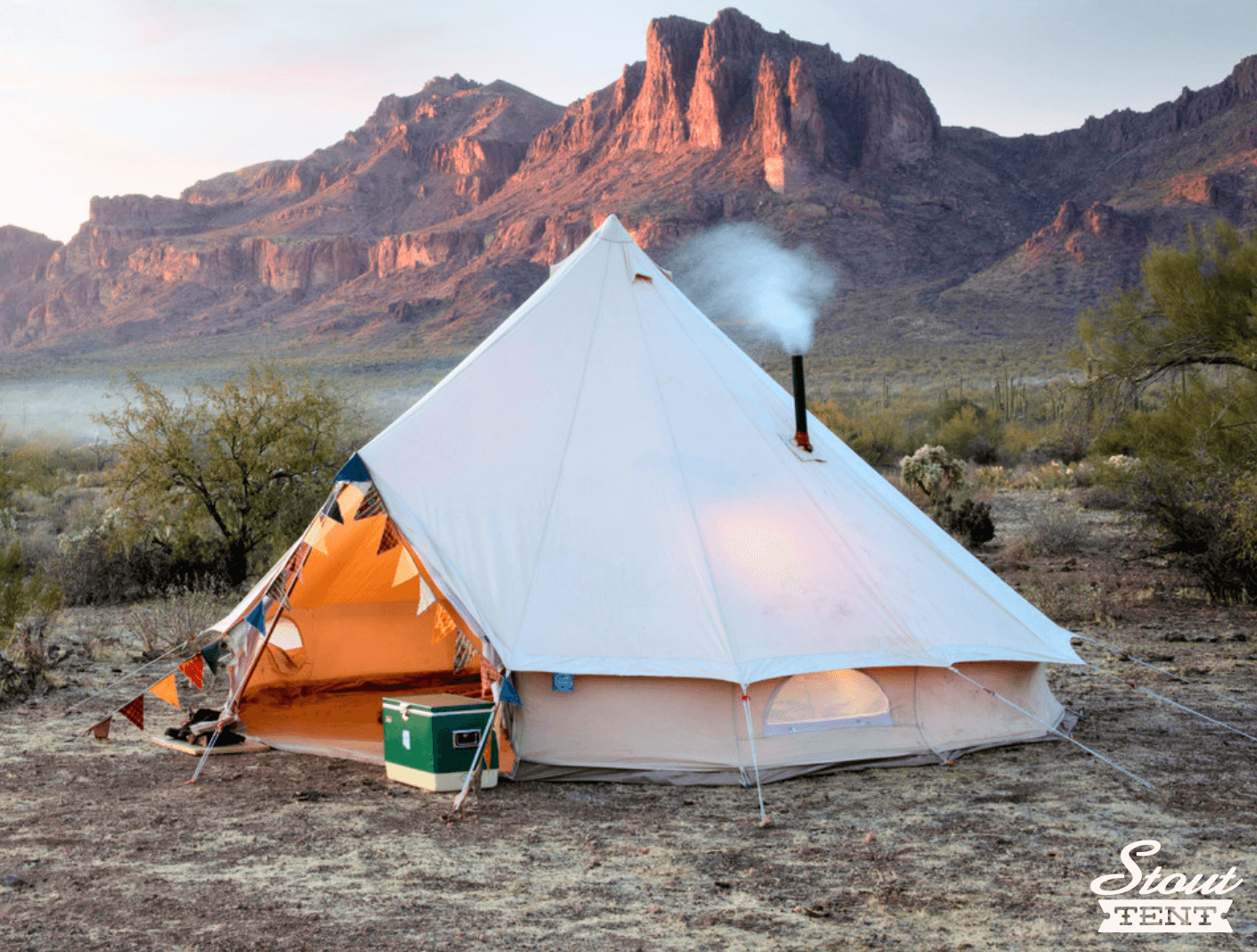
A strong price only converts bookings once the photos back it up. Airbnb’s own hosting guidance stays specific. Shoot interior photos when the room gets the most daylight. Shoot exterior photos during golden hour, the sixty minutes after sunrise or before sunset. Skip the flash in favor of natural light through open flaps and windows instead. Canvas interiors run dim compared to a typical home. String lights or battery lanterns switched on before the shoot solve a problem cold overhead lighting only worsens.
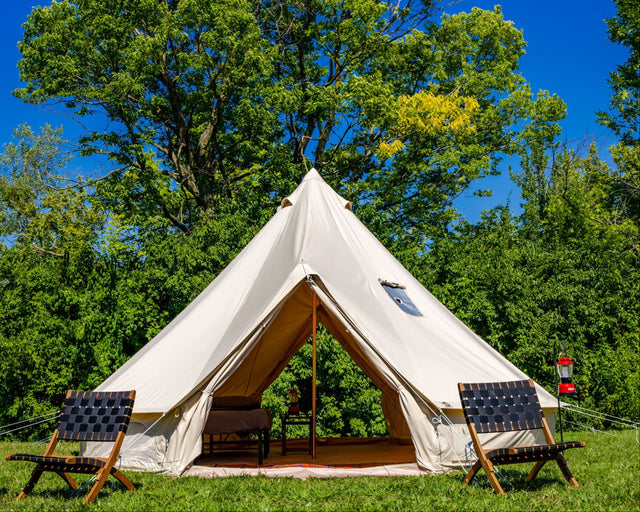
Stout Pro Bell Tent 5M Double-Door
The series Stout builds for festivals and venues where tents stay pitched for six months straight, which is exactly the abuse a rental sees.
- Heavy-duty cotton canvas rated for 4-season use
- Double-wall mesh layer keeps bugs out with sides rolled up
- Galvanized steel poles survive guest handling
- Lifetime warranty with free US shipping
- Cotton canvas needs full drying between guest stays
Stage the bed the way a lifestyle photographer would. Add crisp linens, a textured throw pillow, and a small detail such as a book or a mug on the nightstand. Outside, capture a wide shot placing the tent in its setting. Add a tighter entrance shot with warm light spilling through the doorway. A fire pit lit at dusk, an outdoor seating area, and any worthwhile view round out the set. Aim for 15 to 25 photos total, covering arrival, the interior, the bed, the bathroom setup, and the outdoor space.
Writing a Listing Guests Book
Your opening paragraph should answer three questions fast. Cover what this is, where it sits, and why it stands apart from a generic tent listing. A line describing a sixteen-foot bell tent with a queen bed on ten private acres overlooking a specific landmark works well. It beats a vague claim about a unique outdoor experience. Guests decide whether to keep reading within seconds, so specific details earn clicks generic language never will.
Answer the practical questions before a guest has to ask. Cover distance from parking, bathroom access, heating, cooling, and cell signal. Also state what gets provided versus what a guest should bring. If service drops out, or the bathroom sits a short walk away, say so directly. Frame it as part of the experience instead of hiding it. Above all, mismatched expectations drive most negative reviews. Check every applicable amenity box on the platform, since each one works as a search filter. A skipped box makes your listing invisible in search results.
Hipcamp vs. Airbnb: Which One First?
Hipcamp suits a first-time bell tent rental host well. The platform built itself around outdoor stays, so photos, amenities, and guest expectations already match a tent listing without extra explaining. Its lower commission tier for private landowners lowers the barrier to publishing your first listing too. Many owners find it easier to become a Hipcamp host before branching out to a second platform.
Airbnb brings far more overall search volume and a broader guest base browsing its Camping category. However, guests there compare your tent against traditional homes and hotels by default. Your photos and description carry more weight there to signal what kind of stay this offers. Many hosts list on both platforms once the first proves the tent books consistently. Nothing stops a single bell tent rental from appearing on each site at once. Keep the calendar synced to avoid a double booking.
Final Verdict
A bell tent rental works best for an owner who already has a tent staged as a guest space. It fits owners wanting weekend or seasonal income without the overhead of a full glamping operation. Its biggest strength lies in how little new spending it demands. A lockbox, some lighting, and a fire pit typically cover the gap between a camping tent and a bookable listing.
The trade-off is time, not money. Guest turnover, cleaning, and message responses fall entirely on you as a single-tent host. Anyone unwilling to handle same-week guest communication should reconsider before publishing. Value here comes down almost entirely to furnishing quality and photography. Two tents in similar locations often earn wildly different nightly rates, based on how ready and how well-photographed each one looks.
Start with Hipcamp if outdoor-specific search traffic and a simpler setup matter most to you. Start with Airbnb instead if you want its larger guest base from day one. If your bell tent rental proves itself over a season, you might want more than one tent generating income. Our guide to scaling to a multi-tent glamping business covers what changes once you move past a single listing.
Frequently Asked Questions
How do I become a Hipcamp host?
Create a free Hipcamp account, then add your bell tent as a listing with photos and pricing. You will need to verify your identity and pass a background check before the listing goes live. Confirm your local zoning allows short-term camping stays before publishing too.
What are Hipcamp’s fees?
Hipcamp takes a host commission of 12.5% for parks using its property-management-system (PMS) integration and 15% for private landowners, deducted from each payout. Guests pay a separate service fee starting at a $3 minimum, so the host commission and the guest fee never overlap on the same charge.
How do I list a bell tent on Airbnb?
Verify your identity with a government ID and address, then create a standard Airbnb listing with photos, pricing, and amenities. Your bell tent Airbnb listing surfaces under Airbnb’s Camping search results once the details and amenity tags match.
What should I charge for a bell tent on Airbnb or Hipcamp?
Furnished bell tents with a real bed and finished amenities typically earn $100 to $250 a night. Bare, unfurnished setups run closer to $25 to $50. Price slightly under market for your first ten to fifteen bookings to build reviews faster.
Do I need a permit or insurance to rent out a bell tent on my property?
Permit requirements vary by county, so check your local zoning office before publishing a listing. Both platforms include built-in host liability coverage up to $1 million at no added cost. A personal umbrella policy adds extra protection for first-time hosts.
What photos do Hipcamp and Airbnb reward on a tent listing?
Both platforms favor natural light: interior shots during peak daylight, and exterior shots during golden hour. Add a staged bed with warm lighting, since canvas interiors run dim. Plan on 15 to 25 photos covering arrival, the interior, the bed, and the outdoor space.