


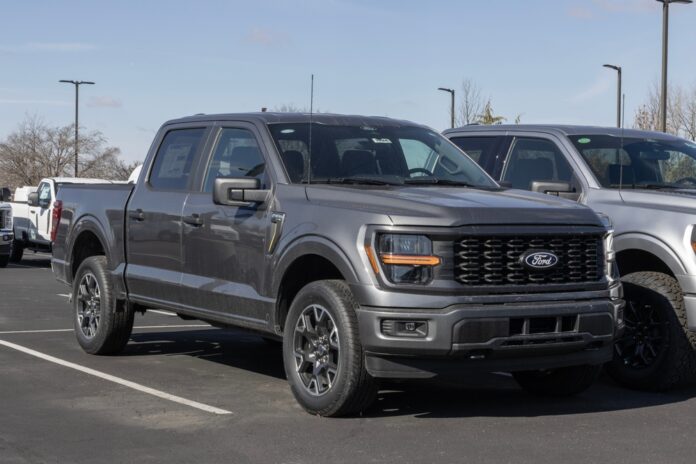

Quick Facts:
- Topic: The 2027 F-150 engine lineup, per a leaked dealer order guide
- Out: 2.7L V6 EcoBoost, listed under “Deleted”
- In: 3.0L V6 EcoBoost, option code 99C, listed under “New/Changed”
- Ford’s position: nothing announced, no comment on the leak
- Power and towing figures: every one reads TBD in Ford’s own guide
- The catch: the Tow/Haul Package is listed as unavailable with the 3.0L
- V8 news: the 5.0L expands to King Ranch and Platinum, reversing a 2026 cut
- Unaffected: Tremor, Raptor and Raptor R keep their 3.5L and 5.2L engines
9 min read
Nothing here is confirmed by Ford. The source is a leaked dealer order guide reported on July 31, 2026. Ford has not announced the 2027 lineup and has not commented on the document. Treat option codes and availability as document-backed, and treat every performance number as unknown.
In This Guide
- What the Leak Says, and What It Does Not
- The 2027 F-150 Engine Lineup on Paper
- No F-150 Engine Has Ever Been a 3.0L EcoBoost
- The 3.0L Is Locked Out of the Tow/Haul Package
- Why the 2027 F-150 Engine Numbers Tell You Almost Nothing Yet
- What the Swap Means if You Wheel an FX4
- Ford Is Not Killing the V8
- The 2.7L Reliability Record, With Receipts
- Where the 2027 F-150 Engine News Leaves a 2026 Buyer
- What Changes When Ford Announces
- Frequently Asked Questions
What the Leak Says, and What It Does Not
The 2027 F-150 engine lineup lost its base engine. Ford Authority broke the story on July 31, citing sources familiar with the matter. Within hours, PickupTruckTalk and Autoblog reported the same change from a leaked 49-page F-150 order guide. Consequently a document sits behind the claim rather than a whisper.
The F-150 order guide is blunt. Under “New/Changed” it lists the 3.0L V6 EcoBoost with option code 99C. Under “Deleted” it lists the 2.7L V6 EcoBoost. The deletion notice is the entire 2.7L mention across all 49 pages. No spec row, no option code, no configuration table.
Sort the reporting into three tiers before reacting to any of it. Ford has confirmed nothing. The engine swap, trim availability and package restrictions are document-backed and readable in the guide. Everything about how the new engine will perform, however, is speculation. Ford’s own document lists horsepower, torque, payload and fuel economy as TBD in every cell.
Consequently, any outlet publishing a 3.0L F-150 horsepower figure this week is guessing. However, one detail supports the document’s credibility. Both engines are built at the same plant in Lima, Ohio, so this is a changeover inside one facility rather than a sourcing shift.
The 2027 F-150 Engine Lineup on Paper
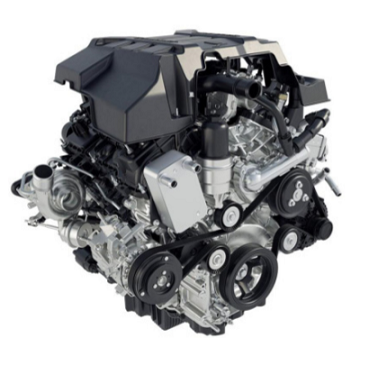
Here is what the current truck offers against what the F-150 order guide describes. Note how much of the right column reads TBD. Then note how many outlets have printed numbers for it anyway.
| Metric | 2.7L EcoBoost (2026 F-150) | 3.0L in other Fords | 3.0L in the F-150 |
|---|---|---|---|
| Horsepower | 325 at 5,500 rpm | 405 to 418 | TBD in Ford’s guide |
| Torque | 400 lb-ft at 3,500 rpm | 430 to 440 lb-ft | TBD |
| Peak torque rpm | 3,500 | 2,750 to 4,500 by application | TBD |
| Max tow | 8,400 lb | Not applicable | No tow chart in the guide |
| Max payload | 1,775 lb | Not applicable | TBD |
| EPA combined | 21 mpg | Not applicable | TBD |
| Tow/Haul Package | Available | Not applicable | Listed as not available |
One number above deflates a popular complaint. In 2WD form the 2.7L returns 21 mpg combined. Meanwhile the far stronger 3.5L EcoBoost returns 20 mpg. Losing the small engine costs a single mpg on the EPA cycle, so the efficiency argument was thinner than its reputation suggests.
No F-150 Engine Has Ever Been a 3.0L EcoBoost
This point gets muddled constantly. Therefore it is worth being precise. A 3.0L EcoBoost gas V6 has never been offered in an F-150 in any model year. The 2026 truck lists six engines and none of them is a 3.0L of any kind.
Specifically, people confuse it with the 3.0L Power Stroke diesel. Ford sold it in the F-150 from 2018 through 2021 at 250 horsepower and 440 lb-ft, then discontinued it. It is a completely different engine with a different fuel, a different block and a different purpose. Anyone telling you the 3.0L is “coming back” to the F-150 is thinking of the diesel.
Today the engine lives in the Ranger Raptor at 405 horsepower, the Bronco Raptor at 418, plus the Explorer ST and Lincoln Aviator.
The 3.0L Is Locked Out of the Tow/Haul Package
Here is the detail buried deepest in the guide, and the one mattering most if you pull a trailer. The Tow/Haul Package, option code 53T, is listed as not available with the 3.0L engine. Notably, the restriction appears on the master package page and repeats in the XLT and STX rows. The axle chart confirms it independently, with every 3.0L row showing N/A in the Tow/Haul column.
This matters because every F-150 towing headline number depends on the package. The current 13,300 lb figure requires the Max Tow/Haul Package plus the optional max tow axle. Therefore a truck locked out of the package has no path to Ford’s advertised numbers. The 3.0L might end up rated below the engine it replaces, whatever it turns out to make.
Two caveats, however, keep this honest. Buyers apparently still get an integrated trailer brake controller, and the guide even requires the 3.0L for one controller configuration. Moreover, PickupTruckTalk asked Ford to explain the restriction and had received no answer at publication. Treat it as an open question rather than a settled downgrade.
Other 3.0L restrictions appear in the same document. No Pro Access Tailgate. Likewise, no availability on 4×4 Lariat or XLT with the 157-inch wheelbase, or on the 122-inch or 157-inch wheelbase XL. If you are calculating what a build will carry, our guide to payload capacity and GVWR covers why the sticker matters more than the brochure.
Why the 2027 F-150 Engine Numbers Tell You Almost Nothing Yet
Most coverage frames this as 325 horsepower against 405, which sounds decisive. However, the comparison is close to meaningless, because the 3.0L is calibrated differently in every vehicle it goes into.
The same engine peaks at 2,750 rpm in the Bronco Raptor and 4,500 rpm in the Ranger Raptor. The gap runs 1,750 rpm on identical displacement. In practice it is the difference between a low-speed crawling calibration and a high-revving performance one. Meanwhile the F-150 2.7L peaks at 3,500 rpm, sitting neatly between them.
For a 4×4 buyer, the peak torque rpm is the number worth waiting for. A Bronco Raptor style curve would be a genuine gain for trailer launches and slow technical driving. Borrow the Ranger Raptor calibration instead and both get worse, despite a bigger window-sticker figure. Ford has published neither, so nobody knows which one the F-150 gets.
Jeep ran a version of this same argument recently, and the outcome is instructive. Our look at how a smaller turbo engine replaced the V6 in the Grand Cherokee found it matched towing while beating the old engine on power and economy. Downsizing is not automatically a downgrade.
What the Swap Means if You Wheel an FX4
The change lands squarely on the budget off-road build path: an XL, STX or XLT with the FX4 package. Such a buyer gains a bigger base engine of unpublished output and loses the Tow/Haul Package. Specifically, towing is exactly where the swap bites. It is a real trade for anyone hauling a trailer to the trailhead.
Higher up the range, nothing moves. The swap does not touch Tremor, Raptor or Raptor R. Tremor stays 3.5L EcoBoost standard with the 5.0L V8 optional from the 401A group up. Raptor keeps the High-Output 3.5L, currently 450 horsepower, and Raptor R keeps the supercharged 5.2L, currently 720.
Axle content shifts too. Specifically, the guide ties a 3.55 electronic-locking rear axle to the 3.0L. In addition, it lists the 3.73 electronic-locking axle as requiring either the 5.0L V8 or the 3.0L. For 2027 the STX FX4 equipment group is deleted as a standalone and FX4 becomes an option on the STX 200A group.
One correction worth carrying: several dealer sites claim the 5.0L V8 is standard on Tremor. The official 2026 order guide reverses it, making the 3.5L standard and the V8 optional.
Ford Is Not Killing the V8
The obvious take on this story: Ford keeps shrinking engines. However, the same document says otherwise.
For 2027, in contrast, the leaked guide expands the 5.0L V8 back to King Ranch and Platinum. Notably, those are the two trims it left for 2026. Ford is deleting its base engine while widening V8 availability at the top of the range. Consequently a “Ford is killing the V8” headline is not what this order guide supports.
GM moved in the same direction for 2027 and further, as our coverage of how GMC added new V8s for 2027 lays out. Before anyone treats displacement as a proxy for durability, though, remember big V8s have their own problems, with hundreds of thousands of GM 6.2L engines under recall and litigation.
The 2.7L Reliability Record, With Receipts
The 2.7L leaves with a worse reputation than its record supports, and moreover most of the numbers circulating online are invented. J.D. Power publishes no engine-specific score for the 2.7L, so any figure attributed to them is fabricated.
The documented history, meanwhile, is one recall. NHTSA campaign 24V635000, submitted August 2024, covered intake valves with grinding burn and over-specification hardness. Eaton supplied them, and consequently the defect was confined to a six-month 2021 production window. The F-150 share was 47,719 trucks from the 2021 and 2022 model years. Ford changed the valve material afterward.
Two complaints repeated everywhere online, meanwhile, do not appear in the record at all. Coolant intrusion is not a recorded 2.7L issue, and cam phaser rattle is not documented on the F-150 2.7L. Both belong to other Ford engines and migrated across in forum retellings.
Worth noting for the incoming engine: the same 2024 recall covered 3.0L applications too, since both belong to Ford’s Nano family and shared the supplier and the defect. Readers weighing long-term ownership should also see our ranking of the most reliable overlanding engines.
Where the 2027 F-150 Engine News Leaves a 2026 Buyer
Nobody outside Ford knows how the 2027 truck performs. However, the choice between model years is a question about known versus unknown, and both ledgers are open.
If you tow near the ceiling, the 2026 is the safer buy. F-150 towing numbers are published for it, the base engine has a clean recall record, and the Tow/Haul Package is available. Meanwhile the 2027 base engine has no published outputs, no tow chart and a documented lockout.
If you wheel more than you tow, waiting costs little. Tremor and Raptor carry over unchanged, and on an FX4 build a bigger base engine is more likely to help than hurt on a trail.
Cross-shopping a 5.0L up-trim? The 2027 news is good, since the V8 returns to King Ranch and Platinum. Either way, wait for Ford’s own numbers before treating any 3.0L figure as real.
What Changes When Ford Announces
Five figures will settle this story, and none exists yet. Horsepower, torque with its peak rpm, the tow chart, EPA economy, and whether the Tow/Haul restriction survives production. We will update this article when Ford publishes them.
Frequently Asked Questions
Is the 2027 F-150 engine change confirmed by Ford?
No. Ford has not announced the 2027 lineup and did not comment on the leaked order guide. The engine swap is document-backed rather than officially confirmed, which is a meaningful difference. Ford Authority reported it from sources. Two outlets then reported the same change from the leaked guide.
How much horsepower will the 3.0L make in the F-150?
Nobody outside Ford knows. Every power, torque, payload and economy cell in the leaked guide reads TBD. The engine makes 405 horsepower in the Ranger Raptor and 418 in the Bronco Raptor. Those are different calibrations in different vehicles, so neither predicts the F-150.
Will the 2027 F-150 tow less than the 2026?
Possibly, and it is the sharpest open question in the leak. The guide lists the Tow/Haul Package as unavailable with the 3.0L, and Ford’s advertised maximum tow ratings depend on it. The guide contains no tow chart at all, so no rating exists to compare yet.
Does the 2027 F-150 still offer a V8?
Yes, and more widely than the 2026 truck. The leaked guide expands the 5.0L V8 to King Ranch and Platinum, reversing a cut made for 2026. Ford appears to be trimming its base engine while broadening V8 availability higher in the range.
Does this affect the F-150 Tremor or Raptor?
No. Tremor runs the 3.5L EcoBoost as standard with the 5.0L V8 optional, Raptor uses the High-Output 3.5L at 450 horsepower today, and Raptor R uses the supercharged 5.2L at 720. None of them offered the 2.7L, and none of them gains the 3.0L.
Was the 2.7L EcoBoost F-150 engine unreliable?
Its record is cleaner than its reputation. One recall touched the engine across twelve model years, confined to a six-month 2021 production window and traced to a valve supplier. Coolant intrusion and cam phaser rattle, the two failures most often attributed to it online, are not documented on this engine in this truck.