


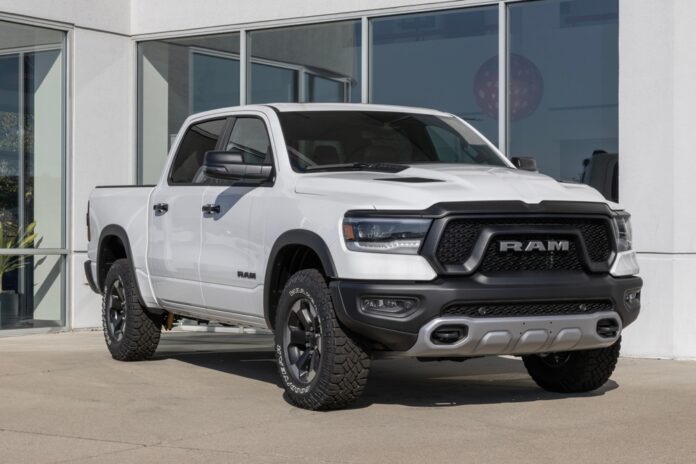

Quick Facts:
- Topic: the 2026 Ram 1500 recall over second-row seat belt anchors
- Vehicles: 1,271,294 in the US, 1,516,604 worldwide
- Model years: 2019 through 2026 Ram 1500
- Defect: the second-row center or left rear (behind the driver) seat belt buckle anchor might not be properly attached to the body structure
- Remedy: dealers inspect and attach the anchor, at no charge
- Not a parts recall: nothing is being replaced
- Injuries: one potentially related injury and no fatalities, per Reuters
- Mopar recall code: 67D, live at recalls.mopar.com now
- NHTSA campaign number: not yet published
- Owner contact: 1-800-853-1403 or recalls.mopar.com
7 min read
Run your VIN at recalls.mopar.com and ask your dealer about Mopar recall code 67D. Important: a clean result at nhtsa.gov does NOT clear your truck today, because NHTSA has published no campaign number and no VIN lookup for this recall yet. Verified August 1, 2026.
In This Guide
- What to Do Right Now
- What Stellantis Announced
- The Ram 1500 Recall by the Numbers
- What an Unattached Anchor Means for a Crash
- Which Trucks and Trims Are Affected
- Why This One Matters if You Wheel With Passengers
- Do Not Tighten the Anchor Yourself
- What to Expect at the Dealer
- How Big This Ram 1500 Recall Is
- Other Open Ram Recalls Worth Checking
- Frequently Asked Questions
What to Do Right Now
The Ram 1500 recall covers two of the three second-row belts: the center position and the left rear position behind the driver. One position is not covered, the right rear behind the front passenger. Until a dealer inspects your truck, treat those two as unverified.
Tonight, move rear passengers to the right rear position. With more people than one seat holds, put adults rather than children in the center and left rear. Then run your VIN at recalls.mopar.com and ask your dealer about Mopar recall code 67D, which is live now even though NHTSA has published nothing.
Safety note: a child seat held in by the vehicle belt at the center or left rear position relies on the recalled anchor. Move it to the right rear, behind the front passenger. Lower anchors and the top tether are separate attachments and are NOT part of this recall, so a seat installed on lower anchors is unaffected wherever it sits. Note also: NHTSA caps lower-anchor use at a combined 65 pounds of child plus seat, and beyond it you move to the vehicle belt, which means the right rear position. Lower anchor placement varies by cab and bench, so check your owner’s manual. If you are unsure about any of it, the right rear seat with the vehicle belt is the simple answer.
One reassurance worth stating plainly. Stellantis chose an inspection rather than a replacement, which tells you the company expects most of these trucks to be built correctly. It simply cannot identify which ones are not.
What Stellantis Announced
The Ram 1500 recall announced by Stellantis covers 1,271,294 US-market pickups. A second-row seat belt anchor might not be properly attached to the body structure. Affected trucks span the 2019 through 2026 model years, nearly the entire current generation.
Stellantis is specific about the defect. Either the second-row center anchor, the left rear anchor behind the driver, or both might sit unattached to the structure they are supposed to be bolted into. Dealers will inspect and attach the anchor where needed, at no charge.
Notably, this is not a parts recall. Dealers replace nothing, so no part shortage should delay it. A technician inspects, then attaches the anchor where the inspection finds a problem. The distinction matters for scheduling, since parts-constrained recalls routinely leave owners waiting months.
Stellantis knows of one potentially related injury and no fatalities, according to Reuters. The company’s own release mentions no injuries at all. Anyone reading only the press statement would miss it.
The Ram 1500 Recall by the Numbers
The market breakdown matters, because several outlets have published it incorrectly. Here are the estimated figures from the Stellantis release itself, market by market.
| Market | Vehicles |
|---|---|
| United States | 1,271,294 |
| Canada | 156,138 |
| Mexico | 15,088 |
| Outside North America | 74,084 |
| Global total | 1,516,604 |
One correction worth carrying: at least one major outlet reported the Mexico figure as 74,084 and dropped the rest-of-world line entirely. The numbers above come straight from the manufacturer.
What an Unattached Anchor Means for a Crash
A seat belt anchor has one job, and the federal standard governing it says so plainly. FMVSS 210, codified at 49 CFR 571.210, defines an anchorage as the component transferring seat belt loads to the vehicle structure. If the anchor is not attached to the structure, there is no load path.
The strength requirements show the forces involved. A lap-belt-only anchorage must withstand 5,000 pounds of force. Lap and shoulder combinations must hold 3,000 pounds at each point at once. Moreover, section S4.2.4(a) requires anchorages at positions sharing a common seat to be loaded simultaneously, with no distance condition attached. The center and left rear positions named in this recall share the same bench.
Consequently a belt in an affected truck would latch normally, retract normally and feel ordinary. A crash load would find no path into the body. No reliable symptom exists, which is exactly why an inspection is the only way to know.
Worth being precise on one point: Stellantis alleges a defect and cites no federal standard violation. At least one outlet characterized the trucks as failing to meet federal standards, but the phrasing is framing rather than a regulatory finding.
Which Trucks and Trims Are Affected
The current-generation Ram 1500, known internally as the DT, is built only as a Quad Cab or a Crew Cab. Both are four-door trucks with second rows, so body style narrows the population barely at all.
Stellantis published no trim exclusion. Therefore Rebel, TRX and RHO trucks fall inside the recall alongside every other 1500 built in the affected window. The Power Wagon is a 2500, which puts it outside this campaign entirely.
Those Ram 1500 model years cover essentially the whole DT generation to date. If you own a Ram 1500 newer than a 2018, assume you are in scope until a dealer inspects the truck. A clean VIN result at nhtsa.gov proves nothing today, because the federal database does not carry this recall yet.
Why This One Matters if You Wheel With Passengers
A recall about a rear seat belt sounds like a commuter problem. For anyone who takes passengers down forest roads, though, it lands differently.
Some owners might notice a rattle from the rear seat area, though nobody should rely on hearing one. An unattached anchor gives no dependable warning at all until the moment it matters.
Interior builds complicate this further. Rear seat delete platforms, drawer systems and sleeping setups all work around or through the rear seat area. Anyone who has removed and reinstalled a rear seat should treat the inspection as a priority. A build hides the exact area the dealer needs to see.
Tell the service writer about any rear seat build when you book, because the dealer needs access to the area your platform covers. If you are re-planning what rides where, our guide to passengers counting toward payload is worth a look.
Do Not Tighten the Anchor Yourself
Safety note: do not attempt to tighten or torque the seat belt buckle anchor yourself. A fastener will torque up correctly against a bracket or captive nut which is itself not attached to the body structure, so the bolt feels right and the load path still does not exist. You would remove any rattle, which is the only hint some owners get, while leaving the belt exactly as unsafe as it was. Book the dealer inspection instead.
This is the practical heart of the story. The failure mode is not a loose bolt needing a snug, it is an anchor missing its connection to the body. Torque feel tells you nothing about whether the load path exists.
The right steps are short, and one needs a warning. First, run your VIN at recalls.mopar.com, where the campaign is live as code 67D. An empty result at nhtsa.gov today does not clear your truck, because the federal database does not carry this recall yet. Next, call Stellantis customer care at 1-800-853-1403 if either lookup comes back empty. Then book the inspection. Also, if you have a rear seat build in the truck, tell the service writer before the appointment so they schedule time to work around it.
What to Expect at the Dealer
Because the remedy is an inspection rather than a parts swap, the appointment should be short and the supply chain plays no role. A technician pulls back trim or the seat bottom, looks at where the anchor meets the body, and attaches it if the connection is missing.
Two practical notes. First, give your dealer the Mopar code 67D, which is already live on Stellantis’s own recall site. Some service departments will have the campaign in their system already, and others will not have seen it yet, so be ready to call back if the first answer is no.
Second, ask for the inspection result in writing on the repair order either way. A recall inspection finding no defect still generates a record. The record proves the check happened if the truck changes hands later.
How Big This Ram 1500 Recall Is
This number is large without being record-setting, and the honest framing matters.
At roughly 1.27 million US vehicles, this campaign beats most single-model actions in any year. It is not 2026’s largest, however, and Stellantis has gone bigger before. Ford recalled roughly 4.4 million F-150s this year, and a 2018 Chrysler campaign reached 4.8 million vehicles. For a recent same-segment comparison, our coverage of Ford’s 741,195-vehicle rollaway recall covers trucks and SUVs flagged days before this one.
This Stellantis recall is not the company’s first at this scale either, and it follows another million-vehicle Stellantis recall covering Wranglers and Gladiators. A Stellantis recall of this size usually traces to assembly rather than design. One missed step at a single station propagates across every truck built afterward. A labelling-error recall reached 540,450 Subarus across the same 2019 to 2026 window on the same logic.
Other Open Ram Recalls Worth Checking
Since you are running a VIN check anyway, other campaigns are open on Ram trucks and worth reviewing in the same session. Two are worth naming.
NHTSA campaign 26V421000 covers headlights, with interim owner letters mailed July 30 and a remedy still under development. Campaign 26V059000 covers trailer brake function across roughly 456,000 vehicles. One VIN lookup returns every applicable campaign at once, so check rather than guess.
Frequently Asked Questions
What is the NHTSA campaign number for this Ram 1500 recall?
None has been published yet. Stellantis announced the recall on July 31. The highest campaign number NHTSA had published at the time of writing was 26V493000, received July 30. Expect a number in the 26V494000 range or above once NHTSA posts the Part 573 report.
Which Ram 1500 model years are affected?
Model years 2019 through 2026, covering essentially the entire current DT generation. Both Quad Cab and Crew Cab body styles are included, since both have second rows. No trim has been excluded, so Rebel, TRX and RHO trucks are in scope.
Is the Ram Power Wagon included?
No. The Power Wagon is built on the Ram 2500 heavy duty platform, and this campaign covers the 1500 only. Ram 2500 and 3500 owners should still run a VIN check for other open campaigns.
Can I check the seat belt anchor myself?
Looking is fine, but a visual check will not tell you much, and you should not try to fix what you find. No reliable symptom exists. An improperly attached anchor looks and feels normal. Tightening it yourself removes the rattle without restoring any strength. Book the dealer inspection instead.
Is it safe to drive the truck?
Stellantis has issued no do-not-drive advisory. The affected positions are the second-row center and the left rear behind the driver. One unaffected second-row belt remains, the right rear. Seat passengers there until the inspection is done, and with more people than one seat holds, put adults rather than children in the covered positions.
How much will the repair cost?
Nothing. Manufacturers perform recall remedies at no charge to the owner. This one is an inspection plus an attachment rather than a parts replacement, so no supply delay should apply.