


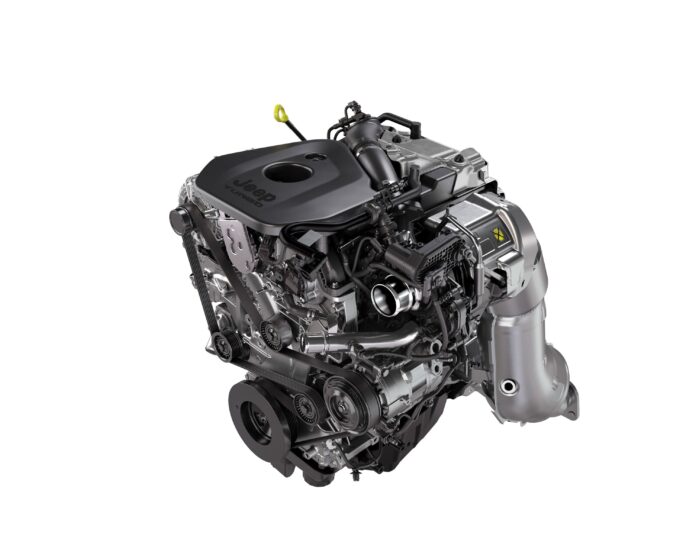

Quick Facts:
- Vehicle: 2026 Jeep Grand Cherokee Hurricane 4 turbo
- Engine: 2.0L Hurricane I-4 turbo, clean-sheet Stellantis architecture
- Horsepower: 324 hp (31 hp more than the outgoing Pentastar V6)
- Torque: 332 lb-ft (72 lb-ft more than the V6)
- Towing: 6,200 pounds, matching the V6 it replaces
- Fuel economy (RWD): 21 mpg city / 27 mpg highway / 23 mpg combined
- Key tech: Turbulent jet ignition, Miller-cycle combustion, 350-bar direct injection plus port injection
- Trims standard: All Grand Cherokee and Grand Cherokee L except Laredo and Laredo X (V6 retained on those)
- Best for: Grand Cherokee buyers who want better fuel economy and stronger low-end torque without losing tow capacity
8 min read
In This Article
Why the V6 Got the Axe
The 2026 Jeep Grand Cherokee Hurricane engine shares exactly one component with the current 2.0L turbo it succeeds: the oil filter. Every other part is new. For many Jeep loyalists, dropping the 3.6L Pentastar V6 for a 2.0L turbocharged four-cylinder sounds like heresy. Yet the engineering story behind the swap is more interesting than the cylinder count suggests. Stellantis did not bolt a turbo onto an old four-cylinder. Instead, the company built a clean-sheet 2026 Jeep Grand Cherokee engine from the block up.
Jeep’s chief engineer for the program, Ashish Dubet, explained the rationale in a recent interview with Pickup Truck +SUV Talk. According to Dubet, the goal was to avoid trade-offs between performance, fuel economy, and refinement. In particular, the team wanted an engine matching the Grand Cherokee’s dual personality of luxury SUV refinement and off-road capability without compromising towing.
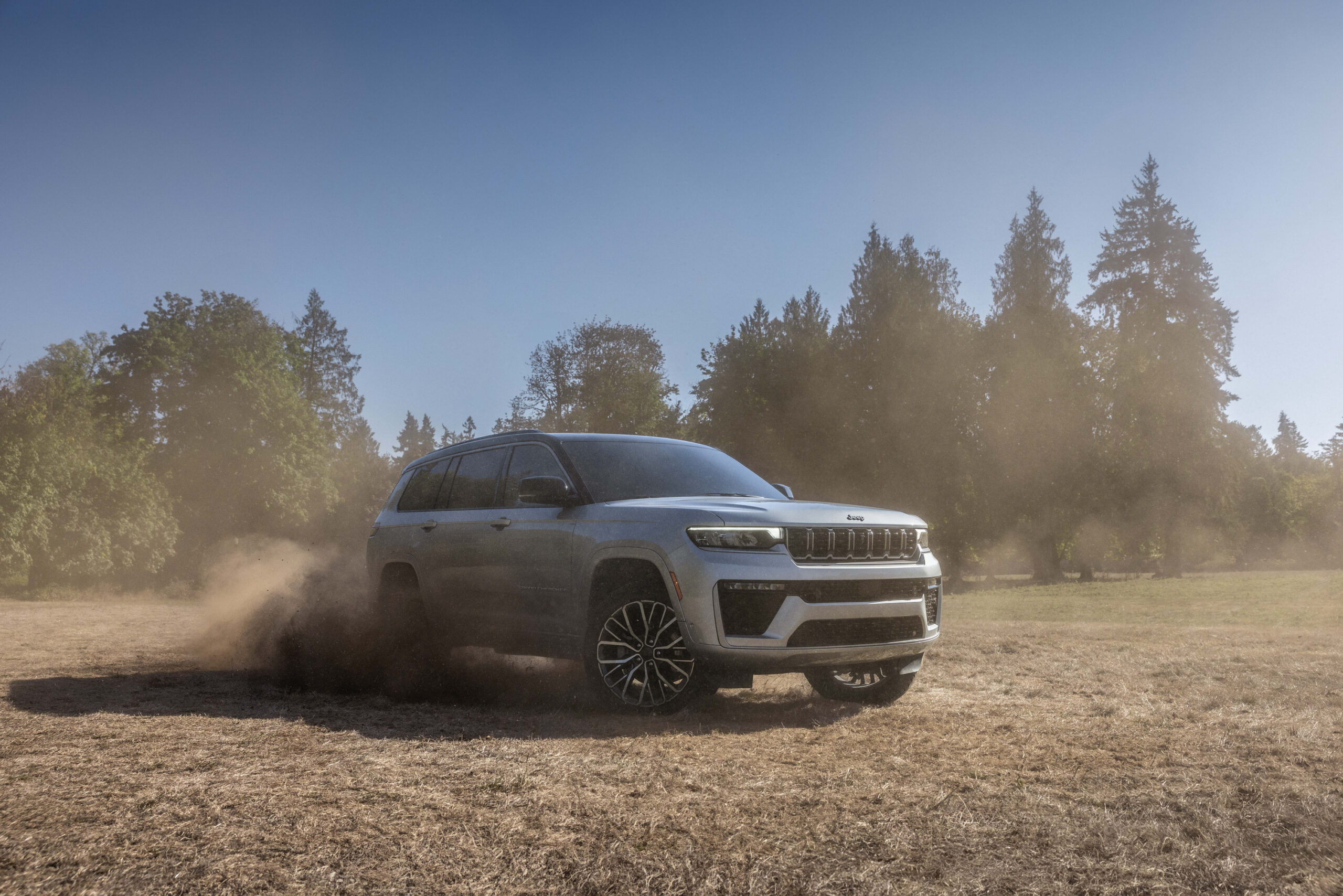
For 2026, the Hurricane 4 becomes the standard engine across the Grand Cherokee and Grand Cherokee L lineup. Notably, the base Laredo and Laredo X trims keep the Pentastar V6 as a budget option. Above those trims, the Limited, Limited Reserve, 85th Anniversary, and Summit all use the new four-cylinder. Compared to the current-generation Grand Cherokee launched on the WL platform, the 2026 Jeep Grand Cherokee engine shift is the biggest mechanical change in years.
Key Specs at a Glance
| Specification | 2026 Hurricane 4 | Outgoing Pentastar V6 |
|---|---|---|
| Displacement | 2.0L | 3.6L |
| Cylinders | Inline-4 turbo | V6 naturally aspirated |
| Horsepower | 324 hp | 293 hp |
| Torque | 332 lb-ft | 260 lb-ft |
| Towing capacity | 6,200 lb | 6,200 lb |
| EPA combined (RWD) | 23 mpg | 22 mpg |
| Fuel improvement vs. prior 2.0L turbo | 10% less fuel (Stellantis claim) | n/a |
| Ignition system | Turbulent jet ignition | Conventional spark |
| Fuel injection | 350-bar DI + port injection | Sequential MPI |
| Cylinder wall thickness | 24% thicker vs. prior turbo | baseline |
How the New Turbo Four Works
The headline feature is turbulent jet ignition, or TJI. Dubet describes the difference with a useful analogy: a conventional spark plug works like a lighter, while turbulent jet ignition works like a blowtorch. Inside the combustion chamber, a small passive pre-chamber sits next to the spark plug. Instead of igniting the air-fuel mixture in the cylinder directly, the spark fires inside the pre-chamber. Then flames shoot through several small holes into the main cylinder at extremely high speed.
Because the flame front spreads from multiple jets at once, combustion happens faster and more completely. As a result, the engine produces more power per unit of fuel, reduces engine knock, and lowers emissions. By Stellantis’ own numbers, the Hurricane 4 generates 20 percent more power while using 10 percent less fuel compared to the current 2.0L turbo. Those are big numbers for a clean-sheet four-cylinder.
Still, turbulent jet ignition is only one piece. The engine also runs Miller-cycle combustion, closing the intake valves earlier than normal to lower pumping losses at part throttle. Additionally, the fuel system pairs 350-bar direct injection with port fuel injection. Direct injection produces the high cylinder pressures needed for power. Meanwhile, port injection helps clean intake valves and reduces the carbon buildup problem common to DI-only engines. For a vehicle expected to run 200,000 miles, the dual-injection design matters.
Finally, a variable geometry turbocharger handles boost. Variable vanes adjust their angle based on engine speed and load. At low rpm, the geometry tightens to spool quickly. At high rpm, the vanes open for top-end airflow. Therefore, low-end torque arrives early without sacrificing high-end power, which matters most for towing and highway merging.
Durability: Built to Outlast the Worry

Skeptics of the 2026 Jeep Grand Cherokee Hurricane engine usually land on one question: will this little engine survive years of towing, off-road use, and high-mileage daily driving? Stellantis engineered the Hurricane 4 engine specifically to answer this concern. According to Dubet, the team accounted for peak cylinder pressures, temperatures, and fatigue cycles spanning decades of ownership.
Several design choices reflect this focus. First, cylinder walls are 24 percent thicker compared to previous designs, helping the block resist the higher cylinder pressures generated by turbocharging and the Miller cycle. Second, the engine uses a single-piece die-cast block design, eliminating the seams and bolted joints where older engines develop oil leaks. Third, a structural oil pan and windage tray stiffen the bottom end while controlling oil aeration during hard cornering, which matters off-road.
The crankshaft and main bearings are also larger than the prior 2.0L turbo unit. Larger bearings spread load, run cooler, and last longer under sustained loads such as trailer towing on grades. On top of those bearing upgrades, the cylinder bores use a spray bore coating instead of cast iron liners. Spray bore coatings reduce friction, improve heat transfer, and shave weight without sacrificing wear resistance.
For comparison, the older Pentastar V6 earned a strong reliability reputation over its 15-year run. Among the most reliable overlanding engines in the Jeep family, the 4.0L AMC inline-six remains the benchmark. The Hurricane 4 is not yet on the list. Still, the engineering choices Stellantis made suggest the company knows it has to earn long-term trust over time, not assume it.
My Take: A Former V6 Skeptic Speaks
I get the V6 anxiety. Honestly, I felt the same way when I ordered my 2025 Chevy Colorado ZR2. The truck shipped with a 2.7L turbo four-cylinder, and I went in reluctant. After all, my previous truck was a Jeep Gladiator with the 3.6L Pentastar V6. I figured a four-cylinder, no matter how boosted, would feel gutless next to a V6 off-road truck.
Fast forward a year, and the math surprised me. My ZR2 makes 310 hp and 430 lb-ft of torque from its turbo four. By contrast, the Gladiator’s V6 made 285 hp and 260 lb-ft. In other words, the ZR2 has more horsepower than the Gladiator did and a lot more torque. On the highway, it merges hard. On the trail, it pulls smoothly off idle without the rev-and-wait dance the V6 needed. Around town, the low-end torque means I rarely feel the truck working.
The trade-off is sound. A turbo four does not bark like a V6 or rumble like a V8. You give up the audible character of a bigger motor. For a Grand Cherokee buyer pulling a boat or driving a daily commute, however, the numbers matter more than the soundtrack. My full one-year review of the Colorado ZR2 turbo four walks through every detail of the adjustment, including how the gearing and throttle calibration matter as much as the cylinder count.
Therefore, when I look at the Hurricane 4 specs (324 hp, 332 lb-ft, 6,200 lb tow), I see a Grand Cherokee outpacing the V6 it replaces in nearly every measurable way except engine sound. The Jeep crowd has every right to mourn the V6 noise. Yet the truck behind those numbers will do what most owners need.
Hurricane 4 vs. Pentastar V6: Where Each Wins
The Pentastar V6 served the Grand Cherokee since 2011 and earned a reliable reputation. Yet on paper the Jeep Grand Cherokee Hurricane 4 wins almost every category Jeep buyers care about. Specifically, the new engine produces 31 more horsepower (324 vs. 293) and 72 more lb-ft of torque (332 vs. 260). EPA combined fuel economy improves by 1 mpg in RWD trim (23 vs. 22), and Stellantis says the engine burns 10 percent less fuel than the prior 2.0L turbo. Towing capacity stays at 6,200 pounds, so trailer owners lose nothing.
Where the V6 still wins is character. A naturally aspirated 3.6L sounds smoother under throttle and produces a different power delivery curve than a boosted four. Some long-time Grand Cherokee owners will miss the linear rev band. Additionally, the V6 has 15 years of field history, while the Hurricane 4 only launched for the 2026 model year with limited customer mileage so far. For risk-averse buyers, the V6 record matters.
For everyone else, the Hurricane 4 is the smarter buy. More torque off the line helps off-road crawling. Better fuel economy means fewer fuel stops on overland trips. The thicker cylinder walls and dual injection system suggest Stellantis expects this engine to last. Compared to other current options across midsize overland and SUV powertrains, the Hurricane 4’s 332 lb-ft of torque beats the Ford 2.3L EcoBoost at 310 lb-ft and edges the Toyota 2.4L turbo in the Land Cruiser at 317 lb-ft.
Pros and Cons
Pros
- 324 hp and 332 lb-ft, beating the V6 by 31 hp and 72 lb-ft
- 1 mpg EPA combined gain over the V6 plus 10% less fuel than the prior 2.0L turbo (Stellantis)
- 6,200 lb towing capacity matches the outgoing V6
- Turbulent jet ignition delivers faster, cleaner combustion
- 24 percent thicker cylinder walls address durability concerns
- 350-bar DI plus port injection reduces carbon buildup risk
- Variable geometry turbo improves low-end response off-road
- Standard on all trims above Laredo X
Cons
- Four-cylinder sound and exhaust note lack V6 character
- Brand-new architecture with limited long-term field data
- Premium fuel recommended for peak output on some trims
- Turbo and dual-injection systems add repair complexity
- Base Laredo and Laredo X buyers still receive the V6 only
Final Verdict
The 2026 Jeep Grand Cherokee Hurricane engine is the right call for most buyers. With 324 hp, 332 lb-ft of torque, a 6,200 lb tow rating, and a modest mpg gain, the new turbo four outperforms the Pentastar V6 in every measurable category except sound. For the Grand Cherokee buyer using the SUV as a family hauler, weekend tow rig, or overland platform, the cylinder count matters less than the output.
For Jeep loyalists who want the V6 sound and 15 years of field history, the Laredo and Laredo X trims keep the Pentastar option available outside the new Jeep Grand Cherokee 4 cylinder configurations. However, anyone shopping Limited, Limited Reserve, 85th Anniversary, or Summit loses the V6 option. Honestly, after a year in a turbo-four ZR2 pulling harder than my V6 Gladiator ever did, I think most Grand Cherokee buyers will adapt quickly once the test drive happens.
The long-term durability question is the real wild card. Stellantis engineered the Hurricane 4 with serious attention to peak pressures, thicker walls, larger bearings, and dual injection. Still, only mileage proves the design. Jeep’s broader powertrain strategy across the Stellantis product plan through 2030 signals heavy investment in the Hurricane family, so support and parts availability should remain solid.
If you are choosing between the Hurricane 4 in a Limited or the Pentastar V6 in a Laredo, the smarter buy is the Hurricane 4. You get more power, better fuel economy, the same towing capability, and a forward-looking architecture. The only reason to pick the V6 is brand familiarity, and even brand loyalty fades after a few merges onto the interstate with 332 lb-ft underfoot.
Frequently Asked Questions
Will every 2026 Jeep Grand Cherokee get the Hurricane 4 engine?
Not every trim. For 2026, the Hurricane 4 engine becomes standard on every Jeep Grand Cherokee 4 cylinder configuration above the base Laredo and Laredo X, which keep the Pentastar V6. If you specifically want the V6, Jeep still offers it at the bottom of the lineup.
Is the 2.0L Hurricane engine reliable?
Long-term data is limited because the engine is new for 2026. Even so, Stellantis engineered the block with 24 percent thicker cylinder walls, larger crankshaft and main bearings, a structural oil pan, and dual fuel injection to address common turbo-four wear points. Field reliability will become clearer once high-mileage owners report back over the next two to three years.
How does the Hurricane 4 compare to the Pentastar V6?
The Hurricane 4 makes 31 more hp (324 vs. 293), 72 more lb-ft of torque (332 vs. 260), and gains 1 mpg combined in EPA testing. Towing capacity stays at 6,200 pounds. The main thing you give up is V6 sound character.
What is turbulent jet ignition?
Turbulent jet ignition uses a small passive pre-chamber next to the spark plug. The spark fires inside the pre-chamber, then flames shoot through small holes into the main cylinder at high speed. As a result, combustion happens faster and more completely, which boosts power, lowers fuel use, and reduces engine knock.
Does the Hurricane 4 require premium fuel?
Jeep states the engine runs on regular gas. Premium fuel might deliver peak output on some trims. Check the owner’s manual for the specific trim and configuration before fueling.
Does the Hurricane 4 tow as much as the V6?
Yes. Both engines carry a 6,200 lb towing rating in rear- and four-wheel-drive configurations. The Hurricane 4 pulls trailers more easily off the line because it produces 72 more lb-ft of torque at lower rpm.