



Quick Facts:
- Topic: Veteran-owned overlanding gear brands
- Brands covered: 10
- Categories: Solar, recovery rope, knives, vans, bedrolls, build shops, mattresses, guided trips, retail, storage
- Branches represented: Army, Marine Corps, Navy, Air Force
- Price range: $28 pouches to $127,395 van builds
- Prices checked: 11 August 2026, direct from each brand
- Timing: published three months ahead of Veterans Day, 11 November
- Best for: Overlanders who want to know who they are buying from
15 min read
In This Guide
- Veteran-Owned Overlanding Gear, and the People Behind It
- The 10 Overlanding Gear Brands at a Glance
- 4xSolar
- Ravenox
- Rucker Knives
- Papago Vans
- Born Outdoor
- Next Jump Outfitters
- RoamRest
- One Niner Expeditions
- Ultimate Adventure Supply
- SToD Gear Co
- Where Your Overlanding Gear Money Goes
- Frequently Asked Questions
Veteran-Owned Overlanding Gear, and the People Behind It
Veterans Day is three months out, on 11 November. Most brands wait for the week itself, then post a flag and a discount code. We would rather spend the runway on something useful. The overlanding gear below comes from ten companies whose founders once defended this country. They now build and sell the equipment the rest of us camp with.
I served eight years in the United States Army Reserves, from 1991 to 1999. Those were drawdown years. The post-Cold War cuts pulled hundreds of thousands of positions out of the force while I was in, so plenty of good soldiers walked out. They carried a skill set no civilian employer had a job description for, so some of them started building things instead.
Veteran owners are not a rounding error, either. Veterans hold majority ownership of more than 1.6 million American firms, according to the Small Business Administration’s Office of Advocacy. Those companies employ nearly 3.2 million people. Veterans also account for 4.3 percent of all business owners. Most of the firms are small, which means one order lands somewhere a person notices.
Why Send Your Overlanding Gear Money Here
Start with the obvious objection. Nobody should overpay out of sentiment, and a flag on a website tells you nothing about whether a product works. The argument here is narrower than patriotism.
In this category the founder’s background is a credential rather than a slogan. A rope rating, a torque value, a power budget. These founders worked with all three when getting it wrong cost more than a ruined weekend. Sean Brownlee spent 25 years trusting cordage in the Marine Corps before he started manufacturing it. Carlos Diaz ran aircraft power budgets before he sold anyone a solar panel.
The second reason is structural. Most of these shops are small enough for the owner to answer the phone, so a warranty problem reaches a decision maker instead of a queue. Buying direct also funds the next production run rather than a distributor’s margin. Neither point asks you to spend more. When two products solve the same problem at the same price, though, one choice keeps a particular kind of business alive.
Ten veteran owned companies are below. First, for each one, you get the founder and the service record as the company states it. Then comes what the business makes or sells, and real products at real prices. Prices come straight from each brand’s own store, checked on 11 August 2026, so confirm before you buy.
The 10 Overlanding Gear Brands at a Glance
| Brand | What they sell | Founder and service | Base |
|---|---|---|---|
| 4xSolar | Hood solar panels, power stations | Carlos Diaz, retired Air Force pilot | Tucson, AZ |
| Ravenox | Soft shackles, rope, cordage | Sean Brownlee, Marine Corps, 25 years | North Carolina |
| Rucker Knives | Handmade field and camp knives | Thomas Rucker, Army Green Beret | Kalispell, MT |
| Papago Vans | Custom camper van conversions | Tim Arias and Ian Gardner, Army | Mesa, AZ |
| Born Outdoor | Bedrolls, quilts, sleep systems | Stuart Born, Army | Boulder area, CO |
| Next Jump Outfitters | Vehicle builds, installs, flatbeds | J Scott, Navy | Tacoma, WA |
| RoamRest | Van, overland and RV mattresses | John Lacey, Army | Clackamas, OR |
| One Niner Expeditions | Guided safaris and expeditions | Joshua Lawes, Army infantry | San Marcos, CA |
| Ultimate Adventure Supply | Roof top tents, recovery, camp gear | Tom, Marine Corps | Festus, MO |
| SToD Gear Co | Firewood, traction board and trash bags | David, combat veteran | Made in the USA |
4xSolar: Off-Grid Power From a Retired Air Force Pilot
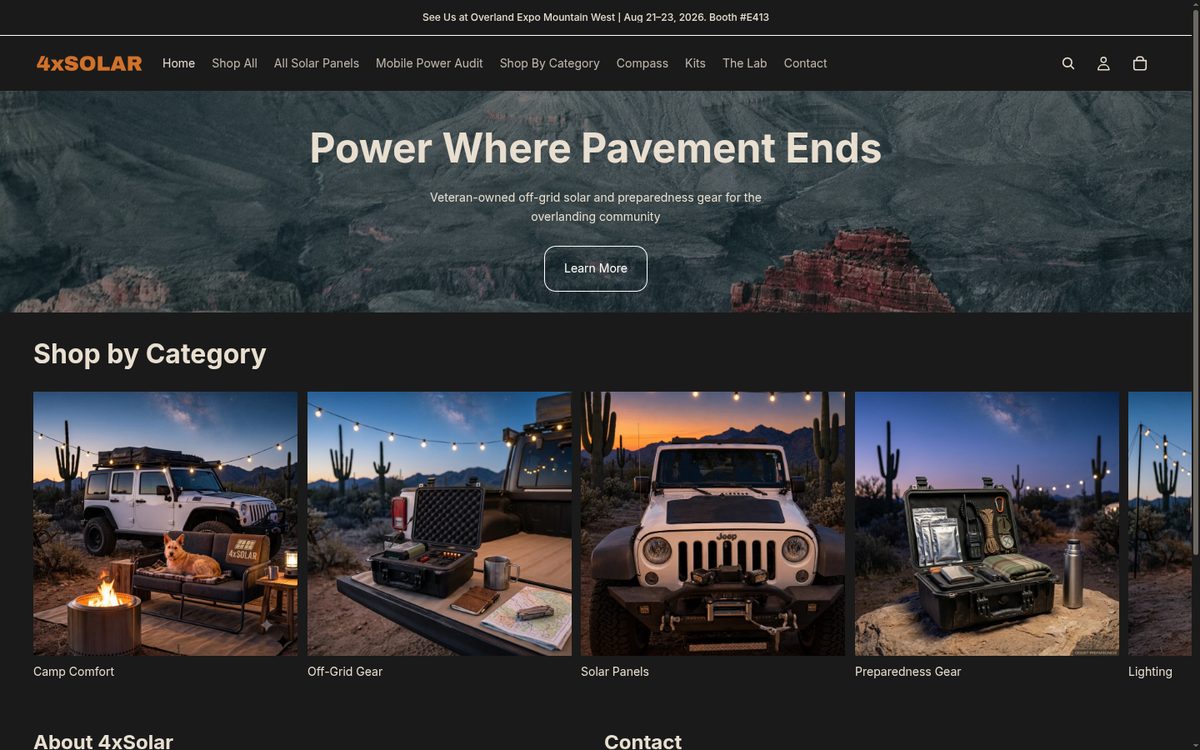
Carlos Diaz retired as a United States Air Force pilot, then founded 4xSolar in Tucson, Arizona in 2026. The homepage headline reads “Power Where Pavement Ends.” Below it, the subhead calls the company veteran-owned off-grid solar and preparedness gear for the overlanding community.
Aviation runs on power budgets. Every system on an aircraft draws current, while every draw gets accounted for, and nobody launches on a hope. Camp electrical fails for the opposite reason. People buy a panel, bolt it to a rack, then wire it to whatever battery came with the rig.
What 4xSolar Sells for an Overlanding Build
The catalog leans toward vehicle-specific solar rather than generic kits. Lensun hood panels, for example, are shaped to a particular hood. The 90-watt unit for the 2018-and-later Jeep Wrangler JL runs $508.20. Similar hood panels across the range then run roughly $229.95 to $418.95.
Storage comes from two Comvolt portable power stations. The 4200 is a 12V, 328Ah unit at $1,949, for instance. Stepping up, the 6000 Pro reaches 12.8V and 470Ah at $2,699. Smaller AMPak and Poseidon power banks start at $99.99, which makes a low-risk first order from a young company.
Sizing is the part most people get wrong, so do the arithmetic first. A 12V compressor fridge pulls roughly 20 to 40 amp-hours a day. Dometic also rates its CFX3 line near 0.85 amp-hours per running hour. Add lights, a fan and device charging, and a modest camp load reaches 40 to 65 amp-hours daily. Our guide on what size solar panel you need works through the derate stack.
Ravenox: Rope and Soft Shackles From a 25-Year Marine
Ravenox dates to 2012, when Sean Brownlee came off 25 years of continuous service in the Marine Corps. He retired as a Master Gunnery Sergeant out of Special Operations. The company lists the parts of the job leading here: rappelling, fast roping from helicopters, SPIE rigging and parachuting. A career spent trusting cordage then turned into a company making it.
Ravenox manufactures in the United States and says so plainly. The site describes a team of American veterans making ropes, cords and clips domestically. Their catalog runs far wider than vehicles, since cotton, hemp, manila and poly rope serve equestrian and industrial buyers.
Soft Shackles for Overland Recovery Gear
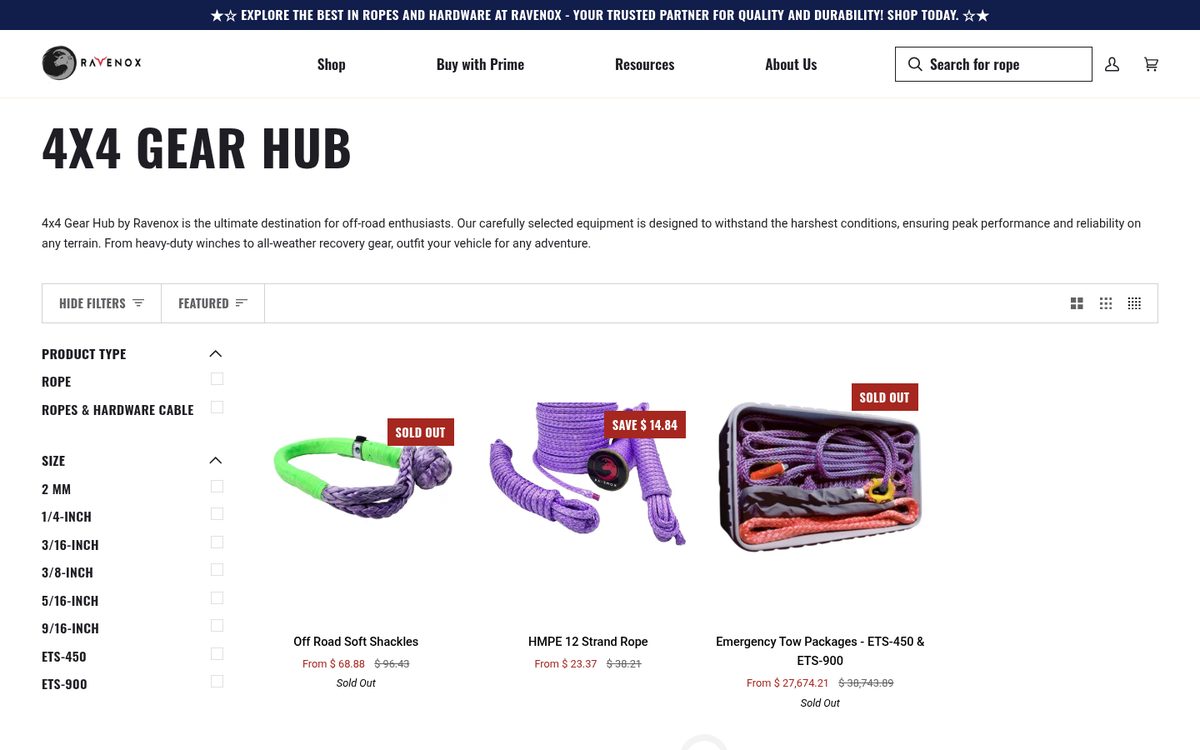
The 4×4 corner of the store is small and specific. Off Road Soft Shackles start at $68.88, and the published numbers are unusually complete. Their 3/8-inch shackle carries a 43,500 pound break strength and weighs 0.4 pounds. Its working load limit is 8,700 pounds at a 5:1 safety factor. The 9/16-inch version reaches 75,800 pounds break strength and a 15,160 pound working load.
HMPE 12-strand synthetic rope starts at $23.37 and sells by length and diameter. Those two products cover a good share of your overland recovery gear. Ravenox makes no kinetic recovery ropes or tree saver straps, though, so plan to source those elsewhere. Our breakdown of soft shackles versus steel covers when each earns a place on the rig.
One practical note. The off-road shackles were sold out when I checked on 11 August 2026. Ask for a restock date rather than substituting an unrated import.
Rucker Knives: Three Generations of Montana Steel
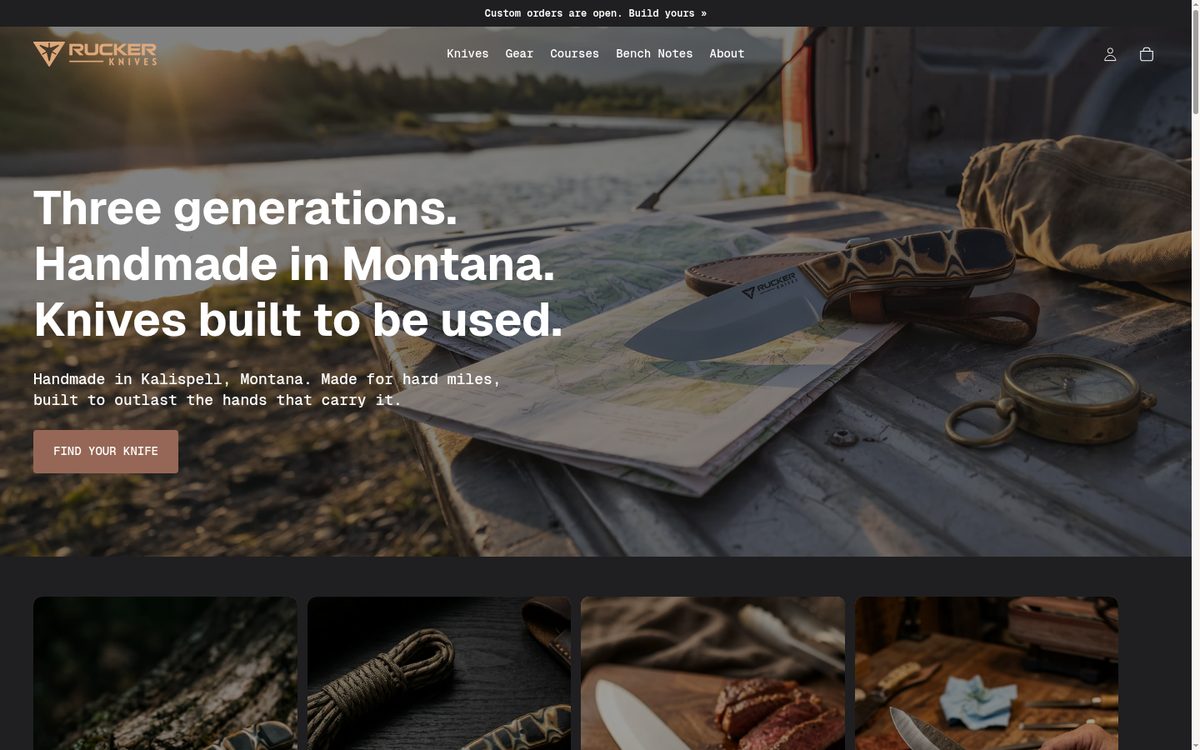
Thomas Rucker picked up a piece of steel more than 25 years ago and started making knives. He also served in the Army as a Green Beret. His son TJ leads the Kalispell, Montana shop today, since he spent nearly 20 years making knives in his own garage. The company describes TJ as a veteran without naming a branch.
Three more veterans work the bench. Read Clark is a Navy veteran and a retired firefighter. He helps develop new lines and forges Damascus and San Mai. Brandon Miller came from Army Special Operations supporting 3rd and 5th Special Forces Groups. Jim Kneebone is an Army veteran and a retired law enforcement officer who learned knifemaking in Thomas Rucker’s shop. The site sums it up as three generations and one workbench.
Overlanding Knives, and What They Cost
Everything is made by hand in northwest Montana, which matters more here than in most categories. Heat treatment decides whether a blade holds an edge or rolls, and heat treatment stays invisible on a product page. A shop grinding and treating its own steel controls the variable. Brands adding a logo to imported blanks do not.
Prices span a wide range. First the IBK4 at $200 and the EDC at $250, then the Carson Skinner at $300. Above those sit the Lil Nasty and The Grizzly at $400. A chef’s knife is $450, and a custom Damascus Ridge Walk reaches $1,000. They also run a knife making workshop at $475 if you would rather build one.
Camp cutting splits into two jobs, so buy for the one you do. Food prep wants a thin, keen edge with enough length for a board. Field tasks want thicker stock, however, and a handle you keep hold of with cold hands. Our piece on why blade steel matters covers the corrosion tradeoffs. Salt air and a damp sheath punish a knife harder than a kitchen drawer does.
Papago Vans: Two Army Veterans and a One-Car Garage
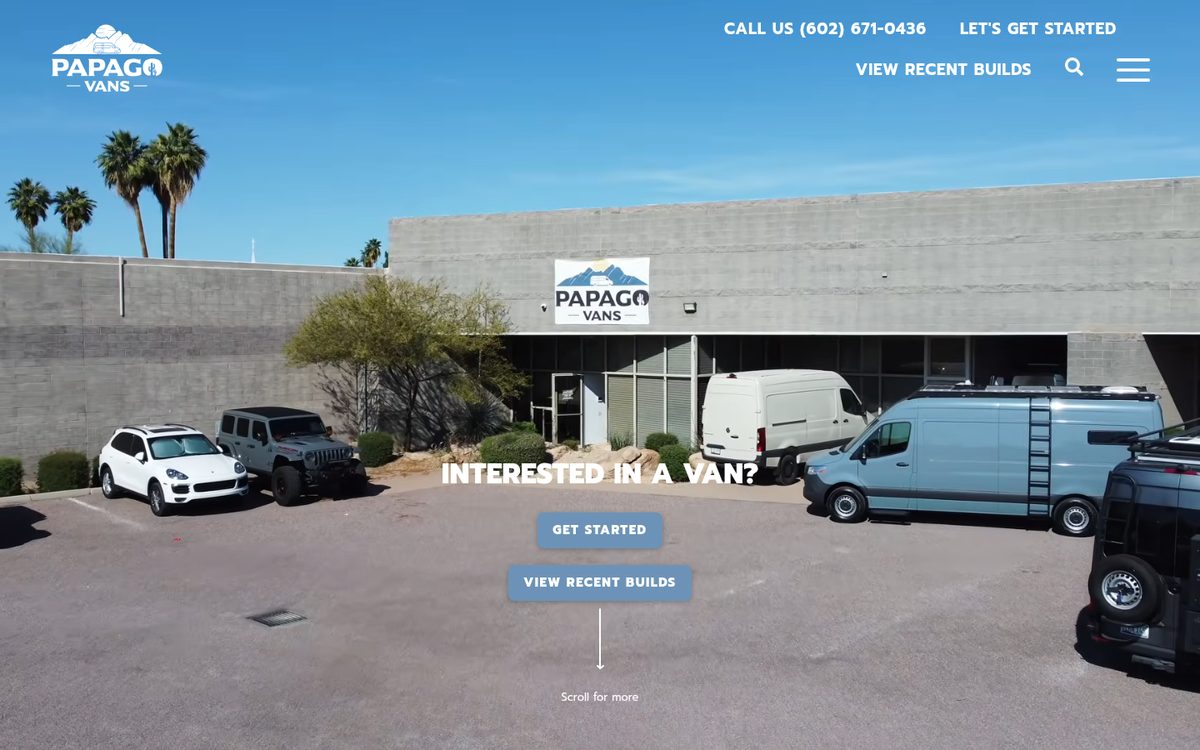
Three friends started Papago Vans in a one-car tandem garage in the Phoenix area in February 2020, weeks before a national shutdown. Two of them, Tim Arias and Ian Gardner, served in the Army. Arias has said the shop’s humor traces straight back to it. Jesse Englehard rounds out the ownership.
They outgrew the garage into a Tempe space first, then landed in Mesa in late 2022. The current shop runs about 22,400 square feet with roughly 38 employees. Every van is built to a customer layout rather than a fixed floor plan.
Five Overlanding Van Build Tiers
Papago publishes starting prices for five packages, which is more transparency than most custom builders offer. Rainier, the weekend warrior build, starts at $48,695. Mammoth follows at $62,995 and Zion at $86,795. Olympus, aimed at full-time travel, starts at $108,595, and El Capitan tops the line at $127,395.
Read the fine print on all five, because the van itself is not included in those figures. No build lead time appears on the site either, so ask for one in writing along with the deposit terms.
Payload is the question most van buyers never ask. Start with the gross vehicle weight rating, subtract curb weight, then subtract the finished conversion. Whatever remains covers you, your passengers, water, fuel and gear, and some finished builds leave under 500 pounds of margin. Ask for a wiring diagram and a component list too. A failed charge controller in a canyon plays out one way with the paperwork and another way without it.
Born Outdoor: Bedrolls From a Colorado Army Veteran
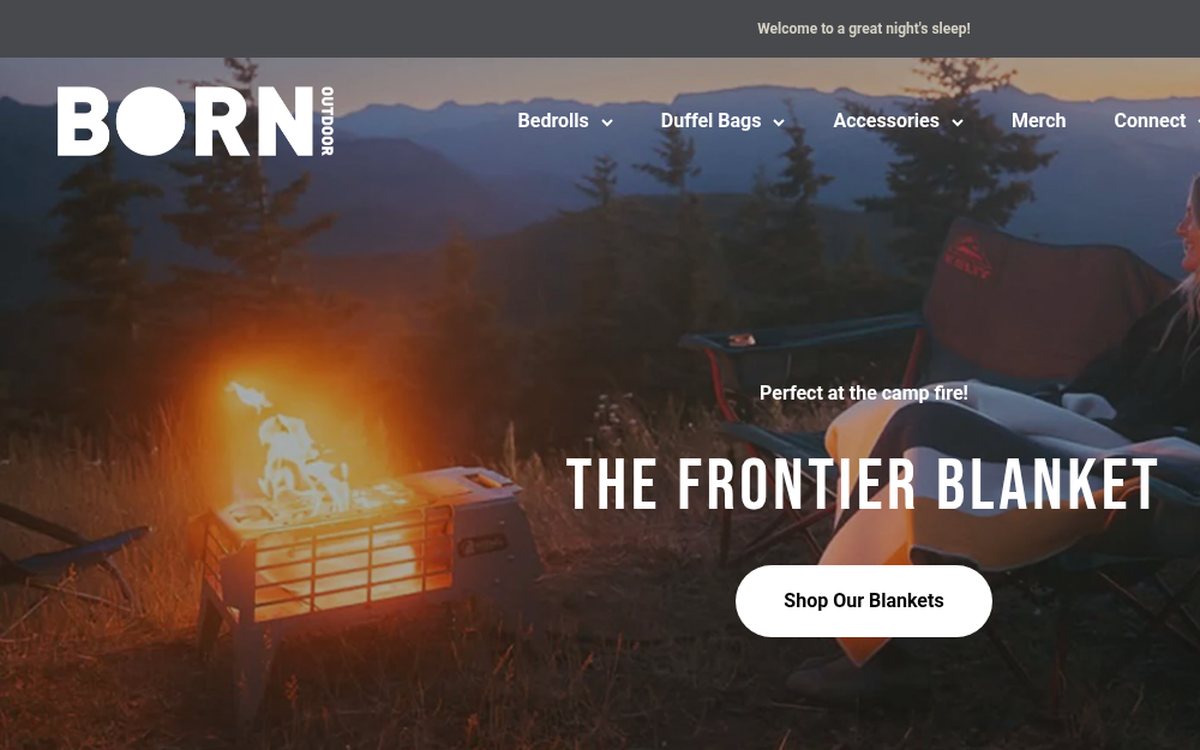
Bedrolls are the whole business at Born Outdoor, and Army veteran Stuart Born has run it since 2017. The about page describes a veteran-owned family business located outside Boulder, Colorado. Outside has credited the operation to him directly.
The pitch is simple. A mummy bag optimizes for warmth per ounce carried on your back, which backpackers need and vehicle travelers do not. Bedrolls instead put pad, bedding and weather shell together as one unit, so setup collapses to unrolling a bundle. Anyone who has made camp in the dark after a long drive understands the appeal.
The Badger Bed and Its Quilts
The Badger Bed Shell runs $430 in the 30-inch size. Its outer is a 600 denier recycled poly oxford ripstop with a C6 DWR TPU coating, over a 210 denier stretch nylon top layer. It measures 82 inches long at 6.6 pounds. Heavy-duty YKK zippers allow left or right entry.
Bedding sells separately or bundled. For example, the Sierra down quilt is $130, with 650 fill white duck down at 1.3 pounds. The Baja quilt is $100. A Frontier wool blanket runs $400, while a Badger Bed footprint starts at $58 and full bundles start at $809.99.
No temperature rating appears on any of it. Defensible for a shell rather than a bag, although it means planning your overland camping gear insulation yourself. Ground conductivity pulls more heat out of a sleeper than air temperature does, so pad R-value drives comfort. Our roundup of the best overland sleeping gear compares the alternatives.
Next Jump Outfitters: A Navy Veteran’s Build Shop
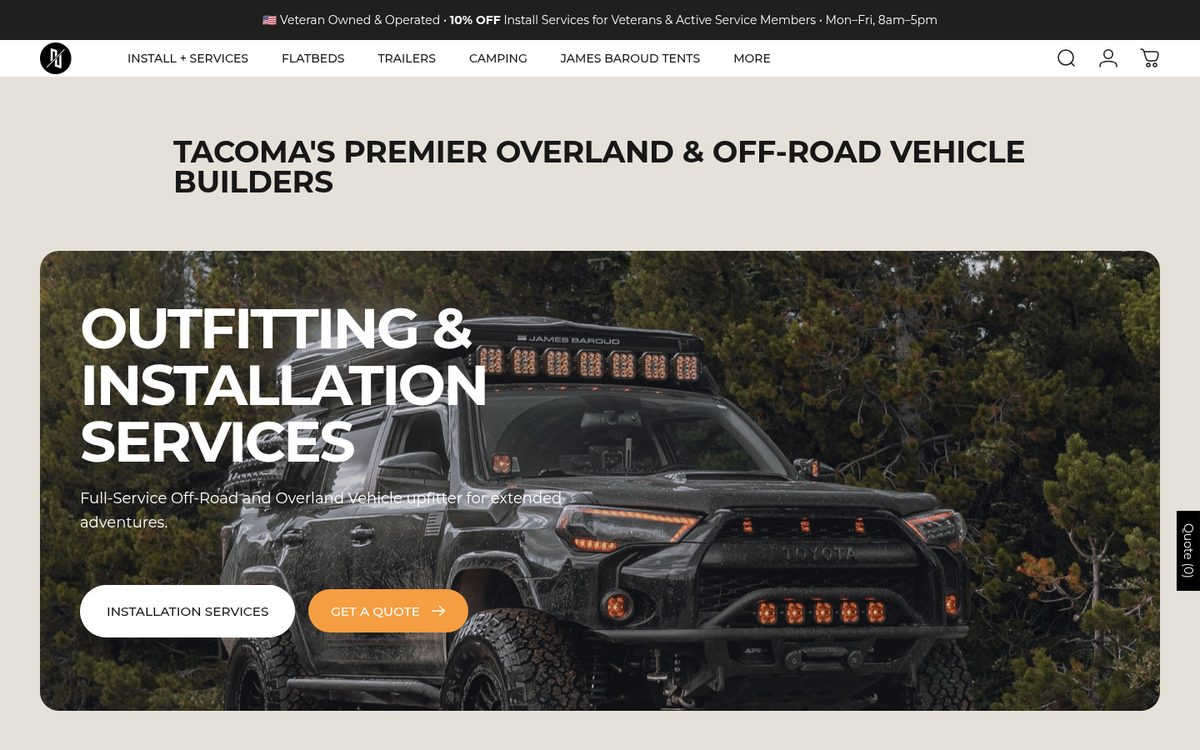
Tacoma, Washington is home to Next Jump Outfitters, founded by Navy veteran J Scott. A banner across the top of every page reads veteran owned and operated. The site also bills the shop as Tacoma’s premier overland and off-road vehicle builder. Veterans and active service members get 10 percent off installation, on orders over $600 covering four hours of labor.
Unlike most of this list, Next Jump sells labor as much as product. A vehicle diagnostic consultation runs $175, and build consultations start from there.
Builds, Brands and Their Own Line
The shop carries Dometic, Bilstein, ReadyLift, CBI Offroad, Katadyn, GSI Outdoors, AMP Research, Wavian and Plano. For instance, a Dometic CFX3 75DZ fridge runs $1,249.99, while the 95DZ is $1,399.99 and a matching fridge slide is $399.99. Smaller items go down to a $45 camp kitchen box built on a Plano trunk.
They also manufacture their own aluminum flatbeds, off-road flatbed trailers, toolboxes, headache racks and camp kitchen slide-outs. Building your own overland gear line is unusual for a shop this size.
Installation quality matters more than most buyers expect. Bolt-on parts fail at their interfaces far more often than in the middle. Suspension fasteners want torquing at ride height rather than with the axle hanging. Otherwise the bushings load wrong and fail early. Ask any shop what they torque to and who does the alignment afterward. Geography limits what Next Jump does for you, although the same questions apply wherever you go.
RoamRest: Sleep Systems and a Federal Hiring Record
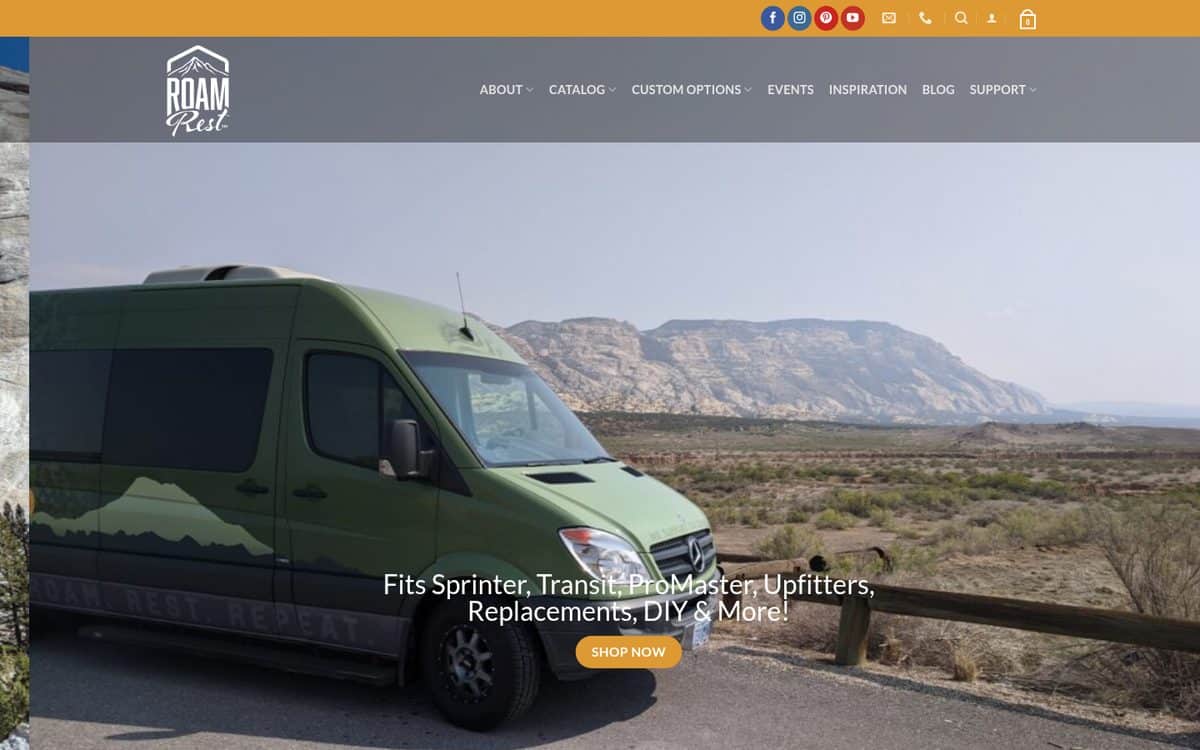
Mattresses for camper vans and overland vehicles come out of Clackamas, Oregon, where John and Shawna Lacey run RoamRest. He is an Army veteran, an engineer and an entrepreneur. The company operates as a division of North America Mattress Corp.
Its parent adds something no other brand here carries. It has earned Department of Labor HIRE Vets Medallion awards every year since 2018. Those include Platinum in 2020 and Gold most recently in 2025. Most veteran-owned claims describe the owner. This one describes the workforce, so it says something about who gets hired rather than who signs the checks.
Three Mattresses, Three Price Points
The Pioneer Overland mattress starts at $485, and it is four inches thick in four layers. Those run an inch of soft conforming foam, an inch of gel memory foam, an inch of performance support and a firm base. The top fabric is soft polyester, while the sides and bottom use a low-slip polyurethane coated nylon.
Next up, the Ultimate Bi-Fold van mattress is $935, running five inches in a medium-firm build with a two-inch supportive base. Finally, Elite RV mattresses cover $420 to $710 depending on size.
Two things are worth asking about any vehicle mattress. Moisture is the first, because body vapor migrates down all night and a sealed plywood platform traps it against the foam. Ventilated bases and breathable covers address it. Foam density is the second, since it drives durability more than thickness does. Ask for the figure in pounds per cubic foot instead of the comfort adjective on the tag.
One Niner Expeditions: Guided Safaris From an Army Infantryman
Joshua Lawes joined the Army in 2019 as an infantryman with the 3-509th Infantry Airborne Battalion in Anchorage, Alaska. He now runs One Niner Expeditions out of San Marcos, California. The company describes itself as veteran owned and conservation driven. It is the only guided-travel business on this list rather than a maker or a shop.
Movement planning, contingency planning and managing a group through unfamiliar terrain describe both careers, which is a cleaner match than it first appears. A guided operator also supplies local knowledge you cannot download. Which track washes out after rain, for instance, or where the fuel station still has fuel.
The Trips, and the Black Mambas
Three named departures run in 2027, all of them capped between four and six guests:
- Luxury South Africa Conservation Safari: 6 days, Hoedspruit, departures in May, June and August
- Victoria Falls & Chobe Safari: 5 days, Zambia and Botswana, April and November
- Northern Kruger Private Safari: 6 days, three summer departures, maximum 4 guests
The conservation claim comes with specifics, which is rarer than it should be. Their South Africa trip runs alongside the Black Mambas, the first all-female anti-poaching unit in Africa, patrolling the Olifants West Nature Reserve. One Niner states the money spent on the safari funds those patrols, community outreach and empowerment programs, although no percentage is published.
No prices appear on One Niner’s own site, since booking runs through a third party. Get the number in writing. The deposit is 50 percent and non-refundable, while cancellations inside 60 days forfeit the full amount. They also list as a Global Rescue Safe Travel Partner.
Ultimate Adventure Supply: A Marine’s Overlanding Gear Shop
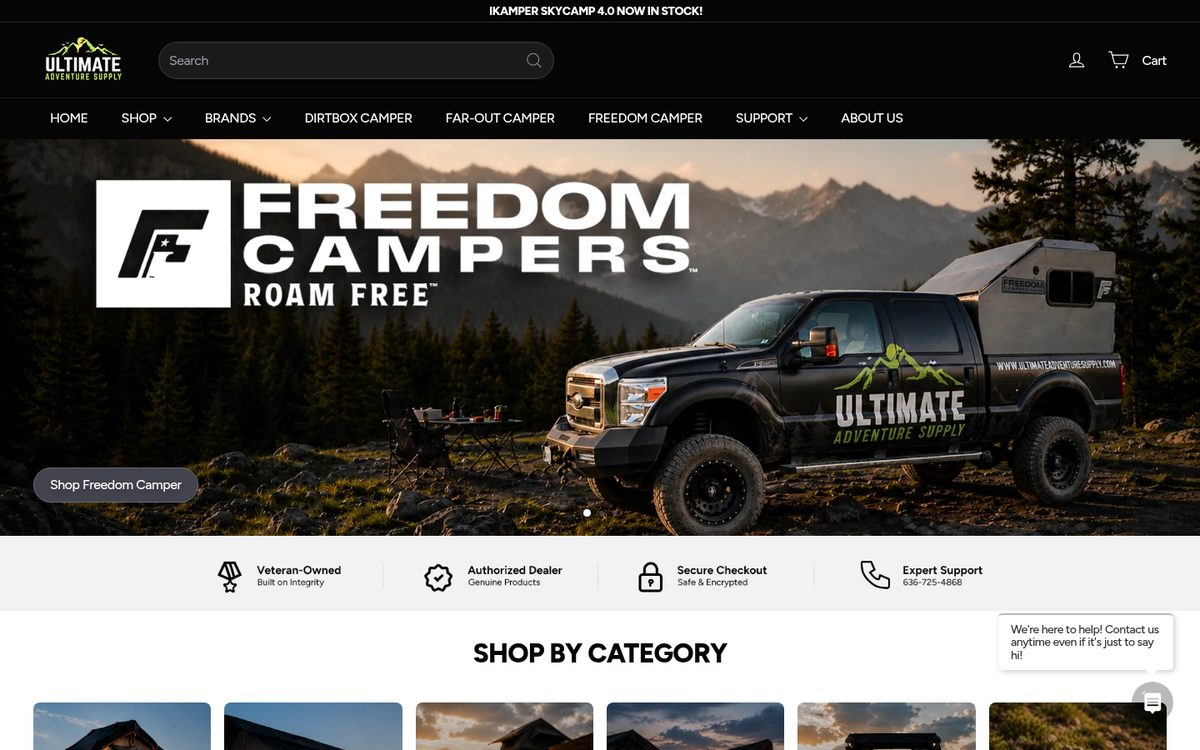
Ultimate Adventure Supply opened in 2025 in Festus, Missouri. A Marine Corps veteran named Tom founded it, and says so on the company’s own about page. Across the site, a trust bar reads veteran-owned, built on integrity.
This one is a retailer rather than a manufacturer, and retailers get almost none of the scrutiny makers do. Yet the retailer decides which brands reach you and how returns work. They also decide whether anyone answers the phone when a tent arrives with a bent pole.
What Is on the Shelves
The overland camping gear lineup runs to 23ZERO, ARB, iKamper, MAXTRAX, Dometic, RotopaX, Jackery, ICECO, Cali Raised LED, Dirtbox Overland and Freedom Camper, among others. Curation is the real product a small shop sells. Anyone with a credit card reaches the same giant marketplace, full of counterfeit straps and rebadged tents.
Representative pricing on 11 August 2026 ran $4,299 for a 23Zero Armadillo Horizon 3 hardshell roof top tent. The Kabari SuperFly hybrid wedge sat at $2,495, and a 70-liter waterproof gear box at $245.99. Several other items carried sale pricing, so check dates against your budget.
Returns run a 30-day window and they issue a return label. No restocking fee is published, however, and the site does not say who absorbs return freight. Roof top tents ship as freight on crates north of 150 pounds, so get both answers in writing before ordering one.
SToD Gear Co: Storage for the Dirtiest Kit You Own
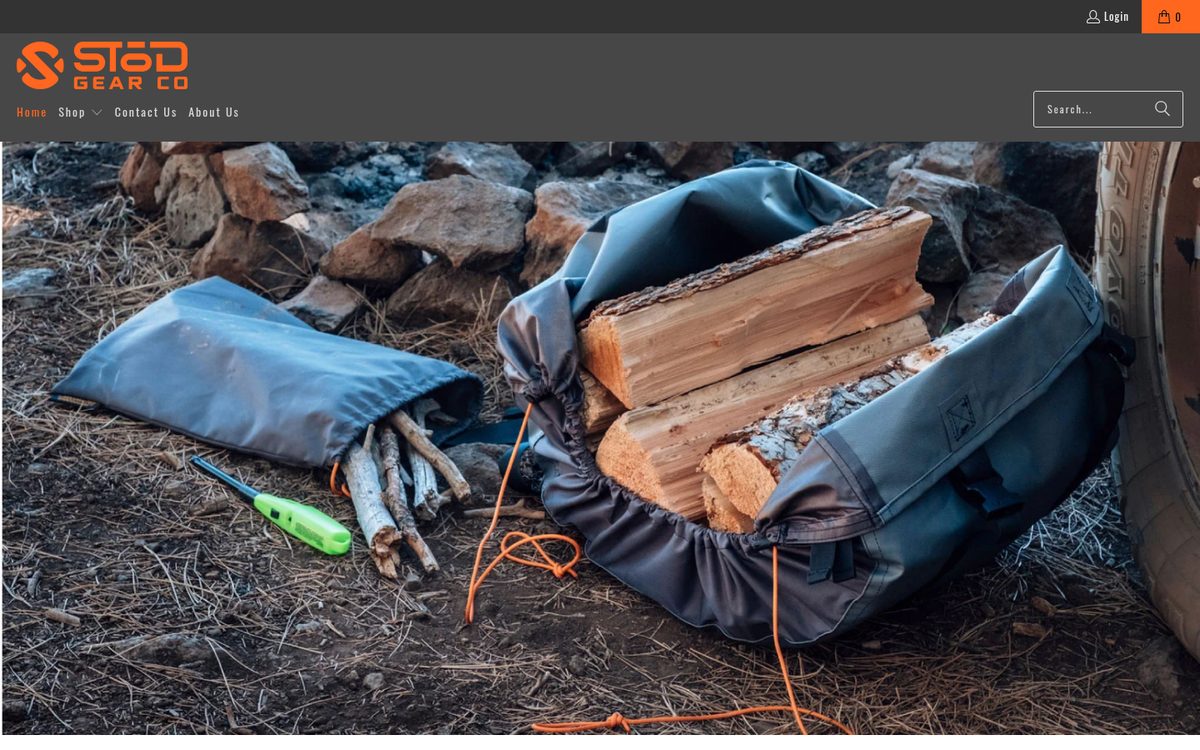
SToD Gear Co makes storage bags for the filthiest items in an overland kit. A combat veteran named David founded it with his wife Nikki. The about page describes how vehicle travel reminded him of parts of his military service. Nikki took to the sewing machine and made the first version. The company recently rebranded from HighRoad Adventure Gear.
Every overlander eventually confronts the same three problems. Wet firewood. Muddy traction boards with mounting teeth sharp enough to chew through a soft bag. A sack of trash you packed out and now live with for two days.
Bags for Firewood, Boards and Trash
The WoodGaiter is the flagship at $145. It measures 30 by 58 inches flat and folds to 14 by 12 by 1.5 inches. Materials get listed openly: vinyl-coated marine-grade polyester tarp, high-abrasion nylon packcloth, marine-grade webbing and US-made Type III paracord. Everything is handmade in the USA.
The TreadPack traction board bag starts at $87, with XL and XLS versions at $93 and $95. Oscar’s Mobile Hideout, a spare-tire trash bag, then starts at $350. Smaller pieces include the LUSB caddies at $78 to $154, overland-edition mesh buckets from $40, and a $28 RoadRuck pouch.
A heavy-duty tote from a hardware store costs under $20 and handles firewood competently. The case for purpose-built soft bags therefore rests on packing efficiency and fitting irregular spaces. Ask any maker how they expect you to clean a bag holding mud, and listen for a real answer about drainage.
Where Your Overlanding Gear Money Goes
These ten veteran owned companies have almost nothing in common as businesses. One sells $28 pouches while another sells $127,395 van builds, and the overland gear categories barely overlap. Ravenox is fourteen years into domestic rope manufacturing, while two others opened within the last two years. A retailer, a build shop and a safari operator sit alongside seven makers.
What they share is an origin. Somebody left the service, found the civilian job market had no slot shaped like their experience, and therefore built something instead. Load planning, torque discipline, checking a specification before trusting it. Every founder here consequently turned one of those habits into a business.
None of this asks you to overpay or to buy something you do not need. When two products solve the same problem at the same price, though, send the money to a shop where the owner learned load ratings the hard way. It costs you nothing, and it keeps a specific kind of business alive. Our roundup of top American-made overland companies covers the manufacturing side of the same argument.
From experience: Nobody tells you how specific the skills are, or how badly they translate on paper. Load planning, torque discipline, checking a spec before trusting it. When I read a spec sheet from one of these shops, I recognize who wrote it.
Frequently Asked Questions
What is overlanding?
Overlanding is self-reliant vehicle-based travel where the journey matters more than the destination. Trips run from a long weekend to months. The vehicle carries sleeping, cooking and recovery equipment, so the traveler stays independent of services. Self-sufficiency is the defining element, rather than terrain difficulty.
What is overland camping?
Overland camping means sleeping at your vehicle during a self-supported trip. Shelter comes from a ground tent, a roof top tent, a truck camper or the vehicle interior. It differs from car camping mainly in remoteness and duration. Overland camps often sit far from services for several days at a stretch.
How do you qualify as a veteran owned business?
Federal programs generally require veteran owned companies to have a veteran holding at least 51 percent ownership plus control of daily operations. Service gets verified through discharge records. The Small Business Administration runs formal certification for federal contracting. Most consumer brands hold no certification at all, however, since none is required for retail sales.
Where do you buy overlanding gear from small brands?
Small overlanding gear brands mostly sell direct from their own websites. Buying direct also returns the largest share of your money to the company. Regional overland gear shops and rally vendor rows carry many of them in person. Marketplace listings often route through resellers, so buying direct also improves your odds on warranty support.