


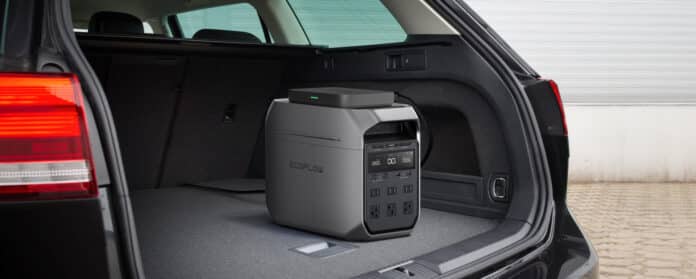
Quick Facts:
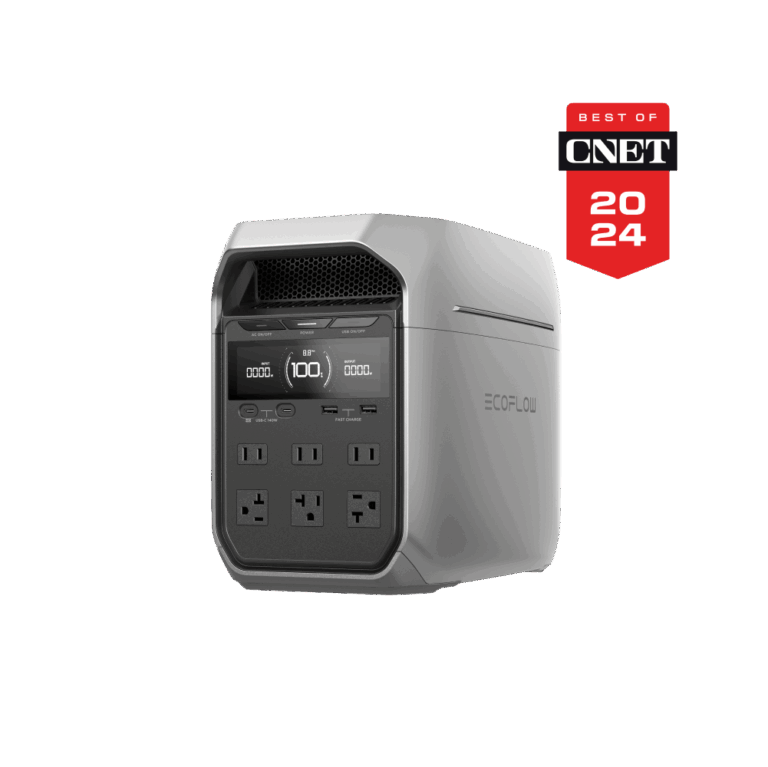
- Product: EcoFlow DELTA 3 Plus portable power station.
- Capacity: 1,024Wh LiFePO4, expandable to 5kWh with extra batteries.
- Output: 1,800W AC across 6 outlets, 3,600W surge.
- Fastest refills: 56 minutes on 1,500W AC, 70 minutes on 1,000W of solar.
- Drive-time refill: 1.3 hours with the 800W Alternator Charger, per EcoFlow.
- Weight: 27.6 lb.
- Warranty: 5 years.
- Price: $719 at EcoFlow (regular $799), price checked November 9, 2026.
- Best for: Truck and SUV campers running a fridge and Starlink for a weekend.
8 min read
In This Guide
4wdTalk earns a commission when you buy through links on this page, at no extra cost to you. As an Amazon Associate, 4wdTalk also earns from qualifying purchases.
Why the EcoFlow DELTA 3 Plus Suits Truck Camping
The EcoFlow DELTA 3 Plus is a 1,024Wh power station built around fast refills. It takes 1,500W from a wall outlet, 1,000W from solar and 800W from your truck’s alternator. As a result, you top it up on the drive between camps instead of rationing power.
This guide is for truck, Jeep and SUV owners who camp two or three nights at a time. Specifically, it covers what the battery runs, how long each refill source takes and where owners hit trouble. I drive a 2025 Chevy Colorado ZR2, and I have not tested this unit myself. Instead, the numbers come from EcoFlow’s spec sheet, two third-party tests and owner reports from Reddit and the off-road forums.
It costs $719 on sale (regular $799, price checked November 9, 2026), above the DELTA 3 Classic in EcoFlow’s 1kWh lineup. The nearest alternative is the DELTA 3 Classic at $479, which holds the same 1,024Wh but takes half the solar input. Also, the bundle with the 800W Alternator Charger lists at $919.
EcoFlow DELTA 3 Plus Key Specs
The spec sheet answers three camp questions: what it powers, how fast it refills and how much room it takes. Here are the figures from EcoFlow’s product page.
| Specification | Details |
|---|---|
| Capacity | 1,024Wh LiFePO4, 4,000 cycles to 80%. |
| AC output | 6 outlets, 1,800W total, 3,600W surge. |
| USB output | 2 USB-C at 140W max, 2 USB-A at 36W max. |
| 12V output | 1 car socket at 126W max, 2 DC5521 ports. |
| AC charging | 1,500W, full in 56 minutes. |
| Solar charging | 2 inputs, 11V to 60V, 500W each. |
| Alternator charging | 800W, full in 1.3 hours. |
| Size and weight | 16 x 8.0 x 11 in, 27.6 lb. |
| Noise | Under 30dB below 600W, under 40dB below 1,200W. |
| Warranty | 5 years. |
Two numbers stand out for overlanders. First, the 126W car socket runs a 12V fridge without the AC inverter. Second, the dual 500W solar inputs double what a single-input 1kWh unit accepts.
Measure your own loads before you trust any runtime math. Use a Kill A Watt AC meter, a KEWIG 12V extension cord, and a DROK DC watt meter.
Gear to measure and wire your camp loads

P3 P4400 Kill A Watt Electricity Usage Monitor | LCD power analyzer…

KEWIG 12/24V 4.9FT 16AWG Car Cigarette Lighter Extension Cord | Aut…

What the EcoFlow DELTA 3 Plus Runs at Camp
Rated capacity and usable capacity differ. Every conversion loses some energy, so this guide plans with 85%, or about 870Wh. Then divide this figure by the watts each device pulls.
| Camp load | Draw | Runtime on 870Wh |
|---|---|---|
| Starlink Mini | 25W to 40W average (Starlink). | About 22 to 35 hours. |
| ARB 50qt fridge, Starlink Mini and devices (OVRmag test) | Down to the 70% range after 10+ hours. | Over a day for the combined load. |
| 1,500W electric kettle | 1,500W for 5 minutes. | 125Wh per boil. |
| AC inverter on, nothing plugged in | About 22W (owner test). | About 530Wh lost per day. |
Run the Fridge From the 12V Socket
The inverter idle row matters most. One owner measured 943.5Wh used over 42 hours with the AC inverter on and nothing connected. This works out to about 22W of waste, and other owners report up to 40W. Therefore, plug your fridge into the 126W car socket and switch the AC side off. Our guide to how much a 12V fridge draws helps you estimate your own fridge’s daily use.
In addition, OVRmag ran the unit on a 7,100-mile TransAmerica Trail trip. Their long-term DELTA 3 Plus test found the battery in the 70% range after 10+ hours off grid. Specifically, the load included an ARB 50qt fridge, a Starlink Mini, phones and laptops.
Starlink, Laptops and a Diesel Heater
I bring a Starlink Mini camping and use it for home backup. As a result, it is the load I size around first. Starlink lists the Mini at 25W to 40W average on its specifications page. Our Starlink Mini power consumption breakdown covers 12V cables and overnight math. For laptops, the two 140W USB-C ports charge without the inverter.
A diesel heater is a different story. I run one overnight in cold camps, and its glow plug pulls hard at startup. Since the car socket tops out at 10A, read our diesel heater power draw guide before you plug one in.
If the DELTA 3 Plus fits your loads, EcoFlow sells it direct with the 5-year warranty.
Power a Weekend Camp From One 1kWh Battery
1,024Wh LiFePO4 with 1,800W AC output, two 500W solar inputs and support for 800W alternator charging. EcoFlow covers it with a 5-year warranty.
Check Price at EcoFlowHow Fast It Refills by Source
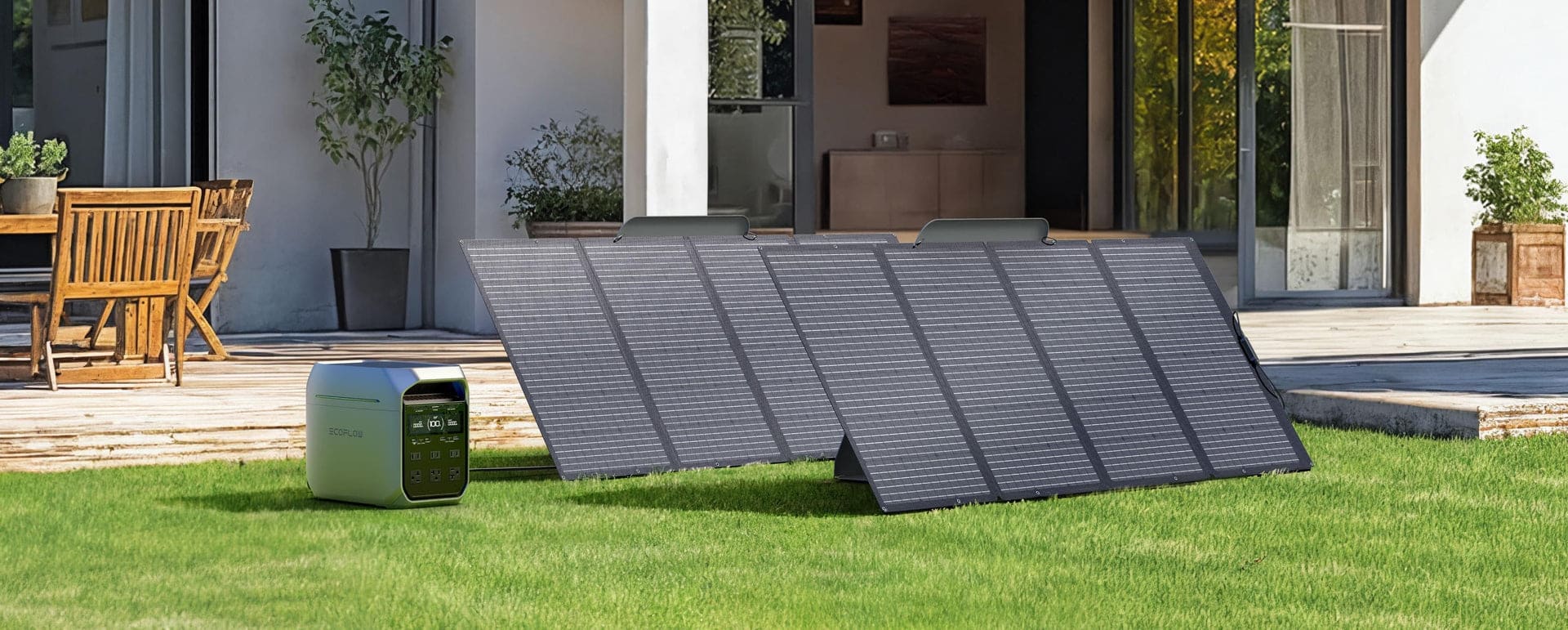
Refill speed decides how many nights you stay out. The table lists EcoFlow’s full-charge times next to third-party and owner results.
| Source | EcoFlow figure | Real-world result |
|---|---|---|
| Wall outlet, 1,500W | 56 minutes. | 55 minutes in The Solar Lab test. |
| Solar, 2 x 500W | 70 minutes at 1,000W. | Close to 1,000W in The Solar Lab test. |
| 800W Alternator Charger | 1.3 hours. | About 530W on a derated Land Cruiser setup. |
| 12V car socket | About 100W. | Our estimate: about 10 hours. |
Solar at Camp
Solar math rarely matches the label. For example, a 400W array at full rating needs about 2.6 hours of strong sun to refill 1,024Wh. However, panels seldom hold full output, so plan on a full day. The Solar Lab reached close to 1,000W with large 415W bifacial panels, which few campers carry. An EcoFlow solar panel such as the 220W portable model folds for the cab. Our guide to sizing solar for overlanding helps you pick a wattage. Also, any EcoFlow solar panel you pair should stay inside the 11V to 60V window on each port.
Alternator Charging on the Drive
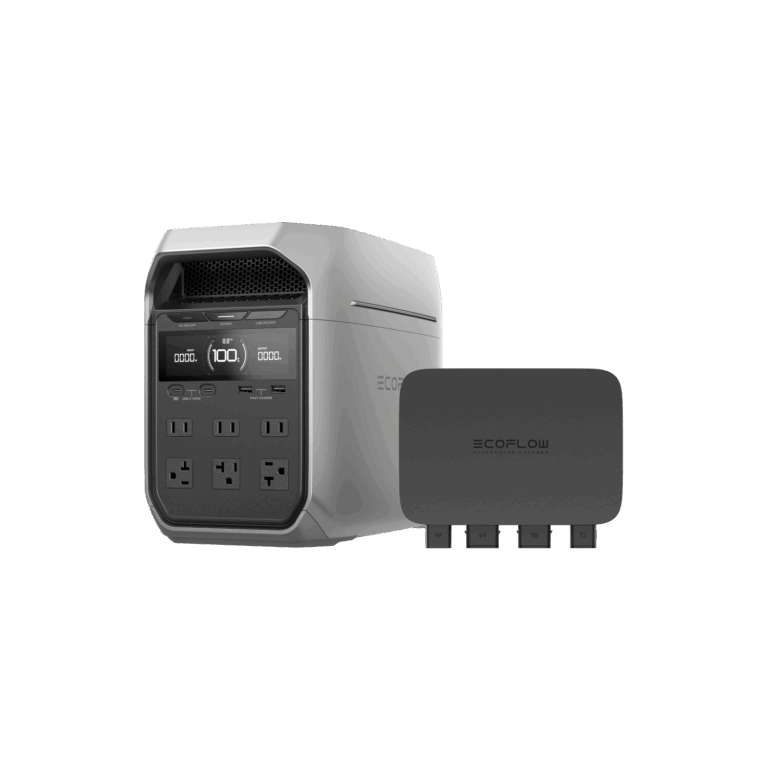
The EcoFlow alternator charger is the fastest refill away from a wall. EcoFlow’s 800W unit wires to the starter battery and feeds the station while you drive. As a result, a two-hour drive between camps refills most of the battery. For me, the 800W charger plus the dual solar inputs make the Plus my pick. Also, owners on Tacoma, Land Cruiser and 4Runner forums praise the charger most.
However, the 800W figure depends on spare alternator output. One Land Cruiser owner with a 180A alternator limited the charger to about 530W. EcoFlow itself tells you to confirm your alternator rating in the owner’s manual. On my ZR2, I’d check the rating before ordering. For the wiring side, our EcoFlow DELTA Gen4 alternator charging article walks through a truck install.
The EcoFlow 800W Alternator Charger costs $269 alone (price checked November 9, 2026). Alternatively, the DELTA 3 Plus bundle with the charger costs $919.
Refill Your Power Station on the Drive to Camp
Charges a 1kWh DELTA unit in about 1.3 hours with spare alternator output. Includes the XT150 cable for DELTA Series units and carries a 2-year warranty.
Check Price at EcoFlowSetup Tips for Trucks and SUVs
Owner threads and one bench test point to four fixes worth doing before your first trip. Most come from repeated owner reports, not a single post.
Stop the Overnight Shutoffs
Several owners report outputs shutting off overnight. One Land Cruiser owner’s fridge shut off three nights in a row. OVRmag hit the same issue until they changed the timeout setting. So, open the EcoFlow app and set the AC and 12V timeouts to never before you leave.
Protect Your Starter Battery
The alternator charger only charges when it sees more than 13V at the battery. Even so, a 4Runner owner raised the start voltage in the app. As a result, the charger stopped pulling from the starter battery at camp. Until you trust your settings, keep a jump pack in the truck.
Strap It Down and Keep It Cool
A 27.6 lb box needs a strap, not a loose spot on the back seat. In addition, heat is a concern. The Solar Lab measured 138°F inside the unit under a 1,573W load. Keep the vents clear and shade the cab when you park.
Plan the Shared Input Port
The alternator charger and an extra battery both use the XT150 input, and the unit has one such port. For this reason, decide early whether more capacity or faster drive-time charging matters more.
Secure the box and protect the truck. AUGO ratchet straps, a Dependable non-slip cargo mat, and a NOCO GB40 jump starter cover those jobs.
Gear to secure and protect your power station


Dependable Industries Premium Non-Slip Car Trunk Mat Cargo Liner Un…

NOCO Boost GB40 12V 1000A UltraSafe Portable Lithium Jump Starter |…
EcoFlow DELTA 3 Plus vs. DELTA 3 Classic
The DELTA 3 Classic is the closest alternative. Both hold 1,024Wh, output 1,800W and weigh under 28 lb. In contrast, the Classic costs $479 (regular $599, price checked November 9, 2026) against $719 for the Plus.
Charging is where they split. The Plus takes 1,000W of solar through two inputs, while the Classic tops out at 500W. In addition, the Plus charges at 1,500W on AC versus 1,400W. Meanwhile, the Classic pairs with EcoFlow’s 500W Alternator Charger, which needs 2.5 hours for a full charge. Owners upgrading from older units cite the faster solar charging most.
Pick the Classic if you camp near hookups or drive daily with a 12V socket refill. Choose the Plus for 600W or more of panels, or for a 1.3-hour EcoFlow alternator charger refill.
Pros and Cons From Specs and Owners
We dug through Reddit, the overland forums and two third-party tests. Here is how the praise and complaints stack up.
Pros
- Refills in 1.3 hours from the 800W Alternator Charger, the feature owners mention most.
- Full AC charge in about 56 minutes and two 500W solar inputs.
- Quiet, under 30dB below 600W and quieter than the DELTA 2 per owners.
- The app makes timeouts, charge limits and monitoring easy.
- Doubles as home backup with a switchover under 10 ms.
Cons
- The AC inverter idles at about 22W to 40W in owner tests, even with nothing plugged in.
- Default timeouts shut outputs off overnight until you change them.
Final Thoughts
The DELTA 3 Plus makes the most sense for campers who drive between sites. With the alternator charger, the battery fills while you cover ground. Then the dual solar inputs carry you through a layover day. For a midsize truck like my ZR2, I’d pair the two once the alternator rating checks out.
The trade-offs are real but fixable. Keep the AC inverter off, run the fridge from the 12V socket and set the timeouts to never. Those three habits address the complaints owners raise most.
On value, $719 buys double the solar input of the $479 DELTA 3 Classic and a faster drive-time refill. If you rarely use solar and camp near power, save the $240. Otherwise, the Plus is the 1kWh unit I’d point you to first.
My Starlink Mini rides along on camping trips and pulls home backup duty too. Therefore, a battery built for both jobs earns its spot in the truck. Set the timeouts, strap it down and point the truck somewhere new.
FAQ
How long does the EcoFlow DELTA 3 Plus run a 12V fridge?
OVRmag found the battery in the 70% range after 10+ hours off grid. Specifically, their load included an ARB 50qt fridge, a Starlink Mini and laptops. A fridge alone draws less, so expect well over a day from the 12V socket.
How long does the EcoFlow DELTA 3 Plus take to charge from an alternator?
EcoFlow rates the 800W Alternator Charger at 1.3 hours for a full charge. Real output depends on spare alternator capacity. One Land Cruiser owner limited it to about 530W, which works out to roughly two hours.
How much solar does the EcoFlow DELTA 3 Plus accept?
It takes up to 1,000W through two 500W inputs rated 11V to 60V. EcoFlow lists a 70-minute full charge at this level. Many campers carry 200W to 400W, so expect most of a sunny day.
What is the difference between the DELTA 3 Classic and DELTA 3 Plus?
Both hold 1,024Wh and output 1,800W. The Plus adds a second 500W solar input, for 1,000W total. It also charges at 1,500W on AC versus 1,400W. In contrast, the DELTA 3 Classic costs $240 less.
Does the EcoFlow DELTA 3 Plus take an extra battery?
Yes. EcoFlow lists expansion to 5kWh with DELTA 3, DELTA 2, DELTA 2 Max or DELTA Pro 3 extra batteries. The extra battery shares the XT150 input with the alternator charger.