


I’ve camped most of my life, and I built 4WDTalk around the same public land I still drive out to today. In California, that means camping in Big Bear, Joshua Tree, state parks, and along the shores of the Pacific. But it also means venturing further afield and enjoying off-the-grid camping in dispersed areas in and around Southern California.
None of my knowledge about off-grid camping came from a manual. It came from running out of battery on a cold night in the mountains, and from learning the hard way how fast a water tank drains without a plan. This guide walks through the exact systems I rely on now: finding a legal spot, running power and water without a hookup, handling waste responsibly, and staying comfortable when the nearest shower sits two states away.
Quick Facts:
- Topic: How to camp off-grid without hookups or a campground
- Skill level: Beginner to intermediate
- Time to plan a first trip: 30 to 45 minutes of research
- Water needed: 1.5 to 2.5 gallons per person, per day
- Power options: Battery bank, solar panels, or a portable generator
- Cost to start: $150 to $600 for basic gear
- Best for: Overlanders and dispersed campers on public land
8 min read
In This Guide
- Off-Grid Camping Overview: Trading Hookups for Freedom
- Key Off-Grid Camping Facts at a Glance
- Finding a Legal Place to Camp Off-Grid
- Power Without Hookups
- Water Without a Spigot
- Waste Management Off the Grid
- Staying Clean and Comfortable Off the Grid
- Solar vs. Generator: Which Should You Choose?
- Pros and Cons of Off-Grid Camping
- Final Verdict
- Frequently Asked Questions
Off-Grid Camping Overview: Trading Hookups for Freedom

Off-grid camping serves overlanders, van dwellers, and trailer owners who want distance from crowded campgrounds and reservation systems. Compared to a paid campsite with a water and power hookup, off-grid camping trades convenience for solitude, lower cost, and access to far more remote terrain. Most public land camping runs free for up to 14 days at a stretch, while a hookup site at a private or state campground often runs $30 to $60 a night.
A typical first trip looks like this: two campers spend three nights on BLM land, running a 100-watt solar panel, a 40-gallon water tank, and a simple waste plan. Total cost for the weekend comes in near zero beyond fuel, once the gear is already in the rig.
Key Off-Grid Camping Facts at a Glance
| Category | Typical Rule or Range | Notes |
|---|---|---|
| Stay limit on public land | 14 days in a 30-day period | Standard on most BLM and USFS land |
| Distance from water sources | 200 feet minimum | Protects streams, lakes, and wildlife |
| Water per person, per day | 1.5 to 2.5 gallons | Drinking, cooking, and basic cleanup |
| Solar panel wattage (weekend trip) | 100 to 200 watts | Runs lights, phones, and a small fridge |
| Generator size (larger rigs) | 2,000 to 4,000 watts | Needed to run air conditioning |
| Cost per night, on-grid campground | $30 to $60 | Compared to $0 on most public dispersed land |
Stay Fresh Off the Grid
Try Rugged Revive Rinse-Free Sponge Bath
Get a real, lathering clean with a few ounces of water and no rinsing step. Built for days between showers.
Finding a Legal Place to Camp Off-Grid
Public land forms the backbone of off-grid camping in the United States. The Bureau of Land Management and the U.S. Forest Service manage hundreds of millions of acres where dispersed camping is legal, free, and open to nearly anyone with a vehicle capable of reaching it.
Start with a step-by-step guide to finding free camping before your first trip, since rules vary by district and season. Fire restrictions, road closures, and seasonal wildlife closures shift throughout the year, so a quick call to the local ranger district saves a wasted drive.
Follow the 200-foot rule near any lake, river, or stream, and stick to previously used sites instead of creating a new clearing. Our guide on dispersed camping done right covers site selection, noise etiquette, and the leave-no-trace habits keeping public land open for future trips.
Power Without Hookups
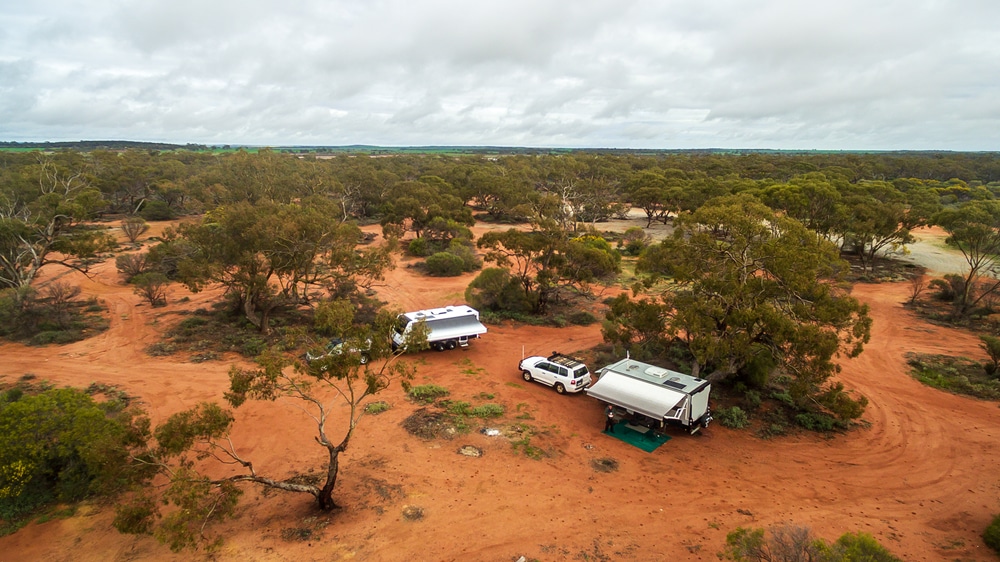
Battery power covers most short trips. A single deep-cycle or lithium battery, charged before departure, runs lights, a fridge, and device charging for two to three days without any additional input.
Solar panels extend this runtime indefinitely. A 100 to 200-watt panel recharges a typical battery bank during daylight hours, making it the quietest and lowest-maintenance option for trips longer than a weekend. Our detailed boondocking power tips for beginners break down panel sizing and battery capacity in more depth.
Generators fill the gap for larger draws. Running air conditioning or several appliances at once typically requires 2,000 to 4,000 watts, well beyond what a small solar setup delivers. Pair a generator with quiet hours and distance from neighboring campers as a courtesy, even on remote public land.
Water Without a Spigot
Water becomes the heaviest and most limiting resource once hookups disappear. Plan on 1.5 to 2.5 gallons per person, per day for drinking, cooking, and basic cleanup, and top off every tank before leaving pavement.
Split your supply across two or three containers instead of one large tank, so a single leak never ends the trip early. Reduce consumption in the kitchen by washing dishes in batches, and cut hygiene use with a rinse-free wash instead of a full basin bath. Our guide to conserving water while boondocking covers additional habits worth building into your routine.
Waste Management Off the Grid
Gray water from dishes and washing needs a plan, since dumping it near a campsite or water source damages the land. A simple gray water jug or basin collects wastewater for proper disposal at an approved dump station later.
Solid human waste requires either a portable toilet system or a cathole dug at least six inches deep and 200 feet from any water source, trail, or campsite. Pack out toilet paper and hygiene products in a sealed bag rather than burying them, since they break down slowly.
Trash management follows the same leave-no-trace principle. Bring a dedicated trash bag or bin, and pack out everything you bring in, including food scraps attracting wildlife overnight.
Staying Clean and Comfortable Off the Grid
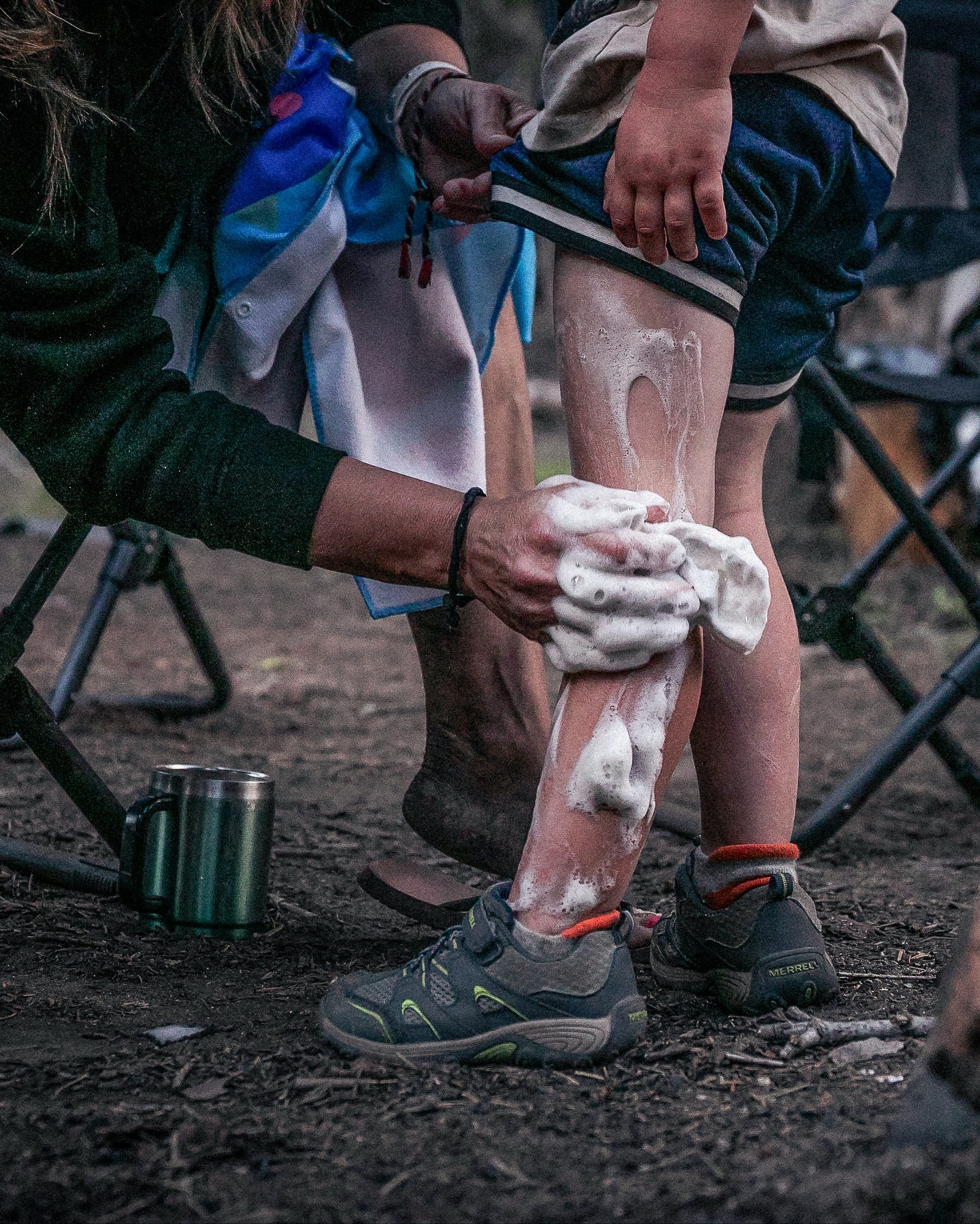
Hygiene ranks among the biggest quality-of-life factors on a multi-day off-grid trip, and it also carries one of the highest hidden water costs. A traditional basin wash with a washcloth burns through 1 to 2 gallons per person for a single cleanup, which adds up fast across several days.
Rugged Revive solves this with a lathering sponge activated by a few ounces of water. There is no rinsing step, no basin water to haul out, and no soap residue left behind once you towel dry. Each sponge handles one full-body wash and gets thrown away, so cleanup stays simple even in a dry campsite.
Our earlier guide to no-shower camping hygiene hacks covers dry shampoo, biodegradable wipes, and spot cleaning for high-sweat areas. Pairing those habits with a rinse-free sponge bath keeps you feeling clean without threatening your drinking supply.
Save on Rugged Revive
Pack Light, Stay Clean
A few sponges weigh almost nothing and free up water tank space for drinking and cooking instead.
Solar vs. Generator: Which Should You Choose?
Solar panels win on noise, maintenance, and long-term cost. Once installed, a panel runs silently for years, needs no fuel, and produces zero exhaust near a shared campsite or sensitive wildlife area.
Generators win on raw output. A 2,000 to 4,000-watt generator powers air conditioning and multiple large appliances at once, a load beyond what a small solar setup handles, though it comes with fuel costs and noise.
Most experienced off-grid campers run both. Solar handles daily lights, phones, and a fridge, while a generator covers occasional high-draw needs like air conditioning on a hot afternoon. This combination balances quiet, low-maintenance power against the flexibility for bigger appliances.
Pros and Cons of Off-Grid Camping
Pros
- Free or near-free camping on hundreds of millions of acres of public land
- No reservations, check-in times, or crowded loops to compete for a site
- Access to remote terrain a paved campground never reaches
- Full control over noise, neighbors, and campsite layout
- Skills and gear translate directly to overlanding and backcountry travel
Cons
- No water, power, or sewer hookups, so every resource travels with you
- Requires upfront gear investment of $150 to $600 for basics
- Cell service and emergency response times run limited in remote areas
- Waste management demands more planning than a full-hookup site
Final Verdict
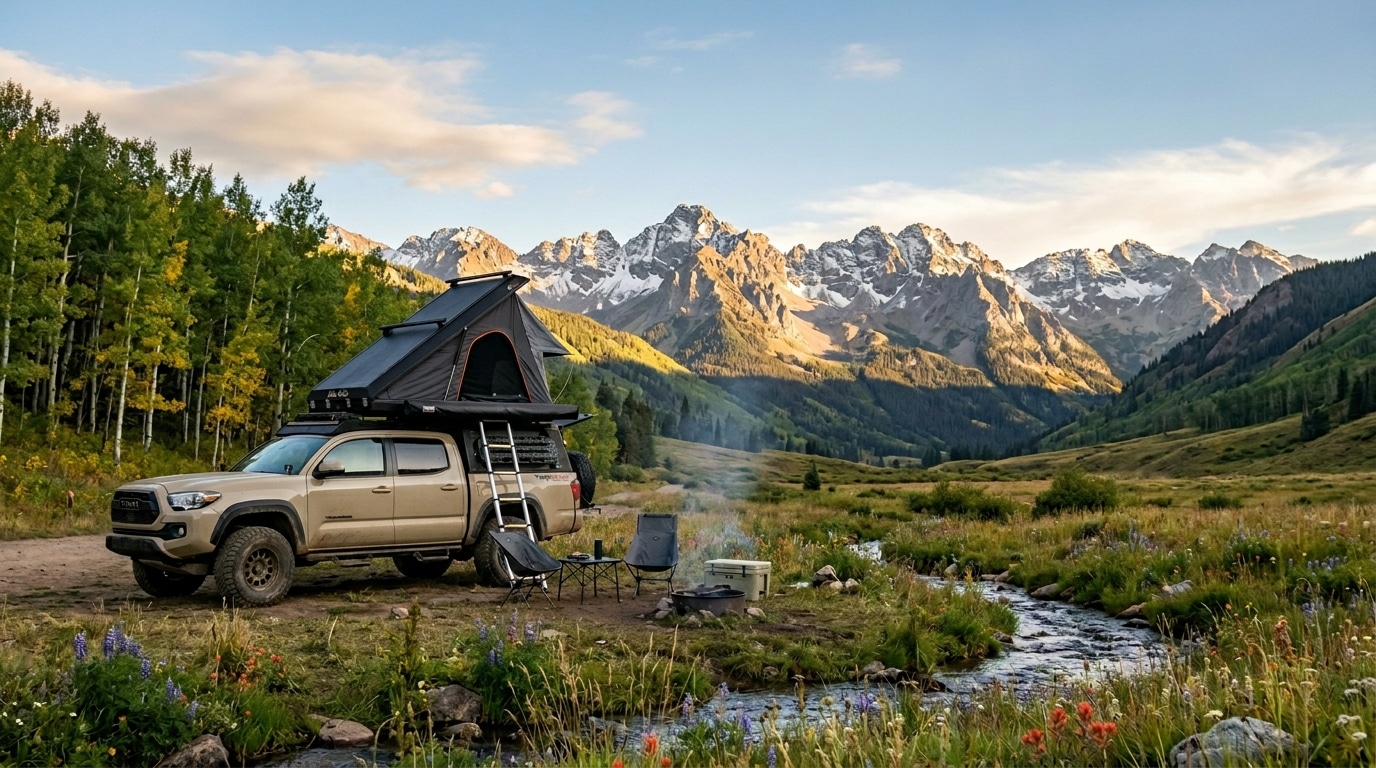
Off-grid camping rewards preparation with genuine freedom. Overlanders, van dwellers, and trailer owners who want distance from crowded campgrounds benefit most from building a simple power, water, and waste plan before the first trip.
The biggest trade-off is self-sufficiency. Every resource a full-hookup campground provides for a nightly fee now travels in your rig, which means more planning and slightly more gear cost upfront. Campers who prefer full amenities and guaranteed cell service should stick with developed campgrounds instead.
Value runs strongly in favor of off-grid camping for anyone taking more than a few trips a year. A $200 solar setup and a $15 water container pay for themselves within a handful of nights compared to $30 to $60 campground fees, while access to remote terrain adds value no paid site provides.
For a first off-grid trip, start small. Pick a well-documented dispersed site within an hour of home, bring a basic battery bank and extra water, and add a rinse-free hygiene option instead of skipping a wash entirely. This combination builds confidence fast before a longer, more remote trip.
Ready to Buy?
Check Today’s Price on Rugged Revive
Orders over $25 ship free within the continental United States, with pack sizes from 25 to 75 sponges.
Frequently Asked Questions
What does it mean to camp off-grid?
Off-grid camping means camping without water, sewer, or electric hookups, usually on public land such as BLM or national forest ground. Campers bring or generate every resource themselves, from power and water to waste management.
Where is it legal to camp off-grid for free?
Most BLM and U.S. Forest Service land allows dispersed camping for free, typically up to 14 days within a 30-day period. Rules vary by district, so check with the local ranger district before heading out.
How much power do I need for a weekend off-grid trip?
A 100 to 200-watt solar panel paired with a single battery covers lights, phones, and a small fridge for most weekend trips. Larger draws like air conditioning require a 2,000 to 4,000-watt generator instead.
How do I handle waste while camping off-grid?
Use a portable toilet system or bury solid waste in a cathole at least six inches deep and 200 feet from water sources and trails. Pack out gray water, trash, and used hygiene products rather than leaving them behind.
How do I stay clean while camping without a shower?
A rinse-free sponge bath, such as Rugged Revive, activates with a few ounces of water and skips the rinsing step entirely. Pairing it with dry shampoo and spot cleaning keeps hygiene water use to a small fraction of a traditional basin wash.
What is the difference between boondocking and dispersed camping?
Dispersed camping refers broadly to camping outside developed campgrounds on public land. Boondocking describes the same practice, usually with an RV or trailer, and the two terms are often used interchangeably among overlanders.
Heads up: Clicking on our affiliate links and exploring our sponsored content helps us at no extra cost to you, and we only recommend gear we’re absolutely crazy about!