



Quick Answer:
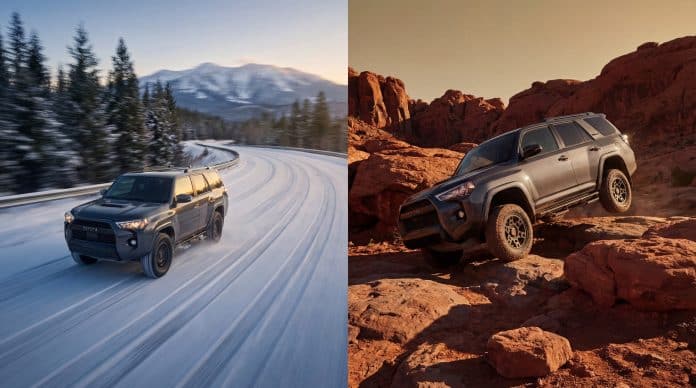
Use 4 High (4H) when you need extra traction at normal driving speeds: snow-covered roads, gravel, light mud, and rain. Use 4 Low (4L) when you need maximum torque at walking speed: rock crawling, steep hill climbs, deep mud, and vehicle recovery. The speed dividing line is roughly 25 mph. Above it, stay in 4H. Below it, shift to 4L.
Last updated: March 2026 | 12 min read
If your truck or SUV has a transfer case with 2H, 4H, and 4L positions, you already have the hardware. What most new 4WD owners lack is a clear understanding of when to use 4 high vs 4 low. Use the wrong mode at the wrong time and you either burn through drivetrain components or get stuck where the right gear ratio would have pulled you through.
This guide breaks down every scenario where you should engage 4H, every scenario where you need 4L, and the specific situations where choosing wrong causes real damage. We include vehicle-specific shift procedures for Toyota, Jeep, Ford, Chevy, and Ram trucks because the process varies between makes.
In This Article
- What Are 4 High and 4 Low? (Mechanical Differences)
- 4H vs 4L Quick Comparison Table
- When to Use 4 High (7 Real Scenarios)
- When to Use 4 Low (6 Real Scenarios)
- 2 High vs 4 High: When to Leave It in 2WD
- How to Shift Between 4H and 4L (By Vehicle)
- 5 Common Mistakes That Damage Your Transfer Case
- FAQs
- The Bottom Line
What Are 4 High and 4 Low? (Mechanical Differences)
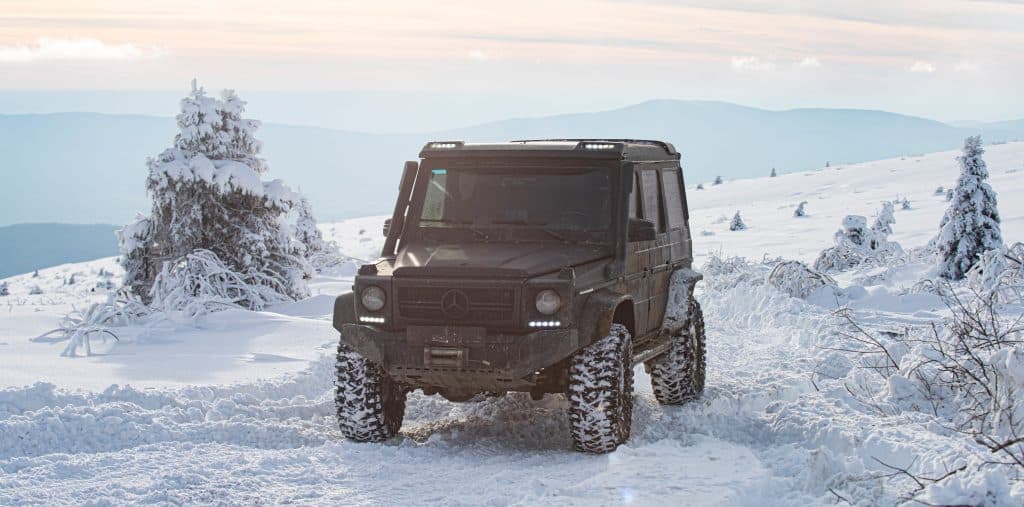
Your transfer case sits between the transmission and the front and rear axles. It splits power to all four wheels. The “high” and “low” settings control the gear ratio inside that transfer case.
4 High (4H) sends power to all four wheels at the same gear ratio as 2WD. Your speedometer, RPMs, and overall driving feel stay normal. The only difference is that all four tires push the vehicle forward instead of two. Typical speed range: 25-55 mph.
4 Low (4L) sends power to all four wheels through a reduction gear set. This multiplies the engine’s torque by a factor of roughly 2.5:1 (varies by vehicle). Your wheels turn slower, but with significantly more force. Typical speed range: 1-15 mph.
Think of it this way: 4H gives you traction at speed. 4L gives you power at crawl. They solve different problems. You will see these abbreviated as 4H vs 4L (or 4h vs 4l) in forums, owner’s manuals, and on your transfer case selector.
The gear reduction ratio varies by manufacturer. A Jeep Wrangler Rubicon with its Rock-Trac transfer case runs a 4:1 low range ratio, which is one of the deepest available in a stock vehicle. A Toyota 4Runner runs 2.566:1. The Ford Bronco Sasquatch package sits at 3.06:1. Deeper ratios provide more torque multiplication for rock crawling but lower maximum speed in 4L.
4 High vs 4 Low: Quick Comparison Table
The table below shows the key differences between 4H vs 4L. This is the quickest way to understand the 4WD high vs low decision. Reference this when deciding which mode to use in the field.
| Feature | 4 High (4H) | 4 Low (4L) |
|---|---|---|
| Speed Range | 25-55 mph | 1-15 mph |
| Torque Output | Standard (1:1 ratio) | Multiplied (2.5:1 to 4:1) |
| Fuel Consumption | 10-15% more than 2WD | 30-50% more than 2WD |
| Shifting Requirement | Shift while moving (under 55 mph) | Stop or near-stop required |
| Best Terrain | Snow, gravel, rain, light mud | Rocks, steep hills, deep mud, sand |
| Drivetrain Stress | Moderate | High (but at lower speeds) |
| Dry Pavement Use | No (part-time systems) | No (part-time systems) |
| Primary Purpose | Traction at road speeds | Maximum torque at crawl speeds |
When to Use 4 High: 7 Real Scenarios
Engage 4 high when the surface is slippery but you need to maintain normal driving speed. Here are the specific situations where 4H is the correct choice.
1. Snow-Covered Roads
This is the most common use case for 4H. When snow covers the road surface and your rear tires start losing grip during acceleration, shift into 4H. All four tires push you forward, and the additional traction helps you maintain speed without fishtailing. Keep your speed between 25-45 mph. If the road is plowed and dry, shift back to 2H.
2. Gravel and Dirt Roads
Loose gravel reduces tire grip by 30-50% compared to pavement. On forest service roads, county dirt roads, or BLM access roads, 4H gives you better directional stability and traction on acceleration. You will feel the truck track straighter through loose corners. Speed range: 25-45 mph.
3. Heavy Rain on Unpaved Roads
Paved roads in rain rarely need 4WD if your tires are in good shape. Unpaved roads in rain are a different story. Clay and dirt turn slick quickly, and 4H keeps all four wheels pulling so you do not lose forward momentum. If you start hydroplaning on standing water, 4H distributes power more evenly and helps maintain directional control.
4. Icy Roads
Black ice and packed snow turn two-wheel drive trucks into sleds. 4H doubles the number of tires putting power to the ground. This helps with acceleration and maintaining momentum. One critical note: 4WD does not reduce your stopping distance on ice. Your braking distance stays the same. Drive accordingly.
5. Sandy Beaches and Desert Trails
Firm-packed sand at speed works with 4H. You maintain momentum without sinking. If you start to bog down or the sand gets softer, drop to 4L and reduce tire pressure to 18-22 psi. The decision point is speed: if you are moving above 25 mph and maintaining forward progress, stay in 4H.
6. Muddy Roads (Not Deep Mud)
Surface mud on a road or trail where the base is still firm calls for 4H. You have enough traction to keep moving, and the higher speed range helps carry momentum through slippery patches. If the mud gets deeper than 6-8 inches or you feel the truck slowing to a crawl, shift to 4L before you get stuck.
7. Towing on Slippery Surfaces
Pulling a trailer or camper on a snow-covered highway is one of the best use cases for 4H. The extra weight on the rear axle increases traction there, and 4H adds front-wheel drive so you maintain control during lane changes and gentle cornering. Keep speed moderate (35-45 mph) and leave extra following distance.
When to Use 4 Low: 6 Real Scenarios
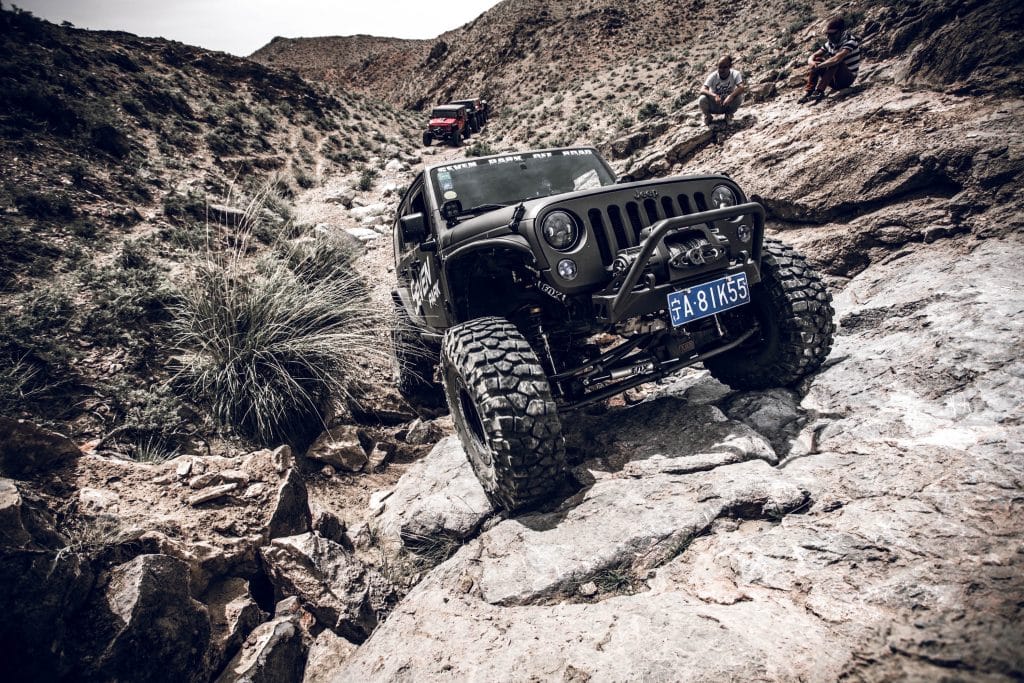
Engage 4 low when you need maximum torque at minimal speed. The rule of thumb: if you would walk this terrain instead of jog, you need 4L.
1. Rock Crawling
This is what 4L was designed for. Moving over boulders, ledges, and uneven rock surfaces requires precise throttle control and maximum wheel torque at 1-5 mph. 4L multiplies your engine’s torque so you can climb obstacles without over-revving. The Jeep Wrangler Rubicon’s 4:1 low-range ratio excels here, providing enough torque multiplication to walk over 18-24 inch rock ledges in first gear.
2. Steep Hill Climbs and Descents
Grades steeper than 20% demand 4L. Going up, the extra torque prevents stalling and wheel spin on loose surfaces. Going down, 4L provides engine braking that controls your descent speed without overheating your brakes. This is important: descending a steep hill in 4H with your foot on the brake builds heat that can cause brake fade. 4L lets the engine do the work.
3. Deep Mud and Bog
When mud reaches axle depth, you need the sustained pulling force that 4L provides. 4H at speed might carry you through thin mud on momentum alone. Deep mud stops that momentum instantly. 4L delivers steady, controlled torque that keeps the wheels turning through thick material. Maintain gentle, consistent throttle. Spinning the wheels fast only digs you deeper.
4. Deep Sand
Soft dune sand or beach sand that your tires sink into more than 2-3 inches calls for 4L with reduced tire pressure (15-20 psi). The slow wheel speed in 4L pushes sand rather than digging into it. Combined with aired-down tires that spread the contact patch wider, 4L gives you the best chance of maintaining forward progress without burying the truck.
5. Vehicle Recovery
Pulling a stuck vehicle with a recovery strap or winching yourself out of a hole requires low-speed torque. 4L delivers this. High-speed wheel spin during recovery risks snapping straps, damaging the drivetrain, or flinging debris. 4L gives you controlled, steady pulling force. Pair it with a properly rated recovery strap (not a tow strap) and take up slack slowly.
6. Fording Water Crossings
Driving through standing water or stream crossings requires 4L for two reasons. First, water creates significant drag against the undercarriage, and 4L provides enough torque to push through. Second, you need slow, steady speed (3-5 mph) to avoid pushing a bow wave into your air intake. 4L keeps your engine RPMs in a usable range at these walking speeds.
2 High vs 4 High: When to Leave It in 2WD
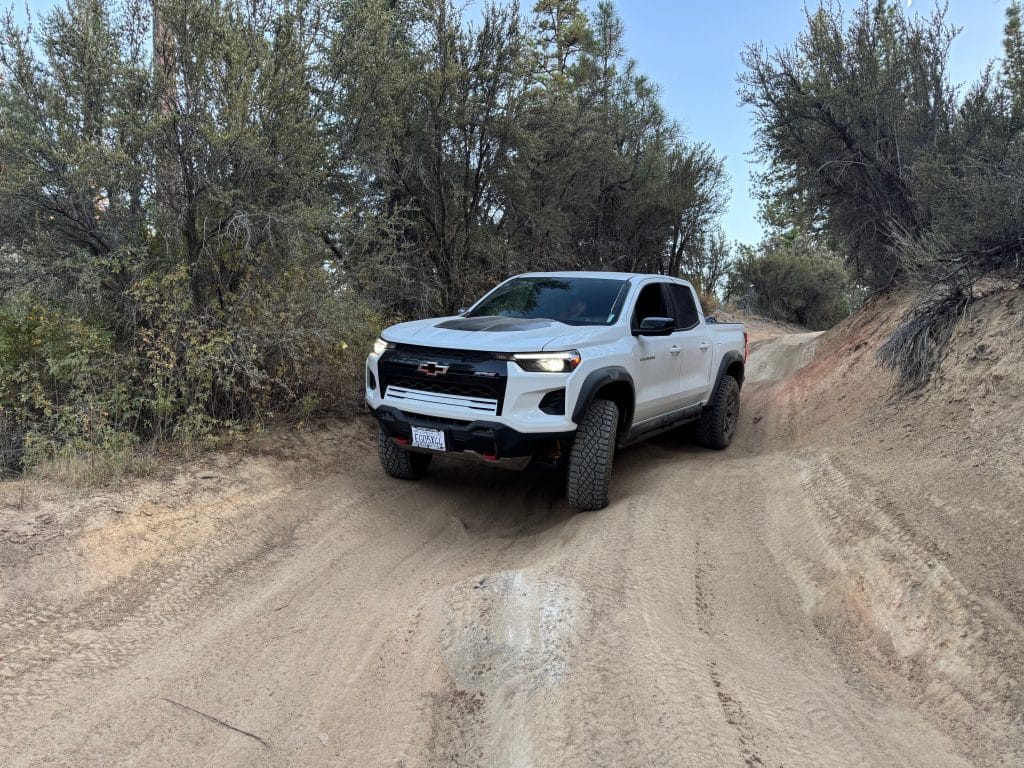
Many truck owners leave their vehicle in 4H “just in case.” On a part-time 4WD system, this causes unnecessary wear and reduces fuel economy by 10-15%. Here is the decision framework for when to stay in 2 high vs shifting to 4 high.
Stay in 2H when:
- Roads are dry, paved, and clear
- Light rain on paved roads (good tires handle this)
- Temperatures are above freezing and roads are dry
- You are on the highway in clear conditions
Shift to 4H when:
- You feel the rear tires slip during acceleration
- Snow, ice, or slush covers the road surface
- You turn onto an unpaved road
- Rain has turned a dirt road to mud
- You start towing in slippery conditions
The trigger for shifting from 2H to 4H is traction loss. If your rear tires maintain grip through acceleration and cornering, 2WD is doing the job. The moment you feel the rear end step out or wheels spin, engage 4H.
Full-time 4WD systems (Toyota Land Cruiser, Lexus GX, Land Rover Defender) do not have a 2H position. They run in 4WD at all times through a center differential that allows front and rear axles to turn at different speeds. If your truck has a full-time system, you do not need to make this decision.
How to Shift Between 4H and 4L (By Vehicle)

The shift procedure varies by manufacturer. Getting it wrong can grind gears or damage the transfer case synchronizers. Here is the correct process for the most common trucks.
Shifting from 4H to 4L
| Vehicle | Selector Type | Procedure |
|---|---|---|
| Toyota 4Runner / Tacoma | Lever | Slow to under 5 mph. Put transmission in Neutral. Pull the transfer case lever from 4H to 4L. Wait for the 4L indicator light. Shift transmission back to Drive. |
| Jeep Wrangler / Gladiator | Lever | Come to a complete stop. Transmission in Neutral. Move transfer case lever firmly from 4H to 4L. You will feel resistance; push through it. Wait for the 4L light. |
| Ford F-150 / Bronco | Electronic dial/button | Slow to under 3 mph. Put transmission in Neutral. Turn the dial to 4L (or press the 4L button). Wait for the dash indicator to confirm. Shift back to Drive. |
| Chevy Silverado / Colorado | Electronic buttons | Slow to under 3 mph. Transmission in Neutral. Press the 4LO button. Wait for the indicator light to stop flashing and stay solid. Shift back to Drive. |
| Ram 1500 | Electronic dial | Come to a complete stop. Transmission in Neutral. Rotate the dial to 4LO. Wait for the 4LO indicator to confirm engagement. Shift back to Drive. |
Important: If the transfer case grinds or refuses to engage, do not force it. Roll the vehicle forward 2-3 feet in Neutral to re-align the gears, then try again. Forcing the lever through a grind damages the synchronizer rings.
Shifting from 4L Back to 4H
Reverse the process. Slow down (or stop, depending on your vehicle), shift to Neutral, move the selector from 4L to 4H, wait for confirmation, then shift back to Drive. Toyota and Ford allow this shift at very low speeds (under 5 mph). Jeep and Ram recommend a full stop.
Shifting from 4H to 2H
Most trucks allow you to shift from 4H to 2H while driving at any speed under 55 mph. No need to stop or shift to Neutral. The transfer case disengages the front axle, and the transition is seamless. You may hear a slight click or thump as the front driveshaft disconnects.
5 Common Mistakes That Damage Your Transfer Case
1. Using 4H or 4L on Dry Pavement (Part-Time Systems)
Part-time 4WD systems lock the front and rear axles together at a 50/50 power split with no center differential. On dry pavement, the front and rear axles need to turn at different speeds during turns. Locked together, the drivetrain binds. This stress transfers to the transfer case, U-joints, and axle shafts. Short distances at low speed will not break anything immediately. Sustained dry-pavement use in 4H causes premature wear on the transfer case chain, output shaft bearings, and front CV joints.
2. Shifting to 4L at Speed
Engaging 4L while moving above 5 mph forces the transfer case gears to mesh at mismatched speeds. The result: gear grinding, damaged synchronizers, and potential transfer case failure. Always slow to near-stop speed before engaging 4L. The cost to replace a transfer case on a Toyota 4Runner runs $2,500-$4,000. On a Jeep Wrangler with the Rock-Trac case, budget $3,000-$5,000.
3. Driving in 4L Above 15 mph
4L multiplies torque by running the engine at higher RPMs for a given wheel speed. Driving at 25-30 mph in 4L pushes the engine to redline territory. This over-revs the motor, overheats the transfer case fluid, and provides zero benefit over 4H at those speeds. If you need to go faster than 15 mph, you need 4H, not 4L.
4. Leaving the Truck in 4H “Just in Case” All Winter
Driving in 4H on clear, dry roads wastes fuel and wears the front drivetrain components. Part-time 4WD trucks are designed to spend most of their life in 2H. Engage 4H when conditions require it and shift back to 2H when the road clears. This habit alone extends the life of your front CV joints, front differential, and transfer case bearings by years.
5. Ignoring the 4WD Warning Light
When the transfer case indicator light flashes instead of staying solid, the system has not fully engaged. Driving in this state means you may have partial 4WD or none at all. Stop, shift to Neutral, and re-engage. If the light continues to flash, the transfer case motor (on electronic systems) or the shift fork (on manual systems) may need service.
Frequently Asked Questions
What is 4 low used for?
4 low is used for maximum torque at very slow speeds. Specific uses include rock crawling, descending steep grades, pulling a stuck vehicle, fording water crossings, and driving through deep mud or soft sand. The gear reduction multiplies your engine’s torque by 2.5x to 4x, depending on the vehicle. This allows the wheels to turn slowly with enough force to climb over obstacles or push through heavy resistance.
When to use 4 high and 4 low in snow?
Use 4 high for driving on snow-covered roads at 25-55 mph. This covers highway driving in snow, commuting on unplowed roads, and general winter driving. Use 4 low for getting unstuck from deep snowdrifts, climbing steep snow-covered hills, or plowing through unbroken snow deeper than 12 inches at walking speed. If the road is plowed and you are moving at normal speed, 4H is the correct setting.
Is it OK to drive in 4 high all the time?
On a full-time 4WD system (Toyota Land Cruiser, Lexus GX, some Land Rovers), yes. These vehicles are designed to operate in 4WD continuously. On a part-time 4WD system (most trucks and Jeeps), no. Driving on dry pavement in 4H causes drivetrain binding because the front and rear axles have no center differential to absorb speed differences during turns. Use 4H only when road surfaces are slippery.
What happens if you drive fast in 4 low?
Driving faster than 15 mph in 4L over-revs the engine because the gear reduction keeps the engine at high RPMs for a given wheel speed. At 25 mph in 4L, your engine may be spinning at 4,500+ RPMs depending on the vehicle. This wastes fuel, generates excessive heat in the transfer case, and risks engine damage if sustained. The mechanical limit for most vehicles in 4L is approximately 25-35 mph, but the practical limit is 15 mph.
4 high vs 4 low for towing?
Use 4H for towing on slippery roads (snow, ice, wet gravel). The extra traction from all four wheels helps manage the trailer’s weight during acceleration and light braking. 4L is only needed for towing if you are pulling a load up a steep, unpaved grade at very slow speed. Never tow at highway speeds in 4L. If road conditions are dry and clear, tow in 2H.
Do I need 4 low for sand dunes?
Yes. Soft sand at dune parks and beach areas where your tires sink more than 2-3 inches requires 4L combined with reduced tire pressure (15-20 psi). The slow wheel speed prevents digging. If the sand is hard-packed and you are moving above 25 mph with good traction, 4H works. The moment your speed drops and tires start to sink, shift to 4L.
What is the speed limit for 4 high?
The shift-into speed for 4H varies by manufacturer: Toyota allows up to 62 mph, Jeep caps it at 50 mph, and Ford/Chevy/Ram specify 55 mph. Once in 4H, the vehicle can technically reach its normal top speed. The recommended practical speed on loose surfaces is 30-45 mph. For detailed speed limits by vehicle, see our complete 4H speed guide with owner’s manual specs.
AWD vs 4 high: what is the difference?
AWD (All-Wheel Drive) operates automatically and continuously, using a center differential to vary the power split between front and rear axles. 4H (4 High) is manually engaged and locks the front and rear axles at a fixed 50/50 power split. AWD provides seamless on-road handling in all conditions. 4H provides stronger off-road traction in specific conditions. AWD does not include a low-range transfer case for rock crawling or steep grades.
The Bottom Line
The decision between 4 high vs 4 low comes down to speed and resistance. Above 25 mph on slippery surfaces (snow, gravel, rain, light mud), use 4H. Below 25 mph on high-resistance terrain (rocks, steep hills, deep mud, soft sand), use 4L. On dry pavement with good traction, use 2H.
Get in the habit of matching your transfer case setting to the terrain in front of you. Switching between 4h vs 4l as conditions change (instead of leaving it in one position all day) protects your drivetrain, saves fuel, and puts the right amount of torque to the wheels for each situation.
Bookmark the comparison table and shift procedure chart above for quick reference the next time you hit the trail.
Related Reading on 4WDtalk: