


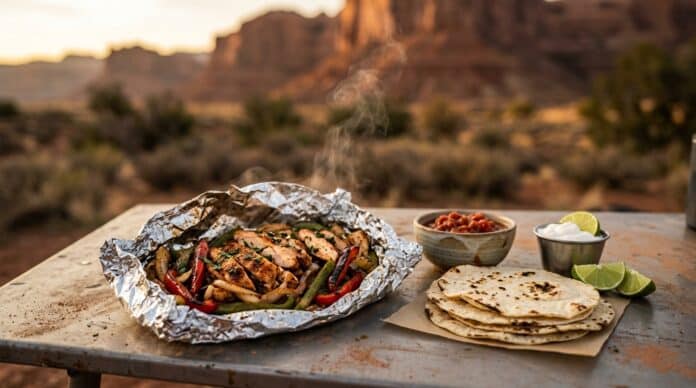

Quick Verdict: Foil packet chicken fajitas pack sliced chicken breast, bell peppers, onion, and fajita seasoning into one sealed packet. First, slice and season everything at home and bag it cold. Then flat-pack fold and cook on medium-hot coals for 20 to 25 minutes, flipping once, until the chicken hits a safe 165F. Finally, pile the fajitas into warm tortillas with salsa and sour cream. Each batch feeds 4 and leaves zero pans to scrub.
Save this recipe for your next trip.
Last updated: June 2026 | Prep: 15 min at home | Cook: 25 min | Serves: 4
Written by Alex Schult
Editor in Chief of 4wdTalk.com. 15+ years of off-road and overlanding experience with 1,000+ hours on the trail.
We tested this recipe on actual overland trips. Amazon affiliate links support 4wdTalk.com at no extra cost to you.
In This Recipe
Why This Recipe Works for Overlanders
Foil packet chicken fajitas deliver a full Tex-Mex dinner from one sealed packet. First, the chicken and peppers cook together while the fajita seasoning and rendered juices form a built-in sauce. Then everyone loads a warm tortilla straight from the foil. Because the packet does the cooking, no skillet needs scrubbing after dinner in cold camp water.
Make-ahead prep handles the food-safety work in foil packet chicken fajitas. Specifically, you slice the raw chicken and vegetables at home and store them cold, so the only camp task is folding and cooking. Since the chicken stays sealed until it hits the coals, you avoid handling raw poultry at a dusty camp table. Also, the recipe scales from 2 to 6 people on the same coal bed.
The flat-pack fold drives a hot, even cook for poultry. Because the packet sits flush on the coals, the chicken reaches a safe 165F throughout without cold centers. When you serve a crowd, you build one packet per pair and customize the heat level for each. This recipe is part of the full foil packet camping recipes collection. While a cast iron skillet sears fajitas faster, the dutch oven camping recipes collection covers larger group meals, and both roll up to our camp cooking for overlanders guide.
Equipment You Need
- Reynolds Wrap Heavy Duty aluminum foil: approximately 0.94 mil thickness for direct coal contact
- Cutting board and knife: for slicing chicken and vegetables at home
- Long-handled tongs: 16-inch to flip packets without reaching over coals
- Heat-proof gloves: rated above 500F for handling hot foil packets
- Charcoal chimney starter: lights briquettes in 15 minutes with no lighter fluid
- Kingsford Original briquettes: consistent burn and predictable ash timing
- Instant-read thermometer: confirms the chicken reaches 165F
- ICECO VL75 ProD fridge (optional): keeps raw chicken below 40F on multi-day trips
The Essential
Reynolds Wrap Heavy Duty Aluminum Foil
Heavy-duty construction holds a juicy chicken packet on a 25-minute coal cook without splitting at the seam. Specifically, one 75 square foot roll wraps roughly 15 dinner packets. Also, it is the only foil I trust on overland trips.
Ingredients
Makes 4 packets
- 1.5 pounds boneless skinless chicken breast, sliced into 1/4-inch strips
- 1 red bell pepper, sliced into strips
- 1 green bell pepper, sliced into strips
- 1 yellow onion, sliced thin
- 2 tablespoons fajita seasoning
- 1 tablespoon olive oil
- 1 lime, juiced
- 8 small flour or corn tortillas
- Salsa, sour cream, and shredded cheese for serving
- 1 teaspoon kosher salt
- 4 sheets heavy-duty foil, 14-inch square each, plus 4 more for double-wrapping
Step-by-Step Instructions
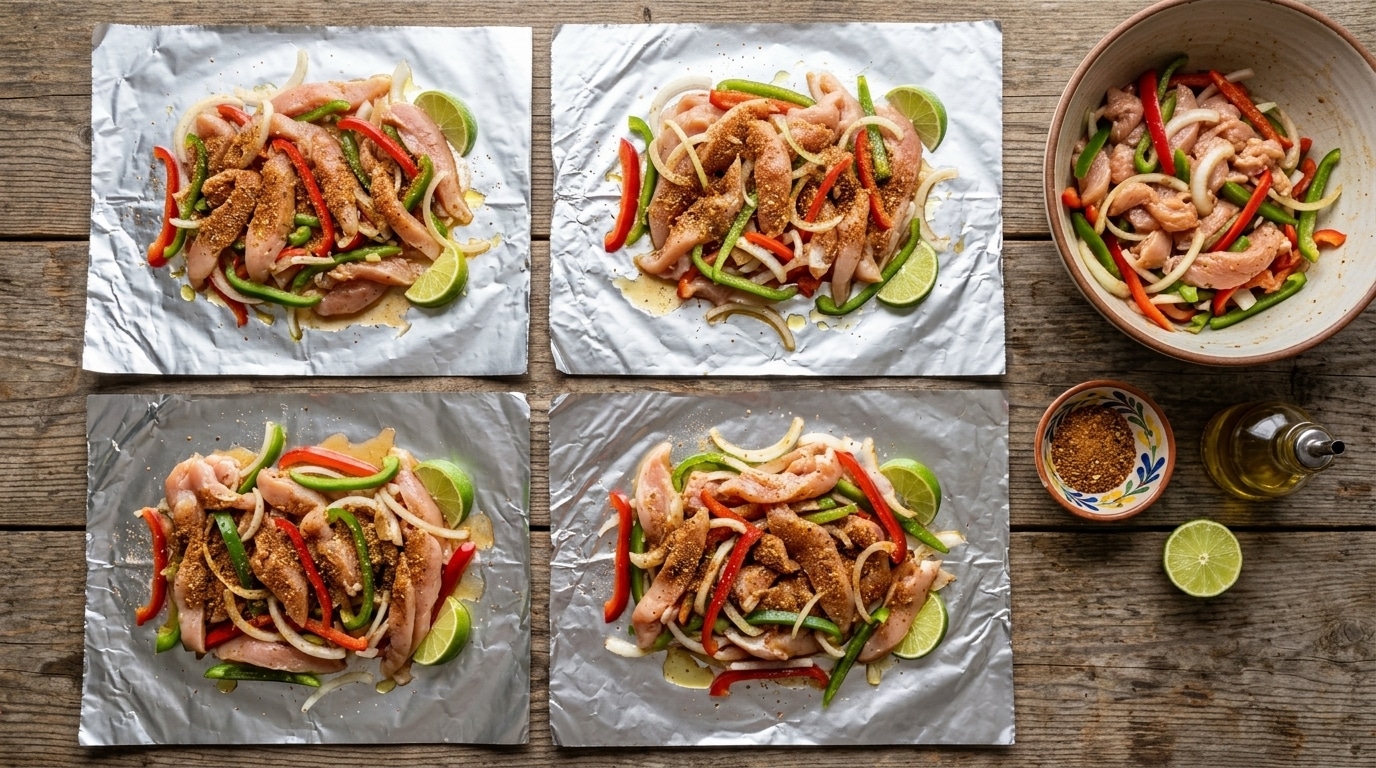
Prep at home (the night before, 15 minutes):
- Slice the chicken: Cut the chicken breast into 1/4-inch strips across the grain. Thin, even strips cook through at the same rate as the peppers.
- Slice the vegetables: Cut the bell peppers and onion into matching strips. Then mix them in a bowl with the chicken.
- Season and bag: Toss the chicken and vegetables with the fajita seasoning, olive oil, lime juice, and salt. Transfer to a sealed zip bag, press out the air, and chill below 40F. Because the chicken is raw, store the bag on the lowest cooler shelf away from ready-to-eat food.
At camp (dinner time):
- Light the coals: Fill a chimney with 25 to 30 Kingsford briquettes. Wait 15 to 20 minutes until they glow orange with light gray ash. Medium-hot coals run 400F to 500F, which cooks the chicken through.
- Build each packet: Divide the chicken and pepper mix across the four foil squares. Then spread each pile into a flat, even layer for fast, uniform cooking.
- Flat-pack fold: Bring the two long foil edges together over the food and fold them down twice in tight creases. Next, fold the two short ends up twice each to seal. Wrap a second foil square around each packet in the opposite direction for puncture protection.
- Cook on the coals: Rake the coals into a flat single layer. Place the packets on the bed with long-handled tongs. Cook 12 minutes on the first side.
- Flip once: After 12 minutes, flip each packet with tongs. Then cook another 8 to 13 minutes. Total cook time runs 20 to 25 minutes on medium-hot coals.
- Check the temperature: Open one packet and tilt the steam away from your face. Slide an instant-read thermometer into the thickest chicken strip. It must read 165F, the safe internal temperature for poultry per USDA guidance.
- Warm the tortillas: While the packets rest, warm the tortillas on the edge of the coals for 15 seconds per side. Then stack them in a clean towel to hold the heat.
- Serve and pack out: Spoon the fajitas into warm tortillas and top with salsa, sour cream, and cheese. Afterward, fold the cooled foil into a ball for pack-out.
Coal Bed Math for Foil Packets
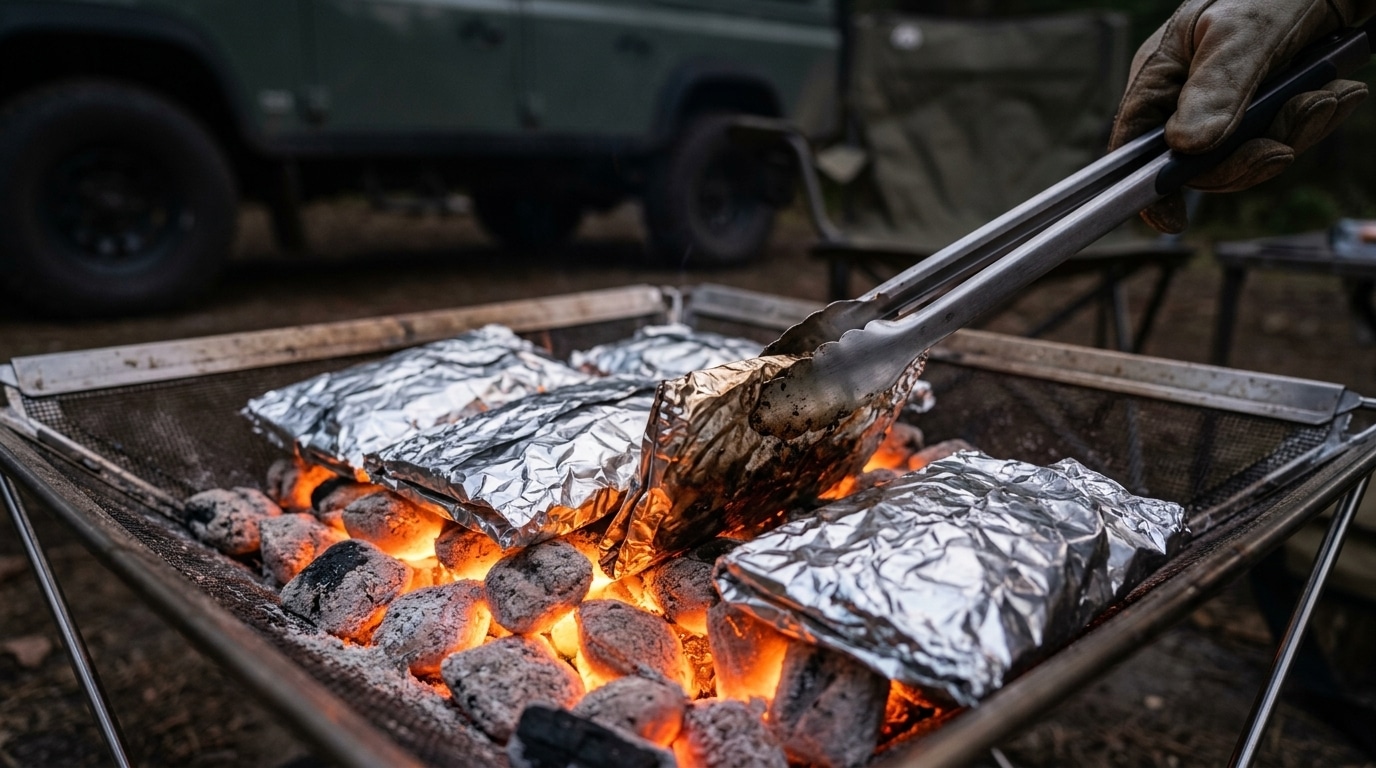
This packet cooks by direct coal contact, so judge heat by the coal surface rather than a briquette count around a Dutch oven. Match the look of the coals to the job below.
| Heat Level | Coal Appearance | Surface Temp | Use |
|---|---|---|---|
| Hot | Bright orange, glowing | 500F+ | Quick sears, 5 to 10 min |
| Medium-Hot | Orange with light gray ash | 400F-500F | Chicken fajitas, most main dishes, 15 to 25 min |
| Medium | Gray ash, orange embers visible | 350F-400F | Eggs, dense vegetables |
| Medium-Low | Mostly gray ash, soft glow | 250F-350F | Reheating, desserts |
Foil packet chicken fajitas run best on medium-hot coals at 400F to 500F, which drive the chicken to 165F while the peppers soften. Three field adjustments shift the timing. First, when wind tops 10 mph, add 5 to 8 minutes. Second, when ambient temperature drops below 40F, add 3 to 5 minutes. Third, above 5,000 feet, add 5 minutes because thinner air slows the cook on a packet running past 20 minutes.
Field Tips for Cooking at Camp
Strip thickness controls the whole cook. When you slice the chicken thicker than 1/4 inch, the centers lag and stay pink while the peppers overcook. Instead, hold the strips thin and even so the chicken reaches 165F right as the vegetables finish. Also, slicing at home keeps raw poultry off your camp table and out of the dust.
The seasoning needs fat to bloom. Because dry fajita spice tastes flat, toss the mix with a tablespoon of olive oil so the spices coat the chicken and peppers. When you add lime juice before sealing, the acid brightens the packet and keeps the chicken moist. A pinch of extra salt at serving sharpens every bite.
Temperature checking is not optional with foil packet chicken fajitas. Therefore, carry an instant-read thermometer and confirm 165F before serving any packet. On a windy or cold morning, expect the cook to run long, so check early and reseal if a packet needs more time. Then you serve safe chicken every time instead of guessing by color.
Variations and Substitutions
- Steak fajitas: Swap the chicken for thin-sliced flank or skirt steak. Cook to 145F for medium and rest 3 minutes before serving.
- Shrimp fajitas: Replace the chicken with peeled shrimp. Reduce the cook to 12 to 15 minutes, until the shrimp turn pink and opaque.
- Spicy version: Add 1 sliced jalapeno and 1/2 teaspoon cayenne to the seasoning. Finish with a squeeze of lime and hot sauce.
- Low-carb bowl: Skip the tortillas and serve the fajitas over cauliflower rice or shredded lettuce. Top with avocado and cotija.
- Extra veggie: Add sliced zucchini or mushrooms to stretch the packet. Keep the total volume flat so the chicken still cooks evenly.
- Cheesy queso finish: Scatter shredded Monterey Jack over the mix in the last 5 minutes. Reseal loosely until the cheese melts.
- Scaled for 2 people: Halve every ingredient. Build 2 packets with 3/4 pound chicken.
- Scaled for 6 people: Increase all amounts by 50%. Build 6 packets and light 35 briquettes for a longer coal bed.
Essential Tool
ICECO VL75 ProD Portable Fridge
A 12-volt fridge holds raw chicken below 40F for the whole trip, which removes the food-safety guesswork of a melting cooler. Also, it doubles as a freezer for longer hauls. I have run one for two-plus years on the trail.
Storage and Leftovers
The prepped raw mix holds below 40F for 24 hours before cooking. Specifically, the sliced chicken, peppers, onion, and seasoning keep together in a sealed bag on the lowest cooler shelf. Because raw chicken spoils fast, never let the bag sit above 40F for more than 2 hours, or 1 hour above 90F. Also, keep the bag separate from ready-to-eat food to prevent cross-contamination.
Cooked foil packet chicken fajitas hold below 40F for 3 to 4 days after cooking. Then reheat a sealed leftover packet on medium coals for 8 minutes, flipping once, until the chicken returns to 165F. Otherwise, slide the leftovers into a skillet over a camp stove and warm through. Discard any cooked packet left above 40F for more than 2 hours, per USDA safe handling rules.
Frequently Asked Questions
How do I know foil packet chicken fajitas are fully cooked?
Use an instant-read thermometer and confirm 165F in the thickest chicken strip. The USDA sets 165F as the safe internal temperature for poultry. Because color alone misleads inside a steamy packet, never judge doneness by sight. If a packet reads low, reseal it and cook 3 to 5 more minutes on the coals.
What coal temperature works best for chicken fajitas?
Medium-hot coals at 400F to 500F deliver the right heat. Specifically, this range drives the chicken to 165F while the peppers soften and brown. However, coals above 500F char the foil bottom before the centers finish. Look for orange embers under a thin coat of gray ash before placing the packets.
Should I slice the chicken before the trip?
Yes, slice the chicken into 1/4-inch strips at home. Because thin, even strips cook at the same rate as the peppers, the whole packet finishes together. Slicing at home also keeps raw poultry off your camp table and out of the dust. Store the sliced chicken cold in a sealed bag until cook time.
Is frozen chicken okay for foil packet chicken fajitas?
Thaw the chicken fully before slicing and cooking. Since a frozen or partly frozen packet cooks unevenly, the centers stay raw while the edges overcook. Thaw the sealed chicken in the cooler for 24 hours, then slice and season. Cook within a day of thawing for the best safety and texture.
How do I keep the chicken from drying out?
Hold the coals at medium-hot and pull the packet as soon as the chicken hits 165F. Because overcooking past 175F dries out lean breast meat, the thermometer is your best tool. Also, the olive oil and lime juice in the seasoning lock in moisture during the cook. Thin, even strips reach temperature fast and stay juicy.
Is it smart to prep foil packet chicken fajitas ahead of time?
Yes, prep the raw mix up to 24 hours ahead and store it below 40F. However, do not assemble the foil packets until dinner time at camp. Since raw chicken in a warm packet risks bacterial growth, keep the mix cold in a sealed bag. Build the packets fresh right before they go on the coals.
How many packets fit on one coal bed?
A 12-inch by 12-inch bed from 25 briquettes holds 4 packets. Meanwhile, 6 packets need 35 briquettes raked into a longer 18-inch by 12-inch bed. Also, leave an inch between packets so heat circulates around each one. Crowding the bed creates cold spots and leaves some chicken undercooked.
How do I pack out the used foil?
Let each packet cool, then fold it into a tight ball. Specifically, the foil compacts small and fits inside a sealed zip bag or dry box. Because Leave No Trace requires packing out all foil, never bury or burn the scraps. Also, sealing the raw-chicken foil keeps odor and wildlife away from camp.
You Might Also Like
- Foil Packet Lemon Herb Chicken (recipe coming soon)
- Foil Packet Taco Meat (recipe coming soon)
- For a handheld breakfast, see Foil Packet Breakfast Burritos
- Return to the full Foil Packet Camping Recipes collection
- For a group dinner, see Dutch Oven Camping Recipes