


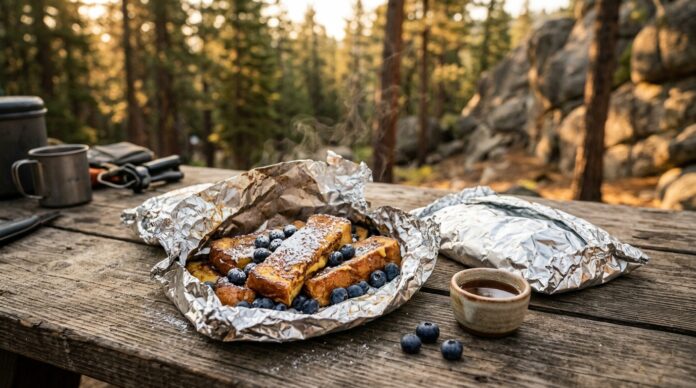

Quick Verdict: Foil packet french toast sticks turn thick-cut bread into a handheld breakfast with no griddle. First, cut the bread into sticks at home and bottle a cinnamon-vanilla custard. Then dip the sticks, lay them on buttered foil, and cook on medium coals for 12 to 15 minutes, flipping once. Finally, serve with maple syrup. Each batch feeds 4, sets to a safe 160F, and leaves zero pans to scrub.
Save this recipe for your next trip.
Last updated: June 2026 | Prep: 10 min at home | Cook: 15 min | Serves: 4
Written by Alex Schult
Editor in Chief of 4wdTalk.com. 15+ years of off-road and overlanding experience with 1,000+ hours on the trail.
We tested this recipe on actual overland trips. Amazon affiliate links support 4wdTalk.com at no extra cost to you.
In This Recipe
Why This Recipe Works for Overlanders
Foil packet french toast sticks give kids and adults a sweet, handheld breakfast without a griddle or a sink full of batter. First, the bread sticks soak up a cinnamon-vanilla custard and steam inside the foil until the centers set. Then everyone grabs a stick, dips it in syrup, and eats with one hand. Because the foil does the cooking, no skillet needs scraping in cold morning water.
Make-ahead prep keeps foil packet french toast sticks simple at camp. Specifically, you cut the bread and mix the custard at home, so the morning work shrinks to dipping and wrapping. Since stale or day-old bread holds the custard better than fresh, this recipe turns leftover loaf ends into breakfast. Also, the sticks scale from 2 to 6 people on the same coal bed with no extra gear.
Portion control is the quiet advantage. Because each packet holds a fixed set of sticks, you feed a crowd without a free-for-all over a shared griddle. When you cook for a mixed group, you customize toppings per packet, from powdered sugar to fresh berries. This recipe is part of the full foil packet camping recipes collection. While a Dutch oven bakes a larger sweet breakfast, the dutch oven camping recipes collection covers those, and both roll up to our camp cooking for overlanders guide.
Equipment You Need
- Reynolds Wrap Heavy Duty aluminum foil: approximately 0.94 mil thickness for direct coal contact
- Cutting board and bread knife: for cutting thick slices into sticks at home
- Leak-proof bottle or jar: for the cinnamon-vanilla custard
- Long-handled tongs: 16-inch to flip packets without reaching over coals
- Heat-proof gloves: rated above 500F for handling hot foil packets
- Charcoal chimney starter: lights briquettes in 15 minutes with no lighter fluid
- Kingsford Original briquettes: consistent burn and predictable ash timing
- Instant-read thermometer: confirms the custard sets at 160F
The Essential
Reynolds Wrap Heavy Duty Aluminum Foil
Heavy-duty construction holds custard-soaked bread on a 15-minute coal cook without tearing or leaking syrup. Specifically, one 75 square foot roll wraps roughly 20 breakfast packets. Also, it is the only foil I trust on overland trips.
Ingredients
Makes 4 packets
- 8 slices thick-cut bread (Texas toast, brioche, or challah), day-old preferred
- 4 large eggs
- 3/4 cup whole milk
- 1 teaspoon vanilla extract
- 1 teaspoon ground cinnamon
- 2 tablespoons granulated sugar
- 1/4 teaspoon kosher salt
- 4 tablespoons butter, divided into pats
- Maple syrup for serving
- Powdered sugar and fresh berries (optional)
- 4 sheets heavy-duty foil, 14-inch square each, plus 4 more for double-wrapping
Step-by-Step Instructions
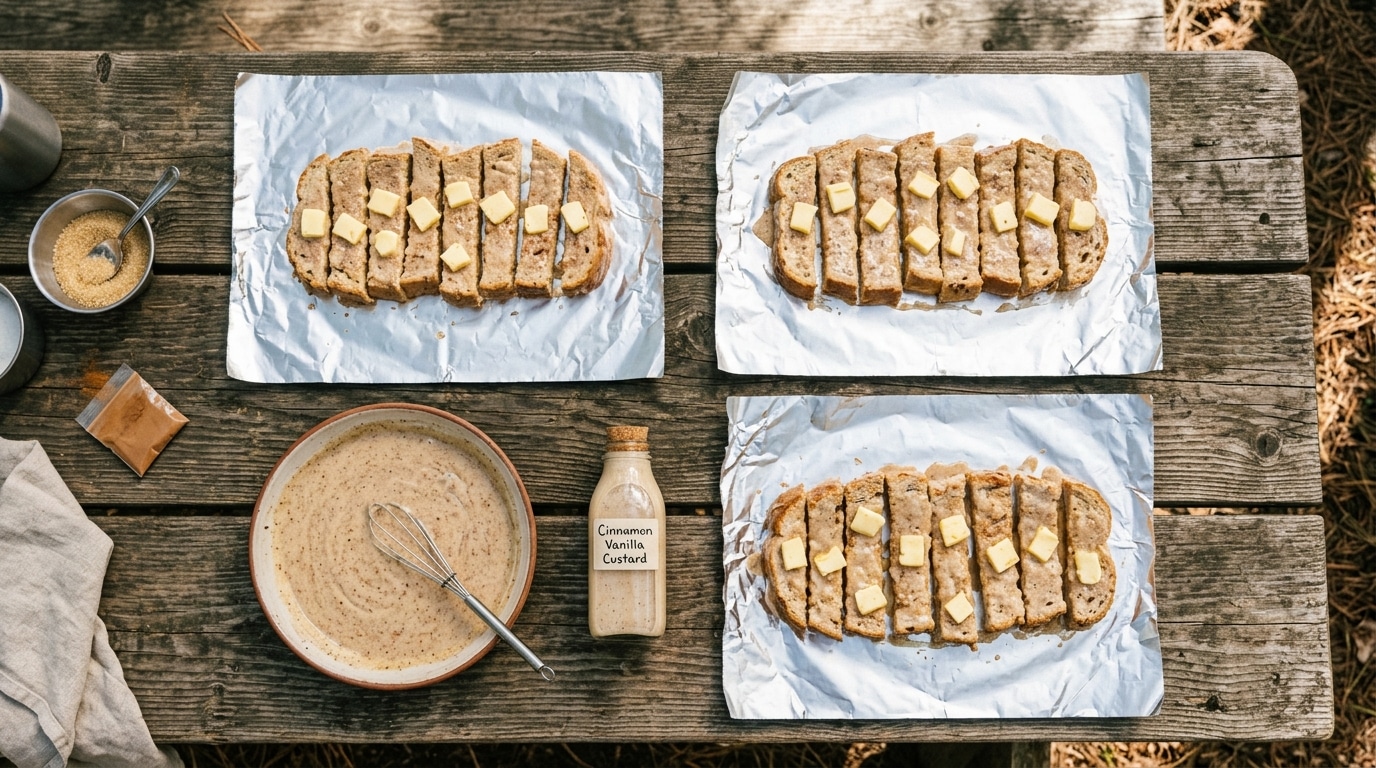
Prep at home (the night before, 10 minutes):
- Cut the bread into sticks: Slice each piece of thick-cut bread into 3 sticks, for 24 sticks total. Then spread them on a sheet pan and leave them uncovered overnight, since slightly stale bread soaks the custard without falling apart.
- Mix the custard: Whisk the eggs, milk, vanilla, cinnamon, sugar, and salt until smooth. Pour the mixture into a leak-proof bottle or jar. Then chill it below 40F until cook time.
- Pack the extras: Bag the butter pats and pack the maple syrup, powdered sugar, and berries. Keep the custard and butter cold in the cooler until the morning you cook.
At camp (morning of breakfast):
- Light the coals: Fill a chimney with 20 to 25 Kingsford briquettes. Wait 15 to 20 minutes until they glow orange under a coat of gray ash. Medium coals run 350F to 400F, which sets the custard without burning the sugar.
- Butter the foil: Rub a butter pat across the center of each 14-inch foil square. Because the sugar in the custard sticks fast, a buttered surface keeps the sticks releasing clean.
- Dip the sticks: Pour the custard into a shallow dish. Roll 6 bread sticks through the custard for each packet, coating all sides. Then let the excess drip off so the sticks soak without turning to mush.
- Arrange and add butter: Lay the dipped sticks in a single row on each buttered square. Next, dot each row with a small pat of butter for browning.
- Tent-fold the packet: Bring the long foil edges up and pinch them above the sticks. Fold the seam down twice with headroom inside, then roll the short ends up twice each. Wrap a second foil square around each packet for puncture protection.
- Cook on the coals: Rake the coals flat. Place the packets on the bed with long-handled tongs and cook 7 minutes on the first side.
- Flip once: After 7 minutes, flip each packet. Then cook another 5 to 8 minutes. Total cook time runs 12 to 15 minutes on medium coals.
- Check the set: Open one packet and tilt the steam away from your face. The custard should look set, not wet, and read 160F at the center for egg safety per USDA guidance. If it reads low, reseal and cook 3 more minutes.
- Serve and pack out: Dust with powdered sugar, add berries, and serve with maple syrup for dipping. Afterward, fold the cooled foil into a ball for pack-out.
Coal Bed Math for Foil Packets
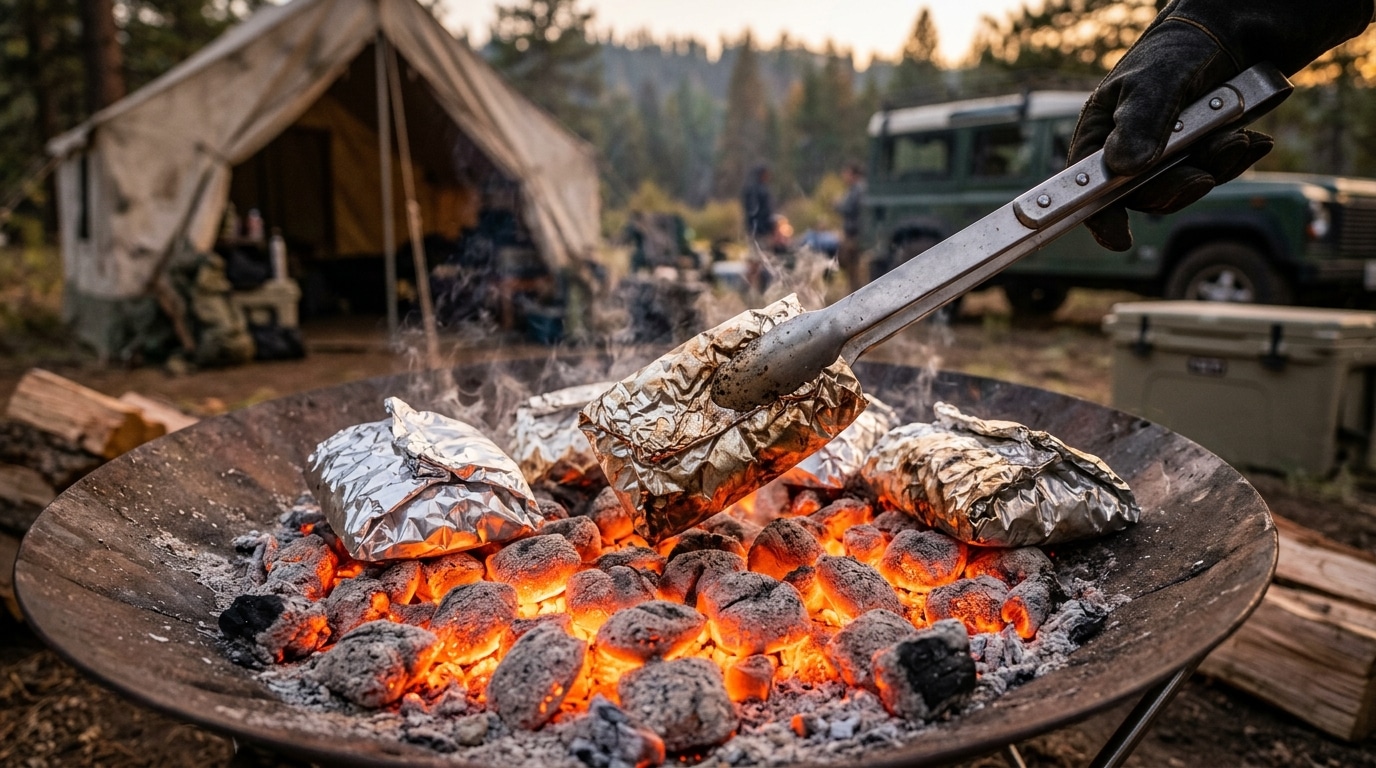
French toast sticks cook by direct coal contact, so judge heat by the coal surface rather than a briquette count around a Dutch oven. Match the look of the coals to the job below.
| Heat Level | Coal Appearance | Surface Temp | Use |
|---|---|---|---|
| Hot | Bright orange, glowing | 500F+ | Quick sears, 5 to 10 min |
| Medium-Hot | Orange with light gray ash | 400F-500F | Most main dishes, 15 to 25 min |
| Medium | Gray ash, orange embers visible | 350F-400F | French toast, eggs, dense vegetables |
| Medium-Low | Mostly gray ash, soft glow | 250F-350F | Reheating, desserts |
Foil packet french toast sticks run best on medium coals at 350F to 400F, which sets the custard while the sugar caramelizes instead of scorching. Three field adjustments shift the timing. First, when wind tops 10 mph, add 5 to 8 minutes. Second, when ambient temperature drops below 40F, add 3 to 5 minutes. Third, above 5,000 feet, add a few minutes since thinner air slows the set on a custard-heavy packet.
Field Tips for Cooking at Camp
Bread choice decides the texture. When you use fresh, soft bread, it absorbs too much custard and turns to paste inside the foil. Instead, reach for day-old thick-cut bread, brioche, or challah, which hold a firm center after soaking. Also, cutting the sticks at home means the morning work drops to a quick dip and wrap.
Dip time matters as much as bread choice. Because a long soak floods the bread, roll each stick through the custard and let the excess drip before wrapping. When the sticks sit too wet, the centers stay raw while the outside browns. A 2 to 3 second dip per side gives a custard layer without a soggy core.
Heat control protects the sugar in foil packet french toast sticks. Therefore, keep the coals at medium, not hot, so the custard sets before the sugar burns. On a windy morning, build a windbreak with a Fireside Outdoor pit or a row of rocks, and stack a second foil sheet as a lid to hold even heat. Then the sticks brown gently instead of scorching on a hot spot.
Variations and Substitutions
- Cinnamon sugar crust: Roll the dipped sticks in a cinnamon-sugar mix before wrapping. The coating caramelizes into a sweet crust on the coals.
- Berry stuffed: Tuck fresh blueberries or sliced strawberries between the sticks before sealing. The berries soften and burst into a quick sauce.
- Banana bread version: Add 1/2 teaspoon nutmeg to the custard and lay banana slices over the sticks. Serve with extra maple syrup.
- Chocolate chip: Scatter 2 tablespoons of mini chocolate chips over each packet. The chips melt into the sticks for a dessert-style breakfast.
- Dairy-free: Swap whole milk for oat or almond milk and use a plant butter on the foil. The custard sets the same way.
- Brioche upgrade: Use thick brioche or challah for a richer, custardy center. Reduce the dip time slightly since these breads soak faster.
- Scaled for 2 people: Halve every ingredient. Build 2 packets with 4 slices and 2 eggs.
- Scaled for 6 people: Increase all amounts by 50%. Build 6 packets and light 30 briquettes for a longer coal bed.
Essential Tool
Fireside Outdoor Pop-Up Fire Pit
A pop-up pit contains your coals and blocks wind, which keeps a delicate custard cook at an even medium heat. Also, it packs flat and follows Leave No Trace by keeping ash off the ground.
Storage and Leftovers
The custard mix holds below 40F for 48 hours before cooking. Specifically, the whisked eggs, milk, and spices keep in a sealed bottle in the cooler, while the cut bread sits dry in a bag at room temperature. Because the custard contains raw egg, never let the bottle sit above 40F for more than 2 hours. Also, dip and cook the sticks the morning of breakfast rather than soaking them ahead.
Cooked foil packet french toast sticks hold below 40F for 2 days after cooking. Then reheat a sealed leftover packet on medium-low coals for 5 to 6 minutes until warm through. Otherwise, crisp the sticks in a buttered skillet over a camp stove. Discard any cooked packet left above 40F for more than 2 hours, per USDA safe handling rules.
Frequently Asked Questions
What bread works best for foil packet french toast sticks?
Day-old thick-cut bread works best, since it holds the custard without falling apart. Specifically, brioche, challah, and Texas toast all soak well and keep a firm center. However, fresh soft bread absorbs too much liquid and turns to paste inside the foil. Leave the sliced sticks out overnight to dry slightly before the trip.
How long should I soak the sticks in custard?
Dip each stick for 2 to 3 seconds per side, then let the excess drip off. Because a long soak floods the bread, a quick roll gives a custard layer without a soggy core. When the centers stay wet after cooking, shorten the dip next time. The goal is a coated surface, not a saturated stick.
What coal temperature sets the custard without burning the sugar?
Medium coals at 350F to 400F hit the right window. Specifically, this heat sets the egg custard while the sugar caramelizes gently. However, hot coals above 500F scorch the sugar before the centers cook. Look for orange embers under a coat of gray ash before you place the packets.
What internal temperature is safe for french toast?
Cook the custard to 160F at the center. The USDA recommends 160F for egg dishes to neutralize salmonella risk. Slide an instant-read thermometer into a thick stick to confirm. If the reading runs low, reseal the packet and cook 3 more minutes on medium coals.
Will foil packet french toast sticks work for a kids breakfast?
Absolutely, the handheld sticks are a strong kid option. Because each child gets a portioned packet, you avoid a scramble over a shared griddle. Let kids dip their own sticks in syrup and pick toppings like berries or powdered sugar. The foil also keeps the sticks warm while younger eaters take their time.
Is it smart to prep the custard ahead of time?
Yes, mix the custard up to 48 hours ahead and store it below 40F in a sealed bottle. However, keep the bread dry and separate until the morning you cook. Since the custard holds raw egg, dipping the sticks early risks soggy bread and food-safety problems. Dip and wrap fresh at camp for the best texture.
How many packets fit on one coal bed?
A 12-inch by 12-inch bed from 25 briquettes holds 4 packets. Meanwhile, 6 packets need 30 briquettes raked into a longer 18-inch by 12-inch bed. Also, leave an inch between packets so heat circulates around each one. Crowding the bed creates cold spots and uneven cooking.
How do I pack out the sticky foil?
Let each packet cool, then fold it into a tight ball. Specifically, the syrupy foil compacts small and fits inside a sealed zip bag or dry box. Because Leave No Trace requires packing out all foil, never bury or burn the scraps. Also, sealing the sticky foil keeps ants and wildlife away from camp.
You Might Also Like
- Foil Packet Banana Boats (recipe coming soon)
- Foil Packet Bacon and Eggs (recipe coming soon)
- For a handheld savory option, see Foil Packet Breakfast Burritos
- Return to the full Foil Packet Camping Recipes collection
- For a sweet group breakfast, see Dutch Oven Cinnamon Rolls