


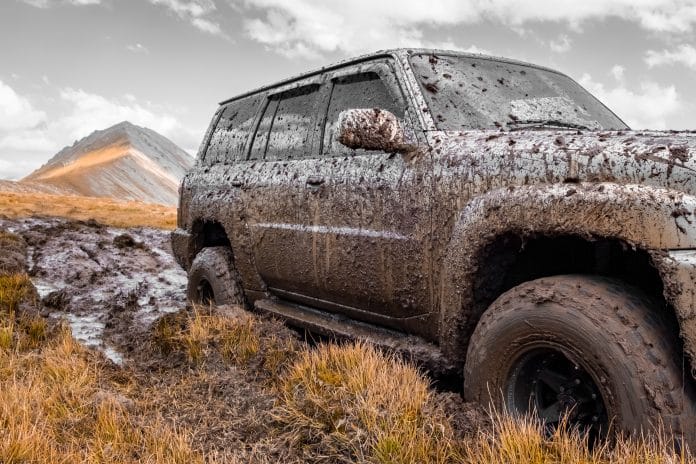

Best Overland Shovel: 3 Off-Road Shovels We’ve Tested for Years
Quick Verdict: After 6+ years of off-road testing, the Krazy Beaver Shovel ($149.99) is our top pick for serious recovery work in hard-packed terrain. The DMOS Delta Shovel ($199) wins for packability at 3.2 lbs and 18.5 inches collapsed. The Tyger Auto 16-in-1 ($129) delivers the best value with 16 built-in tools for budget-minded overlanders. All three outperform hardware store shovels in durability, design, and trail performance.
Last updated: March 2026 | 10 min read
In This Review
- Why Your Off-Road Rig Needs a Dedicated Shovel
- Krazy Beaver Shovel Review (6 Years Tested)
- Tyger Auto 16-in-1 Shovel Review (3 Years Tested)
- DMOS Delta Shovel Review (2 Years Tested)
- Head-to-Head Comparison
- How to Choose the Right Overland Shovel
- Pros and Cons at a Glance
- Final Verdict and Recommendations
- Frequently Asked Questions
Why Your Off-Road Rig Needs a Dedicated Shovel
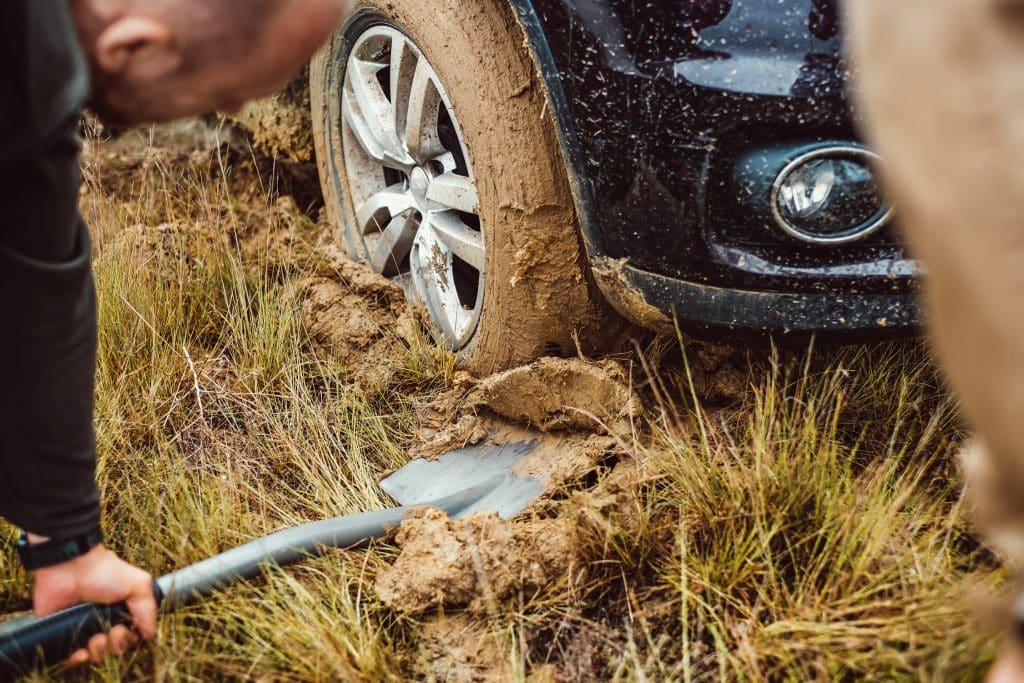
Your recovery gear list probably includes a winch, traction boards, and a kinetic rope. An overland shovel, however? Unfortunately, most people skip it until they’re axle-deep in mud at 9 PM with no cell service.
Here’s the problem: before your traction boards or winch do any good, you often need to move dirt, mud, snow, or rocks out of the way first. That means digging packed mud from wheel wells, trenching water away from a stuck vehicle, and clearing the path in front of your tires before placing recovery boards. As a result, no other tool in your kit handles those jobs.
Beyond recovery, an off road shovel also earns its keep at camp. For instance, leveling a tent pad, digging a fire pit, burying waste in the backcountry, and clearing debris from a trail obstacle. Over six years of trail use, my overland shovel gets pulled out on more trips than my winch.
Why a Hardware Store Shovel Won’t Cut It
The problem with a cheap hardware store shovel is simple: they break. Standard garden shovels use thin steel that bends when you hit a root or pry against a rock. On top of that, the handles snap under lateral pressure. They’re also sized for yard work, not for stowing in a Jeep or strapping to a roof rack. In contrast, a purpose-built off road shovel uses thicker steel (or aircraft-grade aluminum), reinforced handle connections, and compact designs built for vehicle storage. I’ve broken two hardware store shovels on the trail. I’ve never broken any of the three shovels reviewed here.
Krazy Beaver Shovel Review: The Heavy-Duty Workhorse (6 Years Tested)
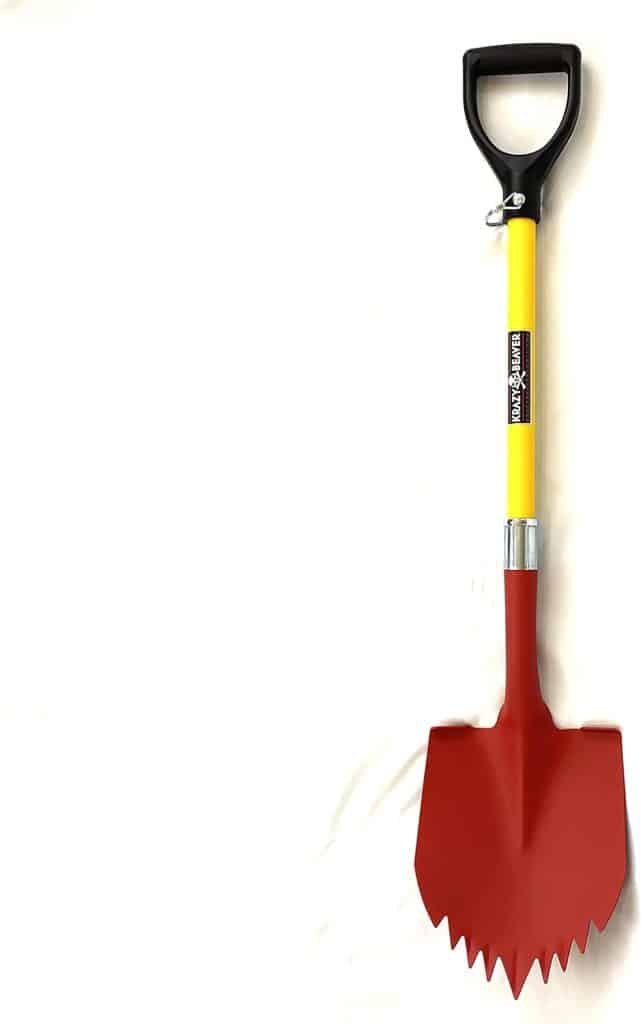
| Specification | Details |
|---|---|
| Blade Material | 13-gauge heat-treated tempered steel |
| Blade Size | 11.5″ x 8.5″ |
| Handle Material | Fiberglass with 14″ reinforcing core |
| Total Length | 40″ (Standard) / 46″ (XL) |
| Weight | 4.6 lbs |
| Blade Edge | Serrated teeth for cutting roots and hardpack |
| Grip | D-grip with hollow storage compartment |
| Made In | USA |
| Amazon Rating | 4.7/5 stars |
| Price | $149.99 |
Available on Amazon
Krazy Beaver Shovel – $149.99
13-gauge tempered steel blade with serrated teeth. Made in the USA. The toughest overland shovel we’ve tested in 6 years of trail use.
The Krazy Beaver has been in my rig for six years. Consequently, it’s the shovel I grab first when things get serious.
Build Quality
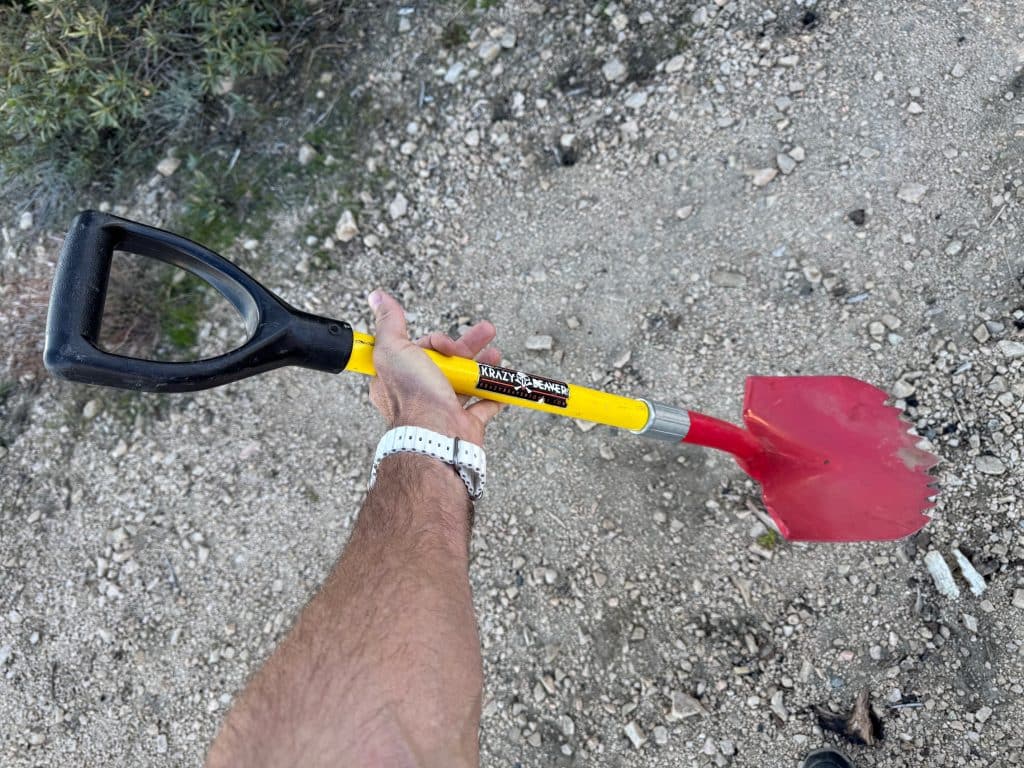
The blade is 13-gauge heat-treated tempered steel, roughly twice as thick as your typical garden shovel. More importantly, the row of teeth along the cutting edge isn’t a gimmick. In fact, those teeth bite into hardpack, frozen ground, and root systems where a flat-edge blade would bounce off. Additionally, the head-to-handle connection uses a 14-inch fiberglass reinforcing core, eliminating the flex you get with wood-handled shovels under heavy prying loads.
Meanwhile, the handle is fiberglass, capped with a D-grip that has a hollow compartment inside for storing small items like matches, a pocket knife, or batteries. Admittedly it’s a small detail, but it shows the kind of thoughtful design running through the entire tool.
Trail Performance
Where the Krazy Beaver separates itself from cheaper options is hard ground performance. I’ve used it to break through sun-baked desert hardpack in Moab, chop through frozen topsoil in the Colorado mountains, and slice through tangled root systems on forest trails in the Pacific Northwest. As a result, the serrated teeth make the initial break-in cut much easier than a standard flat blade.
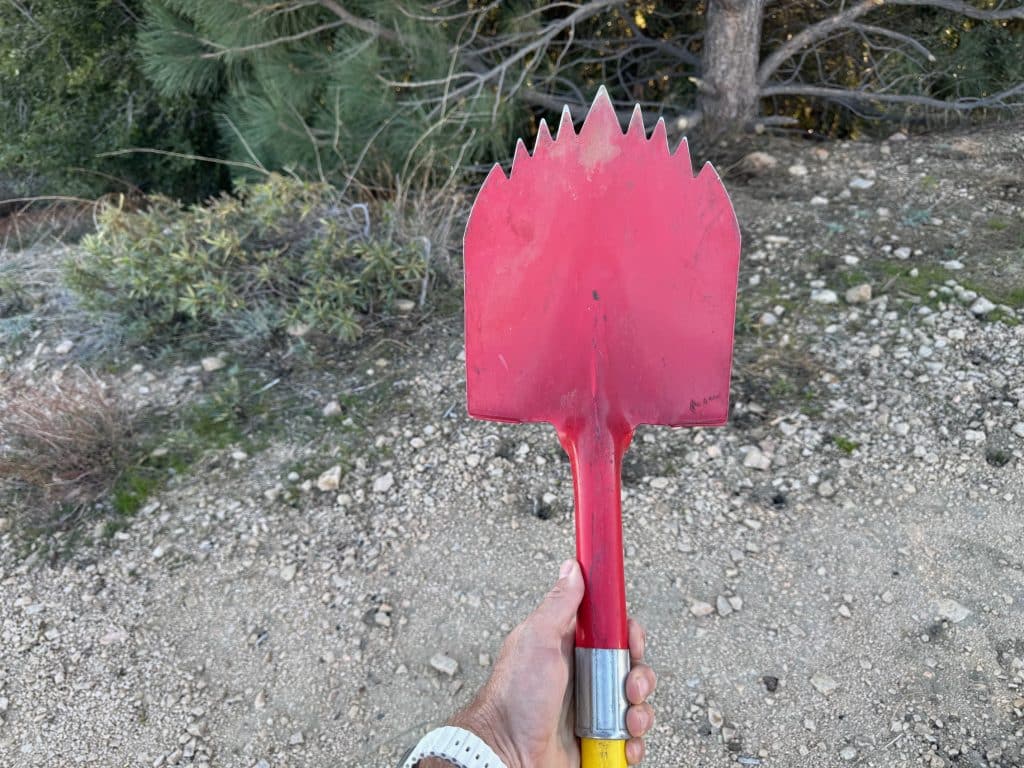
For snow, the blade face is wide enough to move real volume. For example, I’ve cleared paths through 18 inches of packed snow on mountain passes where my rig lost traction. The teeth also slice through icy crust layers a flat blade would ride over.
At 4.6 pounds, it’s the heaviest shovel on this list. Although you’ll feel the weight if you’re backpacking, for vehicle-based overlanding, it’s a non-issue. This shovel lives strapped to my rack or tucked behind the rear seat.
What I’d Improve
Even after six years, I have only two minor complaints. First, the fiberglass handle gets slippery when wet or muddy. Wrapping the shaft with grip tape fixes this for about $3. Second, the 40-inch standard model is a bit short for tall users doing extended digging. The 46-inch XL version solves this, but it costs more and takes up additional space.
Tyger Auto 16-in-1 Multifunctional Shovel Review: Best Budget Multi-Tool (3 Years Tested)
| Specification | Details |
|---|---|
| Blade Material | Military-grade carbon steel |
| Handle Material | Aerospace-grade anodized aluminum tubes |
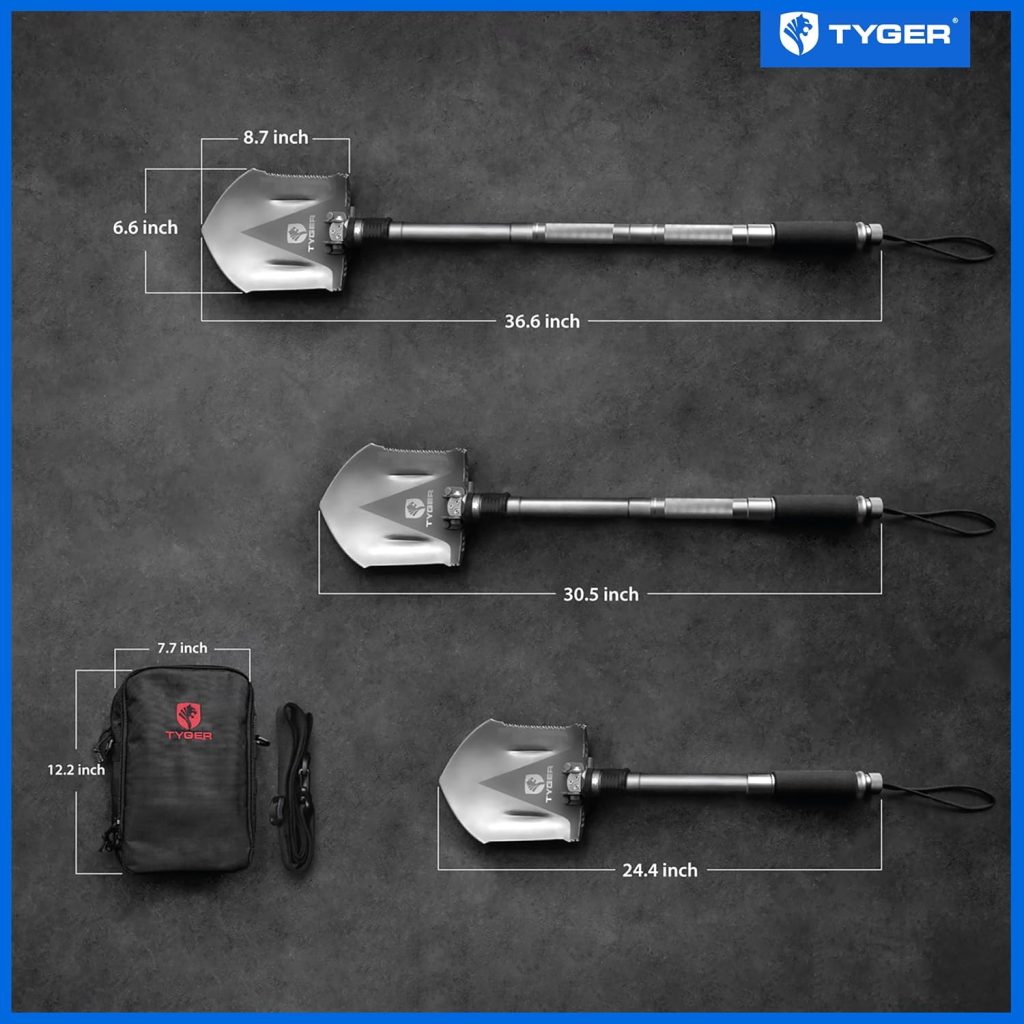
| Functions | 16-in-1 (shovel, hoe, pick, saw, knife, fire starter, bottle opener, whistle, hex wrenches, screwdriver, + more) |
| Mode Switching | Instant slider mechanism (no tools needed) |
| Weight | ~2.5 lbs |
| Design | Folding, compact with carry bag |
| Extension Handle | Sold separately (TG-SV8U3217EH) |
| Amazon Rating | 4.5/5 stars (900+ reviews) |
| Price | $129 |
Available on Amazon
Tyger Auto 16-in-1 Shovel – $129
16 tools in one compact package. Carbon steel blade, folding design, and a carry bag. The best value overland shovel for building your first recovery kit.
I bought the Tyger Auto three years ago as a secondary shovel for my wife’s 4Runner. Since then, it’s become one of the most-used tools in both of our vehicles.
Build Quality
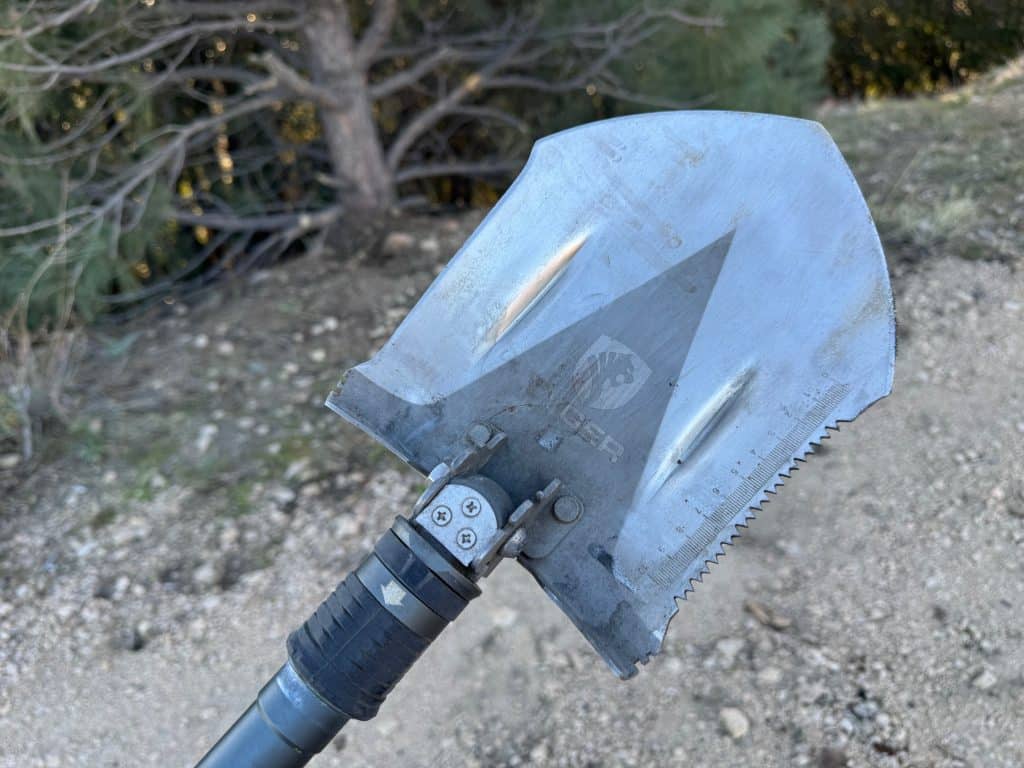
For a multi-tool shovel at $129, the materials are solid across the board. Specifically, the blade is military-grade carbon steel, while the handle tubes are aerospace-grade anodized aluminum. On top of that, the instant switch mechanism lets you pull a slider to change the blade angle in seconds, converting from a standard shovel to a hoe, pick, or flat scraper without any wrenches or bolts.
In total, the 16 functions include: shovel, hoe, pick, saw, knife, fire starter, bottle opener, whistle, hex wrenches, screwdriver, and several emergency tools. Of course, not all 16 see use every trip, but the core ones (shovel, hoe, pick, saw) are genuinely useful on the trail.
Trail Performance
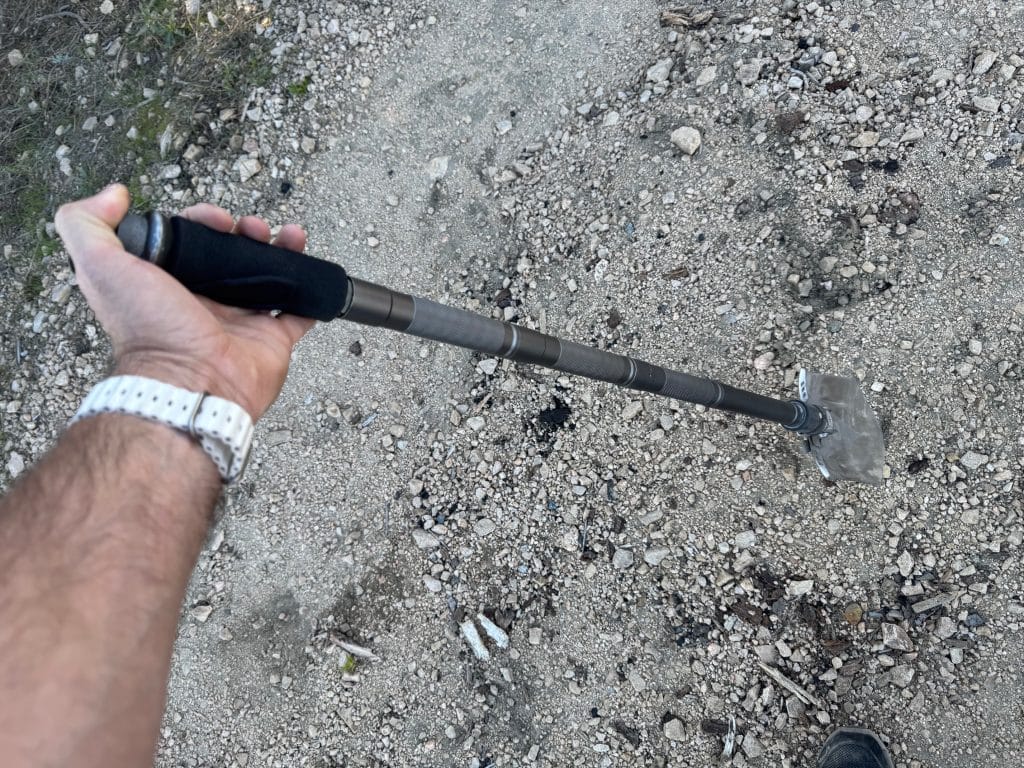
As a digging tool, the Tyger holds its own for light to moderate recovery work. Specifically, I’ve used it to clear mud from wheel wells, dig small trenches for water diversion, and scrape debris off trail obstacles. Because the blade is smaller than the Krazy Beaver, you move less material per scoop. However, the hoe configuration makes up for it when you need to chop into packed ground at an angle.
Similarly, the saw blade along the edge has cut through small branches and roots when clearing a campsite. Likewise, the fire starter has worked reliably every time I’ve tested it. While these aren’t replacements for dedicated tools, they’re solid backups when you don’t want to carry a full toolbox.
Where the Tyger shines brightest, though, is the price-to-capability ratio. At $129, you get a competent shovel plus a dozen emergency tools in a compact package fitting in your glove box. As a result, for off-roaders who want multi-tool versatility without paying $199 for the DMOS, this is a smart purchase.
What I’d Improve
The screwdriver bit holder doesn’t lock securely, so if you’re using the screwdriver function in the field, watch for the bit loosening. Additionally, the handle is shorter than a full-size shovel, meaning more bending during extended digging sessions. Fortunately, Tyger sells an extension handle (TG-SV8U3217EH) separately to fix the reach issue.
DMOS Compact Delta Shovel Review: Best Packable Dirt Shovel (2 Years Tested)
| Specification | Details |
|---|---|
| Blade Material | 16-gauge cold rolled carbon steel (powder-coated) |
| Bracket | 14-gauge carbon steel with 6 oversized aluminum smash rivets |
| Connector | Solid milled 6061 anodized aluminum |
| Shaft Material | 6063 anodized aluminum (telescoping) |
| Grip | Nylon Zytel T-Grip (fiberglass-reinforced) |
| Working Lengths | 24.5″ / 34″ (2 positions) |
| Packed Size | 20″ x 7″ x 3″ |
| Weight | 3.2 lbs |
| Blade Positions | 3 (shovel, hoe, stowed/folded) |
| Made In | North America |
| Warranty | DMOS Limited Lifetime Warranty |
| Price | $199 |
Available on Amazon
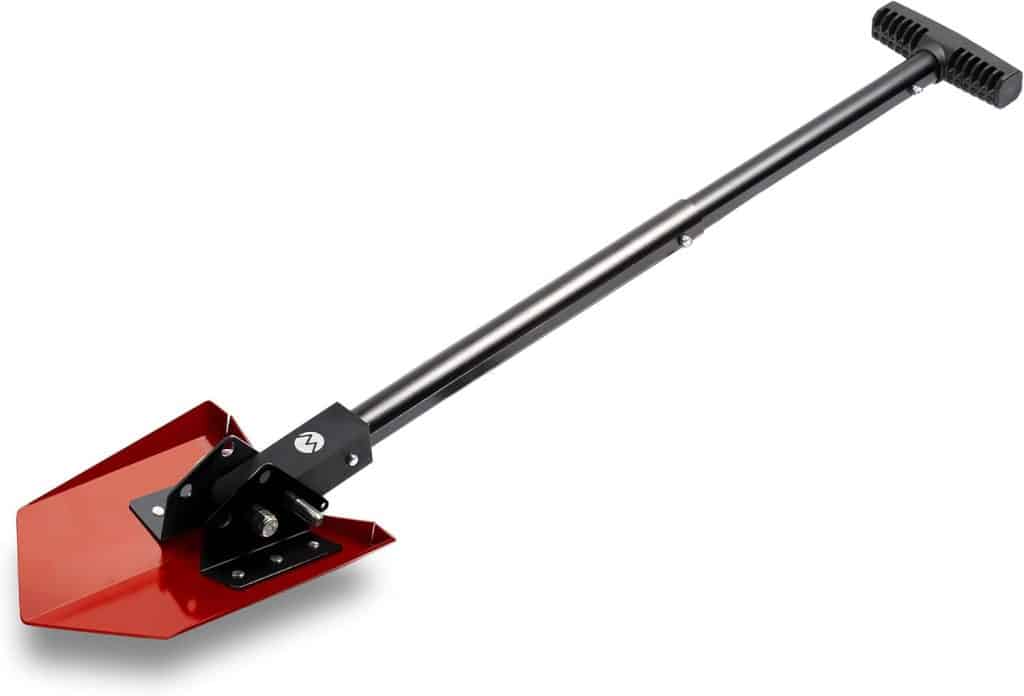
DMOS Compact Delta Shovel – $199
16-gauge carbon steel blade, 3-position design, extends 24.5″ to 34″. Made in North America with a Limited Lifetime Warranty. The best packable dirt shovel we’ve tested.
The DMOS Compact Delta has been in my rotation for two years. It’s built specifically for dirt, clay, and hard ground in a size comparable to a military E-tool.
Build Quality
DMOS built the Compact Delta blade from 16-gauge cold rolled carbon steel with a powder coat finish. For comparison, the Krazy Beaver uses 13-gauge steel, so the DMOS blade is thinner. However, carbon steel provides an excellent strength-to-weight ratio at 3.2 lbs total. The bracket connecting blade to shaft uses 14-gauge carbon steel with six oversized aluminum smash rivets, and the connector is solid milled 6061 anodized aluminum. Underneath, the telescoping shaft is 6063 anodized aluminum topped with a fiberglass-reinforced Nylon Zytel T-grip.
In short, there’s nothing flimsy about this tool. DMOS uses the same premium material mix across their lineup, and the Compact Delta feels solid in hand despite its light weight.
Three-Position Versatility
The blade locks into three positions via a steel spring pin. Position one is a standard shovel for digging. Position two angles the blade into hoe mode for chopping into packed ground, scraping, or pulling soil toward you. Position three folds the blade flat against the shaft for storage or vehicle mounting.
Switching between positions takes seconds without tools. On the trail, I’ve used shovel mode to clear wheel wells and trench water away from a stuck vehicle. Swapping to hoe mode broke through packed clay the flat blade would bounce off. This flexibility sets the Compact Delta apart from single-position shovels.
Size and Packability
The shaft telescopes between two working lengths: 24.5 inches (compact) and 34 inches (extended). At full extension, 34 inches is shorter than the Krazy Beaver’s 40 inches, so you sacrifice some digging leverage. However, the Compact Delta packs down to 20″ x 7″ x 3″ with the blade folded into stow position. An included foot pad gives you extra leverage when stomping the blade into hard ground, partially offsetting the shorter shaft length.
At 20 inches packed, this shovel slides behind a rear seat or fits inside a cargo drawer. It also mounts to a MOLLE panel with a DMOS vehicle mount (sold separately). For rigs with tight storage, the Compact Delta offers dirt-digging capability the Tyger Auto matches in size but not in build quality.
What I’d Improve
The 34-inch maximum length is a compromise. For extended digging sessions, you’ll feel the shorter handle in your back. The full-size DMOS Delta extends to 48 inches and solves this, but it’s larger and heavier. Additionally, the carbon steel blade needs occasional oiling to prevent surface rust if you store the shovel wet. A quick wipe-down after muddy trail use adds 30 seconds to your routine, but it’s worth noting for anyone used to aluminum blades requiring zero maintenance.
Head-to-Head Comparison: Best Overland Shovels
| Feature | Krazy Beaver | Tyger Auto 16-in-1 | DMOS Delta |
|---|---|---|---|
| Price | $149.99 | $129 | $199 |
| Weight | 4.6 lbs | ~2.5 lbs | 3.2 lbs |
| Blade Material | 13-gauge tempered steel | Carbon steel | 6061 aluminum |
| Handle | Fiberglass, fixed | Aluminum, folding | Aluminum, telescoping |
| Max Length | 40″ (46″ XL) | ~24″ | 57″ |
| Packed Size | 40″ (fixed) | Folds compact | 18.5″ x 9″ x 2.5″ |
| Multi-Tool | No | Yes (16 functions) | No |
| Hard Ground | ★★★★★ | ★★★☆☆ | ★★☆☆☆ |
| Snow/Sand | ★★★★☆ | ★★★☆☆ | ★★★★★ |
| Packability | ★★☆☆☆ | ★★★★★ | ★★★★★ |
| Made In | USA | Imported | USA |
| Best For | Heavy recovery, hardpack | Budget kit, multi-tool | Snow, sand, compact rigs |
How to Choose the Right Overland Shovel
Choose the Krazy Beaver if: Your trails run through rocky, hard-packed, or frozen terrain and you need a shovel that won’t bend or break under heavy use. It’s ideal if you have roof rack or exterior mounting space. Above all, this is a buy-once, keep-forever tool made in the USA.
Choose the Tyger Auto if: You’re building your first recovery kit and want maximum utility per dollar. In addition, multi-tool functionality matters to you, and you need something compact enough for a daily driver doubling as a trail vehicle.
Choose the DMOS Delta if: Weight and packability top your priority list. Snow or sand are your most common terrain challenges. On top of that, this shovel stows easily inside the cabin or in a cargo drawer, and it delivers premium materials with USA-made build quality.
Pros and Cons at a Glance
Krazy Beaver Shovel
✔ Pros
- 13-gauge tempered steel survives 6+ years of hard trail use
- Serrated teeth cut through hardpack, roots, and ice
- 14″ fiberglass reinforcing core eliminates handle flex
- Hollow D-grip stores small emergency items
- Made in the USA
✘ Cons
- Heaviest option at 4.6 lbs
- Fixed 40″ length limits storage options
- Fiberglass handle gets slippery when wet
- Standard model a bit short for tall users
Tyger Auto 16-in-1
✔ Pros
- 16 built-in tools for $129
- Instant slider mode-switching (no tools needed)
- Lightest option at ~2.5 lbs
- Folds compact enough for a glove box
- 900+ Amazon reviews averaging 4.5 stars
✘ Cons
- Smaller blade moves less material per scoop
- Screwdriver bit holder doesn’t lock securely
- Short handle requires more bending during extended digging
- Not built for heavy prying or hard-ground recovery
DMOS Delta Shovel
✔ Pros
- Packs to 18.5″ x 9″ x 2.5″ (fits anywhere)
- Telescopes to 57″ for full-size leverage
- 3.2 lbs with 6061 aluminum blade
- 4.9/5 Amazon rating (140+ reviews)
- Made in the USA
✘ Cons
- No spade point or teeth for hard-packed ground
- Open sidewall gaps let loose material spill
- Most expensive option at $199
- Aluminum blade not suited for prying against rocks
Final Verdict and Recommendations
After testing all three of these overland shovels for 2-6 years on trails across the western U.S., each one has earned a permanent spot in my gear rotation. Ultimately, they serve different roles, and the right pick depends on how and where you wheel.
Which Shovel Wins for Each Use Case
The Krazy Beaver is the workhorse. If you’re buying one overland shovel and you need it to perform in the worst conditions (frozen ground, tangled roots, heavy recovery), this is the one. After six years of hard use, mine still looks ready for another six. It’s the shovel I hand someone when they’re stuck and need to dig out fast.
Next up, the Tyger Auto 16-in-1 is the smart budget pick. At $129, it packs more utility into a smaller footprint than anything else in this price range. It won’t outperform the Krazy Beaver in heavy recovery, but it gives new overlanders a competent shovel plus emergency tools at a lower price. As a result, it lives in my wife’s 4Runner as an all-in-one emergency tool.
Finally, the DMOS Compact Delta is the packability champion. If storage space is your biggest constraint, or if you primarily encounter dirt, clay, and hard-packed ground, the Compact Delta’s 20-inch packed size and 3.2-pound weight are hard to beat. Premium materials and North American manufacturing justify the $199 price for a shovel built to last years.
My recommendation: If your budget allows, carry two. I run the Krazy Beaver as my primary (mounted externally on my rack) and the DMOS Compact Delta as my backup (stowed inside the cabin). Regardless of which you choose, any one of these three is a significant upgrade over a hardware store shovel, and all three are available on Amazon with Prime shipping.
Our Top Picks on Amazon
Ready to Upgrade Your Recovery Kit?
All three shovels are available with Prime shipping. Click below to check current pricing and read verified buyer reviews.
Frequently Asked Questions About Overland Shovels
What is the best overland shovel for off-road recovery?
For pure recovery work in hard-packed terrain, the Krazy Beaver Shovel is the strongest option. Its 13-gauge tempered steel blade with serrated teeth breaks through ground that lighter shovels won’t penetrate. The DMOS Compact Delta is a strong second choice for hard ground, with its 16-gauge carbon steel blade and three-position design letting you switch between shovel and hoe mode on the fly.
Is a specialized off road shovel worth the money over a hardware store shovel?
Yes. Purpose-built overland shovels use thicker steel or aircraft-grade aluminum, reinforced handle connections, and compact vehicle-friendly designs. In comparison, standard garden shovels use thin steel that bends when prying against rocks, and the handles snap under lateral pressure. Because of this, the durability difference is significant when you’re 50 miles from pavement.
Should I carry a shovel if I already have traction boards?
A shovel and traction boards solve different parts of the same problem. Specifically, you’ll often need to dig packed mud or snow from around your tires before placing traction boards. The shovel clears the path; then the boards provide the grip surface. Therefore, carrying both gives you the best chance of self-recovery without a winch.
What size overland shovel do I need?
For vehicle-based overlanding, a 36-48 inch shovel gives you enough leverage for serious digging without being too long to store. If you frequently do extended digging (campsite leveling, trench work), go longer. Alternatively, if storage space is tight, a collapsible option like the DMOS Compact Delta (packs to 20 inches) or the Tyger Auto (folds compact) makes more sense.
How do I mount an overland shovel on my vehicle?
Generally, the most common methods are roof rack mounts (Quick Fist clamps or dedicated shovel brackets), tailgate-mounted MOLLE panels, and interior mounts behind the rear seat. The Krazy Beaver works best with external mounts due to its fixed 40-inch length. The DMOS Compact Delta and Tyger Auto both fit inside cargo drawers or behind seats without external mounting. DMOS also sells a dedicated vehicle mount separately for MOLLE panel setups.
Are cheap Amazon shovels worth buying for off-roading?
Generic sub-$20 shovels tend to use thin steel and weak handle joints that fail under heavy trail use. The Tyger Auto at $129 is the lowest price point we recommend for an overland shovel. Because it uses carbon steel and aerospace aluminum, it delivers significantly more durability than bottom-shelf options while staying budget-friendly.