


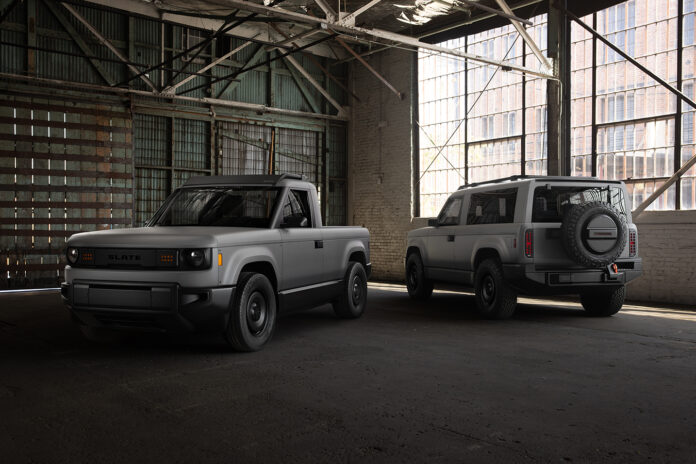

Quick Facts:
- Vehicle: Slate EV truck (Blank Slate base trim)
- Range (stated): 150 miles standard pack, 240 miles extended pack
- Drivetrain: Single rear motor, 201 hp, rear-wheel drive only
- Towing (stated): About 1,000 lb
- Payload (stated): About 1,400 lb
- Bed: 5 ft, compact two-door body
- Price (target): Mid-twenties, roughly $25,000 to $27,000
- Power export: No vehicle-to-load capability confirmed
- Best for: Budget overlanders sticking to graded roads and established camps
6 min read
In This Article
- Slate EV Truck Overview: A New Budget Option
- Key Specs at a Glance
- Range and Off-Grid Reality
- Where the Slate EV Truck Falls Short Off-Road
- The Blank Slate Build-Out
- Powering Camp Without Onboard Export
- Slate vs. Ford Maverick: Which Budget Rig?
- Pros and Cons
- Final Verdict
- Frequently Asked Questions
Slate EV Truck Overview: A New Budget Option
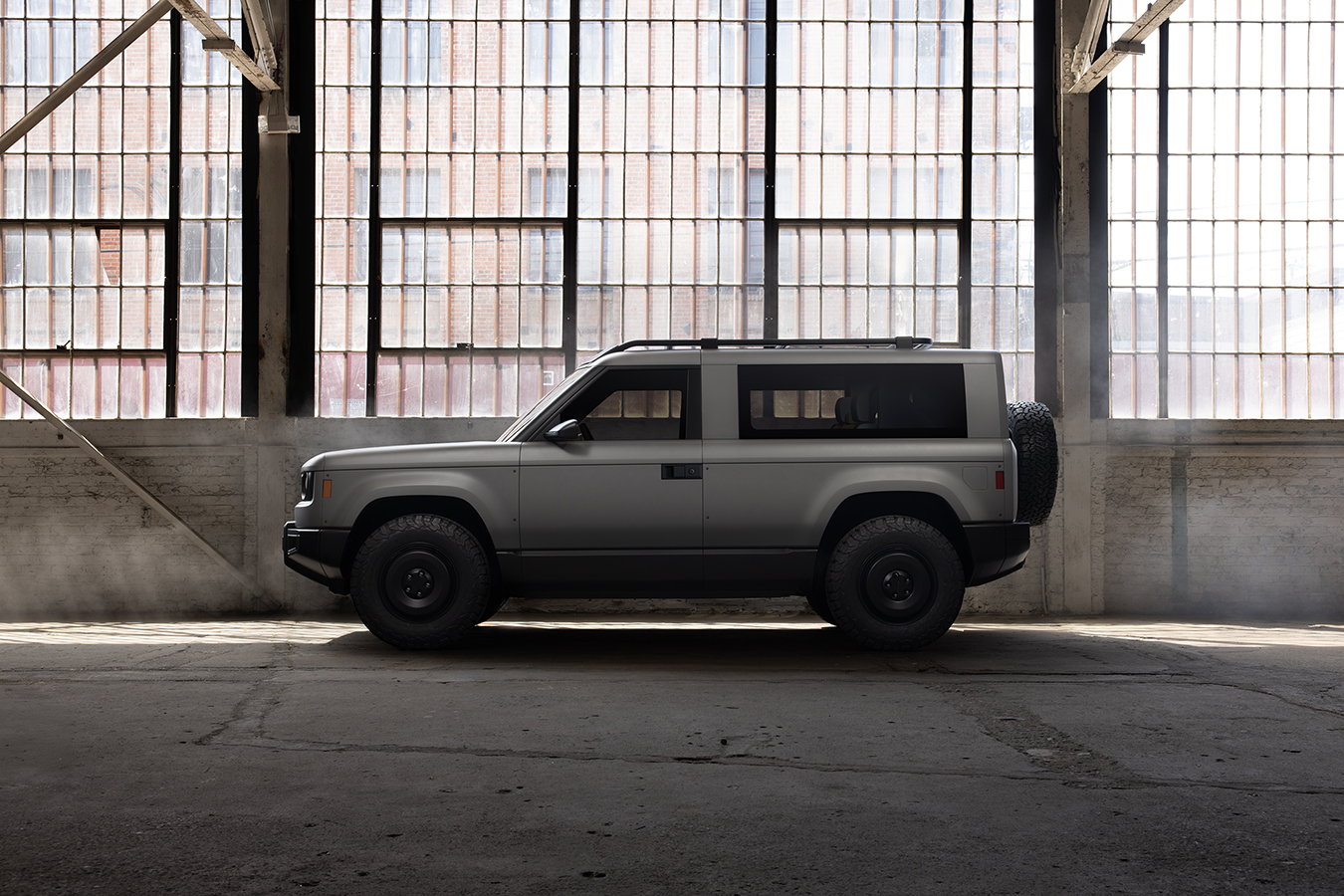
The Slate EV truck has overlanders curious for one reason: price. Slate Auto first floated a sub-$20,000 sticker, though the figure assumed the $7,500 federal EV tax credit. Because Congress ended the credit, Slate now guides buyers toward the mid-twenties, roughly $25,000 to $27,000 by current estimates. Final pricing arrives June 24, 2026, when pre-orders open with a $300 non-refundable deposit.
So you get a bare-bones, American-built slate electric truck aimed squarely at affordability. According to Slate Auto, the base model, called the Blank Slate, ships with crank windows, no infotainment screen, and unpainted composite panels. Moreover, Slate has booked more than 150,000 refundable reservations, and Jeff Bezos sits among its backers. Deliveries start late in 2026.
For budget-minded overlanders, the appeal is obvious. A simple, cheap, fixable truck fits the spirit of light-duty adventure travel. However, the spec sheet sets hard limits. This rig was built for commuters and tradespeople first, not for remote tracks. Therefore, the honest question is not whether it looks the part, but whether the numbers support real off-grid use.
Key Specs at a Glance
All figures below come from Slate Auto and early coverage. Because the truck remains unreleased, treat every number as preliminary and subject to change before deliveries begin.
| Specification | Details (stated) |
|---|---|
| Range (standard pack) | 150 miles, 52.7 kWh |
| Range (extended pack) | 240 miles, 84.3 kWh |
| Motor | Single rear, 201 hp, 195 lb-ft |
| Drivetrain | Rear-wheel drive only |
| Towing capacity | About 1,000 lb |
| Payload | About 1,400 lb |
| Length / bed | 174.6 in overall, 5 ft bed |
| Charging | NACS port, 120 kW DC, 20-80% in ~30 min |
| Price (target) | Mid-twenties, ~$25,000 to $27,000 |
Range and Off-Grid Reality
Before you point any electric rig at the backcountry, you need to respect range. The slate truck range tops out at 240 miles with the extended pack, and the standard pack covers only 150 miles. Those numbers reflect EPA-estimated cycles on pavement. Real overlanding erodes them quickly.
Off-pavement driving punishes efficiency. Soft sand, loose gravel, steep grades, and low tire pressure all raise energy use. Cold mountain nights sap the battery further. Add a roof rack or a loaded bed, and aerodynamic and weight penalties stack up. Consequently, a stated 150 miles will cover noticeably fewer real trail miles, so plan conservatively.
Charging compounds the challenge. Remote staging areas rarely offer fast chargers, so your usable radius is half the range, since you must return to a charger. For this reason, smart route planning matters more on an EV than on a diesel. Our guide to planning remote overland routes walks through mapping fuel and charge points before you leave pavement.
The extended pack is close to mandatory for this use. Even then, treat the Slate as a basecamp-and-day-trip platform. Drive out, set up camp within your safe radius, and explore from there. Buyers chasing serious mileage between charges should study a proper long-range touring setup first.
Where the Slate EV Truck Falls Short Off-Road
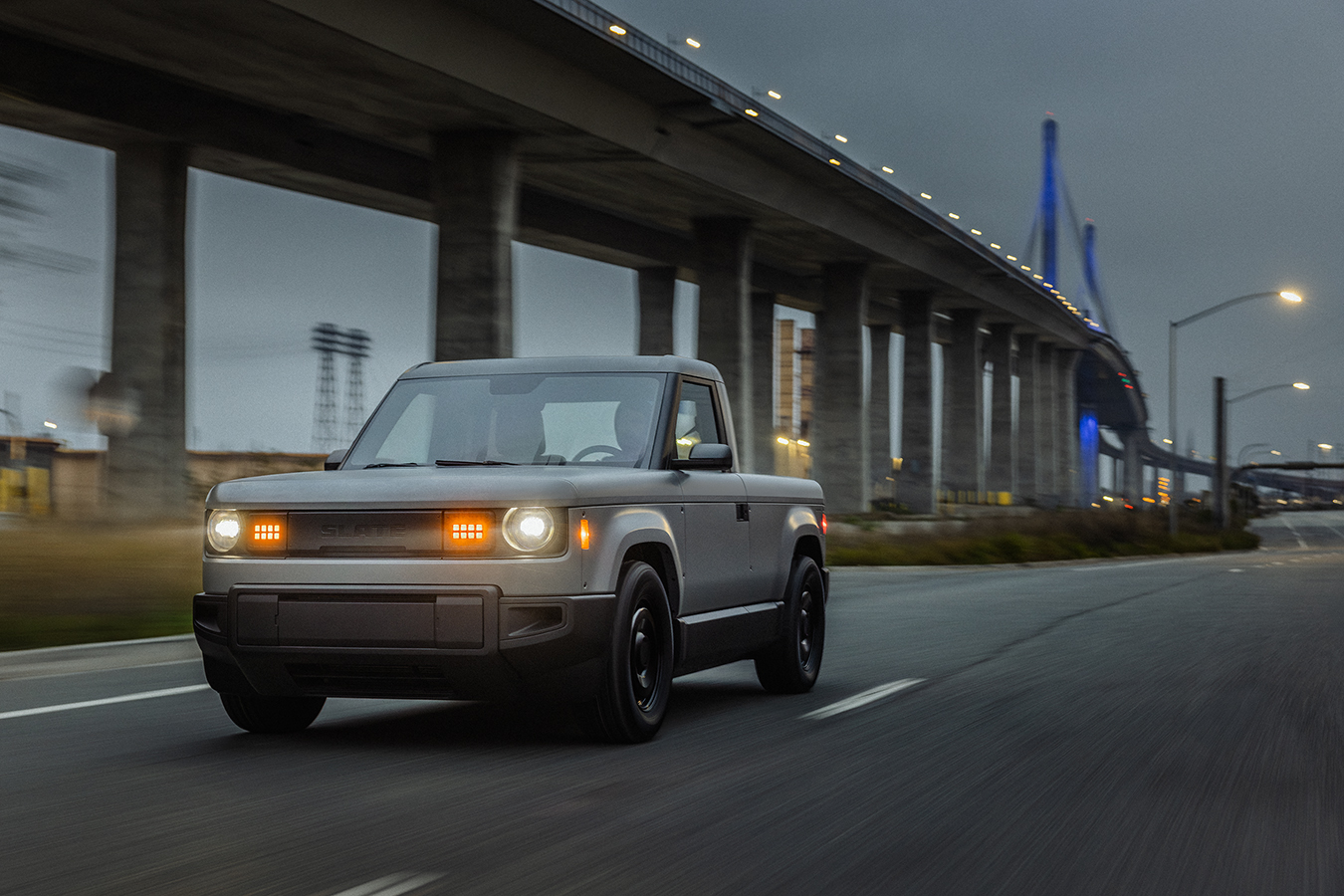
Drivetrain is the headline limitation. The Slate uses a single rear motor and offers no all-wheel-drive option at launch. Slate itself has said extreme off-roading is out of the question. Therefore, rock crawling, deep ruts, and technical climbs are off the table from day one.
Rear-wheel drive still handles plenty, though. Graded forest service roads, gravel, hardpack, and established campground spurs suit it well. A rear locker or good all-terrain tires would help traction on loose surfaces. Slate lists a suspension lift kit among its accessories, which raises clearance for rougher two-tracks.
Towing is the other ceiling. The slate truck towing capacity sits at roughly 1,000 lb, so it will not pull most teardrop or off-road trailers, since many exceed 1,000 lb empty. Instead, a small utility trailer or a lightweight cargo box stays within limits. Payload is healthier at about 1,400 lb, so bed storage and rooftop gear remain workable for a minimalist kit.
The Blank Slate Build-Out
Slate sells the truck as a starting point, not a finished product. The company plans more than 100 accessories, including a roughly $5,000 SUV conversion kit, wheels, wraps, power windows, and the lift kit mentioned earlier. This à la carte model mirrors how overlanders build rigs.
Smart buyers prioritize. Tires, recovery points, and storage come before cosmetic wraps. Our breakdown of overland truck accessories worth installing first applies cleanly here, because the Slate forces you to choose your spend deliberately. Every add-on also pushes the price above the headline figure.
Keep weight in mind during the build. Each accessory adds mass, and mass directly cuts range on an EV. A heavy bumper or a packed roof rack trades miles for capability. For a budget electric truck with limited range, a careful build pays off on every trip.
Powering Camp Without Onboard Export
Many shoppers assume an EV doubles as a giant battery for camp. The Slate does not confirm any vehicle-to-load or bidirectional power export. No bed outlets or export specs appear in current materials. Until Slate states otherwise, do not count on the truck to run your fridge or lights.
This gap matters for off-grid trips. Without export, you still need a dedicated power system for camp loads. A quality portable power station handles fridges, lighting, and device charging without draining the drive battery. Solar input keeps the station topped up across multi-day stays.
There is also a practical upside. Keeping camp power separate protects your range, because every watt pulled for camp would otherwise cut driving miles. Pairing the Slate with off-grid gear is the right approach. Our roundup of off-grid overlanding gear covers the pieces worth carrying.
Slate vs. Ford Maverick: Which Budget Rig?
The natural rival is the Ford Maverick, the budget compact truck many overlanders already trust. The Maverick offers an available all-wheel-drive system, tows up to 4,000 lb when equipped, and refuels in minutes anywhere. For remote, trailer-towing trips, those advantages are decisive.
The slate electric truck answers with lower running costs and dead-simple maintenance. No oil changes, fewer moving parts, and cheap home charging favor the budget electric truck over a lifetime. Where the Maverick wins on capability and reach, the Slate wins on operating cost and repairability for close-to-home adventures.
Choose by terrain and distance. Pick the Maverick for long hauls, trailer towing, and rough trails. Pick the Slate for short-radius, light-duty trips near charging, especially if low cost and home charging top your priorities.
Pros and Cons
Pros
- Low target price in the mid-twenties
- Simple, fixable design with fewer parts to fail
- Healthy ~1,400 lb payload for a compact truck
- Modular accessory system suits custom builds
- NACS port with 120 kW DC fast charging
- Cheap home charging and low running costs
Cons
- Rear-wheel drive only, no AWD option
- Range of 150 to 240 miles shrinks off-pavement
- Towing limited to about 1,000 lb
- No confirmed power export for camp loads
- Accessories push price well above the base figure
Final Verdict
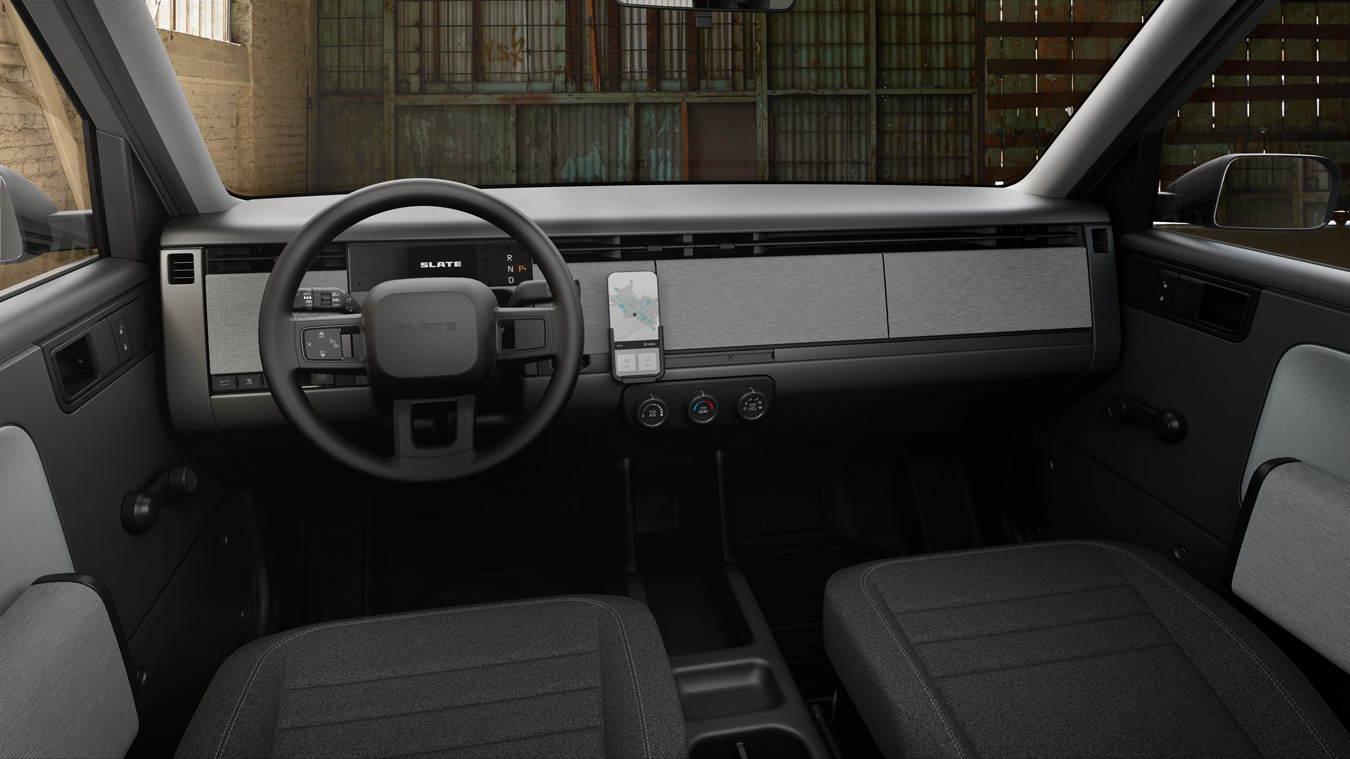
The Slate EV truck suits one overlander well: the budget-focused weekend explorer who stays near pavement and charging. Its biggest strength is cost, both upfront and over years of cheap, low-maintenance ownership. For graded roads, gravel, and established camps, the formula works.
The trade-offs are real, though. Rear-wheel drive, a 1,000 lb tow rating, and a real-world range under 240 miles rule out remote expeditions and trailer hauling. Overlanders who tow teardrops or tackle technical trails should look elsewhere. The truck rewards restraint, not ambition.
On value, the Slate makes sense only if it lands in the promised mid-twenties after the accessories you truly need. Add a lift, better tires, and an extended pack, and the price climbs fast. Budget the full build, not the headline number.
For most serious overlanders, a Ford Maverick remains the more flexible budget pick today. Yet for a specific buyer chasing the cheapest path into light-duty electric adventure, the Slate earns a real look once final pricing and range testing arrive.
Frequently Asked Questions
How much will the Slate truck cost?
Slate guides toward the mid-twenties, roughly $25,000 to $27,000. An earlier sub-$20,000 figure assumed the now-ended $7,500 federal EV tax credit. Final pricing arrives June 24, 2026, when pre-orders open with a $300 non-refundable deposit.
How far does the Slate truck go on a charge?
The standard pack targets 150 miles and the extended pack targets 240 miles. Those stated figures reflect pavement test cycles. Off-pavement driving, cold weather, and heavy loads reduce real slate truck range noticeably, so plan around the lower end.
Does the Slate truck have AWD or four-wheel drive?
No. The Slate uses a single rear motor and rear-wheel drive only, with no all-wheel-drive option announced at launch. Slate has said extreme off-roading is out of the question, so the truck fits graded roads rather than technical trails.
What is the Slate truck’s towing capacity?
Slate states about 1,000 lb. The slate truck towing capacity rules out most off-road trailers and teardrops, since many weigh more than 1,000 lb empty. A small utility trailer stays within the limit.
Will the Slate truck power camp gear?
Not based on current information. Slate has not confirmed any vehicle-to-load or power-export capability. For off-grid camp loads, plan to carry a separate portable power station rather than relying on the truck battery.
When does the Slate truck come out?
Pre-orders open June 24, 2026, and first deliveries are expected late in 2026. Because production is ramping, early delivery windows depend on reservation timing and final configuration choices.