


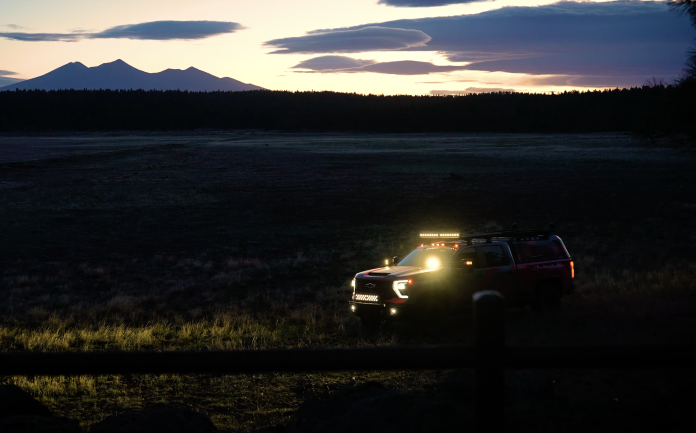

Quick Verdict: Amber vs white off-road lights is a question of physics, not preference. Amber (2,700K-3,000K) cuts through dust, fog, and snow with 590-625nm wavelengths too long to scatter off airborne particles. White (5,000K-6,500K) delivers 10-15% more raw lumens, making it superior on clear nights at speed. The smartest trail setup uses both: white for primary forward lighting and amber for fog-zone and peripheral conditions.
Last updated: March 2026 | 10 min read
In This Article
- Amber vs White Off-Road Lights: The Science Behind the Debate
- Key Specs at a Glance
- Wavelength Science: Why Color Temperature Changes Everything
- Eye Physiology: The Real Reason Amber Works at Night
- Condition-by-Condition Breakdown: When Each Color Wins
- The Lumen Trade-Off: What You Lose with Amber
- Hybrid Lighting Strategy: Running Both Colors on Your Rig
- Amber vs White: Side-by-Side Comparison
- Pros and Cons
- Final Verdict
- Frequently Asked Questions
Amber vs White Off-Road Lights: The Science Behind the Debate
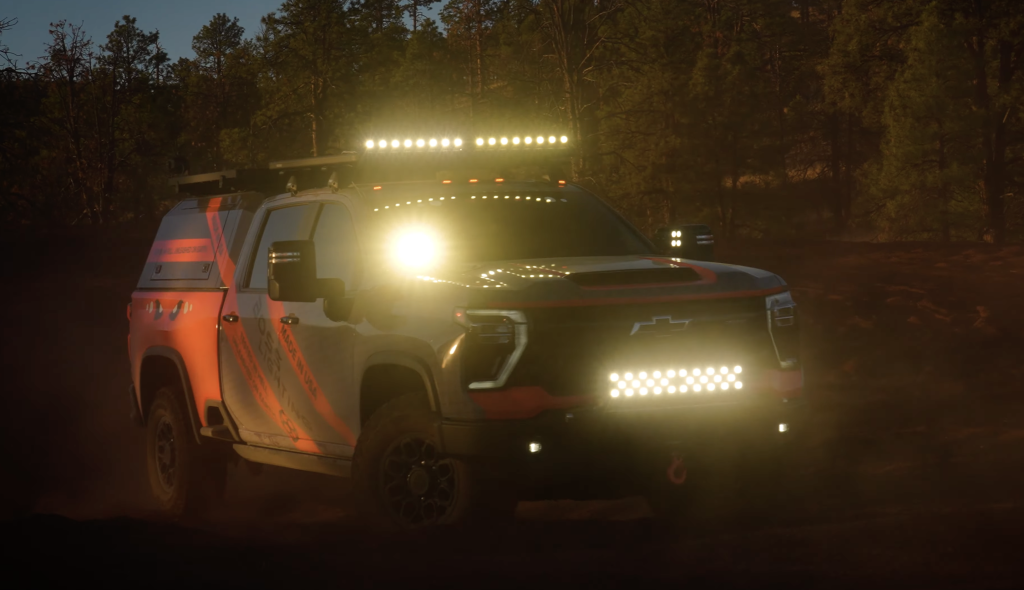
The amber vs white off-road lights debate shows up in every overland forum, and most of the answers get the science wrong. Conventional wisdom says amber “reflects less off fog particles.” However, the real explanation involves your eyes, not the particles. The physics of rod photoreceptor sensitivity (peaking around 498nm in the blue-green range) shows the advantage comes from how human photoreceptors respond to different wavelengths at night.
Here is what the data tells us: amber light operates in the 590-625 nanometer wavelength range, while white LED light concentrates output in the 450-495nm blue spectrum before broadening across visible wavelengths. However, your eyes process these differently after dark. Because night vision relies heavily on rod photoreceptors (peaked sensitivity in the blue-green range), white light makes airborne particles like dust, snow, and rain droplets hyper-visible and distracting. In contrast, amber light sidesteps this rod sensitivity, reducing perceived glare while maintaining usable trail visibility.
Consequently, this distinction matters for every off-roader weighing amber lights against white lights. Your decision affects your ability to see the trail, your eye fatigue over multi-hour night runs, and your safety in low-visibility conditions. Below, we break down the specific data so you know exactly which color to bolt onto your bumper.
Key Specs at a Glance
| Specification | Amber Lights | White Lights |
|---|---|---|
| Color Temperature | 2,700K – 3,000K | 5,000K – 6,500K |
| Wavelength Range | 590 – 625nm | 450 – 700nm (peak 450-495nm blue) |
| Lumen Output (vs. white baseline) | ~85% (15% reduction from amber lens) | 100% baseline |
| Best Conditions | Fog, dust, rain, snow | Clear night, high-speed trails |
| Eye Fatigue Impact | Lower fatigue (reduced blue light) | Higher fatigue over extended use |
| Legal Status (U.S.) | Legal in all 50 states | Legal in all 50 states |
| Historical Precedent | France mandated yellow headlights until 1993 | U.S. standard since FMVSS 108 |
Featured Partner
Boss Lighting: Amber and White LED Configurations
Boss Lighting offers both amber and white LED configurations across their full product lineup. Every unit ships with CNC-machined 6061 aluminum housings, patented cooling technology, and a limited lifetime warranty.
Wavelength Science: Why Off-Road Light Color Temperature Changes Everything
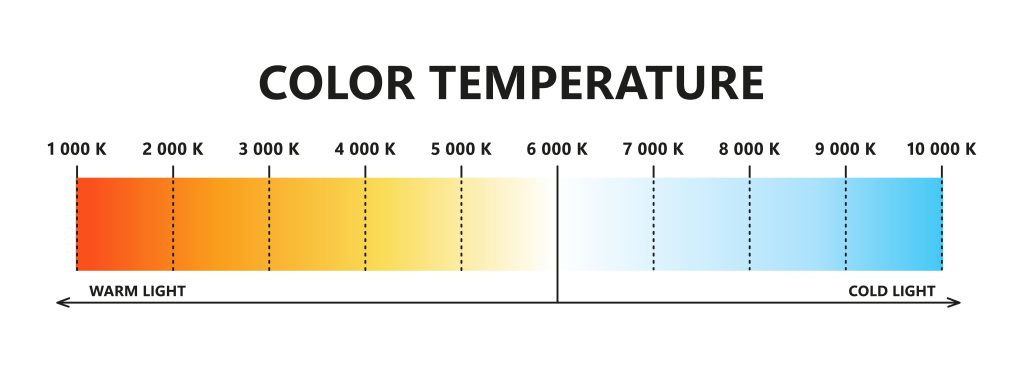
Color temperature, measured in Kelvin (K), determines the visible spectrum your light emits. Amber off-road lights operate between 2,700K and 3,000K, producing wavelengths in the 590-625nm range. White LEDs run between 5,000K and 6,500K, with significant output in the 450-495nm blue range. This difference in wavelength is the foundation of the amber vs white off-road lights decision.
Rayleigh scattering explains part of the story. Shorter wavelengths (blue end of the spectrum) scatter more when they hit small airborne particles. This is the same physics explaining why the sky appears blue: sunlight’s shorter blue wavelengths scatter in all directions off atmospheric molecules. When your 6,000K white LED bar hits a cloud of trail dust, those short blue wavelengths scatter off the particles and bounce back toward your eyes. As a result, a bright, washed-out wall of reflected light forms in front of your windshield.
In contrast, amber wavelengths (590-625nm) are long enough to pass through the same particles with significantly less scattering. Consequently, amber light penetrates fog, dust, and precipitation more effectively. France recognized this advantage decades ago and mandated selective yellow headlights on all vehicles from 1936 until EU harmonization ended the requirement in 1993. Those 57 years of real-world data confirmed what the physics predicts: longer wavelengths perform better in adverse visibility conditions.
Eye Physiology: The Real Reason Amber Works at Night
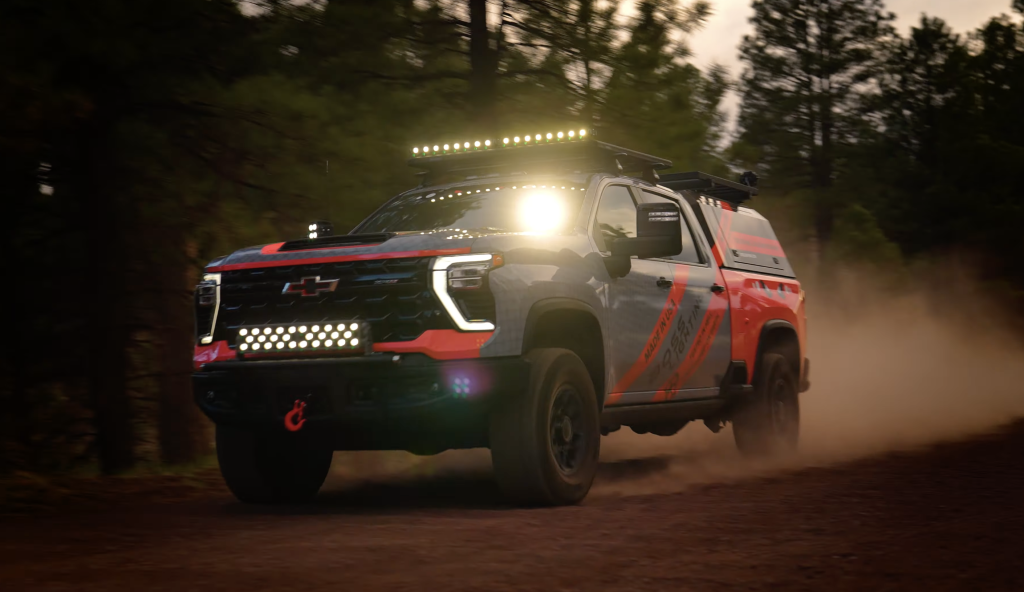
The wavelength story explains scattering, but your eyes tell the rest. Researchers at the Light and Health Research Center at Mount Sinai’s Icahn School of Medicine study how different light spectra affect human vision and alertness. Their findings show the amber vs white off-road lights choice is as much about biology as physics.
Your eyes use two types of photoreceptors: rods and cones. During daylight, cones handle color vision and detail, with peak sensitivity in the green-yellow range (around 555nm). After dark, however, rods take over for low-light vision. Rod photoreceptors peak in the blue-green range (around 498nm), which means they respond strongly to the blue wavelengths in white LED output.
Why Rod Sensitivity Creates the Glare Problem
When white light hits airborne particles (dust, rain, snow), those particles become visible to your rod-sensitive night vision. Consequently, your brain processes each illuminated particle as visual information, creating a “wall” of bright points between you and the trail. This is not a light reflection problem alone. Instead, your eyes are biologically wired to detect those particles when blue wavelengths activate rod photoreceptors.
Amber light (590-625nm) sits well above the rod sensitivity peak. As a result, your rods respond less aggressively to illuminated particles, and your brain receives less distracting visual noise. The trail surface and obstacles remain visible while airborne particles fade into the background. Similarly, this explains why amber lights cause less eye fatigue during extended night driving: reduced rod stimulation means your visual processing system works less hard, keeping you alert longer behind the wheel.
Condition-by-Condition Breakdown: When Each Color Wins
Knowing the science is useful, but trail conditions dictate the decision. Below is a specific breakdown of when amber outperforms white, and when white takes the lead.
Conditions Where Amber Dominates
Dust: Desert and dirt trail driving kicks up fine particulate constantly. Amber’s long wavelengths pass through dust clouds with minimal scattering, giving you 15-30 feet of additional usable visibility compared to white in heavy dust. Moreover, this advantage grows on group runs where the lead vehicle’s dust cloud hangs in the air for trailing rigs.
Fog: Dense fog turns white light into a blinding wall. At the same wattage, amber penetrates fog with noticeably less backscatter because water droplets scatter blue wavelengths at a higher rate. As a result, early morning mountain trail departures and coastal overland routes benefit significantly from amber fog-zone lighting.
Rain and Snow: Similarly, both precipitation types create millions of reflective surfaces between your bumper and the trail. White light illuminates every raindrop and snowflake, overwhelming your night-adapted vision. Amber reduces this noise, letting your eyes focus on the road surface and obstacles. Notably, snow conditions show the largest improvement because snowflakes are highly reflective across all angles.
Conditions Where White Dominates
Clear Night at Speed: On open desert roads, dry lake beds, or well-maintained forest service roads where dust is minimal, white LEDs deliver superior range. The 10-15% lumen advantage translates to meaningful distance visibility at speeds above 35 mph, where reaction time depends on seeing obstacles early.
Technical Trail Work: Rock crawling and slow-speed technical sections benefit from white light’s broader color rendering. For instance, distinguishing between rock types, reading terrain texture, and spotting trail markers is easier under white illumination because cones (color-sensitive) contribute more at closer range and higher brightness levels.
Featured on Boss Lighting
Excel Cube 4 Ditch Light Package
Mount amber ditch lights at bumper height for fog-zone coverage, paired with your primary white bar for a complete dual-color trail setup. The Excel Cube 4 delivers focused optics in a CNC-machined housing built for abuse.
The Lumen Trade-Off: What You Lose with Amber
Amber lenses filter out blue and green wavelengths from the LED output. As a result, filtering costs you lumens. Specifically, amber lens absorption reduces effective lumen output by approximately 15% compared to the same LED emitter behind a clear lens. A light producing 10,000 lumens in white delivers roughly 8,500 lumens in amber configuration at the same wattage.
However, the practical impact depends on speed. Below 30 mph, the 15% loss is nearly imperceptible because your pupils dilate more under amber light (less rod stimulation means wider pupil diameter), allowing more photons onto your retina. Above 35 mph on clear terrain, the 15% gap becomes real: white extends your visible throw distance by an estimated 5-10 feet at speed. In practice, the perceived brightness difference between amber and white is smaller than the spec sheet suggests.
For overlanders, this means the lumen trade-off is speed-dependent. At 45+ mph on an open desert road, white wins because every foot of throw distance counts for reaction time. For low-to-moderate speed driving in dust, fog, or precipitation, the off-road light color temperature advantage of amber outweighs the lumen deficit. Knowing your typical speed range helps you decide which color earns the primary mounting position on your rig.
Hybrid Lighting Strategy: Running Both Colors on Your Rig
Professional desert racers and experienced overlanders rarely choose one color exclusively. Instead, they run a hybrid lighting strategy pairing white and amber across different zones on the vehicle. This approach gives you the benefits of both without compromise.
For example, a common hybrid setup looks like this: primary white LED light bar mounted on the bumper or roof for main forward illumination on clear sections. Amber pods mounted as ditch lights or A-pillar units handle the fog zone, providing close-to-mid-range peripheral visibility in adverse conditions. Then you switch between them based on conditions, or run both simultaneously for layered coverage.
The ideal mounting strategy separates functions by height and position. Specifically, white driving lights belong on the bumper or lower grille for maximum forward throw. Meanwhile, amber selective yellow fog lights mount slightly higher on the cowl or A-pillars, angled wider to cover the immediate trail area and ditches. This separation prevents the two colors from overlapping and creating mixed-spectrum interference at the same focal point.
Amber vs White: Side-by-Side Comparison
The amber vs white off-road lights decision depends on where and how you drive. Overlanders who frequent desert environments, foggy coastal trails, or snowy mountain passes will benefit most from amber. In contrast, trail runners who stick to clear-weather night runs on open terrain get more from white. Since most off-roaders encounter both conditions, a hybrid approach delivers the best overall performance.
White wins on raw output and distance visibility. If you run one set of lights and primarily drive in clear conditions, white is the practical choice. However, the moment conditions deteriorate (dust, fog, rain, snow), white LEDs work against your eyes by activating rod photoreceptors and making airborne particles hyper-visible.
Amber sacrifices 15% of raw lumens for superior performance in every adverse condition. The eye physiology advantage is not subjective; it is rooted in measurable photoreceptor response curves. For overlanders building a truck for varied conditions, amber ditch lights paired with a white primary bar covers every scenario you encounter on the trail. If you need guidance on broader lighting choices, our off-road lighting buying guide covers the full product landscape.
Pros and Cons
Amber Light Pros
- 590-625nm wavelengths penetrate fog, dust, rain, and snow with minimal scattering
- Reduces eye fatigue during extended night driving by lowering rod photoreceptor stimulation
- Legal for forward-facing use in all 50 U.S. states
- France mandated selective yellow for 57 years (1936-1993) based on proven effectiveness
- Pupil dilation partially compensates for the 15% lumen reduction
- Superior performance in group runs where lead-vehicle dust is constant
Amber Light Cons
- 15% lumen reduction from amber lens filtering means less raw output per watt
- Inferior distance visibility on clear nights compared to white at equivalent wattage
- Lower color rendering makes reading terrain textures harder in technical rock crawling
- Fewer amber-specific product options from some manufacturers compared to white
- Benefits are minimal in clear, dry conditions where white dominates
Final Verdict
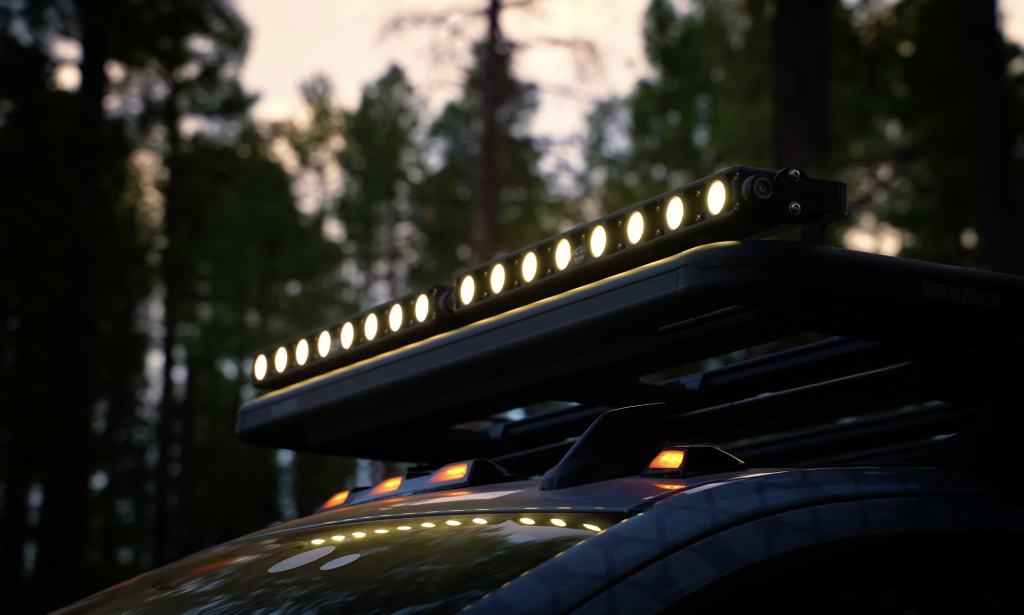
The amber vs white off-road lights choice comes down to your typical trail conditions. If you drive primarily in dust, fog, rain, or snow, amber LEDs deliver measurably better visibility by working with your eye physiology rather than against it. Specifically, the 590-625nm wavelength range avoids the rod photoreceptor sensitivity peak, reducing distracting backscatter and cutting eye fatigue over long night runs.
Conversely, if you drive mostly in clear conditions at higher speeds, white provides 10-15% more raw lumens and superior distance throw. On a clear desert night at 40+ mph, every foot of additional visibility matters, and white delivers it.
For most overlanders and trail runners who encounter varied conditions, a hybrid setup is the strongest recommendation. Mount a white primary light bar for clear-weather forward illumination, and add amber ditch lights or pods for adverse-condition fog-zone coverage. This combination gives you the distance of white and the penetration of amber without forcing a single-color compromise.
Boss Lighting offers both amber and white configurations across their Excel, Premier, and Reaper series, all built with the same CNC-machined 6061 aluminum and patented cooling technology. Pairing a white Premier Series bar with amber Excel Cube ditch lights gives you a complete dual-color system from one manufacturer, backed by a limited lifetime warranty and American-made engineering. For more on how different types of off-road lights work together, check out our equipment breakdown.
Featured on Boss Lighting
Build Your Dual-Color Trail Setup
Pair a white Premier Series light bar with amber Excel Cube ditch lights for complete trail coverage. Every Boss Lighting product is designed, engineered, and manufactured in the USA with a limited lifetime warranty.
Frequently Asked Questions
Are amber off-road lights better for fog and dust than white lights?
Yes. Amber LEDs operate in the 590-625nm wavelength range, which scatters significantly less off airborne particles compared to white light’s 450-495nm blue peak. In fog, dust, rain, and snow, amber provides superior usable visibility because fewer wavelengths bounce back toward your eyes. The advantage is rooted in Rayleigh scattering physics and confirmed by 57 years of mandated selective yellow headlights in France.
What off-road light color temperature is best for night driving?
For mixed conditions, a hybrid approach works best: 5,000K white for primary forward lighting in clear weather, and 2,700K-3,000K amber for fog, dust, and precipitation. If you run only one off-road light color temperature, 5,000K white provides the broadest versatility, but adding a set of amber pod lights to your rig significantly improves low-visibility performance.
Do amber lights reduce eye fatigue compared to white?
Yes. Rod photoreceptors in your eyes peak in sensitivity around 498nm (blue-green), which aligns closely with white LED output. Amber light at 590-625nm sits well above this peak, reducing rod stimulation and lowering the visual processing load on your brain. Over multi-hour night runs, this translates to measurably less fatigue and longer alert driving periods.
How many lumens do you lose with amber lights vs white?
Amber lens filtering reduces effective lumen output by approximately 15%. A 10,000-lumen white LED produces roughly 8,500 lumens in amber configuration at the same wattage. However, your pupils dilate more in amber-lit environments because of reduced rod stimulation, partially compensating for the lumen loss in perceived brightness.
Should I use both amber and white lights on my truck?
A hybrid setup is the strongest option for overlanders who encounter varied conditions. Mount your primary white bar on the bumper or roof for clear-weather forward illumination. Add amber ditch lights or A-pillar pods for fog-zone coverage in adverse conditions. This dual-color strategy gives you full coverage without forcing a single-color compromise.
Are selective yellow fog lights the same as amber off-road lights?
Selective yellow fog lights and amber off-road lights operate in a similar color temperature range (2,700K-3,500K), but they differ in beam pattern and intensity. However, selective yellow fog lights use a wide, flat beam aimed low to reduce backscatter. Amber lights include driving, spot, and flood patterns at higher intensities for trail use. Both leverage the same wavelength advantage in adverse conditions.