


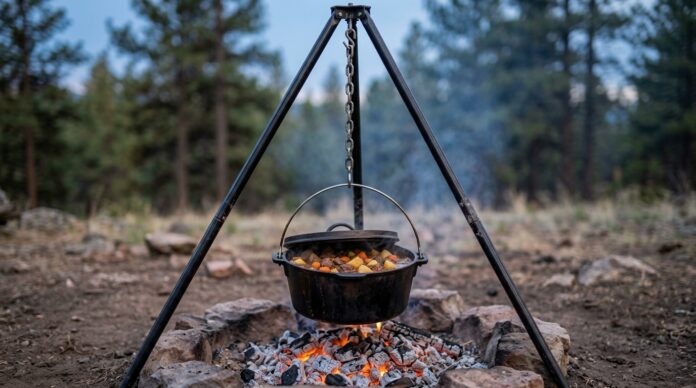
Quick Verdict: This campfire tripod stew hangs a Dutch oven from a steel tripod over the fire. The pot holds seared beef chuck, potatoes, carrots, onion, celery, and broth. Sear low over open flame, then lift the pot on the chain until it rides over medium coals. Ninety minutes to two hours of slow simmer turns 3 pounds of chuck fork-tender. One pot feeds six people off a single fire.
Save this recipe for your next trip.
Last updated: August 2026 | Prep 20 min | Cook 120 min | Serves 6
Written by Alex Schult
Editor in Chief of 4wdTalk.com. 15+ years of off-road and overlanding experience with 1,000+ hours on the trail.
This recipe was tested on an actual overland trip. Amazon affiliate links support 4wdTalk.com at no extra cost to you.
In This Recipe
Why This Recipe Works for Overlanders
Campfire tripod stew works because beef chuck rewards time over temperature. Collagen in the shoulder melts into gelatin between 160F and 205F. The change needs 90 minutes or longer at a steady simmer. A hard boil tightens the muscle fiber instead. A hanging pot sits wherever the chain puts it, so the stew holds a lazy bubble for two hours with no burner to babysit.
Height replaces a control knob here. Every 4 inches of lift drops the effective temperature under the pot noticeably. One chain and one fire then cover searing heat and simmering heat in the same cook. Lower the pot into the flames for the sear. Raise it two or three links once the broth goes in. No second stove, no propane, no fuel math.
Volume also favors campfire tripod stew over a skillet dinner. A 6-quart Dutch oven feeds six people from one pot. The same pot then carries leftovers into the cooler without a transfer. Chuck, root vegetables, and boxed broth ride for days in a drawer system without refrigeration worries beyond the meat itself. Total gear count at the fire ring stays at three items: tripod, pot, and tongs.
Equipment You Need
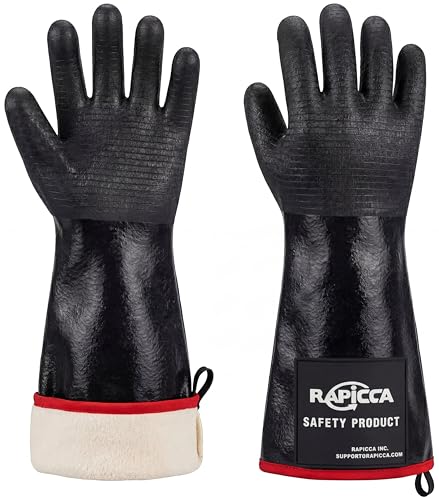
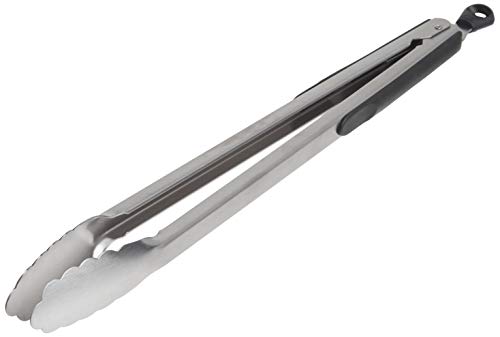
A steel tripod anchors this campfire tripod stew, alongside the core kit covered in Camp Cooking for Overlanders. Look for a 50-inch tripod with a chain rated above 30 pounds. A loaded 6-quart Dutch oven with a lid runs 25 to 30 pounds. Spread the legs into a wide triangle on level ground, then press each foot into the dirt before the pot goes on. A bail-handle Dutch oven with a flanged lid hangs square from the hook. A flat-bottom camp oven with legs wobbles on a chain instead. Long locking tongs handle the sear from outside the flame zone. Gloves rated to at least 500F let you grab the bail and the chain safely.
Camp Kitchen Checklist
- 50-inch steel campfire tripod with adjustable chain
- 6-quart bail-handle Dutch oven, flat bottom preferred
- Heat-resistant gloves rated 500F or higher
- 16-inch locking tongs
- Instant-read thermometer
- Long-handled wooden or silicone spoon
- Chimney starter plus hardwood or briquettes
- Fire poker or rake for moving coals
- Cutting board, knife, and a 1-quart broth bottle
- Stiff plastic scraper and a water bottle for cleanup
Gear for This Recipe

Ingredients
Serves 6 | Prep 20 min | Cook 2 hr | Open flame, then medium coals
- 3 pounds beef chuck, cut into 1-inch cubes
- 1.5 pounds Yukon gold potatoes, cut into 1-inch chunks
- 4 medium carrots, sliced into half-inch rounds
- 1 large yellow onion, diced
- 3 celery stalks, sliced
- 4 cups beef broth
- 3 tablespoons tomato paste
- 1/4 cup all-purpose flour
- 3 tablespoons vegetable oil
- 3 garlic cloves, minced
- 2 bay leaves
- 1 teaspoon dried thyme
- Salt and black pepper, to taste
Step-by-Step Instructions
Home Prep
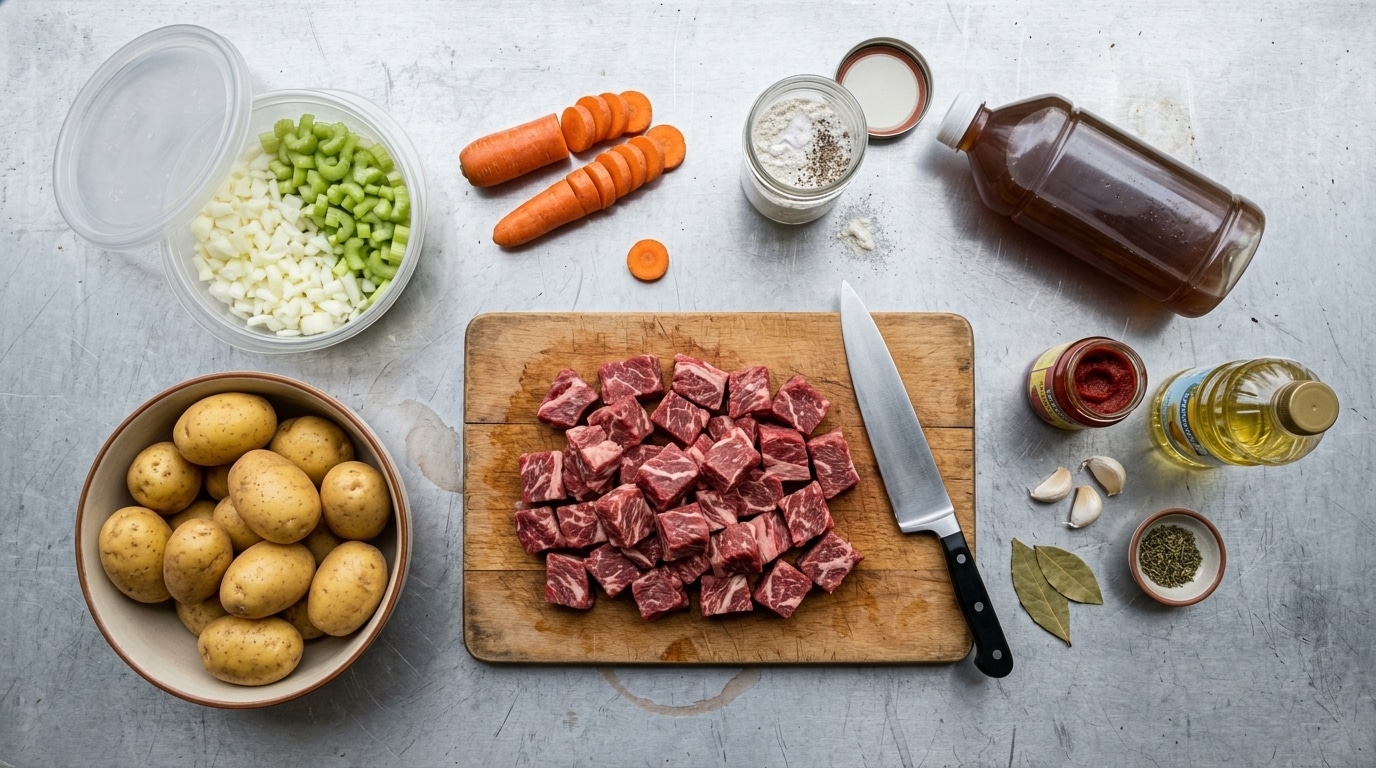
- Trim the chuck and cut it into 1-inch cubes. Pat every face dry, because surface moisture kills the sear. Bag the meat and hold it below 40F.
- Mix the flour, 2 teaspoons of salt, and 1 teaspoon of black pepper in a small jar. Toss the cubes in the flour at camp rather than at home, so the coating stays dry.
- Dice the onion, slice the celery, and cut the carrots into half-inch rounds. Seal all three in one container.
- Scrub the potatoes and leave them whole. Cut chunks at camp, since cut potatoes brown within hours.
- Decant the broth into a 1-quart bottle and scoop the tomato paste into a small jar. Bag the bay leaves, thyme, and minced garlic together.
At Camp
- Set the tripod over the fire ring first, before any fuel goes in. Spread the legs wide, seat each foot, then run the chain up and down once to confirm it moves freely.
- Build the fire 45 to 60 minutes ahead so hardwood burns down to coals. A chimney of briquettes takes 15 to 20 minutes instead. Rake half the coals to one side for a two-zone bed.
- Toss the beef cubes with the flour mix. Hang the Dutch oven low over open flame and add the oil. Heat it 3 minutes, until a drop of water skitters.
- Sear the beef in two batches, 4 to 5 minutes per batch, turning once. Crowding drops the pot below browning temperature and steams the meat gray.
- Return all the beef to the pot. Add the onion, celery, garlic, and tomato paste, then stir 3 minutes as the paste darkens.
- Pour in the broth and scrape the bottom clean with the spoon. Add the potatoes, carrots, bay leaves, and thyme, then set the lid on.
- Raise the pot 8 to 12 inches on the chain so it hangs over medium coals at 350F to 450F. Hold a lazy bubble for 90 minutes to 2 hours, stirring every 20 minutes. Lift one more link if the broth rolls hard.
- Test at 90 minutes: a fork twists the beef apart with light pressure and a potato chunk splits against the spoon. Swing the pot off the fire, rest it 5 minutes, pull the bay leaves, then serve.
Fire and Heat Management
Chain height is the heat dial for a hanging pot. Every 4 inches of lift drops the effective temperature under the base noticeably. Two links up moves a rolling boil back to a simmer within about 3 minutes. Read the bed by eye first, then adjust height rather than pulling coals. The same two-zone bed drives most of the Campfire Cooking Recipes in this series. It also gives you a cooler parking spot when the stew needs to hold.
| Heat Source | Appearance | Approx Temp | Common Use |
|---|---|---|---|
| Open flame | Active yellow-orange flames | 600F+ and uneven | Searing the chuck cubes with the pot hung low, boiling water |
| Hot coals | Bright orange, minimal ash | 500F-600F | Bringing the broth up to temperature after the sear |
| Medium coals | Orange with gray ash | 350F-450F | The 90-minute simmer window for campfire tripod stew |
| Low coals or embers | Mostly gray ash, soft glow | 250F-350F | Holding the finished pot warm for second servings |
Field Tips
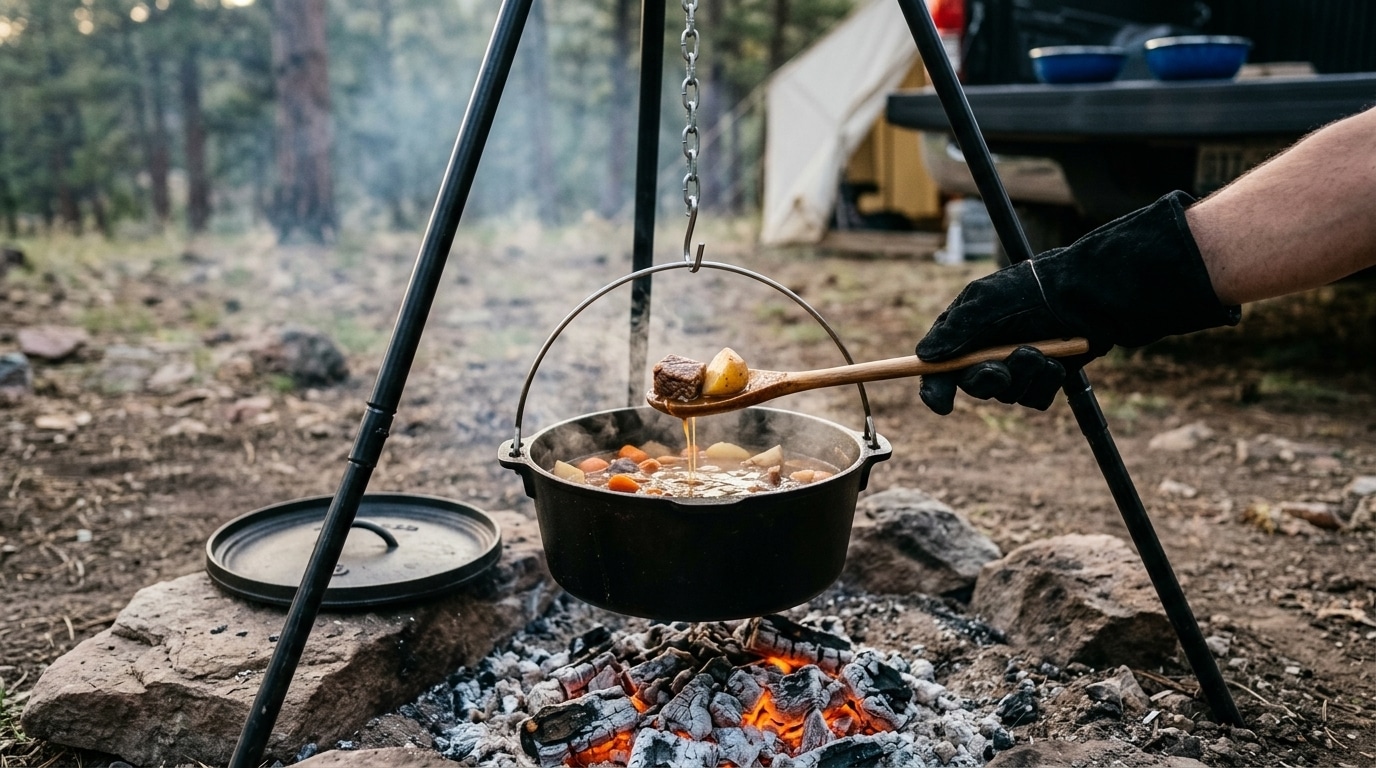
Move the pot, never the fire, once the stew goes in. Raking coals under a loaded 25-pound Dutch oven puts your hands under swinging weight. Two links of chain do the same work from arm’s length. A quarter turn of the pot every 20 minutes also evens out a lopsided bed.
Whole-muscle chuck cubes hit food-safe at 145F with a 3-minute rest, while ground beef needs 160F. Both numbers come from the USDA safe temperature chart. This stew runs well past both, since collagen needs time at 160F to 205F rather than a single target reading. Use the fork test for doneness and the thermometer for safety.
Wind over 10 mph burns fuel faster and creates hot spots across the bed. Stack rocks on the upwind side or use the fire ring wall as a windbreak. A hanging pot also swings in a gust. Ambient temperature under 40F adds 3 to 5 minutes per stage and burns more fuel. Keep a reserve of split wood within reach.
Altitude changes the math on a campfire tripod stew simmer. Above 5,000 feet water boils lower, near 202F rather than 212F, so add 20 to 25 percent to the simmer time. At 7,000 feet in the Sierras, plan on 2 hours and 15 minutes before the first fork test. Top up with a half cup of broth if the level drops below the vegetables.
Fire and Cleanup Gear

TempPro TempSwift 1 Sec Meat Thermometer Digital for Kitchen Cookin…


Variations and Substitutions
The base campfire tripod stew takes swaps well once the chain height feels natural. Change one element per trip, so the liquid ratio and the simmer window stay predictable.
- Red wine braise: Replace 1 cup of the broth with dry red wine. Add it right after the tomato paste, then reduce 5 minutes over hot coals.
- Venison or elk: Wild shoulder meat holds less fat, so add 2 extra tablespoons of oil. Pull the pot at 90 minutes, since overcooked venison turns dry.
- Lamb shoulder version: Swap the chuck for 3 pounds of lamb shoulder cubes and trade thyme for rosemary. Simmer time stays the same at 90 minutes to 2 hours.
- Guinness and barley: Use 1 cup of stout plus 1/2 cup of pearl barley. Barley soaks up liquid fast, so add a full extra cup of broth at the start.
- Root vegetable build: Trade half the potatoes for parsnips and turnips cut to the same 1-inch size. Both soften faster, so add them at the 45-minute mark.
- Mushroom and onion depth: Brown 8 ounces of sliced cremini with the onion. Mushroom liquid deepens the broth without a roux or a starch slurry.
- Gluten-free thickening: Skip the flour dredge. Stir in 2 tablespoons of cornstarch mixed with cold broth during the final 10 minutes.
- Two-night stretch: Cook the stew thin on night one. Reduce the leftovers 15 minutes on night two, then serve over instant polenta or biscuits.
Storage and Leftovers
Leftover campfire tripod stew keeps 3 days in a cooler below 40F. Cool the pot first, though. Swing the Dutch oven off the tripod and set it on a rock away from the fire. Leave the lid ajar until the stew drops under 100F, then portion it into sealed containers. A full container holds cold longer than three half-empty ones.
Reheat over medium coals for 8 to 10 minutes, stirring twice, until the stew reaches 165F throughout. Add a splash of broth first, because starch from the potatoes thickens overnight. Clean the pot while it stays warm. Scrape with a plastic scraper, rinse with hot water and no soap, then dry it over the last coals. Wipe a thin coat of oil across the interior before it returns to the drawer system.
Frequently Asked Questions
What size Dutch oven works best for campfire tripod stew?
A 6-quart bail-handle oven feeds six people with room to stir. Eight quarts serves ten, though a loaded 8-quart pot approaches 40 pounds and stresses a light tripod chain. Under 4 quarts, the liquid reduces too fast during a two-hour simmer.
How high should the pot hang above the coals?
Hang the pot 4 to 6 inches over the flames for the sear. Raise it to 12 to 16 inches above the coal bed for the simmer. Every 4 inches of lift drops the effective temperature noticeably, so adjust by one link at a time and watch the bubble rate.
What internal temperature does the beef need?
Whole-muscle chuck cubes reach food-safe at 145F with a 3-minute rest, and ground beef needs 160F. Texture arrives much later, because collagen breaks down between 160F and 205F over 90 minutes or longer. Cook to the fork test, then confirm safety with a thermometer.
Why is the beef still tough after 90 minutes?
Tough chuck after 90 minutes points to heat, not time. A hard boil tightens muscle fiber and stalls the collagen conversion. Raise the pot two links until the surface shows a lazy bubble, then give it another 30 minutes before the next test.
Do you need a tripod, or will a grate work?
A grate works for the sear and for a short simmer. Chain adjustment beats a fixed grate over a two-hour cook, since fire output drops steadily as the coals burn down. With a grate, plan on adding fuel or moving the pot between zones every 20 minutes.
How much does the simmer time change at altitude?
Above 5,000 feet, add 20 to 25 percent to the simmer time. Water boils near 202F up there rather than 212F, so the pot delivers less heat into the meat. Budget 2 hours and 15 minutes at 7,000 feet before the first fork test.
How do you thicken campfire tripod stew at camp?
The flour dredge on the beef thickens the broth as it simmers. For a heavier body, lift the lid during the final 20 minutes and let steam escape. A cornstarch slurry works too: 2 tablespoons stirred into cold broth. Both methods need no extra gear.
How long does the whole cook take at the fire?
Plan on 2 hours and 30 minutes at camp. Fire prep runs 45 to 60 minutes for hardwood, or 15 to 20 minutes for a chimney of briquettes. The sear takes 15 minutes, and the simmer holds 90 minutes to 2 hours. Home prep the night before adds 20 minutes.
You Might Also Like
- Campfire Cooking Recipes
- Camp Cooking for Overlanders
- Campfire Paella (recipe coming soon)
- Campfire Ribeye Over Coals (recipe coming soon)
- Coal-Roasted Potatoes (recipe coming soon)