


Quick Facts:
- Topic: Picking a camper electrical system for a small camper.
- Option 1: A power station, such as the Anker SOLIX C1000, plus solar.
- Option 2: A fixed 12V camper battery, charge controller and roof panels.
- Decision rule: Does the camper come off, and what will it run?
- Best for: First-time camper pod owners.
4 min read
In This Guide
Choosing a Camper Electrical System
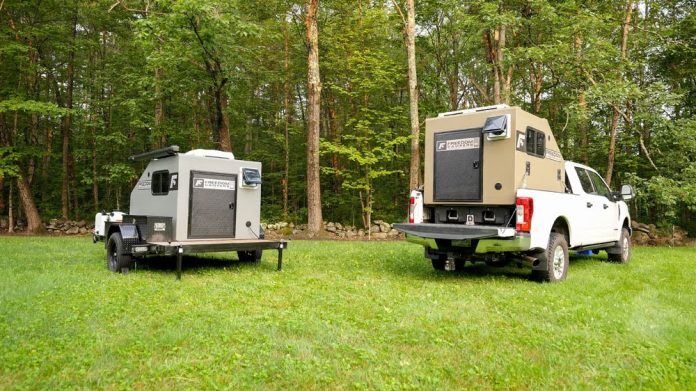
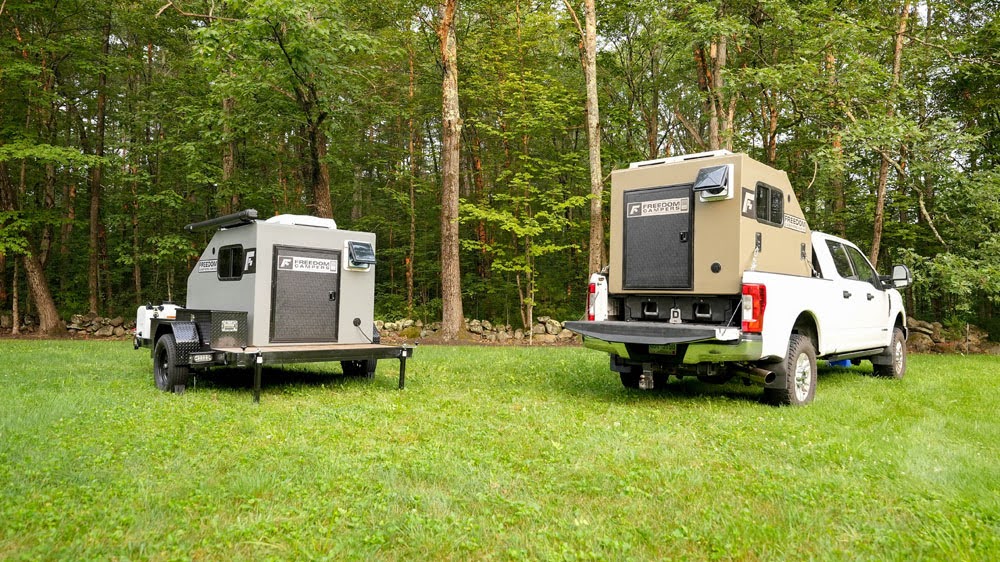
Every small camper pod needs power for a fridge, a vent fan and a phone. Yet your camper electrical system hinges on two questions: does the camper come off, and what will it run? Freedom Campers runs two opposite setups: a removable power station and a permanent 12V trailer build.
In a December 2025 video, Harrison Fetter of Freedom Campers frames the choice around those two questions. The company has no ties to any brand shown. Below, we also add the watt-hour math. I test power stations from EcoFlow, Bluetti, Jackery, Anker and Goal Zero. Notably, our six-month Anker SOLIX C1000 review covers the same 1,800 W model. Over those six months, the C1000 powered a diesel heater running overnight.
Key Facts: The Two Builds
A portable power station packs the battery, inverter, charge controller and ports into one box. In contrast, a fixed camper electrical system wires those parts into the camper or trailer.
| Item | Removable Power Station | Permanent Fixed 12V Build |
|---|---|---|
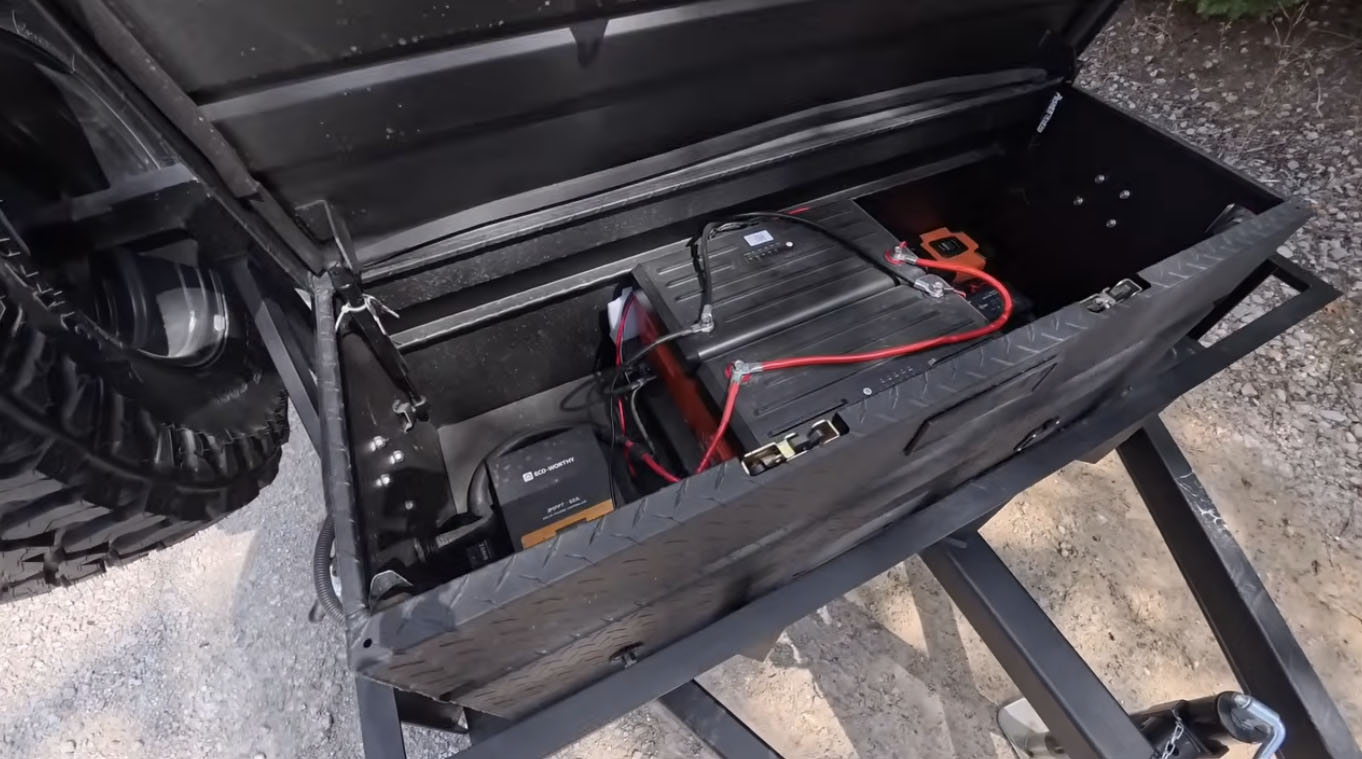
| Core unit | Anker SOLIX C1000, first generation. | 300 Ah battery and solar charge controller. |
| Solar | 200 W rated, about 150 W in full sun. | 400 W. |
| Runs | Fridge, vent fan, phone and camera charging. | 7,000 BTU DC air conditioner, off-grid. |
| Mounting | Camper lifts out of the truck bed by hand. | Camper through-bolted to a trailer deck. |
Both builds start from parts sold on Amazon. Below, we compare the Anker SOLIX C1000, a 230 Ah 12V LiFePO4 battery and a 100 W rigid solar panel.
| Removable Build | Fixed Build Battery | Solar Panel | |
|---|---|---|---|
| Product | TOP PICK Anker SOLIX C1000 |  LiTime 12V 230Ah LiFePO4 |  Renogy 100W Solar Panel |
| Rating | ★★★★★ 4.7 2,200 ratings | ★★★★☆ 4.6 470 ratings | ★★★★☆ 4.6 7,000 ratings |
| Size | 1056 Wh | 230 Ah (about 2900 Wh) | 100 W |
| Fits | Removable build | Fixed build | Either build |
| Price | $599.99 as of Nov 20, 2:40 pm | $484.49 as of Nov 20, 6:23 am | $78.62 as of Nov 20, 4:54 am |
| Check Price → | Check Price → | Check Price → |
Question 1: Does the Camper Come Off?
With no forklift at home, Harrison and his wife lift the camper out of his truck bed by hand. Unwiring a DC battery bank each time makes no sense, while a 28.4-pound C1000 lifts out whole. For his camper solar setup, he sealed roof cable holes with Lexel and plugged the panels into the Anker.
The opposite case is a camper on a dedicated trailer, like a teardrop. Freedom Campers through-bolted its trailer camper to the deck, and Harrison says a power station fits poorly there.
Question 2: What Will Your Camper Electrical System Run?
The trailer build runs a 7,000 BTU DC air conditioner, a load Harrison rules out for a power station. Even a smaller 5,280 BTU battery unit uses 1,200 to 1,600 Wh a night in sleep mode. By contrast, a C1000 holds roughly 1,056 Wh, so it runs dry before morning. Our guide to running a 12V air conditioner overnight has the full numbers.
A Worked Power Budget
Here is a sample day for Harrison’s loads, built from planning figures.
| Load | Basis | Wh Per Day |
|---|---|---|
| Compressor fridge | Dometic CFX3 45, 25 Ah at 90°F. | About 300. |
| Vent fan, 8 hours | 2.5 A planning figure. | About 240. |
| Phone and camera | Planning allowance. | About 50. |
| Total | All on DC. | About 590. |
A full C1000 covers this for a day and a half to two days without sun, before conversion losses. By comparison, 300 Ah stores about 3,600 Wh at 12 volts, roughly six days. Owners report 12V rooftop air conditioners pulling 20 to 40 amps, so 300 Ah gives about 7 to 15 hours of cooling.
For me, a 1,000 Wh station with 200 W of solar suits a fridge, fan and devices on weekend trips, and forum owners agree. I also power my Starlink Mini from EcoFlow and Bluetti stations. If you carry one, add about 250 Wh per 10-hour night at 25 W.
Where the Inverter Costs You
Harrison’s main complaint is the inverter, which wastes a lot of power compared with the DC ports. Even good inverters peak near 90% efficiency, per our guide to sizing a power inverter for a truck build. Therefore, run a 12V fridge from a DC socket. On a fixed build, he suggests a single inverter only if you want an AC plug.
Solar Reality: 200 W Delivers About 150 W
Harrison’s two 100 W panels deliver about 150 W in full sun, or 75% of the label. Similarly, our guide on what size solar panel for overlanding puts a realistic derate near 79%. With four hours of strong sun, this camper solar setup returns about 600 Wh, one day of the budget. Rain cuts deeper; one owner saw 200 W fall to about 20 W.
Solar power for camper roofs scales better on a fixed build. No one person lifts a camper carrying 400 W of panels, an awning and an air conditioner.
Charging From the Vehicle
Owners say a car socket limits a power station to roughly 60 to 120 W from the vehicle. Conversely, a DC-to-DC charger refills a fixed 12V camper battery faster, about 20 Ah per hour for one owner. Our DC to DC charger vs battery isolator guide covers the wiring. If you take the fixed route, compare DC-to-DC chargers next.
DC-to-DC chargers for a fixed 12V battery
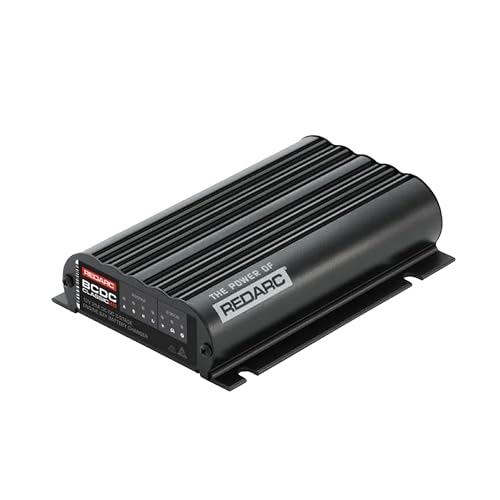
REDARC Dual Input 25A in-Vehicle DC to DC Battery Charger with MPPT…


Power Station vs. Fixed 12V System
The power station vs battery choice comes down to convenience against capacity. A power station needs no fusing or cable runs, so it also moves between vehicles. However, owners say a failed port or battery management system means replacing the whole sealed unit.
A fixed camper battery setup costs less per watt-hour and leaves room for more solar power for camper roofs. Still, the install means heavy cable, fuse blocks and drilling. Because neither build wins outright, let the two questions above decide.
Final Thoughts
If your camper comes off the truck, I’d start with a power station. Owners rank its plug-and-play setup first, and Harrison’s C1000 covers a fridge, fan and charging.
If the camper lives on a trailer, build a fixed 12V system instead. It buys more storage per dollar, room for 400 W of solar and a DC air conditioner.
Either way, settle the power station vs battery question with numbers. Total your daily watt-hours, then size your camper electrical system to the total. Two answers and one sum point to the right build. To see a Freedom Camper, use the Freedom Campers dealer locator.
Frequently Asked Questions
Do camper outlets work on battery?
On a power station, yes, through its inverter, at some cost in efficiency. A fixed 12V camper battery setup needs its own inverter for AC outlets, while 12V and USB ports run directly.
How do you charge a camper battery?
Use solar, the tow vehicle or shore power. For example, the Freedom Campers trailer build pairs 400 W of solar with a front shore power port.
How much solar power does a camper need?
Total your daily watt-hours, then expect about 75% of the panel rating in full sun. In four hours of strong sun, the 150 W Harrison saw from 200 W of panels returns about 600 Wh, near a 590 Wh day.
Will a portable power station run an air conditioner?
Not a 1,000 Wh unit for a full night. Instead, Freedom Campers runs its 7,000 BTU unit from a 300 Ah fixed system.