



Quick Facts:
- Topic: Running a 12V air conditioner in a truck, SUV or truck-bed camp.
- What cools: Compressor units in any climate. Evaporative 12V air coolers lose most of their effect in humid heat.
- Featured unit: ZERO BREEZE Mark 3, 5,280 BTU, 22 lb, runs on 48V DC.
- 12V path: ZERO BREEZE 12V to 48V Converter, 600 W rated, up to 55 A from a 12V battery.
- Overnight draw: Sleep mode uses 150 to 200 W, or 1,200 to 1,600 Wh across 8 hours.
- Power source: A house battery charged by a DC-DC charger, never the starting battery.
- Price: Mark 3 AC-only unit $1,219; converter with eye terminals $175.20 (sale prices, price checked November 10, 2026).
- Best for: Truck campers, truck-bed sleepers and rooftop tent owners in summer heat.
10 min read
In This Guide
- What a 12V Air Conditioner Does in a Truck
- Four Ways to Cool a Truck Camp on 12V
- Why 12V Air Coolers Fail in Humid Heat
- How Much a 12V Air Conditioner Draws Overnight
- What Your Alternator and Starter Battery Will Feed
- Why the Mark 3 Runs on 48V and Who It Suits
- How the 12V to 48V Converter Connects to Your Truck
- Battery AC vs. 12V Rooftop Units vs. Evaporative Coolers
- How to Stretch Every Watt-Hour Overnight
- Final Thoughts
- FAQ
4wdTalk earns a commission when you buy through links on this page, at no extra cost to you. As an Amazon Associate, 4wdTalk also earns from qualifying purchases.
What a 12V Air Conditioner Does in a Truck
Nobody wants a sweaty night in the truck bed or a dead battery at dawn. A 12V air conditioner promises cold air from your truck’s electrical system, with no generator or shore power. In practice, only compressor units deliver real cooling in humid heat. Every one of them also draws more energy overnight than a starting battery holds. As a result, the battery and charging behind the AC matter more than the AC itself.
Most products sold under this label fall into four groups. You’ll find evaporative air coolers, hard-wired 12V rooftop units, battery-powered portable ACs and the truck’s own dash AC at idle. The ZERO BREEZE Mark 3 sits in the third group. It runs on 48V DC from its own packs, while a 12V to 48V Converter lets it run from a vehicle battery.
I drive a 2025 Chevy Colorado ZR2, so I care about two questions. What will a midsize truck’s 12V system run overnight? And what leaves you with a truck too dead to start? This 12V air conditioner guide answers both with published specs, owner reports and simple watt-hour math. For tent placement and venting, see how to run tent AC off a battery.
Four Ways to Cool a Truck Camp on 12V
Here is how the four groups stack up on draw and real cooling. Draw figures come from maker specs where they exist and from owner reports elsewhere.
| Approach | Typical draw | Cools in humid heat? | Best for |
|---|---|---|---|
| Evaporative 12V air cooler | Fan-level draw | No | Dry desert camps. |
| Hard-wired 12V rooftop unit | About 20 A to 40 A or more (owner reports) | Yes | Truck campers with a roof cutout. |
| ZERO BREEZE Mark 3 with the converter | 150 W to 500 W, up to 55 A at 12V | Yes | Truck beds, cabs and rooftop tents. |
| Idling the dash AC | 0.25 to 0.5 gal of fuel per hour | Yes | Pre-cooling before bed. |
Only the bottom three rows move heat out of the space, and the first row disappoints the most buyers.
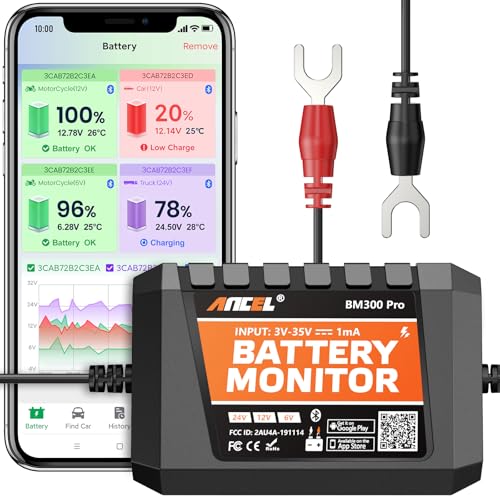
The Victron SmartShunt tracks house battery amps, and the KAIWEETS clamp meter reads DC current on a live cable. Meanwhile, the ANCEL BM300 Pro Bluetooth monitor watches your starting battery from your phone.
12V power monitoring gear


KAIWEETS Digital Clamp Meter 4-Mode Smart-Select Auto-Ranging DC Am…
Why 12V Air Coolers Fail in Humid Heat
An evaporative cooler sold as a 12V air conditioner blows air across wet pads, and the evaporating water cools the air. However, evaporation slows as humidity climbs. The U.S. Department of Energy’s Energy Saver guide calls these coolers suitable only for areas with low humidity. Summer humidity across much of the South and Midwest often runs too high for them.
We dug deep into Reddit, Expedition Portal and the truck camping forums, and owners tell the same story. In humid air, these units work as fans and add moisture to a closed cab. One owner puts the cutoff near 75% humidity. Ice-chest coolers behave differently, since they blow cold air only until the ice melts. One Florida owner got 20 to 30 minutes of cold air before it matched a plain fan.
My take: skip any 12V air cooler unless you camp in dry desert air. A real 12 volt air conditioner uses a compressor and refrigerant. Consequently, it pulls heat and moisture out instead of adding water vapor.
How Much a 12V Air Conditioner Draws Overnight
Every compressor-based 12V air conditioner needs hundreds of watts, so size your battery in watt-hours. For example, ZERO BREEZE lists 500 W of rated cooling input for the Mark 3. Its runtime chart shows 350 to 500 W in Rocket mode and 200 to 350 W in Cool mode. Sleep mode drops to 150 to 200 W.
Now run the math for an 8-hour night in Sleep mode. At 150 to 200 W, the unit uses 1,200 to 1,600 Wh. On a 12V battery, this equals about 100 to 133 amp-hours before converter losses. Meanwhile, Rocket mode at 500 W pulls about 42 A at 12V before converter losses.
What owners report from a 12V AC unit on the roof
Owners of hard-wired rooftop units report similar loads. One Velit 2000R owner in Florida measured a little over 20 A on the lowest setting at 88°F. Another saw more than 40 A in eco mode once the compressor kicked on. Owners who run a Dometic RTX 2000 all night pair it with 600 to 800 Ah of lithium, plus DC-DC charging and solar.
Rooftop units pull far more current, so their owners carry far bigger banks. A portable 12 volt air conditioner in Sleep mode asks much less. For the Mark 3, one 100 Ah lithium battery covers most of a Sleep-mode night. Two give you margin for hot evenings.
What Your Alternator and Starter Battery Will Feed
Those amp-hours should never come from the starting battery. It delivers short, high bursts to crank the engine, not hours of steady draw. With the engine off, a 40 A load flattens a typical truck battery in about an hour. Then you’re waiting on a jump in the morning.
Spare alternator output is smaller than the label
An alternator’s rating is not spare power, because the truck’s own systems use part of it. In our guide to recharging a power station from your alternator, one owner did the math. The owner put the spare output of a 130 A alternator at about 270 to 330 W at night. Sleep mode at 150 to 200 W fits inside this budget, while Rocket mode at 500 W does not.
The 12V socket is slower still. For example, the Mark 3 battery limits charging current to 10 A. A 12V outlet refills it at about 120 W. Therefore, a full 1,022 Wh pack takes more than eight hours of driving on the socket alone.
Idling all night costs fuel and adds risk
The dash AC works at idle, but the fuel adds up. According to FuelEconomy.gov, idling uses a quarter to a half gallon per hour, depending on engine size and AC use. Over 8 hours, you burn 2 to 4 gallons per night.
Safety note: Idling overnight puts exhaust near where you sleep. Owners flag exhaust leaks and snow-blocked tailpipes as the main carbon monoxide risks. Run a CO alarm if you idle at all.
Why the Mark 3 Runs on 48V and Who It Suits
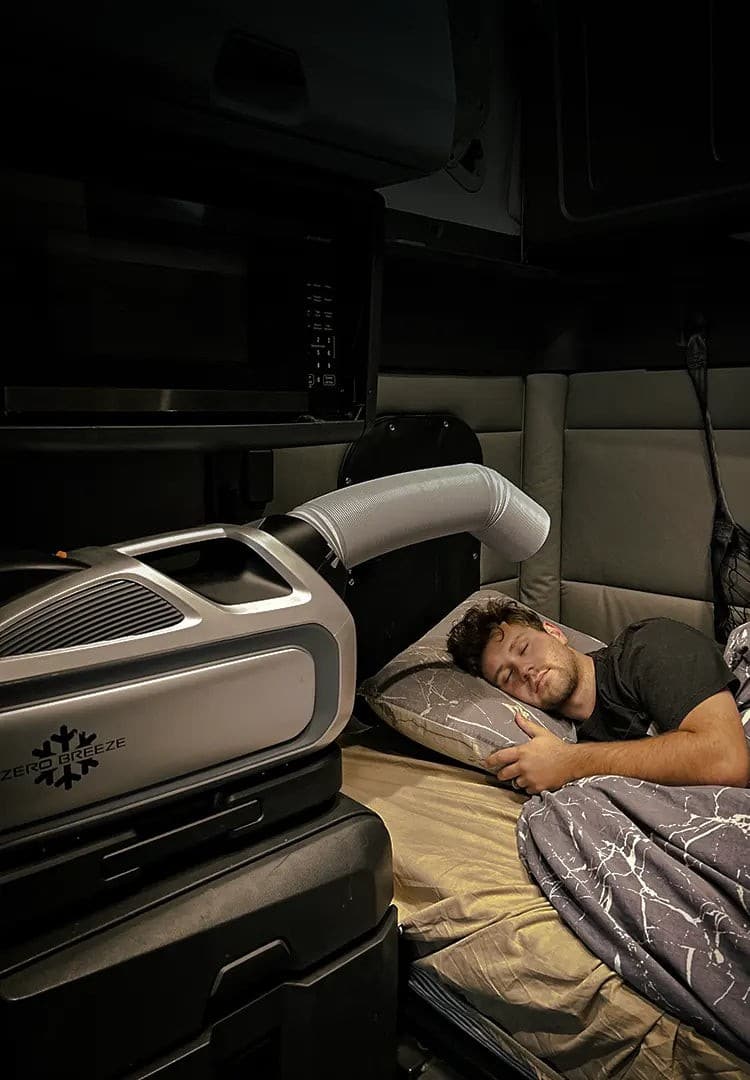
A battery AC skips both the fuel bill and the exhaust. The ZERO BREEZE Mark 3 uses a 48V micro-compressor, which keeps current low and the unit light. Specifically, ZERO BREEZE rates it at 48V DC with a 38V to 58.5V working range. As a result, it won’t run straight from a 12V outlet. Its 1,022 Wh packs supply 48V, and the converter covers vehicle power.
| Specification | Details |
|---|---|
| Cooling capacity | 5,280 BTU (1,550 W) |
| Working voltage | 48V DC |
| Weight | 22 lb |
| Battery pack | 1,022 Wh, 14 lb |
| Sleep mode runtime | 5 to 7 hours per pack |
| Warranty | One year |
| Price (AC only) | $1,219 sale, price checked November 10, 2026 |
| 12V to 48V Converter | 12V to 36V in, 48V out, 600 W rated, up to 55 A at 12V |
| Converter price (eye terminals) | $175.20 sale, price checked November 10, 2026 |
Who the Mark 3 suits
Owners of earlier battery powered air conditioner models use them as spot coolers aimed at the bed. In contrast, owners who expected an earlier model to cool a whole van came away disappointed. For one or two sleepers in a truck bed or rooftop tent, 5,280 BTU is a sensible size. To choose a battery count, see how to pick the right Mark 3 bundle.
Get the Mark 3 as the AC Only and Power It From Your Truck
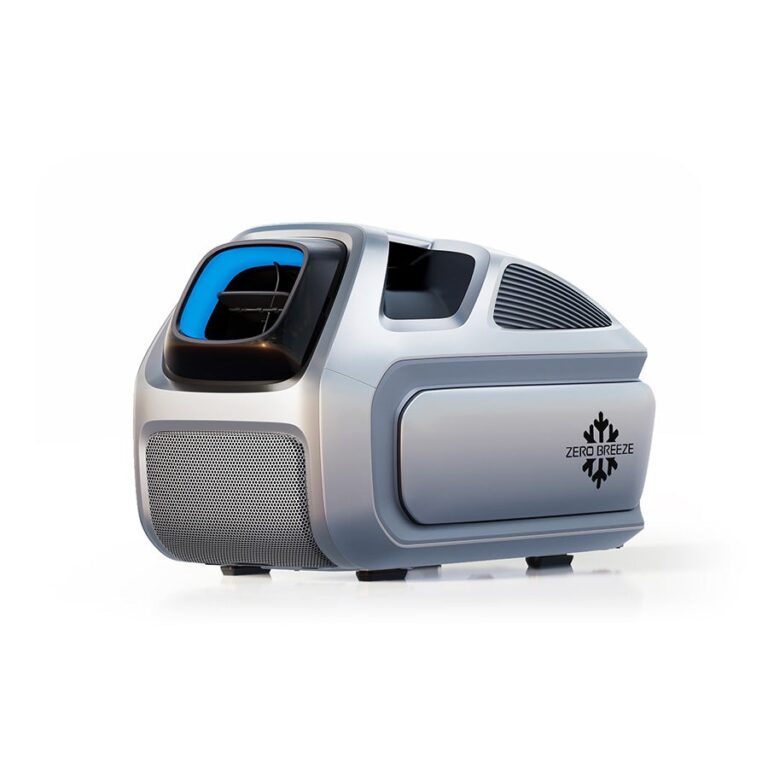
The 5,280 BTU Mark 3 weighs 22 lb and runs on 48V DC from its own packs or the 12V to 48V Converter. ZERO BREEZE covers it with a one-year warranty.
Check Price at ZERO BREEZEHow the 12V to 48V Converter Connects to Your Truck
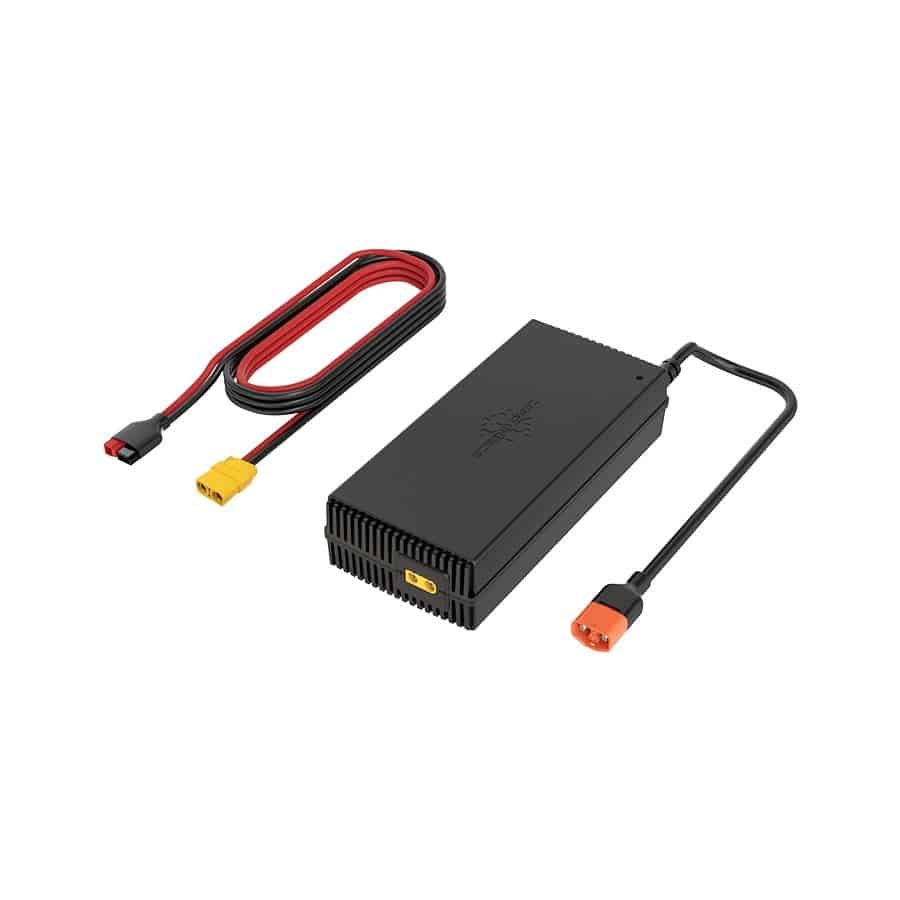
The converter turns the Mark 3 into a 12V air conditioner for your truck. It boosts a 12V to 36V DC source to 48V at 600 W rated output. At 12V input it draws up to 55 A. For this reason, ZERO BREEZE warns against cigarette lighter ports and small power supplies. Instead, feed it from a battery or regulated DC source rated for 600 W or more.
For 12V users, ZERO BREEZE recommends the eye-terminal cable over the Anderson cable. The maker also aims the module at experienced DC users, since it carries no standalone UL or CE certification. With eye terminals, the 12V to 48V Converter costs $175.20 on sale (price checked November 10, 2026).
Safety note: A 55 A load overheats undersized cable and loose terminals. Fuse the positive line at 60 A or more, as ZERO BREEZE recommends, and check polarity twice. Hire an auto electrician if you have never wired a high-current DC circuit.
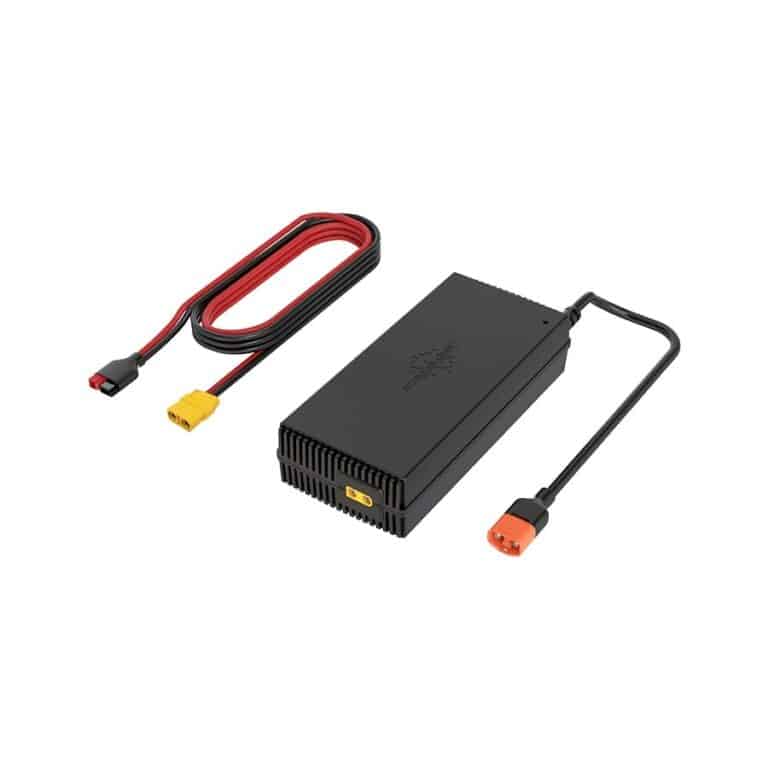
Run the Mark 3 From Your 12V House Battery
Boosts a 12V to 36V DC source to 48V at 600 W rated output. Choose the eye-terminal cable for a 12V battery and fuse the positive line at 60 A or more.
Check Price at ZERO BREEZEWire it to a house battery, not the starter
The clean setup is a second lithium battery plus a DC-DC charger, which refills it while you drive. This keeps the starting battery isolated, so the AC never drains the battery you need in the morning. Our guide on how to wire a second battery covers charger and fuse choices.
On paper, a 200 Ah 12V lithium battery holds about 2,560 Wh. By comparison, two Mark 3 packs hold 2,044 Wh. In theory, one big house battery outlasts a pair of packs. On a midsize truck like my ZR2, I’d keep the AC on a second battery with a low-voltage cutoff.
The Victron Orion-Tr Smart 12/12-30 DC-DC charger refills your house battery while you drive. Pair it with the LiTime 200Ah LiFePO4 battery and the Blue Sea ANL fuse block.
House battery install parts


Litime 12V 200Ah Lithium LiFePO4 Battery for Trolling Motor


Battery AC vs. 12V Rooftop Units vs. Evaporative Coolers
Between a battery AC and a rooftop unit, the biggest difference is installation. A hard-wired 12V ac unit, such as the Dometic RTX 2000 or Velit 2000R, mounts in a roof opening. It suits truck campers and vans, not an open bed or a rooftop tent. The Mark 3, by contrast, sits on a floor or shelf and vents through two hoses.
Rooftop units cool harder, while the portable unit offers more flexibility. Even so, rooftop owners report about a 10°F drop at best in extreme heat. Some budget campers run a household window unit through an inverter instead. Still, this route needs a big battery bank and wastes power in conversion.
Evaporative coolers cost and draw the least, yet they help only in dry air. For most truck campers, the choice is a roof cutout with a big lithium bank, or a portable unit with a smaller house battery. Our roundup of the best portable air conditioners for camping compares the Mark 3 with two rivals.
How to Stretch Every Watt-Hour Overnight
Owners agree the cheapest runtime gain for a 12V air conditioner is a smaller, shadier space. First, park in shade and cover sun-facing glass with insulated window covers. Next, hang a curtain behind the seats so the AC cools only where you sleep.
Then pre-cool with the truck’s dash AC for half an hour before bed. Once the space is cool, switch the battery unit to Sleep mode. One Mark 3 owner reports 150 to 250 W after cool-down, versus about 500 W at startup. Finally, vent both hoses outside and keep the intake fins clean.
Between nights, a DC-DC charger refills the house battery while you drive. Meanwhile, the starting battery stays out of the loop, so the truck stays ready to start.
Final Thoughts
A hot, sleepless night ruins the next day on the trail, and a dead battery at a remote camp ruins far more. If you want cold air in a truck camp without idling, put a compressor unit on its own battery. The Mark 3 suits truck bed, cab and rooftop tent sleepers best. It cools one small space hard and moves between rigs. For me, the Mark 3 plus a house battery is the 12V air conditioner setup worth the money, because it skips both the roof cutout and the idle.
The trade-offs are real, though. For one, the converter pulls up to 55 A, so it needs proper cable, a fuse and a second battery. Budget for the house battery and DC-DC charger on top of the AC and converter. Likewise, owners say 5,000 BTU class units only take the edge off 100°F sun on a metal cab.
A truck camper with a roof vent and 600 Ah of lithium suits a hard-wired rooftop unit better. In dry desert air, an evaporative cooler costs a fraction of either. For humid summer nights in a truck bed or tent, start with the Mark 3, the 12V to 48V Converter and a DC-DC-charged house battery. Sleep cool, and wake up to a truck ready to start.
FAQ
Do 12 volt air conditioners work?
Compressor units work, while evaporative coolers sold as 12V AC mostly act as fans in humid air. Owners of 12V rooftop units report about a 10°F drop at best in extreme heat. Plan to cool one small, shaded space.
Will a 12V battery run an air conditioner overnight?
Yes, with a large battery and proper wiring. An 8-hour night in Mark 3 Sleep mode uses 1,200 to 1,600 Wh. In other words, this equals about 100 to 133 Ah at 12V. Use a house battery charged by a DC-DC charger, not the starting battery.
How many amps does a 12V air conditioner draw?
Owners of 12V rooftop units report about 20 A on low and more than 40 A with the compressor running. The ZERO BREEZE converter draws up to 55 A at 12V. Mark 3 Sleep mode works out to about 12 to 17 A before converter losses.
Does the alternator run a 12V air conditioner while you drive?
Partly. One owner put the spare output of a 130 A alternator at about 270 to 330 W at night. This covers Mark 3 Sleep mode but not its 500 W peak. Therefore, a DC-DC charger and house battery fill the gap.
Is a battery powered air conditioner better than idling the truck?
For overnight use, yes. Idling burns a quarter to a half gallon of fuel per hour, according to FuelEconomy.gov. It also puts exhaust near where you sleep. A battery unit runs quiet and fuel-free once charged.