


Quick Facts:
- Topic: Super El Nino 2027 and the camping season ahead
- Record set: 3.11°C (5.6°F) above normal on Sept. 21, 2026, beating the daily record of 3.08°C from November 2015
- Forecast peak: About 4.1°C, likely between November 2026 and January 2027
- Global outlook: The UK Met Office expects 2027 to replace 2024 as the warmest year on record
- Warmer: Interior Northwest, northern tier states, and much of western Canada
- Drier: Interior Northwest, Great Lakes, the Canadian Rockies, and much of Alberta
- Wetter: California coast, the southern tier, and the Southeast
- Your move: Check fire restrictions with the local ranger district or fire department before every trip
9 min read
In This Article
- Super El Nino 2027: Why Campers Should Pay Attention
- Where the Record El Nino Stands Now
- What Super El Nino 2027 Means Where You Camp
- Why a Warm Winter Means a Longer Wildfire Season
- 2027 vs. 2016: What the Last Super El Nino Did
- How Fire Bans Work: Stage 1, Stage 2 and Canadian Rules
- How to Plan 2027 Camping Trips Around Fire Restrictions
- Final Thoughts
- Frequently Asked Questions
Super El Nino 2027: Why Campers Should Pay Attention
On Sept. 21, 2026, the key ocean zone in the tropical Pacific ran 3.11°C (5.6°F) above normal, the highest daily reading on record. According to Carbon Brief, the reading broke the 2015 record of 3.08°C. Forecasters expect super El Nino 2027 conditions to keep building toward a peak between November and January, ahead of spring trip season.
For campers and overlanders in the northern US and western Canada, the outlook points to a warmer winter, drier in key areas, and a thinner snowpack. As a result, the wildfire season in those regions tends to start earlier, and campfire bans follow close behind. In contrast, California and the southern states lean wetter this winter.
Below, you get the numbers first, then a region-by-region outlook and how fire bans work. You also get a look at what the last super El Nino did in 2016, plus a routine for checking fire restrictions before you leave home.
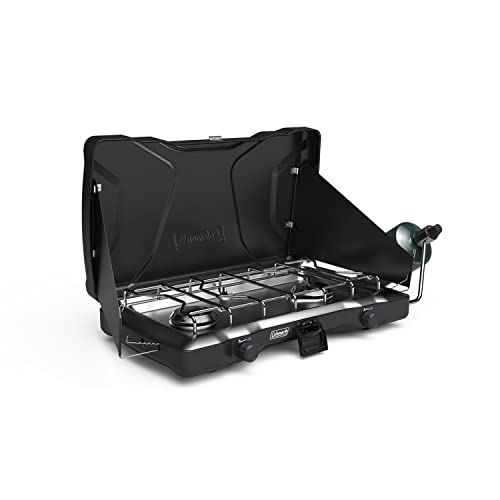
Whatever region you camp in, a stove keeps dinner on the menu when a ban drops campfires. Most Forest Service fire orders exempt pressurized propane stoves, and some require a burner with an on/off valve. The Coleman Triton 2-burner covers basic camp meals. Compared to the Triton, the Camp Chef Everest 2X packs more power into a compact case, while the Camp Chef Explorer suits big group camps.
Propane camp stoves for fire-ban season


Where the Record El Nino Stands Now
Scientists track El Nino with the Nino 3.4 index, which measures sea temperatures in the east-central Pacific. The daily record for this index reaches back only to the early 1980s. Researchers compare this event with the super El Nino of 1877-78, which they estimate at about 2.7°C from old ship logs.
| Key Fact | Details |
|---|---|
| Daily Nino 3.4 reading, Sept. 21, 2026 | 3.11°C (5.6°F) above normal, a new daily record |
| Previous daily record | 3.08°C on Nov. 18, 2015 |
| Forecast peak | About 4.1°C (7.4°F), most model runs between 3.4°C and 4.6°C |
| Peak timing | November 2026 to January 2027 |
| NOAA odds | Over 90% chance of a “very strong” event this fall and winter |
| Global temperature | 2027 “very likely” to replace 2024 as the warmest year on record (UK Met Office) |
The timing matters most for campers. Because the ocean warms the air with a lag, most of the global heat from this event lands in 2027, not 2026. While the peak arrives this winter, the warm aftermath covers your spring and summer trips. In the BBC News report below, you get the new record explained in under three minutes.
What Super El Nino 2027 Means Where You Camp
El Nino does not heat every region the same way. Instead, it shifts the Pacific jet stream, which tends to split North America into a drier north and a wetter south. NOAA’s winter outlook, issued Sept. 17, 2026, follows this classic pattern.
Super El Nino 2027 in the Northern US and Western Canada
NOAA gives the interior Northwest and the northern tier states a 50% to 60% chance of above-normal winter temperatures. It also tilts the odds slightly toward a drier winter, specifically in the interior Northwest and the Great Lakes. North of the border, ClimateData.ca expects drier conditions over the Rockies, the Okanagan, and much of Alberta. It also calls for spring 2027 to run at least 1°C to 2°C above average over large parts of British Columbia and the Yukon.
For you, this points to less snow on the passes and an earlier start to dry-season rules. If you run trails in Montana, Idaho, Washington, Oregon, Alberta, or BC, expect forest roads to open sooner. Expect fire danger ratings to climb early as well, especially on south-facing slopes. For recent examples of how fast closures stack up in these states, see our report on federal fire closures from August 2026.
California, the Southern Tier and the Southeast: Wetter Winter
Down south, NOAA favors a wetter winter along the California coast, at 50% to 60% odds. The strongest wet signal sits over southern Georgia and northern Florida, at 70% to 80%. As a result, winter trips in these regions face mud, washouts, and closed low-water crossings more than fire. Still, a wet winter does not cancel summer fire danger, so the fire-ban check below applies everywhere.
Why a Warm Winter Means a Longer Wildfire Season
Snowpack acts as a slow-release water tank for western forests. Therefore, when it melts early, soils and fuels dry out weeks sooner. A landmark 2006 study in Science by Anthony Westerling found a longer western US wildfire season after the mid-1980s. The season grew by 78 days, and early-snowmelt years accounted for 72% of the area burned.
For Canada, ClimateData.ca links reduced precipitation over western Canada to a lower-than-normal snowpack, drought, and “a greater burned area the following spring and summer.” The 2023 season shows what a hot, dry year looks like. Fires burned about 18.5 million hectares (45.7 million acres), more than double the 1989 record of 6.7 million hectares. Because El Nino formed partway through the summer, the season is a picture of heat and drought, not proof of an El Nino effect.
The US also enters this event with fire already running hot. As of Sept. 26, 2026, NIFC counts 8.56 million acres burned this year, or 143% of the 10-year average. For this reason, a dry winter in the north adds risk on top of an active baseline. If smoke is your concern, our guide to how long wildfire smoke lasts covers when to push through and when to reroute.
2027 vs. 2016: What the Last Super El Nino Did
The closest modern comparison is the 2015-16 super El Nino. After a peak in late 2015, 2016 became the warmest year on record at the time, according to NASA and NOAA. In northern Alberta, the El Nino winter left a thin snowpack, which melted fast in a warm spring.
Then, in spring 2016, the Fort McMurray wildfire started in northern Alberta. It burned 589,552 hectares (about 1.46 million acres) and forced about 88,000 people to evacuate. With a total cost of C$9.9 billion, it became the costliest disaster in Canadian history. ClimateData.ca notes the fire burned during the late stages of the 2015-16 El Nino.
The 2026-27 event has already beaten the 2015-16 daily record, and it is still building. No forecast names where 2027 fires will start. Even so, the northern outlook points the same way it did before 2016. For this reason, plan for early bans and keep a backup route in a different forest.
How Fire Bans Work: Stage 1, Stage 2 and Canadian Rules
A fire ban is a legal order, not a suggestion, and each land agency writes its own. In the US, the Forest Service and BLM mainly use a two-stage system. Canadian provinces, in contrast, use their own categories. Because rules vary by forest and district, always read the exact order for the area you plan to visit.
Stage 1 and Stage 2 Fire Restrictions in the US
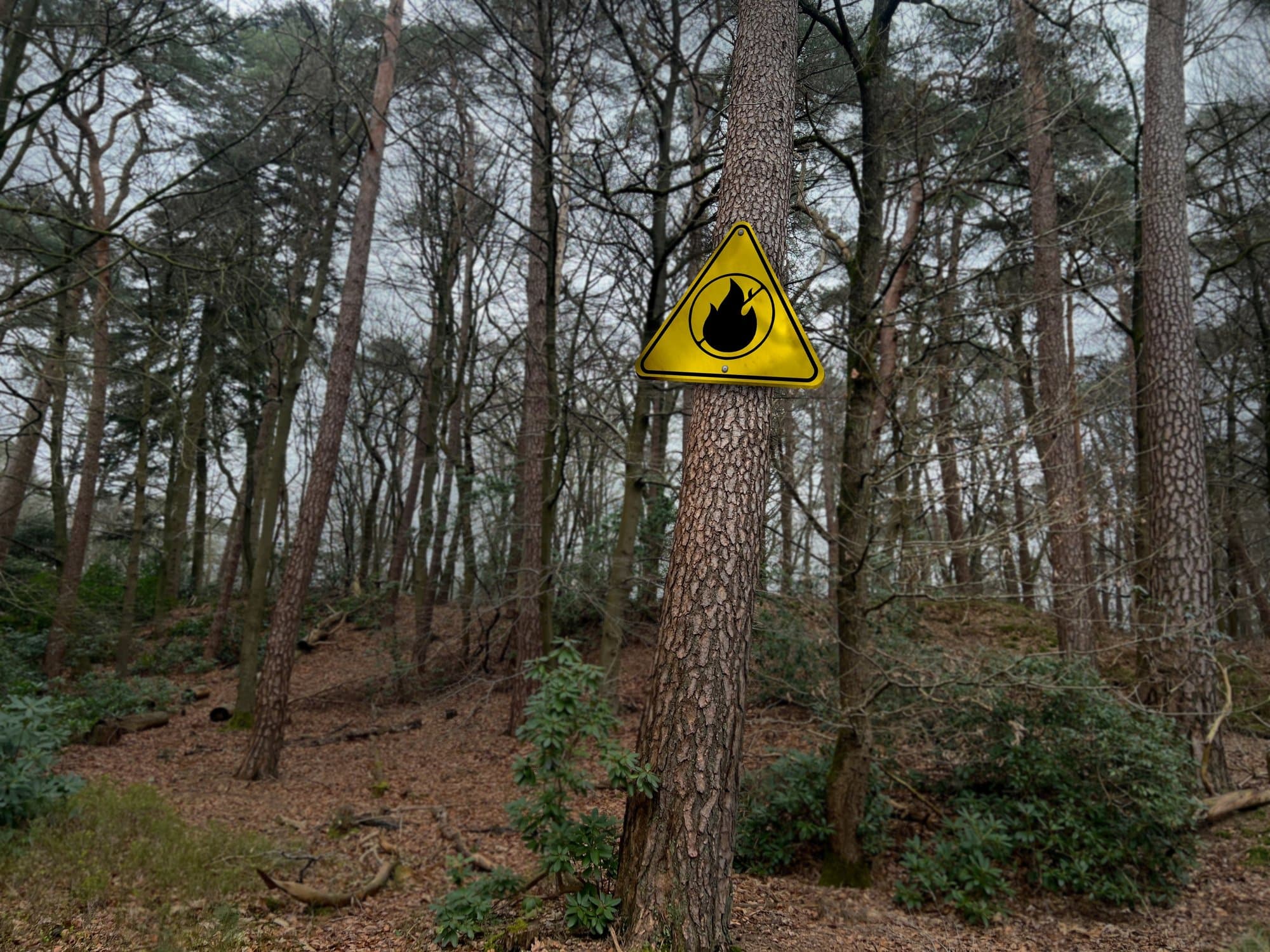
Under Coconino National Forest’s Stage 1 rules, campfires and charcoal fires stop except in Forest Service fire rings at developed recreation sites. Smoking is limited to places such as vehicles, buildings, developed sites, or a cleared 3-foot area. Under Stage 2, all campfires and charcoal fires stop, even at developed sites. Both stages exempt stoves and grills fueled only by pressurized propane or pressurized liquid petroleum, such as white gas. For a real-world breakdown, see our guide to Stage 2 fire restrictions in Central Oregon.
Before You Pack the Firewood
Check Fire Restrictions Where You Plan to Camp
Call the local ranger district, BLM field office, or fire department, or use the BLM list of state fire restriction pages. Rules change week to week in a dry year.
Canadian Campfire Bans
In British Columbia, a Category 1 fire is a campfire up to 0.5 meters high by 0.5 meters wide. During a campfire ban, CSA- or ULC-rated stoves with a flame under 15 centimeters tall are usually still allowed. An illegal campfire in BC risks a C$1,150 ticket. In Alberta, the levels run from fire advisories to restrictions to full fire bans. Propane appliances with an on/off valve stay legal there even under a ban.
Safety note: In dry, windy conditions, one ember from a campfire or a hot exhaust pipe on dry grass starts a fire. Park on dirt or gravel, carry water and a shovel, and drown every legal fire until the ashes are cold to the touch.
Three pieces of gear cover most campsite fire safety. The Kidde Basic 110 carries a 1-A:10-B:C rating, so it handles wood and brush along with fuel fires. Next, a Rhino USA folding shovel digs a fire line or smothers embers. Add a pair of ITRAZ 5.3-gallon collapsible water containers, and you have enough water to drown a fire with no creek nearby.
Campsite fire safety gear for a dry 2027


How to Plan 2027 Camping Trips Around Fire Restrictions
Good planning turns a fire ban from a trip-ender into a small change of menu. Use this routine for every trip next season:
- Two weeks out, check the fire danger rating and any restriction orders for the forest, BLM district, or province.
- Three days out, call the ranger district or local fire department and ask about new orders or closures.
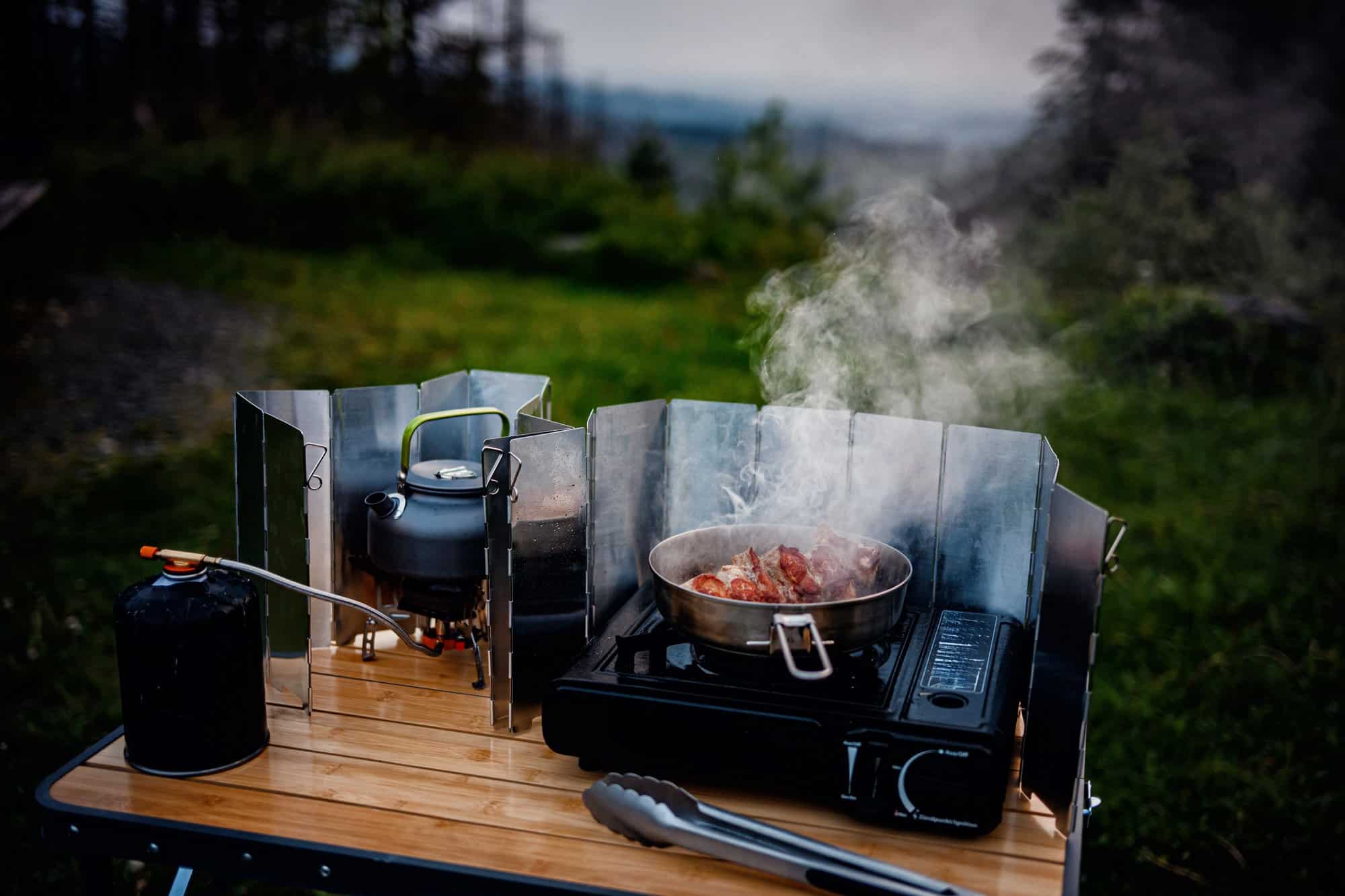
- Pack a propane stove with an on/off valve so dinner does not depend on a campfire.
- Carry at least 5 gallons of water, a shovel, and a fire extinguisher.
- Save a second destination in a different forest in case of a closure.
These steps also help in summer heat, which a warm 2027 makes more likely. For shade, water, and sleep tips, read our guide to camping comfortably in extreme heat. Our list on emergency preparedness for your overland rig covers evacuation gear for a fast exit.
Final Thoughts
The record ocean reading, NOAA’s odds, and the Met Office’s call for a record-warm 2027 all point the same way. For campers in the northern US and western Canada, expect a warmer season, a thin snowpack, and a longer window for fire bans. Down south, a wetter winter brings mud and high water first.
After five Jeeps and now a Colorado ZR2, my rule for 2027 is easy: treat every campfire as a bonus. I would build each trip around a propane stove and plan meals to match. A Stage 1 or Stage 2 order then changes your dinner, and your weekend stays intact. Also, carry water and a shovel, because the rules only work when every camper follows them.
Most of all, make the phone call. After all, your local ranger district, BLM office, or fire department knows about restrictions before any app does. In Canada, CIFFC links to the provincial and territorial wildfire agencies, which post current campfire bans.
Camping in Canada?
Find Your Provincial Fire Ban Map
CIFFC links to the provincial and territorial wildfire agencies. Check the current campfire ban for your route, then call the local fire department if in doubt.
Frequently Asked Questions
What does a super El Nino mean?
A super El Nino is an unusually strong El Nino, where the east-central Pacific runs well above normal for months. The 2026-27 event hit a record daily reading of 3.11°C above normal on Sept. 21, 2026. Forecasts point to a peak near 4.1°C this winter.
What does El Nino mean for summer camping in 2027?
Most of the global heat from this El Nino lands in 2027, so expect a warmer camping season. In the northern US and western Canada, a thin snowpack points to an earlier wildfire season. As a result, campfire bans are more likely to start early.
When was the last super El Nino?
The last super El Nino ran from 2015 to 2016. Its daily Nino 3.4 reading peaked at 3.08°C in November 2015, a record until Sept. 21, 2026. The 2016 Fort McMurray wildfire burned during its late stages.
Does El Nino cause drought?
El Nino tends to bring drier winters to the interior Northwest, the northern Rockies, and parts of western Canada. It tends to bring wetter winters to California and the southern US. Drought risk depends on your region.
Is there a fire ban near me?
Call the local ranger district, BLM field office, or fire department for the most current answer. The BLM lists state fire restriction pages, and CIFFC links to the Canadian wildfire agencies. Check again a few days before you leave.