



Quick Facts:
- Investigation: NHTSA EA26006, opened August 21, 2026
- Vehicles covered: 1,164,820 (estimated)
- Reports: 745 incidents, 22 crashes or fires, 6 injuries, 0 deaths
- Off-road models in scope: 2023-2026 Chevrolet Colorado and GMC Canyon, every trim
- Not named in the filing: Silverado, Sierra, Tahoe, Suburban, Yukon, Escalade
- Recall status: None issued
- Prior probe: PE24011, opened April 2024 on 3,322 vehicles
- Best for: Colorado, Canyon and Lyriq owners deciding what to do next
8 min read
In This Guide
- GM eBoost Brake Investigation: What NHTSA Opened
- Which GM Vehicles Are Covered, and Which Are Not
- The Complaint Record
- What the GM eBoost System Does
- GM’s eBoost Service History, 2019 to 2023
- GM eBoost Brake Investigation Stages and Timeline
- What GM Owners Should Do Now
- Final Verdict
- Frequently Asked Questions
GM eBoost Brake Investigation: What NHTSA Opened
On August 21, 2026, federal regulators escalated the GM eBoost brake investigation to an engineering analysis covering 1,164,820 vehicles. The case number is EA26006, and its subject line reads Electronic Brake Module Component Failure. Own a Chevrolet Colorado ZR2 or a GMC Canyon AT4X? Any 2023 through 2026 trim of either truck sits inside the population under review. No recall has been issued.
NHTSA’s problem description is short and alarming. It reads: “failure of eBoost system causing loss of braking and steering assist functions.” Notably, the narrative section never revisits the steering claim or explains a mechanism, so treat the steering half as an allegation on file rather than a settled finding.
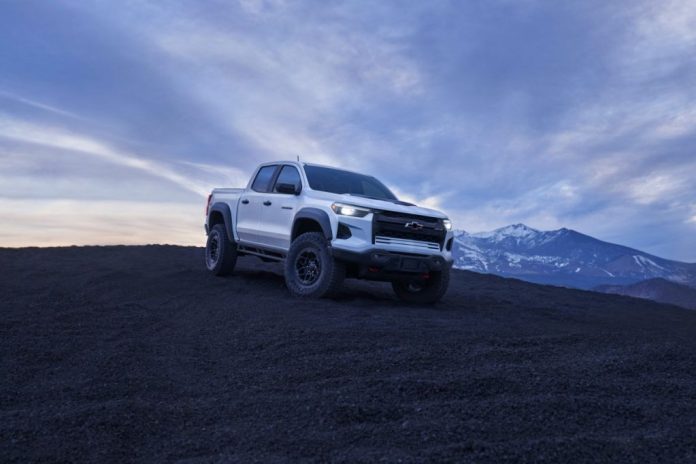
For off-road readers, one detail matters above the headline number. Every 2023 through 2026 Chevrolet Colorado and GMC Canyon sits inside the population, at every trim level. Therefore ZR2, ZR2 Bison, Trail Boss, Z71, AT4 and AT4X owners are all included. Since NHTSA scoped the probe by model year alone, no trim escapes it.
The escalation itself is the news. This stage is the last one before NHTSA decides whether to demand a recall. Therefore the move signals the agency is no longer satisfied with GM’s explanation.
Which GM Vehicles Are Covered, and Which Are Not
Most coverage published this week listed the wrong vehicles. The investigation resume names 2023 through 2026 Cadillac Lyriq, Chevrolet Colorado and GMC Canyon. Then it adds 2024 through 2026 Buick Enclave, Buick Envision, Chevrolet Blazer EV, Chevrolet Equinox EV, Chevrolet Traverse, Cruise Origin and GMC Acadia. Finally it lists 2025 through 2026 Cadillac Celestiq and Optiq.
Similarly, two more appear as peer vehicles rather than GM products. Both the 2024 through 2026 Acura ZDX and Honda Prologue come from the GM and Honda joint venture.
Here is what the resume does not contain. Silverado 1500 is absent. So are Sierra 1500, Tahoe, Suburban, Yukon, Yukon XL and both Escalade variants. In addition, the gasoline Chevrolet Blazer is absent, although at least one outlet listed it. Only the Blazer EV appears. In contrast, Colorado and Canyon are named outright, which puts GM’s two midsize off-road platforms at the center of the case.
GM is also investing $157 million in Wentzville, the only plant building the Colorado ZR2, so the midsize line is not going anywhere. The distinction matters for anyone shopping a full-size rig. Buyers weighing a 2027 Silverado against a midsize should know the brake probe follows the smaller trucks, not the half-tons.
The Complaint Record
| Data Point | Figure |
|---|---|
| Total incident reports | 745 (227 owner, 531 manufacturer, duplicates removed) |
| Crashes or fires | 22 (21 owner-reported, 1 from GM) |
| Injury incidents | 5, involving 6 injuries |
| Fatalities | 0 |
| Population, prior probe | 3,322 (2023 Lyriq only) |
| Population, current probe | 1,164,820 |
The scale comparison is worth holding onto. For context, Ram’s 1,271,294-vehicle seat belt recall covered a similar number of trucks, and the Ram action produced a remedy. This one has produced only an investigation so far.
What the GM eBoost System Does
By published accounts, eBoost replaces the traditional vacuum brake booster with an electro-hydraulic unit. Because modern turbocharged and electric powertrains generate little or no engine vacuum, the industry moved to powered boosters years ago. The unit multiplies pedal effort electrically instead.
NHTSA’s filing does not identify the eBoost supplier, and GM has not publicly named one. Several similar-sounding products from other suppliers exist, so avoid assuming a brand from the name alone.
GM’s account of the failure runs through a fractured spindle inside the unit. According to the agency’s summary of GM’s position, anti-lock braking, stability control and traction control remain functional until the vehicle comes to a complete stop. At the moment of the stop, those functions are lost.
Meanwhile, the driver gets clear warnings. The brake control module sets one of three trouble codes and sounds an audible chime. It also displays a Service Brake System message and lights the ABS, traction and brake telltales. Then it limits vehicle speed to 70 kilometers per hour, or 43 miles per hour.
What the GM Limp Mode Means Off Pavement
Consider what a 43 mph speed limiter means on a remote two-track. Because the limp mode engages wherever the failure happens, a Colorado ZR2 two hours from pavement faces a slow, long drive out with degraded brake assist.
Trail speed rarely tops 43 mph, so the limiter itself might not change your pace on technical terrain. The real exposure sits on the gravel road back to pavement, where 43 mph feels slow and following distance matters more than usual. If a warning fires two hours from cell signal, turn toward pavement instead of pushing deeper onto the trail.
GM’s eBoost Service History, 2019 to 2023
The eBoost unit has a service history stretching back years, though none of it covers the current fleet. In 2019, GM issued Service Update N192210460 for an eBoost control module software fault. Then in March 2021, it opened Customer Satisfaction Program N202324120 to replace eBoost units on 23 examples of the 2021 Silverado 1500 and Sierra 1500.
Two more actions followed. GM introduced a new material clean break point at its assembly plants in the spring of 2023. Afterward, it developed an over-the-air update cycling the booster at every key-on to detect a fractured spindle.
NHTSA’s earlier filing includes a pointed sentence about the second fix: “This software update was not conducted as a recall.” In other words, GM addressed a hardware failure with detection software and a running material change, without a formal safety campaign.
The pattern echoes GM’s engine troubles. The company is defending litigation over its 6.2L V8 recall while a separate probe, EA26005, examines whether the engine remedy worked. Notably, EA26005 opened one day before this one and shares no vehicles with it.
GM eBoost Brake Investigation Stages and Timeline
NHTSA works in stages. A preliminary evaluation comes first, and the agency targets eight months for one. An engineering analysis follows, with an 18-month target. Only afterward does the agency decide whether to press for a recall.
This case began as PE24011 on April 11, 2024. At the time it covered the 2023 Cadillac Lyriq alone, a population of 3,322. Remarkably for a defect probe, it opened on manufacturer field reports with zero owner complaints on file.
The preliminary stage ran roughly 28 months against an eight-month target, and the population grew about 350 times over. Consequently, owners have waited more than two years for an answer. Meanwhile the affected fleet expanded from one luxury SUV to a dozen nameplates.
The specific trigger for escalation appears in the resume. Some reports, it says, describe symptoms inconsistent with GM’s description of a spindle failure. Those reports allege an immediate loss of brake assist rather than a loss after the vehicle stops. Therefore the agency is testing whether GM’s engineering story holds.
GM’s public response is short but not empty. Spokesperson Bill Grotz told The Detroit News the safety of customers is the highest priority for the entire GM team. He then said GM has “conducted a thorough investigation, determining the alleged condition does not present an unreasonable risk to motor vehicle safety.” The phrase matters. An unreasonable risk to motor vehicle safety is the exact legal standard a recall demand turns on. GM is on record saying this does not meet it. Regulators escalated the case anyway.
What GM Owners Should Do Now
The GM eBoost brake investigation has produced no recall, so a VIN check returns nothing for this issue today. Still, four steps are worth taking if you own a covered vehicle. Because an engineering analysis often runs for a year or more, the habits you build now matter later.
First, file a complaint if you have experienced a brake assist failure. Reports go to NHTSA’s safety problem portal or the Vehicle Safety Hotline at 888-327-4236, weekdays 8am to 8pm Eastern. The agency states there is no set number of complaints required to act, since it weighs every report against other data. For instance, this case opened on manufacturer field reports with no owner complaints at all.
Second, document everything as it happens. Keep dated photographs of dashboard warnings, written notes on speed limiter events, and copies of every repair order. If a recall arrives later, the paper trail supports a reimbursement claim for work you paid for.

REDTIGER F7NP 4K Dash Cam Front Rear, STARVIS 2 Sensor, Free Card Included
A dash camera that timestamps dashboard warnings and any hard-braking event automatically, backing up the documentation habit this investigation calls for.
- Event detection saves footage automatically when the G-sensor trips
- Parking mode keeps recording after you leave the truck
- Free memory card included
- Parking mode requires a hardwire kit sold separately
- Does not read or interact with the vehicle's brake system
Documenting a GM Brake Fault
Third, take the warnings seriously. A Service Brake System message paired with a 43 mph limiter is the system telling you it has lost redundancy. Get it scanned before your next trail run rather than after.
Fourth, plan trips around the failure mode. Carry a way to call for help outside cell coverage. Also tell someone your route and return time. Then treat a Service Brake System warning on the trail as a turn-around signal, never a push-through signal.
Final Verdict
If you drive one of the affected trucks, it sits in the population and its brakes have not been recalled. Those two facts sit together uncomfortably, and they will stay in place for a while. NHTSA’s own target allows 18 months from August 2026 to reach a conclusion. Meanwhile Colorado and Canyon owners keep driving trucks under federal review.
The strongest argument for concern is not the crash count. It is the timeline. GM identified a spindle problem, changed materials in 2023, and developed detection software it explicitly declined to run as a recall. Now regulators say owner reports do not match the explanation.
The strongest argument against panic is the warning system. Unlike a silent failure, this one announces itself with a chime, a dash message, three telltales and a speed limiter. Drivers get told something is wrong before the situation becomes a surprise.
Treat it the way you would treat any open probe on a truck you rely on. File a report if it happens to you, keep receipts, and do not let a Service Brake System light ride for a season. Owners tracking multi-campaign safety actions on other brands already know the drill. Above all, do not read the absence of a recall as an all-clear. The probe exists precisely because the agency doubts GM’s current explanation.
Frequently Asked Questions
Is my Chevy Colorado being recalled for brakes?
No. EA26006 is an investigation, not a recall. Your 2023 through 2026 Colorado sits inside the 1,164,820-vehicle population under review, but GM has issued no remedy and NHTSA has demanded none.
Is the Silverado part of the GM eBoost investigation?
No. The resume covers Colorado and Canyon among trucks, plus several crossovers and EVs. Silverado 1500, Sierra 1500, Tahoe, Suburban, Yukon, Yukon XL and Escalade do not appear, despite some early reporting suggesting otherwise.
What does an engineering analysis mean?
It is the final investigative phase of an NHTSA defect probe, following a preliminary evaluation. The agency targets 18 months to complete one. Three things follow: NHTSA closes the case with no defect finding, the maker files a voluntary safety recall, or NHTSA orders one over the maker’s objection.
What is the GM eBoost system?
An electro-hydraulic brake booster replacing the vacuum unit older vehicles used. It multiplies pedal effort electrically, which suits turbocharged and electric powertrains producing little engine vacuum.
What happens if eBoost fails while I am driving?
Per GM’s account to NHTSA, anti-lock braking, stability control and traction control keep working until you stop, then drop out. The truck sets a trouble code, chimes, shows a Service Brake System message and limits speed to 43 mph.