


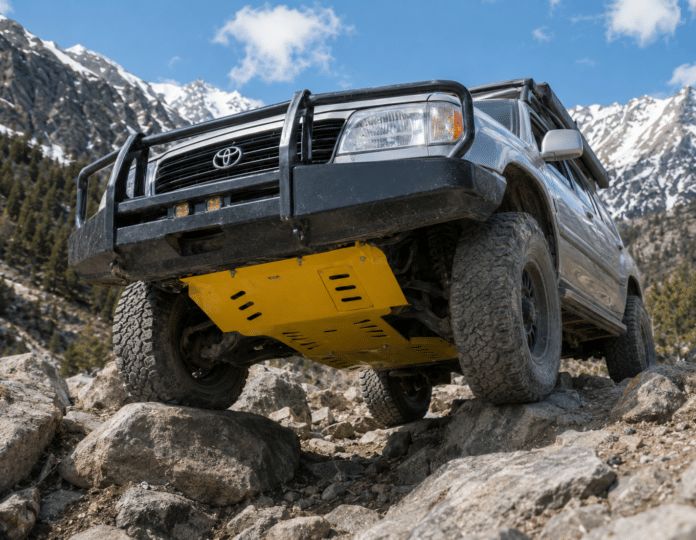

After years of overlanding across the American West, I’ve watched a predictable pattern play out: new off-road builds skip skid plates. Someone picks up a capable rig, starts researching mods, and immediately fixates on lift kits, bigger tires, or a roof rack. Those upgrades are all fine. However, the first thing that gets destroyed on a technical trail is almost never the suspension or the roof. It’s the oil pan, the transmission case, the fuel tank, the differential cover. All the components hanging closest to the ground, completely exposed to whatever the trail throws at them.
Treating skid plates as your first mod is the sequence that keeps your rig running. It’s also why skid plates first mod priority belongs in every build plan before lift kits, tires, or accessories. Skid plates as a first mod decision is the foundation every other upgrade builds on. Before spending money on anything else, your rig’s undercarriage needs protection. On a Utah shelf road, I watched a single rock destroy an unprotected oil pan. That outcome isn’t something you want to deal with 40 miles from the nearest town.
If you’re researching Land Cruiser skid plates, Big Slack Off Road’s Underwhere Skidplate System is one of the most thorough solutions available. It covers the full belly of the rig from front crossmember to rear axle. This article explains why skid plates are the smart first mod, and what full underbelly protection looks like in practice.
Quick Facts:
- Product: Big Slack Off Road Underwhere Skidplate System
- Compatible With: Land Cruiser 100 Series / Lexus LX470
- Material: 3/16″ steel, zinc primed and powder coated
- Coverage: Full belly, front crossmember to rear axle, rock slider to rock slider
- Plates: 3-piece system (purchasable individually)
- Weight: ~450 lbs total system
- Install Time: 4–5 hours initial mount installation
- Removal Time: Under 40 minutes (plates 2 and 3, one person with floor jack)
- Lead Time: 8–10 weeks (built to order)
- Price: $2,200
- Best for: Land Cruiser 100 / LX470 owners who run technical terrain and want full undercarriage protection
8 min read
In This Article
- Why Skid Plates Come First
- Underwhere Skidplate System Specs
- What Skid Plates Protect on the Trail
- Material and Thickness: Why 3/16″ Steel Matters
- Full Belly Coverage vs. Partial Protection
- Serviceability: A Feature Most Skid Plates Ignore
- Skid Plates vs. Other First Mods: Where to Spend First
- Pros and Cons
- Final Verdict
- Frequently Asked Questions
Why Skid Plates Come First

Making skid plates your first mod is the smartest protection strategy available. It’s also the modification that pays for itself the first time you hit something hard. Specifically, off-road skid plates guard the components that are both the most expensive to replace and the most likely to fail on trail. For example, an oil pan replacement on a Land Cruiser 100 is a shop job that runs $500 to $1,500 depending on damage. A cracked transmission case is worse, and a punctured fuel tank on a remote trail is a trip-ending emergency. Compared to any of those repairs, a skid plate system costs a fraction of the price. It also prevents all of them.
The other reason to prioritize undercarriage protection is that it protects your ability to keep wheeling. Suspension upgrades also make your rig more capable. Bigger tires similarly improve traction and clearance. However, none of that matters if you punch a hole in your oil pan on mile three of a 60-mile trail. Big Slack Off Road built the Underwhere system specifically because the factory skid plates on the 100 Series and LX470 leave critical components exposed. The factory setup covers part of the drivetrain. However, it leaves the transmission, transfer case, fuel tank, and 4-link mounts vulnerable when the terrain gets technical. The Underwhere, however, eliminates those gaps entirely.
Skid plates also remove a specific psychological barrier on the trail. When you know your belly is protected, you drive differently. You commit to lines that cross rock ledges instead of hunting for go-arounds that add time and sometimes create worse exposure. That confidence is worth something on technical terrain, particularly on trails where hesitation mid-obstacle creates more risk than committing cleanly.
Underwhere Skidplate System Specs
| Specification | Details |
|---|---|
| Compatible Vehicles | Land Cruiser 100 Series / Lexus LX470 |
| Material | 3/16″ steel, zinc primed, powder coated |
| Number of Plates | 3 main plates |
| Coverage | Front crossmember to rear axle, rock slider to rock slider |
| Plate 1 (Front) | Attaches to frame crossmember and recovery points; includes diff drop |
| Plate 2 (Center) | Largest plate; extends rock slider to rock slider; heat/mud ventilation slots |
| Plate 3 (Rear) | Covers fuel tank and 4-link mounts; driveshaft cutout included |
| Access Points | Oil filter and drain plug access in front plate |
| Total Weight | ~450 lbs |
| Initial Install Time | 4–5 hours |
| Plate 2 and 3 Removal | Under 40 minutes, one person with floor jack |
| Finish | Zinc primer + powder coat |
| Lead Time | 8–10 weeks (built to order) |
| Price | $2,200 (plates purchasable individually) |
Buy Direct From Big Slack Off Road
Underwhere Skidplate System ($2,200)
Built to order with an 8–10 week lead time. Plates are purchasable individually so you protect what matters most first.
What Skid Plates Protect on the Trail

The undercarriage of a 4×4 is full of expensive components. They’re difficult to access on the side of a trail and completely unprotected from below on most stock rigs. The front differential is one of the first things to take a hit on rocky terrain. It hangs low and sits directly in the path of rocks that the front tires ride over. A cracked differential housing means fluid loss, and fluid loss means a seized axle before you get back to the trailhead.
The transmission and transfer case sit in the center of the rig. They take hits from rocks that pass under the front skid plate. On a Land Cruiser 100, the torsion bar setup creates vulnerability zones in the center of the chassis where factory protection is thin. The center plate of the Underwhere system covers this entire zone. It extends rock slider to rock slider with ventilation slots that allow heat to escape. Those slots don’t give rocks a path to the components above. The rear plate covers the fuel tank and the 4-link mounts. On the 100 Series, those 4-link mounts get hit regularly on technical trails and bend on rigs without rear protection.
Material and Thickness: Why 3/16″ Steel Matters
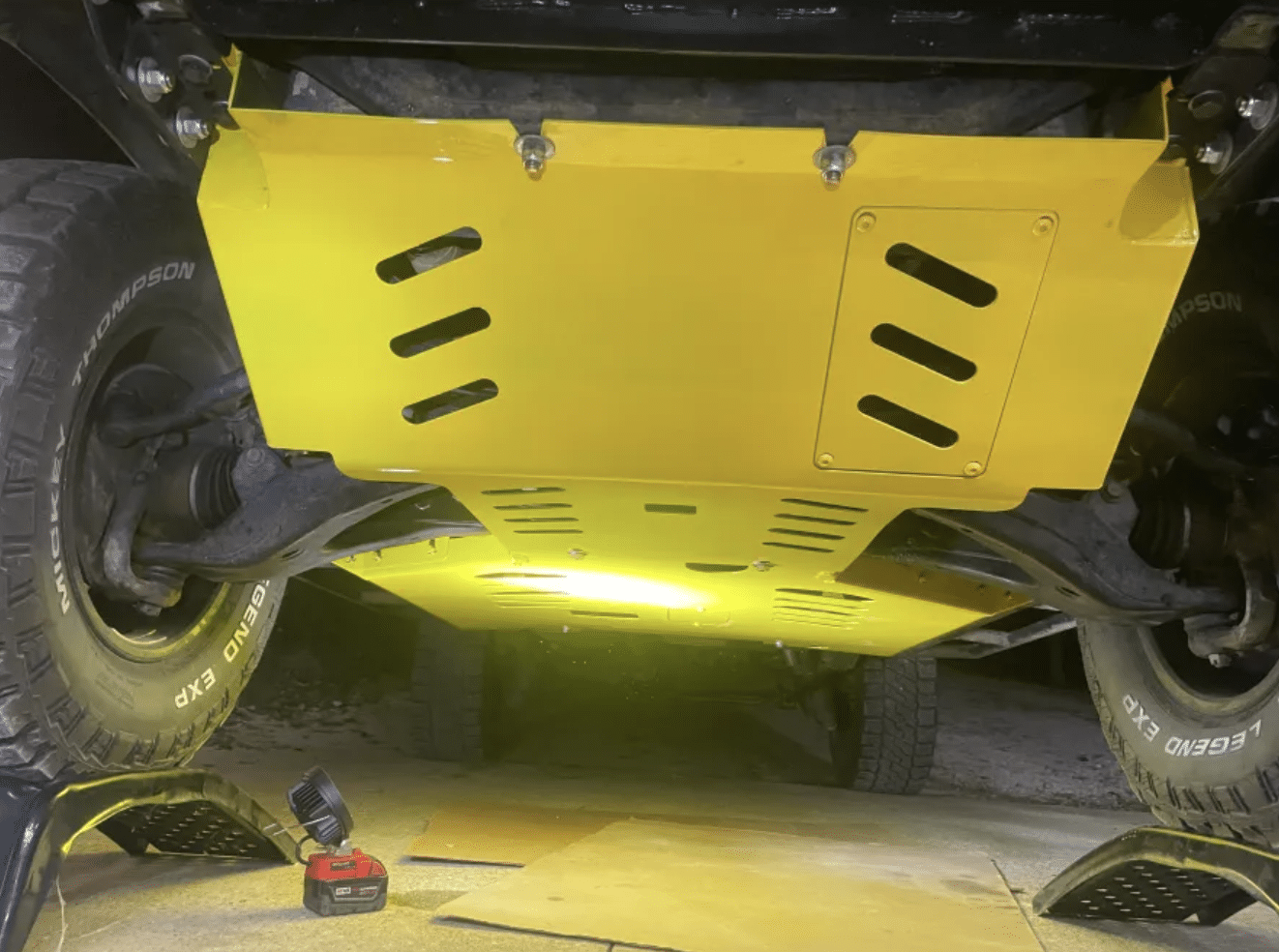
Skid plate thickness determines whether the plate absorbs a hit and keeps moving or deforms enough to contact the component above it. The Underwhere system uses 3/16″ steel throughout all three plates. At that thickness, the steel is rigid enough to slide across rocks rather than flex into them. Thinner plates, particularly the 1/8″ aluminum systems common in the budget category, flex on hard impacts and transfer force upward to the components they’re supposed to protect.
Steel also handles repeated impacts better than aluminum over the long term. Aluminum work-hardens with repeated stress, developing micro-fractures at mounting points over time. Steel is more forgiving across a wider range of impact angles and temperatures. The tradeoff, however, is weight. At roughly 450 lbs total, the Underwhere is a significant addition to the 100 Series. Big Slack recommends upgrading the springs and torsion bars before installation for this reason. This is an honest call from a manufacturer who runs this system on technical terrain. They know what the added weight does to the suspension geometry long-term.
The zinc primer and powder coat finish add corrosion resistance that bare steel systems lack. Mud, water, and trail debris collect on skid plates constantly. A finish that holds up to that environment means the plates aren’t rusting from the inside out after the first wet season.
Full Belly Coverage vs. Partial Protection
Most skid plate systems protect one or two components. A front skid plate covers the differential. A transmission skid covers the gearbox. Each plate is sold and installed separately, and the gaps between them are exactly where rocks find the unprotected components. The Underwhere takes a different approach by creating a flat underbelly across the entire undercarriage, from the front crossmember to the rear axle.
That flat belly design matters specifically because it changes how the rig interacts with obstacles. When the undercarriage is a continuous flat surface, rocks and ledges slide under the vehicle rather than catching on individual components. The rig slides across obstacles instead of hanging on them. In contrast, partial protection creates edges and gaps where a rock can catch, pivot, and transfer force sideways into something expensive. Full belly coverage eliminates those catch points entirely.
The Gap Problem With Factory Skid Plates
Factory skid plates on the Land Cruiser 100 and LX470 cover the front differential and part of the transfer case. However, the transmission, fuel tank, and 4-link mounts are left exposed. In everyday driving and mild off-road use, that’s fine. On technical rocky terrain, those exposed areas become the weak point every time. The Underwhere bridges all of those gaps with three interlocking plates that create a continuous protected surface from front to rear.
Protect Your Land Cruiser
Full Belly Coverage, Built to Order
The Underwhere system covers every critical component the factory plates leave exposed. Order individual plates or the full system.
Serviceability: A Feature Most Skid Plates Ignore
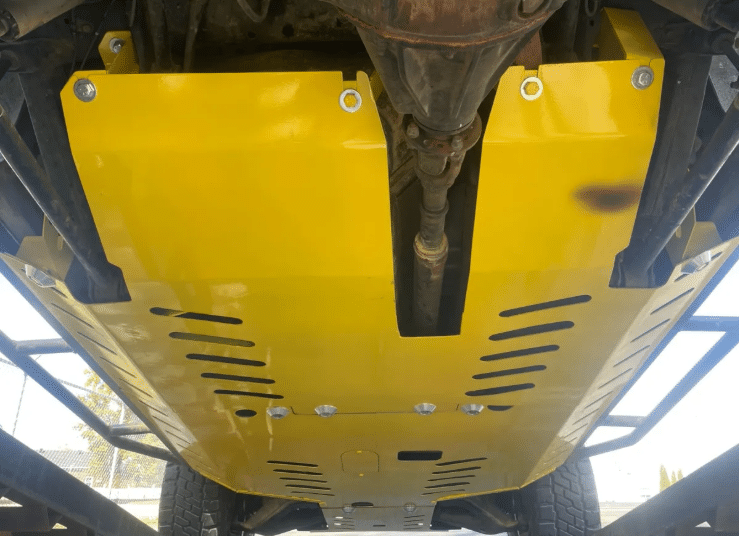
One of the most common complaints about heavy skid plate systems is that they turn routine maintenance into a production job. Oil changes require removing the plates. Filter access disappears. Fluid checks become a floor-jack job. The Underwhere addresses this directly with built-in access points for the oil filter and drain plug in the front plate. Routine service goes through the plate rather than requiring removal.
For the center and rear plates, Big Slack engineered a one-person removal process using a floor jack. It takes under 40 minutes. That’s a real number from a manufacturer who uses this system at events and needs to service the rig in the field. Many competing systems require two people, specialized tools, or more than an hour of work to remove the plates for cleaning. The Underwhere’s mount system handles the complexity of initial installation upfront, so every subsequent removal is straightforward. Initial installation of the full mount system takes 4–5 hours. Big Slack provides detailed installation videos on their YouTube channel to walk through each step.
Skid Plates vs. Other First Mods: Where to Spend First
The argument for tires first is simple: clearance prevents hits in the first place. More clearance means fewer rocks reaching the undercarriage. That’s true up to a point. Also, more clearance means you’re running more technical terrain, which means the rocks you do hit are bigger and hit harder. A 3-inch lift with unprotected components is a net loss on technical trails compared to a stock-height rig with full belly coverage.
Tires are a similar case. Larger tires with more aggressive tread improve traction dramatically and are worth the investment. However, traction doesn’t prevent the oil pan hit when you slide off a ledge sideways. Skid plates and tires complement each other, but if you’re choosing order of operations, protection before capability is the sequence that keeps you from getting stranded. Notably, a skid plate system won’t make your rig more capable on trail. Instead, it protects the capability you already have and ensures that one bad line choice doesn’t end your trip permanently.
Pros and Cons
Pros
- Full belly coverage from front crossmember to rear axle, no exposed gaps for rocks to find
- 3/16″ steel throughout, rigid enough to slide across obstacles rather than flex into components
- Flat underbelly design allows true sliding across rocks and through mud
- Built-in oil filter and drain plug access eliminates removal for routine service
- Plates 2 and 3 removable by one person with floor jack in under 40 minutes
- Covers factory-exposed areas: transmission, fuel tank, and 4-link mounts
- Purchasable individually to protect the most critical areas first if needed
- Zinc primer and powder coat finish resist corrosion from mud and water exposure
Cons
- ~450 lb total weight; spring and torsion bar upgrade recommended before installation
- 8–10 week lead time; built to order, not available off the shelf
- Vehicle-specific to Land Cruiser 100 Series and LX470 only
- Initial installation takes 4–5 hours, not a quick bolt-on job
Final Verdict

Skid plates are the right first mod because they protect everything else you plan to build. A lifted, locked Land Cruiser with no belly protection is one bad rock strike away from a recovery call or an expensive repair. The Underwhere Skidplate System from Big Slack Off Road is the most complete solution available for the 100 Series and LX470. It covers every factory-exposed component with 3/16″ steel and a flat belly design that slides across obstacles rather than catching on them.
The 450 lb weight is the honest trade-off here. It’s significant, and the spring and torsion bar recommendation isn’t optional if you plan to run the rig hard. Factor that into your build budget alongside the $2,200 system price. For Land Cruiser owners who run events like Cruisers on the Rocks or the Great Smoky Mountain Roundup, that weight is well spent. Rocky technical terrain is the entire point at those events. The Underwhere is a purpose-built system from a team that runs it on their own rig at those exact events.
The serviceability design separates this system from most competitors. Access holes for routine fluid service mean skid plates don’t block maintenance. The one-person removal process handles the rest. That matters for a system you’ll leave on the vehicle for years. The individual plate purchasing option also makes it accessible to build out incrementally: front plate first, center second, rear third, as budget allows.
For Land Cruiser 100 Series and LX470 owners who run technical terrain, the Underwhere is the clear choice for full underbelly protection. If you’re not on a 100 Series platform, the principle still applies: get your belly protected before you spend money on anything else.
Ready to Buy?
Check Today’s Price on the Underwhere System
Built to order with an 8–10 week lead time. Big Slack is also happy to answer fitment questions directly.
Frequently Asked Questions
Do I need skid plates for off-roading?
Yes, particularly on rocky terrain. The oil pan, differential, transmission, and fuel tank hang low beneath your rig. Most vehicles offer no factory protection beyond a basic front skid plate. A single hard rock strike on any of these components can end your trip and cost thousands in repairs. Skid plates are the modification that protects every other investment you make in your rig.
What do skid plates protect on a 4×4?
A full skid plate system protects the front differential, transmission, transfer case, fuel tank, and suspension mounting points. On the Land Cruiser 100 Series and LX470 specifically, the factory plates leave the transmission, fuel tank, and 4-link mounts exposed. The Underwhere Skidplate System covers all of these with three interlocking steel plates that span the full belly of the vehicle.
Are skid plates worth the cost?
Yes. A quality skid plate system costs significantly less than replacing the components it protects. An oil pan repair on a Land Cruiser runs $500 to $1,500. Transmission damage is worse. A punctured fuel tank is both expensive and a safety issue. The Underwhere system at $2,200 costs less than a single major drivetrain repair and prevents all of them.
How thick should off-road skid plates be?
For technical rocky terrain, 3/16″ steel is the standard for serious protection. Thinner plates, including 1/8″ steel and most aluminum systems, flex on hard impacts and transfer force into the components above them. The Underwhere uses 3/16″ steel throughout all three plates, which is rigid enough to slide across obstacles rather than deform into them.
How long does it take to install the Underwhere Skidplate System?
Initial installation of the full mount system takes 4–5 hours. Big Slack Off Road provides detailed installation videos on their YouTube channel to guide the process. After the mounts are installed, plates 2 and 3 remove in under 40 minutes by one person with a floor jack. The front plate includes access points for oil filter and drain plug service so routine maintenance doesn’t require plate removal.
Is skid plate installation worth doing before a lift kit?
In most cases, yes. A lift kit improves clearance but doesn’t protect the components a rock hits when you misread a line or slide off a ledge. Skid plates protect the capability you already have. Installing protection first and then adding clearance with a lift kit is the sequence that keeps your rig running rather than stranded. Specifically for the Underwhere, Big Slack recommends upgrading the springs and torsion bars before installation. The 450 lb system weight makes that recommendation particularly important to build planning.
Just so you know, some of the cool stuff we mention comes with affiliate links, meaning we earn a commission if you buy (no extra charge to you!). Plus, we occasionally feature sponsored content, but rest assured, we only shout out products we genuinely stand behind.