



Quick Facts:
- Topic: Winch rope repair for synthetic line, plus a steel cable fix
- Skill level: Intermediate; practice on spare rope first
- Strength kept by a deep bury splice: 90 to 95% (Orion Cordage)
- Strength lost to a bowline knot: Up to 65% (Marlow Ropes chart via Factor 55)
- Replace the line when: You find frayed strands, cuts, a shaggy surface, or kinks in steel rope (WARN)
- Tools needed: Splicing fid, sharp scissors, electrical tape, measuring tape, permanent marker, thimble
- Bury length: 24 inches for 3/8-inch rope
- Best for: Overlanders and off-roaders who run synthetic winch line
8 min read
In This Guide
Winch Rope Repair Overview: Splice, Do Not Knot
Winch rope repair starts with one decision: mend the line or replace it. Splice the break, and do not knot it. A snapped synthetic rope leaves your rig with a short line. The fix you choose decides how much strength you keep. A knot is the weakest choice. According to a Marlow Ropes chart published by Factor 55, a bowline costs up to 65% of rope strength.
In contrast, a splice keeps most of the strength. Orion Cordage reports a properly buried splice retains 90 to 95% of the rated strength. This guide covers the inspection step, the tools to carry, the splice steps for synthetic line, and the temporary fix for steel cable.
A repair also has limits. WARN tells owners to replace a line with frayed strands or cuts, and to replace steel rope with kinks. One exception applies to a broken synthetic line, covered below.
Tools for Winch Rope Repair
What You’ll Need
Tools
- Splicing fid sized to your rope diameter
- Sharp fabric scissors or rope shears
- Measuring tape to verify bury length
- Permanent marker for bury marks
Materials
- Electrical tape for the rope end and the taper wraps
- Metal thimble sized to your rope
- Practice rope of the same diameter
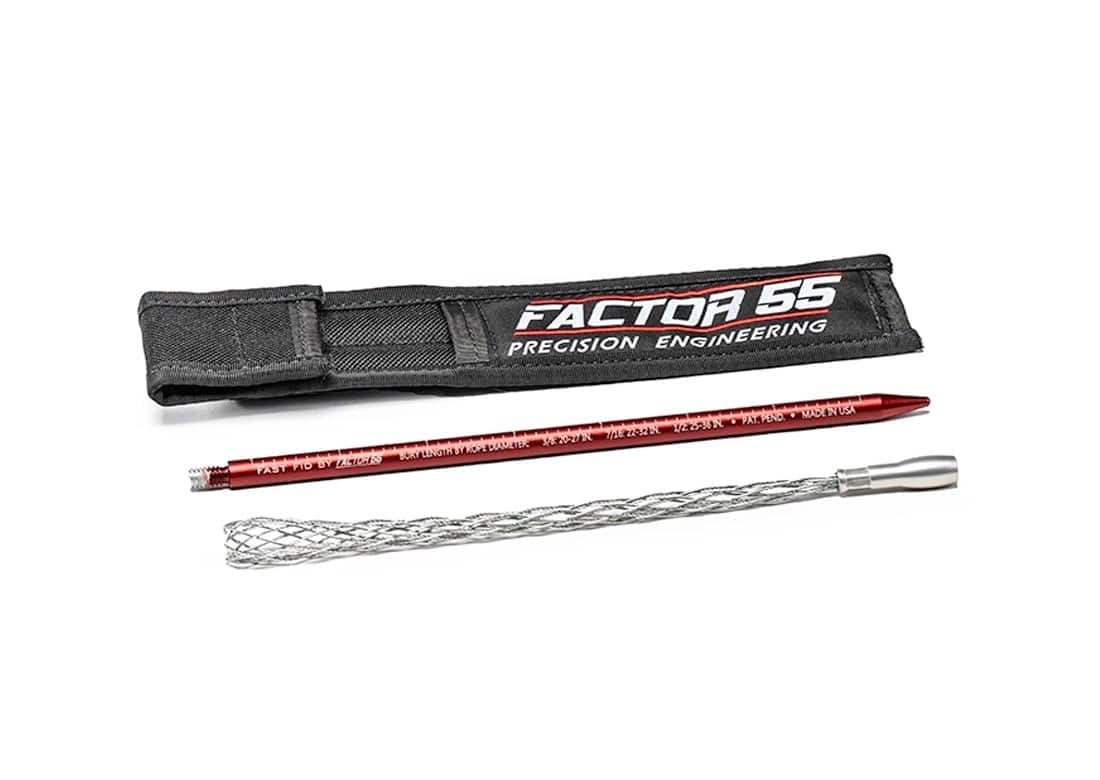
Pack these items in your recovery kit before you need them, because you cannot buy them on the trail. Store the fid, tape, and thimble in one pouch so you find them fast. A fid sized to your rope is the key piece. Orion notes a purpose-built tool such as the Fast Fid speeds up the job. Factor 55 says the wire grip on its Fast Fid holds the rope end, so you skip taping the end to the fid.
For a ready-made fid with a belt-loop pouch, the Fast Fid below fits a trail kit.

Factor 55 Fast FID Rope Splicing Tool
A two-piece splicing fid built for trail repair of synthetic winch line, with a belt-loop pouch.
- Machined from billet aluminum and anodized for corrosion protection
- Laser-engraved rope bury data and a measuring scale
- Wire grip holds the rope end with no tape needed
- Fits synthetic line up to 5/8 inch in diameter
- Made for synthetic winch line only, so it does not mend steel cable
- Limited 1 year warranty
In a pinch, some owners modify a ballpoint pen as a makeshift fid. However, Orion says this compromises precision, so treat it as an emergency fix. A metal thimble matters too. Orion calls thimbles essential for winch work because they protect the rope from abrasion and crushing at the connection point.
Inspect Your Line Before Any Repair
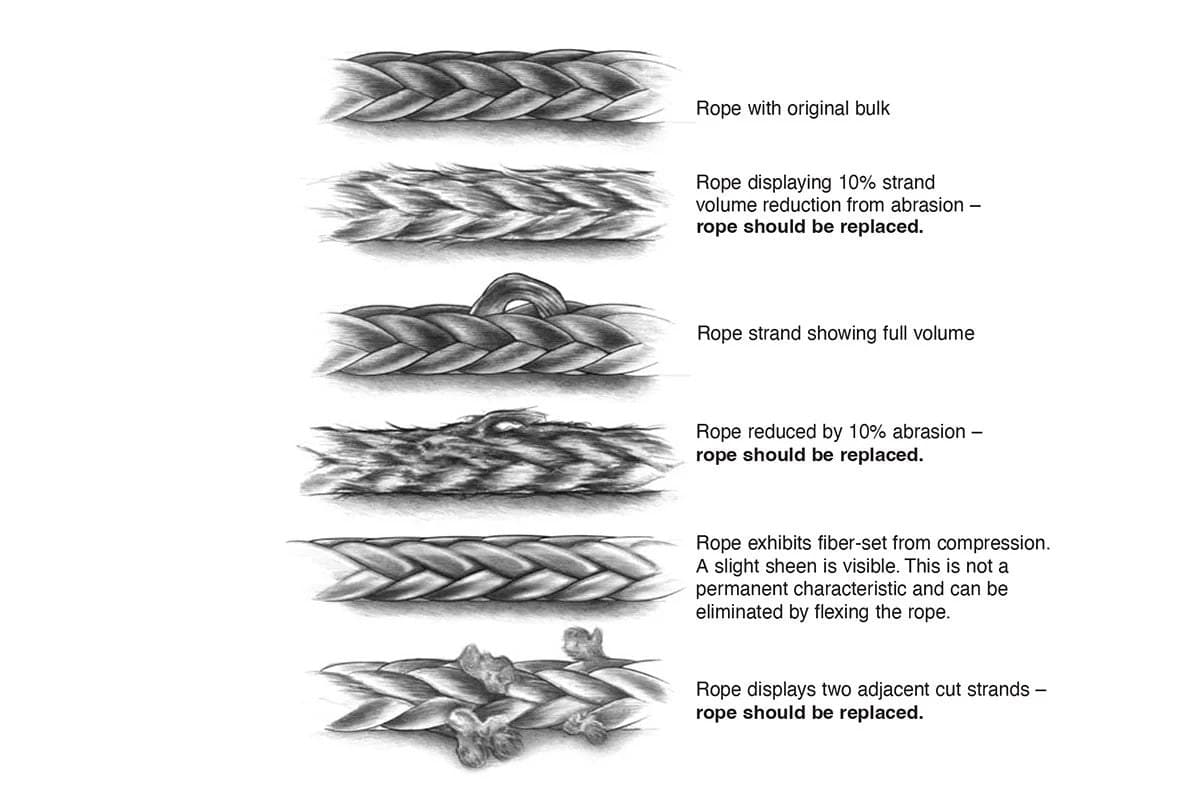
WARN explains how to check a line. First, put the clutch in freespool and pull the rope out to the anchor. Next, confirm the anchor sits securely on the drum. Then inspect the full length for frayed strands and cuts, plus kinks on steel rope. If you run synthetic rope, a shaggy surface with many small frays means the line needs replacing. Do this check at home before a trip, so you know the condition of your line before any pull.
However, flattening is different. WARN says synthetic rope sometimes flattens when layers build up on the drum, and a flattened rope usually returns to shape under tension. Still, check whether the strands themselves are frayed.
Look at the fairlead and the drum too. WARN calls abrasion the top enemy of synthetic line, so a nick on a hawse fairlead threatens the rope. Smooth burrs on the drum with sandpaper, and replace a nicked fairlead.
Safety note: Never winch with a line showing frayed strands, cuts, or kinks. WARN states a compromised rope risks a dangerous winch line failure. Stop the recovery, replace the line, and use another recovery method in the meantime.
Winch Rope Replacement vs. Repair: How to Choose
Repair suits a break near the end of the line or a worn end loop. Orion lists worn end loops as a good candidate for a DIY splice. WARN says to mend a broken synthetic rope but always replace a sliced line. Replace the line when the damage runs deep. Avoid splicing rope with cut strands, glazed sections, UV fading, or uneven diameter, Orion advises, since compromised fibers fail whatever the splice quality.
Moreover, a dirty rope is a poor candidate for splicing. Dirt and grit trapped in the braid cut fibers from the inside, and Orion cites a loss of up to 40% in breaking strength from dirt. Warranty is another factor. Orion lists warranty concerns, along with too little remaining length for the required bury, as reasons to buy pre-spliced rope.
The table ranks each fix from weakest to strongest. Only the bowline row lists strength lost, while the other rows list strength kept.
| Option | Strength result | Source |
|---|---|---|
| Bowline knot | Loses up to 65% of rope strength | Marlow Ropes chart via Factor 55 |
| Double fisherman’s knot | Retains 39%, the best knot on the chart | Marlow Ropes chart via Factor 55 |
| Splice with a short 12-inch bury on 3/8-inch rope | Fails at 50 to 60% of expected strength | Orion Cordage |
| Deep bury splice with a full 24-inch bury | Keeps 90 to 95% of rated strength | Orion Cordage |
A winch rope replacement follows WARN’s guidance on size. Install the same diameter and length the winch shipped with, because the winch and rope were designed and tested together. Stretch the new line before use. Weighing a new winch alongside new line? Our look at whether cheap winches are worth it explains what a low-cost unit costs you over time.
Winch Rope Repair Steps for Synthetic Line
These steps follow Orion’s deep bury method for 3/8-inch synthetic line. Larger rope needs a longer bury, so match the numbers to your rope diameter. Read all five before you start, and practice on spare rope first.
- Check the rope. Look for cut strands, abrasion, glazed sections, UV fading, and uneven diameter. Keep the work area clean so dirt stays out of the braid.
- Measure the tail. The tail is the length you bury. Plan 24 inches for 3/8-inch rope, and mark the length with the permanent marker. Then wrap electrical tape 6 to 8 inches from the cut end so the rope does not unravel.
- Taper the end. Starting 6 to 8 inches back from the tape, gently pull 6 to 8 individual strands from the braid. Space them about 1 inch apart and alternate sides. Cut each at its base with sharp scissors. Re-wrap the tapered section smoothly with tape. Orion says tapered splices test up to 10% stronger than blunt-end splices.
- Form the eye. Thread the tapered end through the thimble, around the groove, and back through the opposite hole. Pull the rope through until 24 inches of tail extends past the thimble. A short tail means starting over, Orion warns.
- Bury the tail. Tape the tapered end to the fid, although Factor 55 says the wire grip on its Fast Fid replaces the tape. Work the fid tip between the strands to find the hollow core, and push the fid through the full tail length. Bring it out through the rope wall and detach it. Then milk the splice by sliding your hand down the standing line until the tail disappears.
Check the Winch Splice for Bulges
The buried section should show no bumps or bunching. If you see a bulge, work the rope more firmly to spread the tail evenly. The common 12-inch rule is inadequate for rope larger than 1/4 inch, Orion adds, which is why this guide uses the longer bury.
Set and Test Your Splice
A new splice needs time to set. According to Orion, the splice might appear to stretch 2 to 4 inches as the braid compacts around the buried tail, which is normal. Read the safety note below before you load the splice.
Safety note: A loaded rope stores energy, and a failure releases it. A winch damper helps prevent recoil in a rope failure, according to WARN. It does not replace standing clear of the rope during every pull.
Now set the splice. Load it in steps of 25%, 50%, and 75% of your working load, and inspect for slippage or gaps after each step. Use a damper whenever you load a mended line. The WARN winch damper below has a rubber-coated center section and a reflective strip.

WARN 91575 Winch Damper with Rigging Accessory Storage Pocket and Reflective Strips , Black
A vinyl winch damper with a rubber-coated center section, made to help prevent rope recoil if the rope fails.
- Rubber-coated center section guards against sliding
- Pocket stores rigging accessories
- Reflective strip improves visibility
- Complies with 4WD competition damper requirements
- Helps prevent recoil in a rope failure but does not remove the risk
Also, test away from a real recovery. Try the splice on a light pull with no one near the line before you trust it on a stuck rig. For pulls without a winch, compare a kinetic rope vs snatch strap for your kit.
Winch Cable Repair for Steel Line
Do you run steel cable? The synthetic splice steps above do not apply to you. TREAD Magazine says the permanent winch cable repair is a steel clamp looping the cable back onto itself after you cut back the frayed wire. However, few people carry a compatible clamp and a crimping tool on the trail.
For this case, TREAD calls a Molly Hogan splice the best temporary solution, and Keller McCowen demonstrates the splice on steel cable for a trail fix. Read TREAD’s article before your trip, since this guide gives no steps for the splice itself. Treat any Molly Hogan splice as temporary, and replace the cable after the trip. Also keep WARN’s rule in mind: steel line with frayed strands, cuts, or kinks needs replacing, not mending.
Winch Rope Repair FAQ
Is it safe to tie a knot in synthetic winch rope?
No. HMPE is a slippery fiber and does not lend itself well to knots, according to Factor 55. A bowline costs up to 65% of rope strength, and even the best knot on the Marlow Ropes chart retains only 39%. Splice the rope instead.
How much strength does a spliced winch rope keep?
Orion Cordage reports a deep bury splice keeps 90 to 95% of rated strength. A short bury drops the result to 50 to 60% of expected strength, so match the bury length to your rope diameter.
When should you replace a winch line instead of repairing it?
Replace it when you find frayed strands or cuts, kinks in steel rope, or a shaggy synthetic rope with small frays. WARN advises you to always replace a compromised rope and never use one with these defects.
Is a Molly Hogan splice a permanent winch cable repair?
No. TREAD describes the Molly Hogan splice as a temporary trail fix for steel cable. The permanent repair uses a steel clamp after you cut back the frayed wire.
What do you need for winch rope repair on the trail?
Carry a fid sized to your rope, sharp scissors, electrical tape, a measuring tape, and a metal thimble. A winch damper adds a margin of safety when you load the mended line.
Final Thoughts
Winch rope repair works best on clean line with a break near the end. Splice the break, bury the full length, and set the splice in stepped loads. Replace a sliced line or any line with damage along its length. Practice the splice once at home on spare rope, so you know every step before a trail break. Before you head out, pack a fid, scissors, tape, a thimble, and a damper.