



I’ve been camping and overlanding most of my life. Over the decades, I’ve slept in tents on frozen ground, graduated to rooftop tents, moved through truck bed campers, and pulled trailers down roads with no business being called roads. I’ve spent real money across all of it. I’ve also made the expensive mistakes so you don’t have to. Every time I’ve added complexity, the trips got heavier, the prep took longer, and the gear spent more time in the garage than in the field. Every time I simplified, I went more often and spent less overall.
The cost of overlanding gets talked about in vague terms online. You’ll see figures thrown around with no sourcing, gear lists with no prices, and YouTube builds priced at $80,000 presented as aspirational rather than extreme. The honest answer is that you don’t need all of it. You need a capable truck, a shelter you trust, recovery gear rated to your terrain, food and water, and a sleep system. Everything else is optional. This article breaks down each category with real prices, explains where the smart money goes, and shows you how to put together a solid first rig without financial regret.
Quick Facts:
- Topic: Cost of overlanding for new and returning truck campers
- Budget range: $500 (minimalist start) to $15,000+ (full build)
- Biggest cost category: Vehicle capability upgrades (tires, suspension, recovery)
- Best shelter value: Freedom Camper truck bed camper – $3,499.99 sale price
- Shelter weight: 175 to 270 lbs depending on size
- Insulation rating: Four-season, rated for all-weather conditions
- Warranty: 3-year limited warranty
- Best for: Truck owners who want a weather-tight, low-complexity, budget-smart overlanding setup
9 min read
In This Article
- The Real Cost of Overlanding: What the Numbers Look Like
- Vehicle Costs: What You Already Have vs. What You Need
- Shelter: The Biggest Decision on Your Overlanding Budget
- Recovery Gear: Non-Negotiable for Off-Pavement Travel
- Sleep System and Camp Kitchen: Where to Spend and Where to Save
- Budget Build vs. Full Build: Which Approach Wins?
- Pros and Cons of Starting Simple
- Final Verdict
- Frequently Asked Questions
The Real Cost of Overlanding: What the Numbers Look Like
The cost of overlanding varies more than almost any other outdoor hobby, because the floor and the ceiling are far apart. On the low end, a person with a reliable truck, a sleeping bag, a cooler, and a tarp is technically overlanding. On the high end, fully built rigs with winches, long-travel suspension, overland trailers, and satellite communication systems run $50,000 to $100,000 or more. Most people land somewhere between those extremes, and where you land depends less on your income than on what you need from a trip.
For a first-time setup on a truck you already own, a practical cost of overlanding budget breaks down by category: shelter ($0 to $10,000), recovery gear ($300 to $1,500), sleep system ($200 to $600), camp kitchen ($150 to $500), navigation ($0 to $600), and communication ($0 to $700). A simple, functional first rig costs between $1,000 and $3,500. That is the honest cost of overlanding for most people starting out. A more complete setup with quality shelter and recovery gear runs $4,500 to $7,000. Neither requires $80,000. The rise of lightweight overlanding is partly a response to the sticker shock of over-built rigs.
The number one mistake new overlanders make is spending on shelter first and skimping on recovery. A beautiful truck camper means nothing if you’re stuck on a shelf road with no traction boards and no shovel. Before any shelter purchase, have a recovery kit. Before any recovery kit, know your terrain. Your budget should follow your actual use case, not what looks impressive on social media.
| Category | Entry Budget | Mid-Range Budget | Full Build |
|---|---|---|---|
| Shelter | $0 (tent) | $1,500-$5,000 | $8,000-$25,000+ |
| Recovery Gear | $300-$500 | $600-$1,200 | $1,500-$5,000+ |
| Sleep System | $150-$300 | $300-$600 | $600-$1,500 |
| Camp Kitchen | $100-$200 | $300-$700 | $800-$3,000+ |
| Navigation/Comms | $0 (phone) | $300-$800 | $1,000-$3,000 |
| Vehicle Upgrades | $0 | $1,500-$4,000 | $5,000-$30,000+ |
| Total (estimate) | $550-$1,000 | $4,500-$12,000 | $17,000-$60,000+ |
Vehicle Costs: What You Already Have vs. What You Need
The truck is the most expensive part of any overlanding setup, and it’s also the one most people already have. A mid-size or full-size 4WD pickup in reasonable shape handles the vast majority of overlanding terrain in the American West. You don’t need a portal axle lift kit and 40-inch tires to camp in the Wind Rivers or run forest roads in the San Juans. Most trails are navigable on a stock truck with decent all-terrain tires.
When calculating the cost of overlanding, tires are the first upgrade worth spending money on. A good set of all-terrain tires costs between $800 and $1,400 mounted and balanced, depending on size. They improve traction on loose terrain, reduce puncture risk on rocky roads, and add confidence in soft conditions. After tires, the next worthwhile investment depends on where you travel. Lift kits ($500 to $4,000 installed) matter for high-clearance terrain. Skid plates ($300 to $800) matter for rocky trails. A winch ($600 to $1,500 installed) matters for serious off-camber or mud work. None of those are required for typical overlanding. All of them add cost. Prioritize the terrain you run, not the terrain you see on YouTube.
One thing many new overlanders miss: tires and a recovery kit deliver more real-world capability improvement than any lift kit. Traction boards, a high-lift jack, and a tow strap cost around $300 total and get you unstuck in more situations than a $3,000 suspension upgrade. Start there before spending on vehicle modifications.
Shelter: The Biggest Decision on Your Overlanding Budget
Shelter is where overlanding budgets diverge most dramatically. At one end, a ground tent costs $100 to $400 and works fine in fair weather. At the other end, a full hard-side slide-in truck camper with kitchen, bathroom, and slide-out costs $20,000 to $50,000. Between those extremes sit rooftop tents, truck bed tents, and lightweight insulated camper shells. Each comes with a different cost of overlanding trade-off between weather protection, setup complexity, and price.
Shelter Options and What They Cost
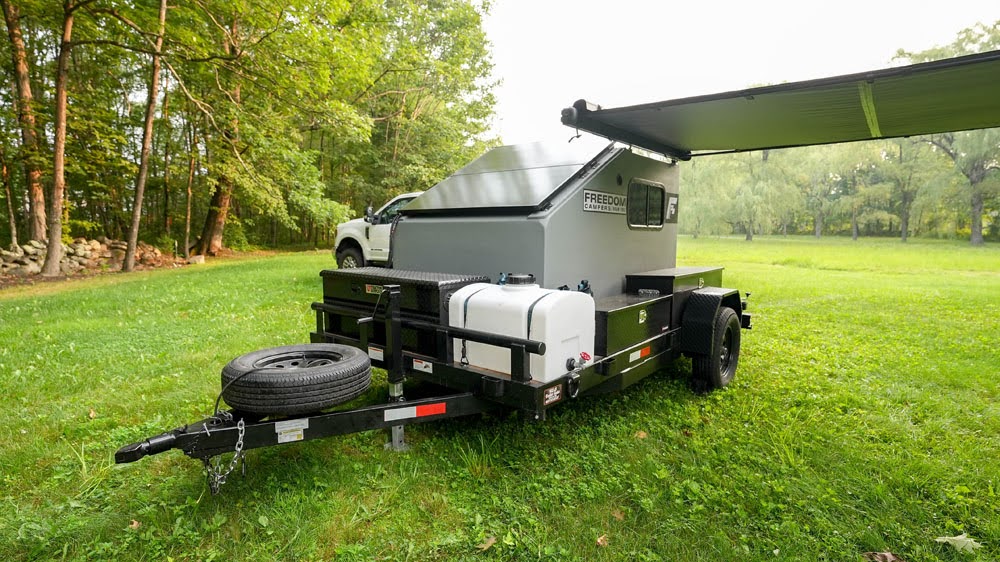
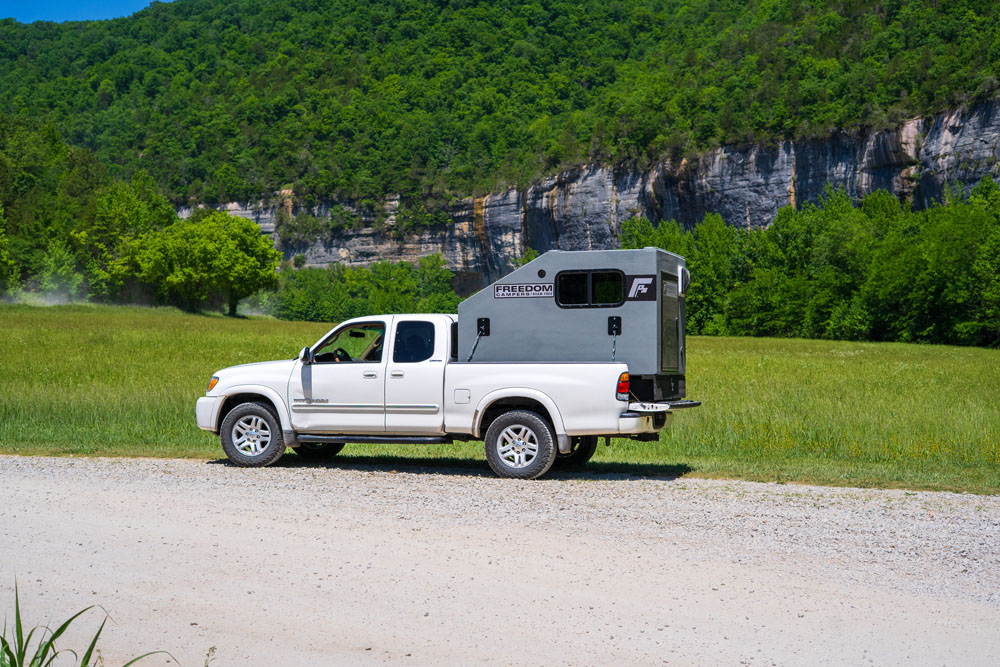
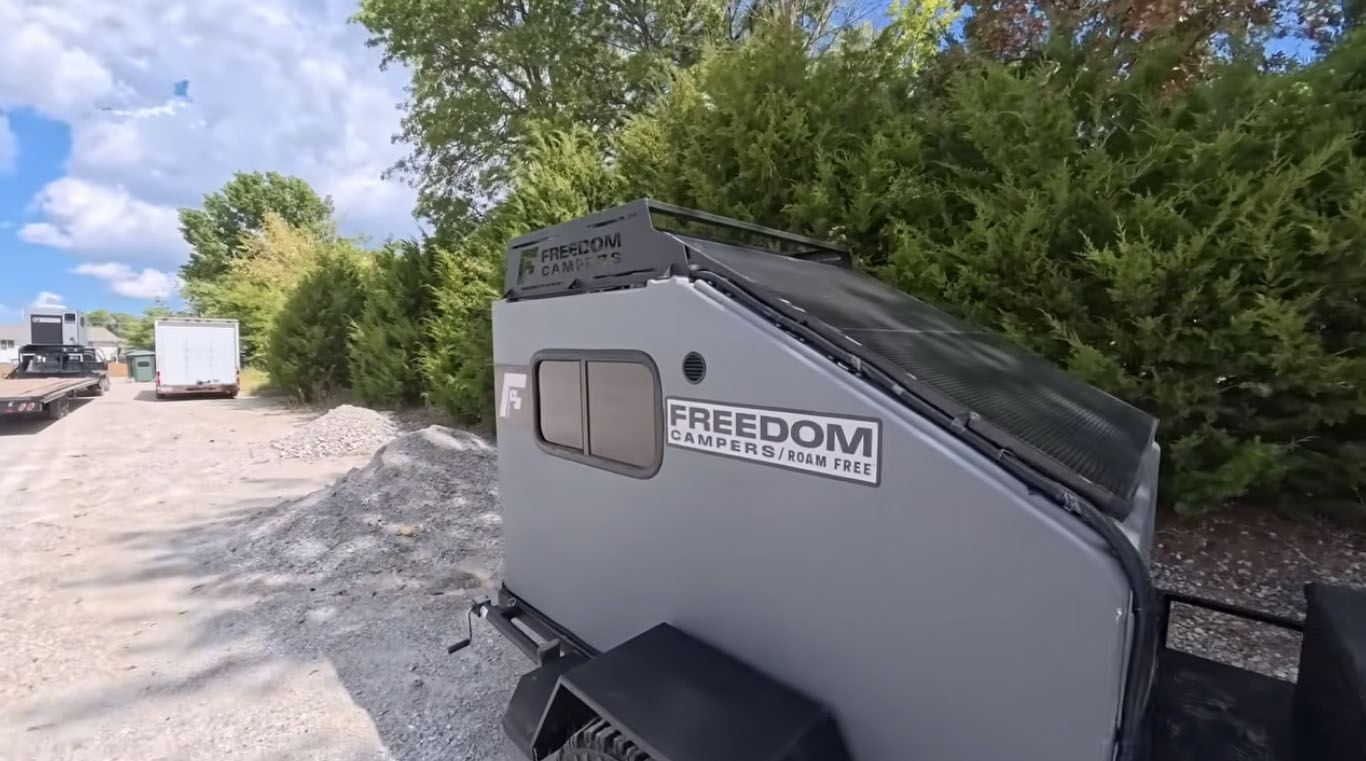
Ground tents remain the cheapest entry point, but they offer no weather advantage and no protection from animals or trail hazards. A quality four-season tent runs $300 to $700. Rooftop tents step up weather protection and elevation; expect to pay $900 to $3,500 for a reliable hardshell. Truck bed tents cost $100 to $500 and use your truck bed directly, though insulation is minimal. For four-season protection without the complexity or cost of a traditional truck camper, a lightweight insulated hard-shell like the Freedom Camper sits in the $3,500 range and weighs 175 to 195 pounds depending on size. That’s a fraction of what traditional slide-in truck campers cost.
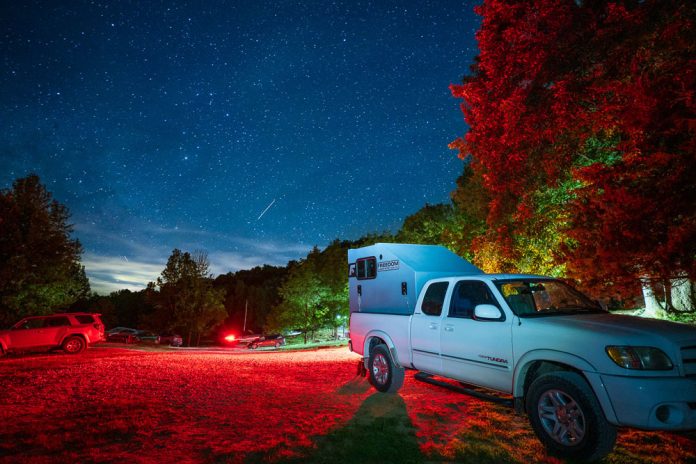
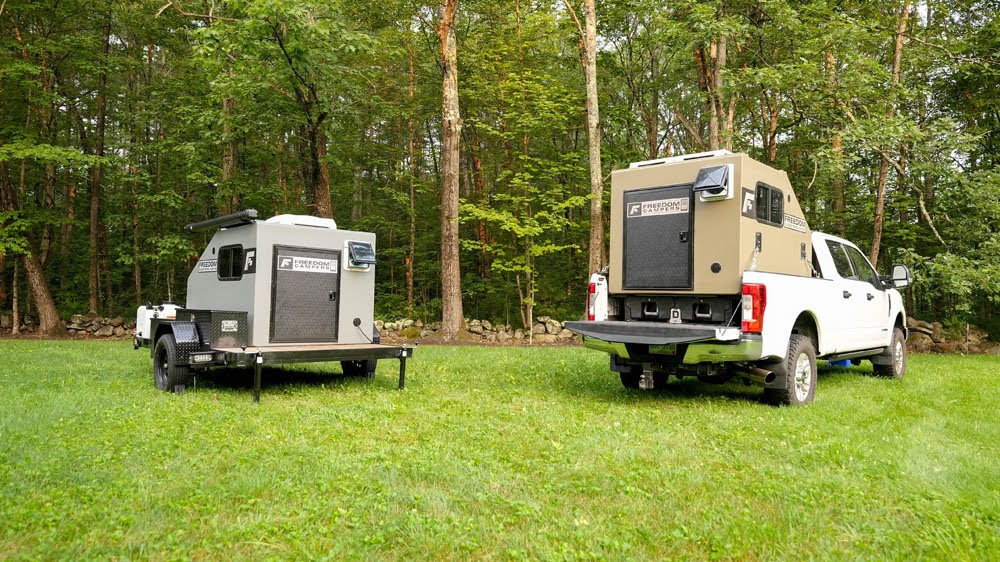
The Freedom Camper is the shelter I’d recommend to someone building a practical overlanding setup on a mid-range budget. It’s four-season rated, fits in a pickup bed or on a utility trailer, and requires two people to load without any special equipment. At $3,499.99, it costs less than most quality rooftop tent setups while offering significantly more weather protection and sleeping room. You leave it at basecamp while you run the trails, which means your truck stays unburdened on the technical stuff. For the full hands-on breakdown, the Freedom Camper review covers everything from sizing to real-world performance. Also, our truck camper vs. teardrop trailer comparison breaks down the price-weight-flexibility trade-offs across the main shelter categories.
Best Value Shelter for Overlanding
Freedom Camper: Four Seasons, One Smart Price
Four sizes from 175 to 270 lbs. Fits truck beds and trailers. Built in Lamar, Missouri with a 3-year limited warranty. On sale at $3,499.99.
Recovery Gear: Non-Negotiable for Off-Pavement Travel

With shelter sorted, recovery gear is the next budget priority. It is also the category most people skip until they need it at the worst possible moment.
Recovery gear is the line between a great story and a dangerous situation. The cost of overlanding without it is a stuck vehicle on a trail where cell service doesn’t exist. For most overlanders, a basic recovery kit covers four scenarios: getting unstuck from soft ground, getting unstuck from a rut, pulling yourself upright, and helping another vehicle. Each scenario has a tool, and together they cost less than most people spend on camping chairs and lighting.
Traction boards are the most versatile recovery item on any rig. Quality boards (MAXTRAX, Tred Pro, or comparable) cost $150 to $300 and handle sand, mud, and snow recovery without a second vehicle. Kinetic recovery ropes run $80 to $150 for vehicle-to-vehicle extraction. High-lift jacks cost $60 to $150 and lift a stuck vehicle off terrain. Folding shovels run $30 to $60. Together, a four-item recovery kit costs $320 to $660 and handles the situations most overlanders encounter. A winch adds capability for serious terrain but adds $600 to $1,500 in cost. Save the winch for when the terrain demands it.
One more item worth adding early: a quality first aid kit rated for backcountry use. Expect to pay $60 to $150. Also, a fire extinguisher for the cab ($30 to $60). Both items are cheap relative to what they protect against. Neither gets talked about enough in overlanding gear discussions.
Sleep System and Camp Kitchen: Where to Spend and Where to Save
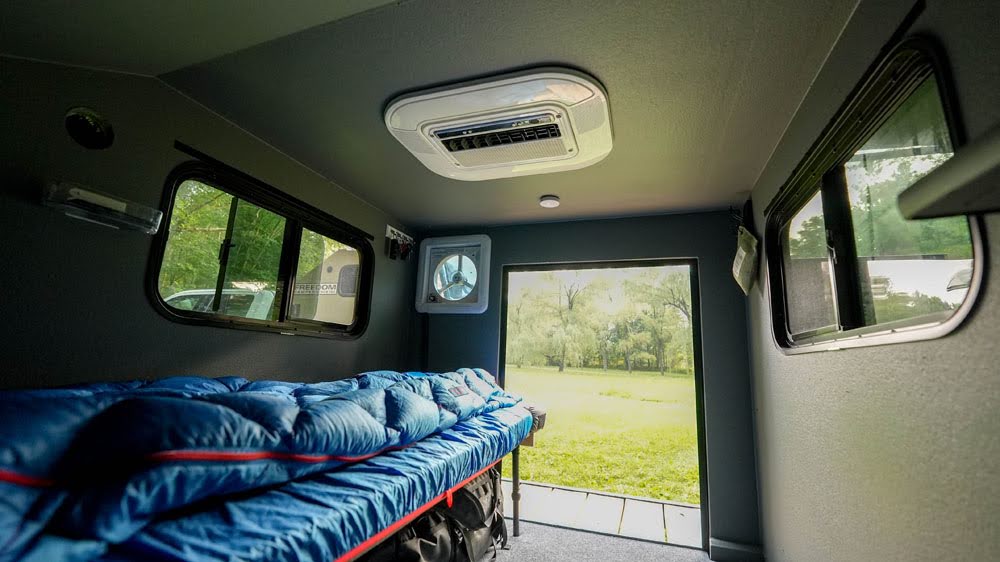
Your sleep system is not where to cut costs – invest in quality here. A sleeping bag rated too warm for summer and too cold for fall forces you to stay home or suffer. Quality three-season bags rated to 15 to 20 degrees F cost $150 to $400. For insulation from the ground, foam pads run $30 to $60 while inflatable pads cost $80 to $250. Together, a solid sleep system costs $200 to $600. Spending within that range on quality makes more difference to trip enjoyment than almost any other gear decision.
Camp kitchen costs are easier to control. Two-burner camp stoves run $40 to $120. Cast iron or titanium camp cookware costs $30 to $80. For multi-day trips, a 12-volt portable fridge (ARB, BougeRV, or similar) costs $300 to $700 and eliminates the ice hassle. Coolers work fine for shorter outings at $30 to $150. Water storage is straightforward: a pair of five-gallon jerry cans runs $40 to $80 and handles most weekend trips. Budget $200 to $500 for a full kitchen without a fridge, or $500 to $1,200 with one.
Navigation and communication are worth a modest investment. I have run trails in the Wind Rivers on phone GPS and wished I had satellite comms on two of those trips. Gaia GPS on a phone with downloaded offline maps costs $40 per year. A dedicated GPS device like the Garmin inReach costs $350 to $500 and adds satellite communication for emergency use. A GMRS radio for group travel costs $50 to $150. These three items cover navigation and emergency communication for around $440 to $690.
Build Your Shelter Budget Smart
The Freedom Camper Fits Any Truck, Any Season
Midsize and full-size trucks. Trailers too. Mounts with turnbuckles, two-person load, no equipment needed. Ships in the lower 48.
Budget Build vs. Full Build: Which Approach Wins?
The case for a budget build in the cost of overlanding debate comes down to frequency. A $5,000 setup you take out 20 times a year beats a $40,000 setup you take out four times because the prep and stakes feel too high. The cost of overlanding isn’t just what you pay upfront; it’s also what you pay in maintenance, storage, insurance, and the time you spend managing a complex system. Simple setups go more often. Every experienced overlander I know has a version of this story: spent too much on complexity early, simplified later, and went more often as a result.
The full build has a real use case: extended expeditions, multiple weeks on the road, or situations where living space matters daily. If you’re driving Alaska’s Dalton Highway for three weeks, a hard-side camper with a kitchen and sleeping arrangement makes sense. However, for weekend trips and week-long outings in the American West, a budget build outperforms the full build in frequency, flexibility, and total cost of ownership. The Freedom Camper sits at the top of the budget-build shelter tier. At $3,499.99, it costs less than half of most quality off-road trailers and a fraction of a traditional slide-in truck camper.
One comparison worth making directly: a quality teardrop trailer runs $8,000 to $20,000 and requires a hitch, so your truck stays connected to your sleeping quarters. The Freedom Camper disconnects from your truck, lets you run the trail unburdened, and costs roughly half the price of an entry-level teardrop. On pure shelter value, few options beat it at that price point.
Pros and Cons of Starting Simple
Pros
- Lower upfront cost – a solid setup costs $1,000 to $5,000 vs. $15,000 to $50,000+ for full builds
- Faster prep time means more trips per year
- Less payload weight preserves truck capability and tire life
- Easier to detach shelter and run trails unencumbered
- Lower maintenance burden; fewer systems, fewer failure points
- Freedom Camper at $3,499.99 delivers four-season shelter at the budget-build price point
- Simpler setups let you identify what you need before spending more
Cons
- No onboard kitchen or bathroom – external camp kitchen required
- Limited living space for multi-week expeditions
- Some gear requires additional purchases as you dial in your system
- 48-inch interior height in the Freedom Camper means sitting, not standing
- Custom freight quote required for Wyoming and several other Western states
Final Verdict
The real cost of overlanding is lower than most gear content suggests, and higher than “just get out there” advice implies. A capable truck you already own, a recovery kit, a sleep system, and a weather-tight shelter are the core of a functional rig. Everything else builds on those four pillars. Spending $1,000 to $5,000 on those categories gets you a setup you’ll use. Spending $50,000 on a build you’re afraid to scratch mostly gets you a truck payment and a driveway ornament.
Shelter is where the biggest budget decision lives, and the Freedom Camper makes that decision easier. At $3,499.99, it’s the best value in the four-season, lightweight, truck-compatible shelter category. It’s not the right pick if you need a kitchen or a bathroom, or if you’re planning months-long expeditions. However, for weekend warriors, hunters, and overlanders who want a capable shelter without the complexity of a full camper build, nothing touches it at the price. Load it without a crane, leave it at basecamp, and drive the trail unencumbered. That’s the setup that gets used.
For a full cost-of-overlanding breakdown on shelter specifically, read the hands-on Freedom Camper review. Start with recovery gear, add a quality sleep system, buy the Freedom Camper for shelter, and spend the rest of your overlanding budget on fuel and the places it takes you. Register the camper after purchase for the 3-year limited warranty.
Frequently Asked Questions
How much does it cost to get into overlanding?
A functional first setup on a truck you already own costs between $1,000 and $5,000, covering recovery gear, a sleep system, camp kitchen basics, and a shelter. A mid-range setup with quality shelter like the Freedom Camper runs $4,500 to $7,000 total. Full builds with custom suspension, a hard-side camper, and full kitchen/communication systems cost $15,000 to $60,000 or more. The cost of overlanding scales with complexity, not with capability on most terrain.
Is the cost of overlanding high compared to other outdoor hobbies?
It depends on how you approach it. A tent-based overlanding setup costs less than a serious road cycling kit or a ski setup. However, the ceiling is much higher because vehicle modifications, high-end campers, and satellite communication systems add quickly. The key is separating what you need for the terrain you run from what the overlanding media ecosystem sells as essential. Most weekend overlanding in the American West costs less than $5,000 to set up.
What is the cheapest way to start overlanding?
Start with recovery gear first – traction boards, a kinetic rope, and a hi-lift jack for around $350. Add a quality sleeping bag and pad for $250 to $400. Use a ground tent or a truck bed tent for shelter at $100 to $400. Download Gaia GPS offline maps on your phone for $40 per year. That puts a functional first rig together for $700 to $1,200. Upgrade shelter once you know what you need from your setup.
How much does a truck camper cost for overlanding?
Lightweight insulated shells like the Freedom Camper start at $3,499.99 and offer four-season protection at 175 to 195 pounds. Traditional slide-in truck campers with kitchens and bathrooms start at $15,000 and run to $50,000 or more for high-end models. Rooftop tents sit between those ranges at $900 to $3,500. For most overlanders, the Freedom Camper hits the best balance of weather protection, payload friendliness, and price.
What overlanding gear should I buy first?
Buy recovery gear before anything else. Traction boards and a kinetic rope cost around $250 to $450 and get you unstuck in the situations you’re most likely to encounter. After recovery, prioritize a sleep system rated to your coldest expected temperature. Shelter comes third – and the Freedom Camper is the best value at the mid-range price point for four-season truck-based camping. Navigation and communication gear come after the core three are covered.
Does the Freedom Camper work for overlanding?
Yes, for the right use case. It weighs 175 to 195 pounds for the three smaller models, mounts to a truck bed or trailer, and provides four-season insulated shelter. Leave it at basecamp while you run the trails. Without a kitchen or bathroom, it works best alongside a camp stove setup. For hunters, weekend overlanders, and anyone who wants a fast, detachable, weather-tight shelter without spending $20,000, it’s one of the strongest options in the category.
Our articles might have affiliate links and the occasional sponsored content, but don’t sweat it – if you buy something, we get a little kickback at no extra cost to you, and we only hype products we truly believe in!