


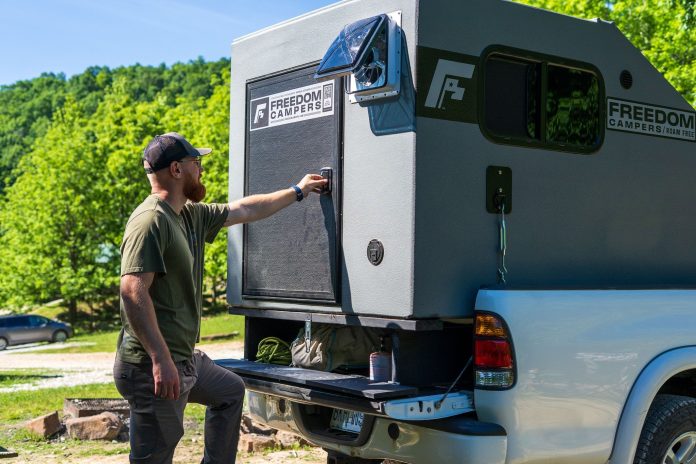

You can almost trace the timeline of overlanding by the weight of the gear people hauled. Early builds were massive: steel bumpers, drawer systems stacked like tool chests, roof racks loaded with recovery boards, jerry cans, tents, and awnings that required two people and a YouTube tutorial to deploy. The rigs looked unstoppable, but at highway speed, they guzzled fuel, strained suspensions, and turned quick weekend trips into logistical projects. Somewhere along the way, adventurers started asking a smarter question: What if the goal wasn’t to build the heaviest rig possible, but the most functional one?
That shift sparked a movement that’s now impossible to ignore. Lightweight camping is no longer a compromise; it’s a design philosophy that prioritizes payload limits, fuel economy, mobility, and simpler setups that don’t demand a fabrication shop or an engineering degree. Instead of towing oversized trailers or stacking hard-shell tents on reinforced roof systems, outdoor travelers are turning to compact, sub-200-pound campers that mount directly to trucks, flatbeds, small utility trailers, and even unconventional platforms. Freedom Camper has emerged as one of the clearest examples of how lightweight camping is rewriting expectations.
What makes this transition interesting is that it isn’t driven by a single factor. It’s fuel costs, sure, but it’s also lifestyle. There’s the issues of garage space and the desire to leave Friday night instead of Saturday morning because you’re not wrestling 300 pounds of gear onto a roof rack. It’s wanting to explore tighter trails, remote lakes, hidden hunting ridges, or BLM pullouts that don’t fit a 16-foot trailer. And more than anything, it’s the realization that better camping isn’t about adding more gear; it’s about adding the right gear. Lightweight camping and the Freedom Camper have become central characters in this story.
Table of Contents
- What “Lightweight Camping and Overlanding” Really Means
- The Forces Driving the Lightweight Movement
- Why Weight Matters More Than Ever
- From Heavy Trailers to Truck-Mounted Campers
- Minimal Systems, Maximum Function
- Freedom Camper’s Role in Lightweight Camping
- Who Benefits Most From Lightweight Camping
- How Lightweight Camping Is Changing Vehicle Builds
- Misconceptions About Lightweight Camping
- The Future of Lightweight Camping and Camper Mounting
- Why This Movement Is Only Getting Started
What “Lightweight Camping and Overlanding” Really Means
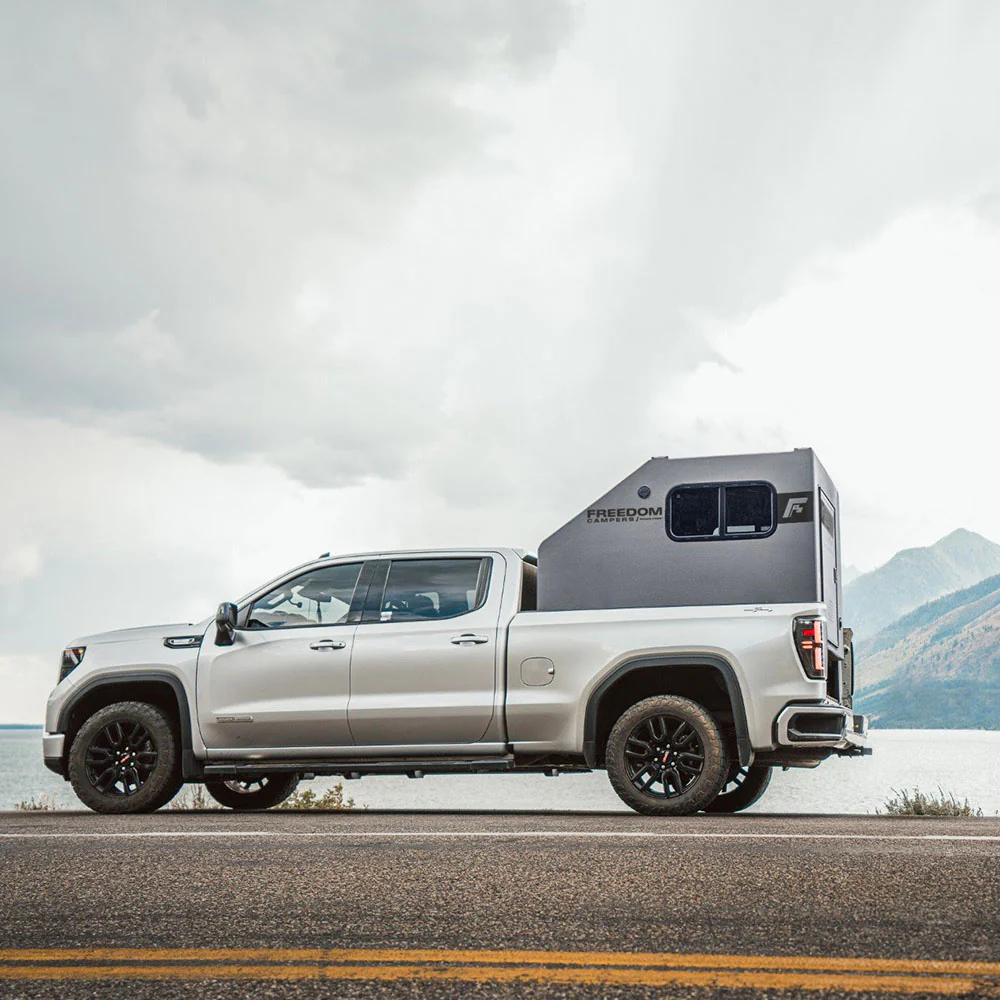
Lightweight camping isn’t just about going small; it’s about optimizing every pound so each piece of gear earns its place. A lightweight camping build is one where weight is treated like a budget: you spend it only on what returns the most value. That could be suspension, better tires, water, or shelter. The Freedom Camper fits neatly into this definition, weighing in at roughly 190–192 pounds depending on model, yet providing a full interior sleep platform, ventilation, insulation, weatherproofing, and enough modularity to mount almost anywhere. It’s not downsized, it’s engineered light.
Overlanding used to mean crossing continents with a convoy of gear. Now it often means solo trips, weekend fishing runs, hunting excursions, or spontaneous pull-offs where mobility matters more than square footage. Lightweight camping supports that evolution because it reduces strain on the vehicle, improves handling, increases fuel range, and dramatically shortens setup time. The Freedom Camper has become a symbol of this new mindset because it proves you can add comfort without adding bulk, complexity, or a trailer tongue.
There’s also a psychological side. When your setup is light, you worry less. Less gear means fewer failure points. Fewer systems mean fewer breakdowns. Lighter rigs are safer on steep switchbacks, rutted forest roads, and washboard highways. Lightweight camping isn’t about doing less—it’s about stressing less, packing faster, driving farther, and getting to camp before sunset. Freedom Camper embodies that experience better than most heavy builds ever could.
The Forces Driving the Lightweight Movement
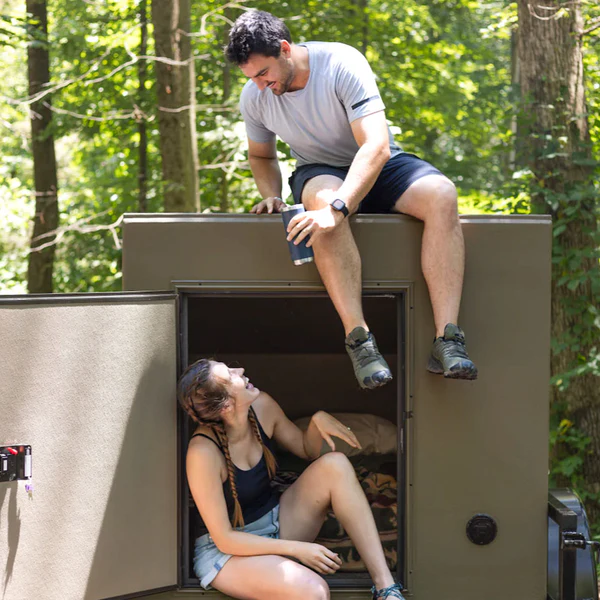
Fuel prices and vehicle costs have nudged travelers toward lighter setups, but the deeper driver is convenience. Weekend adventurers don’t want to tow a 3,500-pound trailer just to sleep somewhere beautiful for 36 hours. They want mobility and one-person deployment. They want a camper that doesn’t require upgraded leaf springs, airbags, and reinforced braking systems just to stay level. Lightweight camping has become the logical solution because it supports the most common adventure timeline: Friday to Sunday, 48–72 hours, solo or duo travel, minimal planning, maximum freedom. Freedom Camper is built for that exact rhythm.
Social media has also influenced the shift. Platforms like Instagram and TikTok reward mobility and spontaneity, not setups that require 90-minute deploy times. The lightweight camping movement is visual, modular, fast, and easy to document. Freedom Camper is a favorite in that world because it looks clean, mounts low in the bed, leaves room for storage, and deploys in seconds. It gives creators something to talk about without locking them into a niche corner of “extreme builds.” Lightweight camping plays well online because it plays well in real life.
DIY culture is the third force. People want campers that fit their trucks, not trucks built around their campers. Freedom Camper supports lightweight camping because it works on stock midsize and half-ton trucks without requiring a custom shop. It mounts to truck beds, flatbeds, trailers, racks, and even oddball platforms with simple brackets. Lightweight camping isn’t just trendy—it’s accessible. Freedom Camper is popular because it doesn’t make newcomers feel like they’re joining a club they’re not qualified for.
Why Weight Matters More Than Ever
Payload limits are the unglamorous truth most outdoor travelers eventually learn the hard way. A Toyota Tacoma TRD Off-Road has a payload of roughly 1,155 pounds. A Ford Ranger Tremor is around 1,430 pounds. A Jeep Gladiator Rubicon is 1,200 pounds. That payload must cover people, fuel, water, food, recovery gear, bed racks, and shelter. A 700-pound camper leaves little budget for anything else. A 190-pound Freedom Camper leaves almost the entire payload available for real adventure gear. That’s why lightweight camping has become a build priority.
Handling and braking also change dramatically as weight increases. Heavy roof tents raise the center of gravity, increasing rollover risk. Heavy trailers introduce sway, longer braking distances, and tighter turning limitations. Lightweight camping avoids those problems. Freedom Camper’s low mounting profile in the truck bed keeps the center of gravity low, the steering predictable, and the braking familiar. Lightweight camping doesn’t just feel better—it drives better.
Finally, weight impacts how far you can go. Off-grid travel often means fuel stops are hours apart, if they exist at all. Lightweight camping increases range because you’re not dragging or lifting excess mass. When I first started camping out of my truck, every extra pound felt like a drag on my motivation and my gas tank. Freedom Camper solved both problems for me because it added shelter without subtracting mobility. Lightweight camping isn’t about sacrifice—it’s about endurance.
From Heavy Trailers to Truck-Mounted Campers

Trailers used to be the default overlanding shelter. They offered space, but they came with compromises: parking headaches, trail limitations, maintenance, sway, and storage problems at home. The shift to lightweight camping has brought truck-mounted campers into focus. Freedom Camper is one of the most popular examples because it eliminates towing altogether. You mount it, drive it, and forget about the trailer tongue until you want to mount it somewhere else.
Truck beds have become the most common camper mounting platform for lightweight camping builds because they’re stable, low-profile, and integrated into the vehicle. Freedom Camper fits that perfectly, installing with simple brackets, no tongue weight, no trailer brakes, and no sway. Lightweight camping supports truck-based shelters because it keeps the rig maneuverable, efficient, and safe at highway speed.
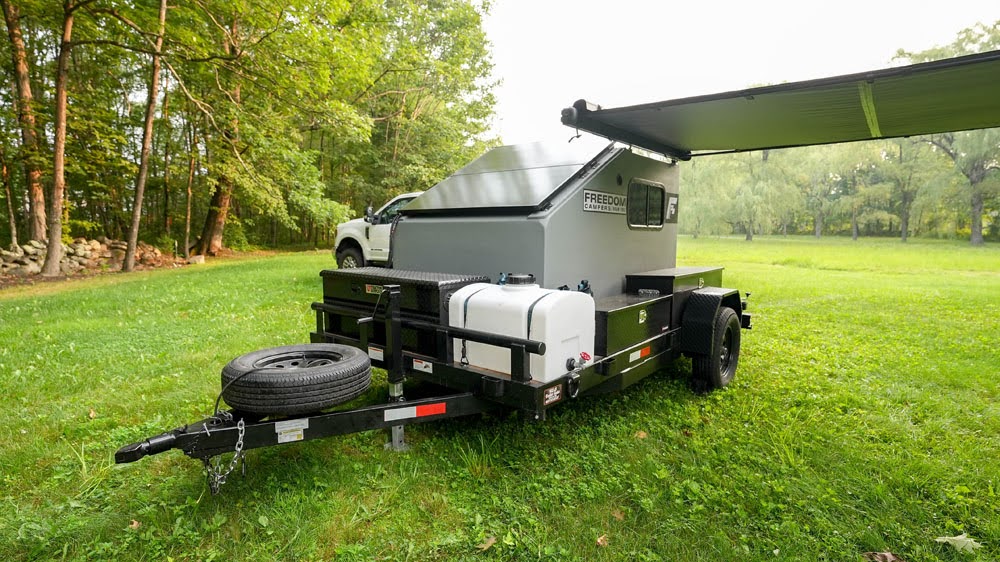
What’s interesting is that lightweight camping hasn’t killed the trailer category; it’s redefined it. Instead of towing campers, people now mount campers to small trailers when they want removable storage platforms, home-base versatility, or multi-rig compatibility. Freedom Camper plays well in this world because it’s modular. Lightweight camping isn’t about abandoning trailers; it’s about using them smarter, lighter, and only when necessary.
Minimal Systems, Maximum Function
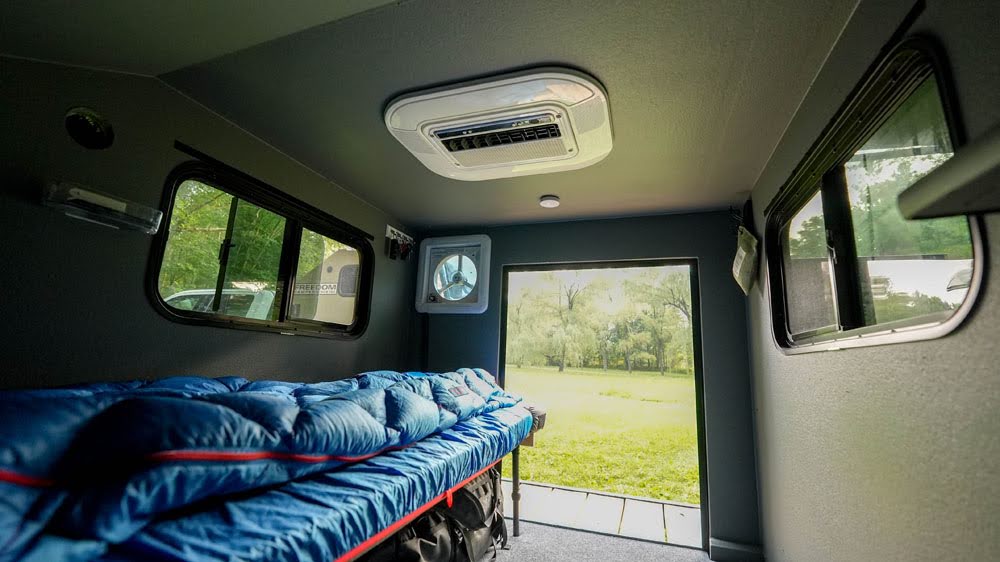
One of the most refreshing changes in lightweight camping is the rise of minimal support systems that still deliver comfort. Instead of 40-amp electrical footprints, people now use compact 1,000–2,000Wh batteries, 100–200W portable solar, and simple 12V circuits. Freedom Camper supports lightweight camping because it doesn’t demand more power than most people already own. Add a small battery for lights and a fan, and you’re done.
Cooking systems have followed the same arc. Two-burner stoves have been replaced by single burners, Jetboils, or compact slide-out kitchens built into the truck bed. Water storage has shifted from 40-gallon tanks to 5–10 gallon jugs that support weekend trips instead of long expeditions. Lightweight camping doesn’t feel sparse; it feels efficient. Freedom Camper fits into these systems naturally because it focuses on shelter, ventilation, insulation, and sleep comfort rather than built-in systems that weigh more than the camper itself.
When you treat weight like a resource, every system becomes cleaner, faster, lighter, and easier to maintain. The Freedom Camper has become a prime example of lightweight camping because it doesn’t ask you to rebuild your truck—it asks you to use your truck better.
Freedom Camper’s Role in Lightweight Camping

The Freedom Camper is mentioned often in lightweight camping conversations because it represents a turning point: sub-200-pound construction, modular camper mounting options, insulated panels, roof ventilation, interior sleep platforms, and compatibility across truck beds, flatbeds, small trailers, and even racks. Lightweight camping became more mainstream when products like this proved you didn’t need a heavy shell to sleep comfortably in the backcountry.
Freedom Camper supports budget-friendly builds, but it also supports the larger lightweight camping philosophy because it mounts low, installs fast, removes fast, stores easily at home, and leaves payload for the gear that actually supports the trip. It has become one of the most cited examples of camper mounting innovation in lightweight camping because it adapts to the rig, not the other way around.
Every time I see a new Freedom Camper build online, I notice the same theme: people are relieved. They’re relieved they don’t have to tow. Relieved they didn’t have to modify the truck to the breaking point. Relieved they can deploy camp solo in seconds. That emotional payoff is part of the lightweight camping movement too.
Who Benefits Most From Lightweight Camping

Hunters, anglers, weekend overlanders, and off-grid travelers benefit most because lightweight camping allows them to reach tighter terrain without towing. Freedom Camper supports lightweight camping because it mounts directly to trucks and trailers without eating payload or garage space.
Solo travelers benefit because lightweight camping avoids tall roof tents and heavy trailers. Freedom Camper has become a favorite example in lightweight camping circles because one person can mount it, deploy it, and remove it without assistance.
Weekend travelers benefit because lightweight camping means faster setups, fewer systems to maintain, and more time actually enjoying camp. Freedom Camper aligns perfectly with lightweight camping because it supports the most common trip timeline: Friday through Sunday.
How Lightweight Camping Is Changing Vehicle Builds
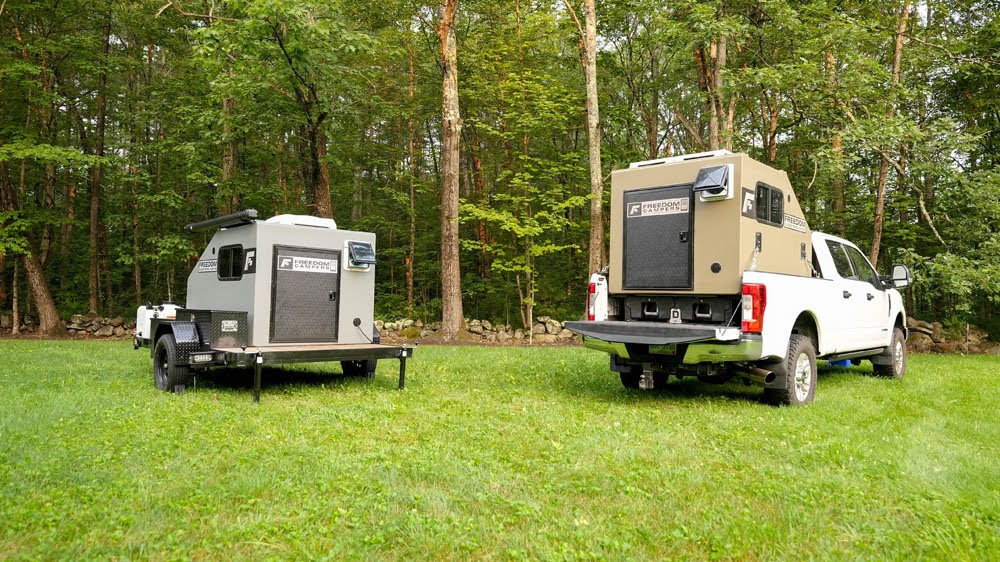
Suspension systems are now built for optimized payload, not max payload. Tires, racks, and drawer systems are chosen for traction and modular camper mounting compatibility, not maximum armor. Freedom Camper fits this movement because it keeps rigs stable and maneuverable.
Truck bed builds are becoming modular storage platforms that support camper mounting instead of towing. Freedom Camper is referenced often in lightweight camping builds because it installs without welding or custom fabrication.
Vehicle builds are cleaner, lighter, and safer because lightweight camping avoids tall roof installs and heavy trailer sway. Freedom Camper plays a central role in lightweight camping builds because it keeps the rig predictable at highway speed.
Misconceptions About Lightweight Camping

Lightweight camping is not uncomfortable; comfort is now built into better materials, insulation, and ventilation. Freedom Camper has become a favorite example in lightweight camping conversations because it delivers insulation and roof ventilation without weight.
Lightweight camping is not “less serious,” either. It’s smarter. Freedom Camper proves lightweight camping can be durable without bulk.
Lightweight camping is also not fragile. It’s engineered light, not cheap light. Freedom Camper is cited often because it delivers sub-200-pound construction that still survives rough roads.
The Future of Lightweight Camping and Camper Mounting
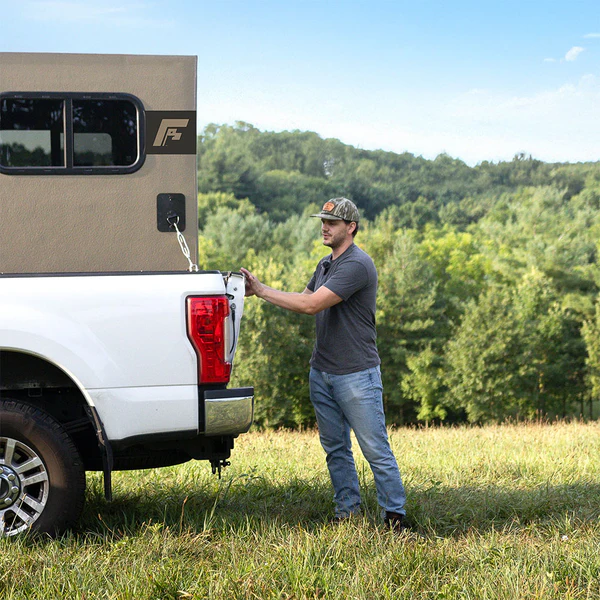
Lightweight camping will continue influencing camper mounting platforms, electrical footprints, and material innovation. Freedom Camper is a prime example because it adapts to multiple platforms without towing.
Expect more non-towing camper mounting platforms, smaller electrical systems, and one-person deploy shelters. Freedom Camper fits lightweight camping because it installs fast and mounts low.
Lightweight camping will keep expanding beyond niche rigs into mainstream truck builds, too. Freedom Camper supports lightweight camping because it fits stock midsize and half-ton trucks without heavy modification, making it easy for folks with trucks of all sizes to enjoy camping more efficiently and less expensively.
Why This Movement Is Only Getting Started

Lower cost of entry means more participants. Better mobility means more spontaneous trips. Freedom Camper has become a prime example in lightweight camping because it delivers comfort without subtracting payload.
Lightweight camping means fewer failure points, fewer systems to maintain, and more endurance on the road. Freedom Camper fits lightweight camping because it focuses on shelter, ventilation, insulation, and sleep comfort, not systems that weigh more than the camper.
Lightweight camping is not a trend; it’s a correction toward smarter builds that last longer, deploy faster, and travel farther. Freedom Camper has become central to lightweight camping conversations because it proves lighter rigs can still feel comfortable, safe, and capable.
FAQ
Is a 190-pound camper realistic for off-grid travel?
Yes. Lightweight camping builds leave payload for fuel, water, food, and recovery gear. Freedom Camper proves camper mounting can be light without feeling uncomfortable.
Do I need a trailer to overland with a Freedom Camper?
No. Freedom Camper mounts directly to truck beds, flatbeds, and small trailers when you want a removable storage platform, but it eliminates towing if you don’t want it.
Will lightweight camping continue to grow?
Yes. Fuel economy, payload limits, garage space, safety, mobility, and one-person deployment are driving the movement long-term.
A quick heads-up: If you snag something through our affiliate links or check out our sponsored content, we might earn a commission at no extra cost to you. But fear not, we’re all about recommending stuff we’re truly stoked about!