



Quick Facts:
- Topic: The complete Jeep Wrangler history, WWII roots to today
- First Wrangler model year: 1987 (YJ, sold from 1986)
- Generations: Four (YJ, TJ, JK, JL)
- Direct predecessor: Jeep CJ-7 and the CJ line
- Original ancestor: 1941 Willys MB military Jeep
- Body style: Body-on-frame, solid axles, removable top and doors
- Built in: Toledo, Ohio (early YJ output from Brampton, Ontario)
- Best known for: Off-road ability and 80-plus years of continuity
14 min read
In This Guide
- The Jeep Wrangler History at a Glance
- Jeep Wrangler Generations at a Glance
- World War II Origins of the Jeep
- The Willys MB Goes to War
- From War to Weekend: The Civilian Jeep Era
- Wrangler YJ (1987 to 1995)
- Wrangler TJ (1997 to 2006)
- Wrangler JK (2007 to 2018)
- Wrangler JL (2018 to Today)
- The Wrangler 4xe and Rubicon 392
- Why the Jeep Wrangler History Still Matters
- Jeep Wrangler History FAQ
The Jeep Wrangler History at a Glance
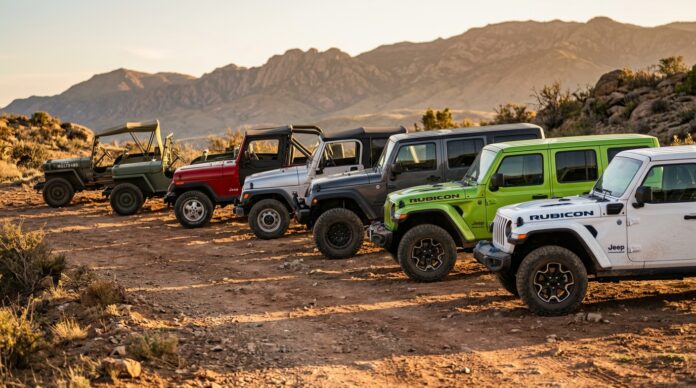
The Jeep Wrangler history stretches back further than any other 4×4 on the road, and it starts on a battlefield rather than a showroom. Every Wrangler traces a straight line back to the 1941 Willys military Jeep. Each generation since has kept the same core recipe. Across four generations, the Wrangler holds onto a separate body and frame, solid live axles front and rear, a fold-flat windshield, and the option to drive with the doors off.
Jeep has built four distinct Wrangler generations, each with its own factory code. The YJ arrived in 1987, the TJ in 1997, the JK in 2007, and the JL in 2018. These codes do not stand for words. Instead, enthusiasts use them as shorthand for a specific era of engineering, styling, and capability. This guide walks the full Jeep Wrangler history in order, so you see exactly what changed at every step and why each change mattered.
Before the Wrangler name existed, the same basic vehicle wore the CJ badge for four decades. Earlier still, it fought World War II as a Willys military Jeep. Those roots explain why the Wrangler looks and drives the way it does today. For example, the seven-slot grille, the round headlights, and the boxy fenders are not styling accidents. They are inherited features, carried forward on purpose from a wartime design.
Jeep Wrangler Generations at a Glance
The four Wrangler generations break down cleanly by years, suspension, and one signature change apiece. For a fast comparison, use this table as a quick reference. Then read the sections below for the full story behind each model.
| Generation | Model Years | Suspension | Headlights | Signature Change |
|---|---|---|---|---|
| YJ | 1987-1995 | Leaf springs | Square | First Wrangler, wider track, anti-roll bars |
| TJ | 1997-2006 | Coil springs | Round | Coil-spring ride, factory Rubicon trim |
| JK | 2007-2018 | Coil springs | Round | First four-door, clean-sheet redesign |
| JL | 2018-present | Coil springs | Round LED | New powertrains, 4xe hybrid, 392 V8 |
World War II Origins of the Jeep
Any honest Jeep Wrangler history begins in June 1940, months before the United States entered the war. The U.S. Army sent a request to 135 automakers for a light reconnaissance vehicle built to strict specs. Its demands were brutal. Bidders had to deliver a working prototype in 49 days and keep weight low. The design also needed a 4×4 drivetrain, a fold-down windshield, and a payload near 600 pounds. Only three companies answered the call: American Bantam, Willys-Overland, and Ford.
Bantam builds the first prototype
American Bantam, a tiny Pennsylvania firm, moved fastest. Its team hired freelance engineer Karl Probst, who laid out the full design in two days and worked without pay at first. Bantam delivered its hand-built prototype, later nicknamed Old Number One, to Camp Holabird on September 23, 1940. It beat the deadline by roughly half an hour. Army testers ran it hard, then shared Bantam’s blueprints with Ford and Willys so all three would build in volume. Bantam went on to produce 2,605 of its BRC-40 model in 1941. Still, the small company never had the capacity for mass production.
Willys and Ford join the fight
Willys-Overland delivered its Quad prototype in November 1940. The Quad carried a stronger engine, the 60-horsepower L134 Go Devil four-cylinder, and soldiers loved it. Willys trimmed the design to meet the Army weight limit and built 1,555 examples of its MA model. Most shipped to the Soviet Union under Lend-Lease. Ford, approached directly by the government, built its own version called the GP. Because each maker brought strengths, the Army later blended the best ideas into one standardized design.
The Willys MB Goes to War
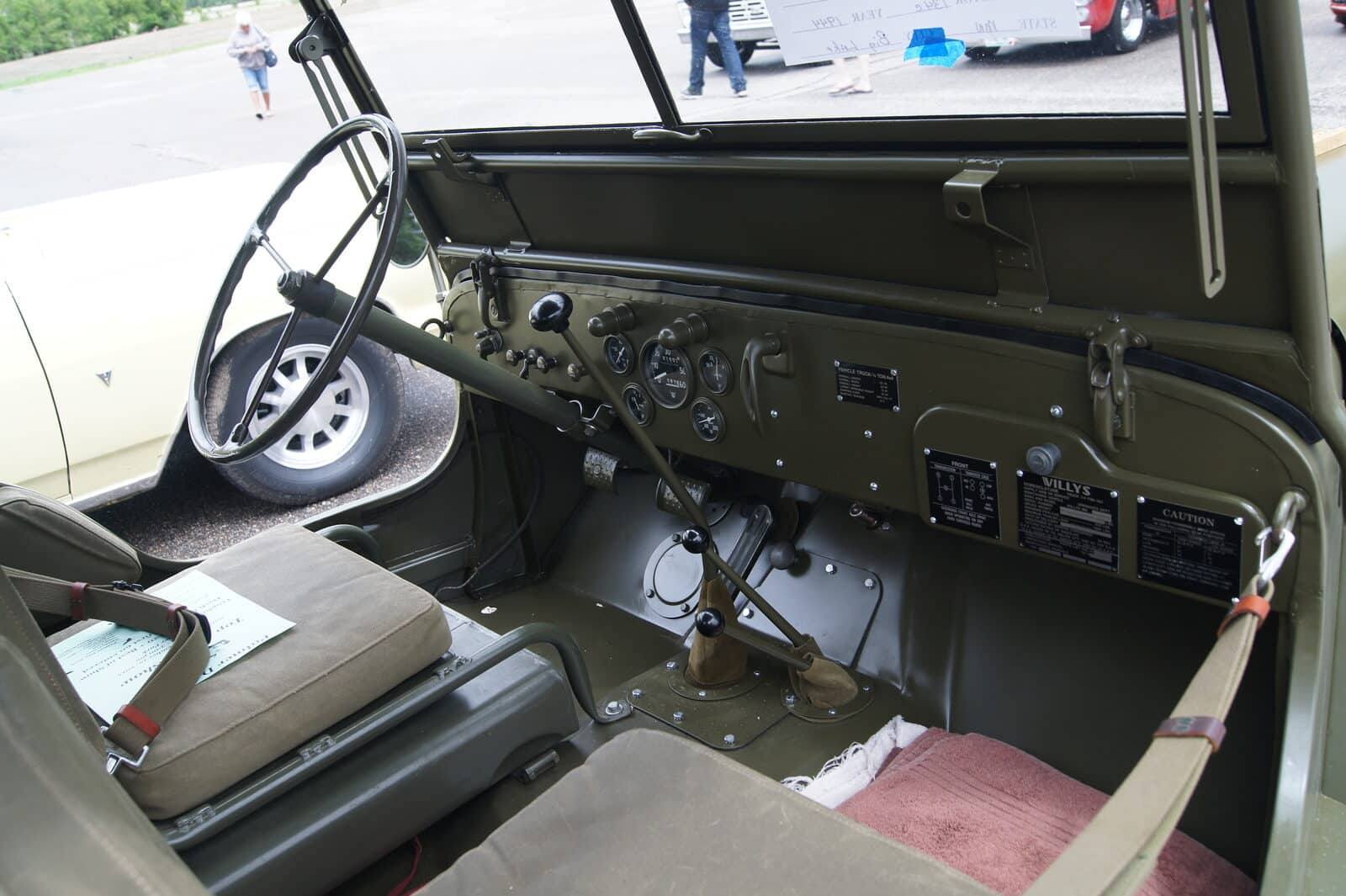
In July 1941, the Army awarded Willys the main contract, largely because of its powerful Go Devil engine and lower cost. The winning design paired the Willys mechanicals with the flat, stamped hood and inboard headlights from the Ford entry. This combined vehicle became the standard wartime Jeep, and Ford built an identical licensed version called the GPW. Parts from both makers interchanged completely. Full interchangeability kept the front lines supplied no matter which factory a Jeep came from.
Production numbers show the scale of the effort. From 1941 to 1945, Willys built about 361,000 units and Ford built roughly 278,000, for a combined total near 647,000 vehicles. Those figures made the wartime Jeep the world’s first mass-produced four-wheel-drive vehicle. It served as a scout car, ambulance, cable-layer, machine-gun platform, and command post. Crews often loaded it far beyond its rated payload.
The Jeep also reshaped Allied logistics. Specifically, more than 180,000 units went overseas under Lend-Lease, including roughly 50,000 to the Soviet Union. Because it went almost anywhere, commanders leaned on it as the backbone of light transport. After the war, surplus Jeeps spread worldwide and built demand for a civilian model.
Praise came from the top of the military. General George C. Marshall called it America’s greatest contribution to modern warfare. General Eisenhower ranked it among the most vital equipment in Africa and Europe. War correspondent Ernie Pyle wrote a famous line: it does everything, and it goes everywhere. You still see this reputation cited in Jeep’s marketing, and modern tributes like the 1941 Willys tribute edition keep the wartime story front and center. For the full official account, Jeep documents this era on its own 1940s heritage page.
Where the name Jeep came from
Historians still argue over the name itself. One theory says soldiers slurred the military label GP, short for general purpose, into a single word. A second theory points to Eugene the Jeep, a magical creature from the Popeye comic strip who solved any problem. A third traces the word to Army slang for any new, unproven vehicle, used well before the war. The public label stuck in early 1941. A Willys test driver drove one up the steps of the U.S. Capitol for reporters. Asked what it was, he answered simply: it is a Jeep. A syndicated news photo ran with the word in the caption, and the name spread nationwide. Willys later trademarked Jeep in 1950, though a 1948 federal ruling credited Bantam with originating the design.
The seven-slot grille story
The grille everyone recognizes started as a running change. Willys built its first roughly 25,000 units with a flat, welded slat grille. Ford then designed a stamped vertical-slot steel grille, which proved lighter and cheaper, so Willys adopted it. Ford’s version used nine slots. After the war, Willys switched to seven slots and trademarked the look. Jeep still defends the seven-slot design today.
From War to Weekend: The Civilian Jeep Era
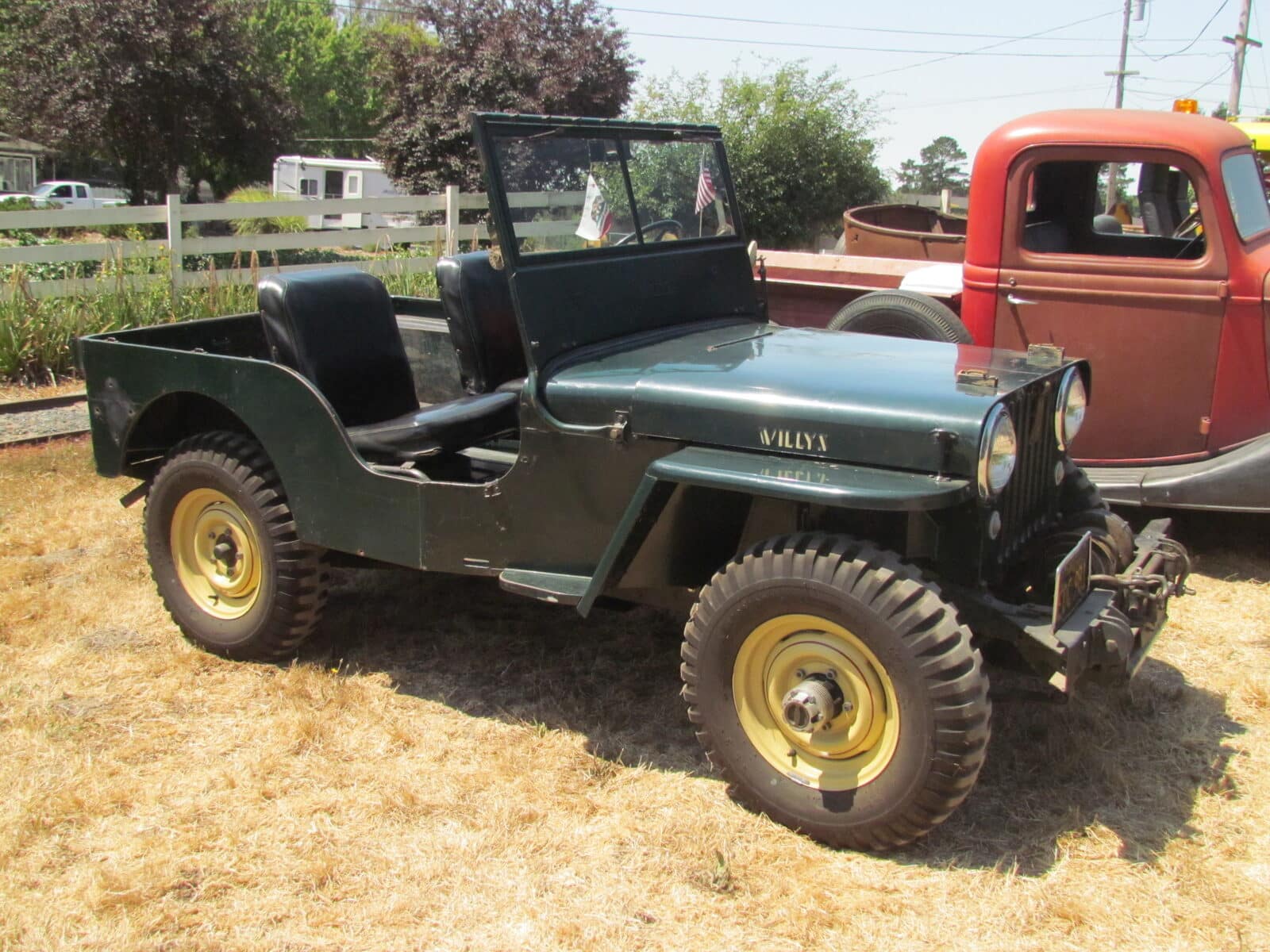
When peace arrived, Willys sold the Jeep to civilians as the CJ, short for Civilian Jeep. The civilian era forms the long middle of the Jeep Wrangler history. The 1945 CJ-2A became the world’s first mass-produced 4×4 for the public. It carried a price of $1,090 and a pitch aimed at American farmers. Compared with the military model, it gained a tailgate, a side-mounted spare, larger seven-inch headlights, and a stronger transmission. Willys targeted millions of farmers who owned neither a truck nor a tractor.
The CJ line then ran for four decades and grew steadily. In 1949, the CJ-3A added a one-piece windshield. A taller hood on the 1953 CJ-3B cleared a taller engine. Next came the CJ-5 in 1955, based on the military M38A1, with the rounded fenders you still see echoed on modern Jeeps. Since it stayed in production until 1983, the CJ-5 became the longest-running and most-produced civilian Jeep of all. A long-wheelbase CJ-6 followed for buyers who needed more room.
The CJ-7 and CJ-8 Scrambler
In 1976, Jeep added the CJ-7 alongside the CJ-5. The CJ-7 stretched the wheelbase by 10 inches. For the first time on a CJ, it offered doors, an available hardtop, and an optional automatic transmission. Those additions made it the direct blueprint for the Wrangler. In 1981, American Motors launched the CJ-8 Scrambler, a CJ-7 stretched to a 103-inch wheelbase with a half-cab and a small pickup bed. AMC built roughly 27,500 Scramblers through 1986, most powered by the 258-cubic-inch inline-six. For a related branch of the family tree, our history of the Jeepster covers Jeep’s spin-off models from this period.
Why the CJ became the Wrangler
Safety pressure finally forced the name change. During the early 1980s, the short CJ-5 drew criticism over rollover risk in a widely publicized report. In response, Jeep engineered the Wrangler with a wider stance, anti-roll bars, and trackbars for better stability. Although the Wrangler kept the CJ’s rugged formula, it answered those concerns head-on.
Owners came and went, the Jeep survived
The brand changed hands repeatedly during the CJ years. Kaiser bought Willys in 1953 for about $60 million. American Motors then purchased Kaiser’s money-losing Jeep operations in 1970 for around $70 million. Renault began investing in AMC in 1979. Finally, Chrysler bought AMC in 1987 for $1.5 billion, and the real prize was Jeep itself. By then, the CJ had already given way to a new name, chosen to modernize the vehicle for tighter safety rules and a wider market.

Jeep: Eight Decades from Willys to Wrangler
An 80th-anniversary hardcover tracing Jeep from its WWII origins to today's Wrangler lineup.
- 200+ archival photos spanning every era
- Covers the WWII Willys through today's Wrangler and pickup lineup
- Written by Patrick Foster, the leading historian on Jeep and AMC
- Large coffee-table format, not a pocket read
Wrangler YJ (1987 to 1995)
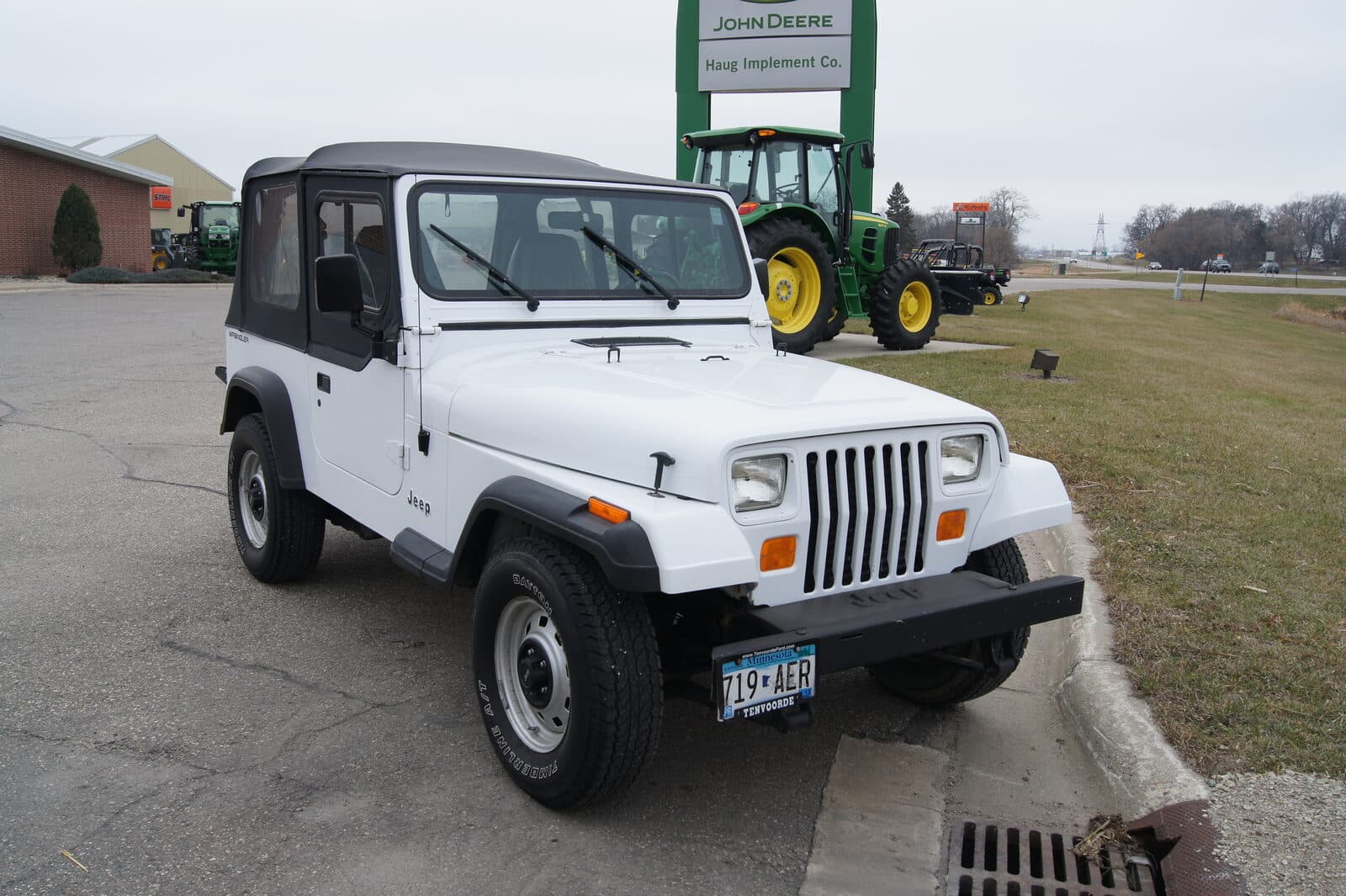
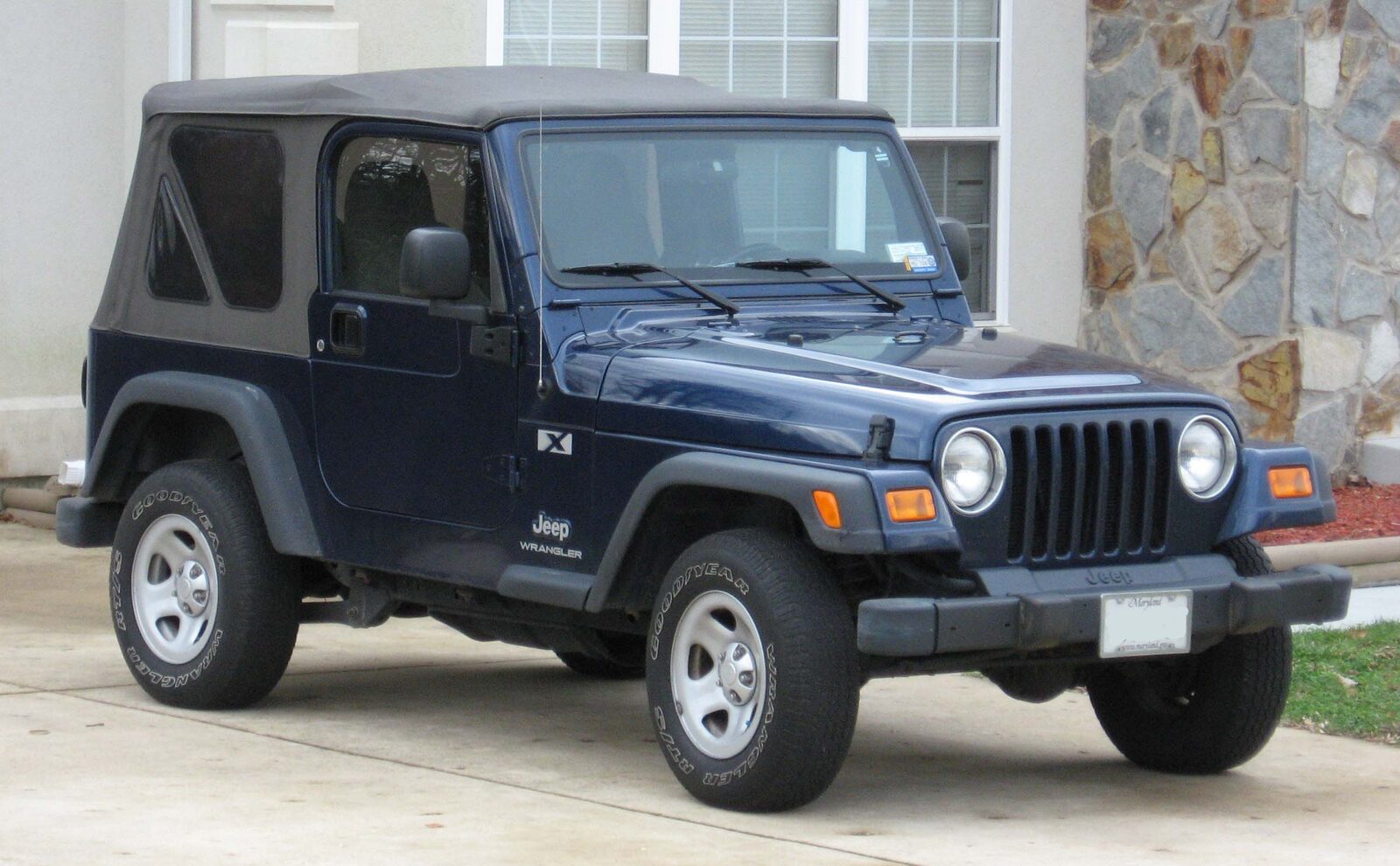
Jeep introduced the first Wrangler in 1986 as a 1987 model, and the YJ code marked a clean break from the CJ badge. The most obvious change hit buyers right in the face. Rectangular headlights arrived, the only square lights in the whole Jeep Wrangler history. Purists complained, and Jeep never repeated the choice. Underneath, though, the YJ kept the CJ-7 wheelbase and leaf-spring solid axles. Its off-road DNA stayed intact.
The real story was refinement. The YJ used a wider track and, for the first time, added trackbars and anti-roll bars. Those parts sharpened on-road handling and made the Jeep less likely to roll for untrained drivers. Buyers chose a base model, a Laredo, or a Sahara. Engine options ran from a 117-horsepower 2.5-liter four-cylinder to a 114-horsepower 4.2-liter inline-six. The six made less power on paper, yet it delivered 210 pound-feet of torque for low-speed crawling.
Two mid-life changes stand out. In 1991, Jeep swapped the old carbureted 4.2-liter six for a fuel-injected 4.0-liter inline-six. Output jumped to 180 horsepower and 220 pound-feet of torque. The 4.0-liter engine later earned a near-legendary reputation for durability. Special editions arrived too, including the 1991 Renegade with its wide bodywork, plus the Islander and Rio Grande packages.
A few footnotes round out the YJ years. Jeep cleared the Wrangler name with Goodyear but skipped the same step with Wrangler jeans, triggering a lawsuit. Anti-lock brakes reached the lineup in 1993. Jeep skipped a 1996 model year, since the TJ took over for 1997. Chrysler bought AMC months after launch, then moved production from Brampton to Toledo.
Wrangler TJ (1997 to 2006)
The TJ arrived for 1997 and fixed the YJ’s most divisive trait. Round headlights returned, restoring the classic Jeep face. Bigger news sat under the body. The TJ adopted coil-spring suspension borrowed from the XJ Cherokee. This single change reshaped the Jeep Wrangler history, since coil springs improved ride quality and added roughly seven inches of extra articulation at each end.
The rest of the TJ backed up the leap. Jeep spent about $260 million on the redesign. Every body panel except the doors and tailgate was new. The body gained 100 percent more torsional stiffness, and the frame grew stiffer as well. Dual airbags became standard, and the automatic shifter moved to the floor. The proven 4.0-liter inline-six carried over as the main engine, now making 190 horsepower in most trims.
On-road manners improved in other ways too. In 2003, Jeep replaced the aging 2.5-liter four with a more modern 2.4-liter unit. Then in 2005, the long-wheelbase models gained an available six-speed manual. As a result of these updates, the TJ drove far better on pavement than any Jeep before it, yet it kept its full trail ability.
The Rubicon and the long-wheelbase LJ
Two additions during the TJ run still shape the lineup today. In 2003, Jeep launched the Wrangler Rubicon, a factory trim aimed at serious off-roaders. It came standard with front and rear locking differentials, a 4-to-1 low-range gear ratio, four-wheel disc brakes, and 31-inch tires. Then in 2004, Jeep offered a long-wheelbase Unlimited, code-named LJ. Its wheelbase ran 10 inches longer than the standard TJ. The LJ added rear-seat room and cargo space and raised the tow rating to 3,500 pounds. A rare TJ Rubicon Unlimited followed, and enthusiasts still hunt for those examples.
Wrangler JK (2007 to 2018)
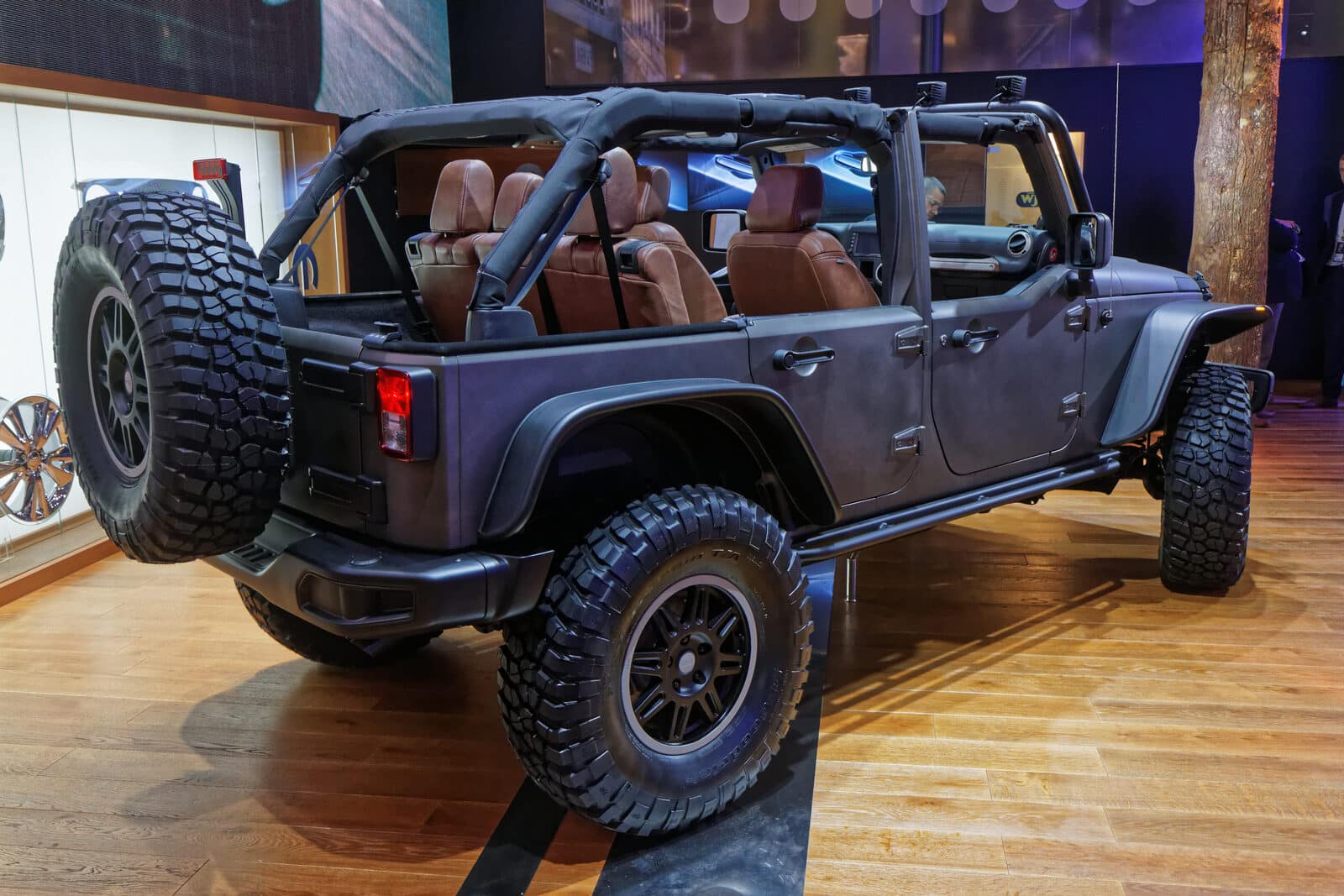
The JK marks the point where the Jeep Wrangler history went fully mainstream. Released for 2007, it was the first Wrangler built as a completely clean-sheet design of body, frame, and suspension. Developed under DaimlerChrysler ownership, it grew in every direction to meet stricter safety and emissions rules. The two-door JK measured 5.4 inches wider than the TJ. Its wheelbase grew by two inches. The added size gave passengers more room and steadied the chassis at highway speed.
The first four-door Wrangler
The headline change reshaped who bought a Wrangler. For the first time, Jeep offered a four-door model, again using the Unlimited name. Its wheelbase ran over 20 inches longer than the two-door. Families adopted it fast. By mid-2017, four-door models made up three-quarters of all new Wranglers sold. The JK also added comforts the CJ crowd never had, including power windows, remote locks, available navigation, and electronically detachable front sway bars on Rubicon trims.
Powertrains evolved during the run. Early JK models from 2007 to 2011 used a 3.8-liter V6 rated near 202 horsepower, an engine carried over from Chrysler minivans and widely seen as underpowered. For 2012, Jeep installed the 3.6-liter Pentastar V6, which produced 285 horsepower and 260 pound-feet of torque, a gain of more than 80 horsepower. Sales climbed with the improvements. Wrangler volume in the United States rose from about 119,000 in 2007 to more than 200,000 by 2015. The JK pushed the Wrangler into the heart of the market, and Jeep later celebrated one million Rubicons sold.
Pop culture noticed the JK as well. In 2011, for instance, Jeep built a limited Call of Duty: Modern Warfare 3 edition based on the Rubicon. Jeep also produced a military version, the J8, for export fleets. As a result of its wider appeal, the JK stayed in production for a full 11 model years, longer than any Wrangler before it.
Wrangler JL (2018 to Today)
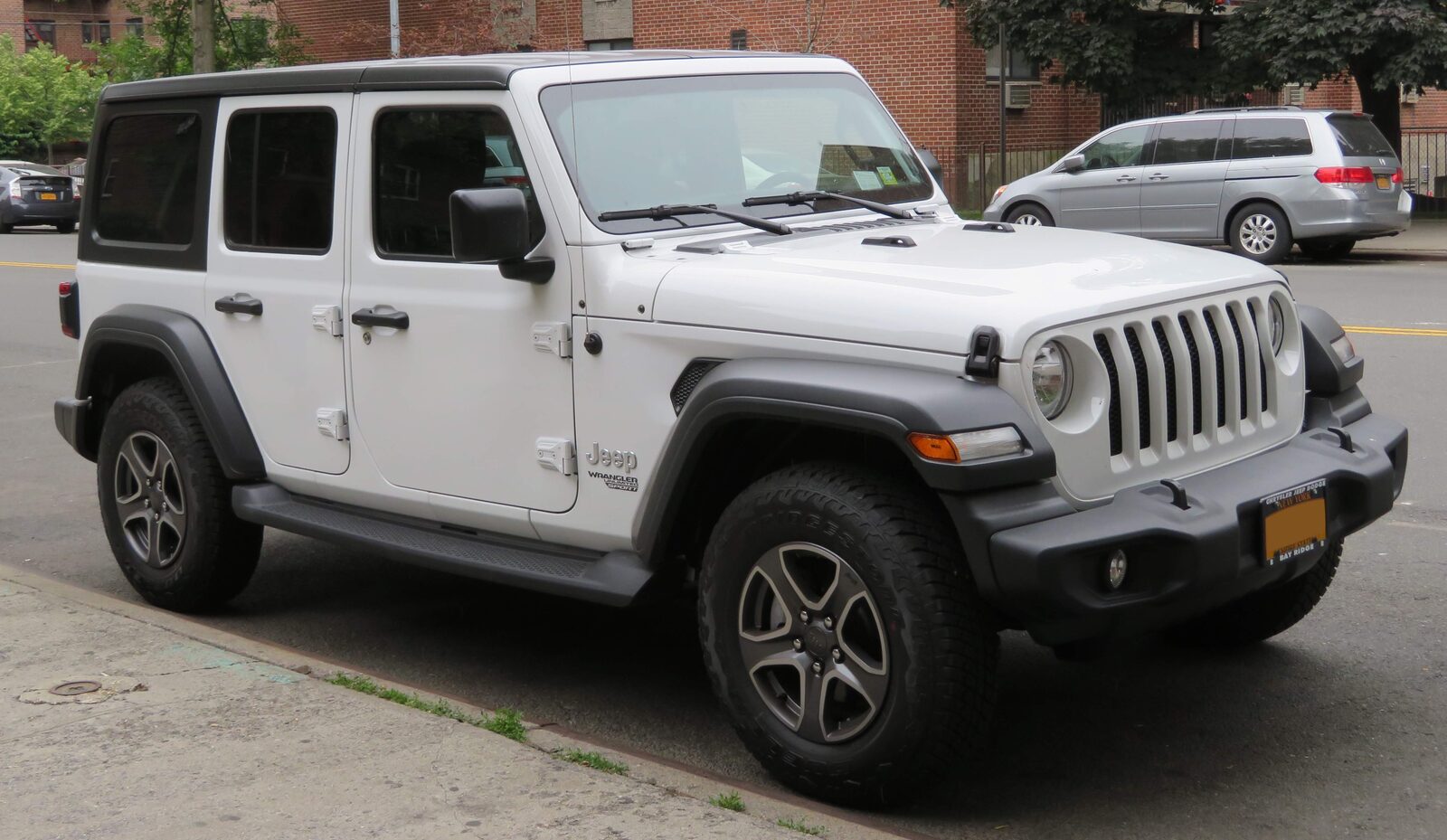
The newest phase of the Jeep Wrangler history began in late 2017, when the JL launched for the 2018 model year. It modernized the Wrangler without erasing its character. Jeep kept the solid axles, the removable top and doors, and the fold-flat windshield, but made the windshield far easier to lower. New zipperless soft tops, blind-spot monitoring, a backup camera, and a cleaner interior brought the Jeep up to date. Lightweight aluminum doors and hood trimmed weight to help efficiency. Jeep also keeps a stripped-down Willys Sport trim in the range, a nod to the brand’s roots.
The powertrain menu widened the most. The JL offered a 3.6-liter Pentastar V6 making 285 horsepower. Jeep added a new 2.0-liter turbocharged four-cylinder rated at 270 horsepower and 295 pound-feet of torque. A 3.0-liter EcoDiesel V6 followed, and an available eight-speed automatic backed the whole range. The four-door JL rides on a 118.4-inch wheelbase and stretches 188.4 inches long. Its two-door sibling keeps a tidy 96.8-inch wheelbase. Modern rivals raised the stakes, a fight our Wrangler versus the Bronco comparison breaks down in detail.
The JL era also broadened the family. In 2020, for example, Jeep revived the pickup body style as the Gladiator, built on a stretched JL frame. The plug-in 4xe then became a sales leader among hybrids, proof buyers would accept electrification without losing capability. Together, these moves kept the Wrangler current as emissions rules tightened worldwide.
The Wrangler 4xe and Rubicon 392
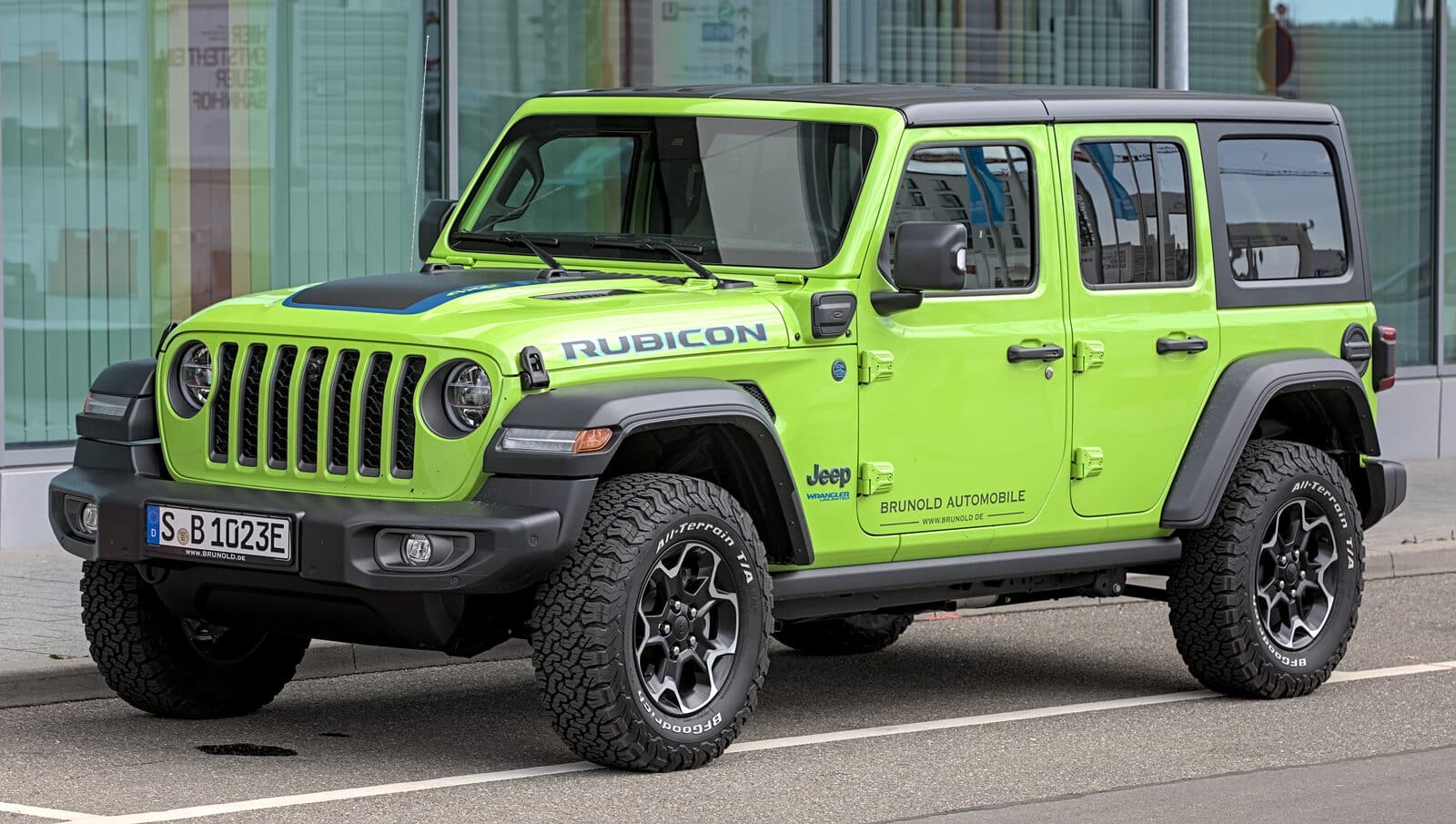
The final act of the modern era splits in two directions. In early 2021, Jeep launched the Wrangler 4xe, a plug-in hybrid pairing the 2.0-liter turbo four with an electric motor. The Wrangler 4xe delivers about 21 miles of EPA-rated electric-only range. It lets you crawl trails in near silence, then switch to gas. The model quickly became one of the best-selling plug-in hybrids in the United States.
At the other end sat raw power. In late 2021, Jeep released the Rubicon 392, the most powerful production Wrangler ever. It carries a 6.4-liter Hemi V8 rated at 470 horsepower and 470 pound-feet of torque. Those numbers send the 392 from 0 to 60 mph in about 4.5 seconds and through the quarter mile in roughly 13.0 seconds. No earlier Wrangler came close. Jeep also showed all-electric Magneto concepts, a hint at where the nameplate heads next.
Taken together, these two variants show the range of the modern Wrangler. On one hand, the 4xe chases efficiency and quiet trail runs. On the other hand, the 392 chases straight-line speed. Yet both keep the solid axles, the removable doors, and the seven-slot grille, so each still reads as a true Wrangler at a glance. A hybrid owner and a V8 owner argue over range and power, then wave to each other on the same trail.

Jeep Wrangler: The Story Behind an Iconic off-Roader
A focused look at the Wrangler's evolution from wartime Jeep to modern off-road icon.
- Traces the Wrangler bloodline from the WWII Willys through the CJ-7 to today
- Includes off-road driving impressions and buying advice
- Compact format, easy to keep on hand for a road trip
- Lighter on technical detail than a shop manual
Why the Jeep Wrangler History Still Matters
Few vehicles hold their identity across 80 years the way the Wrangler has. The whole Jeep Wrangler history reads as one long exercise in careful evolution, not reinvention. Each generation solved a real problem. The YJ sharpened handling, the TJ smoothed the ride, the JK added room, and the JL cleaned up the power. None abandoned the solid axles and removable body panels at the heart of the breed.
This continuity pays off for owners in concrete ways. Wranglers post some of the lowest depreciation of any vehicle. A 2018 iSeeCars study named the Wrangler the model with the lowest five-year depreciation, and strong demand keeps used values high. The nameplate also carries real trophies. In 2007, two Rubicon Unlimiteds set a Guinness record for the highest altitude reached by a four-wheeled vehicle, at 21,804 feet in Chile.
Critics piled on awards as well. For example, Four Wheeler magazine named the Wrangler its Four Wheeler of the Year in 2007 and again in 2013. Kelley Blue Book also handed the Wrangler repeated resale-value awards. Meanwhile, sales kept setting records, and the JL launch year of 2018 moved 240,032 units in the United States, the highest annual total in the nameplate’s history.
For enthusiasts, the appeal is simpler. A modern Wrangler still does the jobs the 1941 military Jeep did, only with airbags, air conditioning, and a hybrid option. The Jeep Wrangler history is the story of a wartime tool refusing to retire. Reviewers still rank it the best Jeep for off-roading. Every trail rig on the road today descends directly from the first Army prototype. Knowing the four eras helps you pick the right one, whether you want a raw leaf-sprung YJ or a 470-horsepower 392.
Jeep Wrangler History FAQ
What year did the first Jeep Wrangler come out?
The first Jeep Wrangler, the YJ, went on sale in the summer of 1986 as a 1987 model. It replaced the long-running CJ line. Before the Wrangler name, the same basic vehicle wore the CJ badge from 1945 and traced back to the 1941 military Jeep.
What do YJ, TJ, JK, and JL mean?
The letters are factory generation codes, and they do not stand for specific words. Enthusiasts use them as shorthand for each era: YJ from 1987, TJ from 1997, JK from 2007, and JL from 2018. Each code marks a major redesign with its own engines, suspension, and styling.
How many Jeep Wrangler generations are there?
There are four Jeep Wrangler generations to date: the YJ, TJ, JK, and JL. The JL remains in production and includes the 4xe hybrid and Rubicon 392 V8 variants. Some enthusiasts count the CJ line as a fifth, earlier chapter, though Jeep treats the CJ as a separate nameplate.
Is the Jeep Wrangler based on the Willys MB?
Yes, the Wrangler descends directly from the World War II Willys military Jeep, built from 1941. The design passed through the civilian CJ line and into the Wrangler in 1987. Core traits like the seven-slot grille, solid axles, and removable top all trace back to the wartime vehicle.
When did the Jeep Wrangler get coil spring suspension?
The Wrangler switched from leaf springs to coil springs with the TJ generation in 1997. Coil springs improved ride comfort and added about seven inches of suspension articulation at each axle. Every Wrangler since the TJ has used coil-spring suspension.
Which Jeep Wrangler generation was the first four-door?
The JK generation introduced the first four-door Wrangler in 2007, sold under the Unlimited name. It added over 20 inches of wheelbase versus the two-door. Four-door models proved so popular they made up three-quarters of Wrangler sales by mid-2017.