


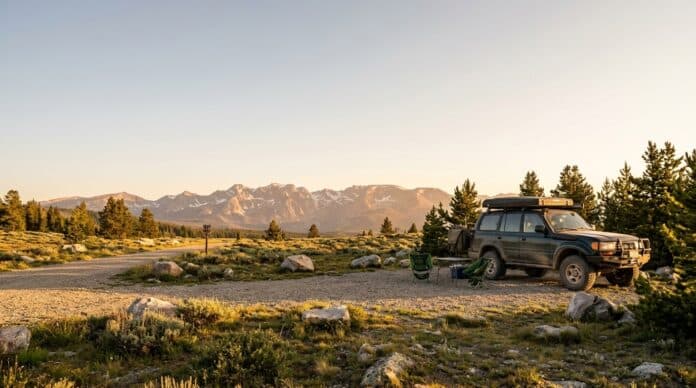

Quick Facts:
- Topic: Free dispersed camping in Montana for off-roaders and overlanders
- Spots covered: 13 free areas across 6 regions
- Land managers: BLM Montana and the Custer Gallatin, Flathead, Lolo, Bitterroot, Beaverhead-Deerlodge, Kootenai, and Helena-Lewis and Clark National Forests
- Typical cost: $0 on most national forest and BLM land
- Bear rule: Grizzly food-storage orders apply to most western and southern Montana forests
- Stay limit: 16 days per site and 32 days per year on Montana national forests; 14 days on BLM
- Vehicle needed: Graded gravel reaches many sites; high-clearance or 4WD opens the rest
- Best season: July through September, once the high roads melt out
- Heads up: Store all food in a hard-sided vehicle, and carry bear spray
- Best for: Overlanders who want big country, solitude, and legal free camping
11 min read
In This Guide
- Dispersed Camping in Montana: What Off-Roaders Need to Know
- Rules and Bear Country for Dispersed Camping in Montana
- Seasons, Fire, and Bears for Dispersed Camping in Montana
- Bozeman and the Yellowstone Gateway
- Glacier Country: the Flathead
- Western Montana: Missoula to the Bitterroot
- Southwest Montana: Dillon and Butte
- The Far Northwest and Central Ranges
- Montana’s BLM East: River Breaks and the Pryors
- Montana State and Agency Resources
- Which Montana Spot Fits Your Rig and Season?
- Final Verdict
- Frequently Asked Questions
Dispersed Camping in Montana: What Off-Roaders Need to Know
Dispersed camping in Montana is free across millions of acres of national forest and BLM land, and few states hand overlanders this much room to roam. You get the peaks around Glacier, the alpine plateau of the Beartooth, the trout rivers near Missoula, and the empty Missouri River Breaks. Better still, most of it sits along forest roads a capable rig reaches without drama.
This guide covers 13 genuinely free areas across six regions. Every spot below rests on public land managed by the BLM or one of seven national forests, so the camping costs nothing. We graded each by road difficulty, so you know where a stock crossover works and where you want high-clearance or 4WD. If you have run our free dispersed camping in Colorado picks, Montana feels wilder and emptier, with one extra thing to respect.
The extra thing is bears. Most of western and southern Montana is grizzly country, and forest food-storage orders carry real fines. We flag which spots require hard-sided storage, along with the fees and closures other guides gloss over. Learn the rules and dispersed camping here becomes some of the best free camping in Montana anywhere in the West.
Rules and Bear Country for Dispersed Camping in Montana
The rules stay simple, with two Montana details worth knowing upfront. On national forest and BLM land, dispersed camping is free and needs no reservation. In fact, the stay limit runs longer here than in most states, and the bear rules run stricter. Here is the quick reference for free camping in Montana on federal land.
| Rule | Details |
|---|---|
| Cost | $0 for dispersed sites on national forest and BLM land |
| Reservation | None required for dispersed camping |
| Stay limit (national forest) | 16 consecutive days per site, 32 total days per year |
| Stay limit (BLM) | 14 days at most locations |
| Bear food storage | Required in grizzly country: hard-sided vehicle or certified container |
| Camp location | On bare ground, generally 200 feet from water, roads, and trails |
| Firewood | Pallets and nail-laden wood prohibited region-wide; obey fire orders |
| Waste | Pack out all trash; bury human waste 6 to 8 inches, 200 feet from water |
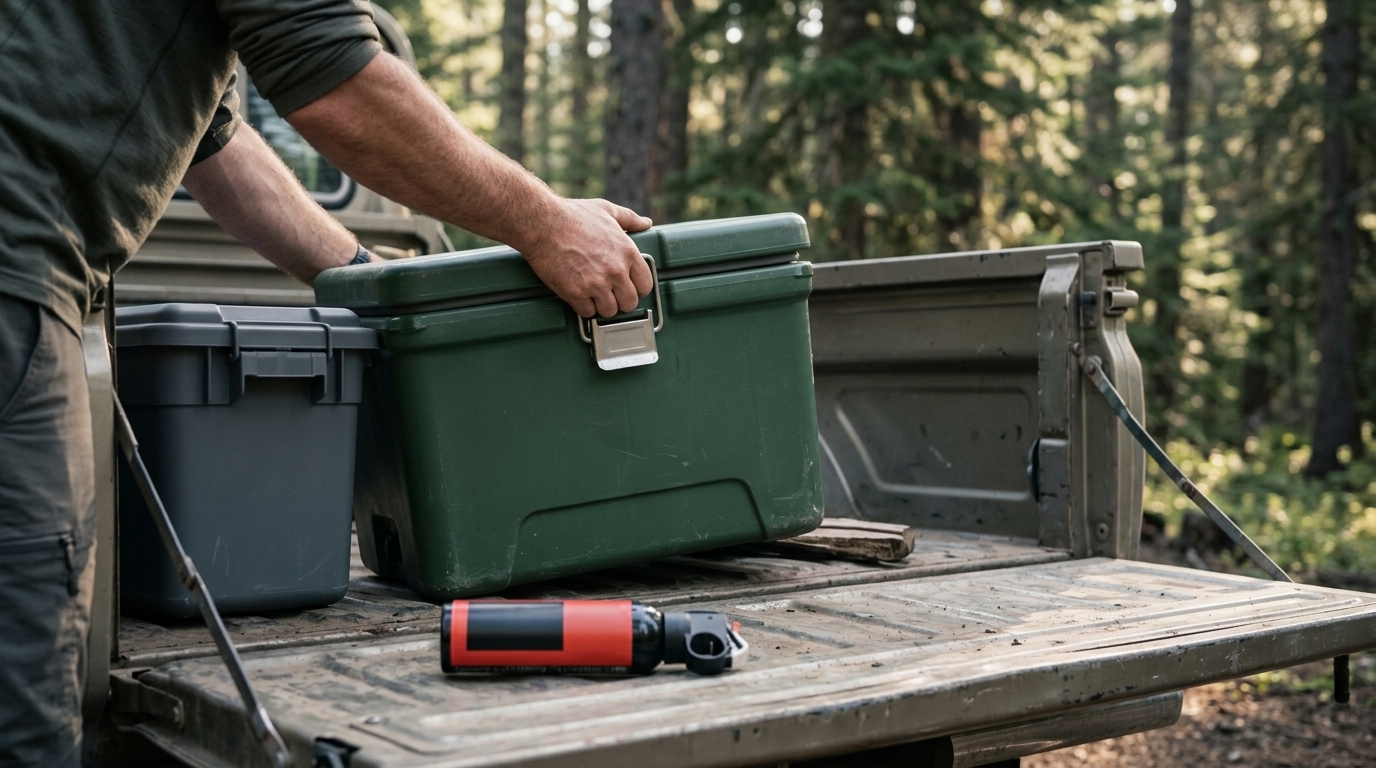
The bear rule is the one to internalize. In grizzly country, all food, garbage, coolers, and toiletries must sit in a locked hard-sided vehicle or a certified bear container whenever you step away. A violation counts as a misdemeanor, with fines up to $5,000, and rangers do cite campers. For overlanders, a locked truck or camper satisfies the order, which makes compliance easy. Also, camp on already-used ground, pull a Motor Vehicle Use Map for your forest, and follow leave no trace principles. New to the process? Our guide on how to find free camping walks through scouting a legal site.
Seasons, Fire, and Bears for Dispersed Camping in Montana
Three forces shape dispersed camping in Montana: snow, fire, and bears. Snow locks the high country deep into spring, fire season builds through late summer, and grizzlies range across most of the western forests all season. Plan around all three and the state rewards the effort.
Grizzly country and the food-storage orders
Bears come first here because the rules are mandatory. The Northern Continental Divide and Greater Yellowstone ecosystems cover the forests around Glacier, the Bob Marshall, and Yellowstone, and each carries a food-storage order from spring through late fall. Store every attractant in your locked vehicle or a certified container, and never leave a cooler on the picnic table. Carry bear spray on your hip, not in the truck, and know how to use it. Eight of the 13 areas below sit under an active order, so treat hard-sided storage as standard gear.
Snow, fire season, and timing
Snow and fire bracket the calendar. High passes and mountain roads hold snow into June, so July through September is the reliable window. The Beartooth Highway shows how fickle elevation gets, since it often reopens in late May and then closes again for spring snowstorms. Fire season builds from mid-July, and dry years turn active early across eastern and southwest Montana. Bans arrive fast once the fuels cure, so check the current fire map the day you leave.
Bozeman and the Yellowstone Gateway
Some of the most scenic dispersed camping in Montana sits around Bozeman, where the Custer Gallatin National Forest wraps the city, Big Sky, and the northern edge of Yellowstone. This is grizzly country under an active food-storage order, so lock your food away. For instance, access ranges from easy gravel pullouts to rough alpine spurs.
Gallatin Canyon and Porcupine-Buffalo Horn
Forest roads off US-191 between Bozeman and Big Sky open free camps along the Gallatin River and up the Porcupine and Buffalo Horn drainages. Graded spurs suit most vehicles, while higher drainage roads want high-clearance. One caveat matters: the nearby Hyalite Reservoir corridor allows camping only at designated sites, not true dispersed, and a 2026 travel order governs access there. Stick to the canyon roads for free camping, with blue-ribbon trout fishing out the door.
Beartooth Highway and Pilot Creek
The Beartooth Highway climbs to nearly 11,000 feet, and free dispersed sites like the Pilot Creek area sit off the corridor near Cooke City. Its pavement is smooth, though the camp spurs turn to rough gravel. Snow lingers up high into July, and the road closes with every storm, so verify it is open first. Still, skip the named roadside campgrounds, which charge fees. Alpine lakes and plateau tundra make this one of the most scenic camps in the state.
Gardiner and Cooke City gateways
Free forest roads ring Yellowstone’s northern and northeastern entrances near Gardiner and Cooke City. Yellowstone National Park itself charges an entrance fee and bans roadside dispersed camping, so the national forest is your free option on the doorstep. Graded gravel reaches easy sites, while spurs climb rougher into the hills. As a result, this gives you dispersed camping near Yellowstone without the park’s reservation system. Grizzlies are common, so the food order applies in full.
Glacier Country: the Flathead
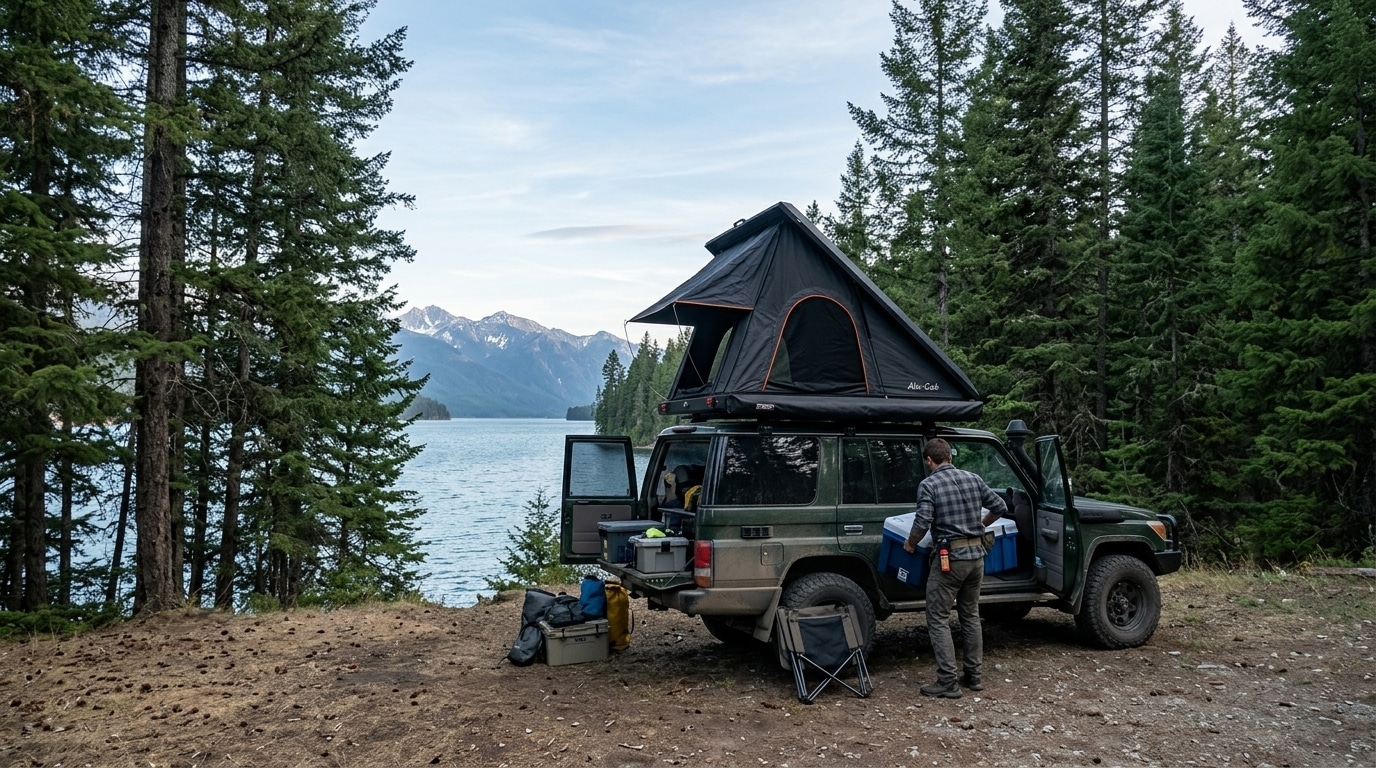
Around Glacier National Park, the Flathead National Forest holds prized dispersed camping in Montana on the park’s quieter flanks. This is core grizzly habitat in the Northern Continental Divide ecosystem, so the food-storage order is strict. Both areas below trade the park’s crowds for river-sound solitude.
Hungry Horse Reservoir and the South Fork
Forest Road 38 loops the long Hungry Horse Reservoir south of Glacier, with free primitive pullouts along the water and the South Fork Flathead. The loop is graded gravel, washboarded and slow, though passable to most rigs. Meanwhile, higher spurs want high-clearance. Developed reservoir campgrounds charge fees, so aim for the primitive dispersed sites instead. This is free dispersed camping near Glacier without the park-gateway prices.
North Fork Flathead and Glacier View
West of Glacier’s wild North Fork, Road 486 runs quiet free camps through the Glacier View country. The road is graded gravel, dusty and washboarded, and reachable by most vehicles. Check the North Fork camping map first, since some river segments ban camping. In contrast, fewer crowds and a big-wilderness feel define this side. Grizzlies range heavily here, so hard-sided storage is not optional.
Western Montana: Missoula to the Bitterroot
Western Montana offers easy dispersed camping in Montana within a short drive of Missoula, packed with trout rivers and canyon roads. Two forests carry it, and both suit spring-through-fall trips at lower elevation. Bear attractant orders apply, so store food hard-sided even where black bears dominate.
Rock Creek, Lolo National Forest
Rock Creek runs southeast of Missoula as a nationally known blue-ribbon trout stream, with free dispersed pullouts along the graded gravel road. Most vehicles reach the creekside sites, while side spurs want high-clearance. Developed campgrounds in the corridor charge fees, so use the dispersed pullouts. An attractant-storage order covers the area, and afternoon fishing restrictions are common in hot late summer. Easy creek camping 40 minutes from town is the draw.
Bitterroot Valley canyon roads
South of Missoula and Hamilton, dozens of canyon roads climb west out of the Bitterroot Valley into the mountains. Lower canyons run graded gravel, and upper roads turn to high-clearance and 4WD as they near the trailheads. In addition, a forest-wide food-storage order applies, and heavy fire seasons often bring late-summer restrictions. So many parallel canyons mean solitude comes easily, with wilderness hiking at the top of each road.
Southwest Montana: Dillon and Butte
Southwest Montana holds the state’s largest forest and a granite-spire gem near the interstate. This corner sits mostly outside current grizzly range, though black bears still roam, so store food responsibly. Terrain runs from a paved scenic byway to remote high-clearance spurs.
Pioneer Mountains, Beaverhead-Deerlodge
The Beaverhead-Deerlodge is Montana’s largest national forest, and the Pioneer Mountains Scenic Byway threads its granite peaks near Dillon. Free dispersed sites line the forest roads off the byway, from graded gravel to 4WD spurs reaching alpine lakes. The byway opens in late spring, while higher roads melt out through June and July. Developed byway campgrounds charge fees, so pick the dispersed spurs. Huge and uncrowded, this range rewards a long, slow route.
Humbug Spires, BLM
About 26 miles south of Butte, the Humbug Spires area protects a cluster of dramatic granite towers on BLM land. Free first-come sites and a gravel access road off I-15 make this an easy, honest stop near the interstate. High-clearance helps in wet weather, though most rigs reach the trailhead. Only black bears live here, so standard bear-aware care applies. Likewise, rock climbers and hikers love the spires straight off the parking area.
The Far Northwest and Central Ranges
Montana’s far northwest corner and its central ranges stay overlooked, which means solitude. The Kootenai and Helena-Lewis and Clark forests anchor them. Grizzly recovery zones touch both, so check the local order before you settle in.
Kootenai National Forest backroads
In the far northwest near Libby, the Kootenai National Forest laces a huge logging-road network through lush lake-and-waterfall country. For example, graded gravel mainlines carry most rigs, with high-clearance and 4WD spurs branching off. The stay limit runs the standard 16 and 32 days, and dispersed camping stays legal even where a campground closes for work. This is Cabinet-Yaak grizzly recovery ground, so the food order applies. Genuine low-traffic solitude is the payoff.
Little Belts and the Rocky Mountain Front
Central Montana’s Helena-Lewis and Clark National Forest spreads across the Little Belt Mountains and the dramatic Rocky Mountain Front. Free dispersed camping is allowed away from posted closures, on graded gravel into the Little Belts and rougher spurs along the Front. A December 2025 windstorm left downed-tree hazards on some roads, so scout access first. The Rocky Mountain Front sits in grizzly country under the food order, while the Little Belts mostly do not. Overlooked ranges mean the roads stay quiet.
Montana’s BLM East: River Breaks and the Pryors
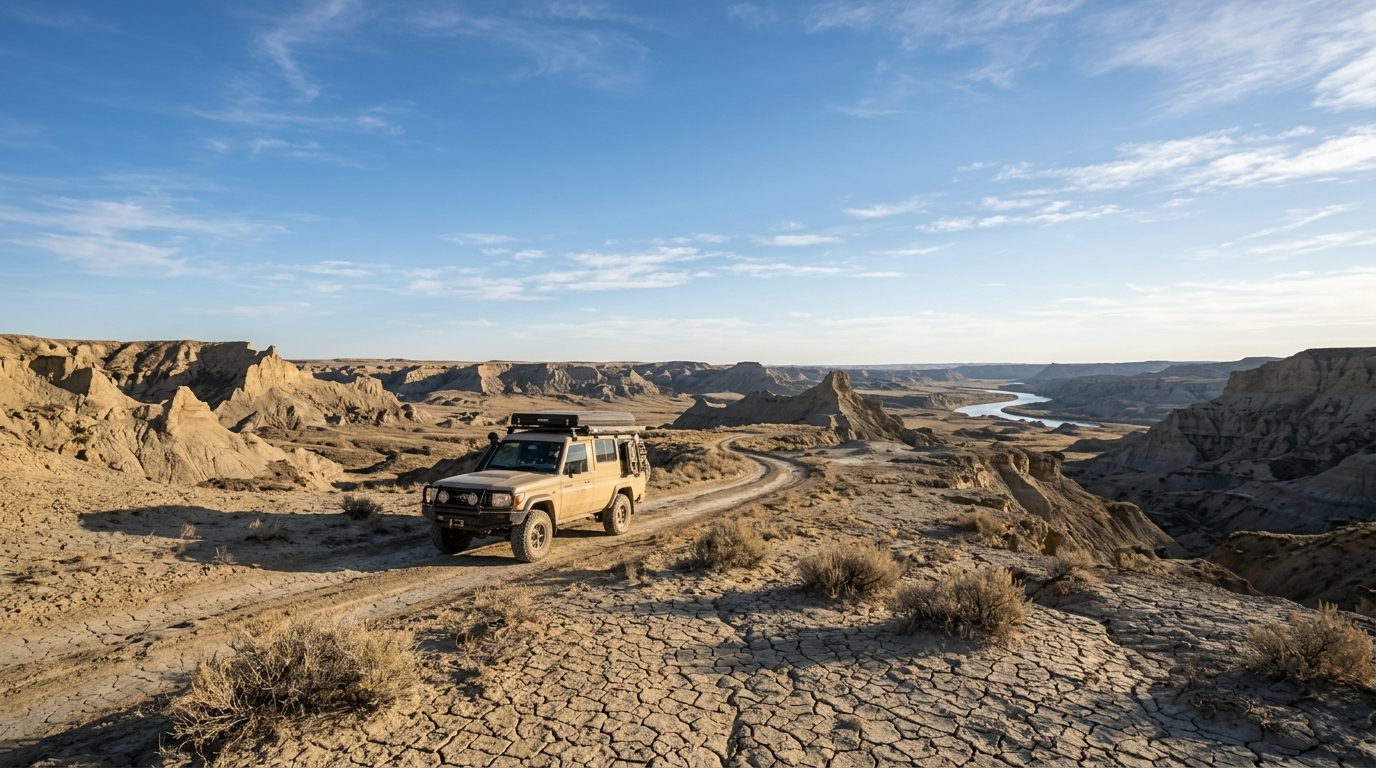
Eastern and south-central Montana trade forest for BLM badlands, river breaks, and desert mountains. These low, remote lands work best in late spring and fall, and they demand real self-reliance. No grizzlies live here, but water, shade, and cell service all vanish.
Upper Missouri River Breaks
The Upper Missouri River Breaks National Monument protects a Lewis-and-Clark landscape of free BLM camping along a Wild and Scenic river. Gumbo clay two-tracks turn impassable when wet, so dry weather and high-clearance are the rule, with 4WD wise after rain. Late spring and fall beat the brutal, buggy heat of midsummer. Some designated river camps carry shorter stay limits and fire bans, so read the signs. Huge sky and near-zero crowds define this self-reliant destination.
The Pryor Mountains
South of Billings near Bighorn Canyon, the Pryor Mountains rise as a remote desert range of BLM and forest land with free dispersed camping. The access roads run rough, steep, and high-clearance to 4WD, and water is extremely scarce, so carry all you need. Moreover, wild horses, ice caves, and limestone canyons make the Pryors unique. Note the boundary carefully: the adjacent Bighorn Canyon recreation area bans roadside dispersed camping, unlike the free BLM and forest land. Solitude here is total.
Montana State and Agency Resources
Conditions for dispersed camping in Montana shift through the season, so bookmark the official sources before any trip. Each link below resolves to the agency running the land, the road, or the bear rules, and together they cover fire status, closures, and food-storage orders.
| Resource | Use it for | Link |
|---|---|---|
| Montana Fire Info | Statewide fire restrictions map and active fires | mtfireinfo.org |
| Grizzly Food Storage (IGBC) | Food-storage rules and certified container list | igbconline.org |
| BLM Montana | BLM recreation, dispersed rules, field offices | blm.gov |
| Custer Gallatin National Forest | Bozeman, Beartooth, and Yellowstone-gateway alerts | fs.usda.gov |
| Flathead National Forest | Glacier-area food orders, road status | fs.usda.gov |
| Lolo National Forest | Rock Creek and Missoula-area alerts | fs.usda.gov |
| Beaverhead-Deerlodge National Forest | Pioneer Mountains and southwest Montana | fs.usda.gov |
| Kootenai National Forest | Libby-area backroads and grizzly orders | fs.usda.gov |
| Bitterroot National Forest | Bitterroot Valley canyon roads and food orders | fs.usda.gov |
| Helena-Lewis and Clark National Forest | Little Belts and Rocky Mountain Front alerts | fs.usda.gov |
| MDT 511 Road Conditions | Real-time road and pass closures, including the Beartooth | 511mt.net |
| Recreation.gov | Reservations for developed sites | recreation.gov |
| Montana Fish, Wildlife and Parks | Fishing, wildlife, and current closures | fwp.mt.gov |
From the 4wdTalk Garage
Montana rewards a rig set up for range and bear country, because these forests run big and services thin out fast. For graded gravel like the Hungry Horse loop or the Rock Creek road, a high-clearance crossover or a stock truck does the job, and airing down to around 20 psi calms the washboard. On the Pryor Mountains and the wet Missouri Breaks two-tracks, you want real 4WD, a low range, and recovery gear. That gumbo clay turns to grease in one storm and strands the unprepared.
Two habits keep a Montana trip safe. First, treat your locked hard-sided vehicle as the bear locker, since it satisfies the food-storage order and keeps a grizzly from turning your camp into a buffet. Keep coolers, trash, and toiletries inside with the windows up, and wear bear spray on your belt. Second, check the fire map and the road report before you climb, because a July snowstorm on the Beartooth or a new fire restriction will flip your plan overnight. Camp on used ground, and you leave these roads open for the next rig.
Which Montana Spot Fits Your Rig and Season?
Your best dispersed camping in Montana comes down to clearance and season. Start with clearance. If you drive a stock crossover or a 2WD truck, you have plenty of dry-weather options. Aim for the Hungry Horse loop, Rock Creek, the Gallatin Canyon spurs, or Humbug Spires. These reach good camps without drama.
If you run 4WD with low range and recovery gear, the harder ground opens up. The Pryor Mountains, the Missouri Breaks two-tracks, and the upper Bitterroot canyons reward a capable setup with deep solitude. Save the clay and the high spurs for dry spells, because rain and late snow both turn them ugly.
Then match the season and the bears. From July through September, the whole state is fair game, so climb high to the Beartooth, the Pioneers, or the Flathead. In late spring and fall, drop to the low BLM country of the Breaks and the Pryors, which bakes in midsummer. Wherever you land in grizzly country, store food hard-sided and carry spray.
Final Verdict
Montana is a giant among free-camping states, and the off-road angle opens up its best country. Few places stack glacier peaks, alpine plateaus, blue-ribbon rivers, and lonesome river breaks this close together. For overlanders who value big country over hookups, the state delivers trip after trip.
The catch is preparation. You have to store food for bears, read the fire map, and know which famous places charge fees or ban camping outright. People who skip the prep meet a grizzly problem, a snowed-out pass, or a Yellowstone entrance booth. Those who plan around snow, fire, and bears get quiet forests to themselves.
The economics are simple, since free camping in Montana costs nothing across every site here. Your real budget is fuel, water, bear spray, and a hard-sided place to lock your food. A high-clearance rig widens the options far more than any dollar figure.
Pick your first dispersed camping in Montana trip by elevation and season. For a summer high-country run, base around the Beartooth or the Pioneers. In a cooler shoulder season, drop to the Missouri Breaks or the Pryors. Pair this guide with our nearby dispersed camping in Washington roundup, and you have a stretch of the northern West to explore for years.
More Free Dispersed Camping Guides by State
Frequently Asked Questions
Is dispersed camping free in Montana?
Yes. Dispersed camping in Montana is free on national forest and BLM land, with no reservation required. Developed campgrounds and areas like Yellowstone charge fees, so confirm whether a named site is free dispersed or a paid site first.
What is the stay limit for dispersed camping in Montana?
Montana national forests allow 16 consecutive days at one site and 32 total days per year, which runs longer than the 14-day rule in most states. On BLM land, the limit is 14 days at most locations. A few managed river camps in the Missouri Breaks carry shorter posted limits.
Do you need bear-proof food storage when camping in Montana?
In grizzly country, yes. The forests around Glacier, the Bob Marshall, and Yellowstone require all food and attractants to sit in a hard-sided vehicle or a certified bear container. For overlanders, a locked truck satisfies the order. Carry bear spray, and never leave food out.
Where is free dispersed camping near Glacier National Park?
The Flathead National Forest offers free dispersed camping near Glacier on the park’s flanks. Forest Road 38 around Hungry Horse Reservoir and Road 486 along the North Fork both hold free primitive sites. All of it is grizzly country, so the food-storage order applies.
Is there free dispersed camping near Yellowstone in Montana?
Yes. The Custer Gallatin National Forest around Gardiner and Cooke City offers free forest-road camping outside the park. Yellowstone itself bans roadside dispersed camping and charges entry, so the national forest is the free option. Dispersed camping near Yellowstone here still falls under the grizzly food order.
When is the best time for boondocking in Montana?
It depends on elevation. High country runs from July through September, while snow gates those roads into June. Low BLM country like the Missouri Breaks and the Pryors is best in late spring and fall, since it bakes in midsummer. Boondocking in Montana peaks when the passes are clear and fire restrictions have not yet arrived.