



Quick Facts:
- Topic: Free dispersed camping in Northern California for off-roaders and overlanders
- Spots covered: 12 free areas across 5 regions, plus one fee trap to avoid
- Land managers: BLM California and the Shasta-Trinity, Modoc, Klamath, Six Rivers, Tahoe, Plumas, Eldorado, and Mendocino National Forests
- Typical cost: $0 on most national forest and BLM land
- Permits: A free California Campfire Permit is required for any stove or fire on federal land
- Stay limit: 14 days per spot on most forests, with per-forest variations
- Vehicle needed: Graded gravel reaches many sites; high-clearance or 4WD opens the rest
- Best season: Late spring and early fall shoulder windows; high country snow-gates in winter
- Heads up: Fire restrictions ran early in 2026, and dispersed camping is banned in the Lake Tahoe Basin
- Best for: Overlanders who want solitude, big country, and legal free camping
11 min read
In This Guide
- Dispersed Camping in Northern California: What Off-Roaders Need to Know
- Rules and Permits for Dispersed Camping in Northern California
- Seasons, Fire, and Road Conditions for Dispersed Camping in Northern California
- Far North: Shasta, Trinity, and the Cascades
- The Northeast Corner: Modoc and Medicine Lake
- The Northwest: Klamath and Six Rivers
- Northern Sierra: Tahoe, Plumas, and Eldorado
- Coast and Inland Ranges: Mendocino and BLM
- California State and Agency Resources
- Which Northern California Spot Fits Your Rig and Season?
- Final Verdict
- Frequently Asked Questions
Dispersed Camping in Northern California: What Off-Roaders Need to Know
Dispersed camping in Northern California is free across millions of acres of national forest and BLM land, and the region hides some of the emptiest public country in the West. You get volcano flanks, wild salmon rivers, granite Sierra crests, and fog-soaked coast ranges. Better still, most of it sits along forest roads a capable rig reaches with ease.
This guide covers 12 genuinely free areas across five regions. Every spot below rests on public land managed by the BLM or one of eight national forests, so the camping costs nothing. We graded each by road difficulty, so you know where a stock crossover works and where you want high-clearance or 4WD. If you have wheeled our free dispersed camping in Southern California picks, the northern half of the state runs bigger, wetter, and wilder.
California also demands more homework than most states, and we lay it out plainly. A free California Campfire Permit is required for any stove or fire on federal land. Fire restrictions arrived early in 2026. One famous stretch, the Lost Coast, gets called free constantly and is not. We flag every catch, because the reward is worth the prep: dispersed camping done right here means solitude few states rival.
Rules and Permits for Dispersed Camping in Northern California
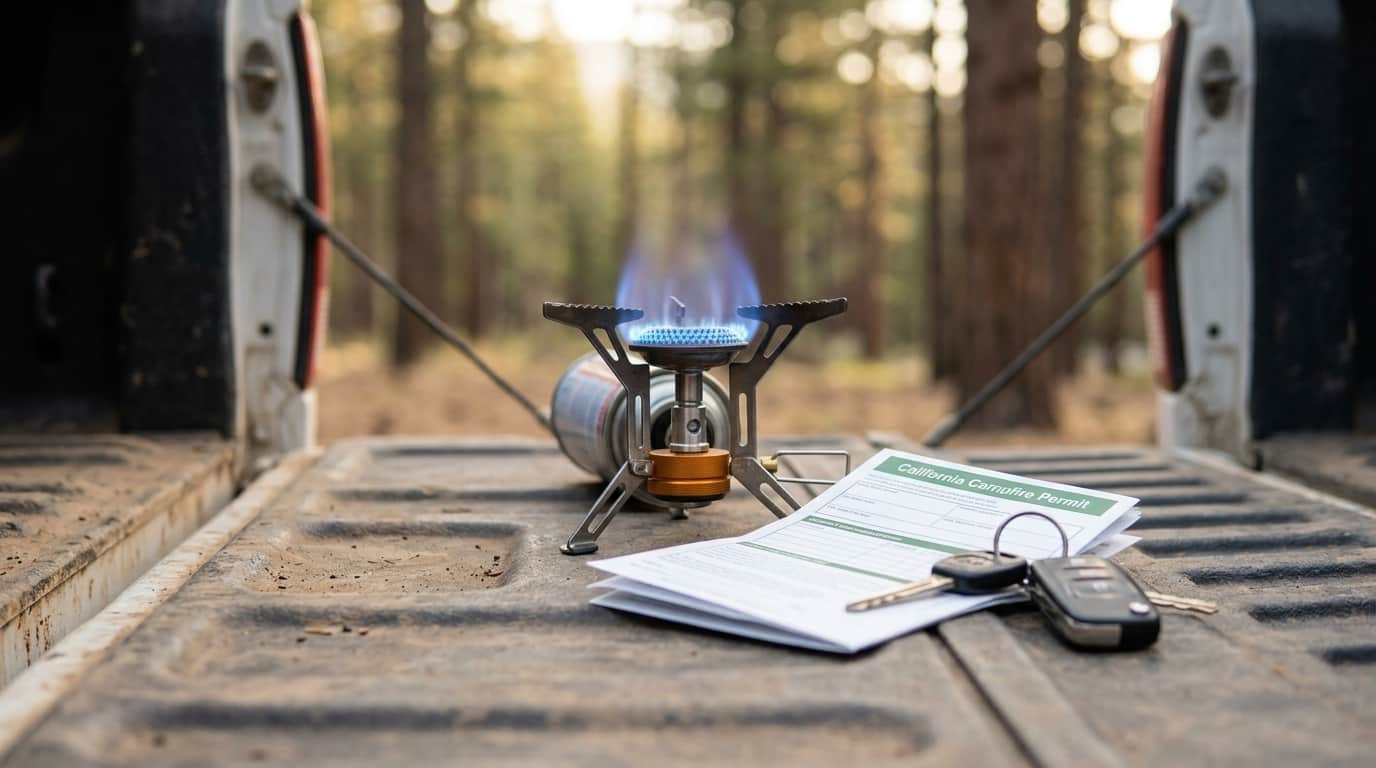
The rules stay consistent across agencies, with a California twist worth memorizing. On national forest and BLM land, dispersed camping is free and needs no reservation. One permit does apply everywhere, though, and skipping it carries real fines. Here is the quick reference for free camping in Northern California on federal land.
| Rule | Details |
|---|---|
| Cost | $0 for dispersed sites on national forest and BLM land |
| Reservation | None required for dispersed camping |
| California Campfire Permit | Free, required for any campfire, charcoal, or gas stove on federal land |
| Stay limit (most forests) | 14 days per spot; Shasta-Trinity caps 30 days per year |
| Stay limit (BLM) | 14 days within a 28-day period |
| Camp location | Within about 150 feet of an open route on the Motor Vehicle Use Map |
| Lake Tahoe Basin | Dispersed camping prohibited; use designated campgrounds only |
| Waste | Pack out all trash; bury human waste 6 to 8 inches, 200 feet from water |
The California Campfire Permit is the rule newcomers miss most. It takes five minutes online, stays free, and covers a propane stove as well as a wood fire. Camp only on already-disturbed ground along open routes, and pull a Motor Vehicle Use Map for your forest first. Following leave no trace principles keeps these roads open, since overuse and abandoned fires have shut down access elsewhere. Want to scout your own site? Our guide on how to find free camping covers the search process.
Seasons, Fire, and Road Conditions for Dispersed Camping in Northern California
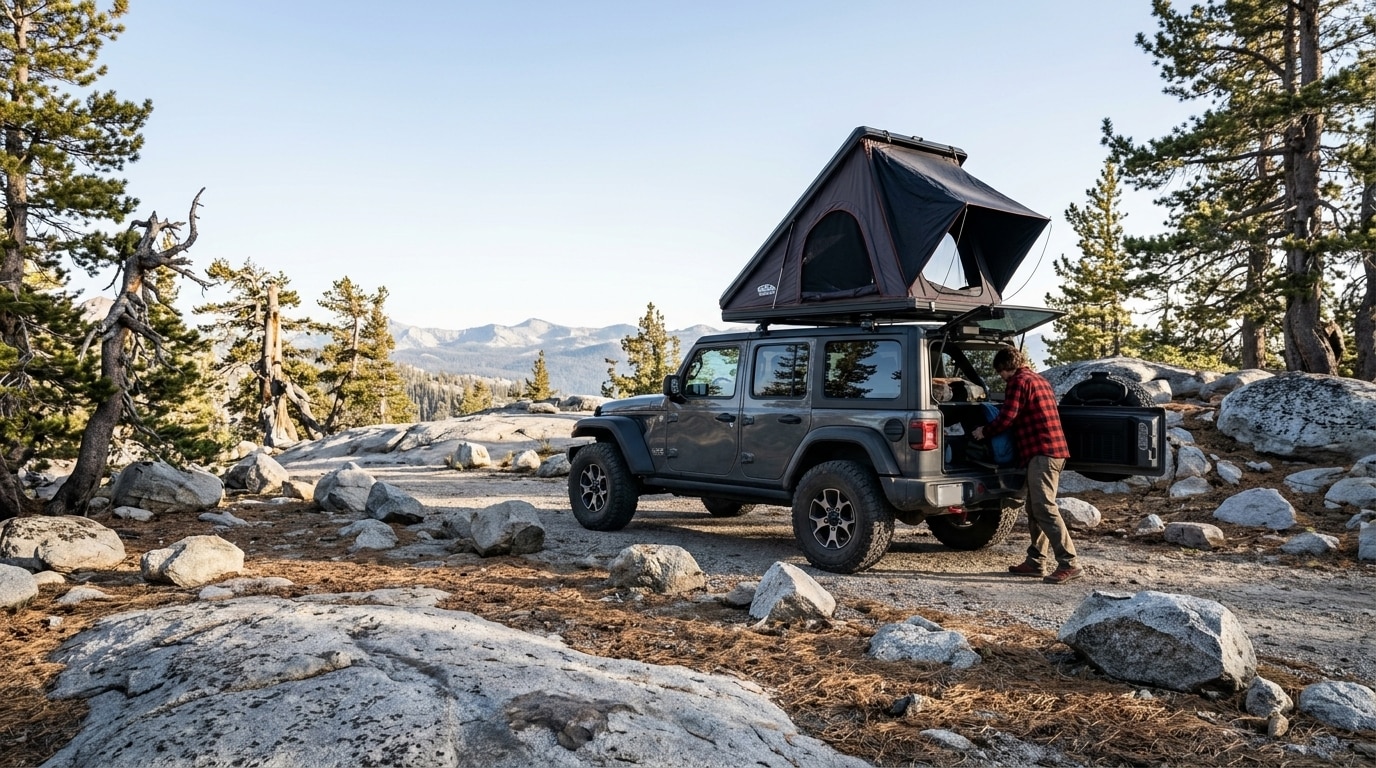
Two forces govern your calendar here: fire and snow. Summer brings the best high-country access, yet it also brings fire restrictions, closures, and active wildfires. Winter locks the Sierra and Cascade roads under snow, which pushes campers down to the foothills and BLM desert. The smart move is to target the shoulder windows in between.
Fire season and the campfire permit
Fire drives everything in a California summer. In 2026, a flash drought pushed restrictions in early, and the Shasta-Trinity forest order took effect July 1 with other forests following. During restrictions, wood and charcoal fires get banned at dispersed sites, and only a permitted gas stove stays legal. On BLM land, the statewide California fire order adds its own rules, including a shovel and a cleared space before you light any stove. So carry the campfire permit, check the forest alerts page the day you leave, and assume open flame is off the table in peak season.
Snow and the shoulder-season sweet spots
Snow decides the rest of the year. High passes and Cascade roads gate through winter and open across May and June, though a below-average 2026 snowpack opened many early. Two windows beat the rest for overlanders. Late spring, from mid-May to mid-June, brings open roads before the fire clamp-down. Early fall, from mid-September into October, brings cool nights and lifted restrictions before the snow returns. Lower BLM sites near Cache Creek fill the winter gap when the mountains close.
Far North: Shasta, Trinity, and the Cascades
The far north is the crown of the region, built around a 14,000-foot volcano and a wilderness of granite alps. Both areas below sit on the Shasta-Trinity National Forest, where dispersed camping is free unless a sign says otherwise. Elevation runs the show, so the high roads open late and gate early.
Mt. Shasta and McCloud forest roads
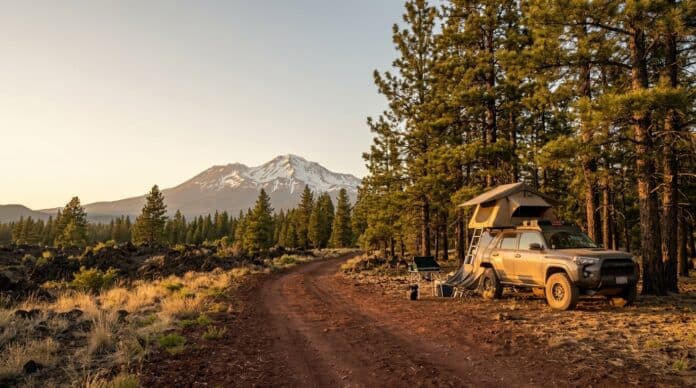
Forest roads lace the flanks of Mt. Shasta and the McCloud River country, with spurs off Everitt Memorial Highway climbing toward treeline. Graded gravel reaches easy sites, while rougher spurs reward high-clearance and 4WD. Most high roads open by mid-May and close with the first snow. You camp with a 14,179-foot volcano filling the windshield, though four named zones stay closed to camping, so read the posts. Nearby Algoma is a free undeveloped area if you want an established fallback.
Trinity Alps fringe
West of Shasta, the Trinity River corridor and the divide roads below the Trinity Alps hold quiet free camps in deep conifer. The wild-and-scenic river stays accessible much of the year, while higher divide roads close under winter snow. Graded mainlines carry most rigs, and a few 4WD routes push toward the Alps trailheads. Skip the developed lake campgrounds, which charge fees, and note the Lewiston Lake closure. The payoff is river-sound camping at the foot of a wilderness.
The Northeast Corner: Modoc and Medicine Lake
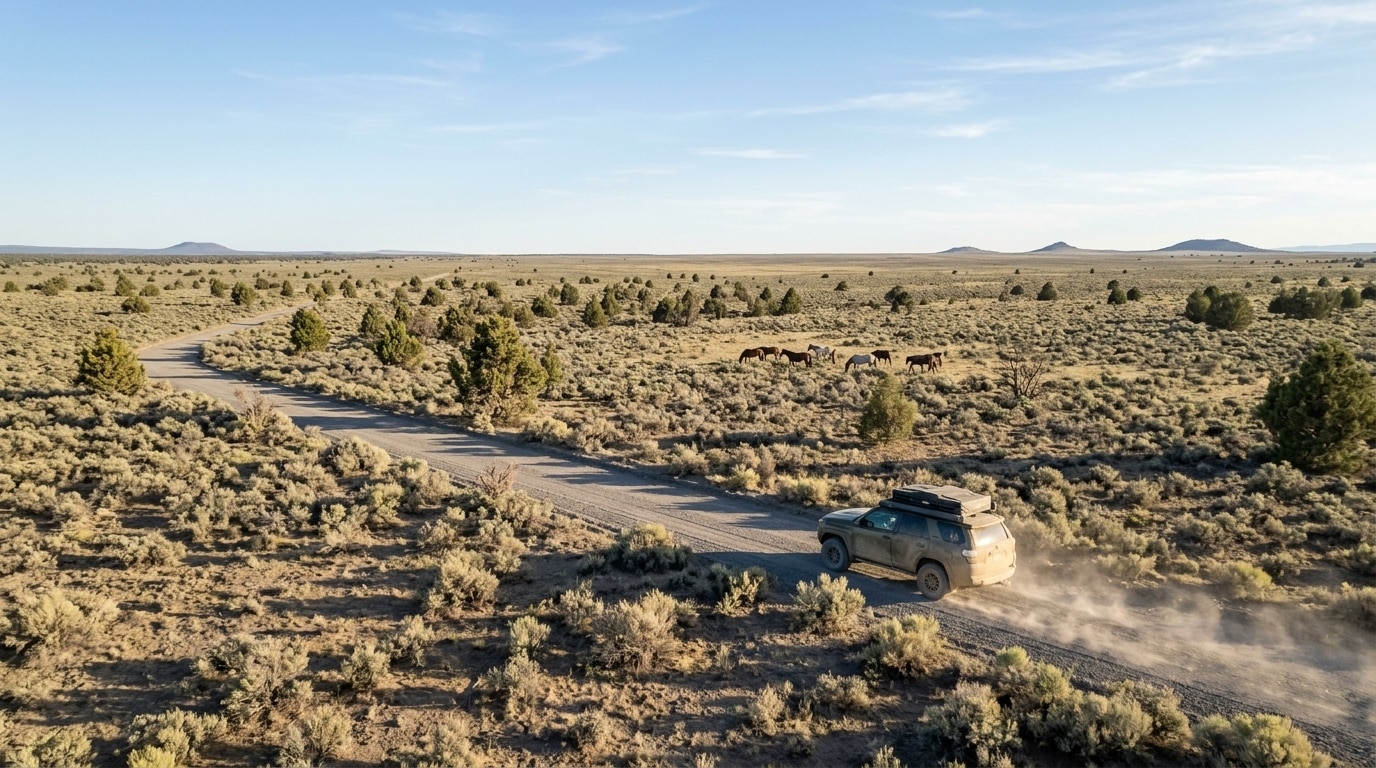
California’s northeast corner is its lonely high desert, and the Modoc National Forest anchors it. Big graded roads cross sagebrush plateaus and lava country, so this is cruising terrain rather than technical rock. Summer and early fall are the season, since the plateau holds snow in winter and greases up when wet.
Devils Garden plateau
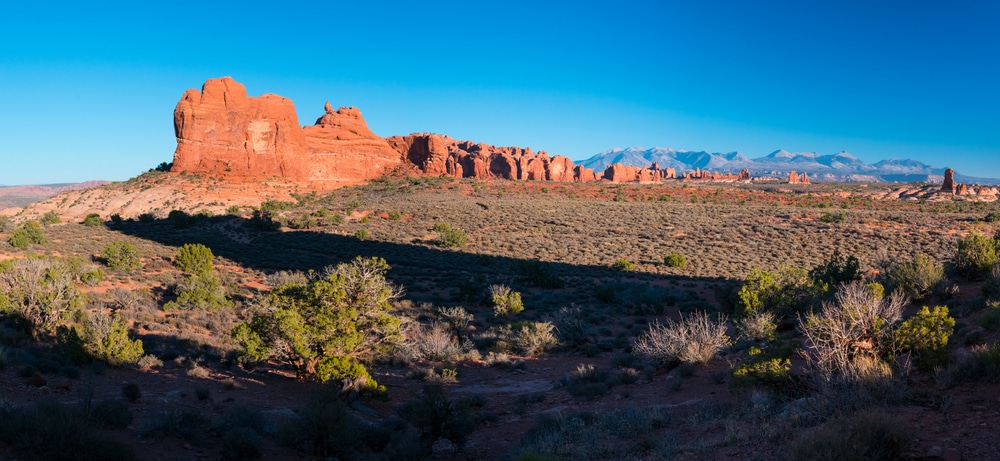
The Devils Garden district north of Alturas offers hundreds of dispersed sites across an open volcanic plateau. Graded gravel roads carry 2WD rigs when dry, then turn slick and rutted in the rain. Summer through fall is prime, with cold nights at elevation. Wild horses roam the Devil’s Garden herd area, and the Modoc Backcountry Discovery Trail runs through, so this rewards a long, unhurried route. Big-sky solitude is the whole point here.
Medicine Lake Highlands
The Medicine Lake Highlands stack obsidian flows, cinder cones, and pine forest around 6,700 feet. Free dispersed camping sits on the surrounding forest roads near Glass Mountain and the Burnt Lava Flow. One honesty note applies: the five lakeside campgrounds now charge $15 per night, so old guides calling them free are wrong. Mainline roads run graded gravel, while spurs to the flows want high-clearance. The highlands open around July and gate with snow, and Lava Beds National Monument sits 30 minutes away.
Lava Beds perimeter
Underground is the main draw here: Lava Beds National Monument protects more than 800 lava-tube caves open to explore on foot. Its entrance fee and $20 campground mean this is a day trip, not a place to camp cheap. Free camping waits on the adjacent Modoc forest roads outside the boundary, the same Medicine Lake highlands country covered above. Set up on national forest land for nothing, then spend the day underground a short drive away.
The Northwest: Klamath and Six Rivers
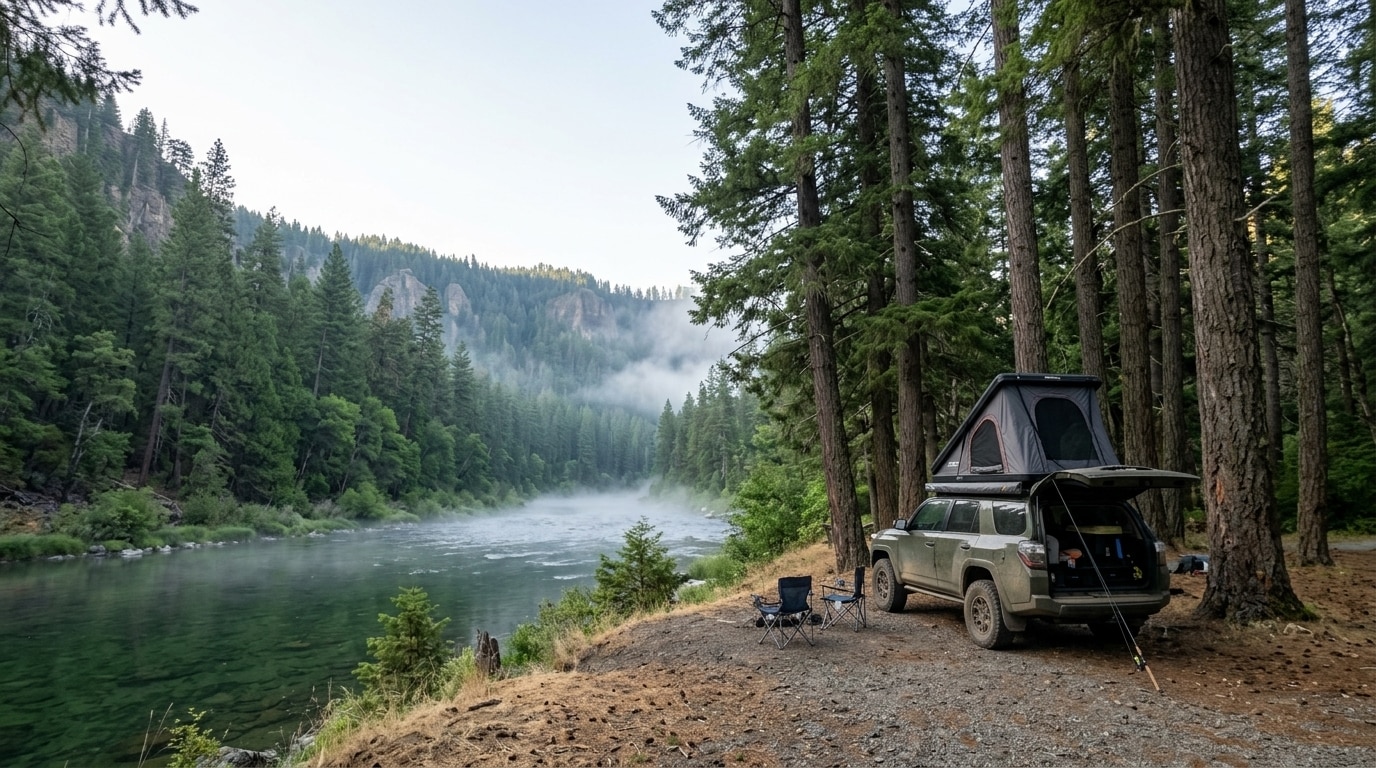
The northwest is river country, thick with Douglas-fir ridges and wild salmon runs. Two forests carry it, and both suit shoulder-season trips when the coast influence keeps temperatures mild. Access ranges from easy river roads to rougher ridge climbs, so you pick the difficulty.
Scott and Salmon Rivers, Klamath National Forest
The Scott and Salmon River corridors on the Klamath National Forest map more than 400 miles of camping roads toward the Marble Mountain Wilderness. Graded gravel follows the rivers, while high-clearance spurs climb to trailheads. River corridors open spring through fall, and higher spurs snow-gate. Flat fishing camps line the North Fork Salmon, though Lovers Camp and Indian Scotty charge fees. Wild steelhead water and marble peaks make this a standout for anglers who overland.
Six Rivers backcountry ridges
Long ridge roads cross the Six Rivers National Forest, and the Six Rivers Backcountry Discovery Trail threads through them. Graded gravel carries 2WD in dry weather, with high-clearance spurs branching off. Coast fog keeps the shoulder seasons comfortable, while interior roads turn muddy in winter. A few named coastal dispersed sites require a free permit with a gate code, so register when asked. Remote fir-ridge camps above the fog line are the reward.
Northern Sierra: Tahoe, Plumas, and Eldorado
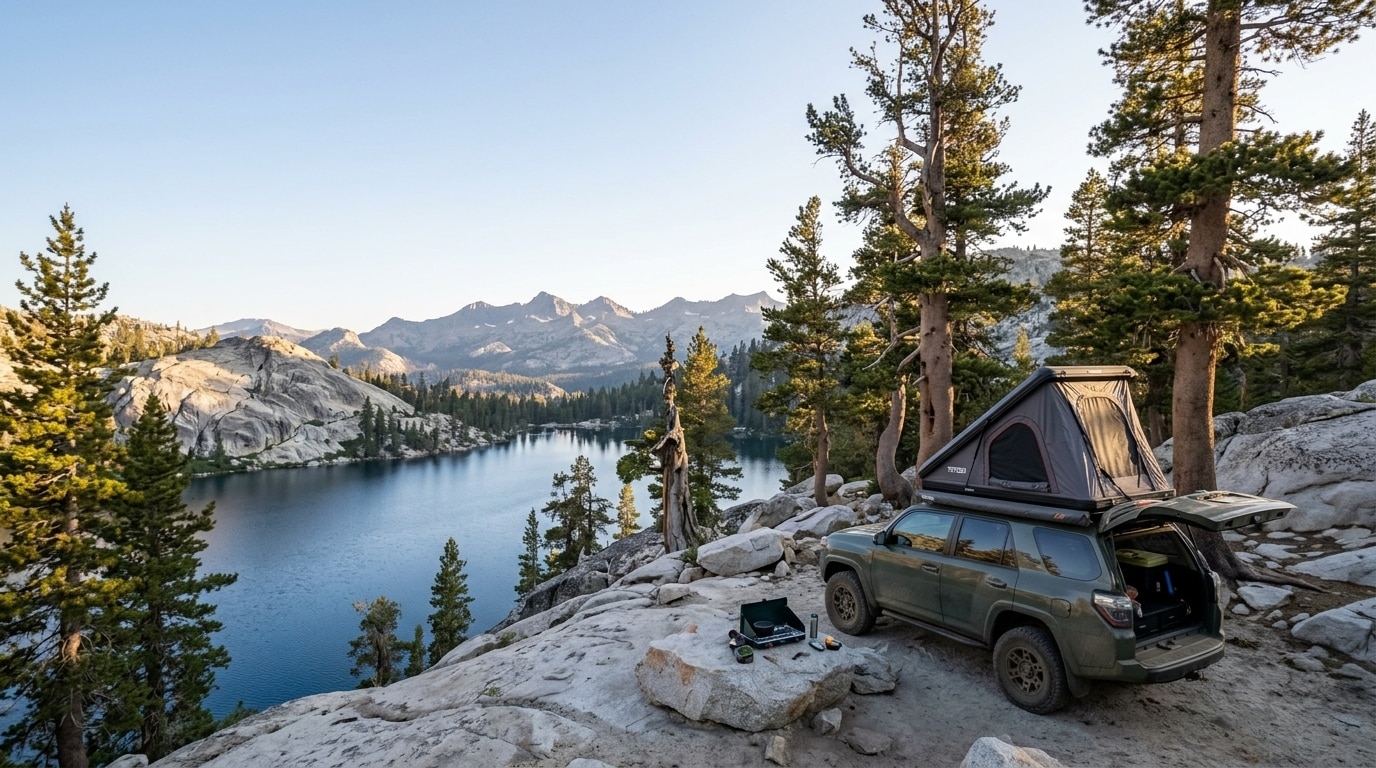
The northern Sierra brings granite, alpine lakes, and historic emigrant routes. Three forests cover it, and each carries its own restriction worth knowing before you commit. High elevation means a short season, so plan on July through October up top.
Tahoe National Forest crest, outside the basin
Dispersed camping near Tahoe is a trap for the unprepared, because it is banned entirely inside the Lake Tahoe Basin. Free dispersed camping stays legal on the Tahoe National Forest crest north of Truckee, along historic routes like Henness Pass. A multi-year restriction also limits camping along Highway 20, so avoid the corridor. Graded roads reach granite-and-pine camps, while spurs climb rougher. The season runs July through October once the crest melts out.
Plumas National Forest roads
Plumas National Forest, the heart of the Lost Sierra, keeps free dispersed camping across most of its roads and even runs free developed sites like Brady’s Camp. The popular Lakes Basin core is the exception, where camping is fee and restricted, so aim at the free forest roads north of Mt. Elwell instead. Lower roads open spring through fall, and the high lakes basin stays buried into summer. Granite tarns without a campground fee define the appeal.
Eldorado National Forest and Crystal Basin
The Eldorado National Forest allows free dispersed camping across much of Crystal Basin, home to granite-rimmed reservoirs and famous Sierra 4WD trails. Paved Ice House Road forms the spine, with high-clearance and 4WD spurs branching into the backcountry. Mid-elevation roads open by early summer, and the high country melts out later. The forest tightens to fire restrictions by early summer, so wood fires give way to permitted stoves. Reservoir camps beside legendary trails make this a fitting Sierra base.
Coast and Inland Ranges: Mendocino and BLM
The coast and inland ranges give you a cool-season option when the mountains close. These low-elevation lands shine from fall through spring, then run hot in midsummer. One of the three below is the region’s biggest fee trap, and we call it out clearly.
Stonyford and Lake Pillsbury, Mendocino National Forest
The Mendocino National Forest spreads big and quiet around Stonyford and Lake Pillsbury, with free dispersed and undeveloped sites like Grizzly Flat. Serious OHV country sits here too, so the gradient runs from easy gravel to technical 4WD trails. Shoulder seasons feel best, since the interior bakes in summer. Skip the developed Pillsbury campgrounds, which charge fees, and steer toward the free primitive spots. This forest anchors part of the Berryessa Snow Mountain National Monument.
Cowboy Camp and Cache Creek, BLM
Cowboy Camp is a free BLM basecamp near Cache Creek, with easy graded access and trail-system camping. Boondocking in Northern California gets no simpler than this low-elevation site, which works fall through spring when the Sierra sits under snow. Tule elk and bald eagles draw wildlife watchers, and spring wildflowers cover the hills. A California Campfire Permit still applies, so pick one up at the BLM office. This is the reliable winter option in the region.
King Range and the Lost Coast: not free
Here is the fee trap. The King Range and its Lost Coast Trail get called free camping constantly, and they are not. A quota system requires a paid overnight permit for the Lost Coast Trail, and the four drive-in campgrounds added fees in 2024. Wilderness rules also require a bear canister. The Lost Coast is a stunning roadless stretch of California, so budget for the permits and treat it as a fee destination rather than free boondocking in Northern California.
California State and Agency Resources
Conditions here change weekly in fire season, so bookmark the official sources before any trip. Each link below resolves to the agency running the land, the road, or the permit, and together they cover fire status, closures, and the campfire permit you need.
| Resource | Use it for | Link |
|---|---|---|
| California Campfire Permit | The free permit required for any stove or fire on federal land | readyforwildfire.org |
| CAL FIRE Incidents | Live map of active California wildfires | fire.ca.gov |
| BLM California | BLM recreation, dispersed rules, fire restrictions | blm.gov |
| Shasta-Trinity National Forest | Far-north alerts, fire orders, road status | fs.usda.gov |
| Modoc National Forest | Devils Garden and Medicine Lake info and alerts | fs.usda.gov |
| Klamath National Forest | Scott and Salmon River district info and alerts | fs.usda.gov |
| Tahoe National Forest | Crest camping rules and current fire orders | fs.usda.gov |
| Eldorado National Forest | Crystal Basin dispersed and fire-restriction status | fs.usda.gov |
| Caltrans QuickMap | Real-time highway conditions, closures, chain controls | quickmap.dot.ca.gov |
| Recreation.gov | Reservations and permits for developed sites | recreation.gov |
| CA Dept. of Fish and Wildlife | Fishing and hunting licenses, wildlife areas | wildlife.ca.gov |
From the 4wdTalk Garage
Northern California rewards a rig set up for range and self-reliance, because these forests run big and services thin out fast. For graded gravel like the Devils Garden plateau or the Klamath river roads, a high-clearance crossover or a stock truck does the job, and airing down to around 20 psi calms the washboard. On the Mendocino OHV country and the rougher Sierra spurs, you want real 4WD, a low range, and recovery gear. Wet clay on the northeast plateaus goes greasy in one storm.
Two habits keep a California trip legal and safe. First, pull the California Campfire Permit before you leave, since rangers do check, and it covers your propane stove as much as a fire. Second, treat the forest alerts page as part of your gear list. With restrictions arriving in June during dry years like 2026, a stove and a full water supply beat any campfire plan. Scout your route on Caltrans QuickMap, camp on already-used ground, and you leave these roads open for the next rig.
Which Northern California Spot Fits Your Rig and Season?
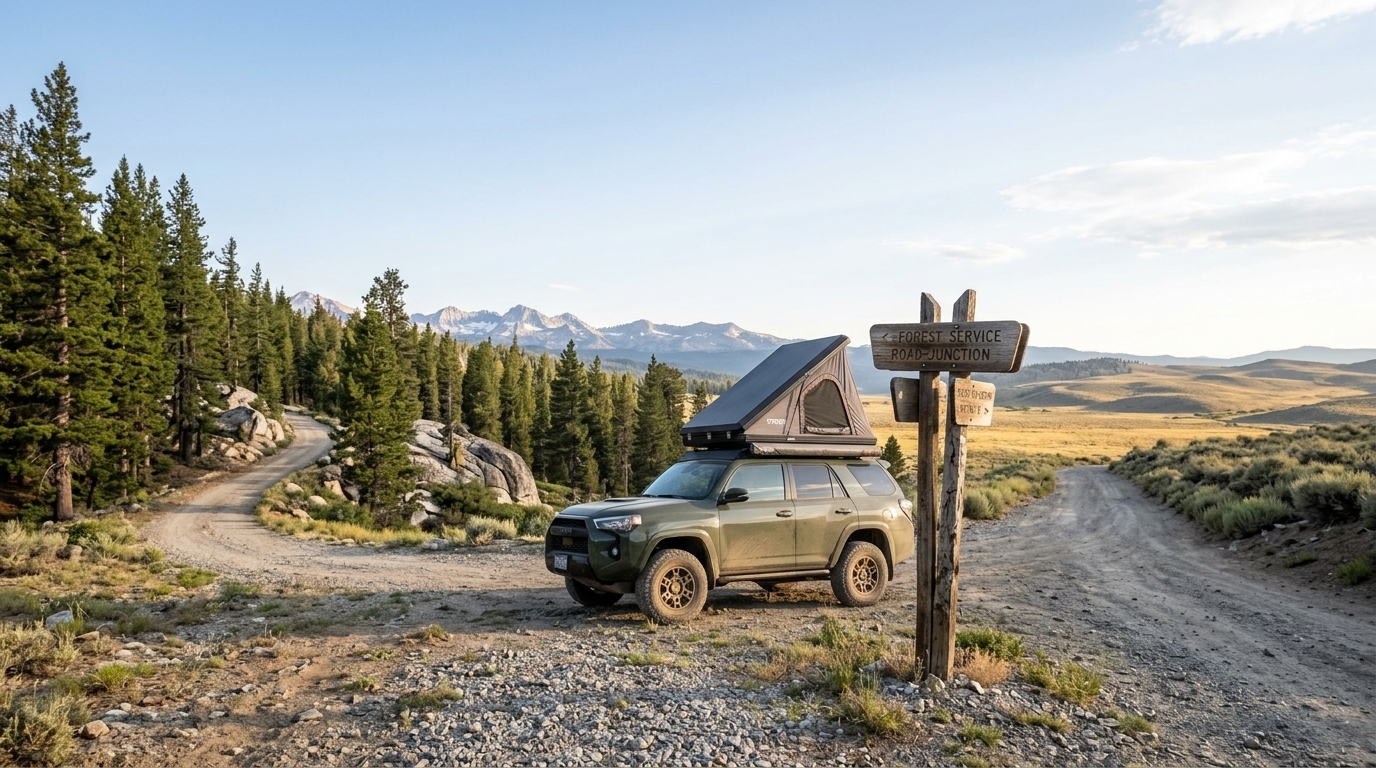
Start with clearance. If you drive a stock crossover or a 2WD truck, you have plenty of dry-weather options. Aim for the Devils Garden plateau, the Klamath river roads, Cowboy Camp, or the graded mainlines around Mt. Shasta. These reach good camps without drama.
If you run 4WD with low range and recovery gear, the harder ground opens up. The Mendocino OHV trails, the Sierra crest spurs, and the Eldorado backcountry reward a capable setup with deeper solitude. Save the northeast clay roads for dry spells, because rain turns them treacherous.
Then match the season. During July through October, climb high to Shasta, the Tahoe crest, Eldorado, or the Medicine Lake Highlands. From November through April, drop low to Cowboy Camp and the Mendocino foothills while the mountains sit under snow. For the easiest trade-off, target the shoulder windows in late spring and early fall, when roads are open and fire rules have not yet clamped down.
Final Verdict
Northern California is a heavyweight for free camping, and the off-road angle opens up the best of it. Few regions stack a glacier-clad volcano, wild rivers, granite crests, and a lost coast this close together. For overlanders who value big country over hookups, the far north and the northern Sierra deliver trip after trip.
The catch is the rulebook. You have to carry the campfire permit, read the fire orders, and know which famous places charge fees or ban camping outright. People who skip the prep get turned around at a Tahoe Basin sign or a Lost Coast permit desk. Those who plan around the season and the restrictions get quiet forests to themselves.
Value stays the strong suit, since free camping in Northern California costs nothing across every site here. Your real budget is fuel, water, and a little paperwork, and a high-clearance rig widens the options far more than any dollar figure.
Pick your first trip by elevation and weather. For a summer high-country run, base around Mt. Shasta or the Eldorado reservoirs. In a cool season, drop to Cowboy Camp or Mendocino. Pair this guide with our nearby dispersed camping in Oregon roundup, and you have two states of free camping to explore for years.
More Free Dispersed Camping Guides by State
Frequently Asked Questions
Is dispersed camping free in Northern California?
Yes. Dispersed camping in Northern California is free on national forest and BLM land, with no reservation required. You do need a free California Campfire Permit for any stove or fire. Some developed campgrounds and areas like the Lost Coast charge fees, so confirm whether a named site is free dispersed or a paid site first.
Do you need a permit to camp on national forest land in California?
You need no permit for the dispersed camping itself. A free California Campfire Permit is required, though, before you use a campfire, charcoal grill, or gas stove on federal land. Get it online in a few minutes, and remember it does not override active fire restrictions.
Is dispersed camping allowed at Lake Tahoe?
No. Dispersed camping is prohibited on all national forest land within the Lake Tahoe Basin, where camping is limited to designated campgrounds. Free dispersed camping near Tahoe is legal on the Tahoe National Forest crest north of Truckee, away from the basin and the Highway 20 restriction.
What is the stay limit for dispersed camping in Northern California?
Most national forests allow 14 days per spot, and Shasta-Trinity caps total stays at 30 days per year. On BLM land, the rule is 14 days within a 28-day period. Always verify the limit with the specific forest or field office, since a few areas differ.
Are campfires allowed at dispersed sites in Northern California?
Often not in summer. During the fire restrictions common from June onward, wood and charcoal fires get banned at dispersed sites, and only a permitted gas stove stays legal. Carry the California Campfire Permit and check the forest alerts page before every trip.
When is the best time for boondocking in Northern California?
It depends on elevation. The high country runs from July through October, while snow gates those roads in winter. Low BLM and coast-range sites are best from fall through spring. For the ideal mix of open roads and legal fires, target the shoulder windows in late spring and early fall.