



Quick Facts:
- Topic: The eight powertrains competing to replace gas and diesel in off-road trucks
- Front-runner today: The electric off-road vehicle, led by Rivian, Hummer EV and the Cybertruck
- Most production-ready bridge: Extended-range EV (EREV), such as the Ram 1500 Ramcharger and Scout Terra
- Longest-range bet: Hydrogen fuel cell, around 700 miles per fill
- Wildcard: Solid-state batteries, targeted for 2027 to 2028
- Biggest overlander objection: Recharging or refueling far from any grid
- Best for: Overlanders weighing their next rig against where the technology is heading
10 min read
In This Article
- The Electric Off-Road Vehicle and the Future of Overlanding
- Eight Powertrains at a Glance
- Battery Electric: The Electric Off-Road Vehicle Today
- Extended-Range EV: The Pragmatic Bridge
- Hydrogen Fuel Cell: The Long-Range Bet
- Hydrogen Combustion: Keeping the Engine Alive
- Solid-State Batteries: The Wildcard
- Diesel-Electric: The Proven Workhorse Path
- Hybrid and Plug-In Hybrid: The Quiet Default
- Synthetic E-Fuels: Saving the Combustion Engine
- Which Path Wins the Trail?
- Final Verdict
- Frequently Asked Questions
The Electric Off-Road Vehicle and the Future of Overlanding
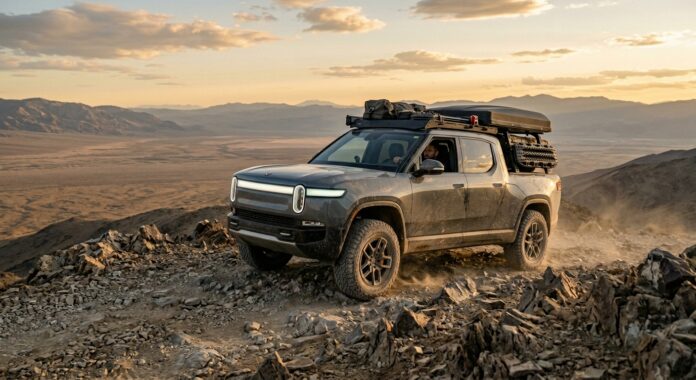
The electric off-road vehicle has moved from concept to campsite in under a decade. Rivian R1T owners now run multi-day trails, and the Hummer EV crawls rocks with four-wheel torque vectoring. Still, ask any overlander about going fully electric, and the same worry surfaces first. Charging deserts on remote routes turn a 300-mile battery into a planning headache.
Because of this worry, the industry is not betting on one winner. Instead, automakers are chasing eight distinct powertrains at once. Some keep a familiar engine. Others replace it entirely with electrons or hydrogen. For overlanders, the stakes are practical rather than abstract: range under load, recovery draw for the winch, weight on soft sand, and whether a fill-up exists within reach of the trailhead.
This article weighs each option against the way you travel. We compare today’s off road electric vehicles with the extended-range EV, the hydrogen fuel cell, the hydrogen-burning engine, solid-state batteries, diesel-electric drive, hybrids, and synthetic fuels. None is a clear champion yet. Each, however, solves a different piece of the overlanding puzzle, and the next ten years will sort them out.
Eight Powertrains at a Glance
Before the deep dive, here is how the contenders stack up on the metrics overlanders care about most. This snapshot reflects current production examples or stated manufacturer targets as of 2026.
| Powertrain | Typical Range | Backcountry Refuel | Availability |
|---|---|---|---|
| Battery electric (BEV) | 250 to 400 miles | Hard off-grid | On sale now |
| Extended-range EV (EREV) | Up to 690 miles | Gas anywhere | 2026 to 2027 |
| Hydrogen fuel cell (FCEV) | Around 700 miles | Stations scarce | Limited fleets |
| Hydrogen combustion | Around 400 miles | Stations scarce | Prototype |
| Solid-state battery EV | Up to 750 miles (target) | Hard off-grid | 2027 to 2028 |
| Diesel-electric series | 500-plus miles | Diesel anywhere | Heavy-duty only |
| Hybrid and plug-in hybrid | 450 to 600 miles | Gas anywhere | On sale now |
| Synthetic e-fuels | Same as gas | Pump where sold | Pilot scale |
The bold row signals the nearest-term practical bridge, not a verdict. Each powertrain earns its own section below, because raw range never tells the whole story on dirt.
Battery Electric: The Electric Off-Road Vehicle Today
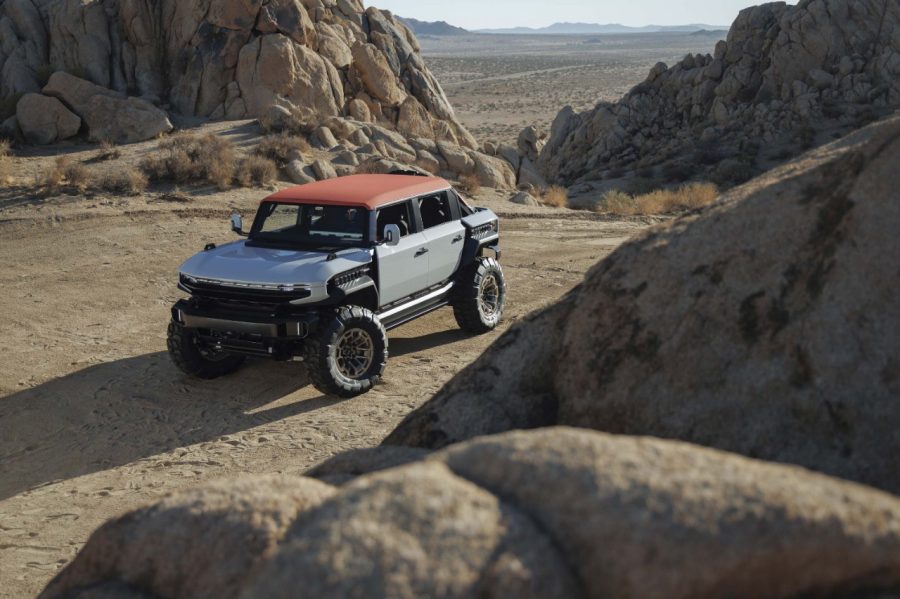
Battery power already delivers the single best trait for technical terrain: instant, precise torque. The Rivian R1T sends power to each wheel independently, so it crawls obstacles with control a clutch never matches. Meanwhile, the GMC Hummer EV pushes past 1,000 horsepower, and its CrabWalk mode angles all four wheels for tight switchbacks.
Yet the same overlanders who praise the drive question the math. Off-road efficiency collapses to roughly 0.5 to 1 mile per kWh in deep sand or mud, so a 400-mile highway figure shrinks fast. Worse, charging infrastructure thins to nothing on the routes overlanders love. Owners of electric overland rigs like Rivian report planning each trip around RV-park outlets rather than trail mileage.
Caution matters here too. The collapse of one promising EV truck maker, chronicled in our look at the failure of an off-road EV startup, shows how fragile the segment still is. For now, the electric off-road vehicle suits weekend overlanders near charging, not remote expedition crews.
Extended-Range EV: The Pragmatic Bridge
The extended range ev solves the charging-desert problem with a small onboard generator. An electric motor always drives the wheels. A gas engine spins only to recharge the battery, never to turn the axle directly. So you keep electric smoothness while gaining gas-station freedom.
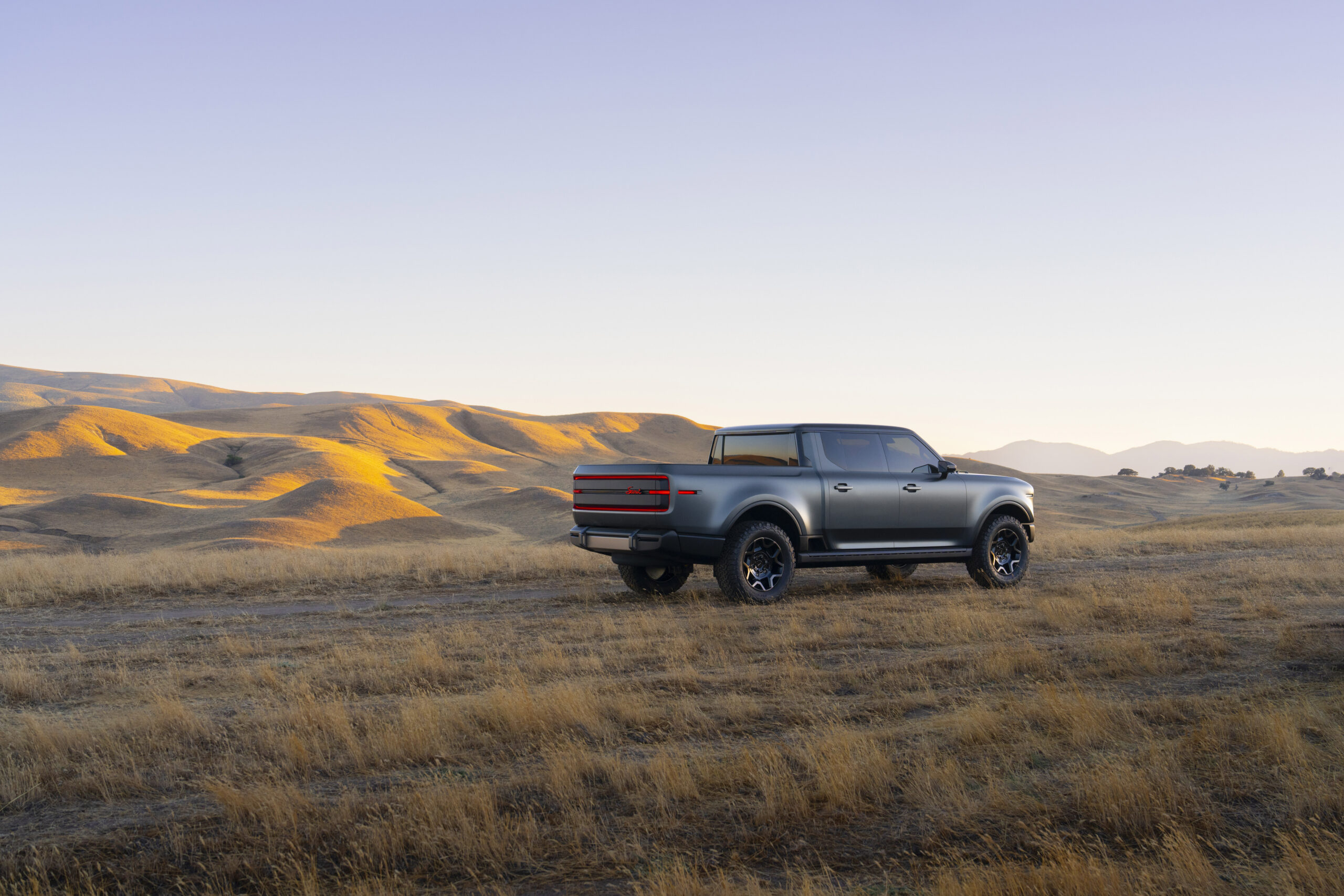
The numbers make overlanders pay attention. Ram says the 2026 Ramcharger travels up to 690 miles total, with 145 of those on battery alone before the engine wakes. Scout Motors reports more than 85 percent of its reservations favor the Harvester range-extender over the pure battery Terra, with roughly 500 miles of total range.
Why Overlanders Lean Toward the EREV
For backcountry travel, the appeal is obvious. You charge at home for daily driving, then burn gas deep in the desert where no plug exists. Towing range no longer triggers panic, because a spare fuel jug refills you anywhere. Among every option here, the EREV asks the fewest lifestyle changes from a current gas-truck owner.
Hydrogen Fuel Cell: The Long-Range Bet
A hydrogen fuel cell makes electricity onboard by combining hydrogen with air, leaving only water vapor behind. The vehicle drives like an EV, yet refills in minutes like a gas truck. Toyota’s Mirai already shows roughly 400 to 402 miles per tank, and newer fuel-cell trucks target around 700 miles.
Heavy-duty momentum is building behind the idea. Toyota’s 2025 collaboration with Hyroad supports deploying hydrogen fuel-cell trucks, drawn from a fleet of 117 Hyroad acquired from Nikola. Among overlanders, the fuel cell also draws a vocal “long-term answer” camp, because fast fills, long range, and zero tailpipe emissions suit remote travel well.
The catch is the map. Public hydrogen stations cluster in a few regions, mostly in California, so a fuel cell hydrogen truck remains impractical for cross-country dirt today. Until fueling spreads, this technology stays a promising bet rather than a trail-ready reality.
Hydrogen Combustion: Keeping the Engine Alive
Hydrogen does not always need a fuel cell. Engineers also burn it inside a traditional engine, swapping gasoline for compressed hydrogen. The result keeps the sound, the shifting, and the mechanical character enthusiasts love, while cutting carbon at the tailpipe to near zero.
Toyota leads this experiment visibly. It has raced a hydrogen-combustion GR Corolla and built a hydrogen-burning Hilux prototype, and executives have said a hydrogen-combustion Land Cruiser sits within reach. For overlanders attached to engine feel, this path preserves the soul of the rig. Efficiency trails a fuel cell, however, and range lands closer to 400 miles. The same station shortage applies, so hydrogen combustion shares the fuel cell’s geography problem while keeping the familiar drivetrain alive.
Solid-State Batteries: The Wildcard
If the battery is the weak link, solid-state chemistry aims to fix it at the source. Solid-state batteries replace the liquid electrolyte inside today’s cells with a solid one. The payoff is denser energy, faster charging, and better cold-weather behavior. For an electric 4×4, denser energy means a meaningful jump in range without adding weight, which matters on soft ground.
The timelines are firming up. Toyota promises a solid-state EV by 2027 or 2028 and has discussed battery range near 750 miles. Nissan aims for mass production in 2028 using a 23-layer design. Chinese cell makers claim energy densities between 260 and 500 Wh per kg, potentially doubling current range.
If those numbers hold, a 700-mile electric off-road vehicle changes the backcountry calculation entirely. Solid-state does not fix charging deserts by itself. Still, doubling range shrinks the problem dramatically, which is why many overlanders treat solid-state as the “wait and see” option.
Diesel-Electric: The Proven Workhorse Path
Diesel-electric drive is not new. Mining haul trucks and locomotives have used it for decades. A diesel engine spins a generator, and electric motors turn the wheels. The engine runs at its most efficient speed constantly, while the motors deliver torque and regenerative braking on descents.
On heavy overland platforms, the logic holds. You gain electric low-speed control and instant torque, yet keep diesel’s energy density and worldwide availability. Expedition builders already edge this direction with auxiliary power. The Winnebago ARKA, for instance, pairs a 6.7L Cummins with 48-volt off-grid power systems and a large lithium house battery for up to 14-day autonomy. A full diesel-electric drivetrain remains rare in light trucks, though, because the hardware adds cost and weight better suited to large rigs.
Hybrid and Plug-In Hybrid: The Quiet Default
While the exotic options grab headlines, hybrids quietly became the practical present. A hybrid blends a gas engine with an electric motor for better economy and low-end torque. The 2026 Toyota Land Cruiser uses an i-Force Max hybrid, and the 4Runner offers similar hybrid power in off-road SUVs buyers respect.
Plug-in hybrids push further with a usable electric-only range. The Jeep Wrangler 4xe travels around 21 miles on battery, enough for silent, emissions-free crawling through a campground or sensitive area. Refueling never changes, because gas stays the backbone. Among off road electric vehicles of every stripe, hybrids ask the least faith from a skeptical buyer, which explains their steady sales.
Synthetic E-Fuels: Saving the Combustion Engine
Synthetic e-fuels take a different angle entirely. Rather than replacing the engine, they replace the fuel. Producers combine captured carbon dioxide with hydrogen made from renewable electricity, creating a near carbon-neutral gasoline substitute. Your existing engine burns it with no modification.
Porsche backs this idea seriously, running a wind-powered e-fuel plant in Chile and citing nearly carbon-neutral combustion. For overlanders, the appeal is preservation. Every classic 80-Series, every 7.3 Power Stroke, every rig on our list of today’s most reliable overlanding engines keeps running without an electric conversion. The obstacle is cost and scale. E-fuels remain expensive and produced in tiny volumes, so they read as a complement to electrification rather than a wholesale replacement.
Which Path Wins the Trail?
No single powertrain sweeps every category, which is the honest takeaway. The electric off-road vehicle wins on driving feel and low running cost, yet loses badly on backcountry refueling. Hydrogen wins on range and fill speed, but the station map blocks real adventure travel today. Solid-state might rewrite the battery story, though not before 2027.
The near-term picture favors flexibility. EREVs and hybrids hand you electric benefits while keeping a gas station as your safety net, so they bridge the gap most overlanders feel right now. Manufacturers clearly agree. As covered in our breakdown of automakers’ 2030 powertrain roadmaps, Stellantis alone plans more than 60 vehicles spanning battery, hybrid, and new powertrains by 2030.
Longer term, the trail likely splits. Day-trip and overland-curious buyers move toward batteries as solid-state extends range. Expedition crews chasing true remoteness lean on liquid fuel, whether diesel-electric, EREV, or eventually hydrogen where stations exist.
Final Verdict
If you measure the future by what works on a real expedition next year, the extended-range EV leads the pack. It delivers electric torque and quiet crawling while keeping the gas station as an anywhere backup, so it removes the charging-desert fear without asking you to gamble on infrastructure. The Ramcharger and Scout Terra prove the concept is arriving, not theoretical.
Buyers who rarely leave cell coverage tell a different story. For them, a battery electric off-road vehicle already makes sense, and solid-state batteries will widen this comfort zone within a few years. The instant torque and home charging suit weekend trails far better than skeptics admit.
Hydrogen and e-fuels stay on the watch list rather than the shopping list. Both solve genuine problems, yet both wait on infrastructure and cost curves outside any single buyer’s control. Diesel-electric, meanwhile, will likely surface first in big expedition trucks before trickling down.
The smart move now is honesty about your own travel. Match the powertrain to where you truly go. A hybrid or EREV fits most overlanders better than either a pure battery rig or a hydrogen prototype, while the proven diesel and gas engines still earn their place until the alternatives close the gap.
Frequently Asked Questions
What is an EREV?
An EREV is an extended-range electric vehicle. Its electric motor always drives the wheels, while a small gas engine works only as a generator to recharge the battery. So you get electric driving with gas-station range, ideal for overlanders who travel beyond charging networks.
Are electric trucks good for overlanding?
Electric trucks shine on torque and trail control, yet struggle with backcountry charging. An electric off-road vehicle works well for trips near infrastructure. For remote expeditions, an EREV or hybrid currently fits better because liquid fuel refuels anywhere.
How does a hydrogen truck compare to an electric one?
A hydrogen truck refuels in minutes and travels around 700 miles, beating most batteries on range and fill speed. The drawback is fueling. Public hydrogen stations remain rare outside a few regions, so a battery electric 4×4 stays more usable across most of the country today.
What will replace diesel trucks for overlanding?
No single replacement has won yet. Diesel-electric drive, EREVs, and synthetic e-fuels each extend diesel’s strengths differently. For heavy expedition rigs, diesel and diesel-electric will likely persist longest because of energy density and global fuel availability.
Are solid-state batteries coming to off-road trucks?
Solid-state batteries are targeted for production around 2027 to 2028 from Toyota and Nissan. Early claims point to range near 750 miles. For an off-road truck, this range would ease the charging-desert problem, though widespread adoption will take additional years.
Do e-fuels let me keep my current overlanding engine?
Yes. Synthetic e-fuels work as a near carbon-neutral drop-in for gasoline, so your existing engine burns them without modification. The limitation is supply. Production stays small and pricey, so e-fuels will supplement electrification rather than replace it soon.