



Quick Facts:
- Subaru recall number: WRH-26 (NHTSA campaign 26V-436)
- Vehicles affected: 540,450 in the US
- Model years: 2019 through 2026
- Models: Ascent, Forester, and Crosstrek Hybrid
- Problem: overstated rear axle rating on the door label
- Safety status: no crashes or injuries reported
- Fix: free corrected label, mailed to owners
- Owner action: apply the label or ask a dealer
8 min read
In This Article
Overview
A new Subaru recall landed in summer 2026 after the automaker found a printing error on its vehicle certification labels. This Subaru recall reaches 540,450 vehicles across several popular family and adventure models. Because the mislabeled number covers how much load each rear axle should carry, the problem matters for drivers who pack heavy. If you overland, camp, or haul gear, this one still deserves a close look.
Federal regulators list the action as campaign number 26V-436, while Subaru tracks it internally as WRH-26. First reported in spring 2026, the issue traces back to overstated rear axle figures printed on the door-jamb sticker. So far the report still lists no crashes, injuries, or mechanical failures. Instead, the fix centers on one small yet important piece of paper.
The mistake sits specifically on the certification label, the sticker in the driver door opening listing tire pressures and weight limits. For example owners who load to the printed rear number might exceed the real limit. As a result the vehicle falls outside federal safety standards. Subaru will then mail each owner a corrected label to cover the old one.
For overland and 4×4 owners, the recall also doubles as a useful reminder. Weight limits also decide how much gear a rig handles safely. Below you will find who is affected, what the numbers mean, and how to load a Subaru with confidence.
Key Facts at a Glance
The table below gathers the core numbers from the federal report, including model counts and build windows. Use it as a quick reference before you check your own vehicle.
| Detail | Figure |
|---|---|
| Subaru recall number | WRH-26 |
| NHTSA campaign number | 26V-436 |
| Total vehicles (US) | 540,450 |
| Model years | 2019 through 2026 |
| 2019-2026 Ascent | 393,800 units; built Mar 2018 to Jun 2026 |
| 2025-2026 Forester (gas) | 49,849 units; built Jan 2024 to Jun 2026 |
| 2025-2026 Forester (hybrid) | 77,504 units; built Nov 2024 to Jun 2026 |
| 2026 Crosstrek Hybrid | 29,297 units; built Jun 2025 to Jun 2026 |
| Defect | Overstated rear axle rating (GAWR) on the label |
| Remedy | Free corrected label, mailed to owners |
What the Subaru Recall Label Error Means
Every vehicle carries a certification label in the driver door opening. It also lists tire sizes, cold tire pressures, and the weight limits set by the maker. Specifically for this Subaru recall, the printed rear axle rating (GAWR) reads higher than the axle truly supports. In other words, the sticker promises more rear capacity than the engineering allows.
Because the number is wrong, the vehicle no longer meets Federal Motor Vehicle Safety Standards. An owner reading only the label might also load the back of the vehicle past its true limit. As a result braking, tire load, and handling grow worse under a heavy pack. An overloaded axle also stresses wheel bearings and suspension parts over time.
The risk still stays theoretical for most drivers. Subaru reports no crashes, no injuries, and no mechanical failures tied to the error so far. The concern applies mainly to owners who load near the maximum, such as families towing or campers stacking gear. For them the correct figure matters on every trip.
Notably the underlying axles are sound. Because of the wording, nothing on the vehicle needs new hardware. The paperwork simply overstated one figure, while the paperwork itself is what Subaru will correct.
Which Vehicles the Subaru Recall Covers
Three model families sit at the center of this Subaru recall, all from recent years. First the largest group is Subaru’s three-row SUV, with 393,800 units from model years 2019 through 2026. Subaru built those between March 2018 and June 2026.
Next the compact SUV line adds 127,353 vehicles across the 2025 and 2026 model years. Of those, 49,849 run on gas, while 77,504 use the hybrid drivetrain. Gas production started in January 2024, while the hybrid version arrived in November.
Finally the 2026 Crosstrek Hybrid contributes 29,297 vehicles, built between June 2025 and June 2026. Importantly the recall does not appear to touch gas-only Crosstrek trims. So if you drive a standard Crosstrek, check your VIN before you worry.
How the Subaru Recall Fix Works
How did the Subaru recall reach this point? Federal regulators flagged the possible problem in spring 2026. Subaru then reviewed its calculated axle figures across the lineup, going back to 2003 model years. Engineers corrected the production tooling on June 9, 2026. As a result newer builds already leave the factory with the right label.
For vehicles already on the road, the fix is still refreshingly simple. Subaru will mail each owner a new self-adhesive label to place over the old one. Because it peels and sticks, you apply it yourself in about a minute. Most owners also receive the label within roughly 60 days.
Prefer a professional touch? Dealers knew about the fix as of mid-July 2026, while they will affix the label free of charge. Either way the repair costs nothing. This owner-fixable design stays unusual, since most recalls send you to a service bay. To confirm your own vehicle, look up the VIN on the NHTSA recalls portal.
GAWR, GVWR, and Payload: Loading a Subaru Safely
Weight numbers confuse a lot of new overlanders. The Subaru recall is a good moment to sort them out. These crossovers appear often in discussions of common overlanding-vehicle problems, including overloading. Three figures matter most, while each one sets a different limit.
GAWR vs GVWR vs Payload
GAWR, or Gross Axle Weight Rating, is the most weight one axle should carry. It also counts the vehicle’s own weight on the axle plus any passengers and cargo pressing on it. A vehicle also has a front figure and a rear figure, while the recall involves the rear one.
GVWR, the Gross Vehicle Weight Rating, is the ceiling for the whole loaded vehicle. Payload sits smaller still. Payload equals GVWR minus the empty curb weight, so it is the room left for people, pets, and gear. Finally when you load up, respect the lowest of the three limits.
How to Weigh Your Loaded Rig
Guesswork fails once you add a fridge, water, and steel. Instead weigh the real thing. Load the vehicle the way you travel, with full tanks, gear, and passengers. Then drive onto a public CAT scale at a truck stop for a few dollars.
Many scales report each axle separately. As a result you see the rear axle load next to its rating right away. Compare each axle to its GAWR, while you compare the total to the GVWR. If any number runs high, move heavy items forward or leave them at home.
Rooftop Tents and Center of Gravity
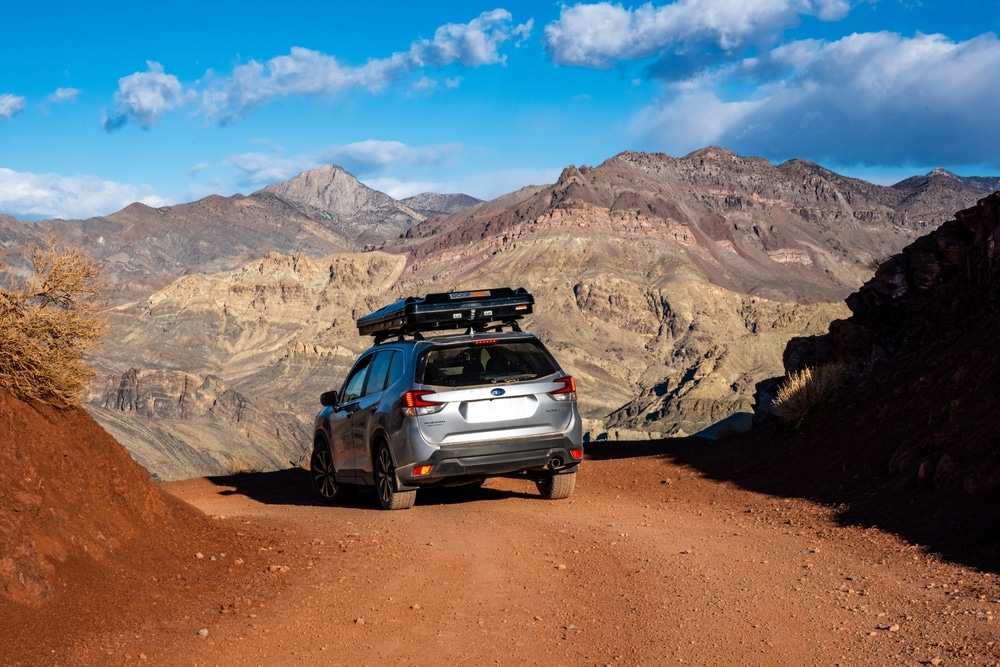
Rooftop tents change the math in two ways. First the tent itself adds 100 to 200 pounds up high, plus bodies at night. Second the roof weight rides far above the axles, which also raises the center of gravity.
A taller center of gravity makes a rig feel tippy on off-camber trails and quick lane changes. Because of physics, you feel it most on a soft-roader with a comfort tune. Instead keep roof loads light, choose a lightweight rooftop tent, and balance heavy items low in the cargo area. The corrected weight rating on the new label then reflects the true limit you plan around.
Final Thoughts
The Subaru recall looks alarming at first glance, while the reality stays manageable. No axle is failing. One printed number ran too high, since a free label sets it right. For most drivers the daily routine also stays the same.
For the overland crowd the lesson lands harder. Weight limits are not fine print. Instead they shape braking distance, tire life, and stability when a trail turns rough. Because you load closer to the edge, you gain the most from knowing your real figures.
Like another recent SUV and truck recall, this one rewards owners who act early. Watch the mail for your corrected label, while your dealer also stands ready to apply it. Then weigh your loaded rig once and note the numbers. After a single scale visit, you plan every future trip with real data instead of a guess.
Frequently Asked Questions
Which Subaru models are part of the recall?
The list covers the 2019-2026 Ascent, the 2025 and 2026 compact SUV in gas and hybrid trims, and the 2026 hybrid Crosstrek. Altogether they reach 540,450 vehicles, including gas and hybrid drivetrains. Gas-only Crosstrek models stay off the list, so check your VIN if you own one.
Is the Subaru recall dangerous to drive?
So far Subaru reports no crashes, injuries, or mechanical problems from the label error. Yet the risk appears only if you load the rear past its true limit. For everyday driving with a normal load, the vehicle still behaves as designed.
How do I get the corrected label?
Subaru mails a self-adhesive label to each owner, usually within about 60 days. Then you peel it and stick it over the old certification label yourself. Alternatively a dealer will apply it free if you prefer expert hands.
What does GAWR mean for loading my Subaru?
GAWR sets the most weight a single axle should carry, including the vehicle’s share plus cargo. Stay under the rear axle limit, the GVWR, and the payload figure at the same time. When in doubt a public scale settles the question in minutes.
Does a rooftop tent affect my weight limits?
Yes, and in two ways. A rooftop tent also adds load to the roof and lifts the center of gravity, which reduces stability. Because of the extra height, keep roof loads light and balance heavy gear low inside the cargo area.