




I’ve been camping since I was a kid, starting in tents before moving to a bumper pull camper as an adult and eventually a fifth wheel for family trips. Almost every trip has been boondocking, and this experience has shaped exactly how I think about camper interiors. The setup working for one person’s travel style falls flat for another’s, and nowhere is the difference more obvious than in how a camper’s interior is configured. A modular camper interior gives you the ability to build the rig around your actual life rather than accepting a manufacturer’s version of what camping should look like.
For overlanders and truck campers especially, modularity isn’t a buzzword. It’s a practical design philosophy. When you’re living in 80 square feet for days at a stretch, every inch matters. The Kimbo 6 and Kimbo 8 both illustrate this approach: both use a factory-installed module system built on a hand-riveted 5052 aluminum monocoque shell, letting you layer in exactly the systems you need, from power upgrades and heating to wet baths and sleeping configurations, without locking into a fixed layout you’ll regret later.
Quick Facts:
- Topic: Modular camper interior design, pros, cons, and customization ideas
- Example campers: Kimbo 6 (from $27,990) and Kimbo 8 (from $42,990)
- Shell construction: Frameless 5052 aluminum monocoque, hand-riveted
- Kimbo 6 insulation: R-5 foam; Kimbo 8 insulation: R-10 foam (2x the K6)
- Kimbo 6 battery: Standard 12V sealed; optional Bluetti Elite 200 (2,074Wh)
- Kimbo 8 battery: Standard 2,000Wh lithium; optional 270Ah lithium management system
- Modular add-ons available: Heating, solar, wet bath, kitchen sink, sleeping configs, awning, roof tracks, recovery gear
- Warranty: 2-year transferable; extended options available
- Best for: Overlanders and truck campers who want a modular camper interior configured to their specific travel style
8 min read
In This Article
- What Is a Modular Camper Interior?
- Kimbo 6 vs. Kimbo 8: Key Specs Side by Side
- Pros of a Modular Camper Interior
- Cons of a Modular Camper Interior
- Customization Ideas by Travel Style
- Power and Off-Grid Systems
- Kimbo 6 vs. Kimbo 8: Which Interior Is Right for You?
- Pros and Cons Summary
- Final Verdict
- Frequently Asked Questions
What Is a Modular Camper Interior?
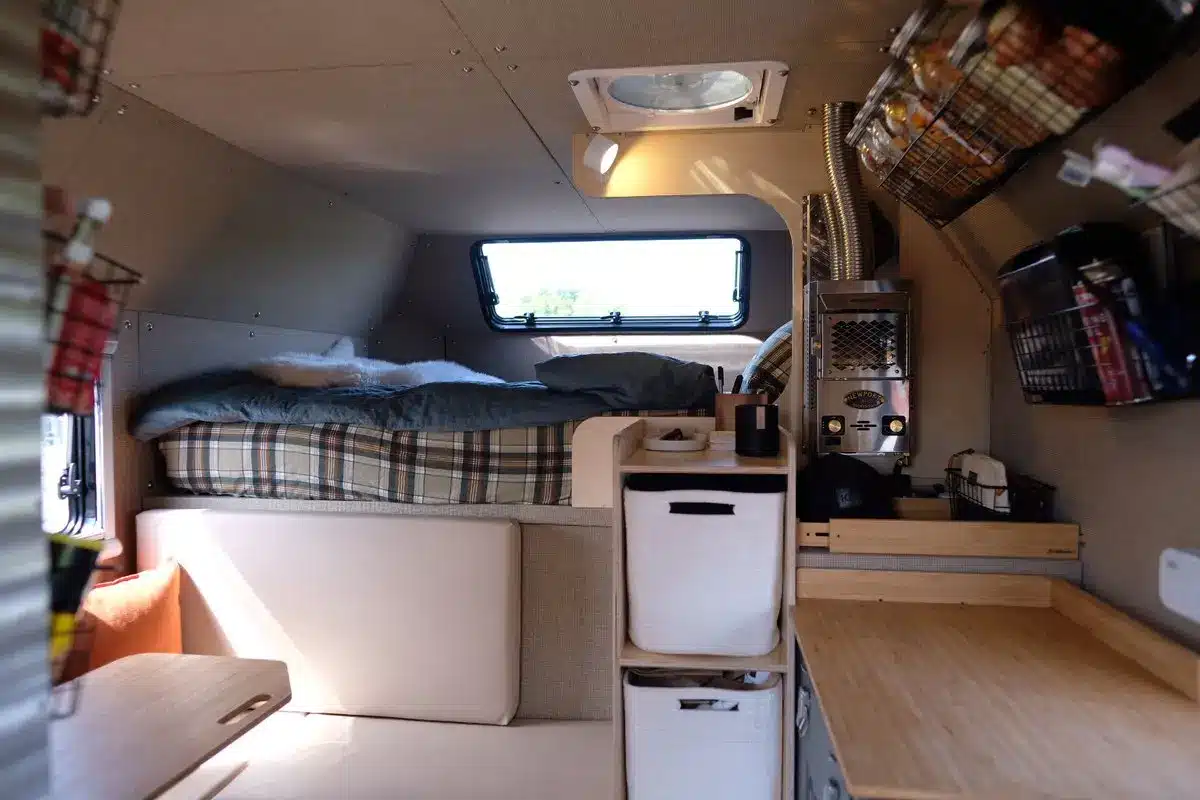
A modular camper interior uses a factory-built shell with pre-engineered mounting points, sealed penetrations, and designated zones for systems added during or after the build. Rather than shipping a fully fixed interior, the manufacturer designs the shell to accept specific modules, including heating units, solar panels, kitchen sinks, shower systems, sleeping configurations, and storage systems, at precise locations with proper structural support and weatherproofing already in place. This approach is the foundation of both Kimbo models and sets them apart from traditional wood-framed campers with fixed layouts.
The practical difference shows up immediately when you compare the buying process. With a traditional fixed-interior camper, you accept whatever the factory installed, even features you’ll never use. With a modular camper interior, you select only the systems your trip style requires. A weekend overlander heading to Utah desert routes doesn’t need a wet bath. A couple traveling full-time through Pacific Northwest winters absolutely needs R-10 insulation and a vented propane heater. Modularity lets each buyer build for their reality rather than a manufacturer’s average-customer assumption.
Both the Kimbo 6 and Kimbo 8 use the same underlying design philosophy: a hand-riveted 5052 marine-grade aluminum monocoque shell with factory-sealed penetrations for every system. Modules install cleanly without drilling through the shell or compromising weather sealing, and every factory-installed module is covered by the 2-year transferable warranty. For more on how interior livability translates in practice, see our look at the Kimbo interior features and livability.
Kimbo 6 vs. Kimbo 8: Key Specs Side by Side
| Specification | Kimbo 6 | Kimbo 8 |
|---|---|---|
| Starting Price | $27,990 | $42,990 |
| Target truck | Midsize (Tacoma, Ranger, Colorado) | Full-size (Tundra, F-150, Silverado, Ram) |
| Base dry weight | 830 lb | 1,125 lb |
| Insulation | R-5 rigid foam | R-10 rigid foam |
| Bed | Loft, 75″L x 54″W | Queen cabover, 80″L x 60″W |
| Wet bath | Optional (interior shower add-on) | Standard dedicated wet bath |
| Solar (standard) | 120W Renogy ShadowFlux | 200W |
| Battery (standard) | 12V sealed | 2,000Wh lithium |
| Heater options | Dickinson Marine Propane | Dickinson Marine Propane OR Diesel |
| Interior height | 75″ | 79″ |
| Build time | 4-6 weeks | 8-12 weeks (early production) |
Build Direct with Kimbo
Configure Your Kimbo 6 Modular Interior
Choose your modules, power system, and sleeping configuration. The Kimbo 6 starts at $27,990 with a 4-6 week build time and a 2-year transferable warranty.
Pros of a Modular Camper Interior
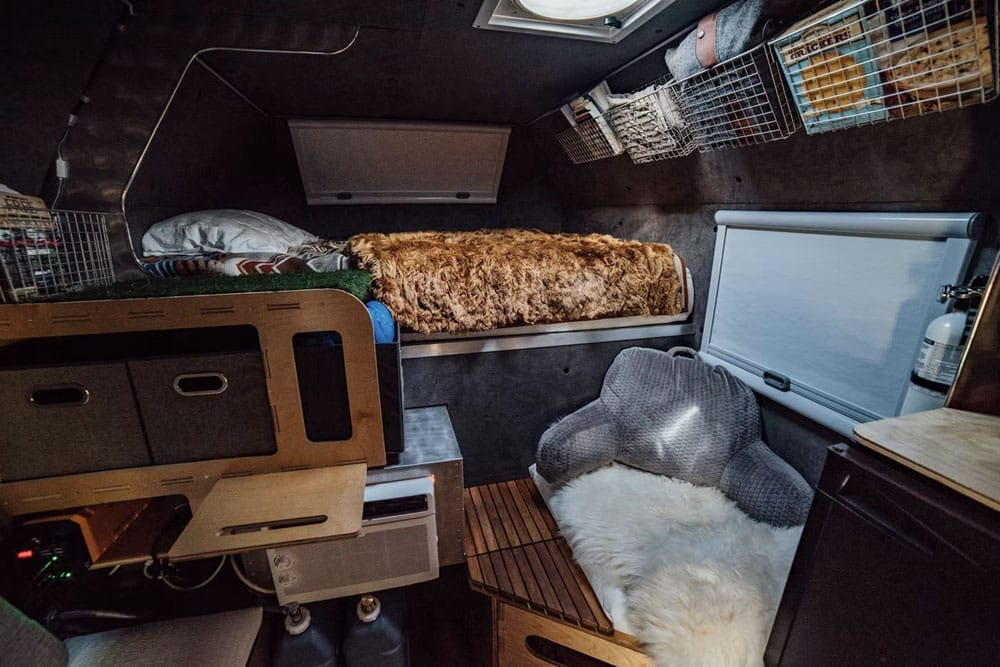
The biggest advantage of a modular camper interior is precision. Specifically, you pay for exactly what your trips require, and nothing extra. A solo overlander who boondocks three-season doesn’t need a wet bath or a diesel heater. Adding those to a fixed-interior camper inflates the price and the weight without adding useful capability. With the Kimbo system, however, you select heating, power, sleeping, kitchen, and bath configurations at build time, and each module is factory-installed with proper sealing and structural integration.
Adaptability over time is also the second major advantage. Travel patterns change. A camper bought for solo weekend trips eventually becomes a full-time platform for a couple, or a family adds a child and needs a second sleeping configuration. Notably, the Kimbo’s design accommodates this evolution: modules like the Extra Bed Module, the Bunk Bed option on the K8, and storage systems are swappable and addable without voiding the warranty or hacking the shell. This adaptability is especially valuable given the 4-6 week build time on the K6 and 8-12 week lead time on the K8; getting the configuration right at build time is important, but knowing the platform grows with you reduces the pressure to anticipate every use case perfectly.
Weight discipline is the third key advantage. The K6 starts at 830 lb base dry, while a fully specced traditional hard-side truck camper typically ships between 1,500 and 2,800 lb. For mid-size truck owners operating near payload limits, therefore, every pound matters, and the modular approach keeps cumulative weight in check. For a full picture of what the exterior design philosophy contributes, see our piece on the exterior design features setting the Kimbo apart.
Cons of a Modular Camper Interior
The primary downside of a modular camper interior is decision complexity at purchase, however. Unlike a fixed-interior camper where the spec list is predetermined, a modular system requires you to think through every system, its cost, its weight impact, and its real-world necessity before committing. Buyers who haven’t done extensive trip planning before ordering, for example, sometimes under-spec and regret it, or over-spec and carry unnecessary weight and cost. Kimbo offers Adventure Consultants and build tools to help, but the cognitive load of configuration is still higher than buying a pre-built rig.
Cost escalation is also the second drawback. The $27,990 K6 base price is competitive; however, the full modular camper interior build adds up quickly. A Dickinson Marine propane heater runs $2,350 installed. The Refrigerator and Off-Grid Power Upgrade adds $3,850. An interior shower module costs $1,980. A Thule awning adds $1,980. A well-equipped boondocking K6 lands in the $34,000-$37,000 range, which is closer to the starting price of traditional fully-appointed competitors. The modular pricing is transparent and justified by quality, but buyers should budget the full equipped price rather than the base price when comparing options.
Finally, the 4-6 week K6 build lead time and 8-12 week K8 lead time mean you won’t drive home from a dealer lot with a Kimbo. For buyers accustomed to RV dealer inventory models, the build-to-order approach requires advance planning. On the other hand, the build-to-order model is precisely why the modular system works: each camper is configured and assembled for a specific owner rather than a hypothetical buyer.
Customization Ideas by Travel Style

Weekend and Seasonal Overlanders
For three-season weekend boondocking on a mid-size truck, specifically, the K6 with the Dickinson Marine propane heater, 120W solar, and the swivel table and storage module covers the essentials without excessive weight. The standard 12V battery handles lighting and fan loads for weekend trips. Adding the Bluetti Elite 200 battery upgrade makes sense if you plan to run a refrigerator or extended electronics loads. The Quick-Release Jack Bracket Kit ($350) speeds up campsite setup significantly and is worth including for anyone camping frequently.
Extended and Full-Time Travelers
Extended travel profiles, however, call for the full off-grid truck camper setup: Refrigerator and Off-Grid Power Upgrade ($3,850, including 2,074Wh Bluetti battery and a second 100W panel), Dickinson Marine heater, and the Joolca Hottap outdoor shower ($1,660). On the K8, the 2,000Wh lithium battery and 200W solar ship standard, and the dedicated wet bath and queen bed are already included. Full-time K8 owners often add the Starlink pre-wire ($650) and the 270Ah lithium power management system. For more on these systems, see our guide on maximizing off-grid comfort with a Kimbo.
Family Configurations
Families, in particular, benefit from the K8’s additional volume and sleeping configurations. The standard queen cabover sleeps two adults. The optional L-Shaped Seating with Drop-Down Bed Cushion adds a secondary sleeping surface, and the Bunk Bed Module provides a dedicated child or guest berth without displacing the queen. The K8’s dedicated wet bath also changes the daily routine significantly for families compared to the K6’s optional exterior shower arrangement.
Power and Off-Grid Systems

Power configuration is the most consequential modular camper interior decision for boondockers, specifically. The K6 ships with a 120W Renogy ShadowFlux solar panel and a 12V sealed battery, adequate for lighting, fan, and device charging on weekend trips. Running a 12V refrigerator continuously pushes beyond the standard system’s comfortable range. Consequently, the Refrigerator and Off-Grid Power Upgrade solves this by bundling a Dometic 44L 12V fridge, a second 100W panel, and the Bluetti Elite 200 (2,074Wh) into a single package at $3,850.
The K8’s standard power package is also more capable: 200W solar and a 2,000Wh lithium battery ship standard. Full-time travelers benefit from the optional Power Management System (270Ah lithium on the K8), which adds Victron Bluetooth monitoring, an alternator charger, and expanded 110V outlets. Solar scales to 600W total, supporting rooftop AC and sustained wet bath pump cycles. See our look at the top off-grid features to look for in a truck camper for a broader power systems framework.
Built for Full-Size Trucks
Kimbo 8: More Space, More Capability
R-10 insulation, dedicated wet bath, queen cabover bed, and 2,000Wh lithium battery standard. Starting at $42,990 for Tundra, F-150, Silverado, Sierra, and Ram.
Kimbo 6 vs. Kimbo 8: Which Interior Is Right for You?

The K6 and K8 share the same hand-riveted 5052 aluminum monocoque shell and the same modular philosophy overall, but they target different truck platforms and use cases. The K6 is optimized for mid-size trucks (Tacoma, Ranger, Colorado, Frontier) and is the right choice for solo travelers, couples, and weekend or extended-trip overlanders who want a lightweight, nimble platform without sacrificing off-grid capability. Its 830 lb base dry weight keeps mid-size truck payload margins safe, and the modular interior scales from a basic weekend setup to a fully equipped off-grid machine.
In contrast, the K8 targets full-size trucks (Tundra, F-150, Silverado, GMC Sierra, Ram) and is designed for full-time and extended-travel use. The standard dedicated wet bath, queen cabover bed (80″L x 60″W), R-10 insulation, and 2,000Wh lithium battery represent a significantly higher starting capability level than the K6. Families and full-time travelers benefit from the additional volume and the sleeping configuration options the K8 supports. The $15,000 price difference between the $27,990 K6 and $42,990 K8 is substantial; however, when you add the wet bath, upgraded battery, and comparable module stack to the K6, the gap narrows considerably. The K8 makes economic sense when the wet bath and queen bed are non-negotiable requirements, or when your truck platform is full-size and the K6 won’t fit. For a complete head-to-head on both platforms, see our full Kimbo Camper review.
Pros and Cons Summary
Pros
- Pay only for the systems your travel style requires; no forced features
- Platform adapts over time as travel needs change, without voiding warranty
- Weight discipline: K6 starts at 830 lb base vs. 1,500-2,800 lb for fixed-interior competitors
- Factory-sealed penetrations eliminate DIY weather risk on every module install
- Aluminum monocoque shell resists moisture, rot, and delamination across all configurations
- R-10 insulation on K8 delivers twice the thermal performance of standard R-5 competitors
- 2-year transferable warranty covers all factory-installed modules
Cons
- Configuration complexity is higher than buying a pre-built fixed-interior rig
- Fully equipped K6 builds reach $34,000-$37,000, narrowing the price gap with fixed-interior competitors
- K8 currently on waitlist, limiting near-term availability
- K6 offers no onboard toilet without the optional interior shower module
Final Verdict
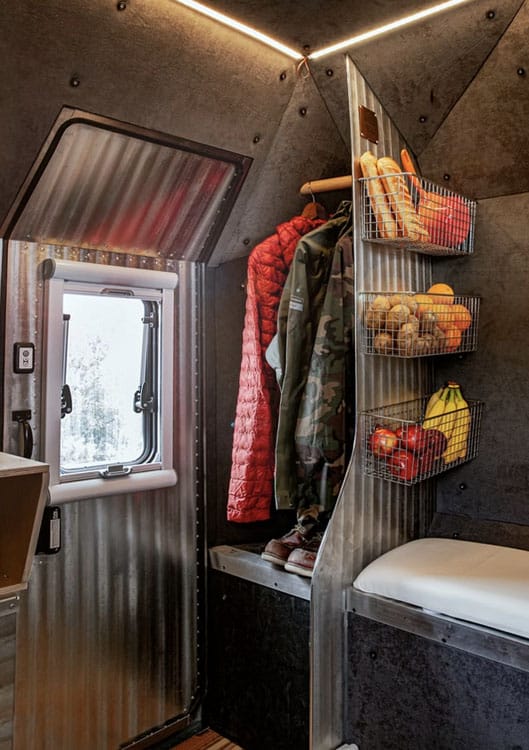
A modular camper interior is the right approach for truck campers and overlanders who travel frequently enough to know their preferences and who value long-term durability over short-term convenience. The Kimbo 6 and Kimbo 8 execute the modular philosophy at a level the traditional RV market doesn’t match: factory-sealed penetrations, a hand-riveted aluminum shell, and a module catalog covering every practical system a boondocker needs. The K6 delivers this starting at $27,990 for mid-size truck owners. The K8 brings the same construction quality to full-size truck platforms with a standard wet bath, queen cabover bed, and a more capable baseline power system at $42,990.
Traditional fixed-interior competitors offer higher onboard water capacity and a simpler buying decision, but those advantages come with more weight, wood-frame construction prone to moisture damage, and layouts you’re stuck with regardless of how your travel style evolves. For buyers prioritizing remote access and long-term durability, the Kimbo’s weight and aluminum construction make a strong case at both price points. The modular camper interior approach does require more upfront thought; buyers who under-configure at build time spend more adding modules later than if they’d spec’d correctly from the start. The Kimbo configurator and Adventure Consultants help with this decision. For more on how either platform supports extended boondocking, see our piece on how the Kimbo supports mobile lifestyles.
Ready to Configure Yours?
Build Your Kimbo: K6 or K8
Configure your modular interior, choose your power system and modules, and reserve your build slot. 2-year transferable warranty on all factory-installed systems.
Frequently Asked Questions
What is a modular camper interior?
A modular camper interior uses a factory-built shell with pre-engineered mounting points and sealed penetrations for systems added at build time or afterward. Rather than fixing a single interior layout, the design accepts specific modules like heating units, kitchen sinks, shower systems, solar panels, and sleeping configurations, each installed cleanly without compromising the shell’s weather resistance. Kimbo uses this approach on both the K6 and K8, with every module factory-installed and covered under the 2-year transferable warranty.
How do the Kimbo 6 and Kimbo 8 modular interiors differ?
The K6 targets mid-size trucks and starts at $27,990 with an R-5 insulated shell, 120W solar, and a 12V sealed battery. The K8 targets full-size trucks and starts at $42,990 with R-10 insulation (twice the K6’s value), a standard dedicated wet bath, a queen cabover bed (80″L x 60″W), 200W solar, and a 2,000Wh lithium battery standard. Both share the same hand-riveted 5052 aluminum monocoque shell and the same factory-installed module system.
Is it possible to add modules to a Kimbo after purchase?
Kimbo recommends configuring all factory-installed modules at build time to preserve warranty coverage and ensure proper integration. Some accessories, including RotoPax mounts, roof rack systems, and wire basket storage, install after delivery without requiring factory work. Structural modules involving sealed roof penetrations or propane integration, such as the Dickinson heater and solar panels, are designed for factory installation.
Friendly disclaimer: Our articles may contain affiliate links that support us without costing you more, and sometimes we spice things up with sponsored content—but only for products we truly stand behind!