


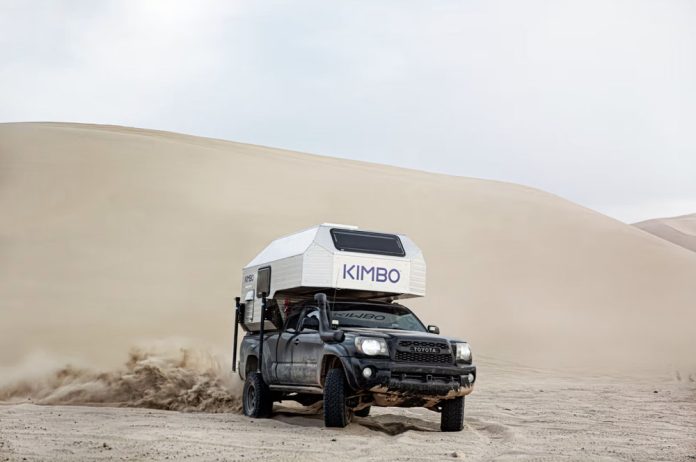

Exterior design is where a truck camper proves whether it is built for real-world travel or just campground convenience. Materials, weight, mounting systems, and access points directly affect durability, handling, and how confidently you can camp off-grid. This is especially true for campers intended to spend time on forest roads, desert tracks, and remote trailheads.
The Kimbo Camper approaches exterior design with a clear emphasis on longevity and simplicity. Rather than relying on molded fiberglass shells or wood-framed walls, it uses a riveted aluminum structure designed to handle vibration, temperature swings, and years of use. These choices influence not only how the camper looks, but how it performs over time.
So, let’s break down the specific exterior design features that define the Kimbo Camper, focusing on construction methods, weight, weather resistance, mounting systems, and off-grid usability. Each feature is tied to measurable details so you can understand how the design translates into real-world performance.
Table of Contents
- Riveted Aluminum Shell Construction
- Lightweight Exterior and Payload Efficiency
- Compact Dimensions and Trail-Friendly Geometry
- Windows, Doors, and Ventilation Design
- Jack System and Truck Mounting Hardware
- Insulation and Weather Protection
- Roof Structure and Gear-Carrying Options
- Exterior Utilities and Off-Grid Connections
- Why These Exterior Choices Matter Long-Term
- FAQ
Riveted Aluminum Shell Construction
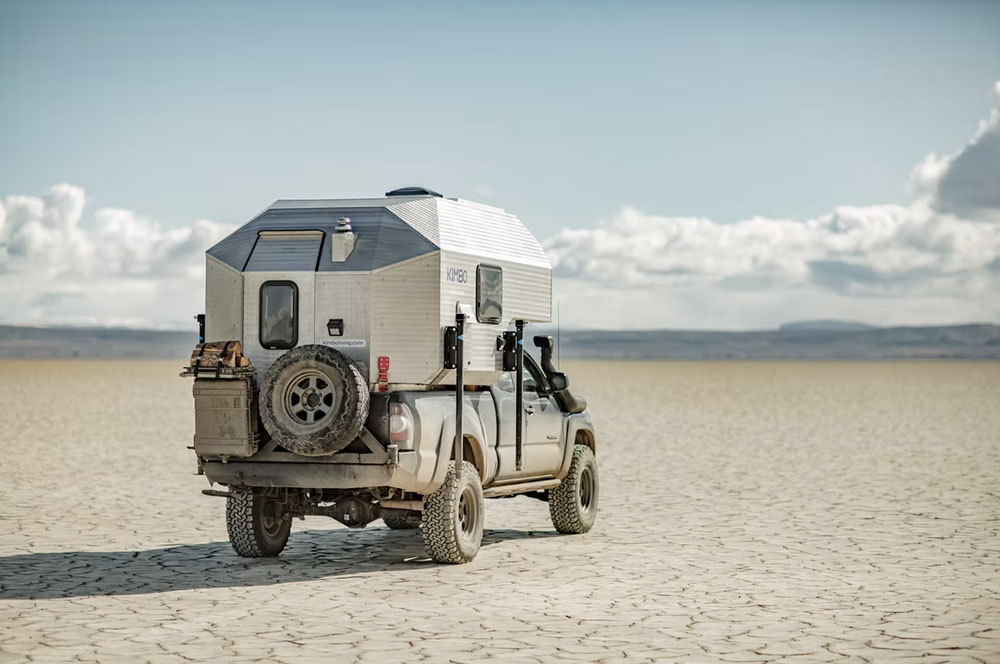
The foundation of the Kimbo Camper exterior is its frameless, riveted aluminum shell. Unlike wood-framed campers that rely on glued panels, the Kimbo uses interlocking aluminum panels that are mechanically fastened and sealed. This construction method reduces long-term risks associated with moisture intrusion and material rot.
The aluminum exterior panels are left in a brushed finish. This finish serves both aesthetic and functional purposes. Scratches from branches or gear are far less noticeable than on painted fiberglass, and there is no gel coat to crack or fade over time. For campers who spend time on narrow trails, this durability becomes a practical advantage.
All seams are sealed and riveted rather than bonded alone. Rivets allow the structure to flex slightly under vibration and thermal expansion, which is critical for off-pavement travel. This method mirrors construction techniques used in aircraft and expedition-grade equipment.
Lightweight Exterior and Payload Efficiency
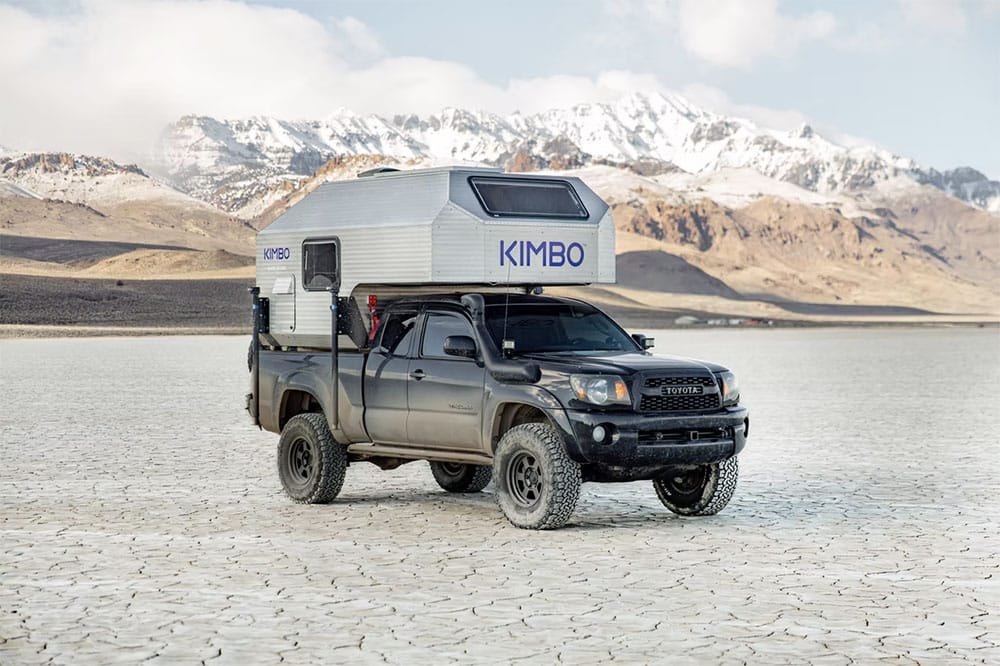
Exterior weight plays a major role in truck compatibility and handling. The Kimbo Camper Series 6 has a dry weight that ranges from approximately 980 pounds to 1,230 pounds depending on installed modules and options. This relatively low weight is achieved largely through the aluminum exterior and minimal overhang design.
Because the exterior shell does not rely on heavy laminated walls or internal wood framing, weight savings are distributed evenly across the camper. This helps keep the center of gravity closer to the truck bed, improving stability during cornering and on uneven terrain.
The lighter exterior allows the Kimbo Camper to be paired with mid-size trucks such as the Toyota Tacoma, while still remaining compatible with full-size trucks using jack bracket extensions. This flexibility broadens the range of vehicles that can safely carry the camper.
Compact Dimensions and Trail-Friendly Geometry
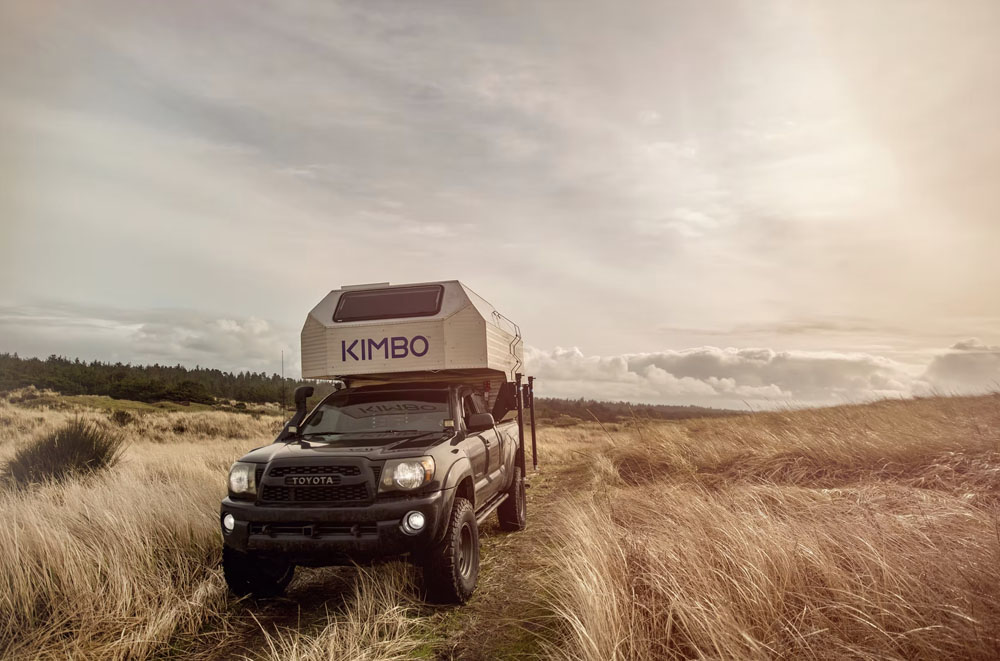
The Kimbo Camper exterior is intentionally compact. The overall height remains low compared to many hard-sided campers, reducing wind resistance and improving fuel economy. The shorter rear overhang improves departure angles when navigating steep driveways, washes, or trail obstacles.
This geometry reduces the likelihood of dragging the camper tail on uneven terrain. For off-grid travelers, this translates into fewer route limitations and less stress when approaching dispersed campsites.
A compact exterior footprint also simplifies storage and daily use. The camper does not dominate the truck visually or physically, making it easier to live with when not actively camping.
Windows, Doors, and Ventilation Design

The Kimbo Camper uses double-pane acrylic windows equipped with integrated screens and blackout shades. These windows provide insulation while reducing condensation compared to single-pane glass alternatives.
Each window is designed to open for cross-ventilation, which becomes essential during warm-weather travel. Combined with the roof-mounted MaxxAir 7500 fan option, the exterior window layout supports passive cooling without relying on powered air conditioning.
The rear entry door is aluminum-framed and sealed to maintain weather resistance. Its placement supports easy access without interfering with exterior storage or roof-mounted gear.
Jack System and Truck Mounting Hardware
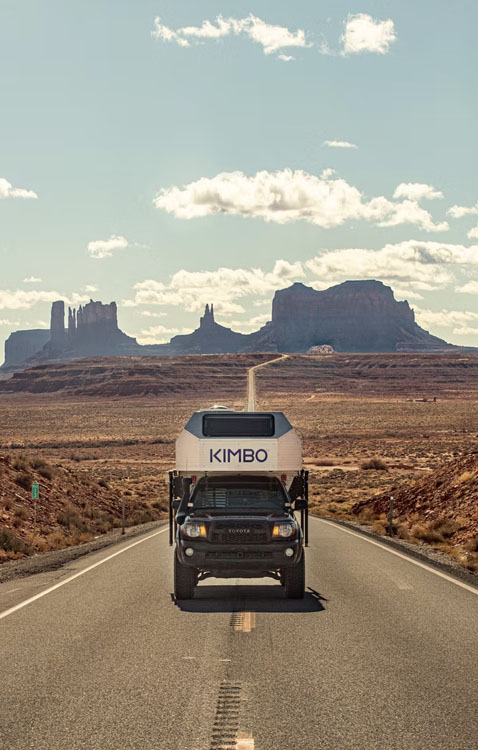
The Kimbo Camper uses removable, side-mounted jack lifts for loading and unloading. These jacks can be removed once the camper is mounted, reducing exterior clutter and improving trail clearance.
High-strength tie-down brackets are integrated into the camper’s structure. These brackets are designed to work with common truck-mounted tie-down systems, providing secure attachment without excessive movement.
Kimbo recommends the use of a rubber bed mat to increase friction and reduce shifting. For full-size trucks, optional jack bracket extensions ensure proper clearance during loading.
Insulation and Weather Protection

The Kimbo Camper exterior is paired with R-5 foam insulation throughout the shell. This insulation is bonded to the aluminum panels and covered with a brushed fabric interior liner.
This insulation system supports four-season use when combined with optional heating solutions. The aluminum exterior helps shed moisture, while sealed seams reduce the likelihood of leaks during prolonged rain or snow exposure.
Temperature stability is further supported by the camper’s compact volume. Less interior air space means the insulation and heating systems work more efficiently.
Roof Structure and Gear-Carrying Options
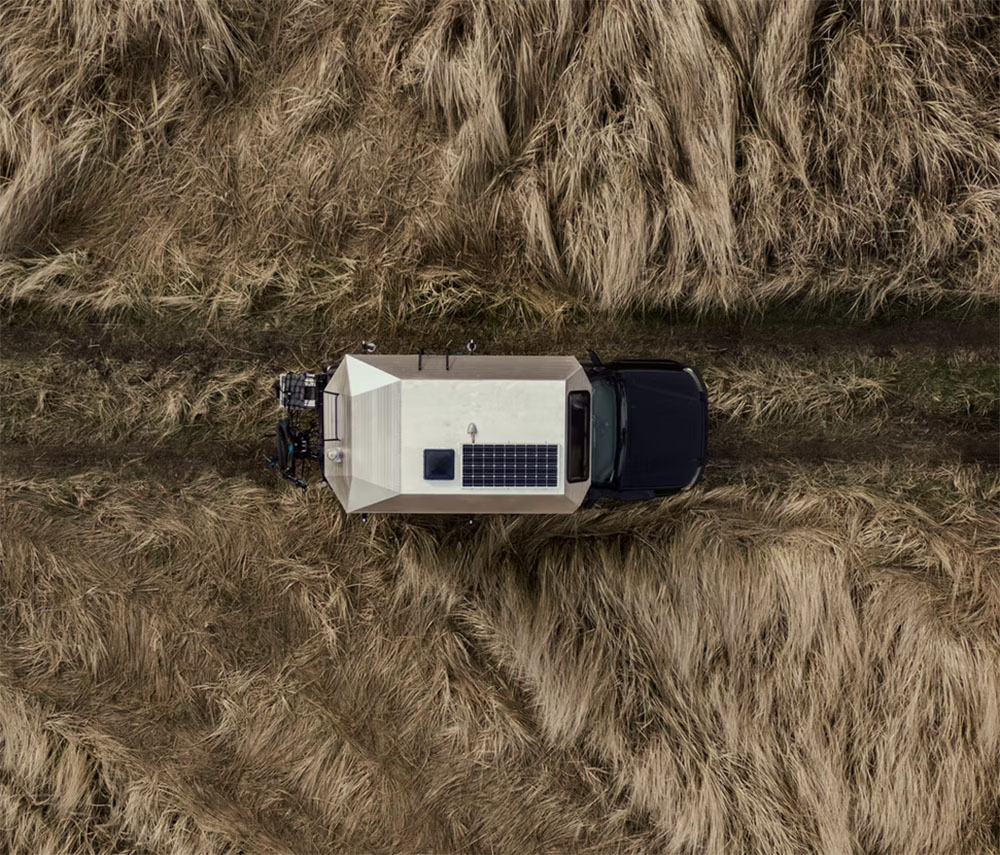
The roof of the Kimbo Camper is reinforced to support optional roof track systems. These tracks allow for mounting gear such as skis, surfboards, or storage boxes without drilling into the roof.
A standard 100-watt monocrystalline bifacial solar panel is roof-mounted and integrated cleanly into the exterior profile. Additional solar capacity can be added without significantly altering the camper’s silhouette.
The roof structure is also designed to support exterior accessories like awnings, further expanding campsite usability.
Exterior Utilities and Off-Grid Connections
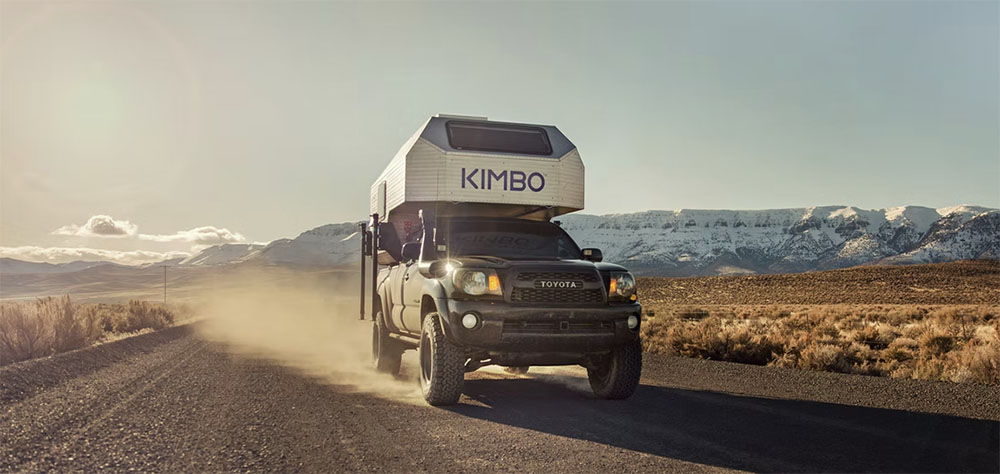
An exterior lockable propane bay houses propane for cooking and heating systems. Keeping propane storage external improves safety and frees interior space.
External 120V shore power connections are discreetly placed for campground or generator use. Optional solar panel plugs allow for portable solar integration.
These exterior utilities are designed to be functional without visually overwhelming the camper, preserving a clean and practical appearance.
Why These Exterior Choices Matter Long-Term
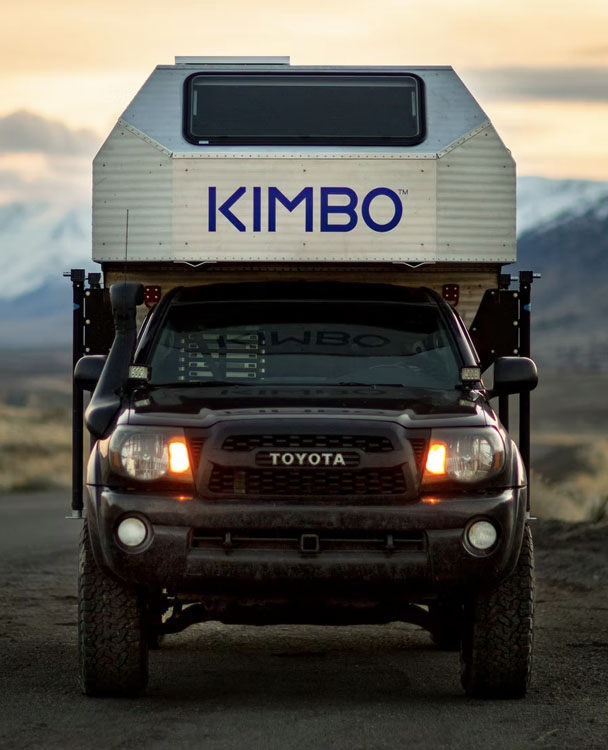
The exterior design of the Kimbo Camper reflects long-term ownership priorities rather than short-term trends. Aluminum construction, modular components, and replaceable systems reduce maintenance complexity.
For off-grid travelers, these choices translate into fewer repairs, easier modifications, and greater confidence when traveling far from support services.
Ultimately, the Kimbo Camper exterior is designed to support years of use across varied terrain and climates without demanding constant attention.
FAQ
What is the exterior made of on the Kimbo Camper?
The exterior is constructed from riveted aluminum panels with sealed seams and a brushed aluminum finish.
How much does the Kimbo Camper weigh?
Dry weight ranges from approximately 980 to 1,230 pounds depending on installed modules and options.
Is the Kimbo Camper suitable for four-season use?
Yes, the R-5 insulated shell combined with sealed construction supports four-season camping when paired with appropriate heating.
Can gear be mounted on the roof?
Yes, optional roof track systems allow mounting skis, boards, and other adventure gear.
A quick heads-up: If you snag something through our affiliate links or check out our sponsored content, we might earn a commission at no extra cost to you. But fear not, we’re all about recommending stuff we’re truly stoked about!