


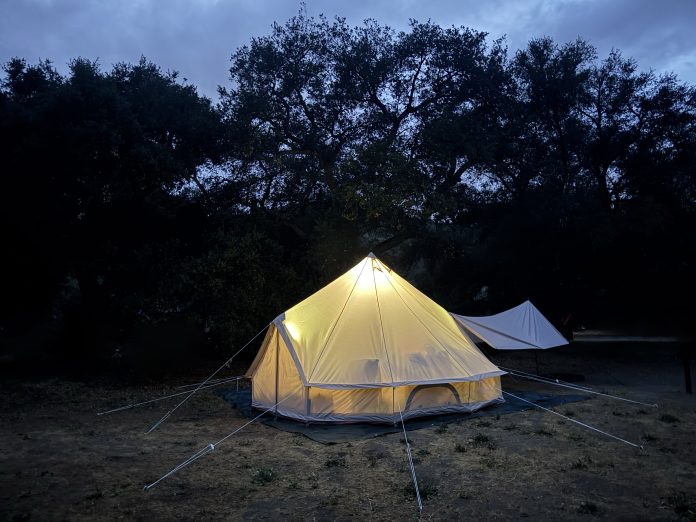

I’ve camped for more than half my life. As a kid, my family tent camped in all four seasons. As an adult, I do the same thing with my family. After all these years, tent size is the mistake I see most often, both in my own early trips and in questions from readers. A tent rated for six people sounds generous. Add kids, gear bags, and a dog, though, and everyone is stepping over each other by the second night.
This guide breaks down how to size a tent for your family, using real square footage math instead of the sleep-count rating printed on the box. It covers how manufacturers calculate capacity, how much space your family truly needs, and how to adjust for kids, gear, and multi-day stays. None of it requires guesswork once you know the numbers.
Quick Facts:
- Topic: Choosing the right tent size for a family
- Skill level: Beginner
- Time required: 10 to 15 minutes to calculate your needs
- Tools needed: Tape measure or floor plan sketch, tent spec sheet
- Difficulty: Easy
- Cost range: $150 to $2,500 depending on tent size and material
- Best for: Families choosing their first or next family-sized tent
8 min read
In This Guide
- Tent Size Overview
- Tent Size Essentials at a Glance
- Why Sleep-Count Ratings Mislead Families
- Calculating the Space Your Family Needs
- Adjusting for Kids, Gear, and Multi-Day Stays
- Peak Height and Shape Matter Too
- Small Family Tent vs. Large Basecamp Tent
- Pros and Cons of Sizing Up
- Final Verdict
- Frequently Asked Questions
Tent Size Overview
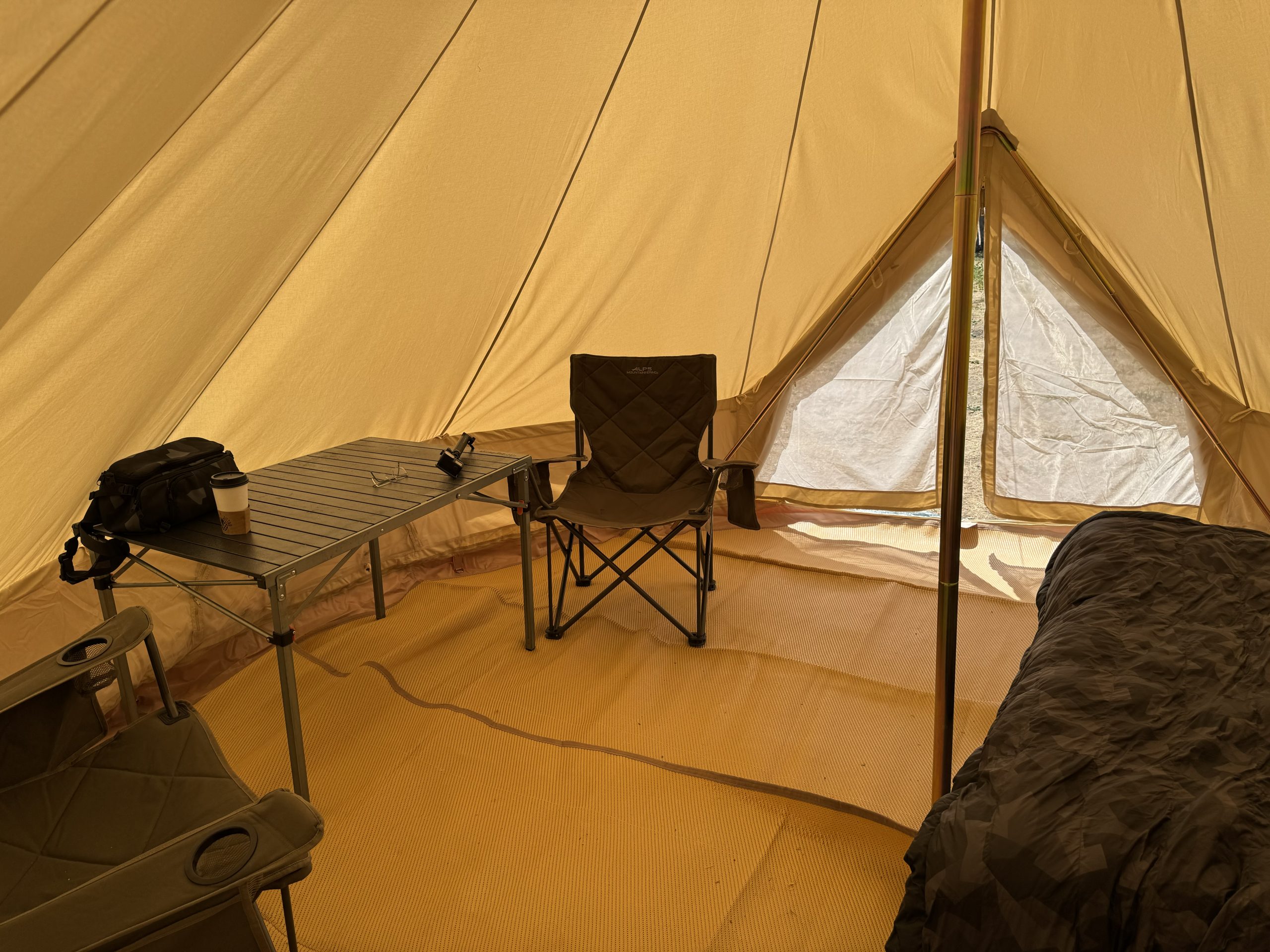
Choosing the right tent size comes down to one habit. Ignore the sleep-count rating and look at the actual square footage instead. Manufacturers calculate capacity by fitting sleeping bags shoulder to shoulder with almost no gap. This rarely matches how a family camps.
In practice, real families need room for more than sleeping bags. Gear bags, a cooler, shoes, and space to change clothes all compete for the same floor. Kids need room to play during a rain delay, and a dog adds another body’s worth of space to the math. Once you account for all of this, most families need a tent rated for one or two more people than they have.
Picture a family of four heading out in a tent rated for four. On paper, it fits. In practice, two kids, two adults, and a weekend’s worth of bags leave almost no floor space free. A tent rated for six solves this cleanly. It costs a bit more, but it prevents the cramped feeling turning a family trip into a stressful one.
Tent Size Essentials at a Glance
| Family Size | Recommended Floor Space |
|---|---|
| Couple, no kids | 70 to 100 sq. ft. |
| Couple plus 1 young child | 100 to 130 sq. ft. |
| Family of 4 | 130 to 170 sq. ft. |
| Family of 4 plus a dog | 160 to 200 sq. ft. |
| Family of 5 or 6 | 190 to 220+ sq. ft. |
| Multi-day or basecamp stays | Add 20 to 30 sq. ft. for gear and living space |
Buy Direct From Stout Tent
The 5M Pro Fits Families Who Outgrow Standard Tents
At 212 square feet with a 9’9″ center pole, it clears the recommended space for a family of five or six with room for gear.
Why Sleep-Count Ratings Mislead Families
First, a tent labeled for six people is typically tested by fitting six sleeping pads edge to edge. There is no room left for gear, movement, or anyone rolling over comfortably. This math works for a backpacking trip, where everyone sleeps and moves on the next morning. It falls apart on a family trip lasting more than one night.
A good rule of thumb is to buy a tent rated for one or two more people than your actual group size. Our ground tent buying guide recommends the same approach. It holds up across nearly every tent style, from basic dome tents to canvas bell tents like our top-ranked ground tent picks.
Meanwhile, manufacturer capacity also ignores dogs entirely. A 70-lb dog takes up roughly the same floor space as a small child. Families camping with a dog should size up an additional notch beyond what the rating suggests.
Calculating the Space Your Family Needs
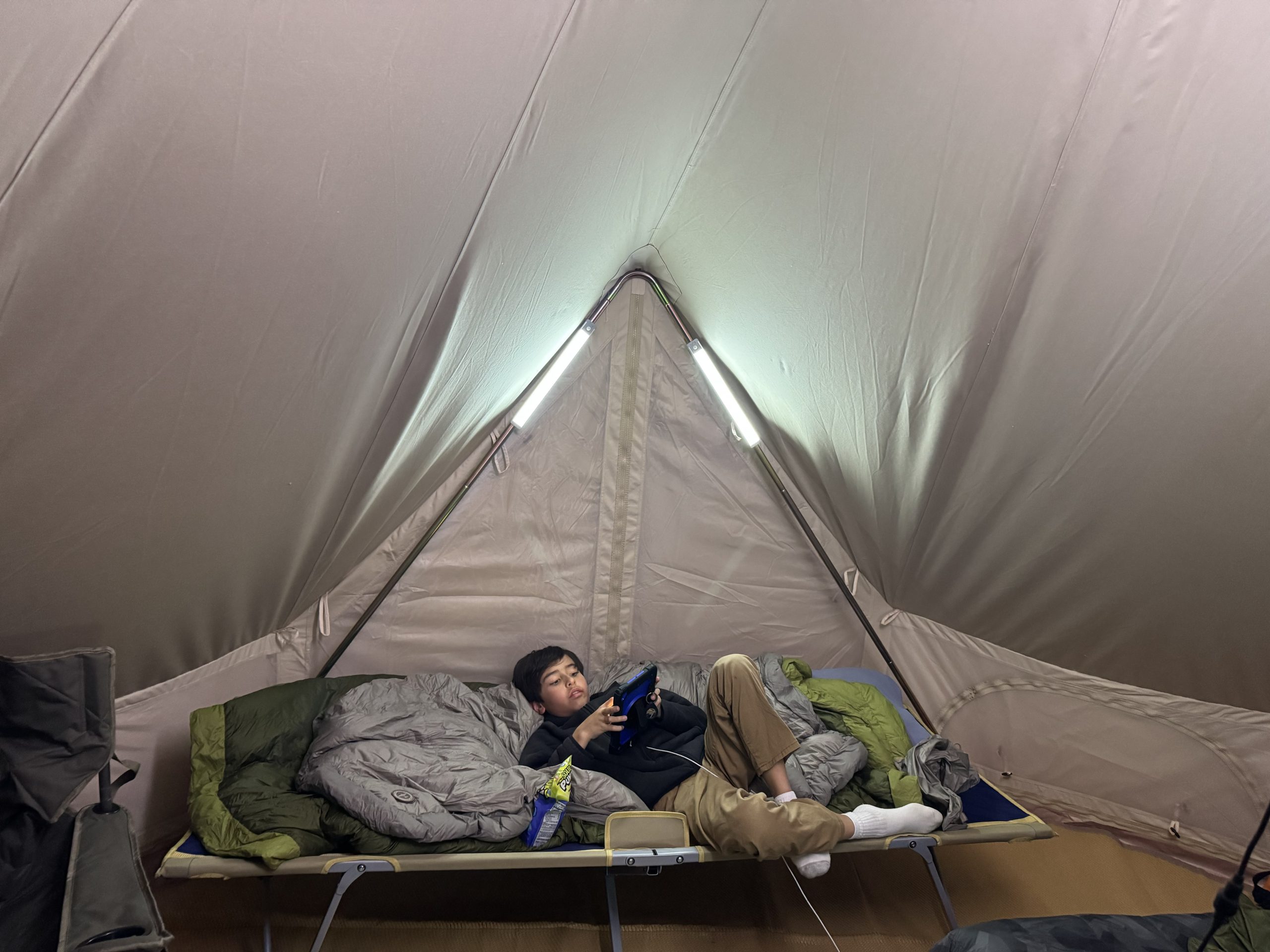
First, start with a simple baseline: 25 to 35 square feet per adult for comfortable sleeping and moving space. This runs well above the 15 to 20 square feet manufacturers often assume. Kids under 10 generally need somewhat less, closer to 20 to 25 square feet. This shrinks further for infants and toddlers who share a parent’s space.
Next, add space for gear separately from sleeping space. A family of four typically needs another 20 to 40 square feet only for bags, coolers, and shoes. This matters most on multi-day trips, where gear does not get repacked into the car each morning. Skipping this step is the most common reason families feel cramped in a tent looking spacious in the store.
Finally, run the math for your specific group before you buy. Two adults at 30 square feet each, two kids at 22 square feet each, and 30 square feet of gear space adds up to 134 square feet as a comfortable minimum. Compare this number directly against a tent’s actual floor space, not the marketed sleep count.
Adjusting for Kids, Gear, and Multi-Day Stays
First, young kids add complexity beyond raw square footage. A toddler needs a safe, contained sleeping spot, ideally away from the main door and any gear tipping over easily. Meanwhile, older kids benefit from a separate zone within the tent, since siblings sharing tight quarters overnight tend to disturb each other’s sleep.
Next, multi-day trips change the calculation further. A one-night trip barely uses the tent for anything beyond sleeping. A five or seven-night stay means kids playing indoors during rain, gear spreading out over several days, and everyone spending real daylight hours inside the tent. Size up for any trip longer than two nights.
Finally, dogs deserve their own line item in the math. Beyond the floor space a dog occupies, consider a washable or rip-stop floor material. Claws wear down lightweight nylon quickly. A family camping regularly with a dog benefits from both the extra square footage and a more durable floor.
Peak Height and Shape Matter Too
However, square footage tells only part of the story. A tent with vertical sidewalls uses its floor space more efficiently than a dome tent with steeply sloped walls, since the sloped design wastes usable space near the edges. Compare peak height and wall angle alongside floor area when shopping.
Similarly, standing headroom changes daily life inside the tent. For instance, a center height of 6 feet or more lets adults dress, cook, and move around without a stoop, which matters most during bad weather when everyone spends more time inside. Our 10-person tent buying guide covers additional shape and door placement considerations for larger family groups.
Save on Your Family Tent Upgrade
Bigger Family? Try the 5M Pro Double Door
A second entrance cuts down on traffic through one door when kids and gear are both moving in and out constantly.
Small Family Tent vs. Large Basecamp Tent
For example, a smaller family tent, in the 100 to 150 square foot range, works well for weekend trips with good weather and a family of three or four. Setup stays quick, and the smaller footprint fits tighter campground sites without trouble.
In contrast, a larger basecamp-style tent, above 200 square feet, changes what a family trip looks like. For instance, kids get a real play zone on rainy days. Additionally, gear stays organized instead of piled near the door. A larger canvas tent, such as the 5M Pro, also supports a stove jack. This extends the camping season into cooler shoulder-season months when a smaller tent would leave the family cold.
However, the trade-off runs in the expected direction. A larger tent costs more, weighs more, and takes longer to pitch. Weekend campers with good weather forecasts do fine with a smaller tent. Families camping longer, in less predictable weather, or with a dog benefit from sizing up.
Pros and Cons of Sizing Up
Pros
- Room for kids to play indoors during rain delays
- Gear stays organized instead of crowding sleep space
- Better fit for dogs sharing the tent overnight
- More comfortable for multi-day and extended stays
- Standing headroom for dressing and moving around
Cons
- Costs more than a tent sized for sleeping alone
- Takes longer to pitch, especially solo
- Needs a larger flat site at the campground
- Heavier and bulkier to transport and store
Final Verdict
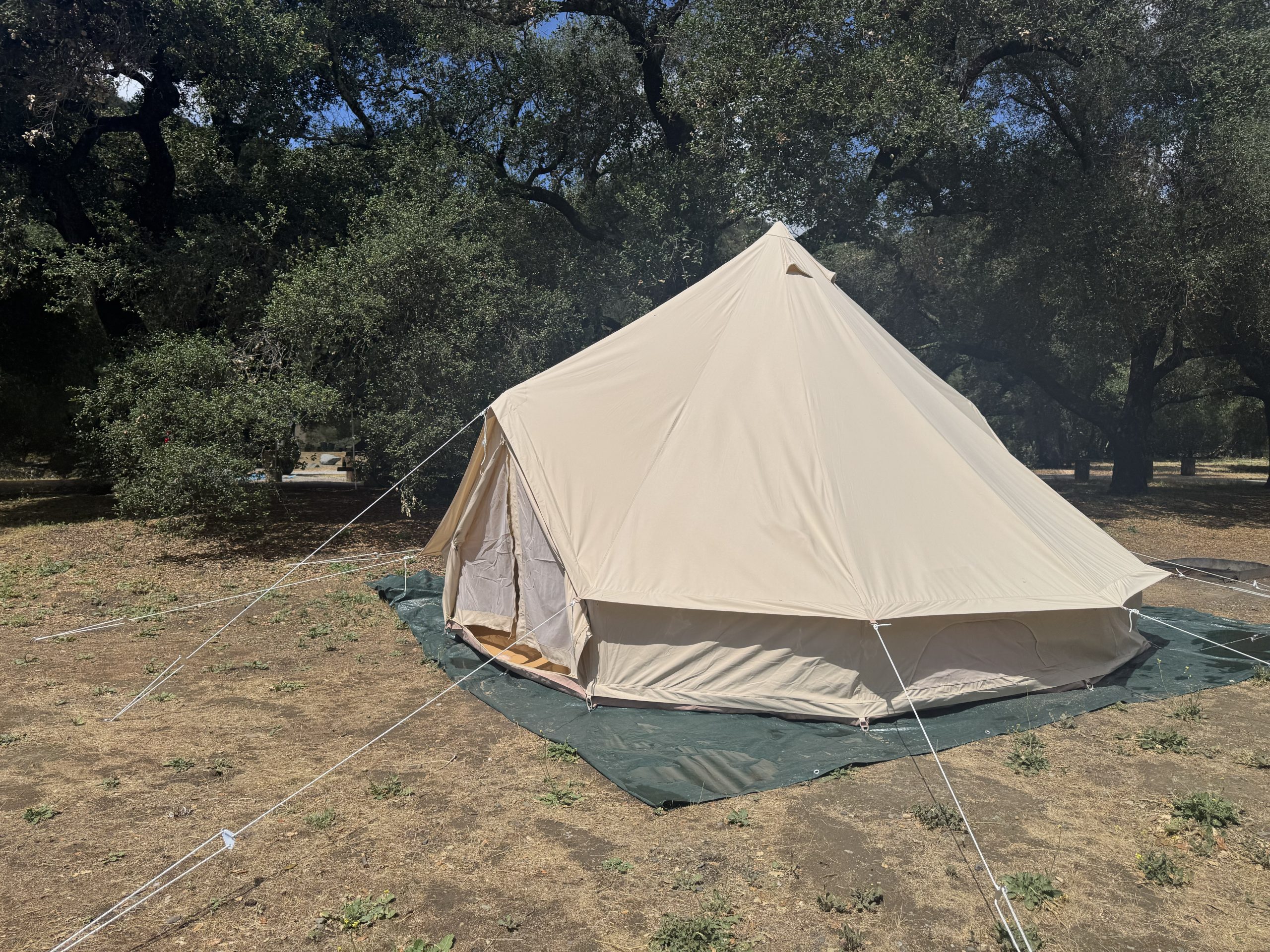
Choosing the right tent size for your family starts with ignoring the sleep-count rating on the box. Calculate actual square footage needs using 25 to 35 square feet per adult, somewhat less per child, and a separate allowance for gear. Add more space for a dog, and more again for trips longer than two nights.
In the end, most families need a tent rated for one or two more people than their actual group size, once gear and comfort are factored in. This small adjustment costs little extra. It prevents the cramped feeling turning an otherwise good trip into an uncomfortable one.
For families who camp often, take multi-day trips, or travel with a dog, a larger basecamp-style tent, such as the Stout Tent 5M Pro, earns its keep across every future trip. Families who camp only on occasional weekends with good weather do fine with a smaller, lighter option, and still camp comfortably.
Ready to Buy?
Check Today’s Price on the 5M Pro Bell Tent
Stout Tent backs the 5M Pro with a lifetime warranty and free shipping across the contiguous US.
Frequently Asked Questions
How much square footage do I need per person in a tent?
Plan for 25 to 35 square feet per adult and 20 to 25 square feet per child, then add 20 to 40 square feet for gear. This runs well above the 15 to 20 square feet manufacturers often assume per person.
Should I buy a tent rated for more people than my family size?
Yes. A good rule of thumb rates the tent one or two people above your actual group size, since manufacturer capacity rarely accounts for gear, movement, or comfortable sleeping space.
How much extra space does a dog need in a family tent?
Treat a dog roughly like an additional small child in terms of floor space. Add 15 to 25 square feet depending on the dog’s size, plus a rip-stop or PVC floor to handle claws.
What size tent do I need for a family of four?
Plan for 130 to 170 square feet as a comfortable range. Go closer to 160 to 200 square feet if a dog joins the family or the trip runs longer than a weekend.
Does tent shape affect how much usable space I get?
Yes. Vertical sidewalls use floor space more efficiently than sloped dome walls. Sloped designs waste usable area near the tent’s edges even when the total floor number looks similar.
Is a bigger tent worth it for occasional weekend camping?
Not always. Families camping only on occasional weekends with good weather forecasts often do fine with a smaller, lighter tent. Sizing up matters most for frequent, multi-day, or dog-inclusive trips.
A quick heads-up: If you snag something through our affiliate links or check out our sponsored content, we might earn a commission at no extra cost to you. But fear not, we’re all about recommending stuff we’re truly stoked about!