


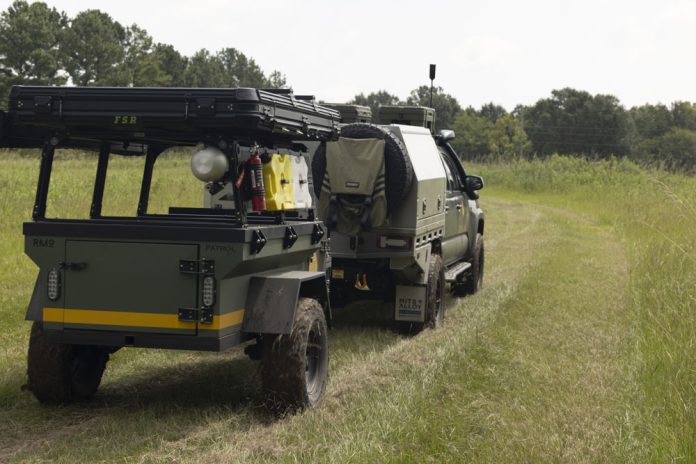

There’s a moment every overlander remembers: the first time a trail stopped being gentle. Maybe it was a corrugated forest road that shook bolts loose, a sudden rainstorm that exposed gear you swore was “packed fine,” or a climb steep enough to make your trailer feel like a pendulum.
That’s when the difference between a rushed build and a dialed overlanding trailer setup becomes impossible to ignore. A well-planned trailer doesn’t just follow your vehicle; it protects your gear, saves your patience, and quietly absorbs the abuse so you can focus on the miles ahead.
The good news? You don’t need to start with a massive trailer or a full shop of tools to get it right. The best overlanding trailer setup begins with smart foundations: independent suspension, a hitch that articulates instead of fights you, and storage zones that keep weight low and accessible.
I’ve seen beautifully engineered trailers turn miserable simply because they were packed without intention. I’ve also watched compact rigs like the Rustic Mountain Patrol XCT thrive because the build respects physics, terrain, and the reality of travel. If you’re building an overlanding trailer setup that needs to work for both weekends and long trips, this is the kind of platform—and mindset—that makes life simpler.
Table of Contents
- Why the Patrol XCT Is a Smart Platform for Adventure
- Packing Philosophy: Weekend Mode vs. Long-Haul Loadouts
- Power, Water & Cold Storage for an Overlanding Trailer Setup
- Exterior Gear That Deserves a Place in Your Overlanding Trailer Setup
- Route & Climate Proofing Your Overlanding Trailer Setup
- Pre-Trip Habits & Trail-Side Mindset
- FAQ
Why the Patrol XCT Is a Smart Platform for Adventure

When you’re planning an overlanding trailer setup, the trailer itself should solve problems before you add a single accessory. The Rustic Mountain Patrol XCT does this better than most compact builds I’ve tested. The steel frame is texture powder-coated, which matters more than people think when branches, grit, and constant vibration become part of the commute. Traditional paint chips, traps moisture, and starts the slow crawl toward corrosion. A texture coating gives abrasion a surface it can rough up without peeling off in sheets. That’s an underrated benefit for anyone building an overlanding trailer setup meant to last years instead of seasons.
The Patrol XCT sits on 31-inch all-terrain tires mounted to 15-inch wheels. Tire diameter isn’t just about looking ready; it directly influences breakover angle, ground clearance, and the trailer’s ability to glide over obstacles instead of plowing into them.
Smaller tires force your suspension to work harder because every rock becomes a sharper angle. The 31-inch tire choice on the Patrol XCT softens those impacts before they reach the frame. The 15-inch wheel size also gives you a durable sidewall without sacrificing tire availability. If you shred a tire 40 miles from pavement, you have a real chance of sourcing a replacement without calling in favors from three states away. That’s exactly how an overlanding trailer setup should be built: capable, repairable, and boring in the best way.
Then there’s the suspension. The Patrol XCT runs Timbren HD 2200LB axleless suspension. This eliminates the long axle beam that normally hangs low, catches obstacles, and transfers shock across both wheels at once. Axleless means each wheel reacts independently, maintaining traction and reducing lateral hop when one side hits something the other doesn’t. On rough terrain, that keeps the trailer tracking behind you instead of steering you. For anyone designing an overlanding trailer setup that has to behave on unpredictable trails, this system is foundational, not optional.
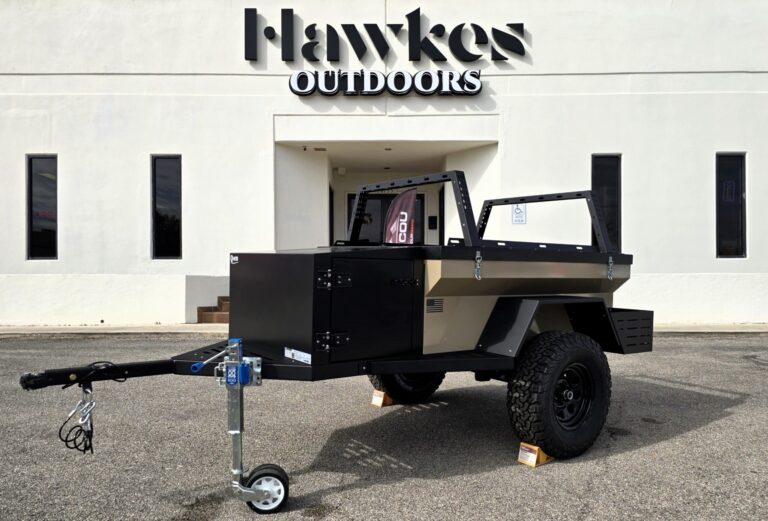
2025 Rustic Mountain Overland Patrol XCT
The XC with a lockable tongue box added forward on the frame, sized for a fridge, electrical, and galley gear, with an access door on the driver and passenger side. That is the piece that keeps cooking gear out of the main bay entirely. 1,250 lbs, tan, listed at $11,489, stock SA1122.
- Tongue box with driver and passenger access doors
- Enclosed main bay with tilting lid and rear tailgate
- Timbren HD 2200 lb axleless suspension
- Custom 16-inch roof rack and front cargo basket
- 1,250 lbs dry
- About $750 more than the Patrol XC
- One unit on the lot at this price
Packing Philosophy: Weekend Mode vs. Long-Haul Loadouts

An overlanding trailer setup lives or dies by how you pack it. Weekend travel rewards speed and access. Long-haul trips reward redundancy and balance. The philosophy should be the same for both: pack by function, not by anxiety.
On weekends, that means prioritizing gear you’ll use first, like your kitchen kit, water, lighting, camp comforts, and so forth, without burying it under recovery tools or seasonal spares. With the Patrol XCT, the tongue box becomes your primary weekend hub. It’s sized for a 12V fridge, electrical components, and a clean galley layout. That means cold food, charged batteries, and organized cooking without opening the main cabin. This kind of separation is the backbone of a good overlanding trailer setup.
Long-haul packing uses the same zones but fills them differently. You’ll carry more water, more food, and more spares, but you still avoid stacking dense weight high or far aft. The Patrol XCT front cargo basket is ideal for heavier expedition gear like sealed bins, traction boards, recovery bags, even tool rolls, because it keeps mass low and forward without crushing your tongue weight.
If your weekend loadout keeps 8–10% of trailer weight on the tongue, your long-haul load can stay in that range too, even when carrying more. I’ve watched trailers packed at 15–18% tongue weight turn a mountain climb into a wrestling match. The right overlanding trailer setup respects the tow vehicle’s rear suspension as much as the trailer’s own.
One personal habit I swear by: I pack my trailer in reverse order of stress. I ask myself, “What breaks the trip if it fails or is inaccessible?” The answer is always cold storage, water, power, and meals. That gear goes in first, gets the best real estate, and sits in positions that protect it from shock. The Patrol XCT makes this mindset easy because the storage architecture was clearly designed by people who have driven the trails, not just drawn them.
Power, Water & Cold Storage for an Overlanding Trailer Setup

Every overlanding trailer setup needs a simple, durable electrical plan. For weekends, a 12V battery with enough capacity to run your fridge, lights, and device charging for 2–3 nights is usually enough, especially if your tow vehicle charges while driving. On long trips, you add redundancy: solar on the 16-inch tall roof rack, a larger battery bank, or both.
The Patrol XCT roof rack height gives you space to mount panels without turning your trailer into a wind brake. That’s the sweet spot for an overlanding trailer setup—power you don’t think about until you need it, and solar that doesn’t punish the highway miles between trailheads.
Water planning is similar. Weekends might mean 5–10 gallons, packed low and central. Long hauls might mean 15–25+ gallons, carried in the same low zones but supplemented by exterior jerry cans or water bricks stored forward.
Again, the Patrol XCT front cargo basket earns its keep here. Coolers are fine for car camping, but fridges are the better answer for a working overlanding trailer setup. The Patrol XCT tongue box can be fitted with a slide or rack, keeping fridge mass low, shock-isolated, and easy to access. A tall fridge mount is one of the fastest ways to destabilize your overlanding trailer setup on rutted roads. A low slide is one of the fastest ways to enjoy your mornings more.
Exterior Gear That Deserves a Place in Your Overlanding Trailer Setup

Exterior add-ons should justify their vibration budget. The Patrol XCT 16-inch tall custom roof rack is one of the few compact racks that treats exterior gear like something you actually rely on. Overlanding trailer setup add-ons that make sense up top include awnings, exterior lighting, recovery boards in padded cases, and soft storage like dry bags that don’t concentrate too much mass.
The front cargo basket is the real hero for exterior packing. I love a front basket on an overlanding trailer setup because it turns dirty trail tools into exterior problems instead of interior ones. Mud-soaked MaxTrax, dusty recovery bags, or wet camp chairs don’t belong inside the sleeping area. The Patrol XCT gives you a dedicated place to carry them without messing with balance or geometry. Lock-N-Roll hitch articulation also matters here. When your trailer and tow vehicle are allowed to move independently, everything you mount outside experiences fewer lateral shocks. That directly improves the long-term calmness of your overlanding trailer setup.
One more personal insight: the best overlanding trailer setup accessory is the one that prevents you from having to accessorize more later. A good roof rack, good hitch, and low CG exterior basket often mean you never need to add band-aid solutions for instability or gear chaos. The Patrol XCT proves this every time it disappears behind the tow vehicle instead of announcing itself.
Route & Climate-Proofing Your Overlanding Trailer Setup

Route proofing an overlanding trailer setup means planning for vibration cycles, not just obstacles. Washboards are the real villain of long trips because they apply 300 tiny hits per minute instead of one big hit per hour. A Timbren suspension reduces how much of that micro-trauma reaches your hardware.
A compact overlanding trailer setup like the Patrol XCT also helps because shorter frames have less leverage to twist. Add texture powder coating, fewer suspension components, and independent wheel reaction, and you get a trailer that stays predictable in dust, mud, rain, snow, and the brutal mix of all four.
Climate-proofing an overlanding trailer setup means sealing electrical, protecting steel, and covering exterior cargo so it doesn’t sandblast itself. The Patrol XCT tongue box design supports weather-sensitive gear (fridge, battery, wiring) in a semi-enclosed zone that’s still vented and accessible from both sides. On long trips, I add simple edge trim seals to exterior lids, dielectric grease to exposed electrical connectors, and corrosion inhibitor on hitch hardware. A good overlanding trailer setup plan assumes the tow vehicle will be fine and the trailer will be bored. That’s the goal.
Snow and mud amplify shock cycles because traction changes and tires slip before grabbing again. Independent suspension helps each wheel maintain contact instead of skating across terrain as a beam. This is why a well-built overlanding trailer setup matters more in shoulder seasons than summer. The Patrol XCT performs in these conditions without feeling dramatic, which is exactly the kind of reliability people want when the weather stops being part of the brochure.
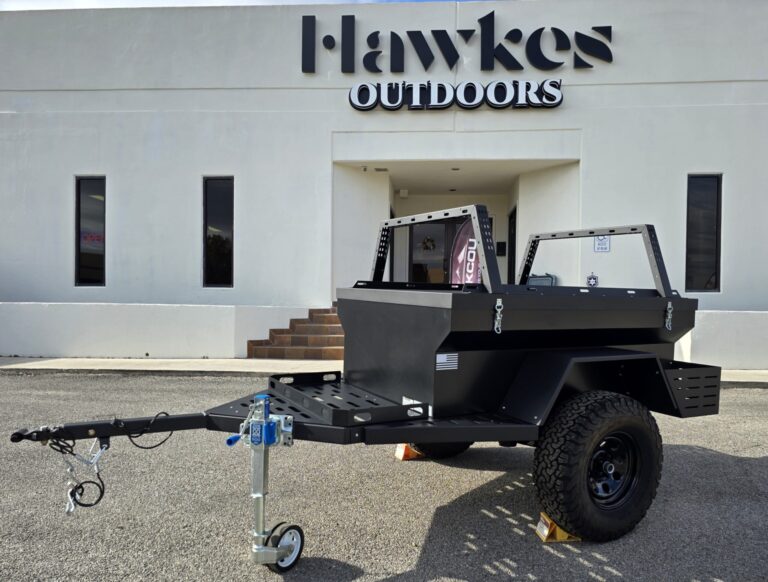
2025 Rustic Mountain Overland Patrol XC
The baseline Patrol, and the cheaper of the two Rustic Mountain trailers Hawkes Outdoors has on the lot. Enclosed cargo bay with a tilting lid and rear tailgate, Timbren HD 2200 lb axleless suspension, and 31-inch AT tires on 15-inch wheels. Listed at $10,737 in black, stock SA1124.
- Enclosed, lockable cargo bay
- Timbren HD 2200 lb axleless suspension
- 31-inch AT tires on 15-inch wheels
- Lock-N-Roll articulating hitch
- ARK tongue jack
- No tongue box, so galley gear rides in the main bay
- One unit on the lot at this price
Pre-Trip Habits & Trail-Side Mindset

The final piece of an overlanding trailer setup is habit, not hardware. Before every weekend run, check three things: tire pressure, hitch articulation, and tongue load balance. Before long trips, add four more: electrical redundancy, water minimums, exterior cargo sealing, and one full suspension visual inspection.
The Timbren suspension simplifies this because there are fewer moving parts to worry about and nothing to grease, align, or retorque like leaf packs and axle beams. The Patrol XCT rewards these quick checks because the platform is already mechanically uncomplicated.
Trail-side mindset matters too. If your trailer behaves, you’ll behave. I once towed a trailer with a stiff hitch and leaf packs through a washout-heavy section in Utah. Every transition felt like it wanted to push the tow vehicle sideways. That taught me a lesson I use on every build now: a good overlanding trailer setup should reduce driver correction, not require more of it. The Patrol XCT hits that target because the suspension and hitch allow movement instead of resisting it.
The best compliment you can pay an overlanding trailer setup is forgetting it’s there. If you pack thoughtfully, mount gear that deserves its spot, and respect tongue weight ranges, you get a rig that feels like part of the vehicle instead of cargo you’re towing. The Patrol XCT proves that compact builds done right aren’t just easier to tow—they make the entire experience less mentally noisy.
FAQ

How much articulation does axleless suspension provide?
Axleless systems allow each wheel to move independently, improving traction and reducing lateral hop on uneven terrain.
Is Timbren suspension good for washboard roads?
Yes. It absorbs high-frequency vibration well and reduces stress on the frame and mounted gear.
Can the Patrol XCT run solar without hurting stability?
Yes. Its 16-inch tall roof rack gives enough mounting height to add panels while keeping weight manageable and airflow cleaner during towing.
What’s the ideal tongue weight range?
For most overlanding trailer setup builds, 8–10% of total trailer weight on the tongue keeps towing stable without overloading the tow vehicle’s rear suspension.
Does axleless suspension require special maintenance?
No. A Timbren suspension has fewer wear points than leaf springs and doesn’t need alignment, greasing, or regular retorquing like traditional axle systems.
What upgrades help fridge access in a compact build?
A tongue box slide or rack keeps the fridge low, accessible, and shock-isolated—better for stability and long-term gear health.
Just so you know, some of the cool stuff we mention comes with affiliate links, meaning we earn a commission if you buy (no extra charge to you!). Plus, we occasionally feature sponsored content, but rest assured, we only shout out products we genuinely stand behind.