


Quick Verdict: Year-round vehicle camping is realistic with a hot tent and a compact wood stove. Where standard 3-season tents force you indoors by October, a properly equipped hot tent maintains 70-85°F interior temperatures even when outside conditions drop to -20°F. Setup takes under 60 seconds with umbrella-frame designs like the Bereg UP-5, and the wood stove doubles as a cooktop and gear dryer. If you’ve been limiting your overlanding to May through September, hot tents remove the calendar restriction entirely.
Last updated: March 2026 | 8 min read
In This Guide
For specific models that fit this year-round playbook, see our roundup of the best hot tents with stove jacks, which ranks eight four-season picks for winter overlanding.
The Short Season Problem
Most overlanders treat their hobby as a warm-weather activity. For instance, search data shows overlanding interest peaks in June and drops to less than half by November. As a result, the average overlander in the Lower 48 runs trips from mid-May through late September, roughly five months. Meanwhile, without year-round vehicle camping gear, the other seven months the rig sits in the driveway.
The limiting factor is almost always shelter. Your 3-season tent works fine at 40°F and above. Below freezing, however, condensation soaks your sleeping bag, wind cuts through mesh panels, and you wake up stiff at 4 AM wondering why you left home. Standard tents are passive shelters. They trap body heat and block wind, but they provide no active warming. Therefore, when outside temperatures drop below 30°F, body heat alone stops being enough.
Year-round vehicle camping needs something standard tents don’t offer. A regular tent traps heat; a hot tent generates it. This shift from passive insulation to active warmth is what lets overlanders extend their season through fall, winter, and early spring. Our introduction to hot tenting explains the basics, while this article focuses on how year-round vehicle camping works in practice across different US regions.
How Hot Tents Solve It
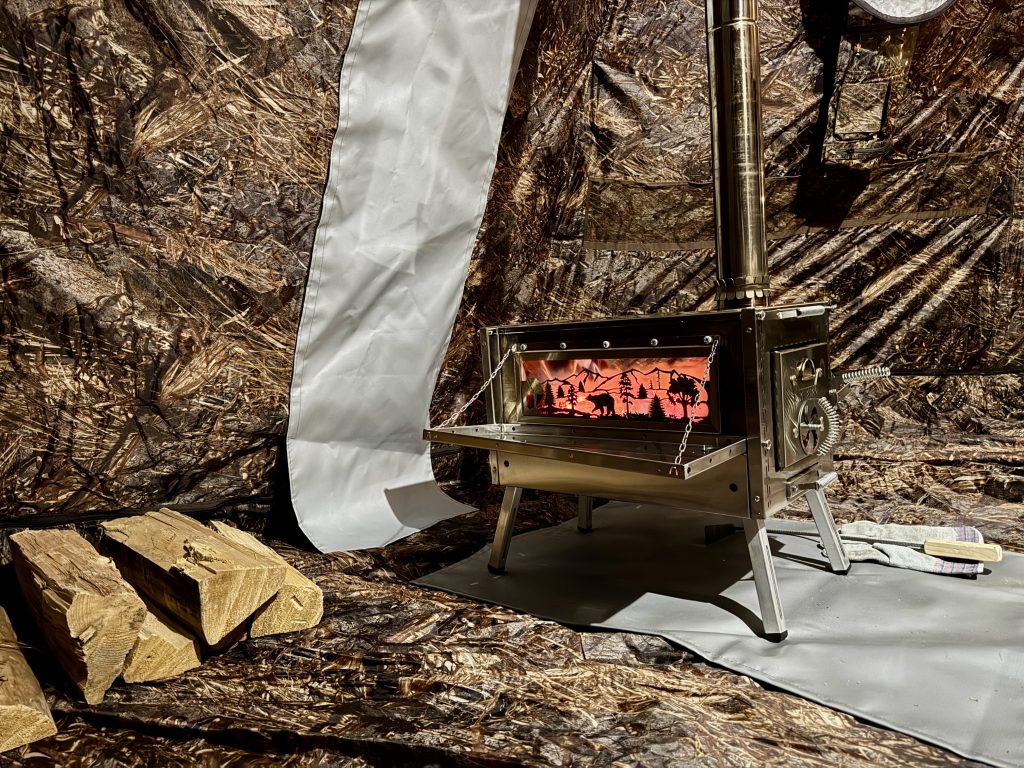
A hot tent is a shelter designed to safely house a wood-burning stove inside. Specifically, the tent fabric is either canvas or heat-resistant synthetic (Oxford 210/300 denier). A fire-rated stove jack, typically rated to 1,200°C, passes the stovepipe through the roof or wall. Inside, a compact stove burns wood to heat the interior space actively.
The difference is night and day. In documented winter camping tests, hot tent interiors hit 85°F while outside temperatures sat at -22°F. On a typical night, you maintain 65-75°F for 2-3 hours per load of wood, then the tent cools gradually while you sleep in a moderate-rated bag. By comparison, a standard 4-season tent forces you into a -20°F bag where you still shiver. With a hot tent, you sit comfortably in base layers, cook dinner on the stove, and dry wet gear before bed.
Besides heating, the wood stove adds three functions a regular tent lacks. First, it serves as a cooktop for meals. Second, it dries wet boots, gloves, and layers overnight. Third, it reduces condensation by circulating warm dry air through the tent. Consequently, you wake up to dry gear instead of frost-coated walls.
Featured on Bereg Canada
Bereg UP-5: 60-Second Setup, Four-Season Protection
65 lbs, patented umbrella frame, aviation-grade aluminum, Oxford 300 fabric, stove jack rated to 1,200°C. Rated from +30°C to -50°C. Sleeps 3-8.
Year-Round Vehicle Camping by Region
Year-round vehicle camping looks different depending on where you’re overlanding. Here’s what each major US region throws at you and how to prepare.
Colorado and the Rockies: Summer temps run 70-80°F at altitude. In contrast, winter nighttime lows hit 10-20°F in the foothills and sub-zero above 9,000 feet. Shoulder seasons (April-May and September-October) bring 25-45°F nights, making them prime hot tent camping territory. Because of this, a winter overlanding tent with a stove turns November through March from impossible to comfortable. National Forest dispersed camping stays open year-round in many areas, giving you access to empty campsites the summer crowds never see.
Utah and the Desert Southwest: Winter daytime highs hover around 40°F with nights below freezing. Five Mile Pass, Pony Express Trail, and Skull Valley remain open all year. Similarly, spring and fall are the sweet spot: 50-70°F days with cool nights. For year-round vehicle camping, a hot tent adds value from November through February when desert nights regularly drop into the teens. Because of limited tree cover, bring processed firewood or a stove rated for briquettes.
Pacific Northwest: Summers are mild (65-80°F), but winters bring wet, cool conditions (30-45°F with persistent rain). Year-round vehicle camping in the Pacific Northwest is about managing wet, not cold. As a result, a hot tent’s ability to dry gear inside beats any standard tent from October through April. However, expect rain-soaked firewood; carry dry kindling or fire starters.
Appalachia and the Southeast: Although daytime temps stay warm year-round, nighttime lows drop to 20-35°F from November through March at elevation. Pisgah, Nantahala, and Cherokee National Forests offer year-round dispersed camping, though higher elevations close in winter and seasonal fire restrictions apply. Still, hot tent camping extends your comfortable window by about four months, covering the colder shoulder seasons when trails are empty and fall colors peak.
Essential Gear for Year-Round Vehicle Camping
| Gear Item | Why It Matters | Budget Range |
|---|---|---|
| Hot tent with stove jack | Active heating, not passive insulation only | $400-$2,000+ |
| Compact wood stove | Heat source, cooktop, and gear dryer | $150-$600 |
| Insulated sleeping pad (R-value 5+) | Ground insulation prevents heat loss through contact | $100-$250 |
| Sleeping bag (20°F or lower) | Backup warmth after stove burns out overnight | $150-$400 |
| Dry firewood or briquettes | Wet wood produces smoke, not heat | $5-$15 per bundle |
| CO detector (battery-powered) | Safety essential; carbon monoxide is odorless | $20-$40 |
Our hot tent wood stove buying guide covers stove selection in detail. In short, look for a stove weighing under 20 lbs with a flat cooktop surface, a spark arrestor, and at least 3 sections of stovepipe. Bereg offers matched stove models (Fireplace, Vector, Satellite) designed to pair with their tent stove jacks for safe operation. For 4-season vehicle camping tips on your first trip, also check our hot tent camping success guide.
Featured on Bereg Canada
Need a Bigger Basecamp? Meet the Bereg UP-7
183 sq ft of usable space, 7.5-foot peak height, double-wall Oxford 210 fabric. Sleeps 5-7 with stove and cots. Deploys in about 1 minute.
Hot Tent Setup Alongside Your Rig
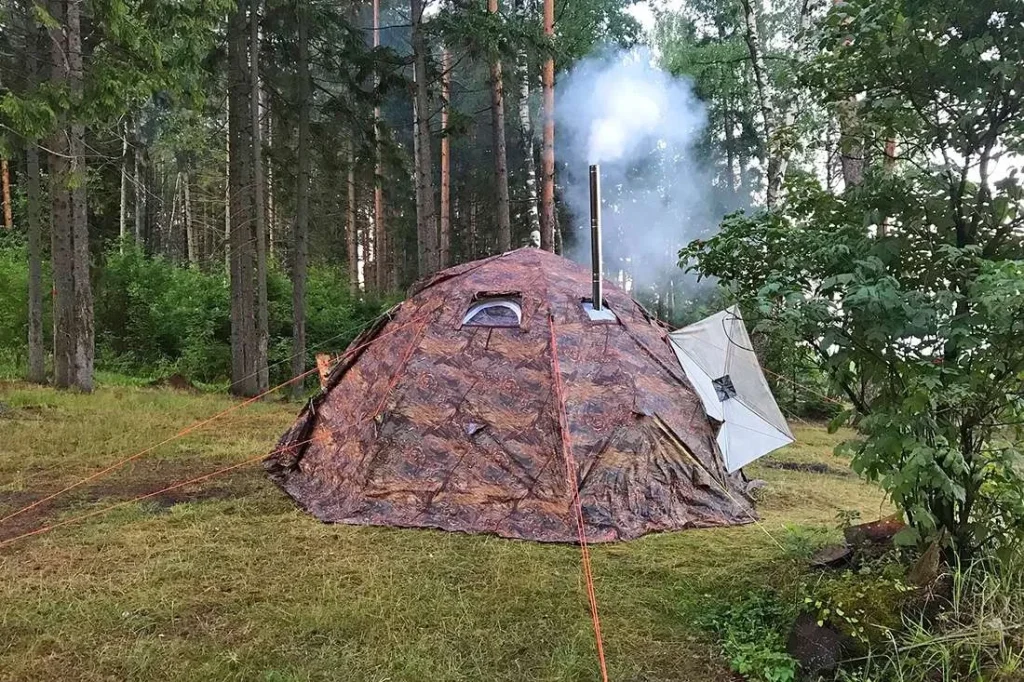
Setting up a hot tent next to your vehicle takes less time than inflating an air mattress. With an umbrella frame like the Bereg UP-5, you pull it open, lock the hub, and stake the corners. Done in under 60 seconds. Meanwhile, the larger UP-7 takes about a minute. Then, position the tent door facing your truck’s tailgate for easy gear transfer between vehicle and shelter.
For year-round vehicle camping safety, stove placement follows a simple rule: keep the stove near the stove jack opening with 18 inches of clearance from tent walls on all sides. Next, run the stovepipe up through the jack at a slight angle to improve draft. Outside, the pipe should extend 12-18 inches above the tent peak to prevent downdrafts. Bereg’s stove jacks are rated to 1,200°C, so pipe contact with the jack material is safe during normal operation.
For extended year-round vehicle camping trips, park your rig as a windbreak on the prevailing wind side. This approach reduces heat loss through the tent wall facing the wind. Additionally, it keeps your vehicle accessible without exposing yourself to gusts during the walk between tent and truck.
Hot Tent vs. Standard 4-Season Tent for Year-Round Vehicle Camping
| Factor | Hot Tent + Stove | Standard 4-Season Tent |
|---|---|---|
| Heating Method | Active (wood stove, 70-85°F interior) | Passive (body heat + insulation only) |
| Cooking Inside | Yes (stove doubles as cooktop) | No (fire risk, CO danger) |
| Gear Drying | Yes (hang wet items near stove) | No (condensation worsens moisture) |
| Comfort Below 20°F | Comfortable in base layers | Requires -20°F bag and layers |
| Weight | 45-86 lbs (tent + stove) | 8-15 lbs |
| Condensation | Reduced (warm air circulation) | Heavy (cold walls + body moisture) |
For someone hauling gear in a truck bed, the weight difference doesn’t matter. Consequently, the hot tent wins on heating, cooking, and moisture control for anyone planning to extend overlanding season past September. Standard 4-season tents still work well for alpine backpacking. However, they were not designed for the comfort demands of year-round vehicle camping trips lasting multiple nights in freezing conditions.
Pros and Cons of Year-Round Overlanding
Pros
- Doubles your usable overlanding season from 5 months to 10-12
- Empty campsites and trails from October through April
- Hot tent interior reaches 70-85°F in sub-zero conditions
- Wood stove provides cooking, gear drying, and heating in one unit
- Bereg UP-5 deploys in under 60 seconds with umbrella frame
- No crowds at popular dispersed camping spots during off-season
Cons
- Higher upfront gear cost ($600-$2,500 for tent + stove)
- Hot tent + stove weighs 45-86 lbs (vehicle-only, not packable)
- Requires dry firewood supply (sometimes scarce in desert regions)
- CO detector is mandatory safety equipment with any stove
- Some forest roads close seasonally due to snow or mud
- Winter vehicle recovery adds risk on remote trails
Final Verdict
Year-round vehicle camping isn’t extreme or impractical. With a hot tent and a compact wood stove, any overlander willing to carry an extra 45-86 lbs in the truck bed gains access to 12 months of camping. In other words, you invest $600-$2,500 once, and in return you add 5-7 months of camping per year.
Bereg’s UP-5 stands out for year-round vehicle camping because of the 60-second umbrella-frame deployment, the -50°C to +30°C rating, and the stove jack rated to 1,200°C. At 65 lbs, it is light enough for two people to carry from the truck to a setup spot. For group trips, the larger UP-7 adds 183 sq ft of usable space. See our Bereg UP-5 vs UP-7 comparison to choose the right size for your 4-season vehicle camping needs.
If you have been parking your rig from October to April, a hot tent is the single most effective way to extend overlanding season. The trails are empty, camping’s cheaper, and winter scenery beats anything you see in July. Year-round vehicle camping starts with shelter, and hot tents are purpose-built for the job.
Featured on Bereg Canada
Ready to Camp Year-Round?
Browse the full Bereg hot tent lineup: UP-5, UP-7, and Sputnik-3. Matched wood stoves available. Ships from Canada to the US.
Frequently Asked Questions
How do you stay warm in a vehicle tent during winter?
A hot tent with a wood stove is the most effective method for year-round vehicle camping in winter. Specifically, the stove heats the interior to 70-85°F even in sub-zero conditions. Also pair this with an insulated sleeping pad (R-value 5+) and a 20°F-rated sleeping bag as backup for after the fire dies down. Our winter camping warmth guide covers additional strategies.
What months is overlanding season?
Traditional overlanding season runs mid-May through late September in most US regions. However, with a winter overlanding tent and proper gear, you extend overlanding season to a full 12 months. In particular, shoulder seasons (April-May and October-November) offer the best balance of mild temperatures, empty trails, and accessible roads.
Is a hot tent safe to use with a wood stove?
Yes, when built for the purpose. Hot tents feature fire-rated stove jacks (Bereg’s are rated to 1,200°C), heat-resistant fabrics, and ventilation systems designed for CO2 and moisture management. Above all, always use a battery-powered CO detector inside the tent, maintain 18 inches of clearance between the stove and tent walls, and keep the stovepipe extending above the tent peak.
How heavy is a hot tent compared to a regular 4-season tent?
For year-round vehicle camping, hot tents weigh significantly more than backpacking alternatives. To illustrate, the Bereg UP-5 weighs 65 lbs, and the UP-7 weighs 86 lbs. Compared to a standard 4-season backpacking tent at 8-15 lbs, the gap is large. Still, for vehicle-based overlanders, this weight difference is a non-issue since the tent rides in the truck bed. In return, you get active heating, interior cooking, and gear drying.
What is the best hot tent for year-round vehicle camping?
For overlanders, the Bereg UP-5 offers the best combination of fast setup (60 seconds), four-season capability (-50°C to +30°C), and manageable weight (65 lbs). Notably, groups of 5 or more benefit from the larger UP-7 with 183 sq ft of interior space. Both models feature aviation-grade aluminum frames and stove jacks rated to 1,200°C for safe hot tent camping operation.