


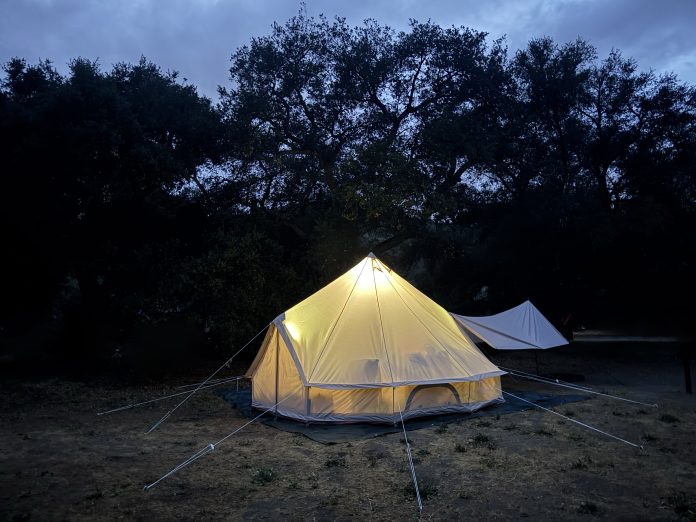

Quick Verdict: After three months testing the Stout Bell Tent Pro Edition with my family of three at Thomas Hunting Grounds outside Big Bear, the 16 ft dual door earns its $1,223.10 price. The 10.06 oz heavyweight cotton canvas, 15-to-20-minute setup, robust zippers, and well-reinforced stress points held up across California wind, summer heat, and a recent heavy rain event. Two minor flaws keep it from perfect: the exterior windows have permanent sewn-in mesh you cannot open, and a handful of stray thread tails from final stitching sit on both the interior and exterior of the canvas.
By Alex Schult | Last updated: April 2026 | 9 min read
In This Review
Stout Bell Tent Pro Edition Overview: Who Should Buy a 16 ft Canvas Tent
I test tents, overlanding gear, and off-road equipment for 4wdTalk, and over the years I have pitched a wide range of canvas bell tents and basecamp shelters. The Stout Bell Tent Pro Edition is Stout Tent’s upgraded version of the Ultimate 5000 series, and after three months of hands-on family use it sits firmly in the premium canvas bell tent tier. Worth knowing up front: the Pro Edition is available in single-door and dual-door configurations, and the unit I tested is the dual door. Standard equipment includes four zippered windows with sewn-in mesh, an adjustable stove jack, a heavy bathtub-style groundsheet, and reflective guy lines.
My typical campsite is dispersed camping up in Big Bear or at Thomas Hunting Grounds just south of Big Bear, California. We have run the tent as a basecamp for my family of three out of a 2025 Chevy Colorado and used it through California’s typical conditions: high-elevation wind, summer heat, and most recently a heavy rain event during a stretch of stormy spring weather. The tent has been thoroughly used over the course of the last three months.
Stout currently lists the 16 ft dual door Pro Edition at $1,223.10. It slots between budget canvas tents and the higher-end premium tier in the canvas bell tent market. For overlanders, weekend basecamp families, and campers running stationary shelter setups in conditions like ours, the Pro Edition’s heavier canvas treatment and reinforced stitching pay off within a season.
Key Specs at a Glance
| Specification | Details |
|---|---|
| Diameter | 16.4 ft (5M model) |
| Door configuration | Dual door (front and rear A-frame) |
| Canvas | 10.06 oz (340 gsm) single-weave cotton, waterproof and mildew treated |
| Windows | 4 zippered windows with sewn-in mesh |
| Stove jack | Adjustable, 3 to 6 inch range |
| Groundsheet | Heavy ripstop PVC, bathtub style |
| Poles | Steel center pole and A-frame door pole |
| Guy lines | Reflective, pre-attached to tent body |
| Price (16 ft dual door, Pro Edition) | $1,223.10 USD at time of review |
Direct from Stout Tent
Stout 16 ft Bell Tent (Pro Series, Dual Door)
US-based service. Bundle stoves, footprints, and inner tents at checkout for package pricing.
Canvas Weight and Weatherproofing
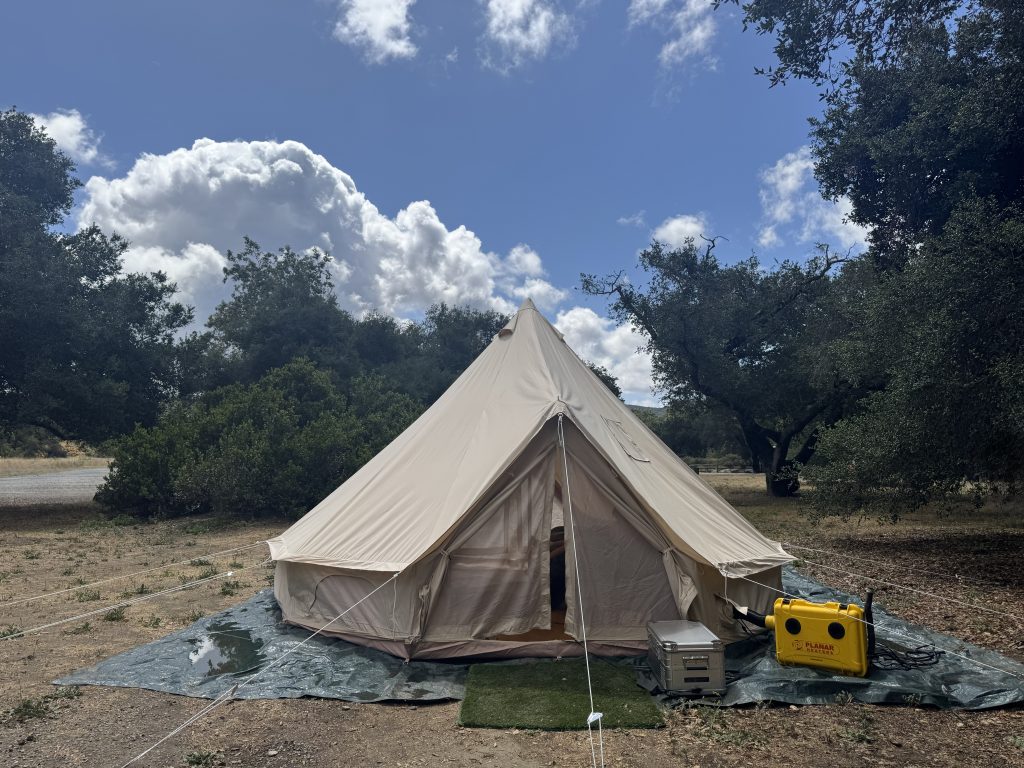
The 10.06 oz cotton canvas is the first thing you notice when you pull the tent from its bag. It feels noticeably heavier than the lighter fabric used on entry-level canvas bell tents, and the weave is dense enough to block midday sun without turning the interior into an oven. After three months of mixed Big Bear weather, the canvas held its shape, did not sag at the eaves, and shed water without weeping at the seams. The heavier weight also dulls outside noise, which matters at dispersed sites where neighbors and passing vehicles carry farther than you would expect.
Stout treats the canvas for water resistance and mildew before shipping. For the first wet weather, you should season the tent by spraying it down and letting it dry; the stitching then swells and self-seals after one full wet cycle. Once seasoned, the canvas shrugs off steady rain. During our most recent test, a heavy spring rain event hit camp overnight and the tent stayed dry inside through the morning, including at the seams and the stove jack patch. Condensation stayed manageable as long as one window or door zip remained cracked.
The trade-off with heavy canvas is weight in the bag. Bagged up, the 16 ft Pro Edition fills the rough volume of a large duffel and weighs in at 96 lbs, so if you didn’t eat your Wheaties, you may want to get an extra set of hands to get it into your truck bed. For a stationary basecamp, the durability gain is worth the extra heft. Conversely, on frequent solo trips where you load and unload daily, a lighter tent saves your back.
Setup Time and Pole System
Setup is faster than I expected for a 16 ft canvas tent. After two practice pitches, my bag-to-staked time settled into a 15-to-20-minute window once I had the sequence down. The first pitch ran longer because I worked through the perimeter band tensioning carefully; by the second pitch, the rhythm clicked. With one person on the canvas and one helping with the center pole raise, the whole process moves quickly. I have set up quite a number of bell tents. The first time is always the slowest, as you have all the guy lines to tie on for the first time
The setup sequence is straightforward. First, you lay out the canvas with the bathtub floor down, peg the perimeter loosely, raise the center pole, insert frames over door(s), then tighten the perimeter and tension the guy lines. The reflective guy lines make night arrivals safer, since headlamp beams catch them before your shins do.
One note on the center pole: the steel construction feels solid and stable in wind, but you feel the heft when you raise it, especially for the first time. The trade-off is fair. A heavier pole gives the tent its stability in weather, and once it is up, there is no flex or sway in the moderate-to-strong gusts I encountered at Thomas Hunting Grounds.
Zipper Quality, Stitching, and Reinforcement
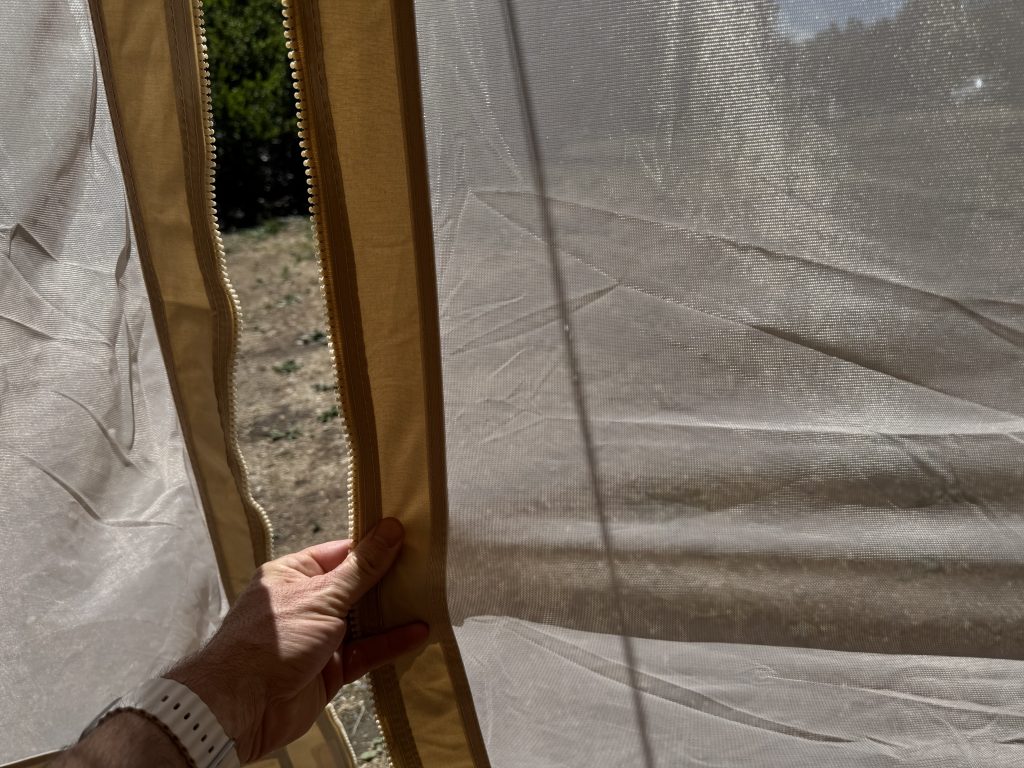
Construction quality is where the Pro Edition earns its premium label. The zippers feel substantial in hand, run smoothly across all four windows and both doors, and show no signs of binding or fabric snag after three months of daily family use. Even better, the pull tabs are easy to grab without fumbling.
Reinforced areas show clear evidence of thoughtful design. The corners, peg loops, ridge band, and door zips show double-stitched and bar-tacked stress points at every load-bearing junction. Underneath, the center pole base sits on a reinforced patch with extra layered canvas, so years of pole pressure will not punch through the floor. Similarly, the door zips include storm flaps to cover the zipper teeth and keep wind-driven rain out of the threads.
Mesh quality is excellent on the inner screens. The bug netting holds a tight, fine weave with no gaps at the seams, and after three months it shows no fraying along the zipper lines. Compared to budget bell tents in this category, where the screen often pulls away from the canvas at the corners within one season, the Stout Bell Tent Pro Edition mesh feels built to last.
The one finish detail worth flagging is cosmetic. Across the tent body, you find a handful of stray thread tails left over from the final sewing pass, where the operator did not trim the loose ends after the last stitch. They sit on both the interior and exterior of the canvas. None of them affect performance, and you will not notice them once the tent is pitched. Still, a final QC trim before packing would lift the curb appeal closer to the boutique end of the market.
Window and Ventilation Design
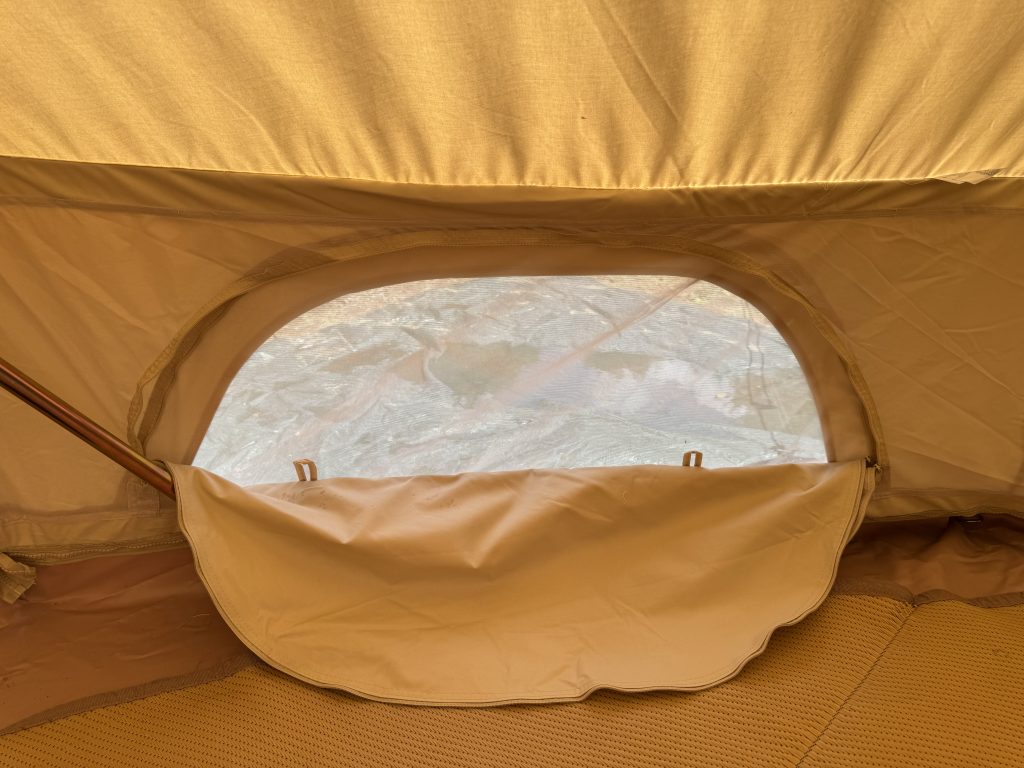
The 16 ft Pro has four zippered windows with sewn-in mesh screens behind the canvas flap. The screens themselves are high-quality, fine-weave bug netting, and the airflow when all four are open kept the tent comfortable through the worst of California summer heat. For cross-ventilation, you open the rear-door storm flap, the front-door storm flap, and the windows on opposite walls, which pulls a steady draft through the tent body.
One design choice is worth flagging for buyers used to other canvas tents. The exterior canvas window has a zipper, but the inner mesh screen is sewn permanently into the window frame. You cannot unzip or remove the mesh, which means you never get a fully unobstructed window opening. A handful of competitors in this category offer screen-removable window designs, which gives you a choice between screen-on and screen-off.
Bundle and Save
Add a Wood Stove or Inner Tent at Checkout
Stout Tent offers package pricing on stoves, inner tents, and footprints when bought with the Pro Edition. The bundle drops the per-item cost vs. buying separately later.
The sewn-in mesh is a real design trade-off, and treating it as data rather than a flaw is the right framing. For my family-of-three basecamp use at Big Bear, it was not an issue. Airflow held strong through California summer heat, and at no point during wind or rain did I wish for a fully open canvas window. However, photographers wanting unobstructed canvas openings, or pet owners wanting dogs to flow in and out without unzipping a door, should weigh the sewn-in mesh as a real limitation rather than a quirk to discount.
Stove Jack and Floor Inserts
The Pro Edition includes an adjustable stove jack with a 3 to 6 inch range, positioned in the canvas wall to clear the center pole. I did not run a wood stove during my three-month test window, since the California weather we faced did not call for one. However, the jack is sized for standard wood stoves and the heavy 10.06 oz canvas combine to make this tent stove-ready out of the box for anyone wanting four-season performance.
Inside, I run the tent with Stout’s floor inserts to add a layer of comfort underfoot for longer family stays. The factory bathtub groundsheet is heavy ripstop PVC and seals against ground moisture well on its own; the floor inserts simply make the interior feel more like a basecamp room and less like a tent floor. For weekend trips with kids, the difference matters.
5M Pro vs. 6M Pro: Which Stout Bell Tent Should You Buy
The most common buyer question is whether to size up to the 6M Pro. I have tested the 6M extensively and have video coverage out on it as well, so I will keep this short. The 6M adds roughly 40% more usable floor area and reads as the right pick for groups of five or more, family-with-kids setups planning extended stays, or anyone wanting full standing room without ducking near the eaves. For the deeper take on the larger model, see my review of the Stout 6M Bell Tent, which covers the same Pro Edition build at the bigger footprint.
The 16 ft dual door is the better pick for couples, small families like ours, or solo overlanders who value pack size and one-person setup feasibility. At 16.4 ft, the bell tent footprint fits in most state-park sites and dispersed-camping pads without crowding the perimeter, and the lighter pack weight makes vehicle loading easier in and out of a midsize truck like the Colorado. Above all, it sits at a lower price point, which matters if you are also budgeting for a stove, footprint, or inner tent at the same time.
If headroom and group capacity are the deciding factors, go 6M. On the other hand, when pack size, solo-setup feasibility, or budget matter more, the 16 ft Pro is the smarter buy. Both share identical canvas, zippers, mesh, and stove jack quality.
Pros and Cons
Pros
- 10.06 oz heavyweight canvas blocks sun, sheds heavy rain, and dulls outside noise
- Setup runs 15 to 20 minutes once practiced, faster than expected for a 16 ft canvas tent
- Zippers feel substantial, run smoothly, and show no binding after three months of family use
- Reinforced stress points at corners, ridge, and door zips show clear bar-tack stitching
- Mesh quality is fine-weave bug netting with no fraying after three months
- Reflective guy lines pre-attached to the tent body save setup time and prevent nighttime stumbles
- Adjustable 3 to 6 inch stove jack and bathtub groundsheet included on the Pro Edition
- Direct-from-manufacturer pricing with bundle discounts on stoves and footprints
Cons
- Window mesh is sewn-in and never fully unzips for an unobstructed opening
- Stray thread tails from the final stitching sit on both the interior and exterior of the canvas
- Pack size and weight ask for two people for comfortable vehicle loading
- Solo center-pole raise is doable but takes effort, especially in wind
- The $1,223 price point sits above budget canvas tents like Teton Sierra
Stout Bell Tent Pro Edition Final Verdict
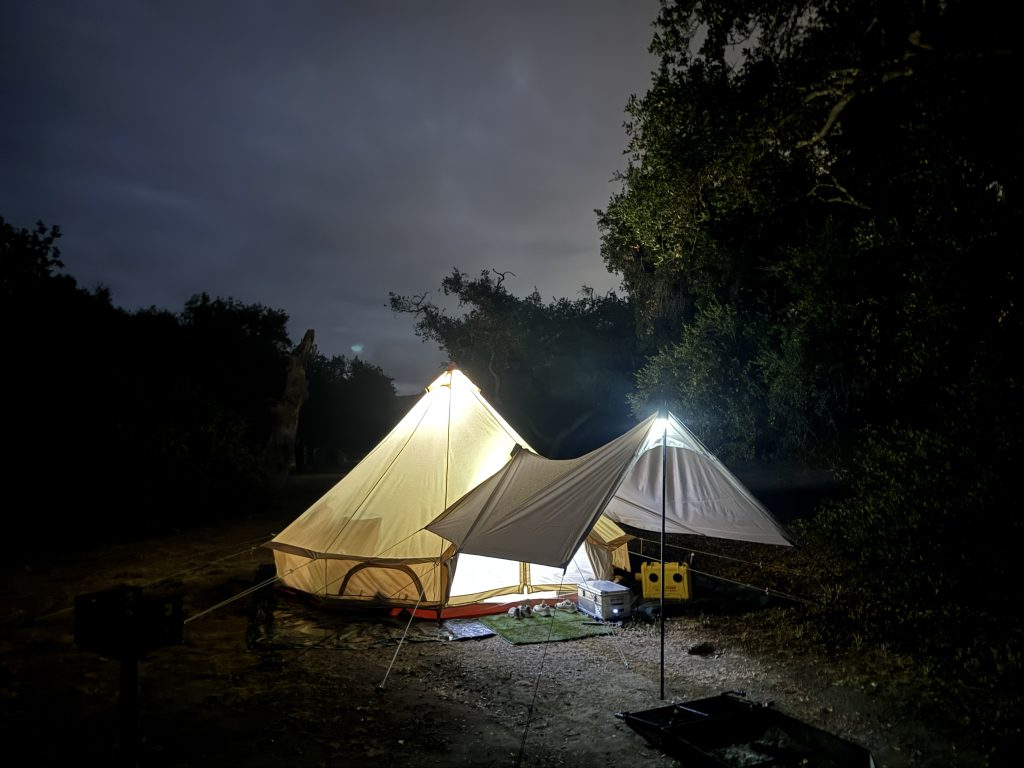
The Stout Bell Tent Pro Edition is the right canvas bell tent for the camper who values build quality over the cheapest sticker. Three months of testing the 16 ft dual door throughout Southern California with my family confirmed the heavyweight canvas, premium zippers, reinforced stitching, and excellent mesh quality earn the price. For overlanders, weekend basecamp families, and dispersed-camping setups in California’s mix of wind, heat, and rain, this is a buy-once decision rather than a replace-every-three-seasons one.
Value at $1,223 and Which Size to Pick
Two trade-offs deserve flagging. First, the sewn-in window mesh removes the option of a fully open window. Second, the stray thread tails from the final stitching pass undermine the boutique feel slightly, even though they do not affect performance. Neither is a deal-breaker, but both are worth knowing before you spend $1,223.
For the price, the value math is very favorable. Comparable premium canvas bell tents in this size class run higher, and the budget tier trades canvas weight and stitching for a lower entry price. The Pro Edition lands in the sweet spot: premium materials, included stove jack, dual doors, and reflective guy lines, all at mid-tier money.
If you want the bigger footprint for groups or extended stays, step up to the 6M Pro. Conversely, the 16 ft dual door Pro Edition is the right call when you want the same build quality at a smaller, more vehicle-friendly size. After three months in the field, my recommendation is straightforward: buy with confidence, season the canvas before your first hard rain, and budget for the stove or floor inserts as a bundle at checkout.
Ready to Buy
Order Your Stout 16 ft Pro Series Bell Tent Today
US-based service. Bundle a stove, footprint, or floor insert at checkout for package pricing and skip the aftermarket markup.
Frequently Asked Questions
How long does the Stout 16 ft Bell Tent Pro Edition take to set up?
For two people working without rushing, my pitch time settled into a 15-to-20-minute window after two practice runs, and that is solo time for me. Solo setup is doable but takes longer if you have never set up one before, since the center pole raise asks for one hand to hold while the other walks the canvas into position. After the first couple of pitches, the process becomes routine.
Is the canvas waterproof out of the box?
The canvas ships with a water-resistant and mildew treatment. However, you should season the tent before relying on it in a storm. Spray it down and let it fully dry; the stitching then swells to seal the needle holes. After one wet-and-dry cycle, the 10.06 oz canvas sheds steady rain without leaking at the seams. During our heavy rain test in Big Bear, the tent stayed dry inside through the night.
Does the 16 ft dual door bell tent have a stove jack?
Yes. The Pro Edition includes an adjustable 3 to 6 inch stove jack positioned in the canvas wall to clear the center pole. I did not run a stove during my test, but the jack and the heavy 10.06 oz canvas make this tent stove-ready out of the box, with no aftermarket modifications required.
Are the window screens removable for unobstructed airflow?
No. The mesh screens are sewn permanently into the window frames behind the exterior canvas flaps. You open the canvas zipper to expose the screen for airflow, but the screen itself never unzips or removes. For most camping use, the airflow is sufficient. Still, anyone prioritizing unobstructed views or pet access should look at competitors with screen-removable windows.
How does the Stout 5M Pro compare to the Stout 6M Pro?
The 6M Pro adds roughly 40% more floor area and reads as the right pick for groups of five or more or for anyone planning to live in the tent for weeks at a time. By contrast, the 16 ft Pro is the right size for couples, small families, and solo campers who value pack size and one-person setup feasibility. Both share identical canvas, zippers, mesh, and stove jack quality.
What is the warranty on the Stout 16 ft Pro Series tent?
For exact warranty terms, check the Stout Tent product page at the time of purchase, since terms occasionally update with new model releases. Stout Tent is US-based and offers package pricing on stoves, inner tents, and footprints at checkout.