


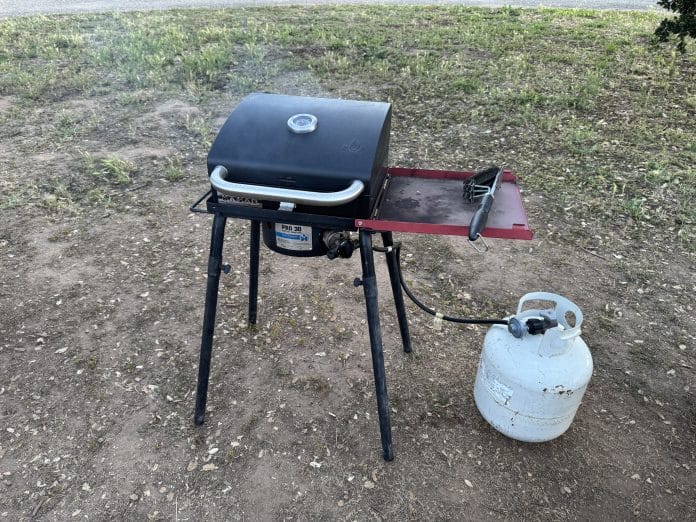


Camp Chef Pro 30: Yes, buy it if you cook seriously at camp.
Three years of overland trips and group breakfasts later, this single burner still earns 80% of our cook time, and it stays at the budget end of the two-burner field.
Quick Verdict
Rating: 4.5 / 5. The Camp Chef Pro 30 Single Burner Stove is the workhorse I reach for when one burner is enough and 30,000 BTU is the floor, not the ceiling. After 3 years of overland trips, tailgates, group breakfasts, and quiet weeknight dinners, the Pro 30 has earned roughly 80 percent of my cook-time at camp. Importantly, the 14-inch accessory ecosystem (BBQ box, griddle, pizza oven) is the real value driver. The base unit is matchlight only on the original Pro 30 SB30D, and a single bolt that rattled loose from the gas valve assembly after 3 years of washboard roads is the one durability flag worth knowing about.
Pros
- 30,000 BTU cast-aluminum burner with no detectable hot spots after 3 years
- 14-inch accessory ecosystem (BBQ box, griddle, pizza oven) delivers a full camp kitchen
- Folding right-side shelf is genuinely useful for prep and condiments
- Detachable legs let you run it freestanding or as a tabletop unit
- Carry bag has held up across 3 years of being stowed and pulled in and out of a tub
- Smooth flame control from low simmer to hard sear
- Bulk propane via included 3 ft hose and regulator
Cons
- No built-in ignition on the original SB30D; the newer Pro 30X solves this
- Gas valve bolt rattled loose after 3 years of corrugated dirt roads (easy fix)
- 23 lb is heavy for ultralight or backpack kits
- One burner limits parallel cooking on group trips
- Side shelf has a slight downhill angle, flagged in early Amazon reviews
- 1-year manufacturer warranty is short relative to the price point
The price reflects the cast-aluminum burner, the full 14-inch accessory ecosystem, and 3 years of real-world durability. Cheaper single-burner box-store stoves do not match those three together.
In This Review
- Why I Picked up the Pro 30
- Verified Specs
- 3 Years of Real Use Across Use Cases
- How the Pro 30 Cooks
- BBQ Box and Griddle: The Two Attachments You Will Use Most
- Build Quality and the 3-Year Durability Report
- What I Wish Was Different
- What Other Owners Are Saying
- Pro 30 vs Pro 30X: Worth the Upgrade?
- Where the Pro 30 Fits in Camp Chef’s Lineup
- Who Should Buy It
- FAQ
- Final Verdict
Why I Picked up the Pro 30
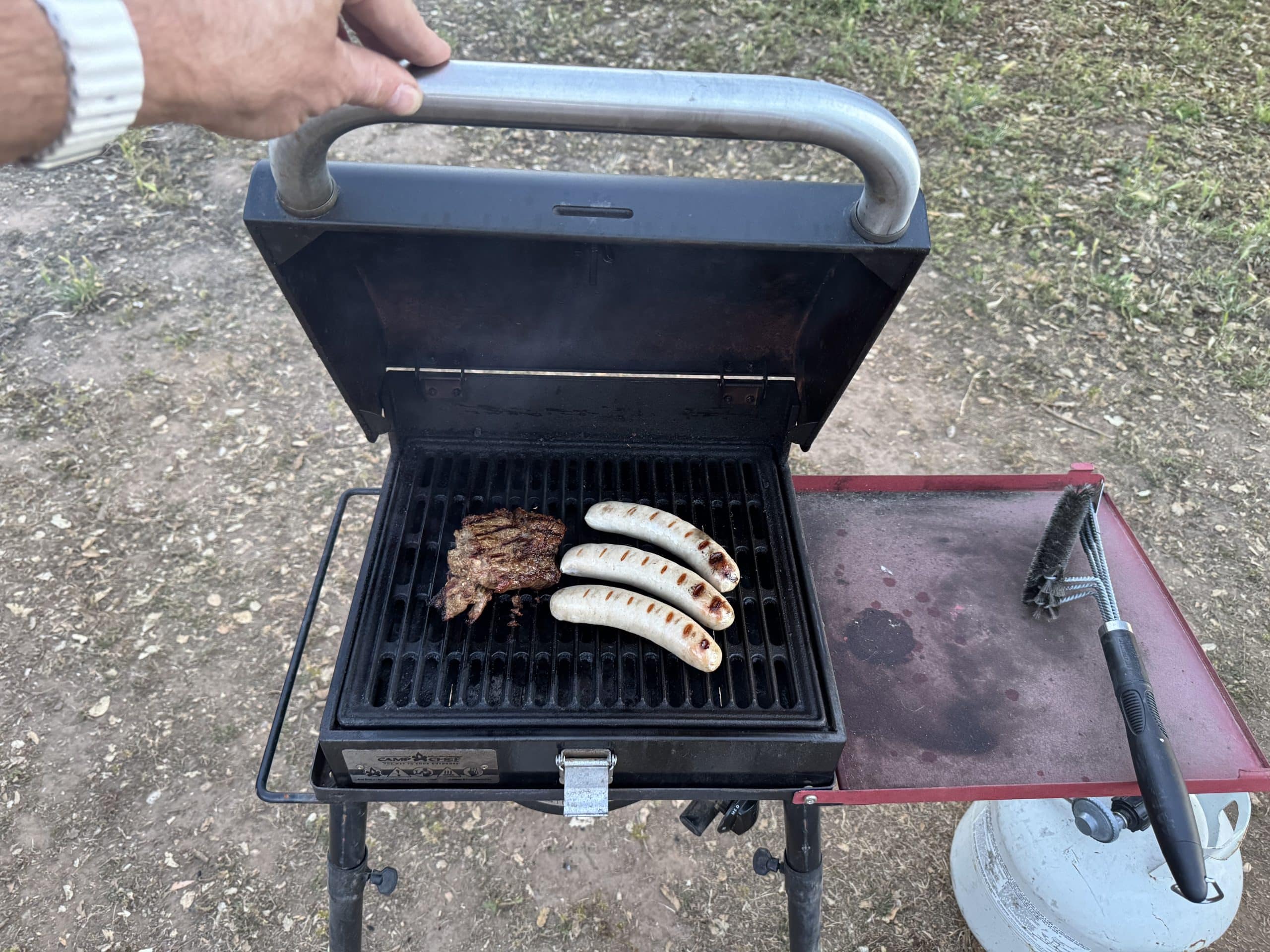
The hardest part of building a camp kitchen is choosing between specialization and versatility. Specifically, you can carry a small two-burner box for boiling water and a separate grill for searing, or you can find one platform that does both well. Three years ago, the Camp Chef Pro 30 was the answer to that second path: one burner with the BTU output to sear, the leg height to stand and cook, and an accessory ecosystem deep enough to swap from a flat-top griddle to a closed BBQ box without buying a second unit.
In practice, that decision has paid off. Generally, the Pro 30 has cooked roughly 80 percent of my meals on the road across 3 full seasons of overlanding, tailgating, group cooks, and quiet solo dinners. As a result, this review is a real-ownership read, not a single-weekend writeup. For broader category context on how a stove fits into the rest of an overland kit, see our field-tested camp cooking guide.
Camp Chef Camp Chef Pro 30 Single Stove - 1-Burner Camp Stove - Ultra Portable Gas Stove for Outdoor & Camping Gear - 231 Sq In Cooking Area
The single-burner overland stove that turns into a full camp kitchen once you add the BBQ box or griddle.
- 30,000 BTU cast-aluminum burner heats edge-to-edge with no hot spots
- 14-inch accessory ecosystem swaps in a BBQ box, griddle, or pizza oven in 30 seconds
- Detachable legs run it freestanding at table height or flat as a tabletop unit
- Folding side shelf holds a plate and condiments during prep
- Matchlight only on the original SB30D; no built-in ignition
- 23 lb body is heavy for backpack or ultralight kits
Camp Chef Pro 30: Verified Specs
| Specification | Value |
|---|---|
| Model | Pro 30 (SB30D) |
| Burner output | 30,000 BTU per hour, single cast-aluminum burner |
| Cooking surface | 14 in x 16.5 in (231 sq in) |
| Weight | 23 lb |
| Leg height | 31 in (detachable) |
| Fuel | Bulk propane via 3 ft hose and regulator (included) |
| Ignition | Matchlight (Pro 30X adds matchless ignition) |
| Side shelf | Folding, mounts on right side |
| Accessory compatibility | Camp Chef 14 in system: BBQ box, griddle, pizza oven, smoker, deluxe BBQ |
| Warranty | 1 year limited (Camp Chef) |
| MSRP | $149.99 |
Specs verified directly against Camp Chef’s official Pro 30 product page and the Amazon listing as of May 2026. The model SB30D is the original Pro 30 (matchlight); the newer Pro 30X is sold separately and adds battery-powered matchless ignition plus an appliance-style temperature control knob.
3 Years of Real Use Across Use Cases
Most camp-stove reviews stop at unboxing and a boil test. By contrast, this one runs across 3 full seasons. Generally, the Pro 30 is a well-diversified cooking unit, and I have leaned on it across every use case an overland-style cook puts a stove through.
Overland and Vehicle-Based Camping
First, the Pro 30 lives in my rig. When the trip calls for a real camp kitchen, the legs go on, the hose connects to a five-gallon propane tank, and dinner happens. Notably, on washboard forest service roads the unit has bounced for hours without losing a leg or a knob. As a result, the detachable legs slide into the body for transport and the whole package fits behind the rear seat without drama. Pair it with a 12V overland fridge and you have a real cook-and-store kitchen on the road.
Tailgating and Developed Campgrounds
For tailgating, you skip the legs entirely. Specifically, the Pro 30 sits flat on a folding table at 8 inches tall, which puts the burner at a comfortable height and frees up the lower space for a cooler. Importantly, the folding side shelf is the underrated hero here. In practice, it holds a plate, a bottle of marinade, and a set of tongs without crowding your prep zone.
Group Cooking for 4 or More
With the griddle attached, the Pro 30 turns into a true group breakfast machine. Specifically, the 30,000 BTU burner heats the entire 14 by 16.5 inch surface evenly, which matters when you are running bacon, eggs, and hash browns at the same time for a hungry crew. For dinner, swap the griddle for a 12-inch skillet and pull from our list of cast iron skillet meals built for camp.
Solo and Couple Cooking
Even on a solo trip, the Pro 30 earns its spot. Generally, the high BTU output gets water boiling quickly for coffee or pasta. For a couple, one pot of sauce and a side pan on the BBQ box turns the unit into a flexible two-zone cook setup.
How the Pro 30 Cooks
Heat Distribution and Flame Control
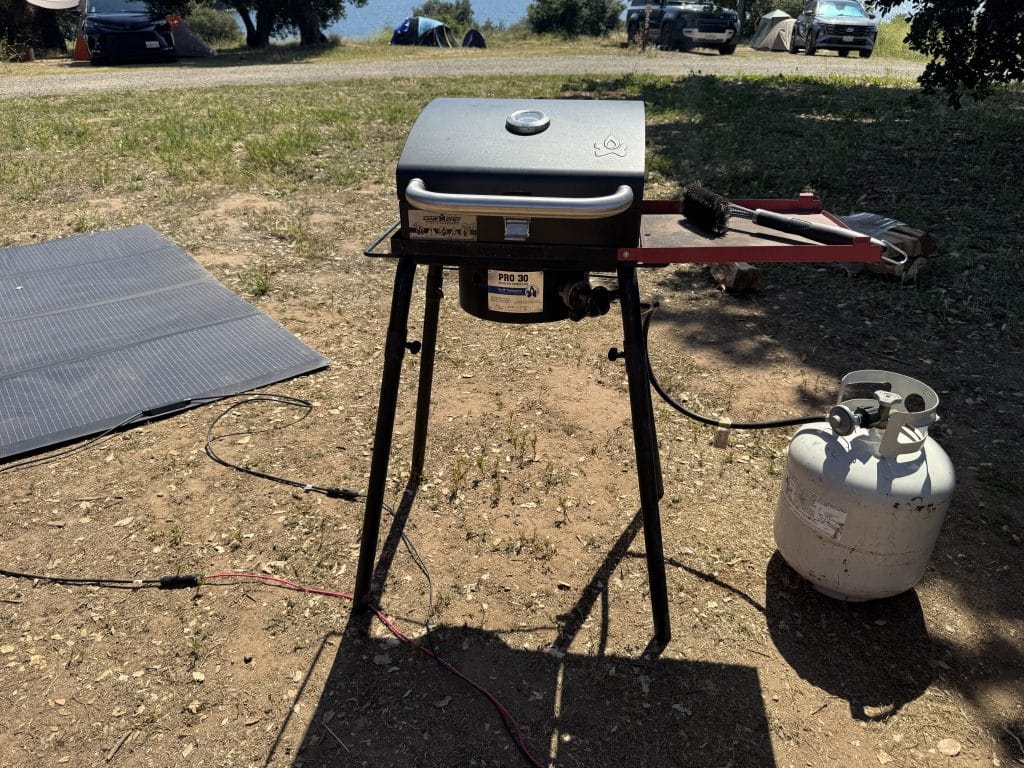
Most single-burner camp stoves have hot spots you compensate for with pan placement. This one does not. Specifically, the cast-aluminum burner spreads heat evenly enough that a cast iron skillet sears at the same temperature edge to edge. As a result, flame control is smooth from a low simmer to a hard sear, with no jumpy mid-range like you see on lighter folding stoves.
BTU Output in Real Use
Importantly, the 30,000 BTU rating is not a marketing number. You feel it. In practice, water hits a hard boil quickly even on cooler mornings, and the burner holds a steady simmer for soups and stews without cycling. Where lower-output single burners struggle at altitude, the Pro 30 pushes through cooler air and thinner pressure with no real falloff in everyday cooking.
The Missing Ignition System
The original Pro 30 SB30D is matchlight only. Specifically, you hold a long-stem lighter near the front lighting port, turn the knob to LOW, and the burner ignites. After 3 years I have the muscle memory down, but I will say it: a built-in matchless ignition would be nice. Notably, the newer Pro 30X addresses this directly with a battery-powered matchless ignition built into the knob. More on the comparison below.
BBQ Box and Griddle: The Two Attachments You Will Use Most
The base stove is solid. However, the accessory ecosystem is what makes the Pro 30 worth its price. Specifically, I run the BBQ box and the griddle on roughly 80 percent of my trips, and they swap in 30 seconds. For a deeper look at the full system, see our breakdown of the Camp Chef accessory ecosystem. Below is how each one earns its place.
Camp Chef BBQ Grill Box (14 in)
First, the BBQ box turns the Pro 30 into a small propane grill. It is built around a porcelain-coated cast iron grate, a heat diffuser plate, and a temperature gauge in the lid. On the road, it is what I reach for when I want grill marks on a steak or a burger without dragging a full grill out of the rig. As a result, the lid holds heat well enough to roast or bake when you want to. Notably, it is heavier than the griddle, so storage is a real consideration if your kit space is tight.
Camp Chef Griddle (14 in)
Second, the griddle is the workhorse. A flat-top steel surface sits directly on the burner ring and turns the Pro 30 into a full flat-top cooktop. For group breakfasts, this attachment alone is worth the price of the system. In practice, bacon renders evenly, eggs slide off without sticking once you have it seasoned, and the heat spreads edge to edge thanks to the underlying burner pattern. Importantly, the griddle weighs less than the BBQ box and stows flat against the side of a storage tub.
Other Attachments Worth Knowing About
Camp Chef builds three more attachments built around the same 14-inch system: the Italia pizza oven, the smoker box, and the deluxe BBQ box. Notably, the pizza oven earns strong praise in long-term reviews for hitting real pizza temperatures and turning out thin-crust pies quickly. I have not run mine through a long enough test to put my own number behind it, but the consensus across multi-year ownership reports is strongly positive. By contrast, the smoker box and deluxe BBQ are more niche and less worth the storage cost for most overland kits.
Build Quality and the 3-Year Durability Report
Camp Chef has a reputation for tank-built stoves. After 3 years and a few thousand miles of washboard, mine has earned the reputation, with one small exception worth flagging. Below is the honest report.
The Gas Valve Bolt: An Honest Flag
On my most recent trip, I noticed a small bolt had vibrated out of the gas valve assembly. Specifically, this is the part of the stove housing the knob you turn from off to high. The fix was simple: a replacement bolt from a hardware bin at home, threaded back in with a dab of blue Loctite to keep it seated. As a result, the stove has worked normally since.
Importantly, it is worth flagging because 3 years of corrugated dirt roads will work on any threaded fastener without thread locker. By contrast, if you carry the Pro 30 in a vehicle seeing rough roads regularly, I would suggest pulling the side panels once a year and checking every visible bolt with a 4 mm hex driver. Notably, a two-minute preventive check would have caught mine before it backed out.
Carry Bag, Legs, and Side Shelf
The carry bag has held up reasonably well. Specifically, the zipper still runs cleanly after 3 years of being dragged in and out of a hard-side storage tub, and the bag’s nylon body shows wear at the corners but no failures. Additionally, the detachable legs lock with thumb screws and have not stripped. The folding side shelf is rock solid. Notably, one early Amazon reviewer flagged a slight downhill incline on the shelf, which I have noticed but never had cause a real problem.
What I Wish Was Different
After 3 years, here is the short list of things Camp Chef should improve on the original Pro 30:
- Add an ignition system. The matchlight design is dated. Importantly, the Pro 30X solves this; the original Pro 30 still ships without one.
- Loctite the gas valve bolts at the factory. Specifically, a 10-cent dab of thread locker would prevent the failure mode I experienced.
- Stiffen the side shelf hinge. The hinge works, but a slightly stiffer detent would keep it from flopping when you set down a heavy plate.
- Include a cover for the burner when stowed. In practice, spiderwebs find their way in during off-season storage.
What Other Owners Are Saying
To validate the pattern beyond my own use, I checked public owner reviews on Amazon and the Camp Chef product page. Generally, the picture held.
- First, the Amazon listing carries a 4.6 / 5 average across 561 reviews as of May 2026, with build quality and functionality leading the positive comments.
- Second, the most consistent owner complaint across the public reviews is about the legs not always securing tightly the first time you set them up. In my experience, hand-tightening the thumb screws fully resolves this.
- Third, several owners mention the slight downhill angle on the folding side shelf. As noted above, I have observed this but have never had it cause a real problem in use.
Owner review counts and rating averages are pulled directly from the public Amazon product listing for the Pro 30 SB30D. Quoted complaints reflect the most common themes across visible reviews, not specific named users.
Camp Chef Pro 30 vs Pro 30X: Worth the Upgrade?
Camp Chef now sells the Pro 30X alongside the original Pro 30. Notably, the differences are meaningful but narrow.
| Feature | Pro 30 (SB30D) | Pro 30X |
|---|---|---|
| Burner output | 30,000 BTU | 30,000 BTU |
| Cooking surface | 14 in x 16.5 in | 14 in x 16.5 in |
| Ignition | Matchlight | Matchless (battery) |
| Knob style | Standard | Appliance-style temperature control |
| Accessory compatibility | 14 in system | 14 in system |
If you do not own a Pro 30 yet and the price gap is small, the Pro 30X is the smarter buy. Specifically, the matchless ignition and refined temperature dial address the two real complaints with the original. By contrast, if you already own the original Pro 30, there is no reason to upgrade. Instead, buy the BBQ box or griddle.
Where the Pro 30 Fits in Camp Chef’s Lineup
Camp Chef builds a wide camp-cooking range, from single-burner stoves to two-burner Explorer units, all the way up to multi-burner Pro 90 systems. Specifically, the Pro 30 sits at the entry point of the system: one burner, one cooking zone, full 14-inch accessory compatibility. Importantly, the 14-inch attachments are shared across most of Camp Chef’s single-burner and Explorer-class stoves, so anything you buy for the Pro 30 carries over if you upgrade to a larger stove later.
For the broader Camp Chef accessory picture, see our roundup of the best Camp Chef grill accessories for overlanding. Additionally, for Dutch oven recipes you can run on the Pro 30 burner ring, our Dutch oven camping recipes roundup is the place to start.
Who Should Buy the Camp Chef Pro 30
Buy it if you fit any of these:
- You drive to camp and want a single-burner stove with real BTU output
- You want one tool that scales across overlanding, tailgating, and backyard cooking
- You plan to add the BBQ box or griddle in the next 6 to 12 months
- You value a full accessory ecosystem more than the absolute lowest price
- You want a 3-year-plus durable cook surface, not a 1-season throwaway
Skip it if any of these apply:
- You backpack and need ultralight weight
- You cook for groups large enough to need two burners running at once
- You want a built-in ignition out of the box (look at the Pro 30X instead)
- You only ever boil water and a $40 entry-level stove would do
Therefore, if you cook seriously and drive to your camp, the Pro 30 is the buy. Ultimately, if you want the same stove with built-in ignition, spring for the Pro 30X.
FAQ
Does the Camp Chef Pro 30 work with 1-pound propane bottles?
Out of the box, no. Specifically, the Pro 30 ships with a 3 ft hose and regulator designed for bulk propane (a 5-gallon or 20-pound tank). However, you can add a separate Camp Chef adapter to run it on 1-pound canisters. For overlanding, the bulk-propane setup is the better choice anyway because runtime is dramatically longer.
How tall is the Pro 30 with the legs on?
The leg height is 31 inches, which puts the burner at a comfortable cook height for an average-sized adult. Without the legs, the body sits about 8 inches tall and rests directly on a table.
Will my old Camp Chef accessories fit the Pro 30?
If your old accessories are part of the 14-inch Camp Chef system, yes. Specifically, the Pro 30 uses the same 14-inch mount as the Explorer 1-Burner and several other Camp Chef stoves. By contrast, older 16-inch accessories will not fit.
How long does a 20-pound propane tank last on the Pro 30?
Runtime depends on how hard you run the burner. At wide-open 30,000 BTU output, a 20-pound tank empties faster than most owners expect. In real camp use with mixed simmer and sear, you will get many days of cooking out of a single tank. Generally, bulk propane is the smarter choice for any trip longer than a quick weekend.
Is the Pro 30 worth the upgrade from a basic two-burner box-store stove?
If you cook seriously and want attachments, yes. Specifically, the Pro 30 outputs nearly twice the BTU per burner of a typical entry-level two-burner camp stove, and the accessory ecosystem is the dividing line. By contrast, a $60 box-store stove is fine for boiling water. The Pro 30 at $150 is a real outdoor cook surface.
Will the Pro 30 handle a heavy cast iron Dutch oven?
Yes. Specifically, the cast-aluminum burner ring and steel grate hold a 12-inch loaded cast iron Dutch oven without flexing. Importantly, the Pro 30 is built around the same 14-inch system Camp Chef uses on its larger stoves, so the structural rating is more than adequate for serious cookware.
Final Verdict: Camp Chef Pro 30 Earns 4.5 / 5
If I had to keep one camp stove and let the rest go, the Pro 30 is the one I would keep. After 3 years of washboard roads, group breakfasts, and solo weeknight dinners, it still heats like it did the first week. Generally, Camp Chef stoves are consistent across the lineup; specifically, they are well made and they do what you need a stove to do.
Above all, the Pro 30 earns roughly 80 percent of my cook-time at camp for three reasons: first, the 30,000 BTU burner runs even and hot; second, the 14-inch accessory ecosystem turns one stove into a full kitchen; and finally, the build quality has earned its keep across 3 years of overland use. Therefore, if you cook seriously, drive to your camp, and want a stove you will own for a decade, this is the buy. Importantly, if you want the same stove with built-in ignition, spring for the Pro 30X. Either way, the BBQ box and griddle attachments are where the system pays for itself.
Related Camp Cooking Reviews on 4wdTalk
- The Best Camp Chef Grill Accessories for Overlanding
- Camp Cooking for Overlanders: The Field-Tested Guide
- Cast Iron Camping Recipes: 20 Skillet Meals for Overlanders
- Dutch Oven Camping Recipes: 25 Overland-Tested Meals
- Best Overland Fridge/Freezers of 2026
Tags: Camp Chef, Pro 30, single burner camp stove, propane camp stove, 30000 BTU stove, BBQ box, griddle, overland cooking, camp kitchen, 3-year review