



You pull into camp later than expected. The sun is fading, the wind is picking up, and you still need to level the trailer, deploy the awning, and set up the kitchen. In those moments, your setup routine either flows smoothly or feels chaotic. More often than not, the difference comes down to one overlooked detail: camp lighting.
Most people think lighting is about brightness. If it turns on and floods the area with white light, it must be good enough. But after years of camping and overlanding, I have found that the right lighting strategy saves more time than any fancy tool or accessory. When your lighting works with you instead of against you, setup becomes methodical and calm rather than rushed and frustrating.
Proper camp lighting is about control, placement, and predictability. When you dial those in, you reduce mistakes, cut setup time, and preserve your energy for the part that matters most: actually enjoying camping!
Let’s break down exactly how lighting impacts efficiency and how to make it work for you.
Table of Contents
- Why Lighting Strategy Matters More Than Lumens
- Common Camp Setup Bottlenecks After Dark
- Task Lighting vs Ambient Lighting
- The Role of Adjustable Brightness in Faster Setup
- Why Color Temperature Impacts Efficiency
- Reducing Setup Mistakes with Consistent Lighting
- Modular Lighting Systems and Long-Term Efficiency
- Real-World Camp Scenarios Where Lighting Saves Time
- Balancing Simplicity and Capability
- Lighting as Part of Your Camp Workflow
Why Lighting Strategy Matters More Than Lumens
When people shop for camp lighting, they often focus on lumen ratings. Higher numbers feel reassuring. Yet brightness without direction and control often slows you down. Harsh light creates glare, washes out depth perception, and casts sharp shadows in the very areas where you need clarity.
Effective lighting is intentional. It targets work zones such as leveling jacks, cooking surfaces, or storage drawers. Instead of blasting the entire campsite with light, it distributes illumination where tasks happen. This reduces wasted motion because you are not constantly repositioning lights or grabbing a headlamp.
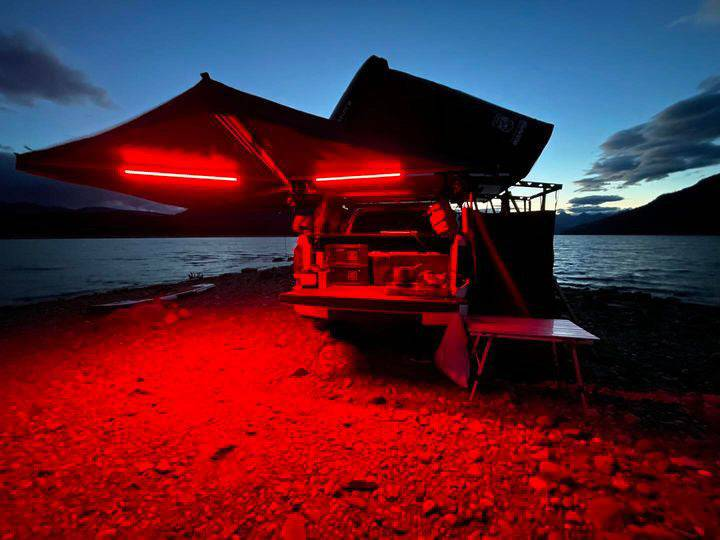
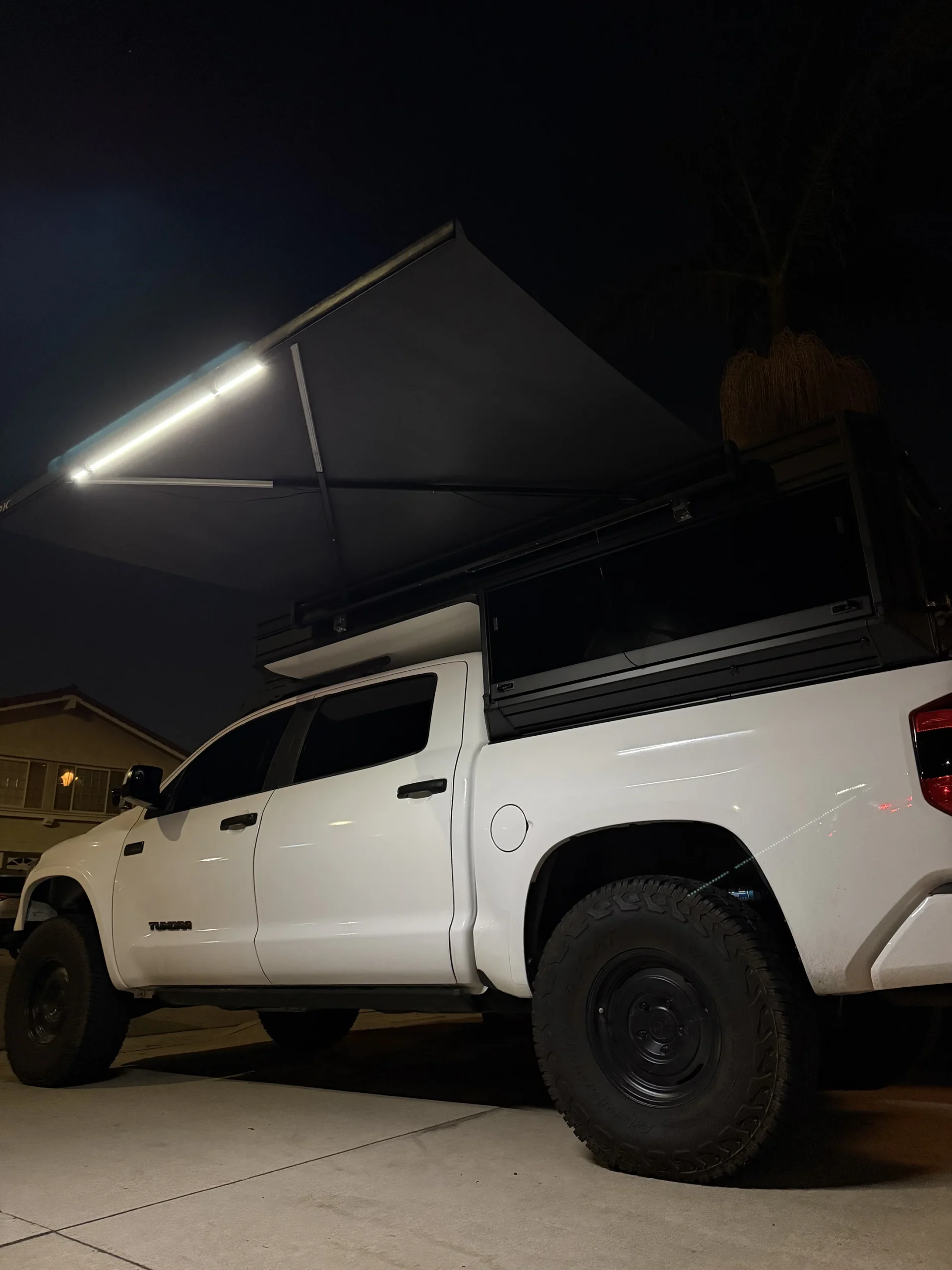
In my own setups, I have found that a few well-placed strip lights under an awning and focused pod lights near the wheels outperform a single high-output floodlight. The goal is not maximum brightness. The goal is a smooth workflow.
When you approach camp lighting as part of your system rather than an accessory, you begin designing it around efficiency instead of spectacle. That mindset alone changes how quickly camp comes together.
Common Camp Setup Bottlenecks After Dark
Think about where your setup usually slows down. Leveling a trailer often requires multiple trips from one side to the other. If shadows hide your bubble level or blocks, you repeat steps. That costs time.
Deploying a 270-degree awning in fading light can also create friction. You fumble with arms and tension points because visibility is uneven. If your lighting is mounted too high or too far back, the working area remains dim.
Organizing a camp kitchen is another common bottleneck. Searching for utensils, spices, or tools in poorly lit drawers turns a simple dinner into a scavenger hunt. Focused lighting inside storage compartments removes guesswork and speeds up meal prep.
Each of these moments seems small, but together they define how long setup takes. Strategic camp lighting eliminates these friction points and turns a 45-minute scramble into a predictable routine.
Task Lighting vs Ambient Lighting
Efficient camp lighting separates task lighting from ambient lighting. Task lighting supports specific actions such as cooking, tightening bolts, or organizing gear. It should be bright, direct, and positioned close to the work surface.
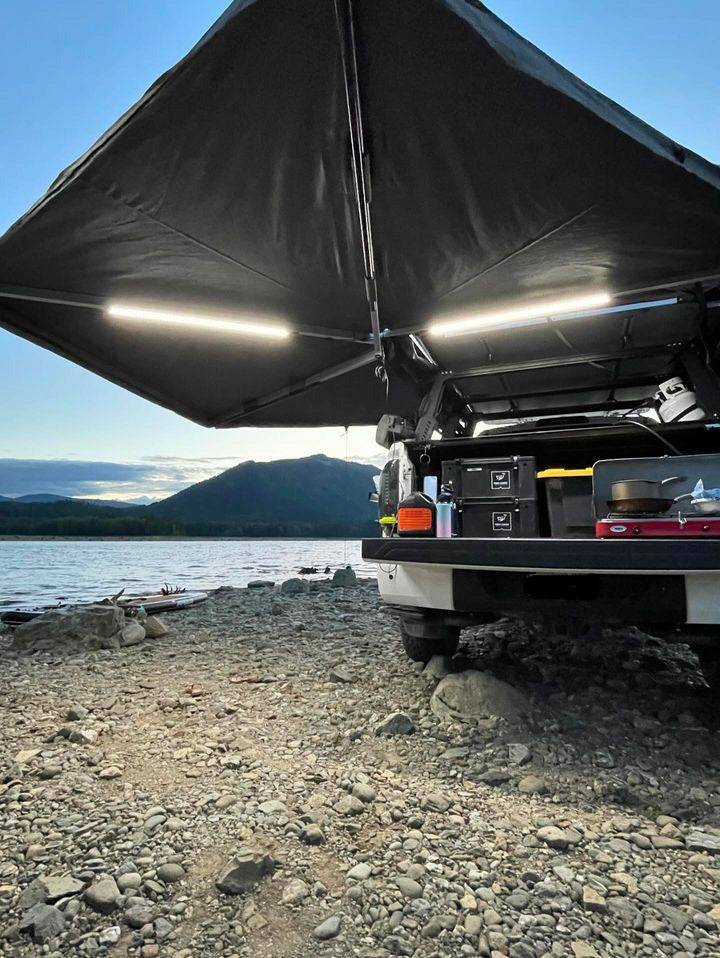
Ambient lighting, on the other hand, fills space. It makes camp feel comfortable and safe without overwhelming your eyes. Under-awning strip lights often serve this purpose once the heavy lifting of setup is done.
The key is flexibility. Systems that allow you to combine strip lights and compact pods create layered illumination. For example, products like GoFluxx tricolor strips under an awning paired with small FLUXX POD lights near wheels or steps allow you to separate work zones from general areas.
When both lighting types exist in harmony, you move through the setup logically. You finish tasks under bright, focused light, then transition to softer ambient light once camp is established.
The Role of Adjustable Brightness in Faster Setup
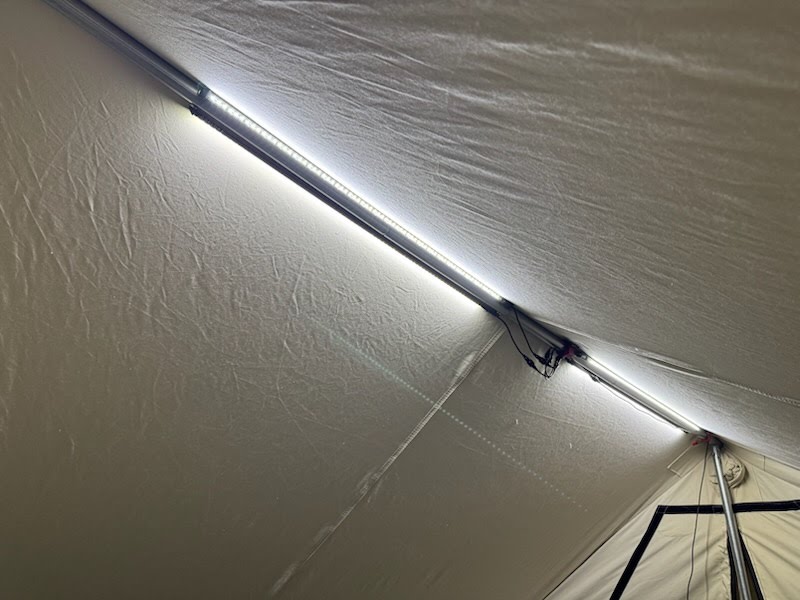
Dimming is one of the most underrated features in camp lighting. During initial arrival, you want full output. You need to see terrain, obstacles, and connection points clearly.
Once the trailer is level and the awning is deployed, that same intensity becomes excessive. Glare increases eye strain and reduces depth perception. Adjustable brightness lets you scale output to match the phase of setup.
I’ve noticed that dimmable systems reduce the mental fatigue of working at night. You aren’t fighting your own lights. Instead, you fine-tune them to support your pace. Integrated dimming built directly into the fixture, like in certain tricolor systems, simplifies this even further because you are not relying on separate controllers.
That ease of control shortens setup because you make fewer adjustments and spend less time troubleshooting lighting itself.
Why Color Temperature Impacts Efficiency
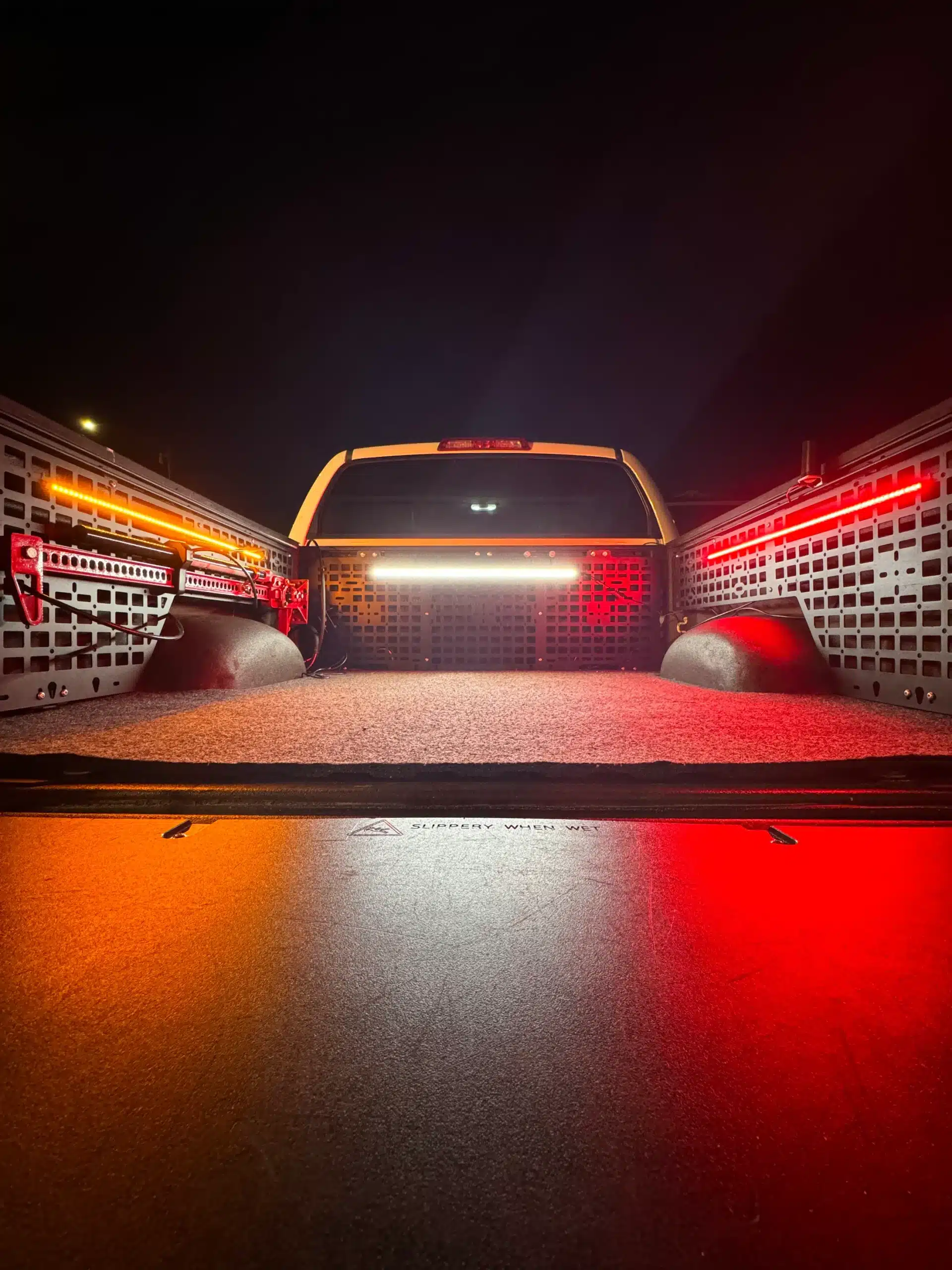
Color plays a significant role in camp lighting efficiency. Bright white light is excellent for detail work. It reveals texture, fasteners, and labels clearly.
Red light preserves night vision. When you switch to red during late-night adjustments, your eyes adapt faster when you look beyond camp. This reduces the need to pause and reorient yourself.
Amber light offers a softer glow that feels easier on the eyes. It also tends to attract fewer insects than bright white light, which keeps your cooking area more comfortable. Tricolor systems, such as those offered by GoFluxx, make these transitions simple without adding extra fixtures.
When you can match color to task, you eliminate inefficiencies caused by eye strain and constant adaptation. That alone improves how smoothly you move through setup and breakdown.
Reducing Setup Mistakes with Consistent Lighting
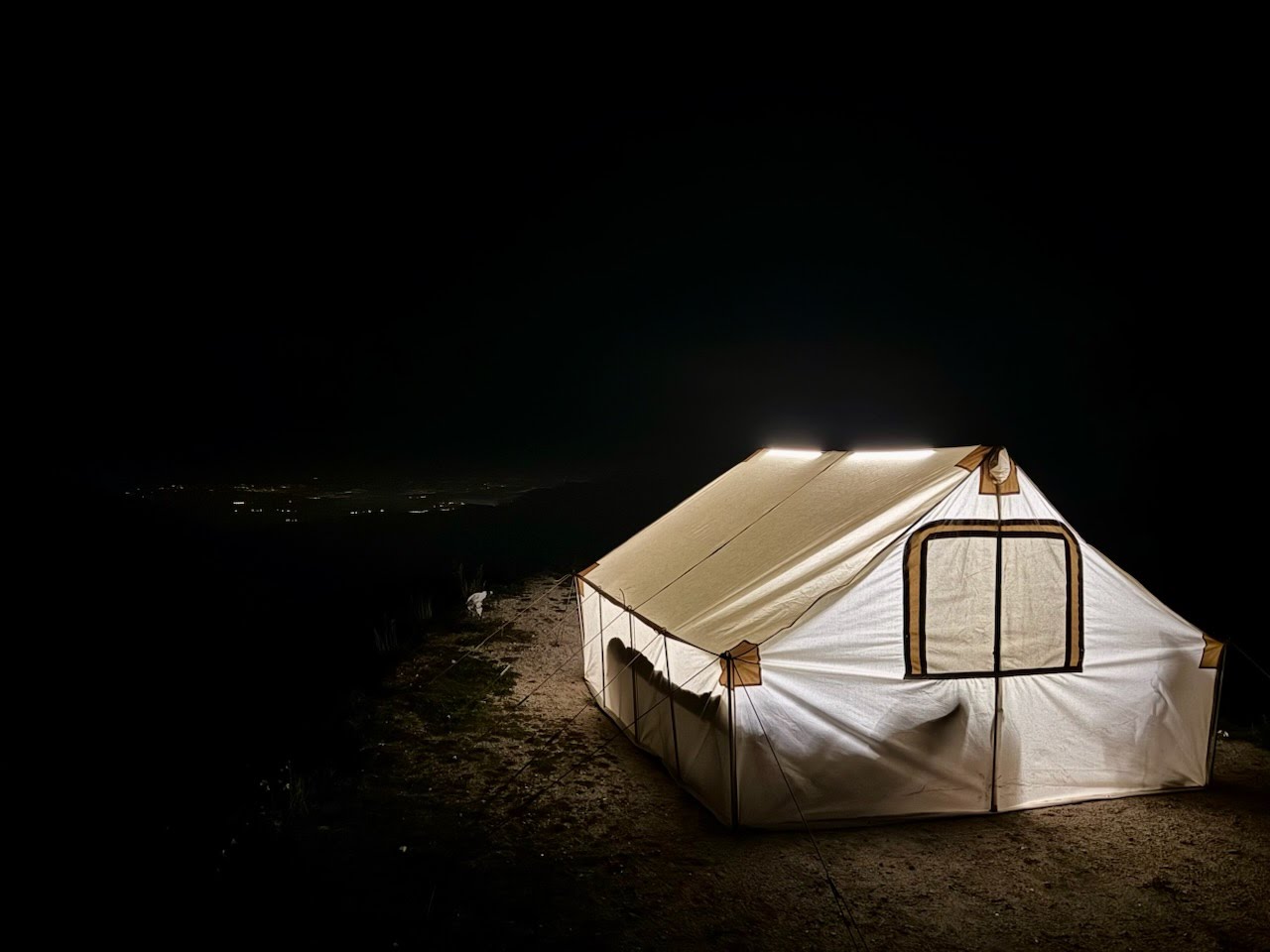
Consistency is an efficiency multiplier. When your camp lighting behaves predictably, you build muscle memory around your setup routine.
IP67-rated fixtures withstand dust and rain, which means you are not dealing with flickering or failed lights after rough roads. Secure mounting with aluminum housings reduces vibration issues that can loosen cheaper strips over time.
Memory functions also play a role. Lights that return to the last-used color and brightness remove repetitive adjustments. After a long drive, those small savings matter more than you might expect.
Reliable lighting reduces mistakes such as misaligned awning arms or poorly seated connectors. You see clearly the first time, which prevents rework and speeds everything up.
Modular Lighting Systems and Long-Term Efficiency
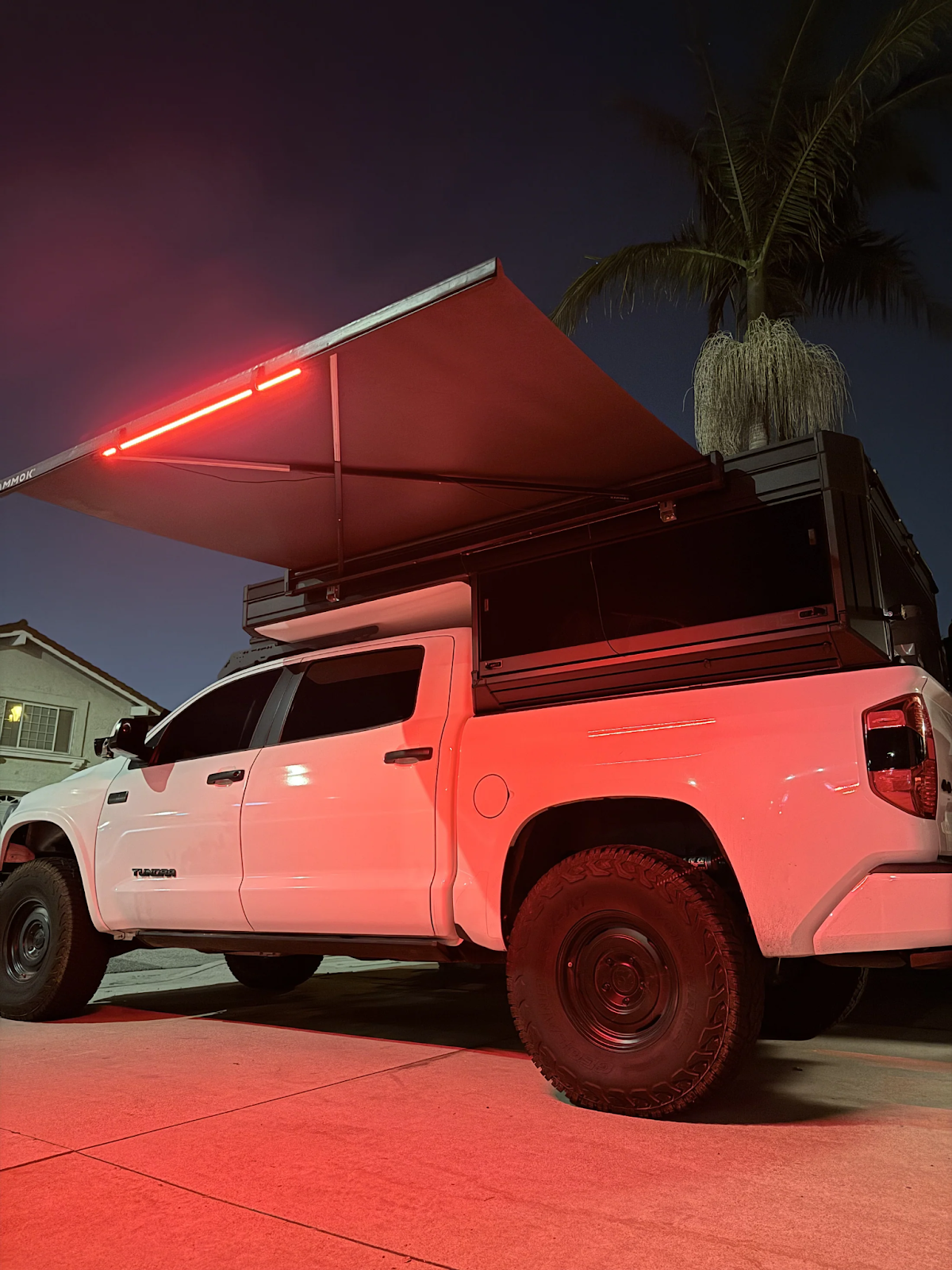
Camp builds evolve. You add a fridge, then drawers, then maybe a rooftop tent. If your lighting cannot expand with your setup, you end up rewiring from scratch.
Modular camp lighting systems use standardized connectors, splitters, and extension cables. This allows you to start small and expand as your needs grow. Systems like GoFluxx operate on 12V DC and integrate cleanly into vehicles and campers without complex adapters.
The long-term benefit is reduced frustration. You are not tearing apart panels to add one more strip light. Instead, you plug into an existing ecosystem and move on.
Efficiency is not just about tonight’s setup. It is about minimizing friction across years of trips.
Real-World Camp Scenarios Where Lighting Saves Time
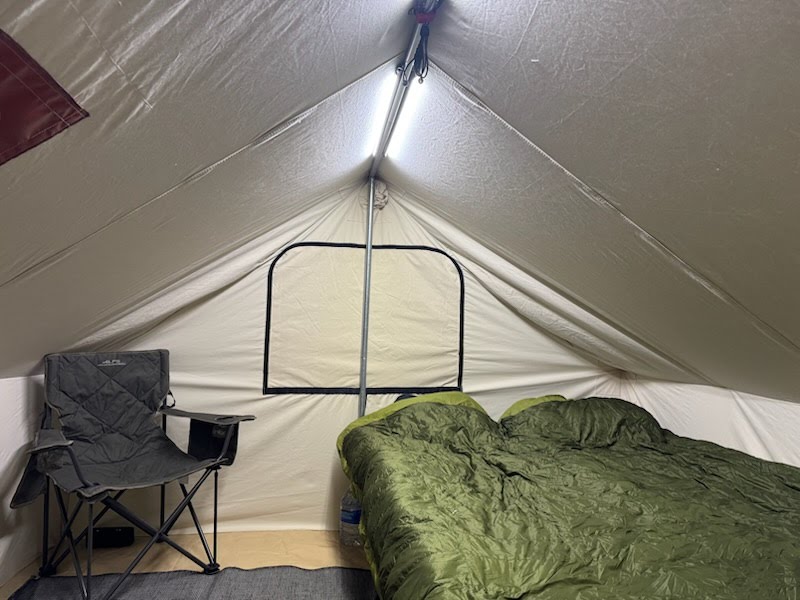
Arriving after sunset is the most obvious example. With well-placed camp lighting already mounted under your awning and along your trailer, you flip a switch and immediately see your work zones.
Breaking camp before sunrise offers another test. Focused red or dimmed amber lighting lets you pack quietly without blinding yourself or disturbing others. You move through teardown quickly because every latch and strap is visible.
Cooking in windy conditions also benefits from thoughtful lighting. Stable strip lights mounted securely resist vibration and keep illumination consistent while you work.
Even minor repairs, such as tightening a bracket or adjusting a hinge, become quicker when you have directional lighting instead of relying on a handheld flashlight. In each case, lighting shortens task time and reduces frustration.
Balancing Simplicity and Capability
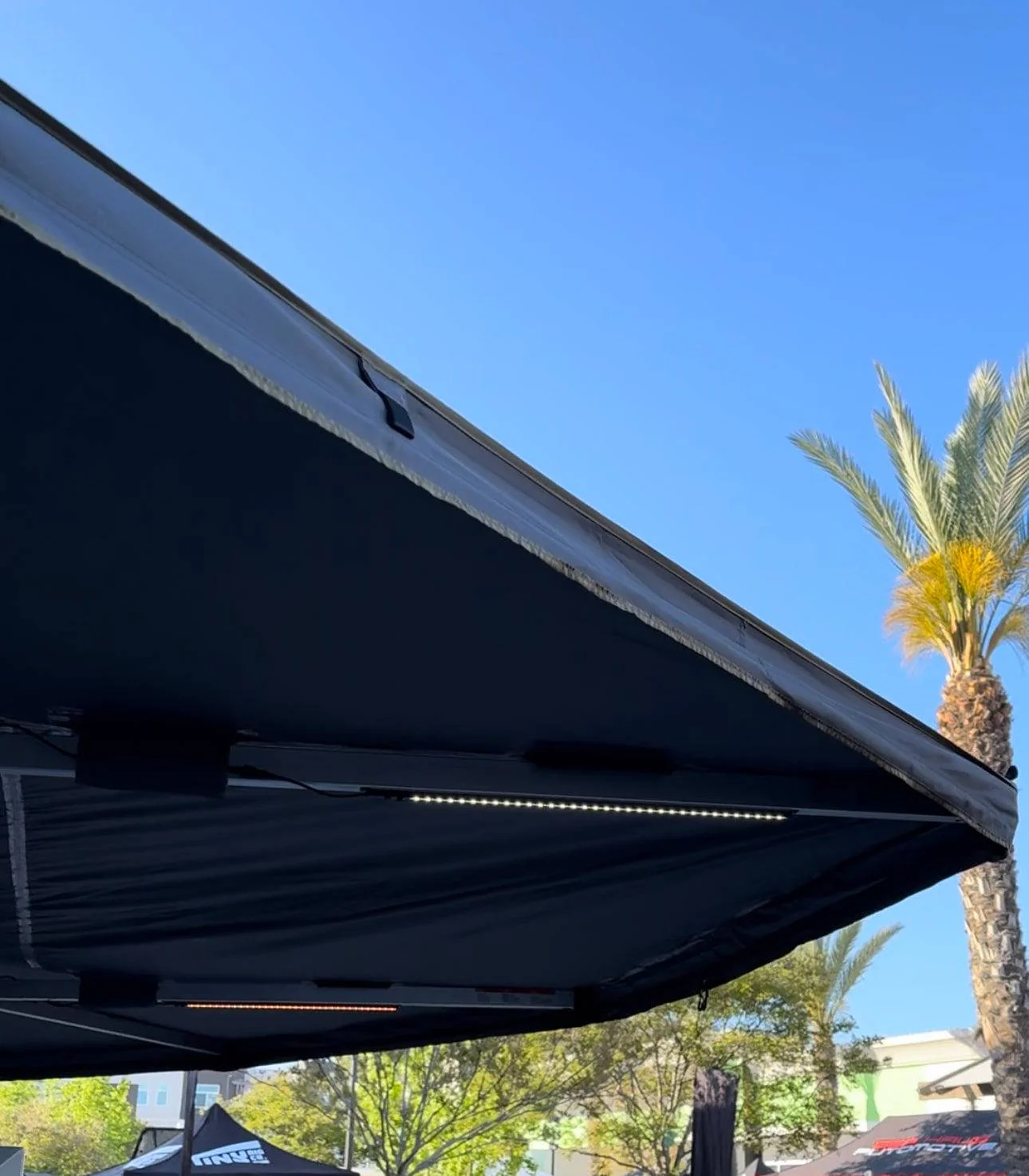
Not every camper needs a complex lighting setup. If your trips are short and mostly fair-weather, simple on-off white lights may be sufficient.
However, as your trips extend or your setup grows more involved, capability becomes valuable. Dimming, tricolor output, and modular expansion shift from luxury to practicality.
The key is choosing camp lighting that aligns with how you actually camp. For many overlanders, integrated systems that combine strips and pods provide flexibility without unnecessary complication.
Efficiency does not require excess. It requires thoughtful selection.
Lighting as Part of Your Camp Workflow
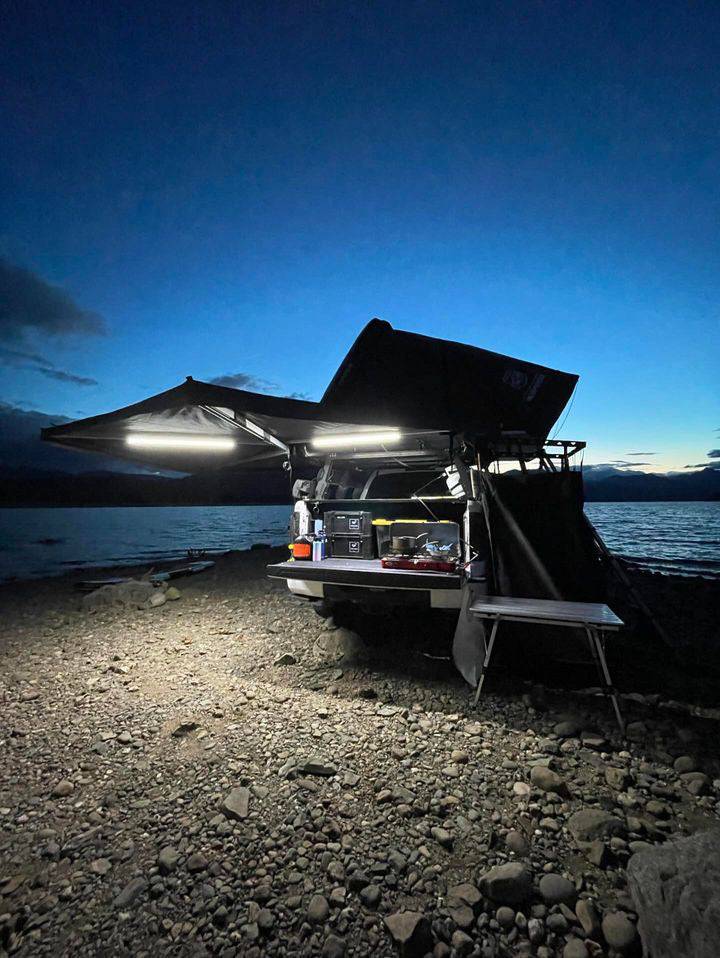
When you view camp lighting as infrastructure rather than decoration, your setup changes. You design lighting around how you move, cook, level, and relax.
Over time, this approach reduces stress at camp. You arrive knowing that visibility will not be a limiting factor. Your workflow becomes predictable, and that predictability saves time.
I’ve found that investing in proper lighting pays off every single trip. You finish setup sooner. You make fewer mistakes. You conserve energy for the experiences you came for.
Camp lighting may not be the most glamorous upgrade on your rig, but it is one of the most practical. When you have lighting that does its job and supports your workflow instead of competing with it, efficiency follows naturally. For me, GoFluxx hits the mark on all counts!
FAQ
How does camp lighting improve setup speed?
Proper placement, adjustable brightness, and targeted task lighting reduce repeated steps and mistakes, allowing you to complete setup tasks faster.
Is dimming really necessary for camping?
Dimming allows you to use full brightness during setup and lower output afterward, which reduces glare and eye strain while improving comfort.
Why is IP67 important for camp lighting?
IP67-rated lights resist dust and water exposure, ensuring reliable performance in rain, mud, and off-road conditions.
Are tricolor lights worth it?
Tricolor systems provide white for tasks, red for night vision, and amber for softer ambient light, increasing versatility and efficiency in camp.
Friendly disclaimer: Our articles may contain affiliate links that support us without costing you more, and sometimes we spice things up with sponsored content—but only for products we truly stand behind!