



Last updated: February 2026 | 10 min read
Hot tent camping combines the freedom of backcountry camping with genuine warmth in extreme conditions. If you’ve been curious about winter camping but worried about staying warm, a quality four-season tent with a wood stove changes everything. The learning curve is shallow, the comfort gains are massive, and you’ll wonder why you didn’t start sooner.
Table of Contents:
Ready to shop? Our guide to the best hot tents of 2026 compares eight four-season models side by side, from compact wall tents around $640 to fully loaded inflatables near $3,500.
What is a Hot Tent and Why They’re Gaining Traction
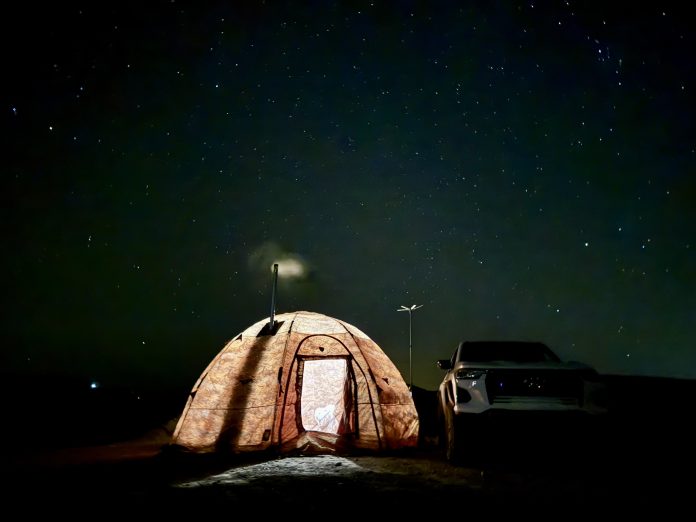
A hot tent is a four-season tent designed to work with a wood stove, allowing you to heat your shelter from the inside. The tent fabric is fire-resistant. The stovepipe jack in the roof safely vents the flue. The construction handles extreme weather year-round.
I’ve field tested hot tents for the last seven years, starting with winter camps in Big Bear when temperatures dropped well below freezing. Back then, hot tent camping was a bit more niche. You’d see them on expedition or hunting blogs or YouTube channels from hardcore explorers. Now they’re everywhere. More people realize winter camping doesn’t have to mean suffering through a cold night in your sleeping bag.
The appeal is simple. A quality hot tent lets you camp comfortably when regular tents become a liability. Sit upright inside during storms. Dry your gear. Keep water from freezing. You’re not fighting to maintain body heat at 2 a.m. That peace of mind is worth more than people realize until they experience it.
What’s changed in recent years is availability and price. The technology isn’t new, but the market has opened up. Manufacturers finally make hot tents that don’t require an engineering degree to set up or a trust fund to purchase.
Bereg Canada offers four-season hot tents with aviation-grade aluminum frames, rated to -50C, and pop-up setup in under one minute. Models include the UP-5, UP-7, Cube, and MFP. All are wood stove compatible and manufactured to handle the harshest conditions North America throws at them.
Choosing the Right Tent Size
Size matters more with hot tents than regular camping tents. You want enough space to move around, store gear, and have a small seating area, but not so much that heating becomes impossible or you’re hauling excess weight.
Solo and two-person hot tents are lighter and easier to heat. The Bereg UP-5 is designed for one or two people comfortably. It’s spacious enough to sit up, move around, and keep your cold-weather gear inside. Backpacking solo or with a partner? This is the sweet spot.
For groups or longer trips establishing a base camp, the UP-7 or larger models work better. You get more interior space, room for multiple people, and better wood and gear storage options. The trade-off is weight and the fuel you’ll need to heat it. Plan accordingly.
The Cube model offers a different approach. It’s nearly square, which maximizes usable floor space and heats efficiently. This design appeals to people wanting semi-permanent setup or valuing interior room over portability.
Think about your use case. Solo winter backpacking needs a different tent than a basecamp expedition with a group. There’s no one-size-fits-all answer, which is why hot tent manufacturers make multiple models.
Wood Stove Basics: Safety, Ventilation, and Fuel
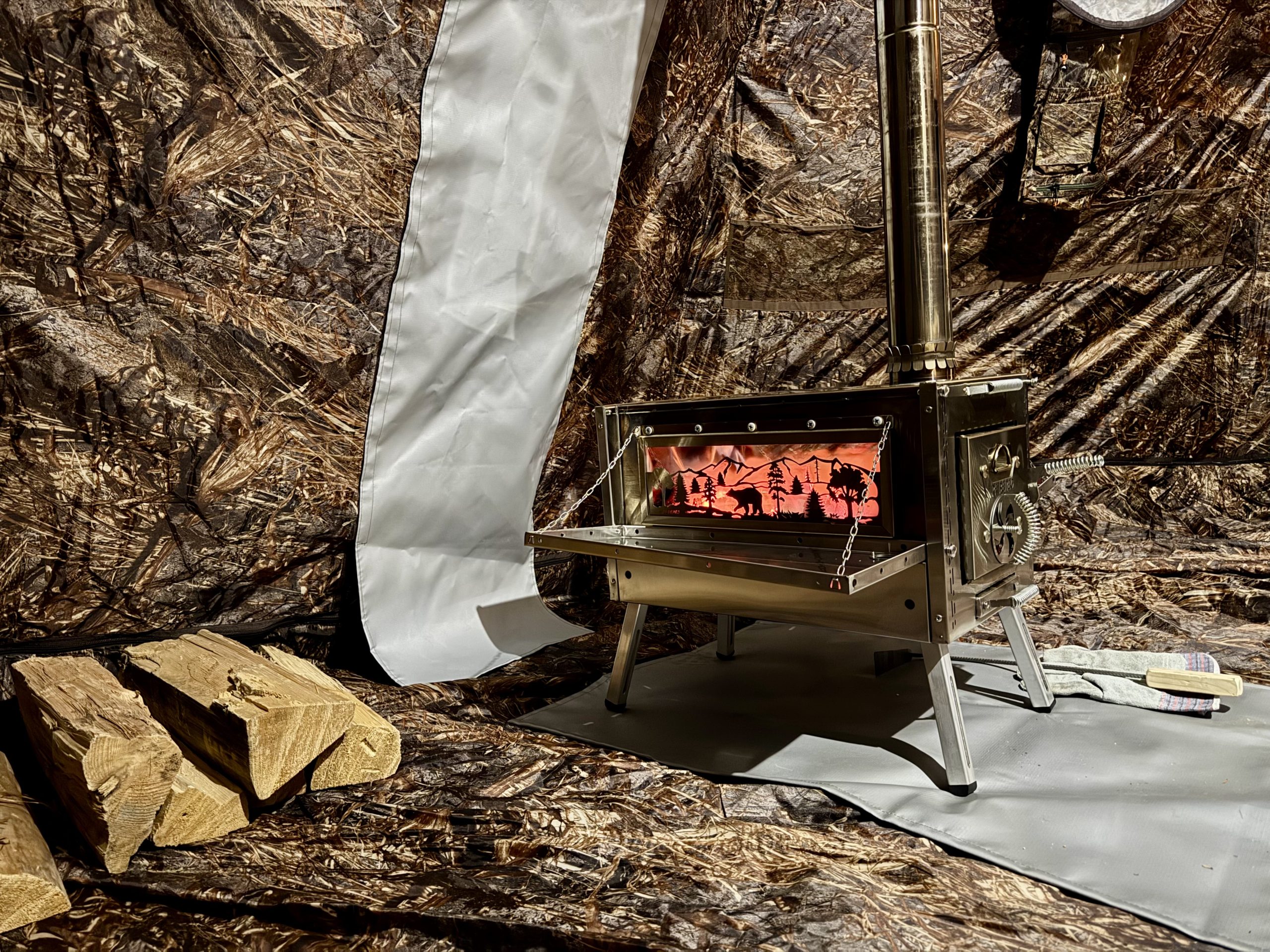
The wood stove is the heart of your hot tent setup, and it demands respect. This is not casual.
Safety starts with the stove itself. Your tent needs to be designed for stove use. That means fire-resistant fabric, a proper stovepipe jack, and adequate clearance between the stove and tent walls. Never improvise. A quality four-season hot tent accounts for all of this. After six years of testing, I’ve seen what happens when people retrofit regular tents with wood stoves. It doesn’t end well.
Ventilation is critical. You need fresh air in and exhaust out. Your stovepipe vents the exhaust. You need at least one intake vent in the tent wall or door for fresh air and combustion. Without proper ventilation, you get carbon monoxide buildup, a cold stove, and a tent full of smoke. A well-designed hot tent has intake vents positioned to work with the stovepipe.
Fuel selection matters. Use dry, seasoned hardwood. Split wood dries faster than rounds. Wet wood won’t burn hot, produces excessive smoke, and creates creosote buildup in your flue. During winter camps in Big Bear, I learned the hard way that gathering wood on-site is unreliable. Bring your fuel with you.
Stove operation is straightforward once you understand it. You’re not running a fire for hours. You’re doing short, hot burns to heat the tent quickly, then letting the fire die down. A hot tent with a small wood stove warms fast. Once it reaches temperature, minimal wood keeps it warm.
Always follow manufacturer guidelines. Clearance distances, ventilation requirements, and safety procedures exist for good reasons. Your hot tent manual tells you exactly how to operate the stove safely.
Setup and Takedown

One of the biggest advantages of modern hot tents is speed. The Bereg tents I’ve tested set up in about one minute. You’re not wrestling with poles, threading fabric, or swearing at guylines for twenty minutes.
Here’s how it works. Lets use the UP-7 for this example as this tent frame is built to pop open in about 60-90 seconds. Once you take the tent out of the bag and let the supports extend out, simply find your door into the tent, enter, find the main center support and push up till it pops into place. You’ll find with these tents, the opening is just like an umbrella. Most of your wall supports will pop into place at the same time, those that don’t, a quick push outward and they snap into place.
Speed matters when setting up in cold, wet, or dark conditions. You’re not standing around getting cold while you fiddle with your shelter. Pop it up, get inside, and fire up the stove.
Takedown is equally simple. Reverse of the setup steps, stuff it back in the bag, and you’re moving. In Big Bear, I’ve torn down complete camps in minutes. That speed is a real safety advantage if weather deteriorates or you need to move quickly.
The aviation-grade aluminum frame on quality hot tents won’t bend or warp in cold. The fabric remains flexible in subzero temperatures. Cheap tents become brittle and fragile in extreme cold. If you’re investing in a hot tent, get one built for the conditions you’ll face.
Four-Season Performance in the Real World
Four-season means the tent works in winter. Not “theoretically” works, but keeps you warm and dry when it’s twenty below.
The thermal advantage of the RIGHT hot tent is immediate. You’re inside a heated shelter. A quality four-season tent with a wood stove or quality diesel heater is worlds apart from a regular winter tent. You sit upright. You move around without overheating your sleeping system. Your water doesn’t freeze. Your hands work properly. You sleep significantly better.
After seven years of field testing, these are some of my favorite tents on the market. No other tent comes close from a thermal standpoint. The difference between a regular winter tent and a hot tent in extreme conditions is life-changing. The secret sauce with these PF Bereg tents of course is the inner wall, which creates an air buffer (aka thermal barrier.).
Frame design matters. Aviation-grade aluminum doesn’t become brittle in cold and won’t snap at -40 degrees. Cheap materials fail. You buy once and you’re done.
Fabric choice matters too. Fire-resistant stove jack material rated for four-season use doesn’t degrade from temperature swings. The stitching and seams are reinforced. All of this adds up to a tent that works in the conditions it claims to handle.
Performance isn’t theoretical; it’s tested. Ask the manufacturer what temperatures it’s been tested at. Read reviews from people who’ve used it in cold. Don’t rely on marketing claims. Actual field data tells the story.
Managing Condensation
This is the most misunderstood part of hot tent camping. People expect to be completely dry inside a heated tent. That’s not realistic. Managing moisture is essential.
A warm interior and cold exterior creates condensation. Your breathing, body, and gear release moisture. That moisture condenses on the coldest surface, usually the tent fabric near the roof.
Here’s how to manage it. First, maintain adequate ventilation. Keep intake vents open and let air circulate. Second, keep your stove burning hot enough to warm the tent. A smoldering fire won’t work. Third, position your sleeping bag and gear strategically. Don’t pack everything tightly. Air needs to move.
Some condensation is normal. You might wake to frost on the inside of the roof. That’s okay. Avoid water dripping onto your sleeping bag or gear. If that’s happening, your ventilation is insufficient or your stove isn’t hot enough.
After years of testing, periodic ventilation helps. Let fresh air in for a few minutes every couple of hours. It sounds counterintuitive when you’re trying to stay warm, but it improves comfort by reducing condensation problems.
Your tent’s design affects this too. Tents with interior vents positioned correctly manage moisture better. This is another reason to buy from manufacturers who understand hot tent camping. They’ve solved these problems already.
The Bereg hot tent designs prioritize speed and reliability in extreme environments. Whether you’re in whiteout conditions or setting up before dark, the pop-up frame and intuitive setup mean you’re sheltered in seconds. The stovepipe jack integrates seamlessly, and heating capability is immediate.
Gear You Need Alongside the Tent

A hot tent is one piece of a larger system. You need other components to make it work effectively.
A quality wood stove. Not all wood stoves are equal. Size matters. A stove too large wastes fuel. A stove too small won’t heat effectively. Reputable hot tent manufacturers recommend specific stove models for their designs. Follow those recommendations.
Stovepipe and accessories. You need quality stovepipe that won’t rust out or develop leaks. Bring extra sections. A damper is useful for controlling burn rate and heat output. Gloves for handling hot metal. A fire screen or reflector to manage radiant heat inside the tent.
Insulated flooring. A groundsheet protects from moisture rising below. In winter, you need insulation underneath you. Many people use foam sleeping pads under the tent floor or inside beneath their sleeping bag. This prevents heat loss through the ground.
Proper sleep system. A quality four-season sleeping bag is essential. You’re warm inside the tent, but sleeping on the ground is still cold. A bag rated for the temperatures you’ll encounter is non-negotiable.
Wood carrier or storage. You need to bring fuel and keep it somewhat dry. A simple wood rack or bag organizes your fuel and keeps it accessible.
Thermometer. Knowing the inside temperature helps you understand how your setup is performing and when condensation might be a problem.
Carbon monoxide detector. This is not optional. A battery-powered CO detector is cheap insurance. Hang it near your head level and check it regularly.
Who Hot Tents Are Best For
Hot tents aren’t for everyone, but they’re transformative for specific groups.
Winter backpackers and mountaineers. Climb in winter or backpack in extreme conditions? A hot tent expands what’s possible. You go higher, stay longer, and maintain better hygiene and mental health because you’re warm. If you are backpacking far from your vehicle, I would recommend UP2.
Hunters and ice anglers. People spending long days in cold conditions benefit enormously from a warm shelter. Productivity and safety both improve.
Overlanders exploring remote areas in winter. Travel in a vehicle but still camp? A hot tent gives you four-season capability without a fully equipped RV.
People wanting to explore winter landscapes without suffering. This is the group I encounter most often. They love being in the mountains and wilderness, but they dreaded winter because cold camping is unpleasant. A hot tent changes that entirely.
Basecamp expeditions. Establishing a fixed camp for days or weeks? A hot tent changes everything. You have a comfortable headquarters for planning, rest, and recovery.
Hot tents aren’t ideal for ultralight backpackers carrying everything or people with small budgets. They’re heavier than three-season tents and cost more upfront. Once bought, you have a tool lasting decades. But the initial investment is real.
FAQ
How long does a hot tent stay warm after the fire dies? It depends on outside temperature and how well your tent is insulated. In moderate cold (10-20 degrees), you’ll stay warm for 20-60 minutes. In extreme cold (-30 and below), heat loss is faster. Most people keep the stove running through the evening and overnight, using enough wood to maintain comfort.
Is hot tent camping dangerous? Not if you follow proper procedures. Carbon monoxide, fire, and burns are real risks, but they’re managed through ventilation, proper stove installation, and basic safety practices. A quality tent and stove designed to work together handle these risks.
Can you use any wood stove in a hot tent? No. Stove sizing and compatibility matter. Your tent manufacturer specifies which stoves work with their design. Oversized stoves overheat the fabric. Undersized stoves won’t adequately heat the interior. Follow their recommendations.
What’s the best wood to burn? Dry, seasoned hardwood. Oak, birch, and maple are excellent choices. Avoid softwoods like pine or spruce because they create excess creosote. Burn only wood seasoned for at least six months. Wet wood won’t burn hot and creates problems.
How do I prevent the tent fabric from burning? Your tent is designed with fire-resistant material and proper spacing between the stove and walls. Don’t modify or damage the interior. Follow the manufacturer’s clearance guidelines. Don’t hang gear directly against tent walls near the stove. Use common sense and you’ll be fine.
Can I use diesel heater in a hot tent? Absolutely. Run your heater hose into tent and fire-a-way! Diesel heaters are great in places where burn restrictions are in place.
Can I use a hot tent without a stove? Technically yes, but you’re losing the primary advantage. Unless you have a diesel heater (as previous mentioned). A three-season tent works in spring, summer, and fall. A hot tent in summer is a normal tent. If you’re buying a four-season hot tent, you’re buying it for winter and extreme conditions. Use the stove.
What’s the weight difference between hot tents and regular tents? Quality four-season hot tents are heavier because of stronger fabric, aluminum framing, and reinforced construction. A two-person hot tent might weigh 10-15 pounds. A regular two-person three-season tent might be 5-7 pounds. The stove and fuel add more weight. You’re trading weight for capability.
Are hot tents better than RVs for winter camping? They’re different tools for different situations. An RV offers more comfort and amenities. A hot tent offers mobility, lower cost, and closer connection to the landscape. Many overlanders use both. Hot tents work where RVs can’t go.
Hot tent camping isn’t complicated. It’s a direct way to expand your camping season and explore winter landscapes. The learning curve is shallow. The rewards are immediate. After six years of field testing, a quality hot tent is one of the best investments a serious camper will make. Start with the right tent, follow proper safety procedures, and you’ll be comfortable in conditions that would shut down regular campers.
Winter camping doesn’t have to mean suffering in a cold sleeping bag. It means sitting upright in a warm tent, watching snow fall, feeling comfortable. That’s what a good hot tent offers.