


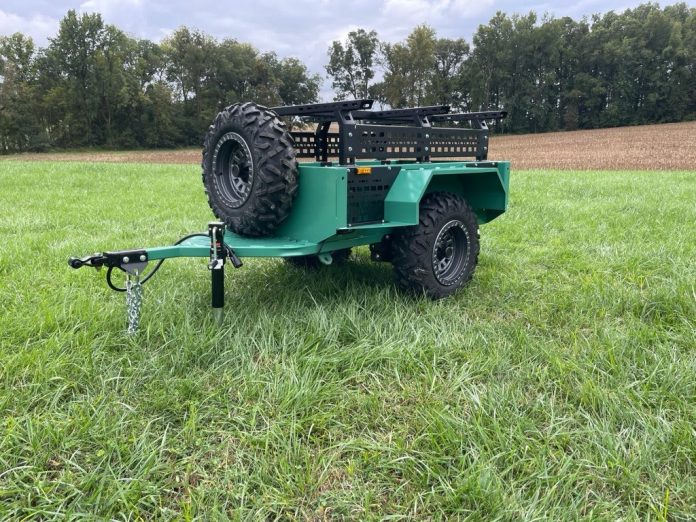

Most overland trailers are built for people who want to bring everything. Dual Jerry cans, a roof tent, a kitchen drawer system, a fridge, a 40-gallon water tank, and so on. And for extended backcountry expeditions, this setup makes sense. However, a large portion of overlanders don’t need all of it. Couples, weekend warriors, minimalists, and SXS riders all share a common problem: the market for small, capable, lightweight overland trailers is thin, and what exists either costs a fortune or falls apart on the trail. I’ve spent years testing and towing trailers across the Western United States, from desert washes in Arizona to rocky two-tracks in Wyoming, and the sub-$5,000 capable trailer is genuinely rare. The Big Slack Off Road Slack Wagon Junior at $4,499 is one of the few worth taking seriously.
Big Slack Off Road is a family operation run by brothers Mark and Matthew Cecil out of western Kentucky. These aren’t marketers who decided to start an overland brand; they’re riders who broke enough gear on real trails to start building their own. I covered their full-size Big Slack Slack Wagon in an earlier walkthrough, and the Junior shares the same design philosophy at a smaller scale. At 500 lbs empty and with a 1,200-lb GVWR, it tows behind a vehicle most people already own, or even behind an SXS or ATV with the right tire setup. Understanding how to choose a budget overland trailer starts with knowing what matters on the trail versus what looks good in a brochure. The Slack Wagon Junior gets the important things right.
Quick Facts:
- Product: Big Slack Off Road Slack Wagon Junior
- Bed Size: 31 x 60 in interior; 57-in overall width
- Empty Weight: ~500 lb
- GVWR: 1,200 lb
- Payload: ~700 lb
- Suspension: Timbren Axleless
- Tires: DOT street-legal standard; ATV tires available
- Recovery Points: 4 corner tie-down/recovery points
- Options: Lock & Roll hitch, spare tire, racks, tailgate, DOT or ATV tires
- Price: $4,499
- Best for: Couples, minimalist campers, SXS/ATV riders, small-SUV overlanders
8 min read
In This Review
- Who the Slack Wagon Junior Is For
- Key Specs at a Glance
- Weight, Payload, and Tow Vehicle Flexibility
- Timbren Suspension and Trail Performance
- Storage, Organization, and Bed Design
- Options and Customization
- Slack Wagon Junior vs. Slack Wagon: Which Should You Buy?
- Pros and Cons
- Final Verdict
- Frequently Asked Questions
Who the Slack Wagon Junior Is For
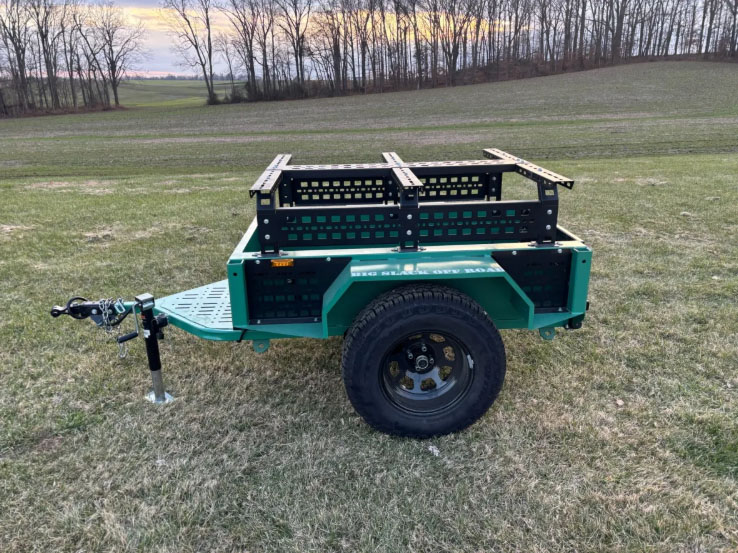
The best overland trailer for camping light isn’t the one with the longest feature list. It’s the one light enough to follow you everywhere, affordable enough to buy without financing a truck, and tough enough to survive the trails you run in practice. The Slack Wagon Junior targets three specific buyer types, and it serves all three well.
First are the minimalist campers: couples or solo travelers who bring a ground tent or a small RTT, a cooler, a two-burner stove, and a duffel bag of clothing. For these buyers, a full-size overland trailer is overkill and the weight penalty isn’t worth it. The Junior’s 57-inch overall width means it fits in a standard garage bay and follows a compact SUV or crossover without drama. Second are SXS and ATV riders who want to base-camp from the trail instead of hauling everything on their machine. The Junior offers available ATV tires and a GVWR of 1,200 lbs, making it one of the few purpose-built off-road trailers rated for SXS tow. Third are budget-conscious overlanders building their first rig. At $4,499, it’s accessible without sacrificing trail capability.
What the Junior is not built for is extended multi-week expeditions where you need a full kitchen, 40 gallons of water storage, and an integrated electrical system. Those buyers should step up to the full Slack Wagon or the Big Slack Slacklander. The Junior is purpose-built for the buyer who camps lighter and moves faster. As a small off-road trailer, it excels where full-size rigs struggle: narrow trails, limited parking, and tight garage storage. For serious overland platform builds, a lightweight trailer like this frees up vehicle payload for the gear worth carrying.
Key Specs at a Glance
| Specification | Details |
|---|---|
| Price | $4,499 |
| Bed Interior | 31 x 60 in |
| Overall Width | 57 in |
| Empty Weight | ~500 lb |
| GVWR | 1,200 lb |
| Payload | ~700 lb |
| Suspension | Timbren Axleless |
| Standard Tires | DOT street-legal |
| ATV Tires | Available (enables SXS/ATV towing) |
| Recovery Points | 4 corner tie-down/recovery points |
| Tote Capacity | Three 17-gallon totes (available at hardware stores) |
| Front Platform | Yes, for additional attachment points |
| Options | Lock & Roll hitch, spare tire, racks, tailgate |
| Built | Western Kentucky, USA |
Buy Direct From Big Slack Off Road
Slack Wagon Junior: Starting at $4,499
500 lb empty weight, Timbren axleless suspension, street-legal or ATV tires. Contact Big Slack to build your configuration.
Weight, Payload, and Tow Vehicle Flexibility
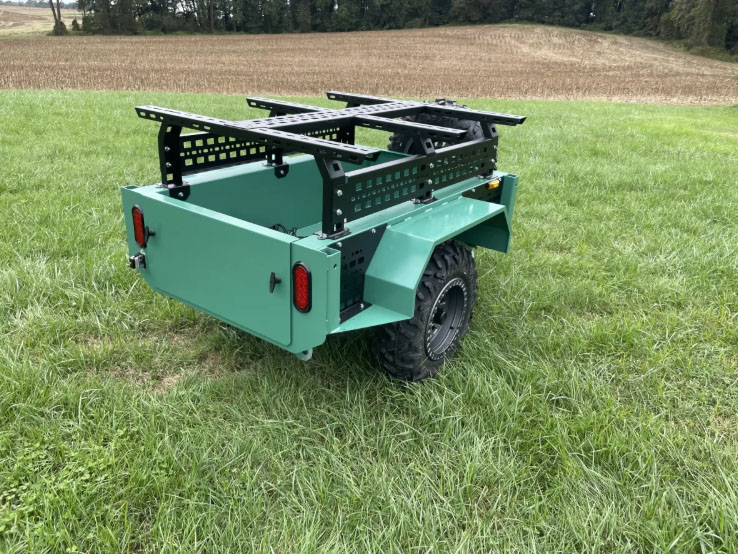
At roughly 500 lbs empty, the Slack Wagon Junior sits in a genuinely rare weight class for purpose-built off-road trailers. Most overland trailers with a steel frame and Timbren suspension start at 700 to 900 lbs before you add a single accessory. The Junior’s 500-lb baseline means vehicles with modest tow ratings, including compact crossovers, small SUVs, and even some larger AWD vehicles, stay comfortably within their tow capacity when the trailer is loaded. Understanding your rig’s payload and GVWR before adding a trailer is essential, and the Junior makes these numbers work for more buyers than almost any other steel-frame off-road trailer at this price.
The 1,200-lb GVWR gives roughly 700 lbs of payload. For a couple going out for three nights, this is enough for a rooftop tent (50-80 lbs), a 40-quart cooler loaded with food and ice (60 lbs), clothing, cooking gear, tools, and water for a weekend. Camping light doesn’t mean camping without what you need; it means bringing what you need and leaving the rest behind. The Junior’s payload math works for this approach in a way few trailers at this price point do.
The ATV towable trailer option is worth specific attention. Few trailers at any price offer a credible dual-use story for both street and ATV/SXS towing. The Junior’s DOT tires make it street-legal for road travel; swapping to ATV tires opens it up for towing behind a side-by-side or ATV on the trail. For riders who truck their SXS to a riding area and then want to pull a camp trailer on the trail without a separate tow vehicle, this is a real solution to a real problem.
Timbren Suspension and Trail Performance
The Timbren axleless suspension is the engineering choice on the Junior separating it from trailers at similar price points. Most trailers under $5,000 use a straight leaf-spring axle with basic rubber bushings. Timbren’s system eliminates the solid axle entirely, replacing it with independent rubber spring units at each wheel. This setup keeps the trailer’s undercarriage flat and low, improving ground clearance, and allows each wheel to articulate independently over rough terrain.
In practical terms, Timbren suspension absorbs trail impacts without transferring them through the hitch to the tow vehicle. On rocky two-tracks and washboard roads, the kind of terrain minimalist overlanders run in practice, this matters. The Junior’s 500-lb empty weight combined with independent articulation means it follows a compact SUV or SXS through terrain without the bouncing, binding, or pitching behavior common in cheaper leaf-spring setups at this weight. Big Slack uses the same Timbren system across their full trailer lineup, so the Junior isn’t getting a budget version of the suspension; it’s the same hardware.
Storage, Organization, and Bed Design
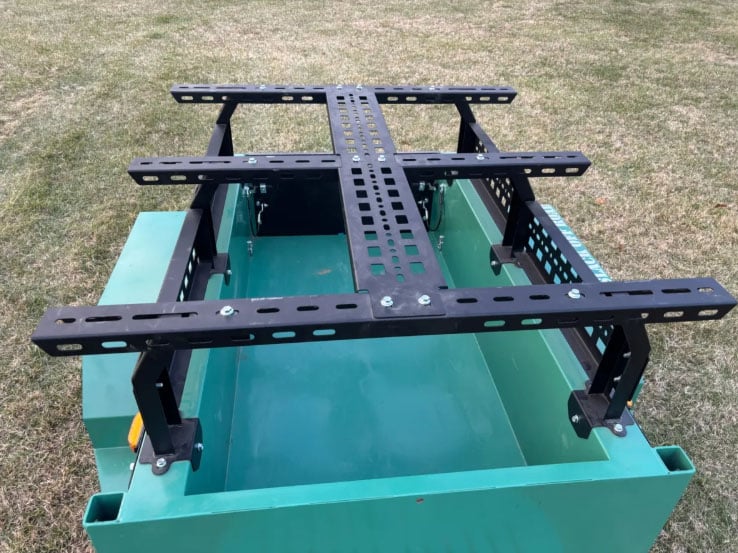
The 31 x 60-inch bed fits three standard 17-gallon totes available at any hardware store. This is a specific, practical decision: instead of proprietary drawer systems or custom storage boxes, you organize your gear in totes you already own or buy for under $15 each. Three totes side by side fill the bed width. Each holds roughly one person’s worth of clothing, camp kitchen gear, or food for a weekend trip. The system is simple, weatherproof when lidded, and easy to pull out and carry to a campsite without unpacking item by item.
The swing-down rear tailgate makes loading and unloading straightforward. Open the tailgate, slide totes out from the back, done. For buyers with limited upper-body strength or height, tailgate access beats lifting over a side rail every time. The front platform adds a small mounting area for additional items such as a water jug, a fuel canister, or accessories Big Slack offers as bolt-on add-ons. Four corner recovery and tie-down points anchor cargo securely and give you legitimate attachment points for recovery rigging if needed on the trail.
The overall 57-inch width is a detail worth noting. It’s narrow enough to follow a compact SUV through tight forest two-tracks without the trailer catching on brush and narrow enough to store in a standard single-car garage stall alongside a vehicle. Wider trailers with 74-inch overall widths are genuinely harder to maneuver in tight terrain. The Junior’s narrower footprint is a real advantage for the buyer running technical or brushy terrain.
Built in Kentucky, Ready for the Trail
Configure Your Slack Wagon Junior
Add a Lock & Roll hitch, spare tire, racks, or tailgate. Contact Big Slack to build your spec sheet and get into production.
Options and Customization
Big Slack offers the Junior with a short list of meaningful options rather than a long list of cosmetic add-ons. The Lock and Roll articulating hitch is the most important upgrade for off-road use. Standard ball hitches bind under articulation on rough terrain; the Lock and Roll allows the trailer to move independently of the tow vehicle, reducing stress on both the hitch and the trailer frame. For anyone running the Junior on actual trail terrain rather than forest roads, this upgrade is worth the cost.
Optional racks support rooftop tents, bike carriers, or cargo boxes. For buyers who want to mount a two-person RTT on the Junior rather than on their vehicle, the rack system provides the platform. This frees up interior vehicle space for passengers or gear while keeping the tent accessible. Bike carriers on the rack work well for riders who camp at a basecamp and day-ride from there.
The spare tire option is straightforward trail insurance. DOT tires and ATV tires are both available depending on your intended use. Buyers running the Junior behind a street vehicle for road travel plus moderate trail use choose DOT tires. Buyers planning to tow behind an SXS on off-road terrain choose ATV tires. The tailgate is available as a separate option, and Big Slack recommends contacting them directly to build a spec sheet before ordering; lead times and configuration details are worked out in a brief pre-production conversation.
Slack Wagon Junior vs. Slack Wagon: Which Should You Buy?
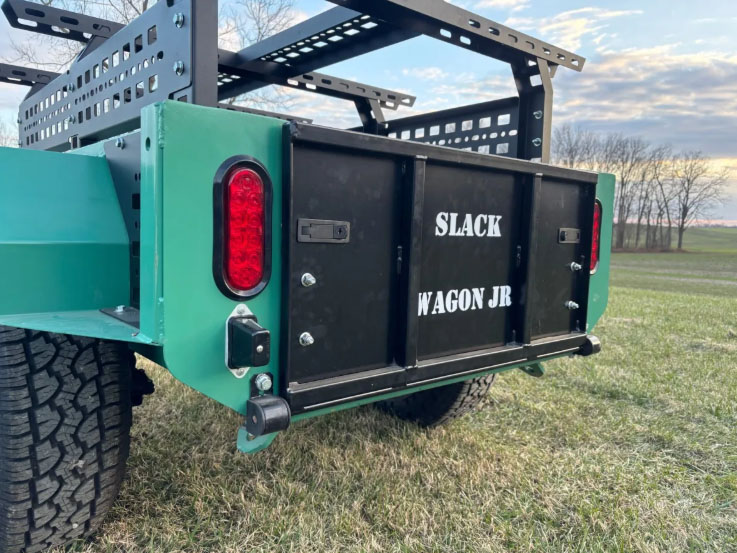
The Big Slack Slack Wagon starts at $5,999 with a 6.5-foot bed, 48.5-inch interior width, and a 3,000-lb GVWR. It weighs roughly 1,000 lbs empty and offers a substantially larger payload capacity of approximately 2,000 lbs. For buyers who need to carry more gear, haul water, or support a more complex camp setup, the full Slack Wagon is the better buy. If your primary goal is a capable ATV towable trailer you can also run behind a street vehicle, the Junior is the more purpose-built choice.
The Junior at $4,499 is the right choice for three specific scenarios. First: you tow with a vehicle with a limited tow rating and the full Slack Wagon’s 1,000-lb empty weight pushes you too close to your limit. Second: you genuinely camp light and the Junior’s 700-lb payload is enough for your kit. Third: you want to tow behind an SXS or ATV on the trail. The Junior’s ATV tire option and lighter weight make this practical in a way the full Slack Wagon doesn’t support as cleanly.
Accessories cross-pollinate between the two platforms. Big Slack designed the Junior on the same architecture as the full Slack Wagon, so racks, hitches, and add-ons developed for one generally fit the other. Starting with the Junior and adding accessories over time is a realistic path, and upgrading to the full Slack Wagon later doesn’t mean your accessories go to waste.
Pros and Cons
Pros
- ~500 lb empty weight is rare for a steel-frame, Timbren-equipped off-road trailer
- $4,499 starting price is accessible without financing a vehicle
- Dual DOT/ATV tire option enables both street and SXS/ATV towing, which is unique in this price class
- 57-inch overall width follows compact SUVs through tight trail terrain
- Three standard 17-gallon totes fit the bed with no proprietary storage required
- Timbren axleless suspension provides independent articulation at this price class
- 4 corner recovery and tie-down points for trail recovery and cargo security
- Accessories cross-compatible with the full-size Slack Wagon platform
- Built in the USA (western Kentucky)
Cons
- ~700 lb payload limits longer or larger-group trips
- No built-in kitchen, electrical system, or water storage
- No published lead time on website; requires direct contact to order
- ATV tires require a separate purchase; not a simple tire swap
- Smaller bed (31 x 60 in) limits gear volume for buyers used to full-size trailers
- No galley, tent, or shelter included; you’re building a camp setup around it
Final Verdict
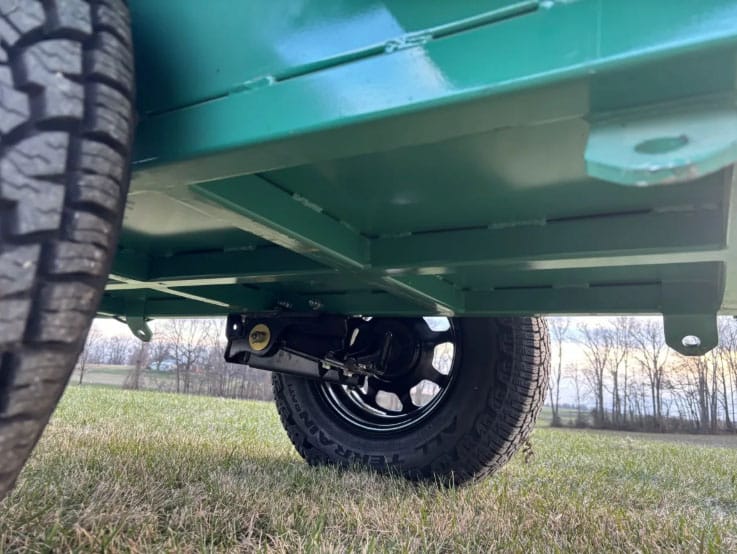
The Slack Wagon Junior answers a question the overland market mostly ignores: what do you buy when you want a purpose-built, trail-capable trailer under $5,000 with a weight under 500 lbs? Most competitors at this price use budget leaf-spring axles, lack dedicated recovery points, and aren’t designed for anything beyond smooth campground roads. The Junior uses Timbren axleless suspension, has four-corner recovery hardware, and handles both street and ATV tire configurations, a combination with almost no competition at this price point.
The trade-offs are honest. Payload sits at roughly 700 lbs, so buyers who need to carry a lot of water, heavy gear, or extended supplies should look at the full Slack Wagon or a higher-GVWR alternative. The Junior is also not a self-contained camping system; you’re building your camp setup around it rather than buying one from the factory. For buyers who already have their cooking, sleeping, and storage gear dialed in and want a rugged platform to carry it, this is exactly the right trailer.
At $4,499, the Slack Wagon Junior is one of the strongest value propositions in the lightweight overland trailer segment. Competing options from other builders either weigh more, cost significantly more, or lack the Timbren suspension and ATV tire flexibility. For minimalist overlanders, weekend campers, SXS riders, and small-SUV owners who want off-road capability without the price and weight penalty of a full-size rig, the Junior belongs at the top of the list.
Contact Big Slack directly to configure your order. They’ll build a spec sheet with you, confirm lead time, and walk you through available options before production begins.
Ready to Order?
Get Your Slack Wagon Junior Into Production
Contact Big Slack to configure your build, confirm options, and get your spec sheet approved before production begins.
Frequently Asked Questions
How much does the Slack Wagon Junior cost?
The Slack Wagon Junior starts at $4,499. Options including the Lock and Roll hitch, spare tire, racks, and tailgate add to the base price. Contact Big Slack directly for a current configuration quote, as pricing on individual options isn’t published on the website.
What is the payload capacity of the Slack Wagon Junior?
The Junior weighs approximately 500 lbs empty with a GVWR of 1,200 lbs, leaving roughly 700 lbs of payload. For a couple on a weekend trip with a rooftop tent, cooler, food, water, and gear, 700 lbs is workable with careful packing. Extended trips or larger groups with more supplies will find the payload limiting.
Is the Slack Wagon Junior the best overland trailer for camping light with an ATV or SXS?
For buyers wanting a lightweight overland trailer towable behind both a street vehicle and an ATV or SXS, the Junior is one of the few purpose-built options in this price range. Available ATV tires enable SXS towing on trail terrain, while DOT tires keep it street-legal for road travel. Few competitors offer both at this weight and price point.
What suspension does the Slack Wagon Junior use?
The Junior uses Timbren Axleless suspension, the same system found on purpose-built small off-road trailers costing twice as much, which eliminates the solid axle and uses independent rubber spring units at each wheel. This improves ground clearance, allows independent wheel articulation over rough terrain, and absorbs trail impacts without transmitting them through the hitch to the tow vehicle. It’s the same system Big Slack uses on their full-size Slack Wagon.
How does the Slack Wagon Junior compare to the full Slack Wagon?
The full Slack Wagon starts at $5,999, weighs roughly 1,000 lbs empty, and offers a 6.5-foot bed with a 3,000-lb GVWR and approximately 2,000-lb payload. The Junior at $4,499 is lighter (500 lbs), narrower (57-in vs. 74-in width), and has a smaller bed and lower payload, but it works behind smaller tow vehicles and behind ATVs and SXS rigs. Accessories cross-pollinate between the two platforms.
Does the Slack Wagon Junior come with a rooftop tent?
No. The Junior doesn’t include a tent, kitchen, or sleeping system. Optional racks are available to mount a rooftop tent, a bike carrier, or a cargo box. Buyers bring their own sleeping and cooking setup. This is intentional: the Junior is a platform trailer, not a packaged camping system, which keeps the weight and price down and lets buyers use gear they already own.
Heads up: Clicking on our affiliate links and exploring our sponsored content helps us at no extra cost to you, and we only recommend gear we’re absolutely crazy about!